
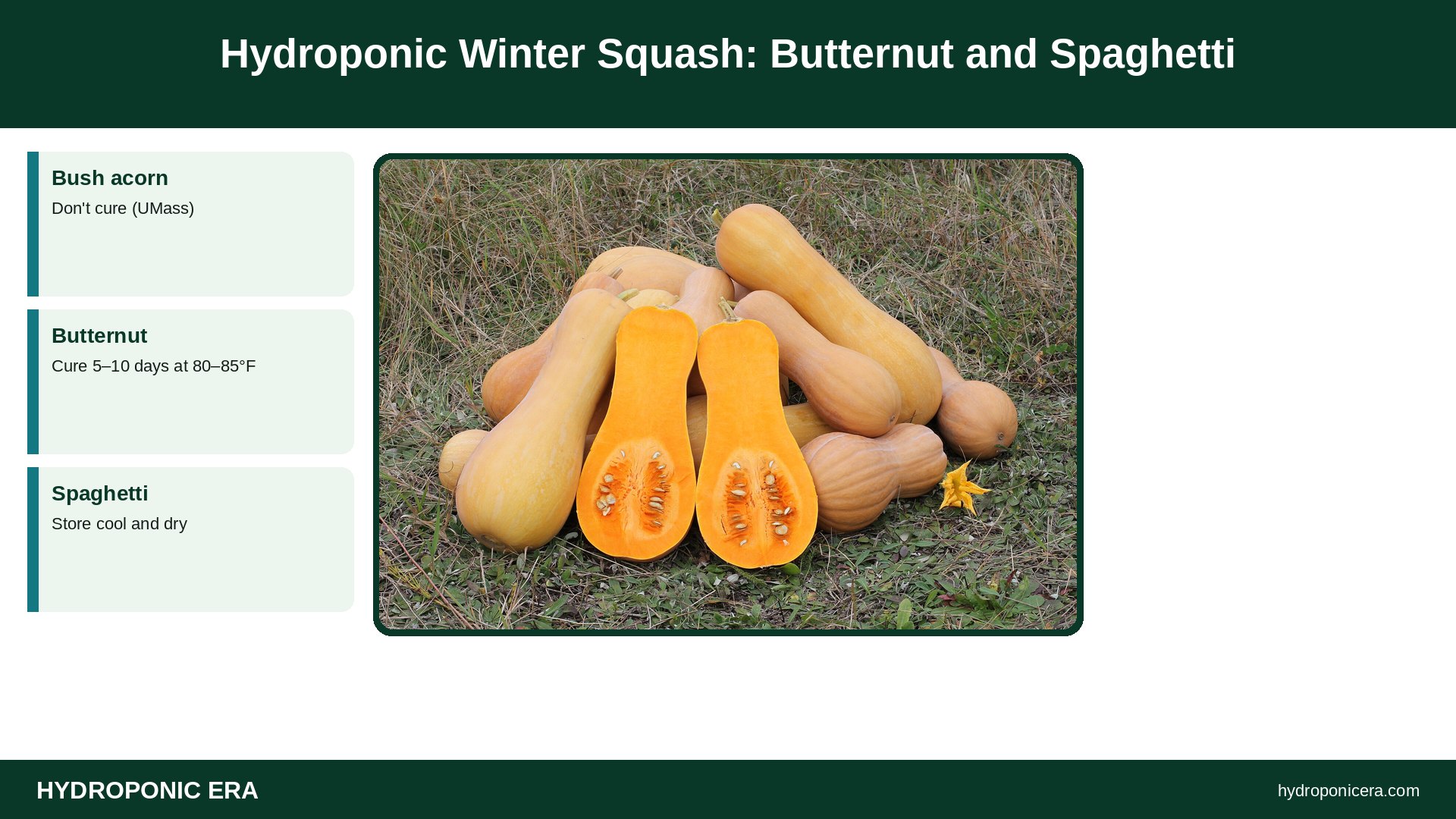
Hydroponic winter squash such as butternut, acorn, spaghetti, and kabocha can grow in large Dutch buckets or media beds with drip feeding, but the vines are big, hungry, and need a lot of space and light. Choose compact or bush varieties, train vines up a strong trellis, support fruit in slings, and hand-pollinate indoors. After harvest, UMass Extension recommends curing most winter squash at 80–85°F with 80–85% humidity for about 5–10 days, then storing at 50–60°F; acorn squash shouldn’t be cured.
Key takeaway: Grow bush or compact winter squash in big drip-fed containers, hand-pollinate, support heavy fruit, and cure properly for long storage.
| Type | Fit for hydroponics | Curing |
|---|---|---|
| Bush acorn | Good, compact | Don’t cure (UMass) |
| Butternut | Fair; long vines | Cure 5–10 days at 80–85°F |
| Spaghetti | Fair | Store cool and dry |
| Kabocha, buttercup | Fair; vigorous | Cure 5–10 days at 80–85°F |
Can You Grow Hydroponic Winter Squash?
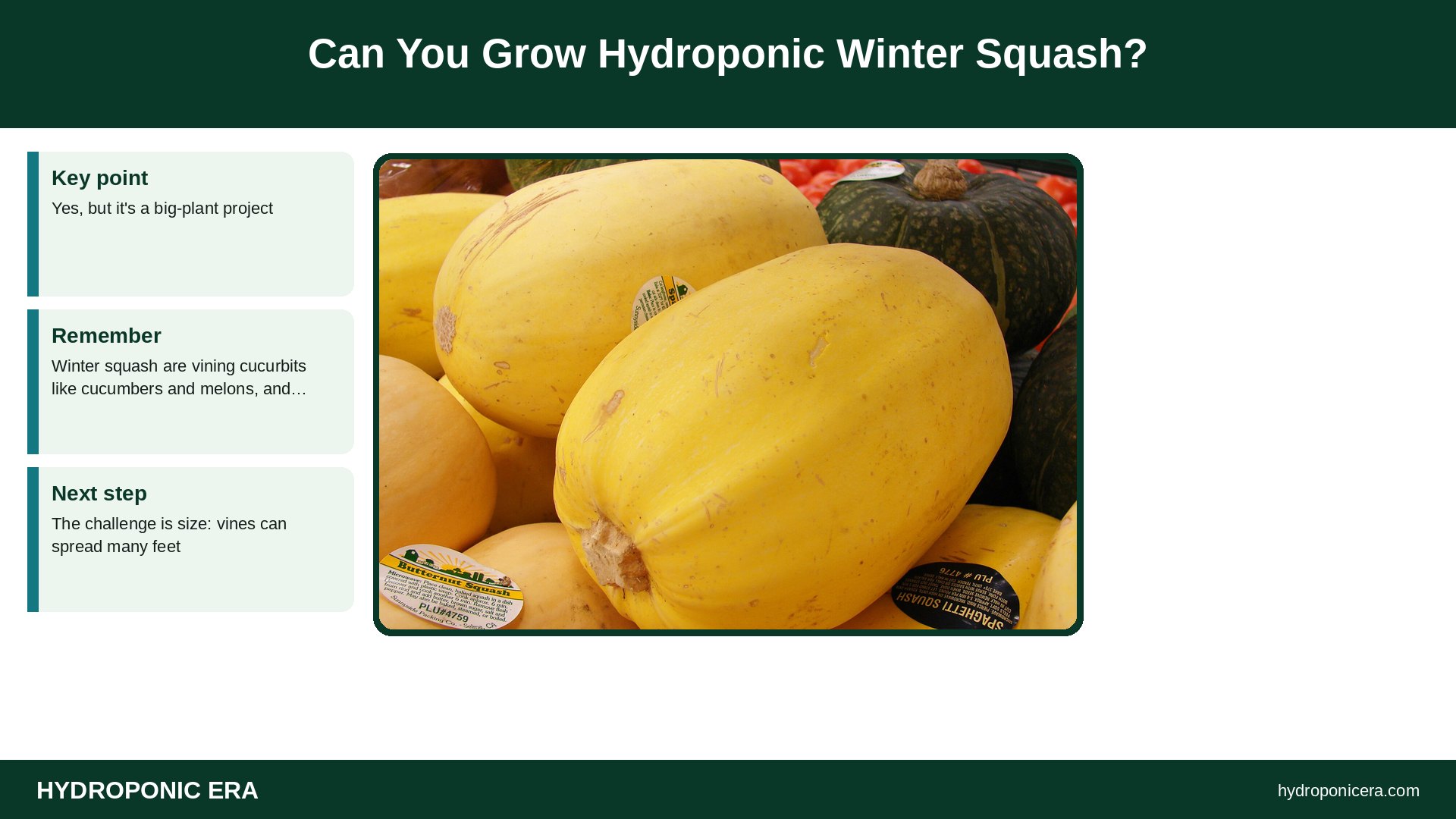
Yes, but it’s a big-plant project. Winter squash are vining cucurbits like cucumbers and melons, and they grow well in hydroponics when they have a large root zone, steady water, and plenty of light. The challenge is size: vines can spread many feet. Bush varieties are the best choice for indoor or patio systems. See hydroponic watermelon for a similar crop.
Best Systems for Hydroponic Winter Squash
- Dutch buckets: one plant per bucket with perlite or coco and drip feeding.
- Media beds: roomy, stable, and forgiving.
- Large DWC totes: possible, but keep water cool and well aerated.
- NFT and towers: not suitable for such large plants.
See DWC vs NFT vs Dutch bucket.
Starting Hydroponic Winter Squash
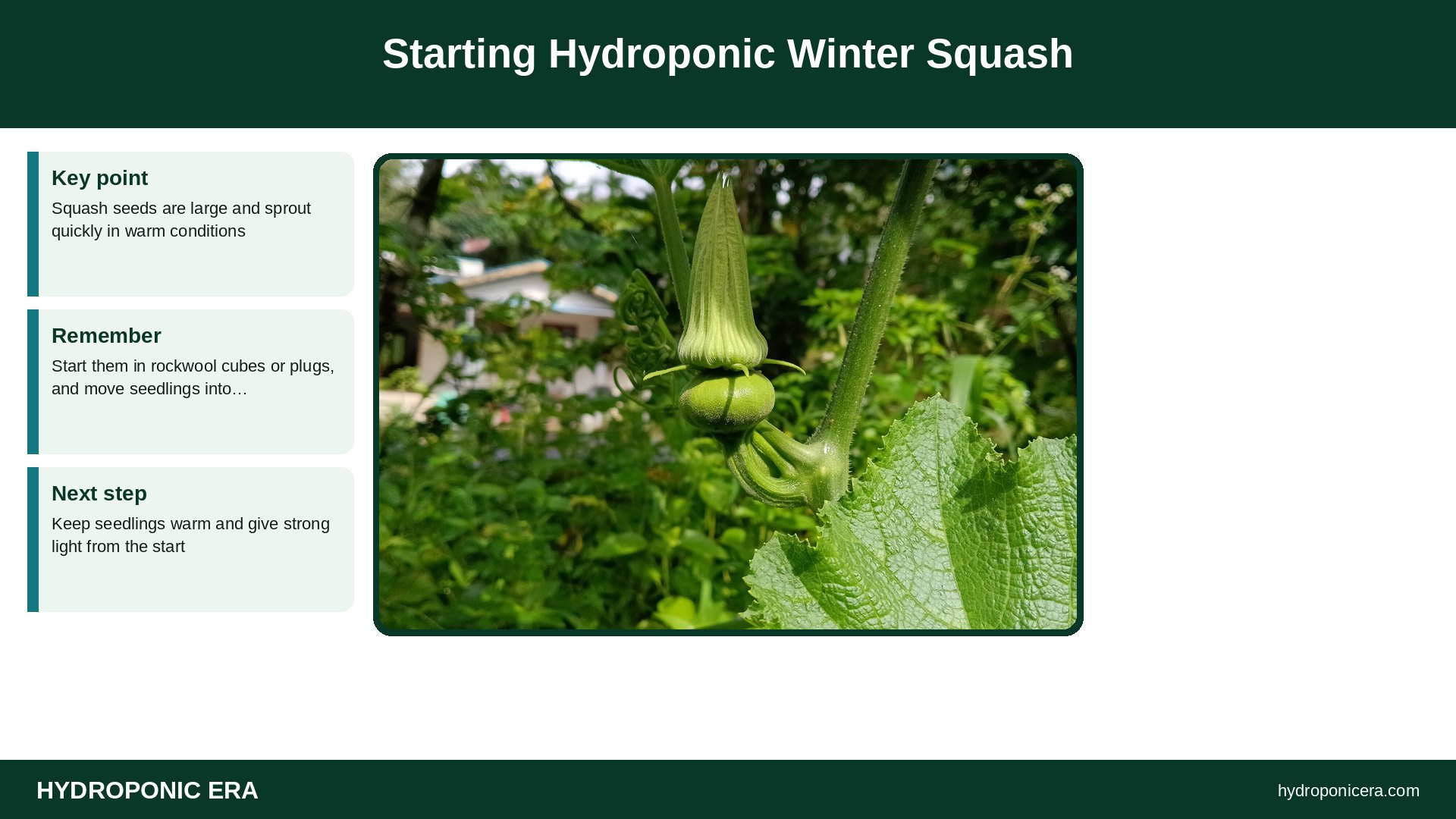
Squash seeds are large and sprout quickly in warm conditions. Start them in rockwool cubes or plugs, and move seedlings into buckets early, since cucurbits don’t like root disturbance. Keep seedlings warm and give strong light from the start. See starter sponges.
Trellising Hydroponic Winter Squash
Train vines up a sturdy trellis or cattle panel to save space and improve airflow. Tie stems loosely as they climb. Heavy fruit like butternut and kabocha need slings of netting or fabric tied to the trellis. Smaller acorn and spaghetti squash are easier to support.
Pollinating Hydroponic Winter Squash
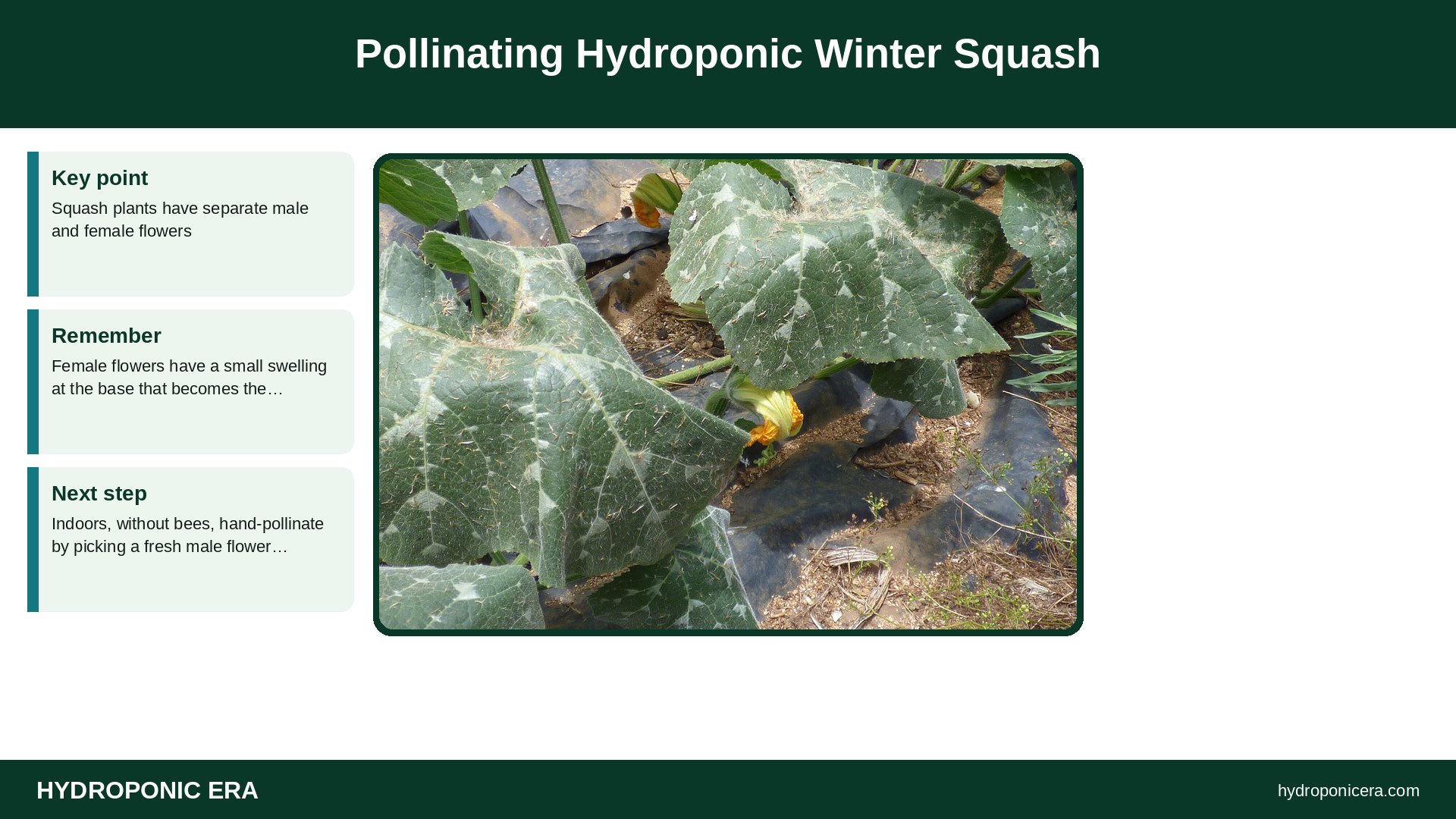
Squash plants have separate male and female flowers. Female flowers have a small swelling at the base that becomes the fruit. Indoors, without bees, hand-pollinate by picking a fresh male flower, removing the petals, and touching it to the center of an open female flower in the morning. Unpollinated fruit usually yellows and drops.
Nutrients and pH for Hydroponic Winter Squash
Use a complete fruiting-crop nutrient, keep pH around 5.5–6.5, and raise strength as plants grow. Squash need plenty of potassium once fruit sets, and steady calcium. Big vines drink a lot, so check reservoir levels daily in warm weather and watch EC. See how to lower EC.
Light and Temperature
Winter squash are warm-season crops that need full sun outdoors. Indoors, give strong LED light for much of the day. Keep the room warm, and keep the nutrient cool and aerated to protect roots. In hot weather, see hydroponics in hot climates.
Harvesting Hydroponic Winter Squash
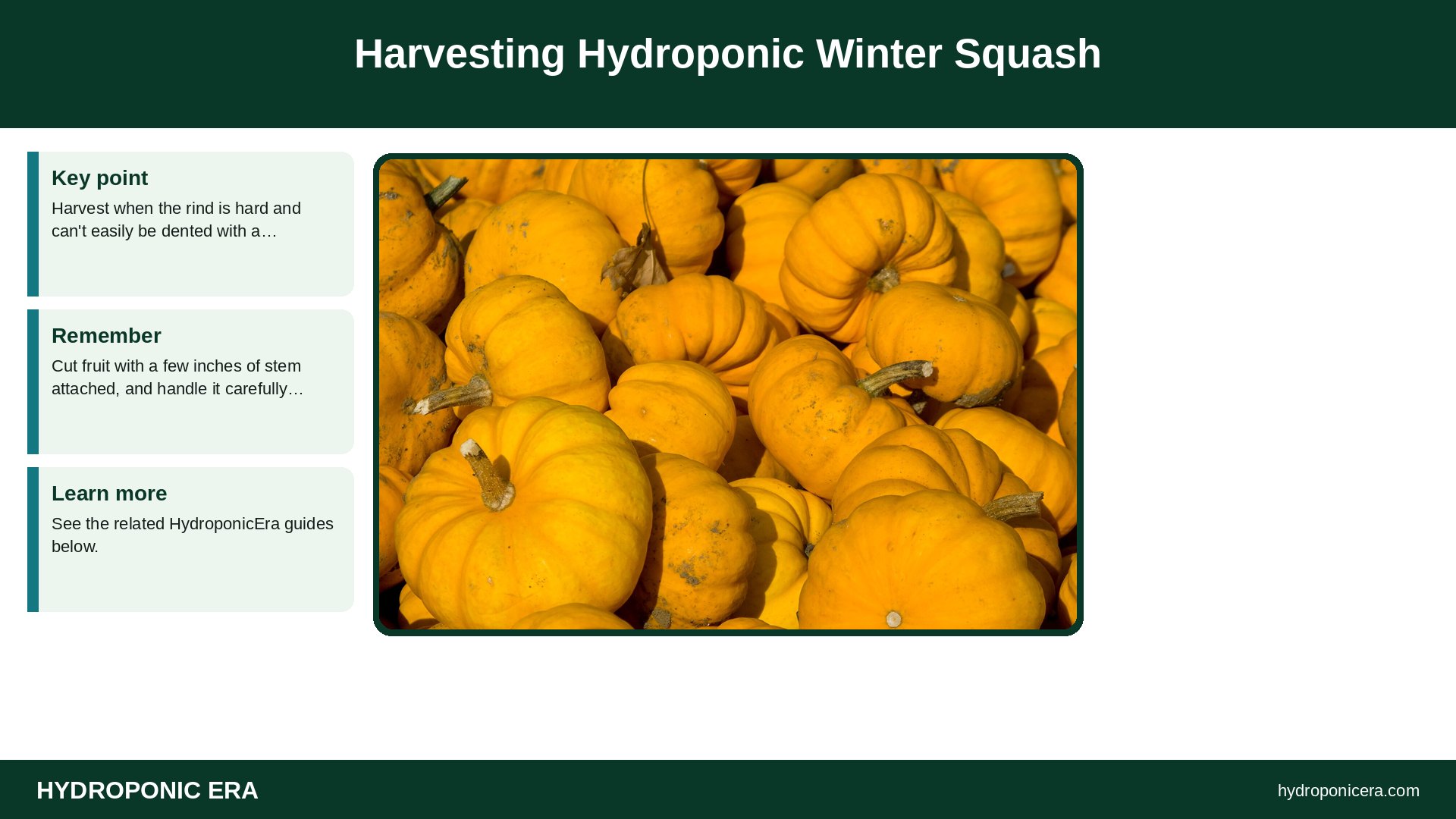
Harvest when the rind is hard and can’t easily be dented with a fingernail, and the color is deep and even. Cut fruit with a few inches of stem attached, and handle it carefully to avoid bruises, which shorten storage life.
Curing and Storing Hydroponic Winter Squash
UMass Extension recommends curing butternut, hubbard, kabocha, and buttercup squash for 5–10 days at 80–85°F and 80–85% relative humidity. Curing hardens the skin and heals wounds. Acorn squash should not be cured, as it can shorten storage life. After curing, UMass advises storing squash at 50–60°F with 50–70% humidity and good ventilation, and avoiding temperatures below 50°F, which cause chilling injury.
Common Problems With Hydroponic Winter Squash
- Powdery mildew: white patches on leaves; improve airflow.
- Fruit drops when small: poor pollination.
- Squash bugs and aphids: check leaves and stems often.
- Root rot: warm, low-oxygen water.
- Blossom end rot: uneven water and calcium supply.
Weekly Routine for Hydroponic Winter Squash
- Check pH and EC and record them.
- Top off the reservoir daily in hot weather.
- Hand-pollinate new female flowers.
- Tie in new growth and support fruit.
- Check for mildew and pests.
- Change nutrient every two to three weeks.
Hydroponic Winter Squash vs Summer Squash
Summer squash like zucchini are harvested young and soft, often within weeks of flowering, and plants keep producing. Winter squash ripen fully on the vine, take longer, and store for months. Indoors, zucchini usually gives a faster return, while winter squash rewards patience with storable fruit.
How Many Hydroponic Winter Squash per Plant?
Yields depend on variety, light, and space. Indoors, keeping a few fruit per plant helps each reach full size. Remove extra small fruit and late flowers once the plant is carrying a good load.
Choosing Hydroponic Winter Squash Varieties
UMass notes acorn and delicata squash can be eaten right after harvest, while butternut, hubbard, kabocha, and buttercup benefit from curing. UMass also warns that catalog days to maturity can be optimistic, especially for acorn squash, where real maturity may take closer to 90–100 days from seeding. Plan for a long crop cycle, and pick bush or semi-bush types for containers so vines stay manageable under lights.
Hydroponic Winter Squash Storage Tips From UMass
UMass advises storing pumpkins and winter squash in a cool, dry, well-ventilated area at 50–60°F with 50–70% relative humidity. It warns chilling injury is possible below 50°F, and that long-term storage above 60°F increases respiration and weight loss. UMass also notes acorn and delicata squash can be eaten soon after harvest, while butternut, hubbard, and kabocha benefit from curing first. Check stored squash every few weeks and use any with soft spots first.
FAQs: Hydroponic Winter Squash
Can winter squash grow hydroponically?
Yes, in large drip-fed buckets or media beds.
Which winter squash is best for hydroponics?
Bush acorn types are the most compact.
Do I need to hand-pollinate?
Indoors, yes.
How do I cure winter squash?
UMass recommends 5–10 days at 80–85°F and high humidity, except acorn squash.
How long does winter squash store?
Cured squash stored at 50–60°F can last for months, depending on type.
Sources
- UMass Amherst Extension — Pumpkin and Winter Squash Harvest, Curing, and Storage
- Photo credits (Wikimedia Commons, edited with titles): Cucurbita moschata Butternut 2012 G2 by George Chernilevsky (Public domain); Starr 070730-7822 Cucurbita pepo by Forest & Kim Starr (CC BY 3.0); Female flower bud in pumpkin by Pragathi. BH (CC BY-SA 4.0); Starr-170614-0954-Cucurbita maxima-flowers leaves-Community Garden Sand Island-Midway Atoll (36311291576) by Forest and Kim Starr (CC BY 3.0 us); Miniature Pumpkins (4047781359) by Gary J. Wood from Toronto, ON, Canada (CC BY-SA 2.0)