
Microgreens vs sprouts comes down to how they’re grown and what you eat. Sprouts are germinated seeds grown in water, usually in a jar, for 2–7 days and eaten whole, roots and all. Microgreens are grown in soil, coir or a mat with light for about 7–21 days, and only the stems and leaves are cut and eaten. Microgreens have green leaves, more flavor and generally lower food safety risk, because sprouts grow in the warm, wet conditions that the FDA says are ideal for bacteria like Salmonella, Listeria and E. coli.
Key takeaway: Choose microgreens if you want a safer, more flavorful raw green. If you grow sprouts, buy seed sold for sprouting and know that people at higher risk should avoid raw sprouts.
| Sprouts | Microgreens | |
|---|---|---|
| Growing medium | Water only (jar, tray, bag) | Soil, coir, or a hemp or jute mat |
| Light | Not needed | Needed after germination |
| Time | About 2–7 days | About 7–21 days |
| Part eaten | Whole seedling, including seed and root | Stems and leaves, cut above the media |
| Leaves | Unopened or tiny, pale | Open cotyledons, sometimes first true leaves |
| Food safety | Higher risk when raw | Lower risk, still wash before eating |
| Flavor | Mild, crunchy | Stronger, crop-specific |
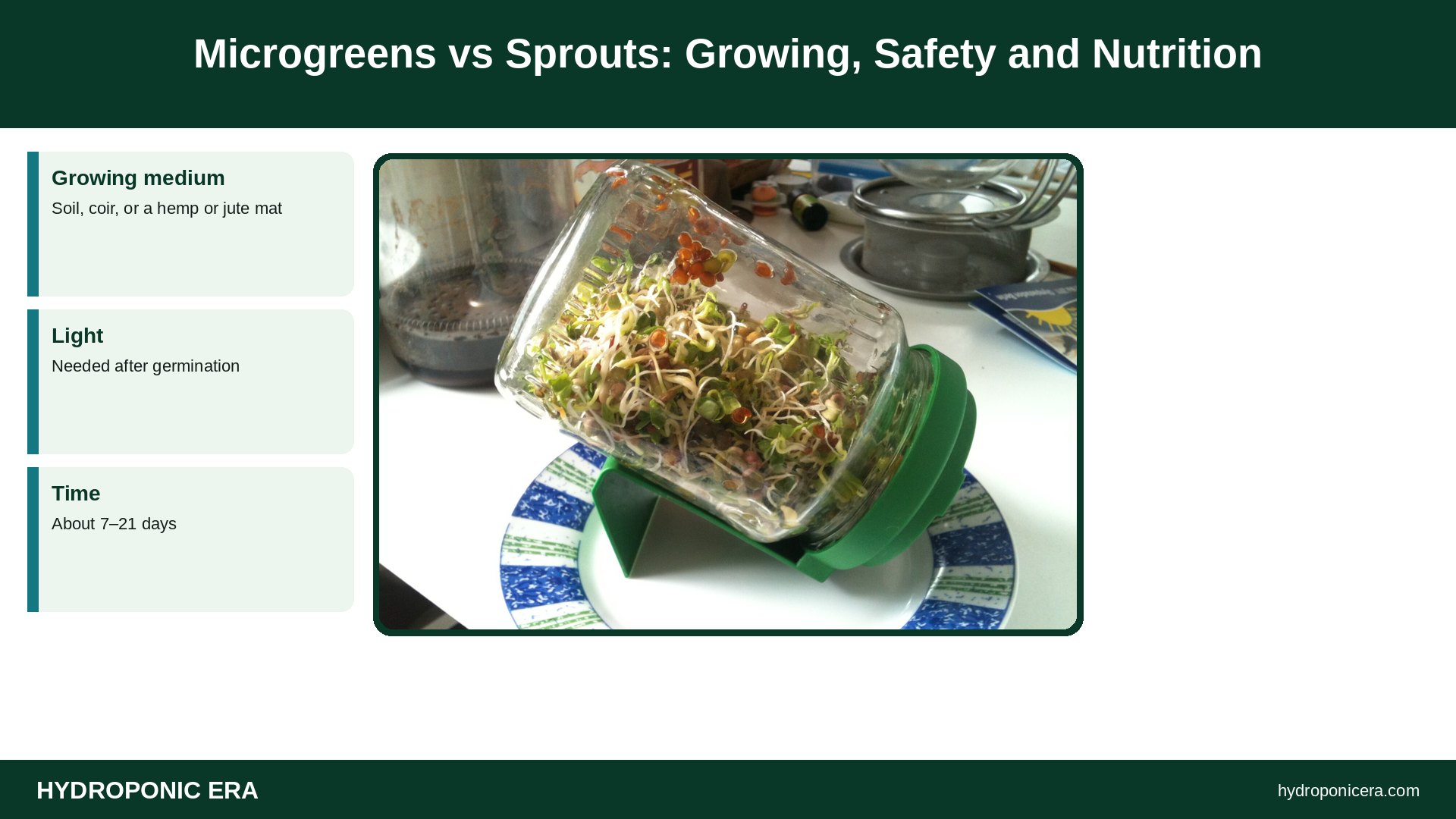
What Are Sprouts?
Sprouts are seeds that have just germinated. They’re soaked, rinsed and drained a few times a day, usually in a jar or sprouting tray, and eaten within days. Common sprouts include alfalfa, mung bean, broccoli, radish and clover. Because they’re eaten whole, the seed, root and shoot all end up on your plate. See how to grow sprouts in a jar.
What Are Microgreens?
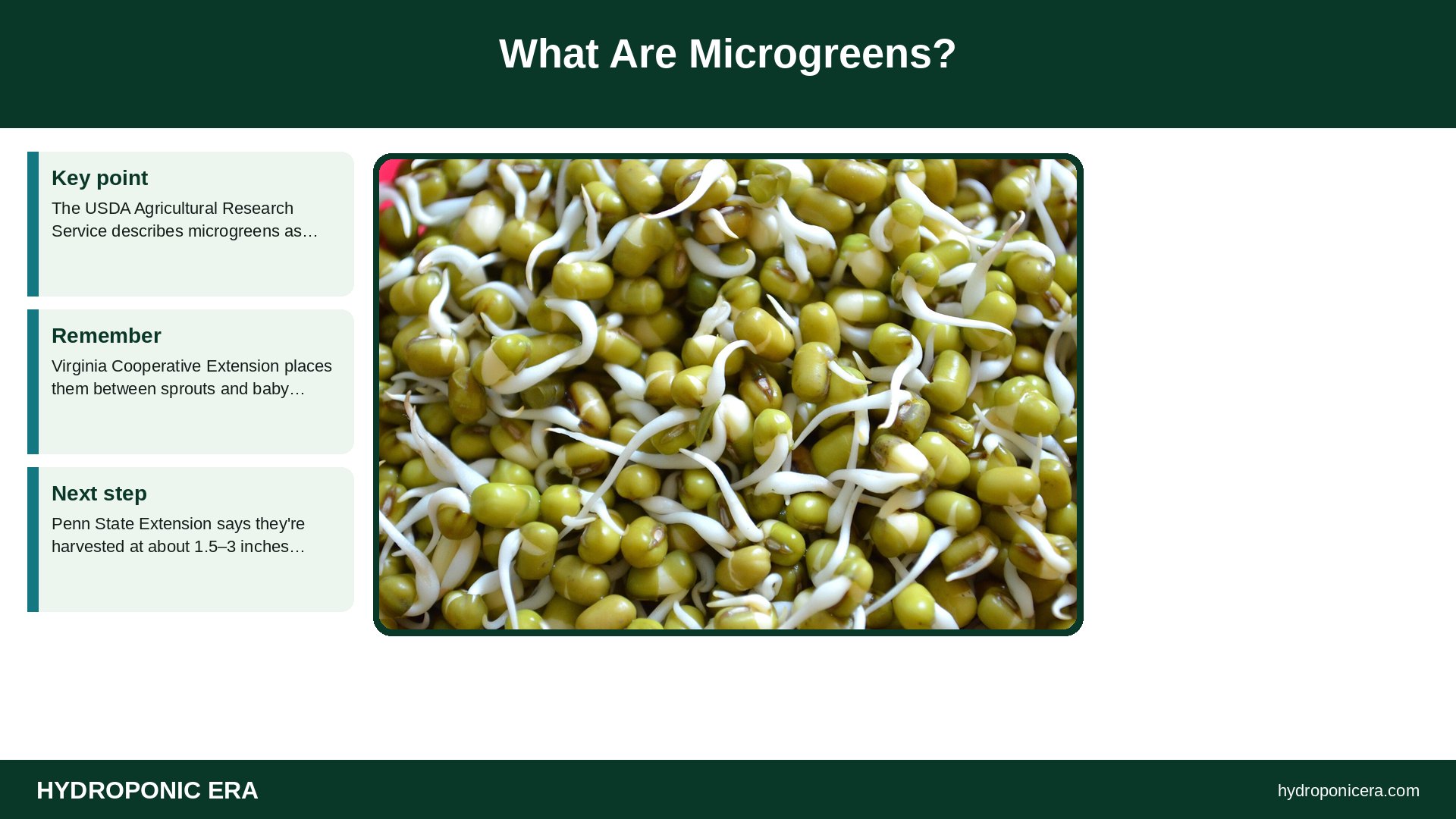
The USDA Agricultural Research Service describes microgreens as edible greens grown from vegetable and herb seeds and harvested without roots at the seedling stage, when they have two fully expanded cotyledons, or seed leaves. Virginia Cooperative Extension places them between sprouts and baby greens. Penn State Extension says they’re harvested at about 1.5–3 inches (4–8 cm) tall, 7–21 days after seeding. See growing microgreens hydroponically.
Microgreens vs Sprouts: Food Safety
This is the biggest difference. The FDA explains that sprouts are grown from seeds and beans in warm, humid conditions that are also ideal for bacteria. If just a few harmful bacteria are on the seed, they can grow to high levels during sprouting, even when you sprout at home under sanitary conditions. The FDA advises children, older adults, pregnant women and people with weakened immune systems to avoid raw or lightly cooked sprouts of any kind, including alfalfa, clover, radish, onion and mung bean. The CDC has investigated multiple outbreaks linked to raw sprouts, including a Salmonella outbreak linked to alfalfa sprouts in 2022.
Microgreens grow in drier conditions with light and airflow, and the root and seed are left behind at harvest. That lowers risk but doesn’t remove it. Use clean trays, drinking-quality water, seed sold for microgreens or sprouting, and wash the greens before eating, as Penn State recommends. See home food safety.
Microgreens vs Sprouts: Nutrition
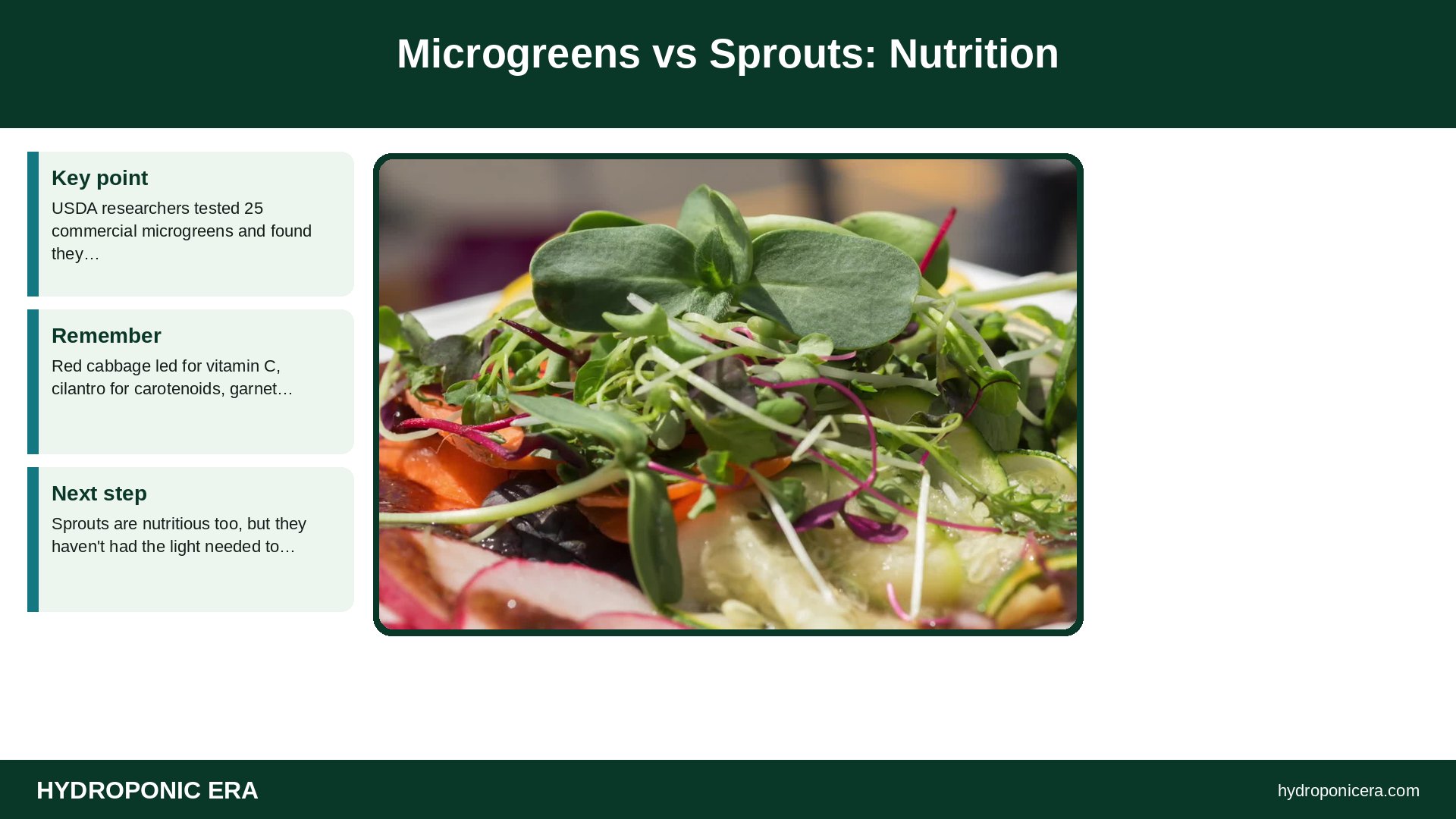
USDA researchers tested 25 commercial microgreens and found they generally contained about five times more vitamins and carotenoids than mature leaves of the same plants (Xiao et al., 2012). Red cabbage led for vitamin C, cilantro for carotenoids, garnet amaranth for vitamin K and green daikon radish for vitamin E. Sprouts are nutritious too, but they haven’t had the light needed to build much chlorophyll and carotenoids. Penn State notes plants produce more antioxidants in response to sunlight. Direct comparisons depend on the crop, so the fair summary is that microgreens give you more leafy, light-driven nutrients, while sprouts give you the nutrition of a germinating seed.
Microgreens vs Sprouts: Flavor and Use
- Sprouts: mild, juicy and crunchy. Good in stir-fries and cooked dishes, which also makes them safer.
- Microgreens: strong flavors, from spicy radish and mustard to nutty sunflower and sweet pea. Great raw on salads, sandwiches, tacos and soups.
Microgreens vs Sprouts: Cost and Effort
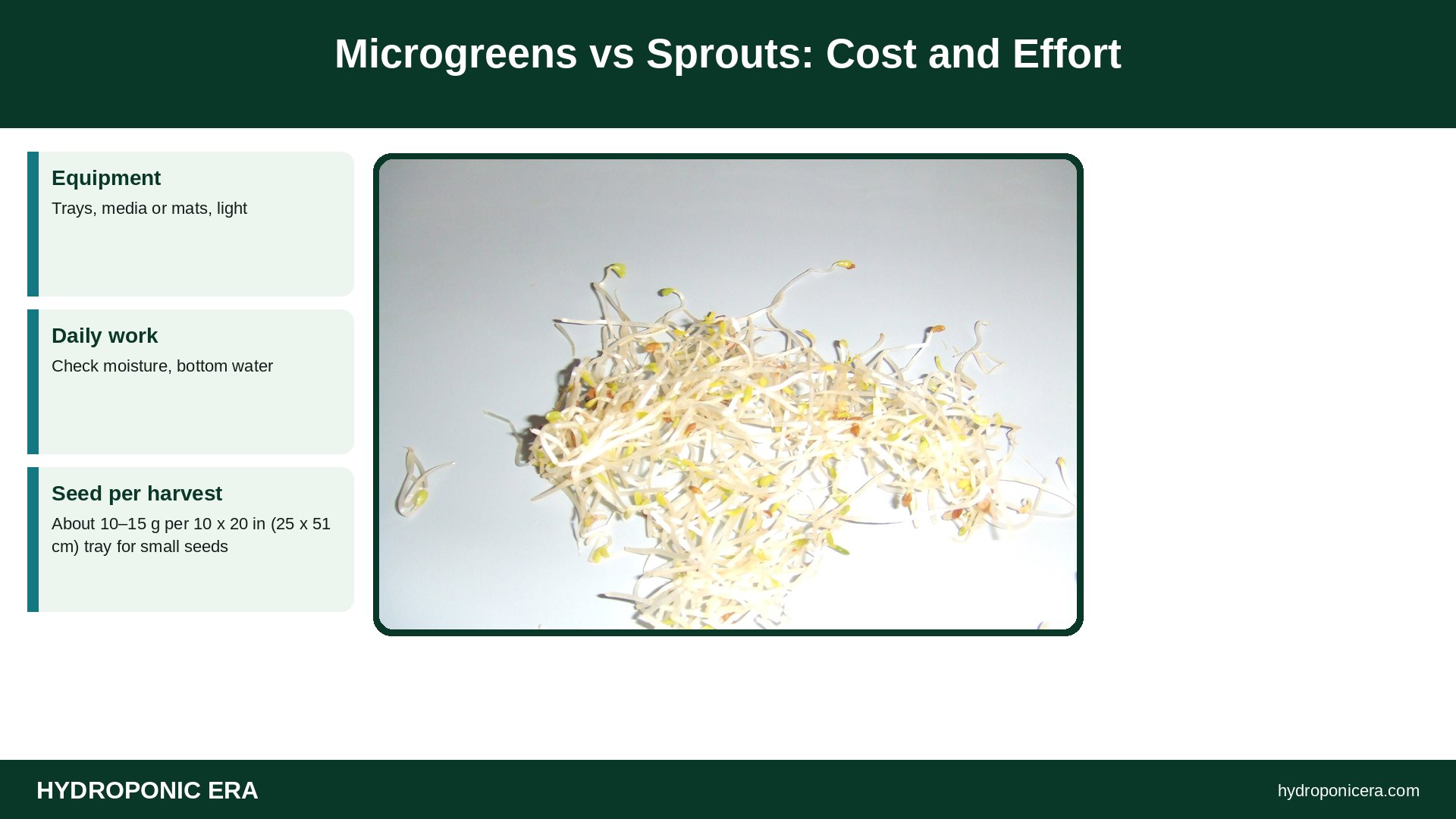
| Factor | Sprouts | Microgreens |
|---|---|---|
| Equipment | Jar, mesh lid | Trays, media or mats, light |
| Daily work | Rinse 2–3 times a day | Check moisture, bottom water |
| Seed per harvest | Small amounts | About 10–15 g per 10 x 20 in (25 x 51 cm) tray for small seeds |
| Space | A countertop | A shelf with a light or bright window |
See microgreen grow mats for a soil-free way to grow microgreens.
Which Seeds Work for Each?
Many seeds work both ways: broccoli, radish, alfalfa, mustard and clover. Mung beans and lentils are mostly grown as sprouts. Herbs like basil and cilantro are grown as microgreens, since they need time and light to develop flavor. Buy seed labeled for sprouting or microgreens; Penn State warns against pesticide-treated seed because the seed coat can stay on the seedling.
How to Switch From Sprouts to Microgreens
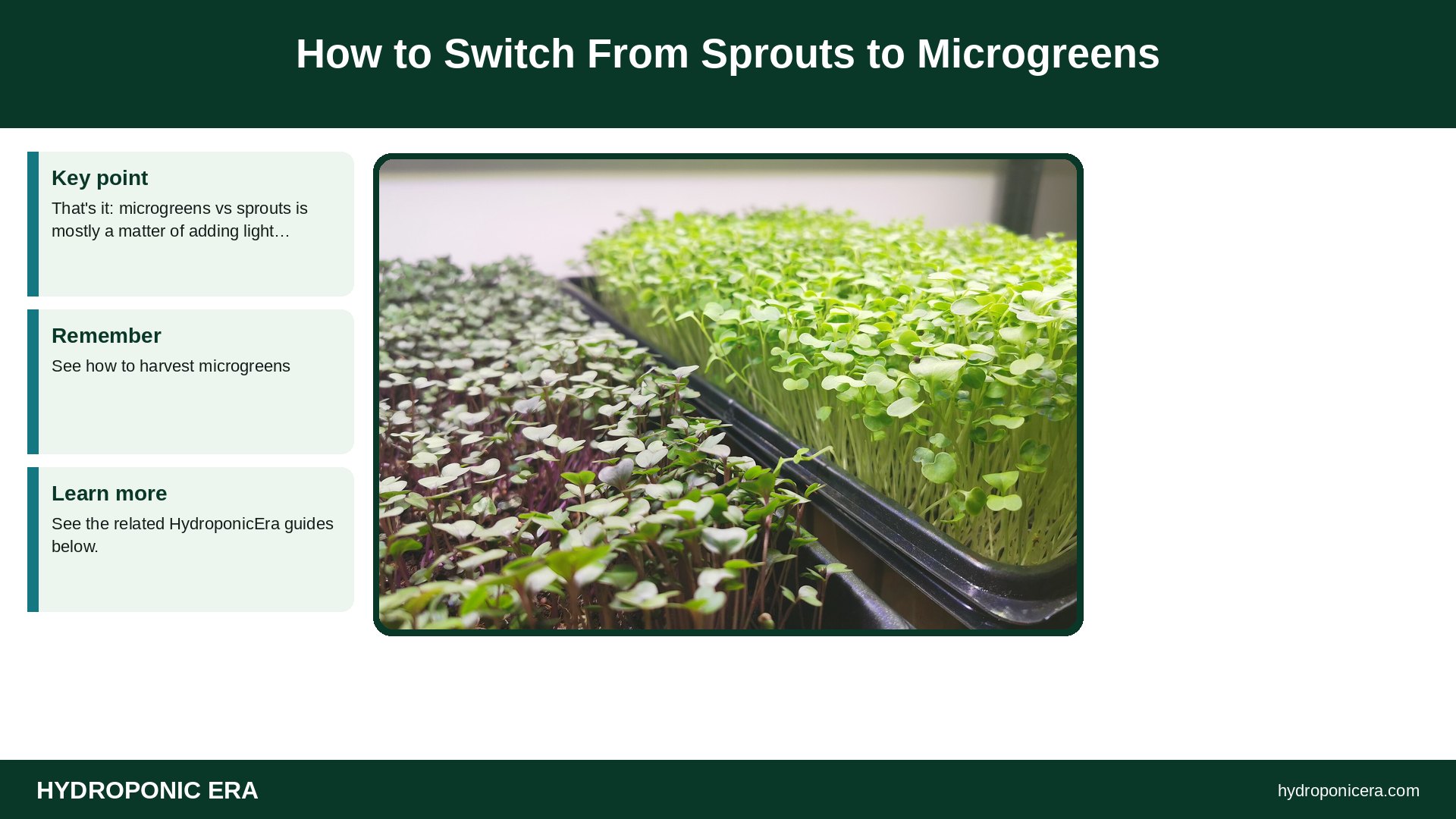
- Use the same seed, such as broccoli or radish.
- Sow it on a moist mat or coir in a tray with drainage.
- Keep it dark and covered for 2–3 days.
- Give 16–18 hours of light until harvest.
- Cut above the media at 1.5–3 inches (4–8 cm).
That’s it: microgreens vs sprouts is mostly a matter of adding light and a few more days. See how to harvest microgreens.
Microgreens vs Sprouts at a Glance: Which Should You Grow?
- Pick sprouts if you want the fastest crop with no light and plan to cook them.
- Pick microgreens if you want raw greens for salads and garnishes, more flavor and color, and lower risk.
- Grow both if you like variety: a jar of mung bean sprouts for stir-fries and a tray of radish microgreens for sandwiches.
In the microgreens vs sprouts choice, safety often decides it for families with young children, pregnant women or older adults. The FDA’s advice is specific to raw sprouts, and cooking sprouts thoroughly reduces the risk, as the CDC notes. Microgreens are usually eaten raw, so clean growing and washing before eating still matter.
Shelf Life: Microgreens vs Sprouts
Both are perishable. Penn State reports that microgreens stored at 41°F (5°C) in the dark can last 10–14 days, compared with 2–4 days at room temperature. Keep sprouts refrigerated at 40°F (4°C) or below, as the FDA advises for fresh produce, and use them within a few days. Throw out either one if it smells sour or looks slimy.
FAQs
Are microgreens safer than sprouts?
Generally yes, because they grow in drier conditions and are cut above the root.
Can I eat sprouts raw?
Many people do, but the FDA advises higher-risk groups to avoid raw sprouts.
Are microgreens more nutritious than sprouts?
Microgreens usually develop more vitamins and pigments that need light.
Can the same seeds be used for both?
Yes, for broccoli, radish, alfalfa and others.
Do sprouts need light?
No; they’re grown in the dark or indirect light.
Should I wash microgreens?
Yes, right before eating, to keep shelf life longer.
Sources
- US Food and Drug Administration — Selecting and Serving Produce Safely
- Centers for Disease Control and Prevention — Salmonella Outbreak Linked to Alfalfa Sprouts
- USDA Agricultural Research Service — Specialty Greens Pack a Nutritional Punch
- Xiao, Lester et al. (2012) — Assessment of Vitamin and Carotenoid Concentrations of Emerging Food Products: Edible Microgreens
- Penn State Extension — Growing Microgreens
- Virginia Cooperative Extension — Introduction to Microgreen Production
- Photo credits (Wikimedia Commons, edited with titles): Growing bean sprouts by User:tlcoles (CC BY-SA 3.0); Mung bean sprouts, close-up by pics_pd (CC0); 20160617-AMS-LSC-9000 (61-sec.) (27334710733) by U.S. Department of Agriculture (Public domain); Medicago sativa (alfalfa) by No machine-readable author provided. Hans B.~commonswiki assumed (based on copyr (Public domain); Mikrolistki – brokuł i rzodkiewka na tacach plastikowych by Teogenesis (CC BY-SA 4.0)