
What are pelleted seeds and how do you sow them? Pelleted seeds are small or irregular seeds coated in inert clay-like material so each is uniform, easy to handle. Sow one per plug, water once to split the coating, then keep media evenly moist, never soggy. Johnny’s recommends using pelleted seeds within one year and storing them cool and dry.
Key takeaway: Pelleted seeds make singulating tiny seeds easy but need steady moisture, good air and fresh stock.
| Factor | Pelleted | Raw | Source |
|---|---|---|---|
| Handling | Uniform, round, easy to see | Tiny, irregular, hard to space | Johnny’s, UC ANR |
| Thinning | Little or none | Often heavy | UC ANR |
| Moisture need | Consistent, moderate, never dry | Moderate | Johnny’s |
| Shelf life | Use within about 1 year | Often longer | Johnny’s |
| Cost | Usually higher | Lower | UC ANR |
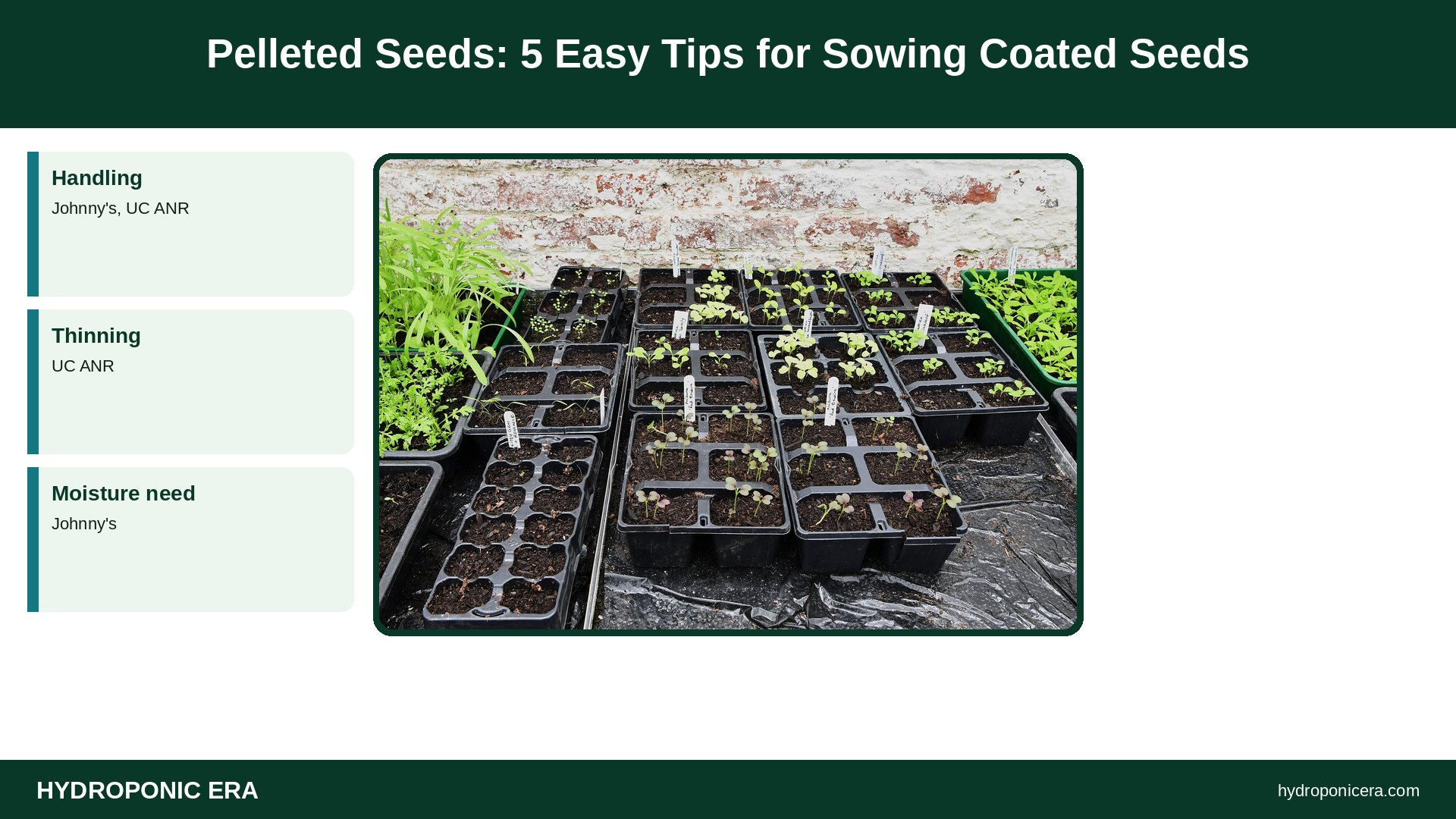
What Are Pelleted Seeds Made Of?
Inert coating material. Johnny’s Selected Seeds says pelleting coats small or irregular seeds with inert materials by tumbling them while gradually adding moisture, then drying them. Cornell seed scientists Collins Bugingo and Alan Taylor list fillers such as talc, kaolin clay, limestone, diatomaceous earth and perlite fines, and say a pellet can weigh 5 to 10 times the bare seed.
Why Use Seed Pellets in Hydroponics?
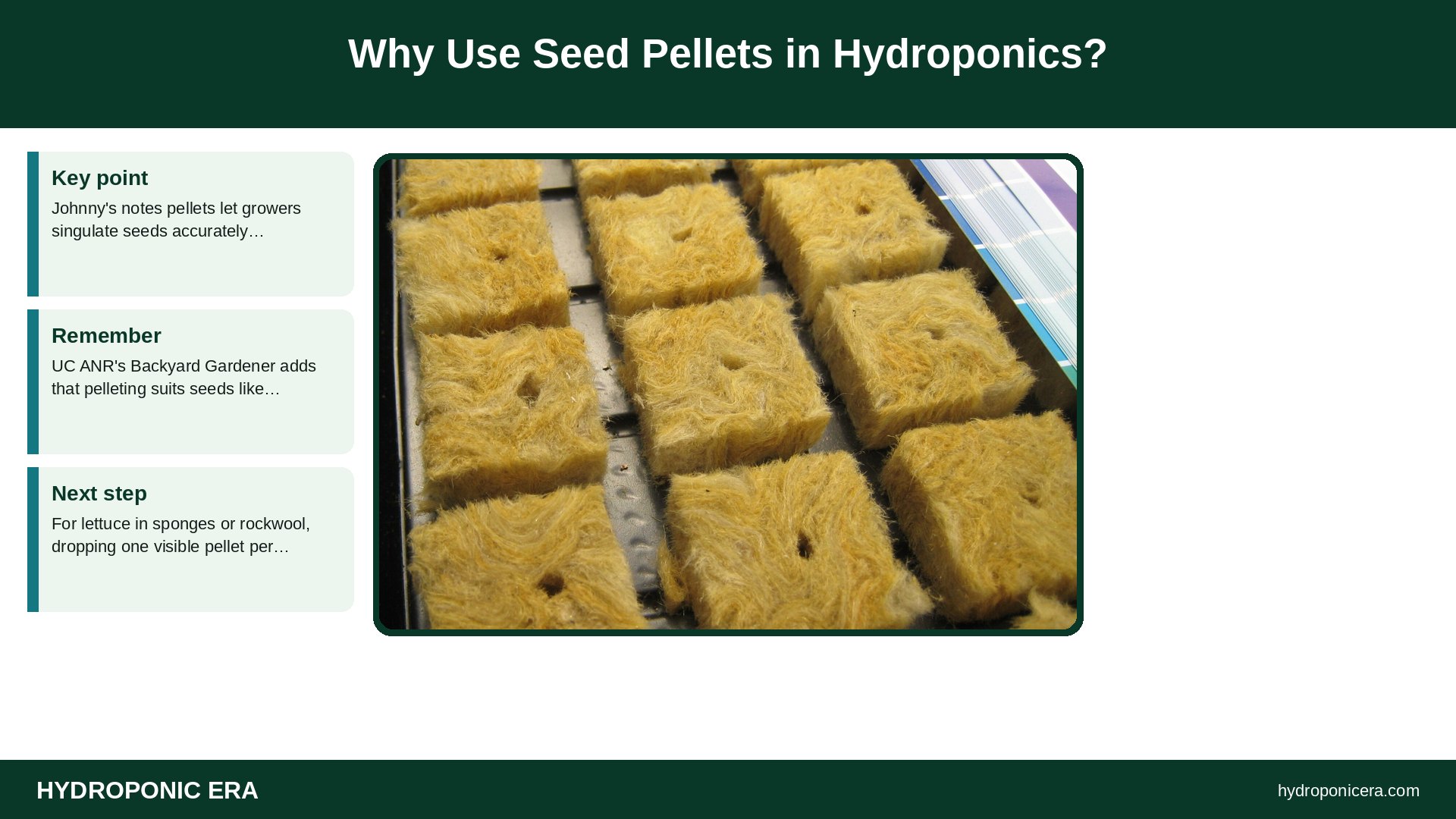
One seed per plug. Johnny’s notes pellets let growers singulate seeds accurately, cutting seed waste and thinning, and they are less likely to jam mechanical seeders. UC ANR’s Backyard Gardener adds that pelleting suits seeds like petunias that are very hard to sow otherwise. For lettuce in sponges or rockwool, dropping one visible pellet per cube is simple.
See our guide to rockwool for hydroponics for cube prep.
How Do You Sow Pelleted Seeds?
Moisten, place, water in. Johnny’s says an initial watering splits or dissolves the pellet. After that, the medium must not dry out before germination finishes, or the pellet may only partly split and stunt or kill the seedling. PanAmerican Seed advises watering in, then holding steady moisture until the coating fully breaks down.
- Pre-wet plugs or cubes to field moisture.
- Place one pellet on each plug.
- Water gently to split the coating.
- Cover with a humidity dome.
- Check moisture daily until sprouts appear.
Can Seed Pellets Get Too Wet?
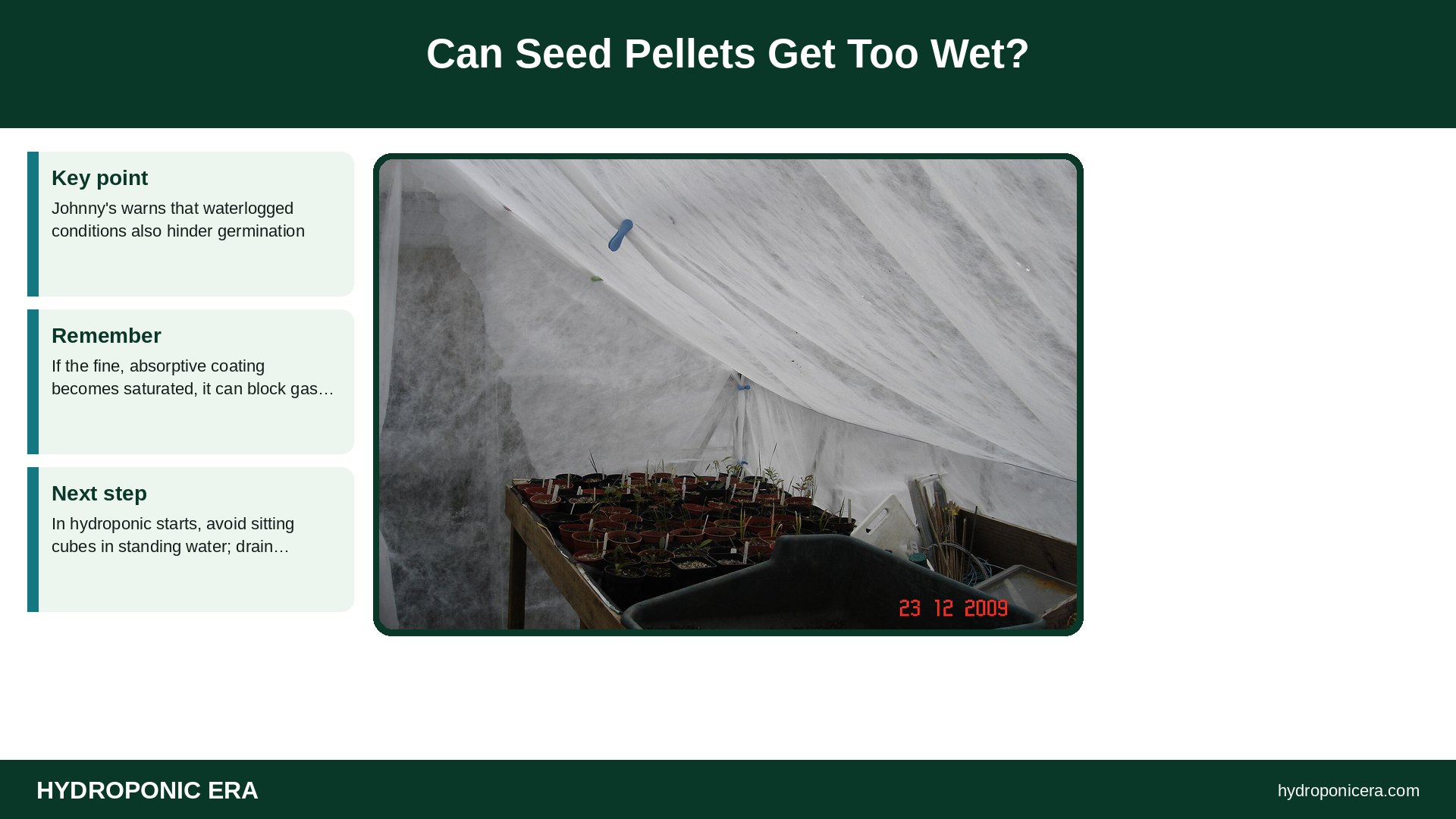
Yes. Johnny’s warns that waterlogged conditions also hinder germination. If the fine, absorptive coating becomes saturated, it can block gas exchange the embryo needs to survive. In hydroponic starts, avoid sitting cubes in standing water; drain excess so the plug is moist but holds air.
If sprouts never appear, use our guide to hydroponic seeds not germinating.
Do Pelleted Seeds Germinate Slower?
Sometimes. UC ANR’s Backyard Gardener found pelleted seeds took a little longer to germinate than regular seeds, though carrots came up evenly and beets emerged as single plants instead of clusters. Cornell warns against excessive build-up on tiny seeds, which can impair emergence. Gentle bottom heat can help keep germination moving.
Our guide to seedling heat mats and humidity domes covers the setup.
How Long Do Pelleted Seeds Last?
About one year. Johnny’s says pelleting may shorten shelf life and recommends using it within a year of purchase. UC ANR also advises planting them fresh. Cornell explains coated seed should be dried to equilibrium with about 40% relative humidity for storage, and recommends storing it cool and dry.
How Should You Store Seed Pellets?
Cool, dark, dry and airtight. Johnny’s suggests an airtight container if you refrigerate seed, to buffer humidity swings. PanAmerican Seed cites James’ rule: keep storage temperature in °F plus relative humidity in percent below 100. Above 80% humidity and 100°F (38°C), its wax multi-pellets can soften.
Which Crops Come as Pelleted Seeds?
Mostly small or irregular seeds. Cornell lists onion, carrot and many flowers as typical pelleting crops. Johnny’s mentions onions, beets, carrots, parsnips and lettuce, plus some flowers, and notes even spacing favors more uniform roots in root and bulb crops. UC ANR adds petunias, whose dust-like seed is very hard to sow without a coating.
How Is Pelleting Different From Film Coating?
Pelleting adds far more material. Cornell describes three coating levels: film coating is a thin polymer layer with under 2% weight gain, encrusting adds moderate build-up for uniform size and shape, and pelleting creates a round coating that can weigh 5 to 10 times the seed. Each level can also carry seed treatments.
Are Seed Pellets Worth the Extra Cost?
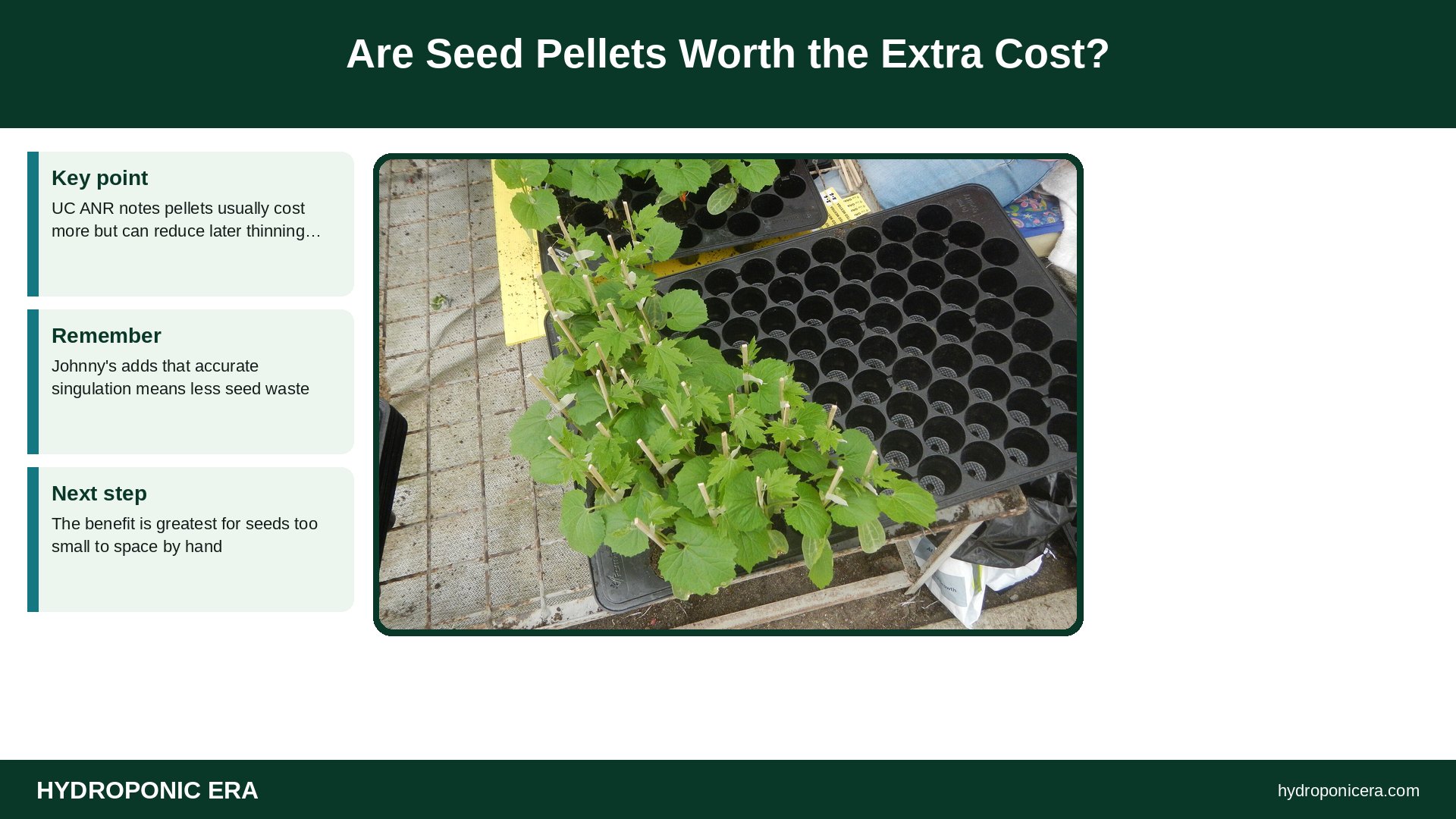
Often, for tiny seeds. UC ANR notes pellets usually cost more but can reduce later thinning, and they conserve moisture and are less likely to wash away. Johnny’s adds that accurate singulation means less seed waste. The benefit is greatest for seeds too small to space by hand.
FAQ About Pelleted Seeds
Are pellets chemically treated?
UC ANR notes many are not, but some coatings carry fungicides; check the label.
Can I pellet seeds at home?
Cornell describes rotary pan coaters and controlled drying, which are hard to match at home.
Are pellets organic?
Johnny’s sells certified organic seed with NOP-compliant pelleting.
Do pellets need light?
Follow the crop’s own germination needs once the coating splits.
Where can I start seeds?
See our hydroponic starter sponges guide.
Sources
- Johnny’s Selected Seeds — About Pelleted Seeds
- University of California ANR — Sowing Pelleted Seeds, The Backyard Gardener
- Cornell University, Bugingo and Taylor — Seed Coating Technologies: Practical Guidance
- PanAmerican Seed — Best Practices for Precision Multi-Pellets (PDF)
- Photo credits (Wikimedia Commons, edited with titles): Temple Sowerby, Acorn Bank, Mizuna and lettuce seedlings – geograph.org.uk – 7625183 by Michael Garlick (CC BY-SA 2.0); Rockwool cubes-inlay PNr°0091 by D-Kuru (CC BY-SA 3.0 at); Fleece lined greenhouse potting tray and seed pots – Flickr – peganum by peganum from Small Dole, England (CC BY-SA 2.0); 5670Farm Ready Seedling Facility East West Seed Philippines 20 by Judgefloro (CC0)