
How do you get rid of sooty mold on plants? Control the sap-sucking insects first, then wash the leaves. UC IPM says the fungus feeds on honeydew from aphids, whiteflies, scales and mealybugs, and fades once honeydew stops. Rinse leaves with a strong stream of water or mild soapy water, and manage the ants that protect those insects.
Key takeaway: Sooty mold is a symptom of a honeydew-producing pest, so the fix is pest control plus washing.
| Step | What to do | Source |
|---|---|---|
| 1. Confirm | Black, wipeable coating over sticky honeydew | UC IPM, UW-Extension |
| 2. Find the pest | Aphids, whiteflies, scales, mealybugs, psyllids | UC IPM, UMD |
| 3. Reduce the pest | Water blasts, natural enemies, least-toxic sprays | UC IPM, UMD |
| 4. Manage ants | Barriers or baits; ants guard honeydew makers | UC IPM, UMD |
| 5. Wash leaves | Strong water stream or mild soap and water | UC IPM |
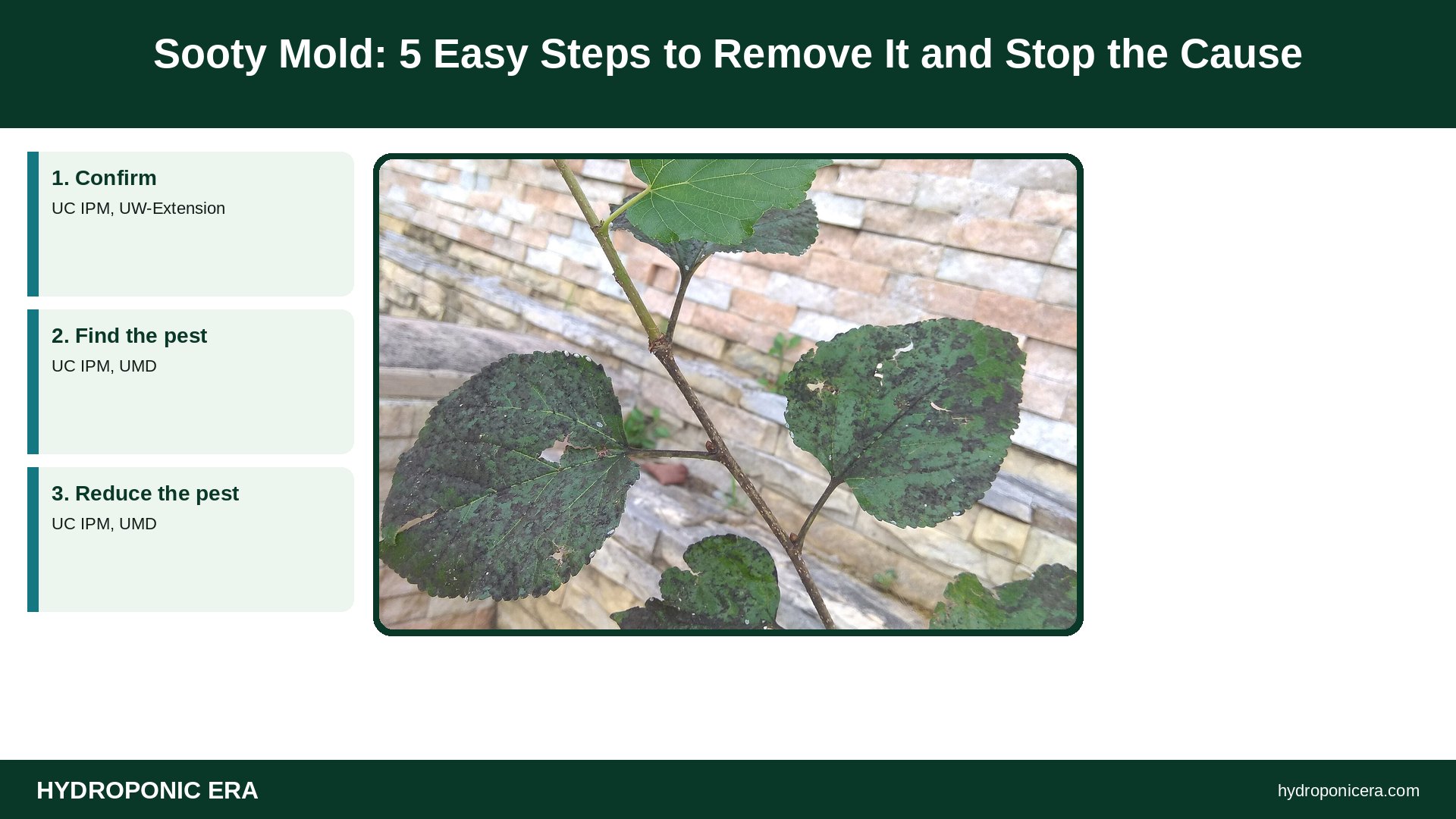
What Is Sooty Mold?
A black fungal coating that lives on honeydew, not on the plant itself. UC IPM says the dark threadlike growth resembles soot and is caused mainly by Capnodium, Fumago and Scorias fungi. University of Maryland Extension stresses that these fungi are not plant parasites. You can usually scrape it off with a finger, notes UW-Extension.
What Causes Sooty Mold on Plants?
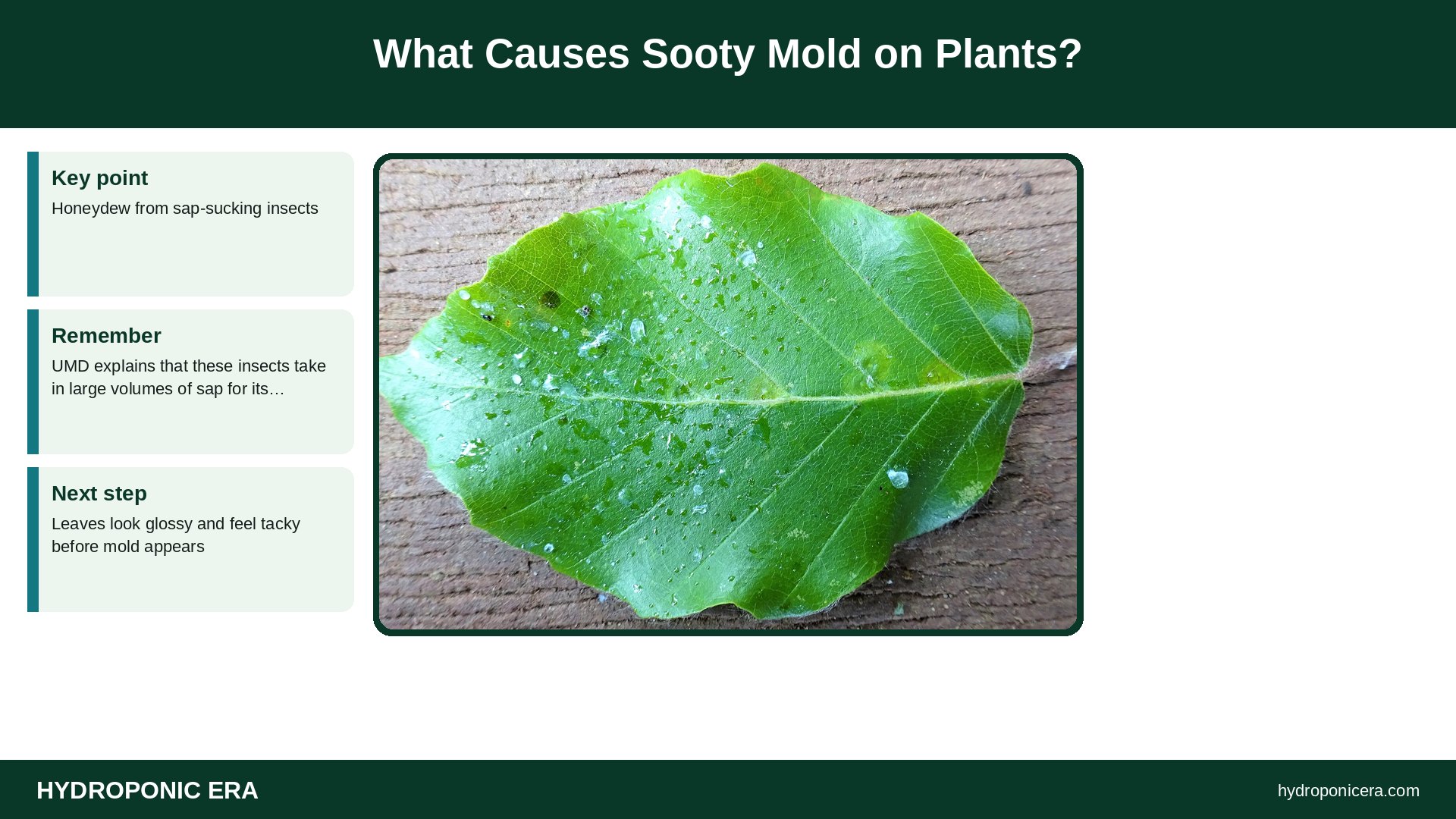
Honeydew from sap-sucking insects. UMD explains that these insects take in large volumes of sap for its dilute protein and excrete the surplus sugar water as sticky honeydew. Leaves look glossy and feel tacky before mold appears. UC IPM lists aphids, leafhoppers, mealybugs, psyllids, soft scales and whiteflies as common sources.
UW-Extension adds that these insects excrete honeydew in volumes many times their body weight each day, and its carbohydrate content may exceed 80 percent, which explains how fast the black layer can build.
Identify the culprit with our guides to aphids and mites and whiteflies.
Does Sooty Mold Hurt the Plant?
Indirectly. UC IPM says heavy coatings block sunlight, reduce photosynthesis and can stunt growth or cause early leaf drop. UW-Extension adds that it rarely injures plants on its own; the bigger damage usually comes from the heavy insect infestation. In greenhouses, mold on flowers lowers their market value.
Are Fruits and Vegetables With Sooty Mold Safe to Eat?
Yes, after washing. UC IPM states that coated fruits or vegetables are still edible and recommends washing the mold off with mild soap and warm water. University of Maryland Extension gives the same advice: simply wash off the residue before eating.
Why Do Ants Make the Problem Worse?
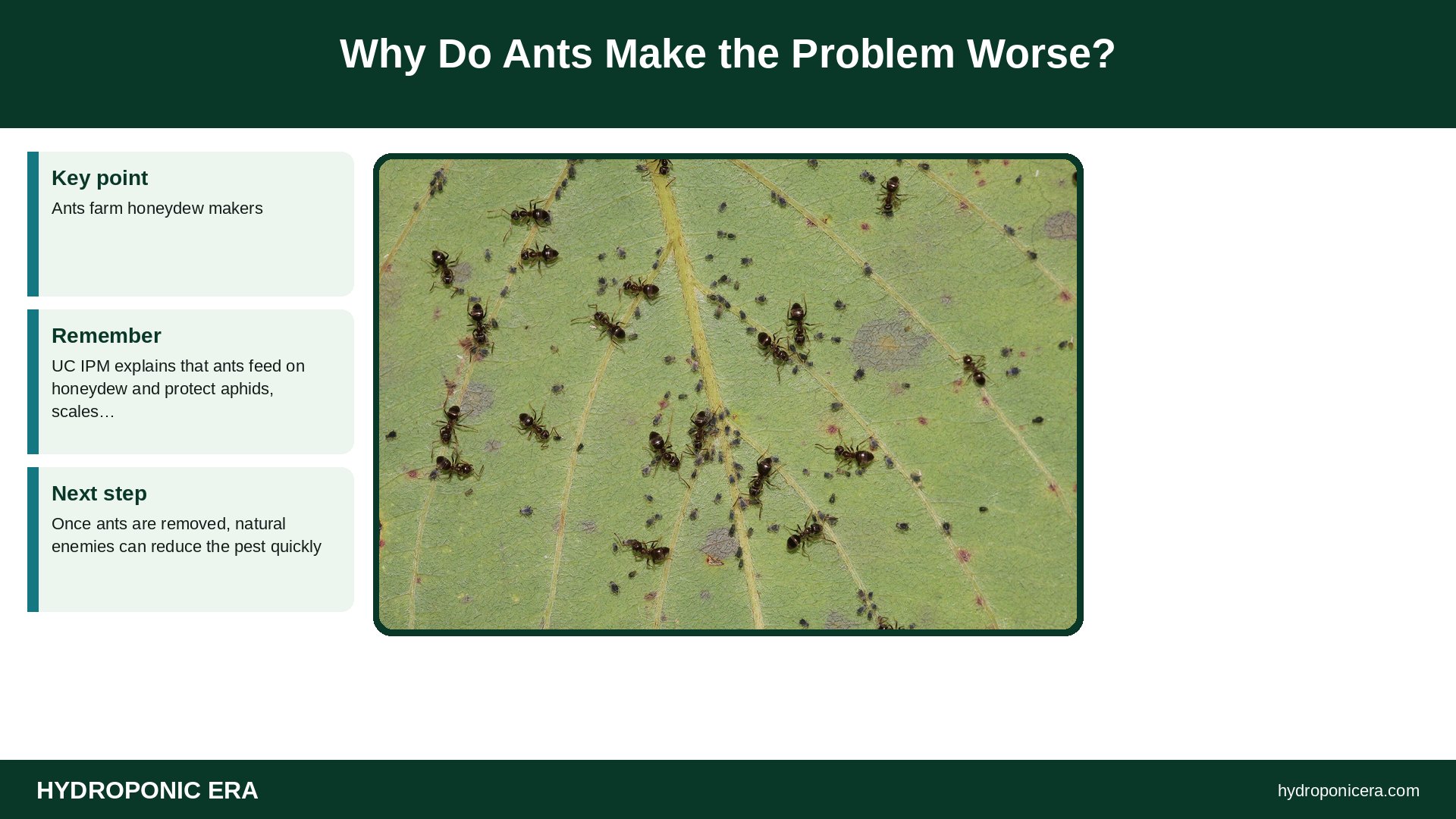
Ants farm honeydew makers. UC IPM explains that ants feed on honeydew and protect aphids, scales and mealybugs from predators and parasites. Once ants are removed, natural enemies can reduce the pest quickly. Outdoors, UC IPM suggests sticky trunk barriers, trimming limbs touching buildings, and ant bait stakes.
How Do You Remove Sooty Mold From Leaves?
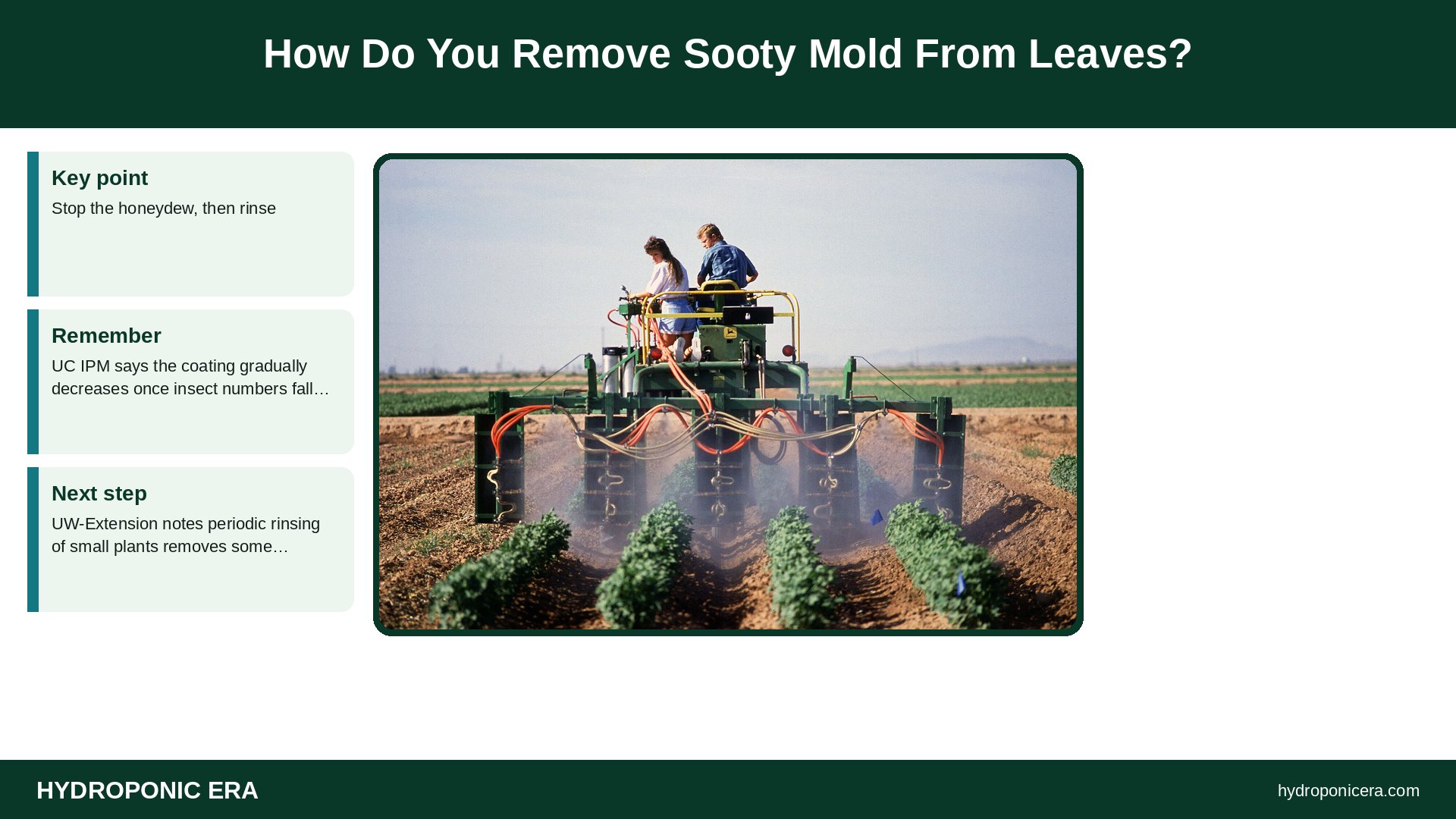
Stop the honeydew, then rinse. UC IPM says the coating gradually decreases once insect numbers fall and can be washed off with a strong stream of water or soap and water. UW-Extension notes periodic rinsing of small plants removes some insects and early mold, but washing after heavy buildup is less effective.
- Check new, tender growth for sucking insects.
- Knock pests off with a strong water spray.
- Prune heavily infested shoots.
- Treat remaining pests with a labeled least-toxic product.
- Wash leaves with water or mild soapy water.
- Keep checking weekly until honeydew stops.
For the spray step, see our guides to insecticidal soap and mealybugs and scale.
How Do You Stop Sooty Mold Coming Back?
Keep honeydew insects in check. UC IPM advises fertilizing and watering properly so plants stay healthy without excessive soft growth, which attracts sucking insects. UMD recommends using the least-toxic approach so beneficial insects such as lady beetles can manage the rest. Indoors, inspect new plants before bringing them near others.
Wisconsin specialists add that plants in very humid spaces, such as greenhouse foliage plants and orchids, may need frequent rinsing to clear honeydew before fungus forms. They also warn to identify insects before spraying, because some insects you see may be beneficials eating the pest, and careless spraying can make the problem worse.
FAQ About Sooty Mold
Is sooty mold harmful to people?
Extension sources say coated produce is edible after washing.
Will it go away on its own?
Yes, gradually, once honeydew production stops.
Can it grow on hydroponic plants?
Yes, wherever honeydew insects feed, indoors or out.
Does neem oil remove the black coating?
It targets pests; wash the mold off with water.
Is it the same as black spot?
No. This mold sits on the surface and wipes off.
Sources
- UC Statewide IPM Program — Pest Notes: Sooty Mold (Pub. 74108)
- University of Maryland Extension — Honeydew and Sooty Mold
- University of Wisconsin-Extension — Sooty Mold (A2637)
- Photo credits (Wikimedia Commons, edited with titles): Sooty mould on leaves of Morus nigra by Wee Hong (CC BY-SA 4.0); Aphid honeydew rain on a beech leaf by Rosser1954 (CC BY-SA 4.0); Black garden ants Lasius niger tending prob Aphis neilliae 3579 by ImagePerson (CC BY 4.0); K4817-4 (8497812386) by USDAgov (Public domain)