
How do you remove string algae from a pond? Remove string algae by raking or netting the mats out, and dispose of them away from the pond edge. Then cut the nutrients that feed it, add shade and circulation, and consider barley straw in late winter. Chemical algaecides work but need correct dosing, labels and sometimes permits.
Key takeaway: String algae, or filamentous algae, starts on the pond bottom in late winter and spring and forms floating mats by July. Rake it out, reduce nutrients, shade the water, aerate, add barley straw early and use copper only with care.
| Method | What it does | Caution |
|---|---|---|
| Raking or netting | Removes algae and nutrients | Labor-intensive, dispose of mats away from the pond |
| Barley straw | Helps prevent new growth | Does not kill existing algae, results inconsistent |
| Aeration | Helps bind phosphorus in sediment | Works better on planktonic algae |
| Dyes | Block sunlight early in the season | Use early, may need a permit |
| Copper algaecides | Kill existing algae | Toxic to some fish, test hardness, follow label |
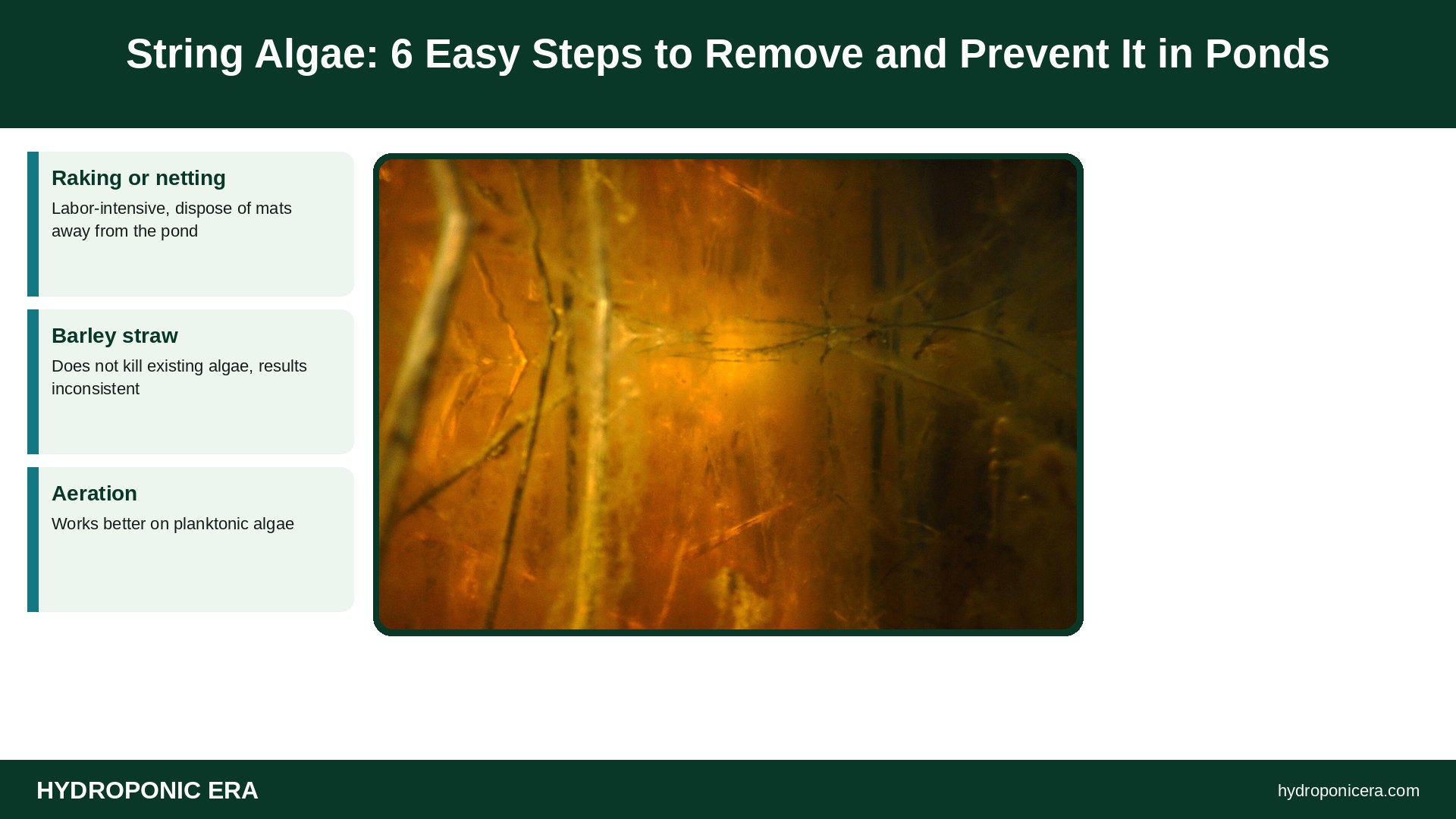
What Is String Algae?
String algae is a common name for filamentous algae, which form long, hairlike strands that grow from the pond bottom toward the surface. Penn State Extension says growth begins in winter and early spring, and by mid-summer the strands form mats that trap gases and float to the surface. They prefer warm, stagnant, nutrient-rich water.
Algae are part of every pond’s food web, but this kind often reach nuisance levels and can interfere with fishing and swimming.
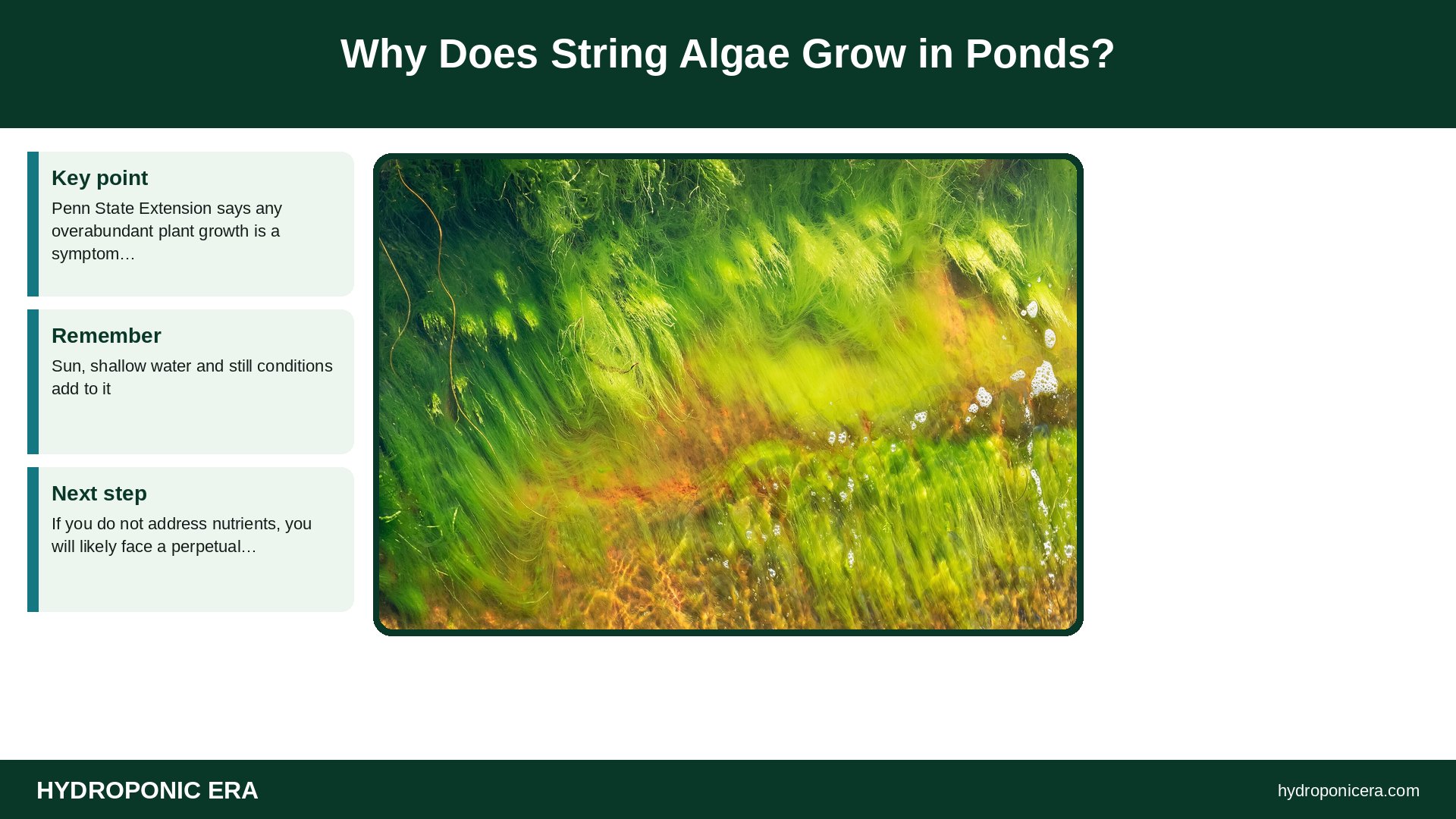
Why Does String Algae Grow in Ponds?
Penn State Extension says any overabundant plant growth is a symptom of excess nutrients, mainly phosphorus and nitrogen, from runoff, septic systems, lawns, barnyards and fertilizer. Sun, shallow water and still conditions add to it. If you do not address nutrients, you will likely face a perpetual need for control.
- Lawn fertilizer and clippings near the bank.
- Runoff from fields, barnyards and septic systems.
- Decaying leaves and fish waste.
- Warm, still, shallow water.
How Do You Remove String Algae by Hand?
- Use a pond rake, net or pole to pull the mats onto the bank.
- Let the water drain from the pile, then move it well away from the pond edge.
- Compost it, or bag it and put it in the trash.
- Repeat every week or two during the growing season.
- Remove loose fragments from the water.
Penn State notes that disposing of mats away from the pond edge prevents nutrients from reentering the water as they decay. Raking is labor-intensive, but it removes nutrients and can be very effective in small ponds.
Does Barley Straw Control String Algae?
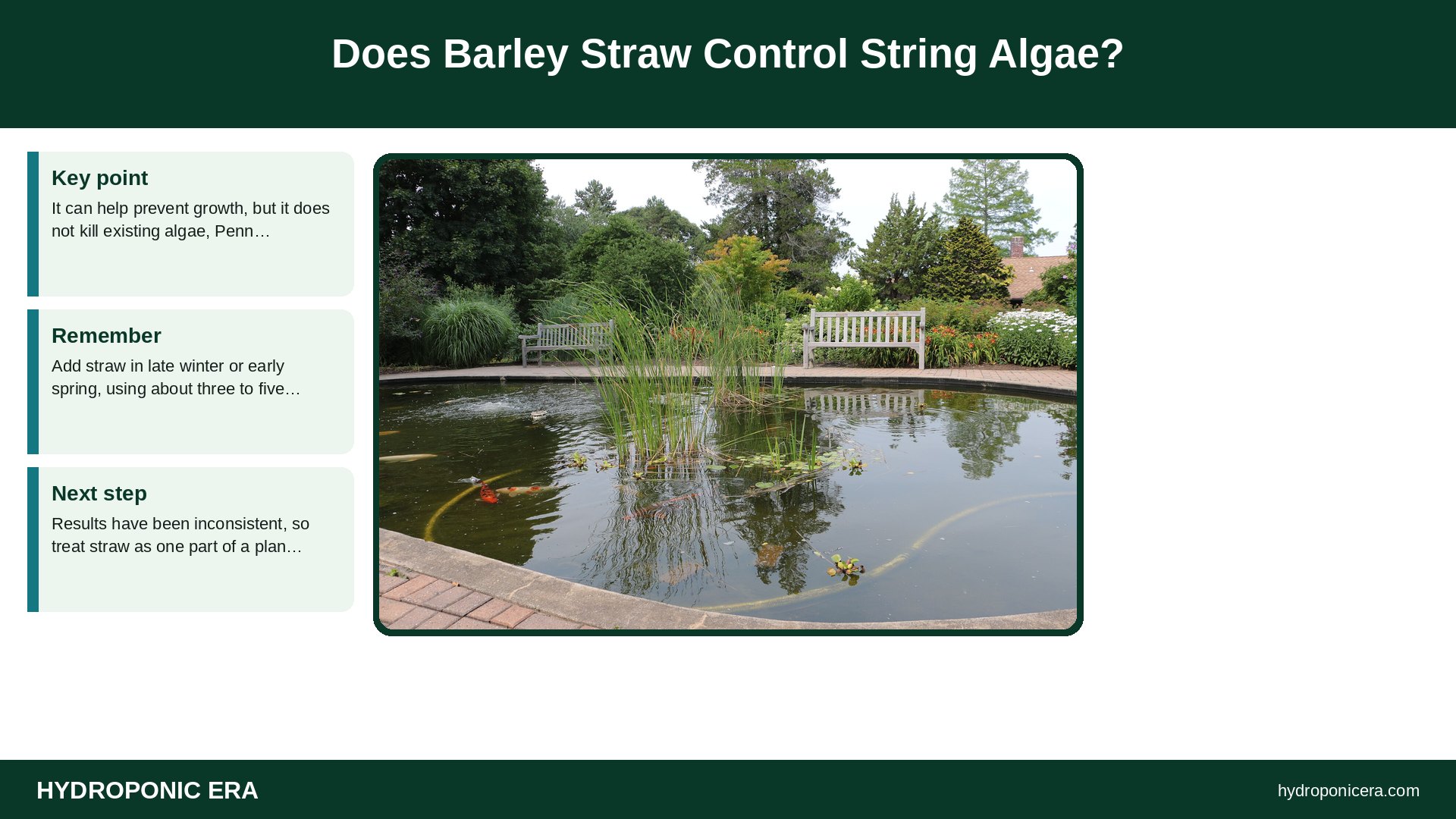
It can help prevent growth, but it does not kill existing algae, Penn State says. Add straw in late winter or early spring, using about three to five bales per surface acre, in loose bundles in wire or cloth near where water enters. Results have been inconsistent, so treat straw as one part of a plan, not a cure.
Does Aeration Help With String Algae?
A little. Penn State says adding oxygen to bottom layers can encourage phosphorus to bind in sediments, so less is available to algae. Aeration is generally better suited to planktonic algae than filamentous types, but it also protects fish from the low oxygen that follows algae die-offs. Our guide to fish farming for beginners covers oxygen basics.
Should You Use Copper or Other Algaecides on String Algae?
Use them carefully. Texas A&M AquaPlant rates copper sulfate and chelated copper as excellent on filamentous algae, but all copper compounds can be toxic to fish above label rates, and even at label rates in soft or acidic water. Test alkalinity or hardness first, follow the label exactly and check whether your state requires a permit. Penn State says copper and endothall are toxic to some fish, especially trout and carp.
Treat early, before large mats form, and treat only part of the pond at a time. Killing everything at once can cause oxygen depletion. Treat one-half or one-third of the pond, wait two weeks and aerate at night.
Can Dyes, Tilapia or Grass Carp Control String Algae?
Dyes color the water to block sunlight, so they work best early, when algae first appears on the bottom, Penn State says. Texas A&M AquaPlant notes that dyes do not feed the natural food chain and may suppress it. Tilapia eat filamentous algae but die below 55°F (13°C) and may be illegal to stock, so check with your county extension agent first. Grass carp do not find string algae palatable, per Penn State.
How Do You Cut Nutrients Feeding String Algae?
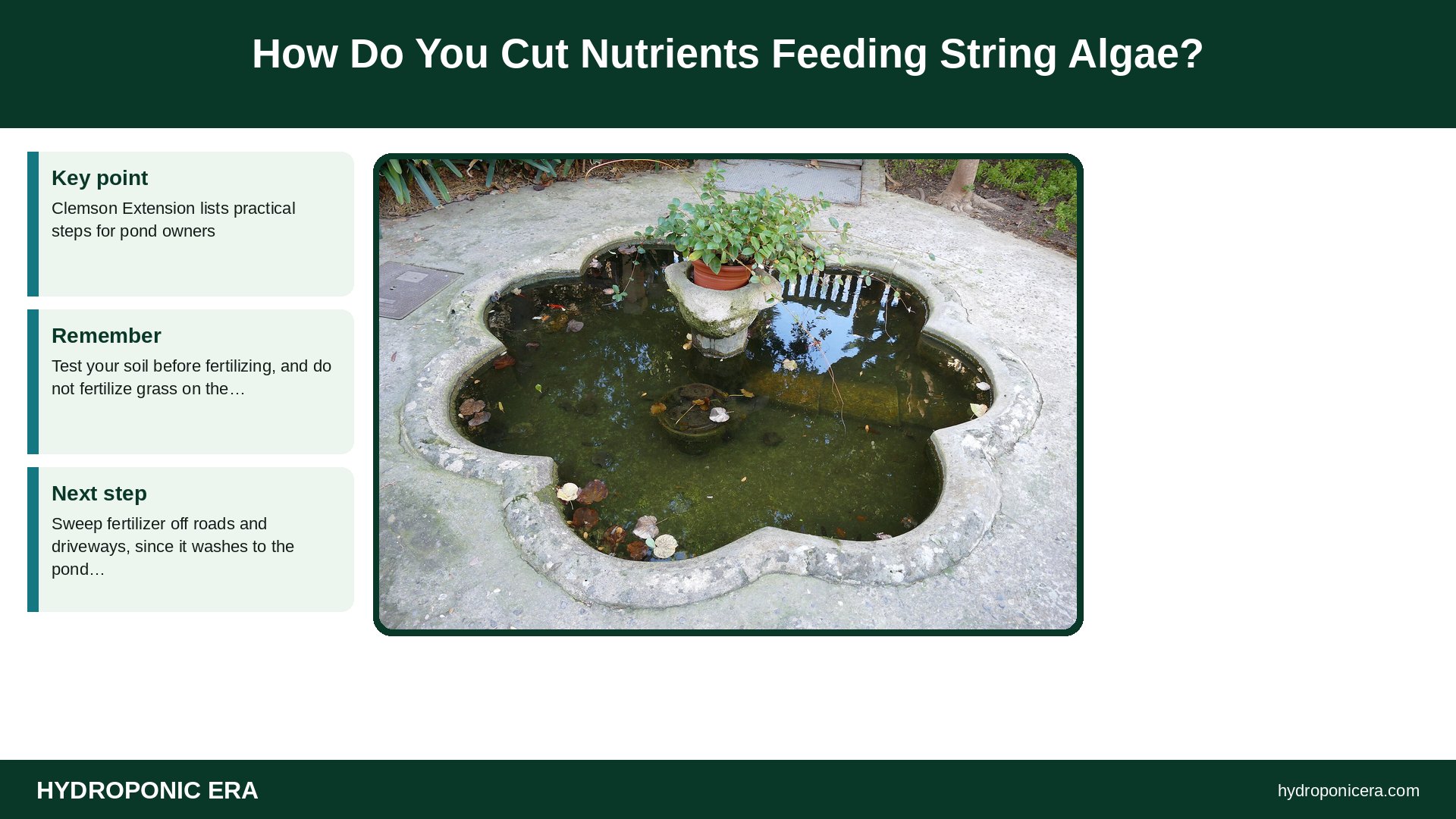
Clemson Extension lists practical steps for pond owners. Test your soil before fertilizing, and do not fertilize grass on the bank slope. Sweep fertilizer off roads and driveways, since it washes to the pond in the next storm. Do not feed fish, turtles, ducks or geese, and do not dump yard waste in the pond.
- Plant shoreline vegetation to absorb nutrients.
- Wash vehicles with phosphate-free soap or at a car wash.
- Prevent sediment from washing in from bare soil.
- Keep a vegetated buffer around the pond.
These steps reduce string algae over time, but they work slowly. Expect a season or two before you see a clear change, and keep raking in the meantime. Also see our water lettuce guide for the caution that floating plants can shade water but also become a problem themselves.
How Do You Prevent String Algae From Coming Back?
Cut nutrients first. Penn State recommends reducing fertilizer near the pond, maintaining septic systems, redirecting runoff and keeping vegetated buffer strips. Shade from water lilies can also limit light, but do not cover more than the amount recommended for your pond. Water additives are sold, but Penn State says results are inconsistent and costly on larger ponds.
FAQ About String Algae
Is string algae harmful?
It is part of the food web, but heavy mats can cause fish kills when they die and decay.
When does it start growing?
Winter and early spring on the pond bottom.
Can I use barley straw?
Yes, in late winter or early spring, as prevention.
Is copper safe?
Only if you follow the label. It is toxic to some fish.
Will it come back?
Yes, unless you lower nutrients.
Sources
- Penn State Extension — Filamentous algae
- Texas A&M AquaPlant — How to control filamentous algae
- Clemson Cooperative Extension — Aeration, circulation and fountains
- Photo credits (Wikimedia Commons, edited with titles): MareLambersart small pond Underwater03 by Lamiot (CC BY-SA 3.0); Cladophora glomerata in a wave at Govik 4 by W.carter (CC0); Deep Cut Gardens Koi Pond by FossilDS (CC0); Fountain with goldfish in Jardí del Bisbe 03 by Kritzolina (CC BY-SA 4.0)