
Is sulfur fungicide safe for hydroponic plants? Yes, if you follow the label and the heat and oil rules. Sulfur fungicide is one of the oldest and most effective preventive treatments for powdery mildew, but it must go on before infection, never near or above 90°F (32°C), and never within two weeks of an oil spray. Burning or vaporizing sulfur is not an EPA-approved use.
Key takeaway: Purdue Extension explains that sulfur stops fungal spores from germinating, which is why it only works as a preventive. Cornell’s vegetable program found sulfur at least as effective as chlorothalonil for powdery mildew in pumpkin trials, and better on leaf undersides because sulfur is volatile. Keep spray off your reservoir and out of the nutrient solution.
| Fact | What sources report | Source |
|---|---|---|
| How it works | Prevents fungal spores from germinating | Purdue |
| Timing | Effective only before disease appears | UC IPM; Purdue |
| Heat limit | Not near or above 90°F (32°C) | UC IPM |
| Heat limit (stricter) | Not when above 80°F (27°C) is expected | Purdue |
| Oil interval | 2 weeks (UC IPM) to 1 month (Purdue) | UC IPM; Purdue |
| Burners | No EPA-approved sulfur fumigation products | NPIC; Cornell |
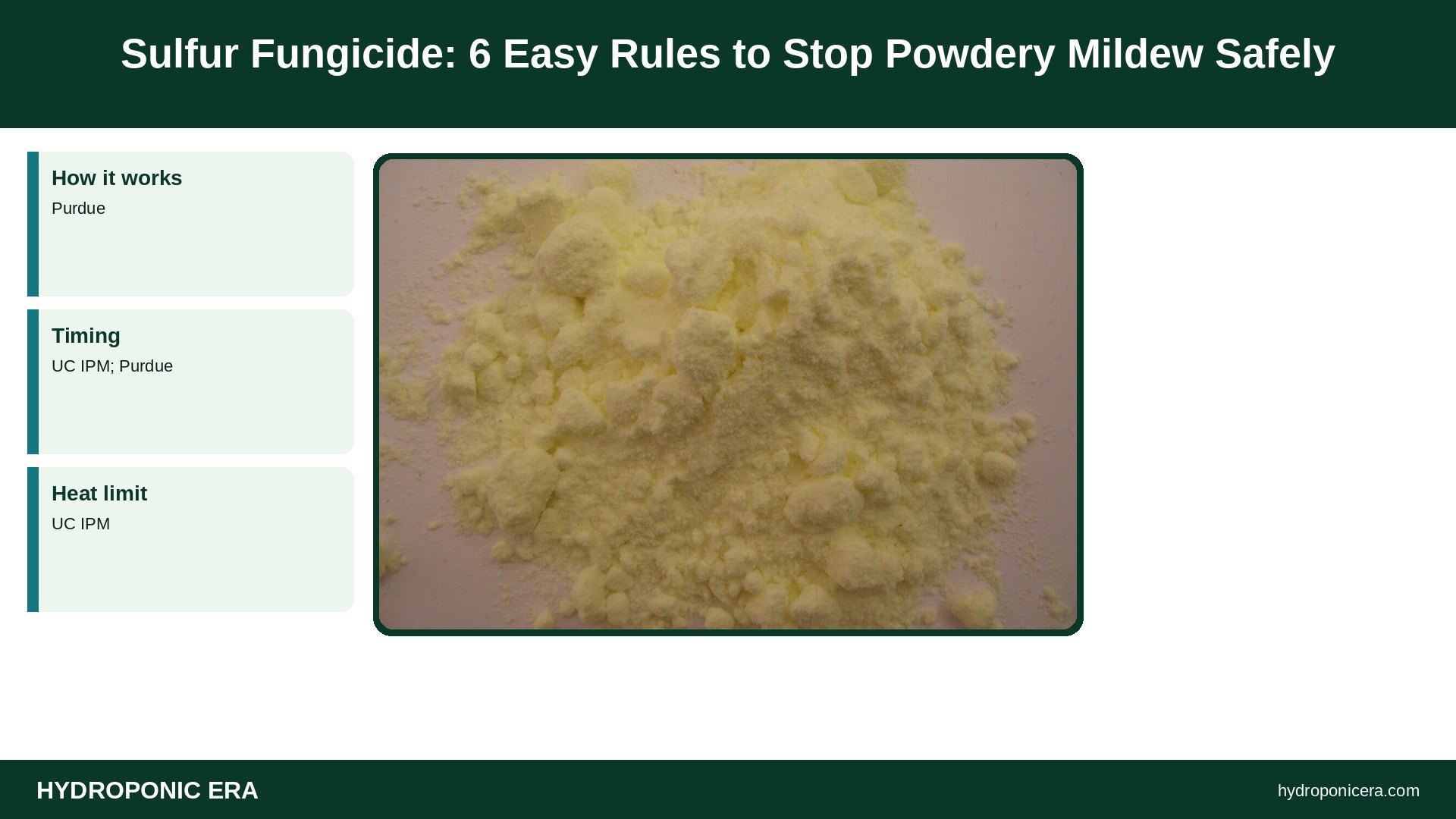
What Is Sulfur Fungicide?
Sulfur fungicide is elemental sulfur formulated to protect leaves from fungal disease. Purdue Extension says it can be bought as a dust, wettable powder or liquid, and is used against powdery mildew, rose black spot, rusts and other diseases. Cornell notes that sulfur products are labeled primarily for powdery mildew, plus some rusts and mites.
UC IPM says sulfur has been used to manage powdery mildew for centuries, and recommends products formulated with surfactants that help it spread across the leaf.
How Does Sulfur Fungicide Work?
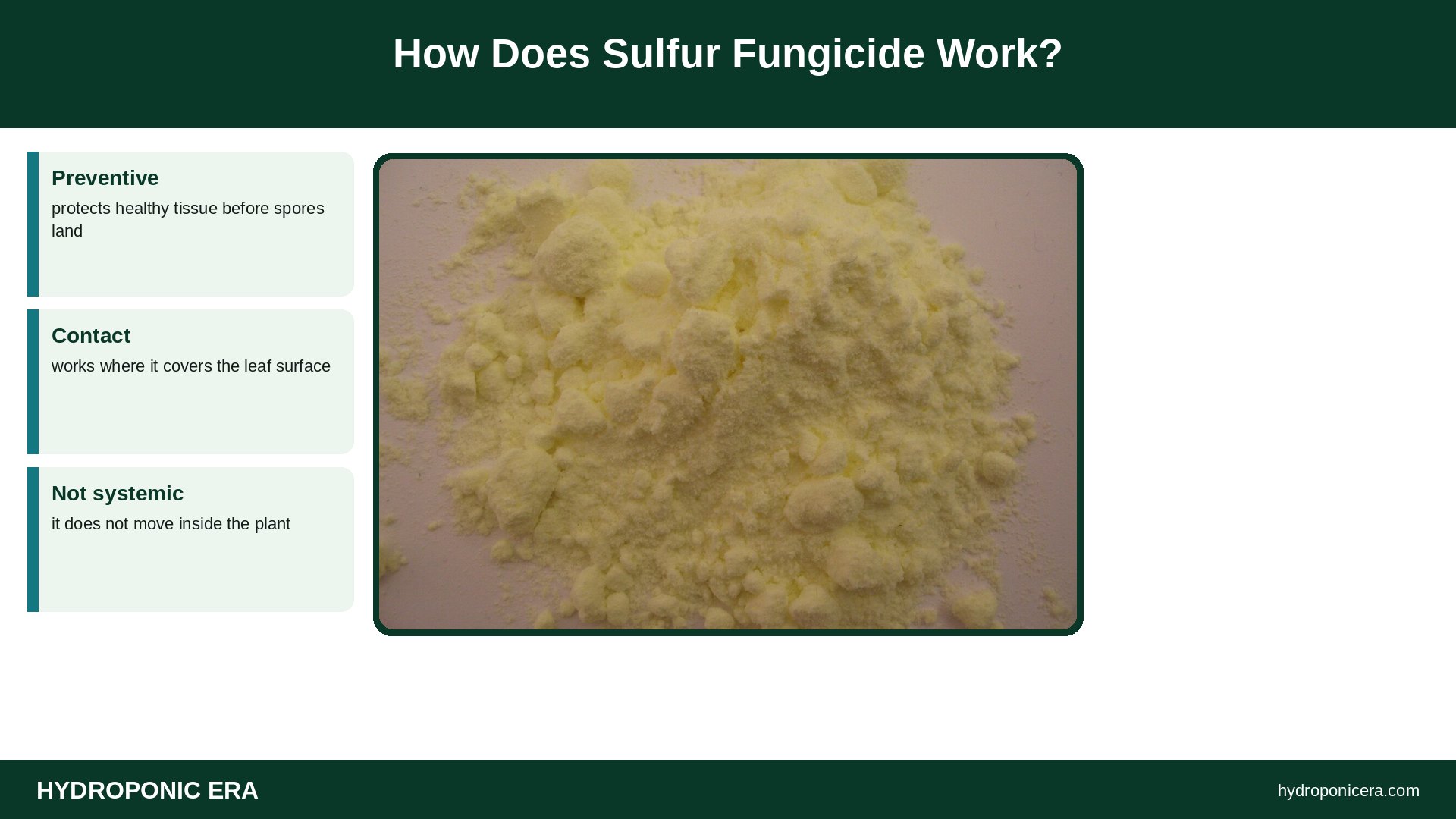
It acts as a protective barrier. Purdue explains that sulfur prevents fungal spores from germinating, so it must be on the leaf before the disease develops. Cornell adds that sulfur’s volatility lets it redistribute somewhat, which helped it control powdery mildew on the underside of leaves better than another contact fungicide in field trials.
- Preventive: protects healthy tissue before spores land.
- Contact: works where it covers the leaf surface.
- Not systemic: it does not move inside the plant.
If you are unsure whether white spots are disease, compare them in our guide to white leaf residue vs powdery mildew.
How Do You Use Sulfur Fungicide on Hydroponic Plants?
Spray leaves, not roots. In hydroponics, sulfur fungicide is a foliar product, so cover or lift the plants away from open channels and reservoirs before spraying. Use a labeled wettable or liquid product, start when conditions favor powdery mildew, and keep coverage even on both leaf surfaces.
- Confirm your crop is listed on the product label.
- Check the forecast for the next several days.
- Cover reservoirs, NFT channels and exposed roots.
- Spray both leaf surfaces until evenly coated.
- Repeat only at the label interval.
Our guide to powdery mildew in hydroponics covers humidity and airflow fixes that reduce how often you need to spray.
What Temperature Is Too Hot for Sulfur Fungicide?
Sources differ, so use the stricter limit if in doubt. UC IPM says not to apply sulfur when the temperature is near or higher than 90°F (32°C) to avoid plant injury. Purdue Extension is more cautious, advising against sulfur when temperatures are expected to exceed 80°F (27°C). Grow rooms under strong lights can run hot at canopy height.
Can You Mix Sulfur Fungicide With Neem or Other Oils?
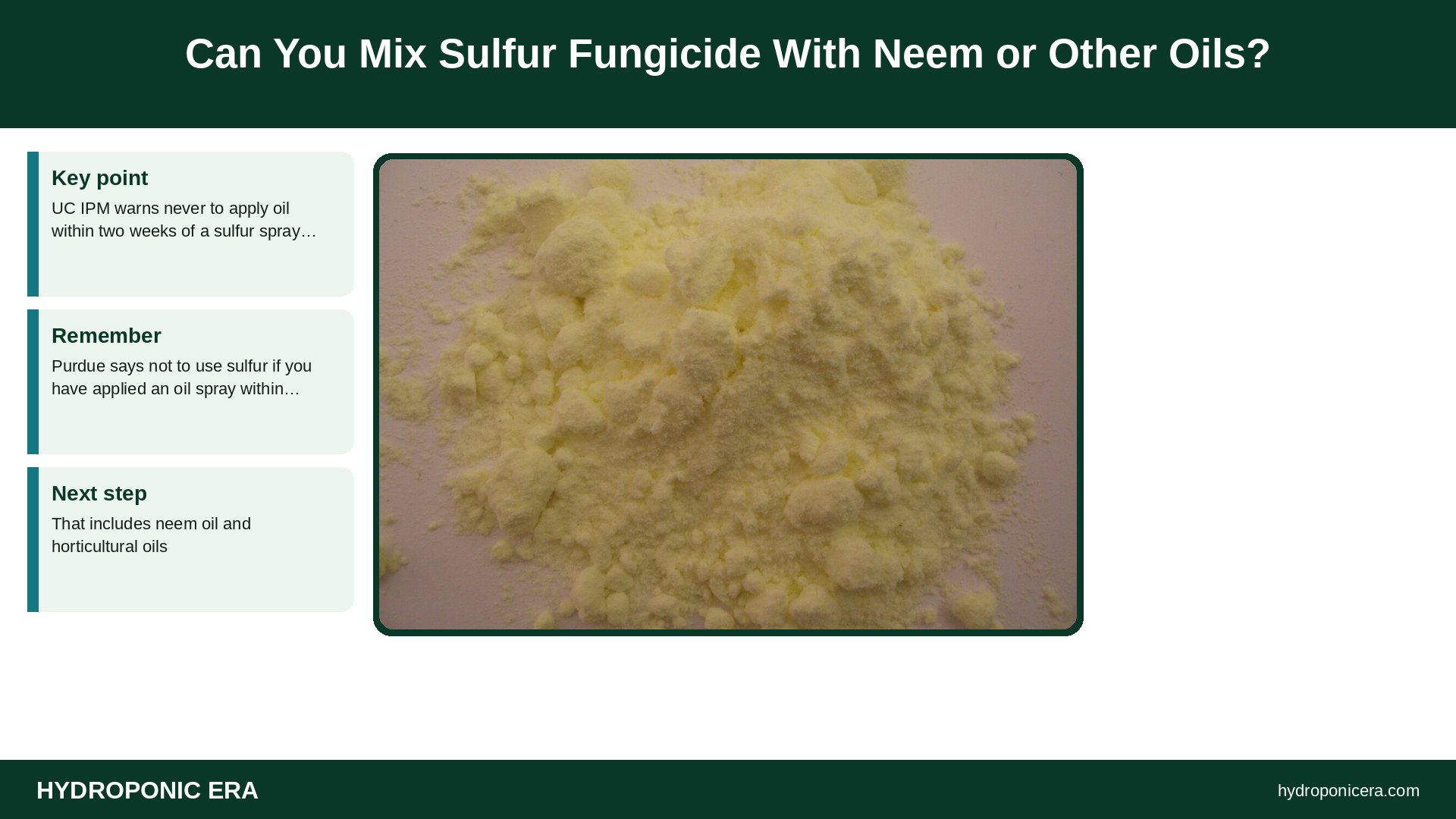
No. UC IPM warns never to apply oil within two weeks of a sulfur spray, and says some plants may need an even longer gap. Purdue says not to use sulfur if you have applied an oil spray within the last month, because the combination is phytotoxic. That includes neem oil and horticultural oils.
If you already use oils, read our guide to neem oil for plants and plan your spray calendar so the two never overlap.
Which Plants Should Not Get Sulfur Fungicide?
Some crops are sulfur-shy. Purdue Extension lists varieties of gooseberries, currants, apricots, raspberries and cucurbits as plants that should never be treated with sulfur. That matters for hydroponic growers, since cucumbers, melons and squash belong to the cucurbit family. UC IPM also warns that sulfur sprays can damage some ornamental cultivars.
| Crop group | Sulfur fungicide? | Source |
|---|---|---|
| Cucurbits (cucumber, melon, squash) | Avoid | Purdue |
| Raspberries, currants, gooseberries | Avoid | Purdue |
| Some ornamental cultivars | Use caution | UC IPM |
| Other crops | Only if on the label | Product label |
Is Burning or Vaporizing Sulfur Allowed in a Grow Room?
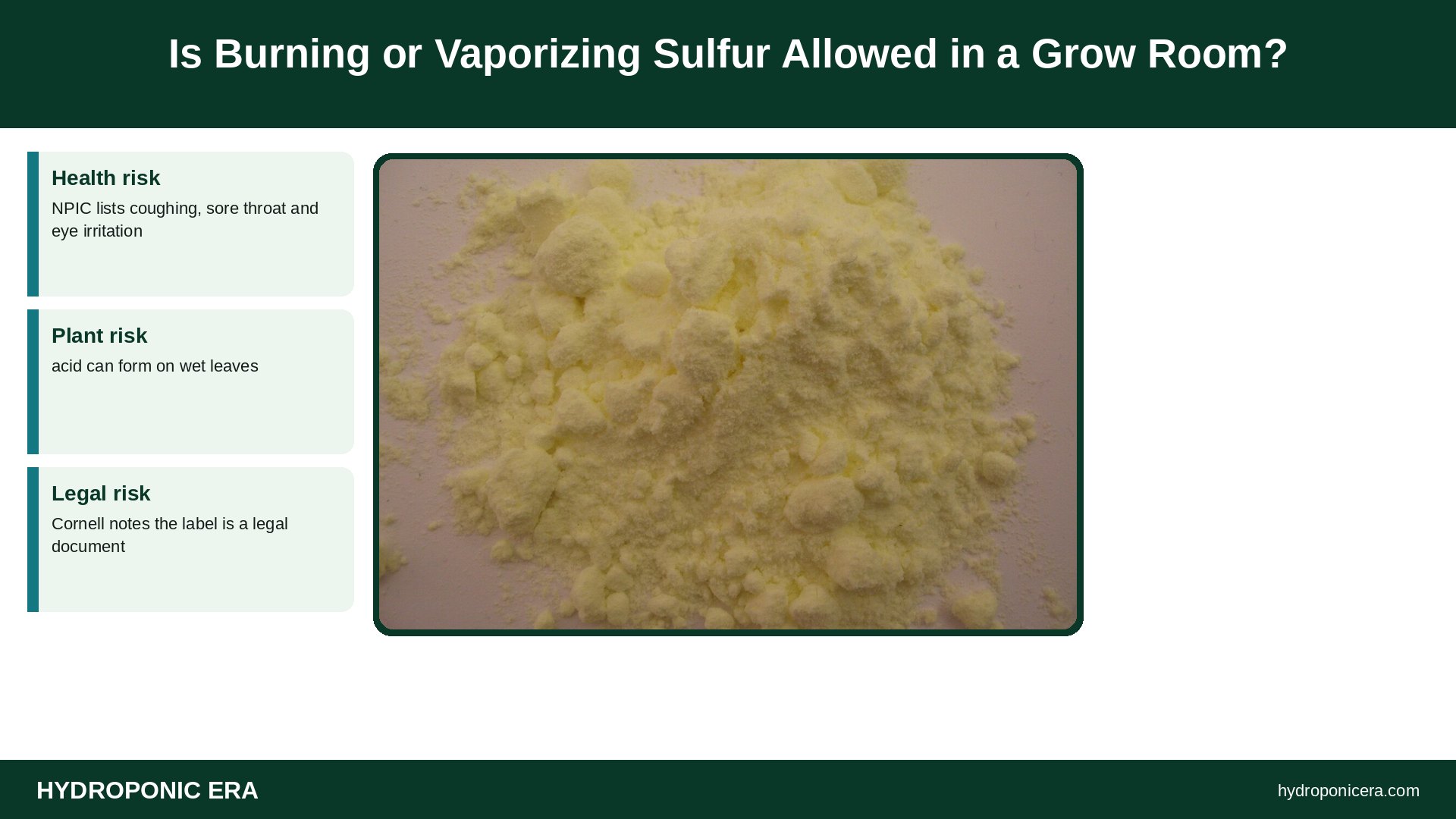
No. The National Pesticide Information Center says there are no EPA-approved sulfur products for plant fumigation. Burning sulfur produces sulfur dioxide, a gas that can mix with moisture on plants to form an acid that damages leaves, and breathing it can harm human health. Cornell could not find any EPA-registered fungicide with burner or evaporator directions.
- Health risk: NPIC lists coughing, sore throat and eye irritation.
- Plant risk: acid can form on wet leaves.
- Legal risk: Cornell notes the label is a legal document.
Wettable Sulfur vs Sulfur Dust: Which Is Better?
For most growers, a wettable or liquid product. Purdue says sulfur fungicide comes as a dust, wettable powder or liquid. UC IPM recommends products formulated with surfactants, which help sulfur spread across the leaf, and warns that sulfur dust is much harder to use, irritates skin and eyes, and suits fewer plants. Dust also drifts easily into open channels.
Does Sulfur Fungicide Control Spider Mites?
Some products are labeled for mites. Cornell notes that sulfur fungicides are labeled mainly for powdery mildew, with some rusts and mites also listed. Check the label for your specific mite target and crop before relying on it. For other options, see our guide to spider mites in hydroponics.
FAQ About Sulfur Fungicide
Is sulfur fungicide organic?
Some products are; check the label for an OMRI listing.
Can sulfur fungicide cure powdery mildew?
No; UC IPM says it works only before disease appears.
Does sulfur fungicide prevent rust?
Purdue lists rusts among the diseases sulfur can help prevent.
Can I add sulfur fungicide to my reservoir?
No; it is a leaf spray, so keep it out of nutrient solution.
Is garden or soil sulfur a fungicide?
Cornell found a soil sulfur label with no disease-control directions.
How often can I spray sulfur fungicide?
Only as often as the product label allows.
Sources
- UC IPM — Powdery Mildew on Ornamentals
- Purdue Extension — Using Organic Fungicides (BP-69-W)
- Cornell Vegetable Program — Managing Diseases With Sulfur
- NPIC — Can I burn sulfur for pest control?
- Photo credits (Wikimedia Commons, edited with titles): Sulfur powder by This image was made by Serpens !? If you want to reuse this image, please credit (CC BY 3.0)