
What is pepper mild mottle virus and can it spread in hydroponics? Pepper mild mottle virus (PMMoV) is a seed-borne tobamovirus that causes mottled, puckered leaves and lumpy, distorted pepper fruit. It spreads by touch, tools and contaminated seed rather than insects, and tobamoviruses can also be waterborne, so a shared hydroponic system can move it. There is no cure; prevention and removal are the only controls.
Key takeaway: University of Florida IFAS Extension says pepper mild mottle virus is not transmitted by insects and cannot be controlled with chemical or biological products once a plant is infected. UC Davis notes tobamovirus particles can survive in dry soil and plant debris for several years. Start with tested seed, sanitize hands and tools, and work suspect plants last.
| Fact | What sources report | Source |
|---|---|---|
| Virus group | Tobamovirus (TMV family) | UF/IFAS; UC Davis |
| Spread | Contact, tools, seed; can be waterborne | UF/IFAS; UC Davis |
| Insect vector | None known | UF/IFAS; UC Davis |
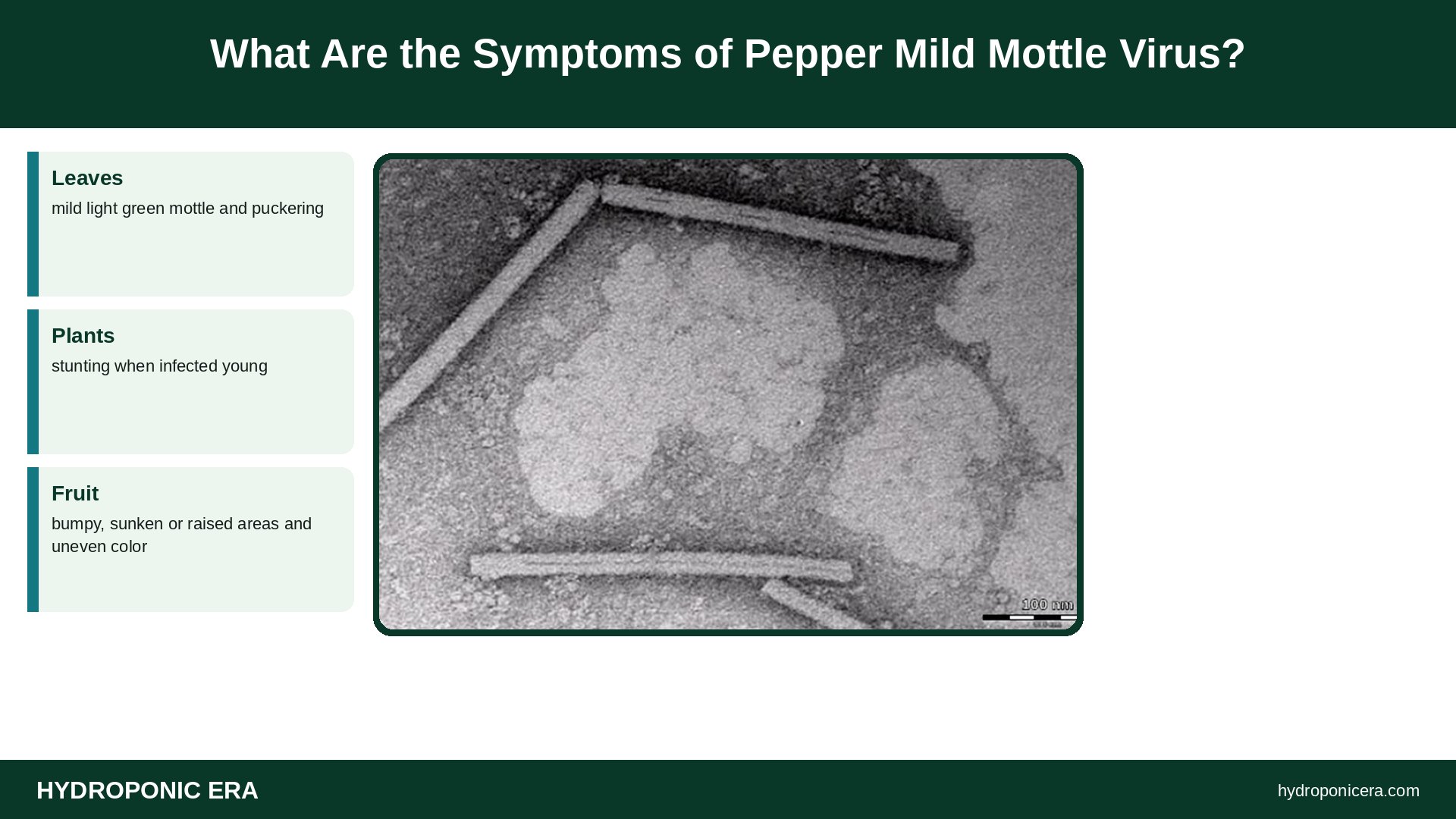
| Particle size | About 300 × 18 nm rods | UC Davis |
| Survival | Dry soil and debris for several years | UC Davis |
| Cure | None once infected | UF/IFAS |
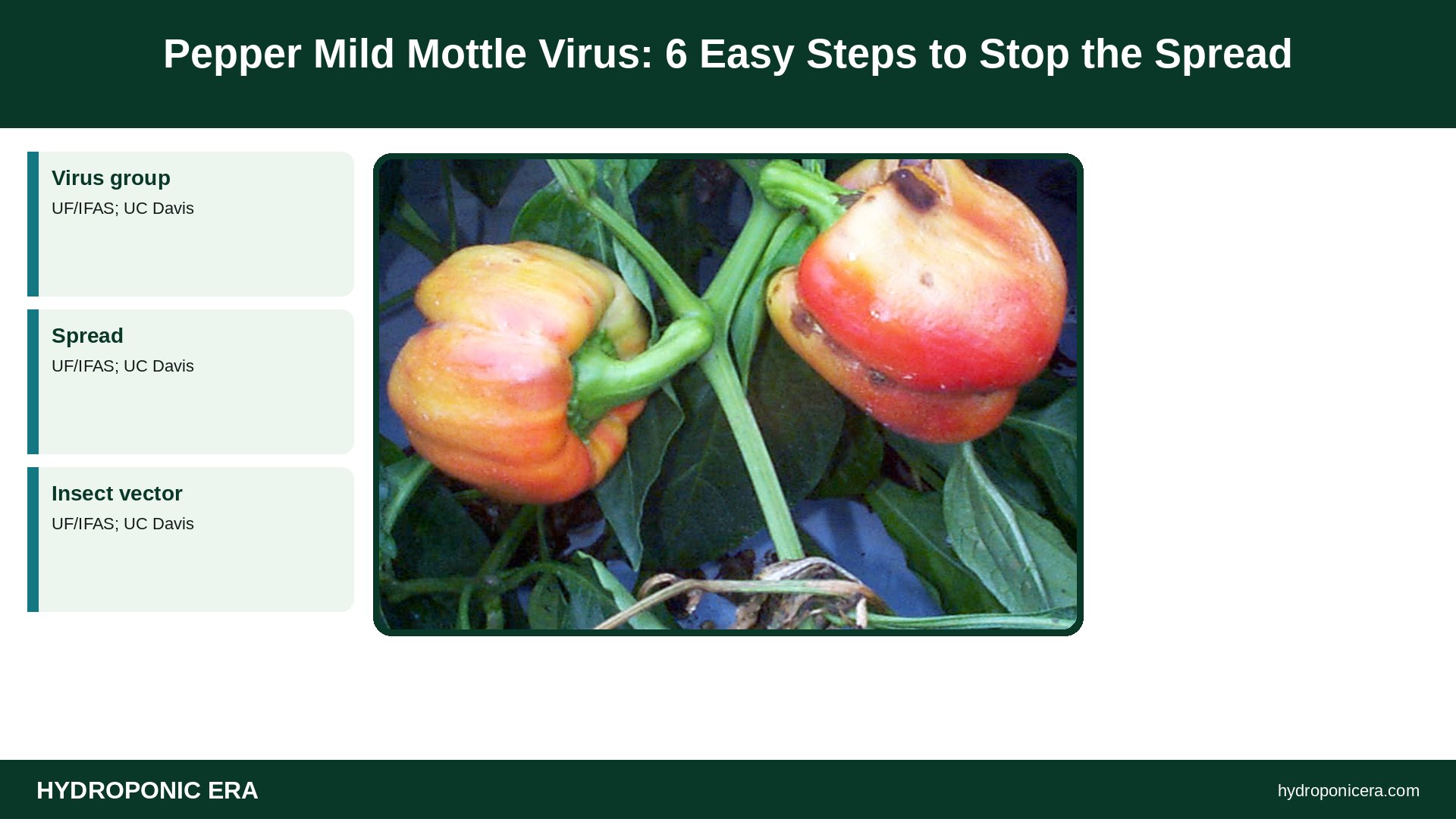
What Is Pepper Mild Mottle Virus?
Pepper mild mottle virus is a member of the tobacco mosaic virus (tobamovirus) family that infects bell, hot and ornamental peppers. UF/IFAS reports it occurs worldwide in field-grown peppers and has been found in greenhouse peppers in Canada, Italy and Spain, where greenhouse practices favor rapid spread. Florida outbreaks reached up to 30% incidence.
It is closely related to the viruses in our guides to tobacco mosaic virus and tomato brown rugose fruit virus, and the same sanitation habits apply to all three.
What Are the Symptoms of Pepper Mild Mottle Virus?
Look at young leaves and fruit. UF/IFAS says infected leaves are often puckered and mottled yellow or light green, with symptoms clearer on younger leaves. Plants infected early can be stunted. The most obvious sign is distorted or lumpy fruit, sometimes with color changes or brown streaks on older fruit.
- Leaves: mild light green mottle and puckering.
- Plants: stunting when infected young.
- Fruit: bumpy, sunken or raised areas and uneven color.
UC Davis notes that symptom severity varies with the virus strain, pepper variety, temperature and light, so a lab test is the only reliable confirmation.
How Does Pepper Mild Mottle Virus Spread?
Mostly by contact and seed. UF/IFAS says PMMoV spreads mechanically and through contaminated seed, enters through tiny wounds, and survives on skin, clothing, tools and equipment. UC Davis adds that tobamoviruses can also be waterborne, and that infected seed, fruit, leaves, stems, roots and debris are common sources of inoculum.
- Hands and tools: pruning, tying and harvesting.
- Seed: infected or untested seed lots.
- Water: shared nutrient solution in recirculating systems.
- Debris: old roots and leaves left in the growing area.
Is Pepper Mild Mottle Virus Seed-Borne?
Yes. A 2023 study in India found seed-to-seedling transmission of pepper mild mottle virus in all three capsicum cultivars tested, and the authors warn that even a small share of infected seed can greatly raise virus levels in a crop. UF/IFAS says only seed tested and found free of the virus should be planted.
UF/IFAS adds that contaminated seed can be treated with heat, acid or trisodium phosphate to remove virus on the surface, but these treatments can lower germination.
Can Pepper Mild Mottle Virus Spread Through a Hydroponic System?
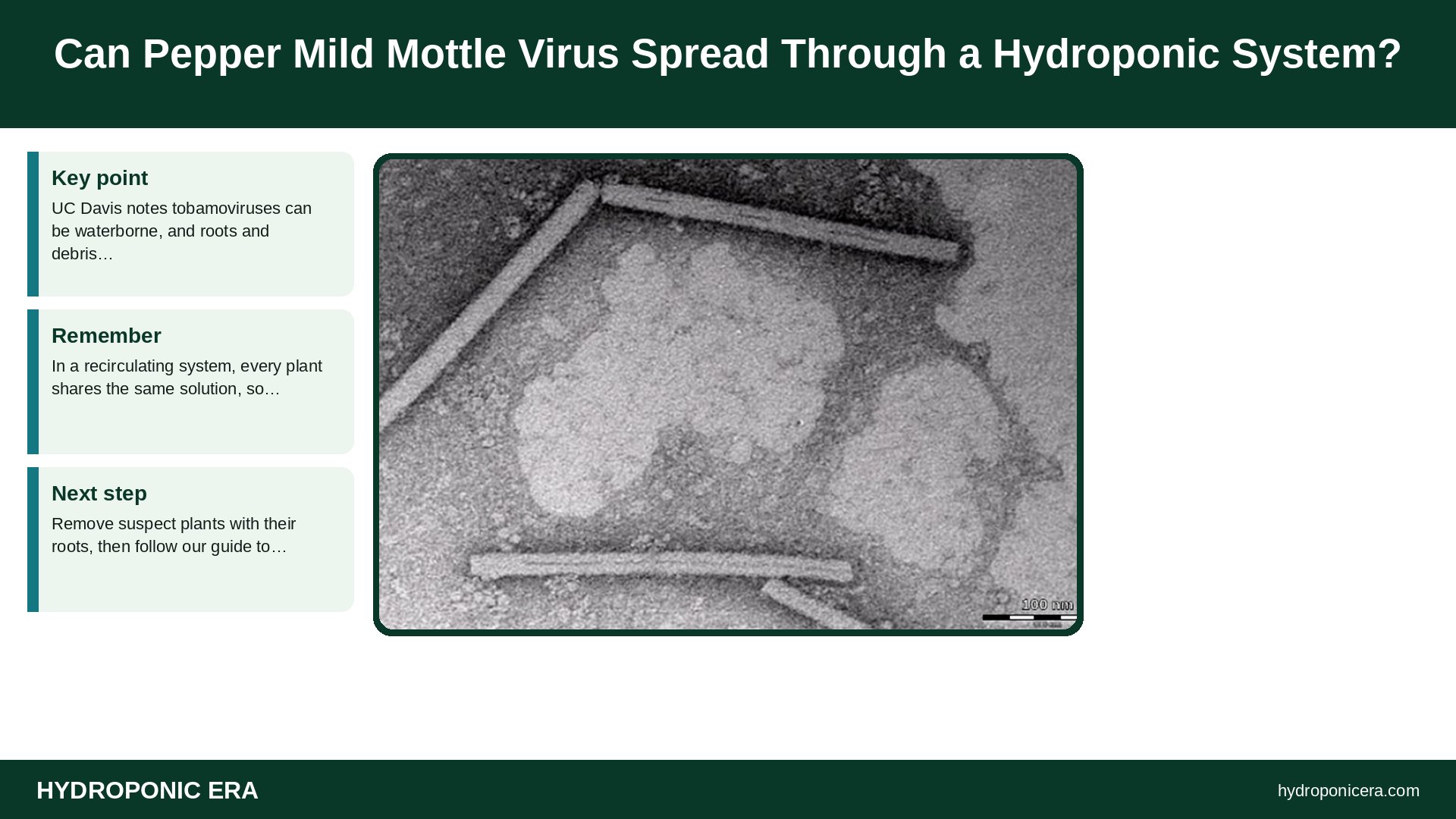
It can. UC Davis notes tobamoviruses can be waterborne, and roots and debris carry the virus. In a recirculating system, every plant shares the same solution, so one infected plant puts the rest at risk. Remove suspect plants with their roots, then follow our guide to cleaning and sterilizing a hydroponic system between crops.
How Do You Get Rid of Pepper Mild Mottle Virus?
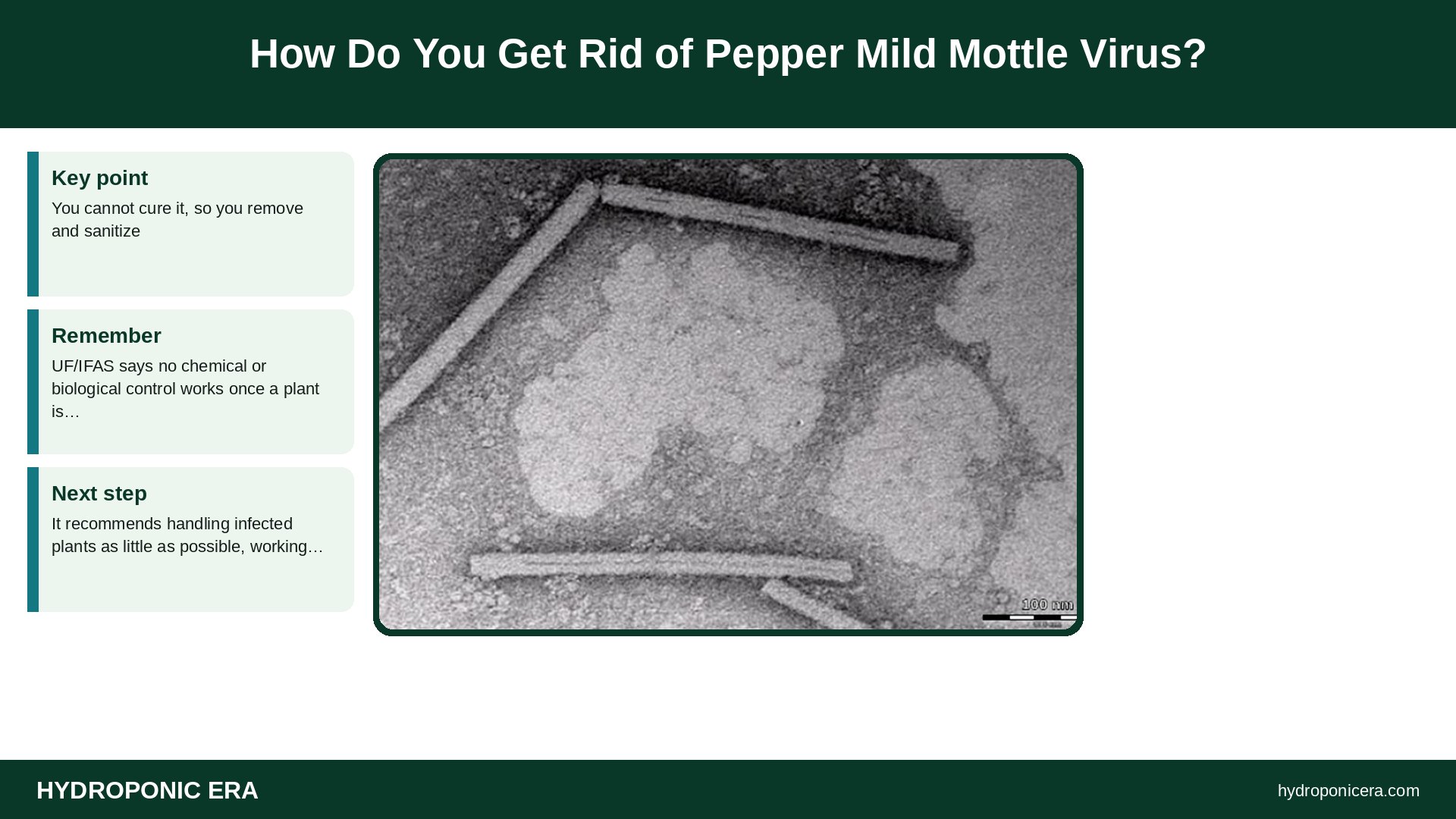
You cannot cure it, so you remove and sanitize. UF/IFAS says no chemical or biological control works once a plant is infected. It recommends handling infected plants as little as possible, working them last, and removing a symptomless plant on each side of a removed plant, because those neighbors are likely infected too.
- Bag infected plants without brushing healthy ones.
- Remove the neighbors on each side as well.
- Wash hands with 70% alcohol or strong soap, per UF/IFAS.
- Clean tools with saturated trisodium phosphate, bleach or 20% nonfat dry milk.
- Compost or bury debris away from peppers; do not burn it.
UF/IFAS warns against burning because tobamoviruses are known to spread through smoke.
Why Is Pepper Mild Mottle Virus So Hard to Eliminate?
Because it is very stable. UF/IFAS says viruses in this family are notoriously easy to spread and difficult to eliminate, and that diseased plant material stays infectious until completely degraded. It also recommends removing volunteer peppers and nightshade-family weeds, which can harbor the virus between crops. In a grow room, that means clearing every scrap of root and leaf.
Are There Peppers Resistant to Pepper Mild Mottle Virus?
Some are. UF/IFAS says many pepper cultivars and species are susceptible because they lack a resistance gene. UC Davis explains that resistance to most tobamoviruses is conferred by four alleles at the L locus, named L1 through L4, and that resistant cultivars offer the most effective way to stop spread. Check seed catalogs for these codes.
Compare options in our list of the best pepper varieties for hydroponics, then confirm the resistance code with the seed supplier.
Does Pepper Mild Mottle Virus Affect Tomatoes?
Not according to UF/IFAS, which says the virus does not affect tomato, eggplant or tobacco even though they are in the same plant family. UC Davis notes that related tobamoviruses such as TMV and ToMV can infect both tomato and pepper, so mixed infections in peppers are common. Lab testing tells you which virus you have.
FAQ About Pepper Mild Mottle Virus
Do insects spread pepper mild mottle virus?
No; UF/IFAS and UC Davis both report no insect vector.
Can pepper mild mottle virus be cured with sprays?
No; UF/IFAS says no chemical or biological control works.
How long does pepper mild mottle virus survive?
UC Davis says several years in dry soil and debris.
Will a UV sterilizer stop pepper mild mottle virus?
No source here confirms it; sanitize and remove infected plants.
Should I reuse growing media after pepper mild mottle virus?
Replace it; debris can carry the virus for years.
How is pepper mild mottle virus confirmed?
UF/IFAS recommends a plant diagnostic clinic using ELISA or molecular tests.
Sources
- UF/IFAS Extension — Pepper Mild Mottle Virus (HS-808)
- UC Davis CPPSI — Guidelines for the Identification of Pepper Tobamovirus Races
- PubMed Central (Indian Virological Society, 2023) — RT-PCR detection of Pepper mild mottle virus from capsicum seeds and seed transmission assay
- Photo credits (Wikimedia Commons, edited with titles): Pepper mild mottle virus by Image: UF/IFAS Pest Alert Web site/Pamela Roberts (CC BY 2.5); Journal.pone.0010041.g001.A by Philippe Colson, Hervé Richet, Christelle Desnues, Fanny Balique, Valérie Moal, (CC BY 2.5)