
What causes lettuce big vein and can it spread in hydroponics? Lettuce big vein is a virus disease carried into roots by the soil fungus Olpidium. It makes leaf veins look wide and clear, and leaves ruffled. It is uncommon in greenhouse lettuce, but in nutrient film (NFT) systems the virus and its swimming spores can quickly spread through a whole crop.
Key takeaway: There is no spray that cures lettuce big vein. UC IPM says it is worse in cool weather and milder above 60°F (16°C), and that resistant cultivars are now available. The Canadian Phytopathological Society says disinfesting media, water systems and equipment gives only partial control, and recommends a water sterilizer if you draw water from a creek or outside reservoir.
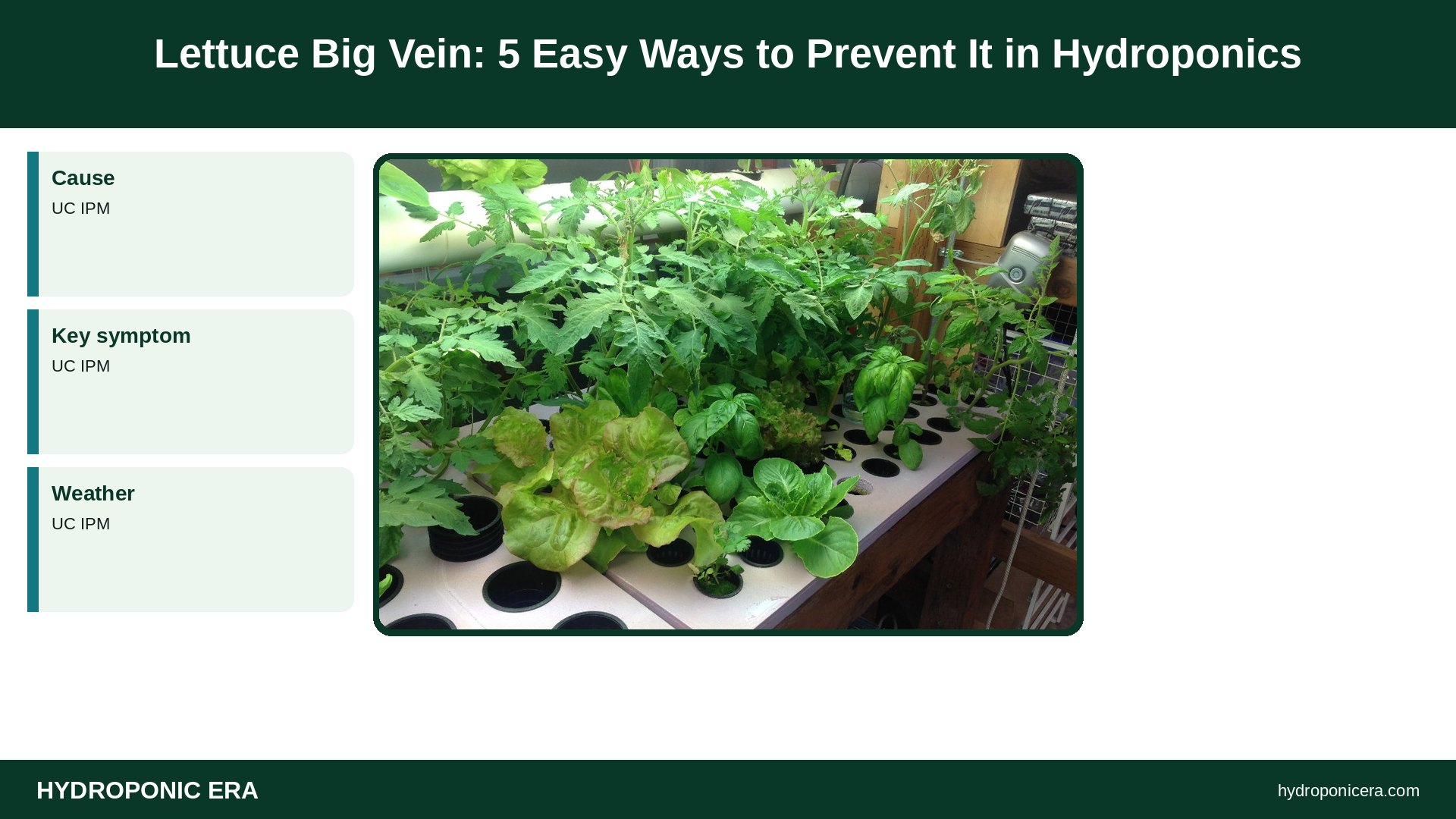
| Fact | What sources report | Source |
|---|---|---|
| Cause | Virus vectored by the fungus Olpidium | UC IPM |
| Key symptom | Enlarged, clear veins; ruffled leaves | UC IPM |
| Weather | Worse in cool spring weather | UC IPM |
| Temperature | Milder when air is above 60°F (16°C) | UC IPM |
| Hydroponic risk | Can spread quickly through NFT | Canadian Phytopathological Society |
| Rotation | Not effective | UC IPM |
What Is Lettuce Big Vein?
Lettuce big vein is a viral disease of lettuce spread by a root-infecting fungus. UC IPM’s agricultural guidelines describe the virus as soilborne and say it enters lettuce through Olpidium brassicae, a fungus that attaches to lettuce roots. UC IPM’s home garden page calls the cause a “viruslike agent,” so older and newer sources name it differently.
Either way, the disease depends on the fungus. Without the root-infecting vector, the virus has no easy route into healthy plants.
What Are the Symptoms of Lettuce Big Vein?
Look for wide, clear veins. UC IPM says lettuce big vein makes leaf veins very enlarged and clear, and the deformity is easiest to see when you hold a leaf up with the light behind it. The swollen veins make the rest of the leaf ruffled and malformed. Severe cases can be unmarketable, and head lettuce may fail to form heads.
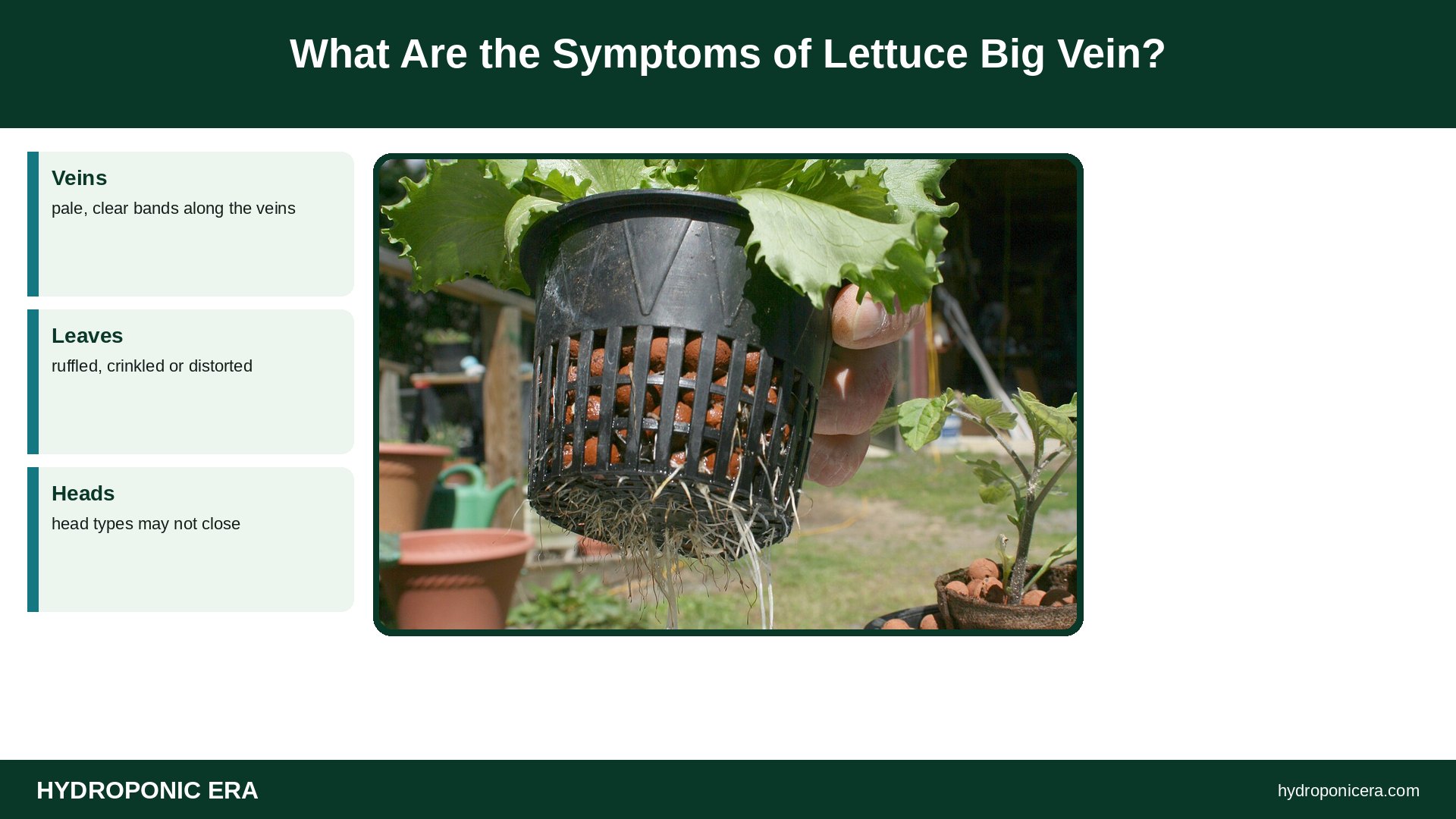
- Veins: pale, clear bands along the veins.
- Leaves: ruffled, crinkled or distorted.
- Heads: head types may not close.
- Mild cases: UC IPM says these can still be harvested.
Tip burn and nutrient problems can also distort leaves, so compare with our guide to tip burn in hydroponics before you decide.
How Does Lettuce Big Vein Spread in Hydroponics?
Through the water. A study published by the International Society for Horticultural Science explains that lettuce big vein moves from diseased to healthy plants by zoospores, the swimming spores of the root fungus Olpidium. The Canadian Phytopathological Society says that if plants become infected in a nutrient film system, the pathogen and its fungal vector can quickly spread through a crop.
- Recirculating solution: carries spores plant to plant.
- Outside water: creeks or open reservoirs can bring it in.
- Equipment: channels, trays and tools move infested water.
- Media: infested soil or growing media holds resting spores.
What Temperature Makes Lettuce Big Vein Worse?
Cool conditions. UC IPM says lettuce big vein is more prevalent and severe during cool weather, especially cool spring weather, and that symptoms are not as severe when air temperatures are above 60°F (16°C). In outdoor production it suggests changing planting time; indoors, avoid running a cold grow room for lettuce.
Keep your nutrient solution in a healthy range too, as covered in our guide to hydroponic reservoir temperature.
How Do You Prevent Lettuce Big Vein in a Hydroponic System?
Use clean water, clean equipment and tolerant varieties. The Canadian Phytopathological Society says hydroponic lettuce growers can get partial control by disinfesting growing media, watering systems and equipment, though this will not completely eradicate the vector or virus. It also advises installing a water sterilizer if water comes from a creek or outside reservoir.
- Use municipal, well or treated water instead of open surface water.
- Sterilize source water if it comes from a pond or creek.
- Clean channels, tanks and trays between crops.
- Replace used media instead of reusing it.
- Choose varieties described as big vein resistant or tolerant.
Read our step-by-step guide to cleaning and sterilizing a hydroponic system, and see our overview of UV sterilizers for hydroponic reservoirs for treating source water.
Are There Lettuce Varieties Resistant to Lettuce Big Vein?
Yes, some. UC IPM says big vein resistant cultivars are now available, and advises avoiding susceptible cultivars in spring where the disease has a history. Its home garden page also notes some varieties may be more tolerant. Seed catalogs and seed company trial notes are the best place to confirm which current varieties carry that rating.
Is There a Cure for Lettuce Big Vein?
No. UC IPM says there is little that can be done to manage lettuce big vein once it is present, crop rotation does not control it, and it suggests no other control options beyond resistant cultivars and cultural practices. Remove badly affected plants, clean the system and replant with tolerant seed in warmer conditions.
Research has looked at treating the water itself. The ISHS study found certain surfactants were toxic to Olpidium zoospores at 1–10 parts per million in lab tests, but those were research results, not labeled treatments, so do not add products to your reservoir on that basis.
Can Lettuce Big Vein Affect Other Crops?
Our sources focus on lettuce. UC IPM covers lettuce big vein in its lettuce guidelines, and the Canadian Phytopathological Society lists it among greenhouse lettuce diseases. If you grow mixed crops in one reservoir, treat any lettuce outbreak as a system problem and clean everything before replanting.
FAQ About Lettuce Big Vein
Is lettuce with big vein safe to eat?
UC IPM says mildly affected plants can still be harvested.
Do insects spread lettuce big vein?
No; UC IPM says a root fungus, Olpidium, carries it.
Does crop rotation stop lettuce big vein?
No; UC IPM says rotation is not effective.
Is lettuce big vein common in greenhouses?
The Canadian Phytopathological Society says it is uncommon in greenhouse lettuce.
Does warm weather help with lettuce big vein?
Yes; UC IPM says symptoms are milder above 60°F (16°C).
Will cleaning remove lettuce big vein completely?
No; disinfesting gives only partial control.
Sources
- UC IPM — Big Vein of Lettuce (Home and Landscape)
- UC IPM — Big Vein: Lettuce Pest Management Guidelines
- Canadian Phytopathological Society — Diseases and Pests of Vegetable Crops in Canada: Greenhouse Lettuce
- ISHS Acta Horticulturae — Studies on the Control of Lettuce Big-Vein Disease in Recirculated Nutrient Solutions
- Photo credits (Wikimedia Commons, edited with titles):