
How do you build a terrarium? A terrarium is built in layers: 1–2 inches (2.5–5 cm) of washed gravel for drainage, a thin layer of horticultural charcoal, then 2–4 inches (5–10 cm) of light potting mix. Add small humidity-loving plants, mist lightly and place it in bright, indirect light, not direct sun.
Key takeaway: A terrarium works when you match plants to the container. Closed ones suit ferns, moss and other moisture lovers. Open ones suit drier plants. Use clear glass, drainage and charcoal layers, light potting mix and bright indirect light, and water sparingly.
| Type | Best plants | Care level |
|---|---|---|
| Closed terrarium | Ferns, moss, peperomia, mini African violets | Low watering, vent if fogged |
| Open terrarium | Succulents, cacti, air plants | Dry soil, more light |
| Open with lid ajar | Mixed foliage plants | Medium moisture |
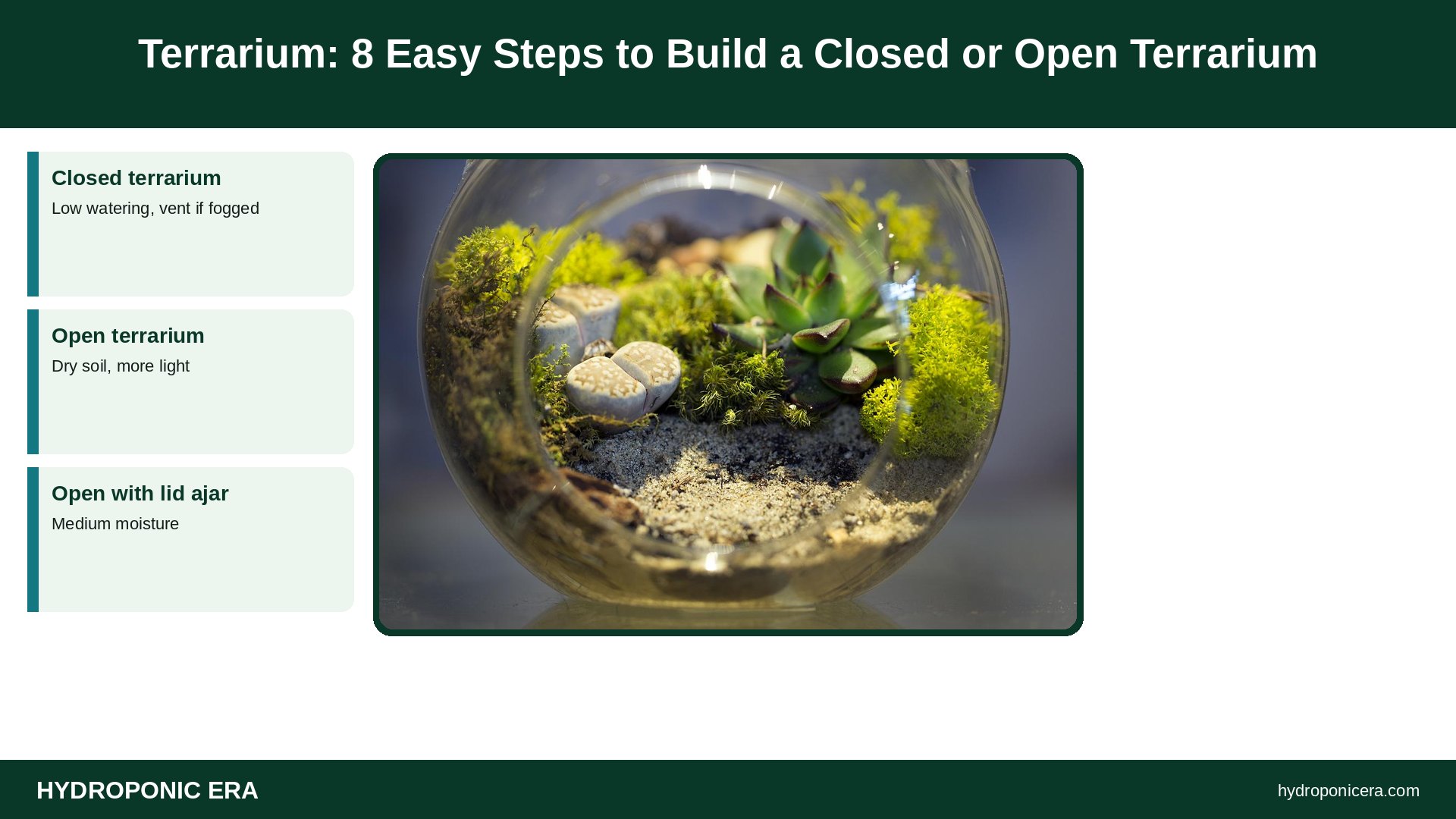
What Is a Terrarium?
This kind of garden is a clear glass container planted with small plants, either sealed to hold humidity or left open for airflow. A closed one recycles moisture as it evaporates and condenses on the glass, so it needs little water. An open one dries faster and suits plants that like drier conditions.
Extension guides from the University of Vermont, Iowa State and Oregon State all describe the same basic recipe: a clear container, a drainage layer, charcoal, light soil and slow-growing plants. Pick the design first, then choose plants that match it.
What Supplies Do You Need for a Terrarium?
- A clear glass container with a wide opening, such as a jar, bowl or fish tank
- Washed gravel or small pebbles for drainage
- Horticultural charcoal, in a thin layer
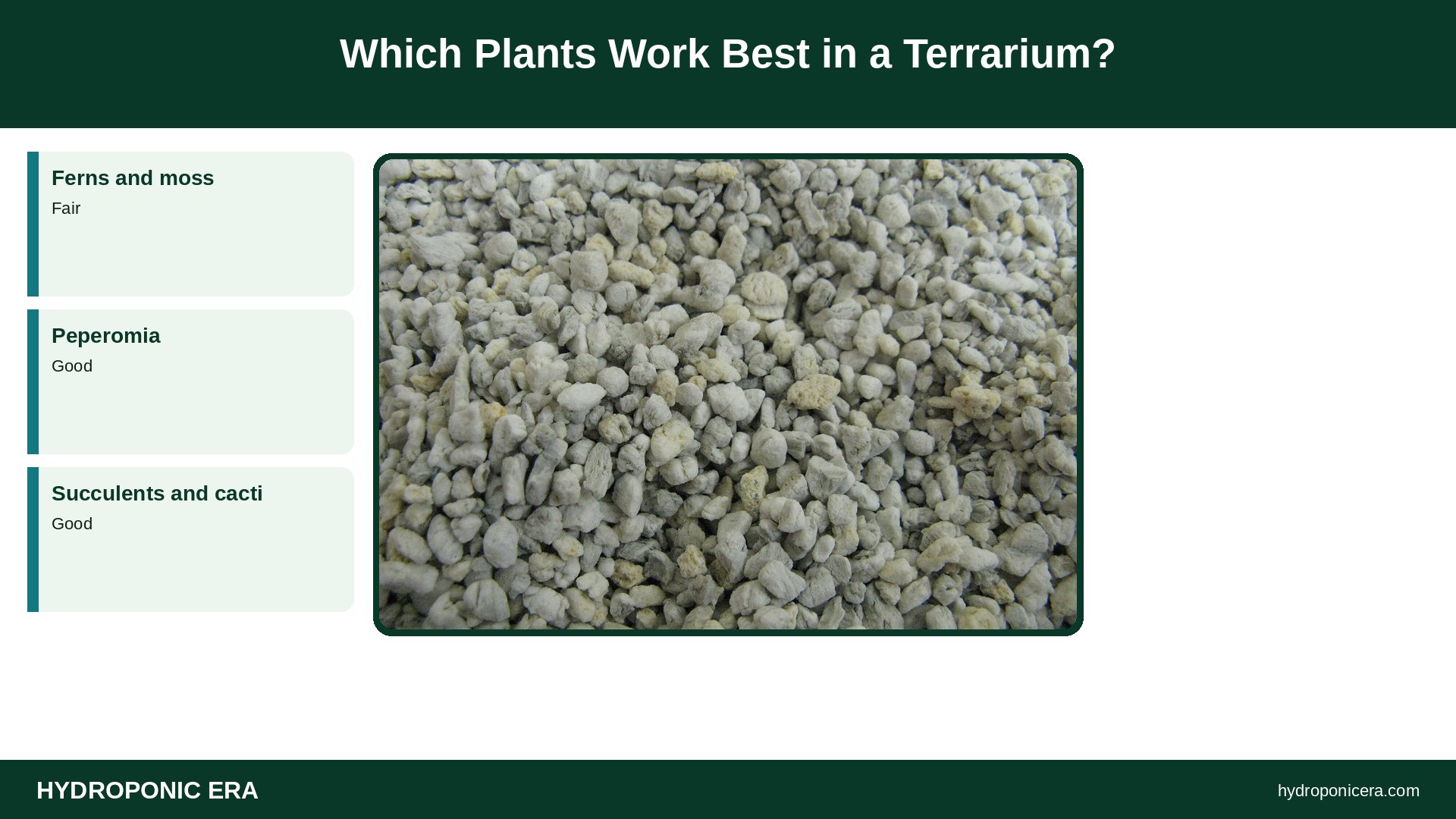
- Light potting mix with perlite or vermiculite added
- Small plants and a few decorations such as stones or bark
- A spray bottle, long spoon or tongs, and a soft brush
Wash the glass and gravel first to remove dust. A wide mouth makes planting easier, especially in a small one. See our guide to growing media and perlite and vermiculite for how light, airy mixes work.
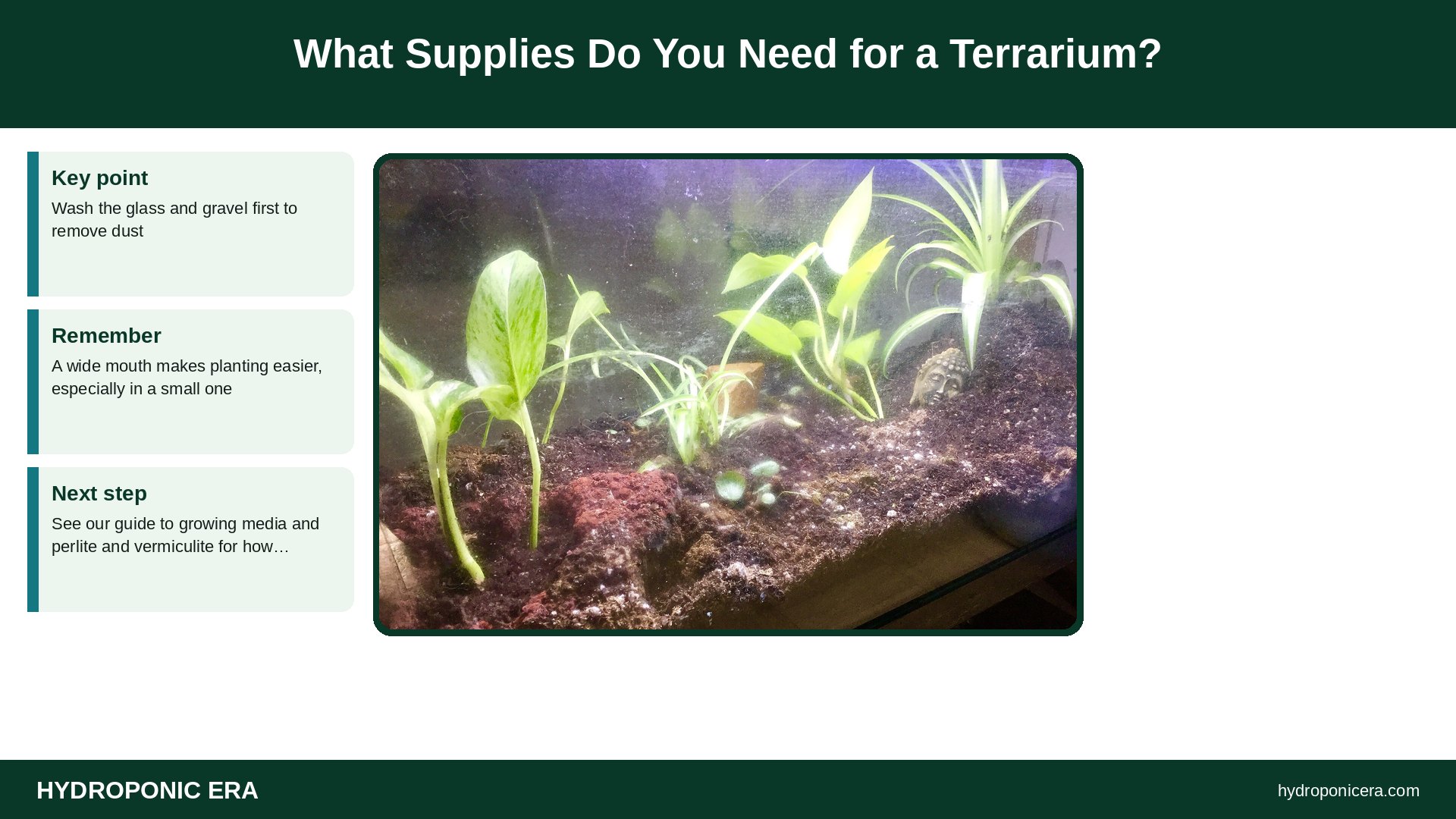
How Do You Build a Terrarium Step by Step?
- Clean the container and let it dry.
- Add 1–2 inches (2.5–5 cm) of washed gravel.
- Sprinkle a thin layer of horticultural charcoal over the gravel.
- Add 2–4 inches (5–10 cm) of light potting mix, sloping it slightly if you like.
- Make planting holes with a spoon, and set each plant gently.
- Press the soil lightly around the roots, and brush leaves clean.
- Mist lightly to settle the soil, but do not soak it.
- Place it in bright, indirect light, and watch for condensation over the first few days.
Plant tall ones at the back and low ones at the front, and leave space for growth. A crowded jar becomes a tangle in a few months.
Which Plants Work Best in a Terrarium?
For a closed one, choose ferns, moss, peperomia, fittonia and miniature African violets, which tolerate high humidity. For an open design, small succulents, cacti and air plants suit drier air. Do not mix moisture lovers with succulents, because their needs conflict and one group will suffer.
| Plant | Closed | Open |
|---|---|---|
| Ferns and moss | Good | Fair |
| Peperomia | Good | Good |
| Succulents and cacti | Avoid | Good |
| Air plants | Avoid | Good |
Choose slow-growing, compact plants labeled for glass gardens. A fast grower will outgrow the glass quickly and need regular trimming.
How Do You Water and Care for a Terrarium?
Water sparingly, with a little mist or a few spoonfuls at a time. A closed one may need water only every few weeks or months, while an open one needs it more often. If glass stays fogged all day, open the lid for a few hours. If the soil looks dry and plants droop, mist lightly.
Keep it in bright, indirect light, such as near an east or north window. Direct sun can overheat the glass and cook the plants. If light is poor, a small LED works. Our LED grow light guide explains how much light plants need.
Trim dead leaves with scissors and remove them, because decaying leaves invite mold. Rotate the container every week so plants grow evenly.
Why Is My Terrarium Moldy or Dying?
Most problems come from too much water, too little light or poor airflow. Mold often shows as white fuzz on soil or dead leaves. Remove it, open the lid for a few days and cut back watering. Fungus gnats can also appear in damp soil, as explained in fungus gnats in hydroponics.
- Mold: remove it, increase airflow, water less.
- Yellow leaves: usually overwatering, so let it dry.
- Leggy growth: needs more light.
- Brown crispy leaves: too dry or too much sun.
Humidity matters too. Our humidity and VPD guide explains why high humidity with poor air movement promotes disease.
How Do You Prune and Maintain the Plants Over Time?
Plants grow toward light and will eventually press against the glass. Pinch back tips with clean scissors every few weeks to keep them compact, and remove any leaf that touches the glass, since it tends to rot. Wipe condensation and algae from the inside with a soft cloth or a cotton swab on a stick.
Do not fertilize heavily. Slow growth is the goal, and rich feeding makes plants outgrow their space. If growth looks pale after a year, a very dilute houseplant fertilizer once or twice a year is plenty. Replace any plant that fails instead of crowding in more, and keep tools clean to avoid spreading disease.
Can You Make a Terrarium Without Charcoal or Drainage?
You can, but results are less forgiving. Without a drainage layer, extra water sits at the bottom and roots rot. Without charcoal, odors and stale water are more likely. If you skip them, use less water, a shallow container with a hole is better, or choose cacti and succulents in a fast-draining mix.
FAQ About Building a Terrarium
How often should I water it?
Closed ones may need water every few weeks or months. Open ones need it more often. Water lightly only when the soil looks dry.
Can a terrarium sit in direct sunlight?
No. Direct sun can overheat the glass. Use bright, indirect light.
Do I need charcoal in the container?
It is recommended in thin layers to help keep the container fresh, but drainage matters more.
What size container is best for beginners?
A wide-mouth jar or bowl that holds at least a few inches of soil is easiest for beginners.
How long does a terrarium last?
With care and trimming, a well-balanced one can last for years.
Sources
- University of Vermont Extension — Creating a garden terrarium
- Iowa State Extension — Building and caring for a terrarium
- Oregon State Extension — Terrariums
- Photo credits (Wikimedia Commons, edited with titles): Terrarium small by christopher* (CC BY 2.0); Sealed terrarium by Beeblebrox (CC BY-SA 4.0); Perlite1 by KENPEI (CC BY-SA 3.0); 2008-09-20 Thermometer reading by Ildar Sagdejev (Specious) (CC BY-SA 4.0)