
Quick Answer
Blossom Drop Hydroponic Tomatoes Peppers (blossom drop hydroponic tomatoes peppers) is the practical focus of this guide for home growers.
Blossom drop in hydroponic tomatoes and peppers means flowers abort before fruit set. Common drivers are heat (including warm nights), poor pollination indoors, humidity extremes, and nitrogen excess—not “the plant hates you.” Fix climate and pollen transfer before rewriting the entire nutrient recipe.
Related: indoor pollination, tomatoes, peppers, humidity/VPD.
Key Takeaways
- Penn State heat-stress tomato guidance links high day and night temperatures to flower abortion.
- UF/IFAS greenhouse tomato notes poor pollination/set above roughly the high-80s to 90°F class of stress.
- Indoor plants still need pollen movement—fans and manual vibration matter ({a(‘pollination’,’pollination guide’)}).
- Very high or very low humidity can impair pollen function; manage VPD thoughtfully.
- Excess vegetative nitrogen can favor leaves over reliable set—balance stage nutrition.
- Do not confuse drop with Botrytis flower rot—inspect for gray mold.
- Peppers have their own heat-sensitive set windows—same measurement habit helps.
- Change one driver at a time and watch the next flower cluster.
Related HydroponicEra guides
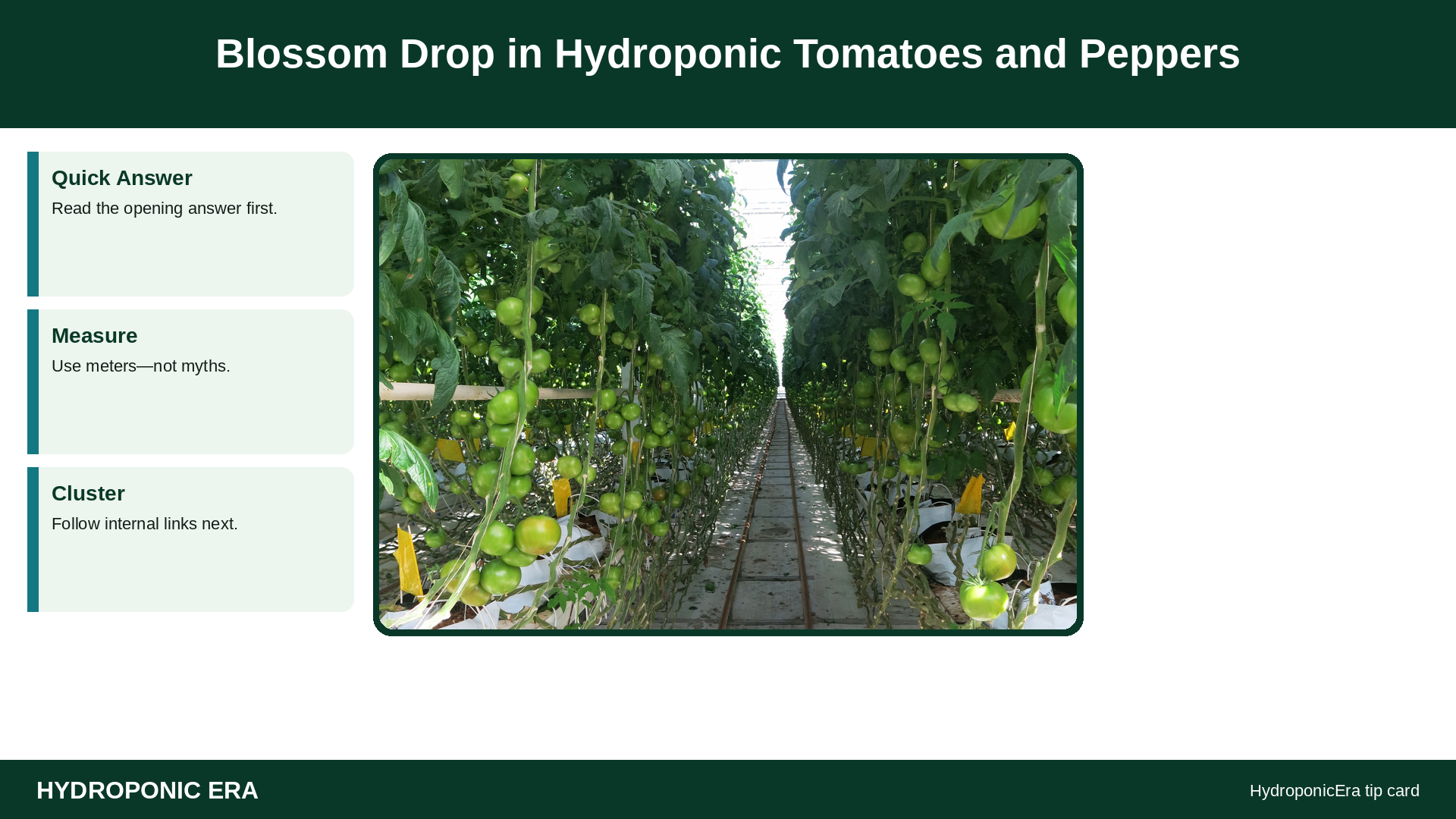
Blossom Drop Hydroponic Tomatoes Peppers: Why Flowers Abort
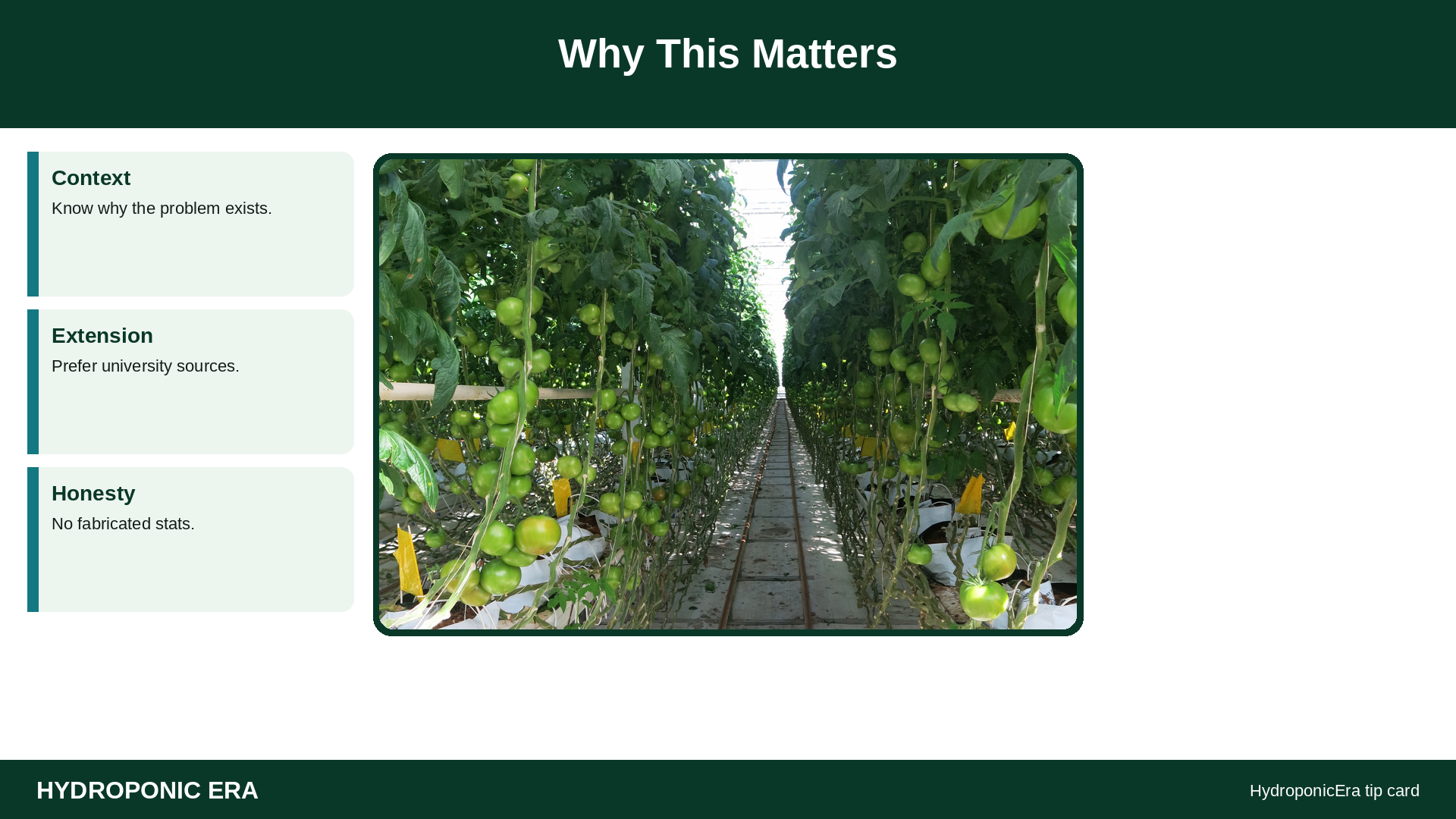
Flower abortion is a stress response. Penn State’s heat-stress tomato page explains heat in the week before flowering and warm nights as set killers. UF/IFAS CV266 adds that excessive heat impairs pollination and fruit set in greenhouse tomatoes. Indoors, still air means pollen may never reach the stigma even when temperatures are perfect—see indoor pollination.
Blossom Drop Hydroponic Tomatoes Peppers: Driver Comparison Table
| Driver | Clues | First fix |
|---|---|---|
| Heat / warm nights | Drop after hot photoperiods | Cool canopy; night temps |
| No pollen transfer | Healthy flowers, zero set | Fans / vibrate / pollinate |
| Humidity extremes | Pollen sticky or desiccated | VPD into a workable band |
| N-heavy vegetation | Jungle growth, weak clusters | Stage-appropriate nutrition |
| Botrytis on blooms | Gray fuzz on petals | Sanitation + humidity |
Blossom Drop Hydroponic Tomatoes Peppers: Step-by-Step Recovery

- Log day/night canopy temps for 7 days
- Confirm flowers are dry and free of gray mold
- Add gentle airflow and a daily pollination habit for tomatoes
- Moderate RH extremes using your VPD guide
- Review nitrogen intensity vs fruiting stage
- Stabilize EC—avoid shock swings during flowering
- Prune only enough for light/air—don’t strip stress onto heat-stressed plants
- Evaluate the next truss before changing everything again
Blossom Drop Hydroponic Tomatoes Peppers: Common Mistakes

- Buying random “bloom boosters” before measuring temperature
- Sealed tents with zero pollen movement
- Assuming hydroponics auto-pollinates fruiting crops
- Cranking N because leaves are pretty
- Ignoring warm nights while cooling only at noon
Blossom Drop Hydroponic Tomatoes Peppers: Troubleshooting Table

| Situation | Likely | Next |
|---|---|---|
| Drop after 90°F+ days | Heat stress | Cooling + heat article |
| Perfect temps, no fruit | Pollination gap | Pollination guide |
| Soft rotting blooms | Botrytis | Botrytis guide |
| Peppers drop in heat | Crop heat sensitivity | Night cooling; cultivar |
Prevention Framework
Framework: climate → pollen transfer → balanced fruiting nutrition → disease check. Keep notes per cultivar. Link VPD, pollination, and fruiting crop guides.
What to Check Before You Escalate
- Day/night temps logged?
- Pollination method in place?
- RH extreme?
- Botrytis on flowers?
- N intensity appropriate?
- EC stable?
Flower Cluster Checklist for Indoor Set
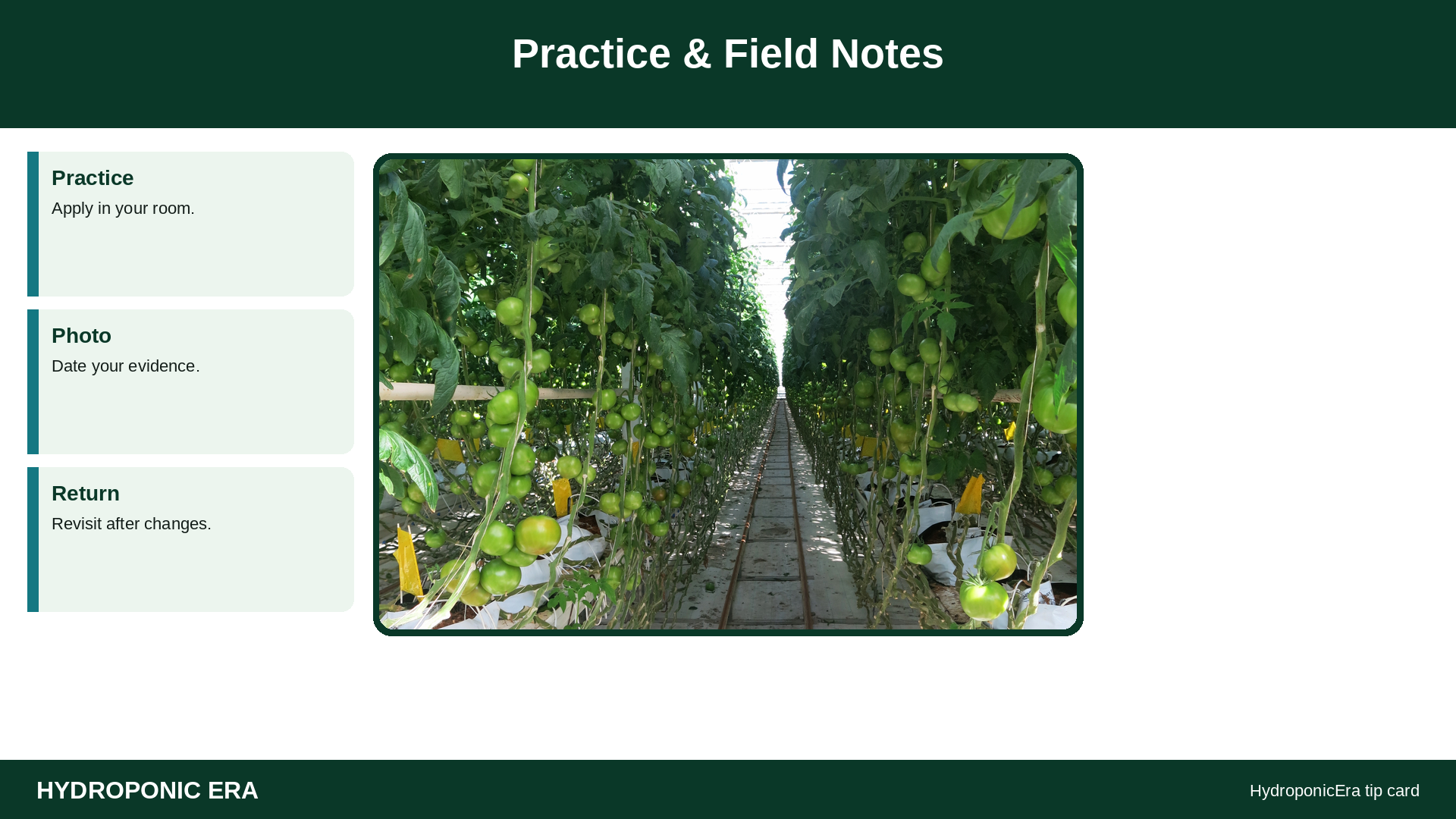
Hang a cluster checklist on the tent: day temp OK? night temp OK? pollen moved today? flowers dry (no Botrytis)? RH not extreme? EC stable? N not runaway vegetative? Check boxes before changing nutrient brands. Penn State heat-stress and UF/IFAS greenhouse tomato materials make heat and pollination central; indoor still air adds a hydro-tent twist (pollination).
Original pollination streak: seven consecutive days of fan vibration or manual tomato flower vibration during mid-photoperiod. Mark the streak on a calendar. If set improves only after the streak, you found the gap without buying a new fertilizer.
Night temperature logging catches silent set killers. A room that cools by day but stays warm overnight still fits heat-stress abortion patterns described for tomatoes. Peppers likewise sulk in heat—use peppers and cultivar notes.
Inspect aborted blooms. Dry, clean drop suggests stress/pollination. Soft, fuzzy rot suggests Botrytis—switch to sanitation and humidity control rather than “more PK.”
Nutrition sanity: fruiting recipes exist, but excess nitrogen jungles happen. Confirm you are not reading a deficiency chart upside-down while the plant is simply heat-stressed (nitrogen, EC).
Practice closer: tag one truss with date-opened and date-set count. Compare tagged trusses before vs after climate/pollination fixes. Continue with tomatoes, VPD, and the heat-stress article in this batch.
Field Notes: Separating Heat Drop from Pollination Drop
Run a two-knob experiment across consecutive weeks when possible: week A emphasize cooling/night temps; week B emphasize daily pollination habits if temps are already reasonable. Penn State and UF/IFAS tomato materials keep heat central; indoor tents add pollen-transfer gaps (pollination).
Watch flower morphology. Heat-stressed blooms may look pale or poorly formed; perfect blooms with zero fruit often mean pollen never moved. Humidity extremes that make pollen sticky or brittle show up in VPD logs (VPD).
Avoid “bloom booster” theater while nitrogen still pushes a jungle. Confirm stage nutrition with meters (EC). Inspect for Botrytis on petals before blaming fertility.
Original set ratio: flowers opened vs fruitlets retained on one tagged truss. Publish that ratio to yourself weekly. Link tomatoes and peppers.
FAQs

Do I need bees indoors?
Not required—vibration/fans/manual pollination often suffice for tomatoes.
Is blossom drop always heat?
Heat is common, but pollination and humidity are frequent co-causes.
Will PK booster stop drop?
Not if temperature/pollination are wrong.
Peppers vs tomatoes?
Both drop under heat; pepper set windows can be narrow—measure anyway.
Night temperature matter?
Yes—warm nights are called out in heat-stress tomato guidance.
Sources?
Penn State heat stress, UF/IFAS CV266, OSU hydro, crop extension pages.
Do I pollinate peppers like tomatoes?
Pepper flowers differ; gentle airflow helps, and heat control remains critical for set.
Can low light cause drop too?
Poor energy status can reduce set—ensure stage-appropriate PPFD alongside climate.
Measurement and Logging Habits That Keep Advice Honest
Every troubleshooting or equipment claim on HydroponicEra should collapse to something you can measure or photograph. Write the date, the meter reading, and one photo when you change a variable. That habit prevents stacking five fixes overnight and then inventing a success story. Use calibrated pH/EC meters where nutrients are involved, and canopy-level climate sensors where humidity and heat are involved (humidity/VPD).
When you link outward to university extension pages in the Sources section, treat them as anchors—not as promises that your exact tent will match a greenhouse trial. Translate ranges into your room with logs. If a fix works, keep it; if not, revert one step and retest. That methodology is the expertise signal search and AI systems can trust without fabricated statistics.
Internal next reads stay in-cluster: problems pages cross-link to cleaning, airflow, and crop guides like tomatoes or lettuce when symptoms live on those plants. Equipment pages cross-link to reservoir setup, pumps, and grow tents so purchases match the system you already run.
Blossom Drop Hydroponic Tomatoes Peppers: Practical Checklist
Blossom Drop Hydroponic Tomatoes Peppers matters every week in a home system. Recheck blossom drop hydroponic tomatoes peppers after transplants, heat spikes, and canopy fill-in. Strong blossom drop hydroponic tomatoes peppers habits beat one-time guesses. When blossom drop hydroponic tomatoes peppers drifts, leaves crowd, roots stress, or harvest quality drops. Write blossom drop hydroponic tomatoes peppers targets into your log so you do not rely on memory. Teach helpers your blossom drop hydroponic tomatoes peppers checklist before you leave town. Improve blossom drop hydroponic tomatoes peppers in small steps—measure, adjust, then wait a day.
Sources
- Penn State Extension — Heat Stress and Tomatoes
- University of Florida IFAS — CV266: Production of Greenhouse Tomatoes
- University of Minnesota Extension — Growing tomatoes
- University of Minnesota Extension — Growing peppers in home gardens
- University of Maryland Extension — Peppers
- Oklahoma State University Extension — Hydroponics
- Michigan State University Extension — Why greenhouse growers should pay attention to VPD