
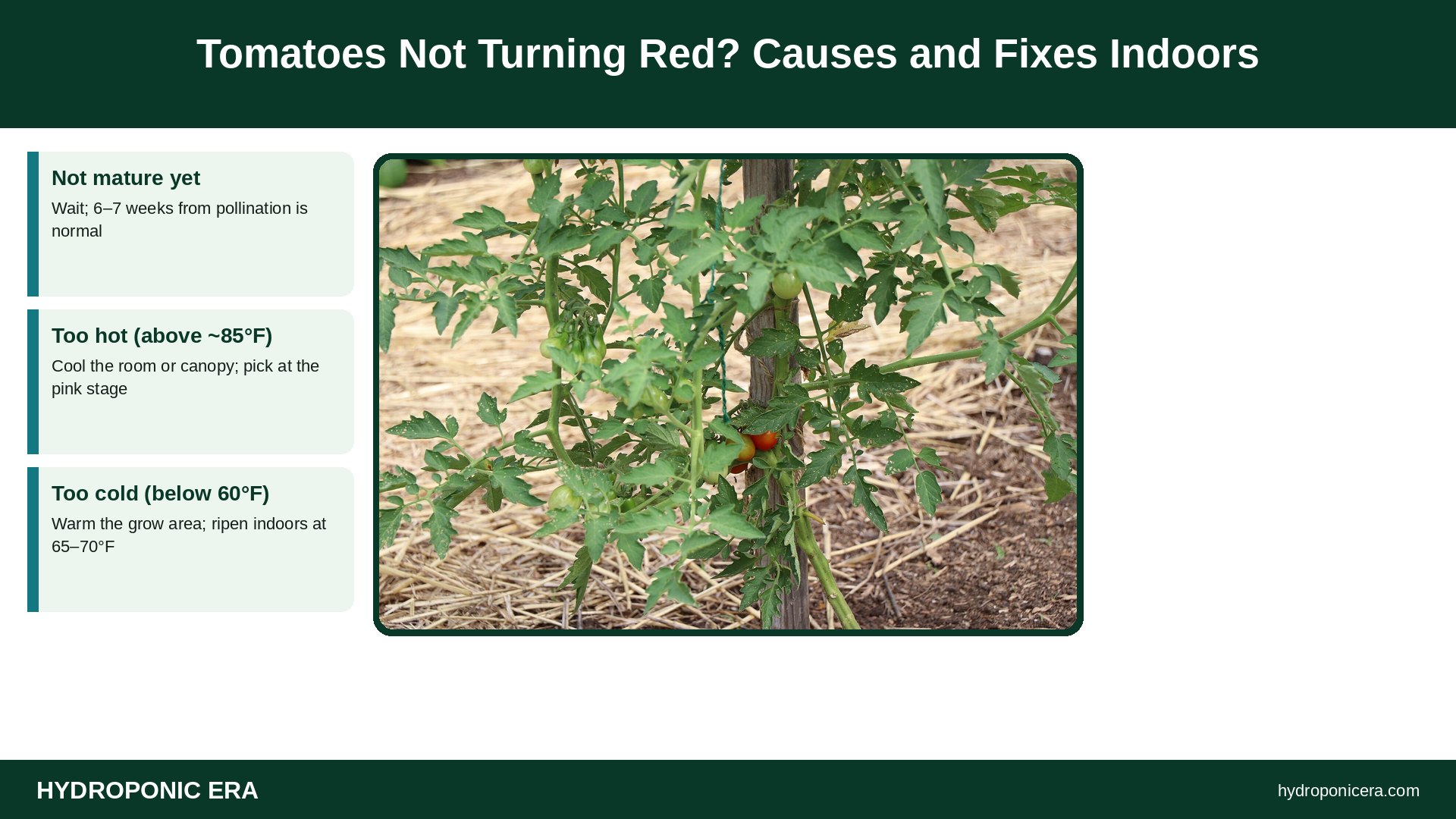
Tomatoes not turning red are usually waiting on time or stuck in the wrong temperature. Purdue Extension notes red pigment doesn’t form above 86°F, and University of Missouri specialists say ripening is fastest at 68–77°F. Fruit also needs six to seven weeks from pollination to mature. Most green tomatoes ripen once temperatures are back in range. If you get yellow shoulders or blotches, check potassium and heat.
| Cause | What you see | Fix |
|---|---|---|
| Not mature yet | Glossy green fruit, still sizing | Wait; 6–7 weeks from pollination is normal |
| Too hot (above ~85°F) | Fruit stalls or turns yellow-orange | Cool the room or canopy; pick at the pink stage |
| Too cold (below 60°F) | Slow, blotchy color | Warm the grow area; ripen indoors at 65–70°F |
| Low potassium | Yellow shoulders, blotchy ripening | Check EC and your nutrient’s K level |
| Variety | Fruit is meant to be yellow, orange or green | Check the seed packet |
Why Tomatoes Not Turning Red Is Usually About Time
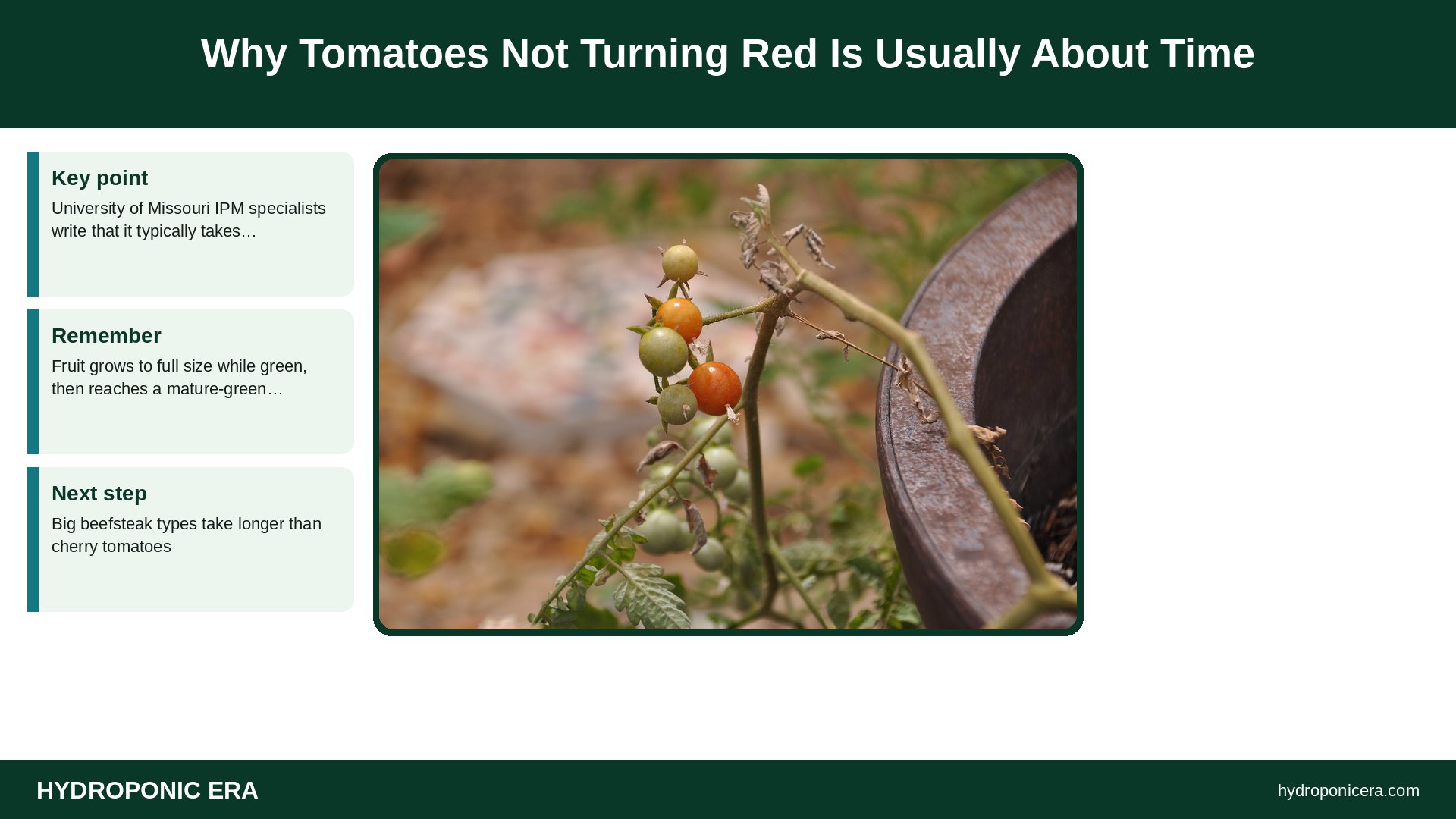
University of Missouri IPM specialists write that it typically takes six to seven weeks after a flower is fertilized for a tomato to mature fully. Fruit grows to full size while green, then reaches a mature-green stage before color starts. Big beefsteak types take longer than cherry tomatoes. If your first fruits set less than a month ago, tomatoes not turning red is normal.
A quick test: mature-green fruit has a slightly lighter, glossier green and stops getting bigger. The first blush of color usually appears at the blossom end, the bottom of the fruit.
Heat: The Most Common Reason for Tomatoes Not Turning Red
Tomato color comes from two pigments, lycopene (red) and carotene (yellow-orange). Missouri’s guide says temperatures above 85°F tend to slow or even halt production of both, and that 37% of a tomato’s lycopene is in the skin. Purdue Extension puts the red cutoff at 86°F and notes yellow pigment keeps developing, so fruit ripened in hot weather often turns yellowish-orange. South Dakota State Extension agrees that lycopene stops forming above 85°F.
Indoors, heat often comes from lights. Fruit near an LED bar or under a hot fixture can sit well above room temperature. Measure temperature at the fruit, not at the thermostat. Our heat and cold stress guide explains how to cool a grow space.
Cold Temperatures and Blotchy Ripening
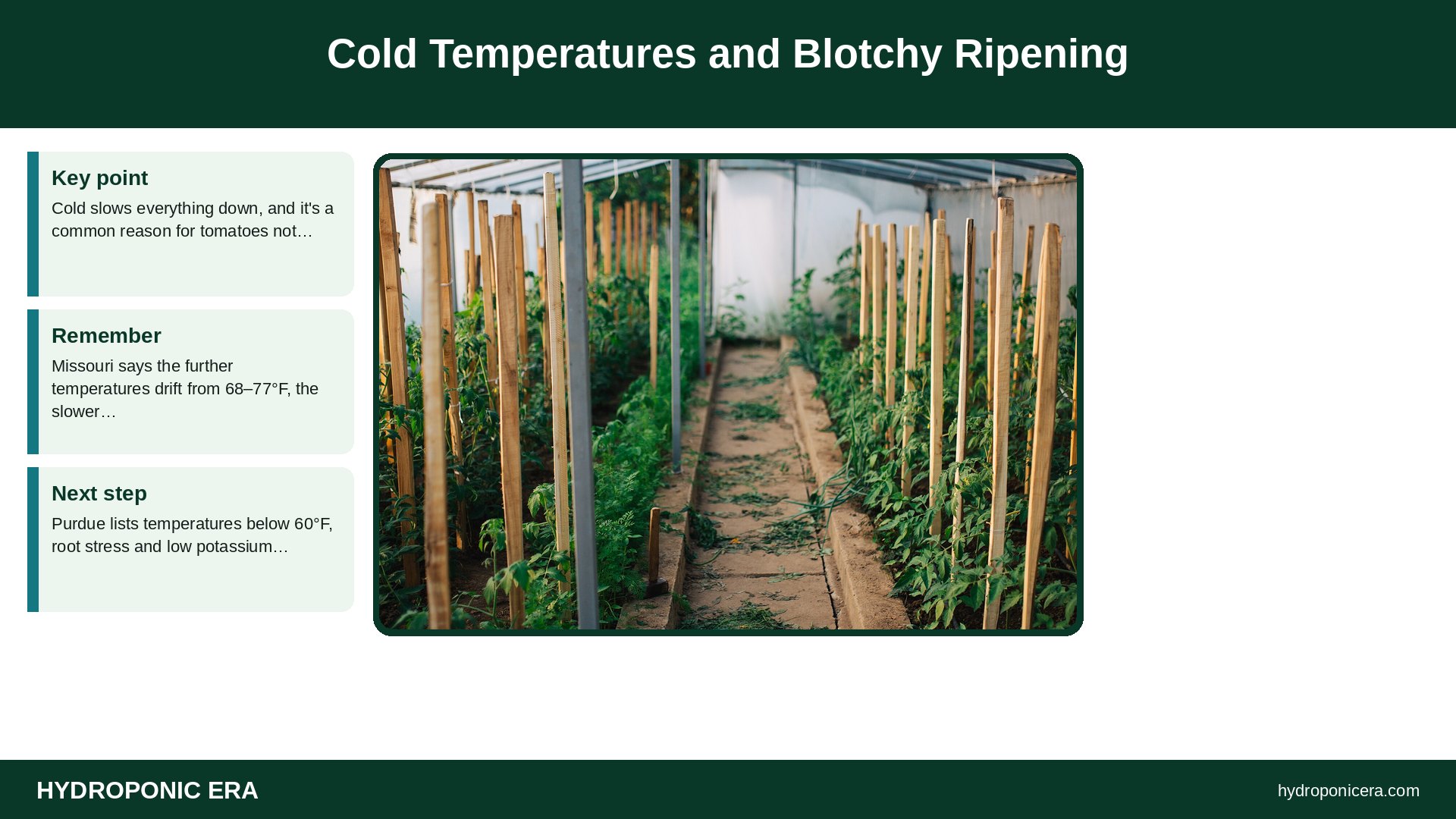
Cold slows everything down, and it’s a common reason for tomatoes not turning red in late fall. Missouri says the further temperatures drift from 68–77°F, the slower ripening becomes. Purdue lists temperatures below 60°F, root stress and low potassium as causes of blotchy ripening, where patches stay green or yellow. In a basement or garage system in winter, tomatoes not turning red may simply be cold fruit.
Yellow Shoulders and Potassium
Yellow shoulder is a disorder where the top of the fruit, around the stem, stays yellow while the rest turns red. Missouri explains that heat on the exposed shoulder blocks lycopene there first, and that affected fruit is often low in potassium: yellow shoulder often appears when tissue potassium drops from an adequate 4–6% to a low 2–3%, especially in heat.
For hydroponic growers, that points to the nutrient solution. Fruiting tomatoes need more potassium than leafy greens, so a lettuce-style formula can come up short. Our potassium deficiency guide and leafy vs fruiting nutrient recipes cover the adjustments. Missouri also links blotchy ripening to too much nitrogen, excess potassium competitors and dense canopies.
Tomatoes Not Turning Red: Quick Diagnosis Checklist
Work through these questions in order before changing your nutrients:
- Is it the whole plant or a few fruit? Whole-plant delays point to temperature or time. A few stubborn fruit near a light point to local heat.
- Is the color uneven? Yellow shoulders or patches with tomatoes not turning red evenly suggest heat plus low potassium.
- Is it cold at night? A garage system in winter may run well below 60°F after lights-off.
- Is the plant overloaded? Many fruit on a small plant share limited sugars and potassium.
Write down fruit-zone temperatures for a few days. Most cases of tomatoes not turning red become obvious once you see the numbers.
How to Fix Tomatoes Not Turning Red: 7 Steps
- Check the variety. Some types ripen yellow, orange, purple or green.
- Count the weeks. If fruit set less than six weeks ago, wait.
- Measure fruit-zone temperature. Aim for roughly 68–77°F during ripening and keep the area under 85°F.
- Keep leaf cover. SDSU warns that suddenly exposing fruit by heavy pruning can cause discoloration. Don’t strip leaves to “let the sun in.”
- Check potassium and EC. Use a fruiting-stage formula and test EC regularly.
- Pick at the pink stage. Purdue suggests picking fruit when it shows pink and letting it finish indoors to avoid sunscald and cracking.
- Ripen picked fruit warm. Purdue says green tomatoes ripen in a dark, warm spot at 65–70°F.
Ripening Picked Green Tomatoes Indoors
Mature-green fruit picked before a cold snap or at the end of a crop will usually color off the vine. Clean and dry the fruit, remove the stems and keep it at 65–70°F. Purdue advises against storing green fruit below 55°F, which can stop ripening. Light isn’t needed; a box in a warm room works. Check every few days and remove any fruit that starts to rot.
Tomatoes Not Turning Red in Hydroponic Systems
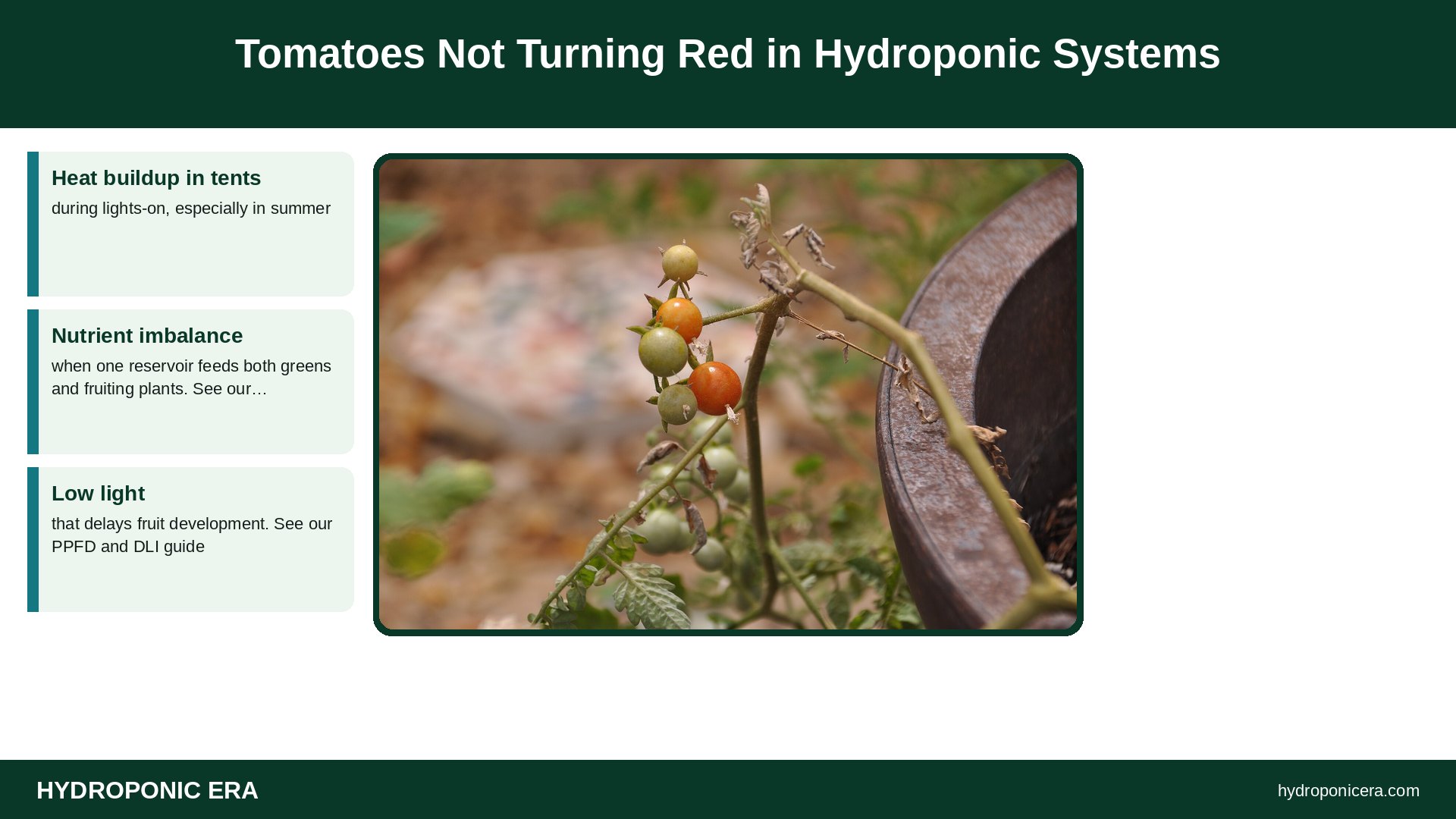
Hydroponic tomatoes ripen the same way as soil tomatoes, but a few causes of tomatoes not turning red are more common indoors:
- Heat buildup in tents during lights-on, especially in summer.
- Nutrient imbalance when one reservoir feeds both greens and fruiting plants. See our multi-crop reservoir guide.
- Low light that delays fruit development. See our PPFD and DLI guide.
- Too many fruit on small plants, which slows sizing and ripening.
Related fruit problems include blossom drop and fruit cracking. If leaves show velvety olive mold underneath, see our tomato leaf mold guide.
FAQs: Tomatoes Not Turning Red
Why are my tomatoes not turning red on the vine?
Usually they aren’t mature yet or it’s too hot. Above about 85°F, red pigment production slows or stops.
Should I cut leaves off to help tomatoes ripen?
No. Leaves feed the fruit, and sudden exposure can cause discoloration and sunscald.
Can I eat tomatoes with yellow shoulders?
Yes, the fruit is edible; the yellow area is just firmer and less flavorful. Cut it away if you prefer.
How long does it take tomatoes to turn red after picking?
It depends on how mature the fruit was and how warm you keep it. Purdue recommends a dark, warm 65–70°F spot; check fruit every few days.
Related HydroponicEra Guides
- How to grow hydroponic tomatoes
- How to grow cherry tomatoes hydroponically
- Tomato catfacing and fruit deformities
- Potassium deficiency in hydroponics
Sources
- Purdue Extension HO-26 — Tomatoes
- University of Missouri IPM — Tomato fruit disorders
- South Dakota State University Extension — Heat Causes Problems for Garden Produce
- Photo credits (Wikimedia Commons, edited with titles): Several green unripe and red ripe tomatoes growing on the vine. (086c449c-117b-44f6-a7c4-e2acbf284092) by NPS (Public domain); Ripening Tomatoes by WarmPhoto (CC BY-SA 4.0); Greenhouse filled with tomato plants and a bucket on the path by Shixart1985 (CC BY 2.0)