
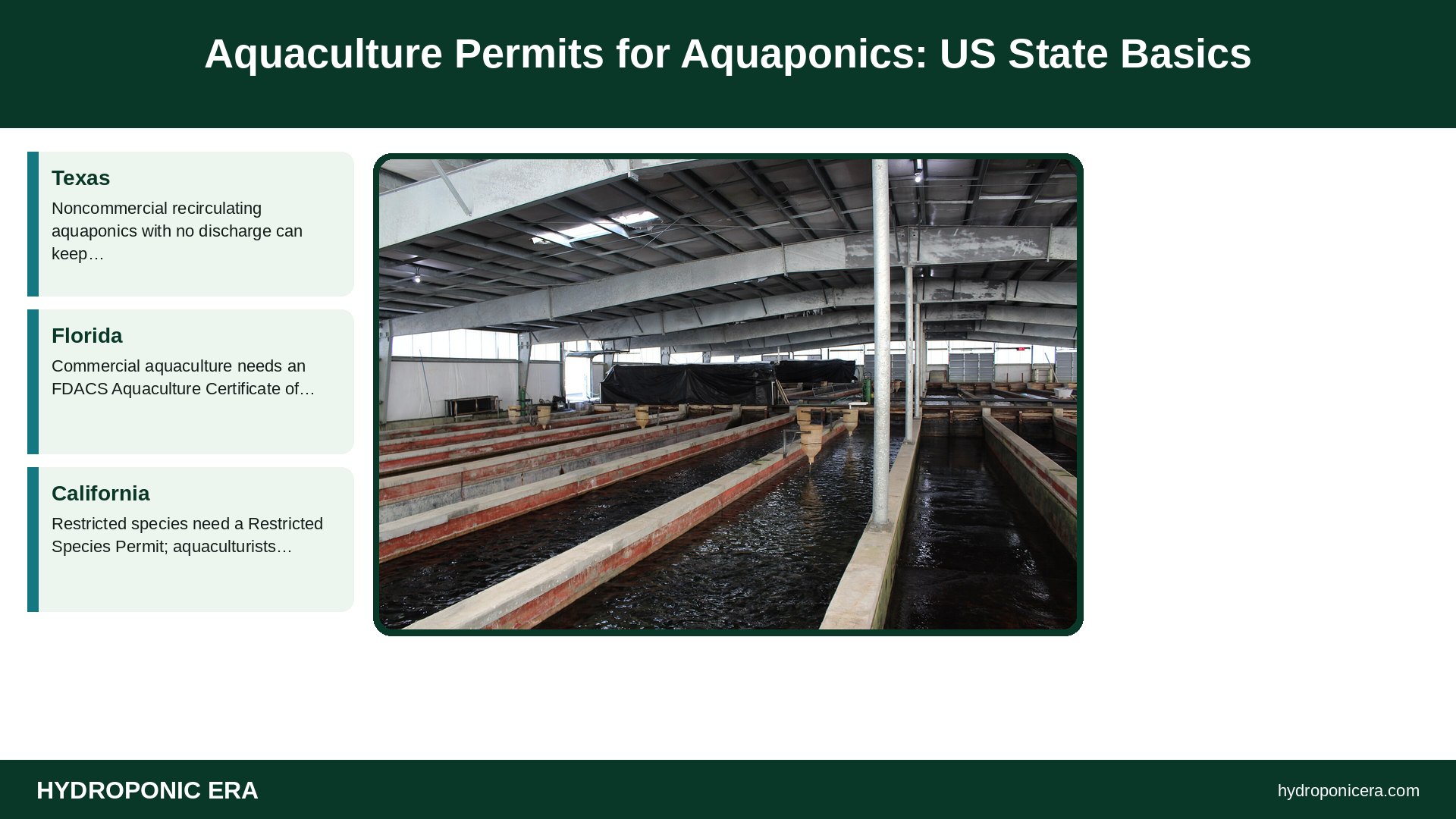
Whether you need an aquaculture permit for aquaponics depends on your state, the fish species, and whether you sell fish or discharge water. In most states, aquaculture is regulated by the state fish and wildlife agency, the department of agriculture, or both. Commercial growers generally need some form of registration or license. Hobby systems with native or approved species are often exempt, but exotic species like tilapia usually trigger extra rules. Texas, Florida, and California show how different the rules can be, so always check with your own state agency before you buy fish.
Key takeaway: Before stocking, confirm three things with your state: whether your species is allowed, whether a hobby system needs a permit, and what you need to sell fish or produce.
This article is general information, not legal advice. Rules change, so confirm with the agency before you act.
| State | Agency | Example rule (as published) |
|---|---|---|
| Texas | Texas Parks and Wildlife Department (TPWD) | Noncommercial recirculating aquaponics with no discharge can keep certain tilapia without a permit; commercial needs an Exotic Species Aquaculture Permit |
| Florida | FWC and FDACS | Commercial aquaculture needs an FDACS Aquaculture Certificate of Registration; some species need FWC authorization |
| California | California Department of Fish and Wildlife (CDFW) | Restricted species need a Restricted Species Permit; aquaculturists must register |
Why Aquaculture Permit Rules Exist
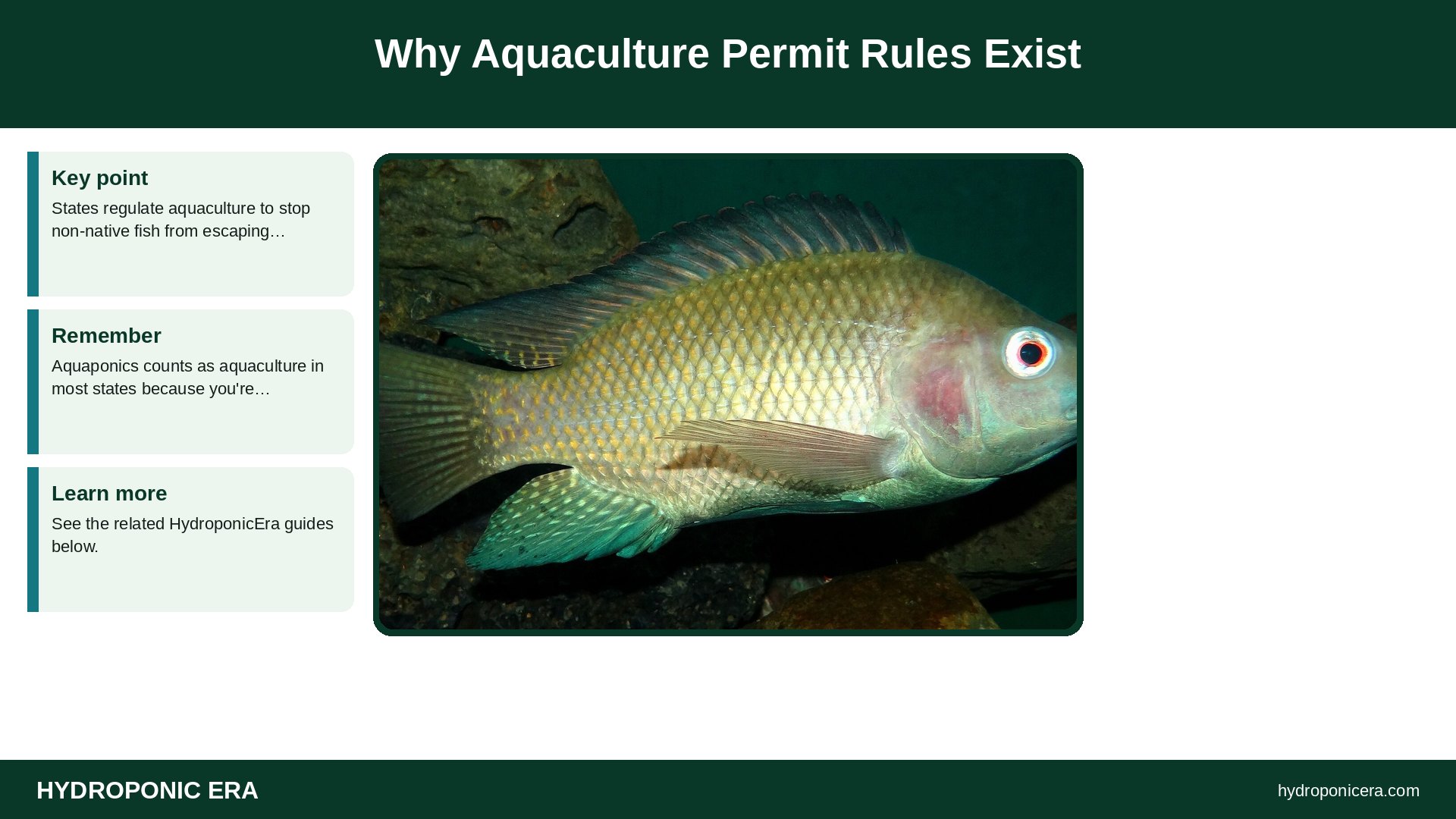
States regulate aquaculture to stop non-native fish from escaping into rivers and lakes, to prevent fish diseases from spreading, to protect water quality from discharges, and to keep food-safe practices for fish sold to the public. Aquaponics counts as aquaculture in most states because you’re raising fish, even if the fish are mainly there to feed the plants.
The Questions That Decide Whether You Need an Aquaculture Permit
- Species: native and approved species have looser rules than exotics or restricted species.
- Commercial or hobby: selling fish almost always needs registration or a license.
- Discharge: releasing system water to the environment may need a water permit.
- Source of fish: many states require buying from a licensed dealer or hatchery.
- Containment: exotic species often must be held in a closed, secure system.
- Selling produce: food safety rules may apply to vegetables as well.
Texas Aquaculture Permit Rules
TPWD announced that, from January 11, 2021, people may keep blue, Nile, Mozambique, and Wami tilapia in noncommercial, recirculating aquaponic systems without a permit, if the system has no discharge. Under the TPWD rule:
- The fish can’t be sold.
- Fish must be bought from a permitted Texas seller, with an exotic species transport invoice kept for one year.
- The system must be secure to prevent escape.
Commercial operations, and operations outside those conditions, need a TPWD Exotic Species Aquaculture Permit. Commercial aquaculture in Texas is also licensed through the Texas Department of Agriculture, so check both.
Florida Aquaculture Permit Rules
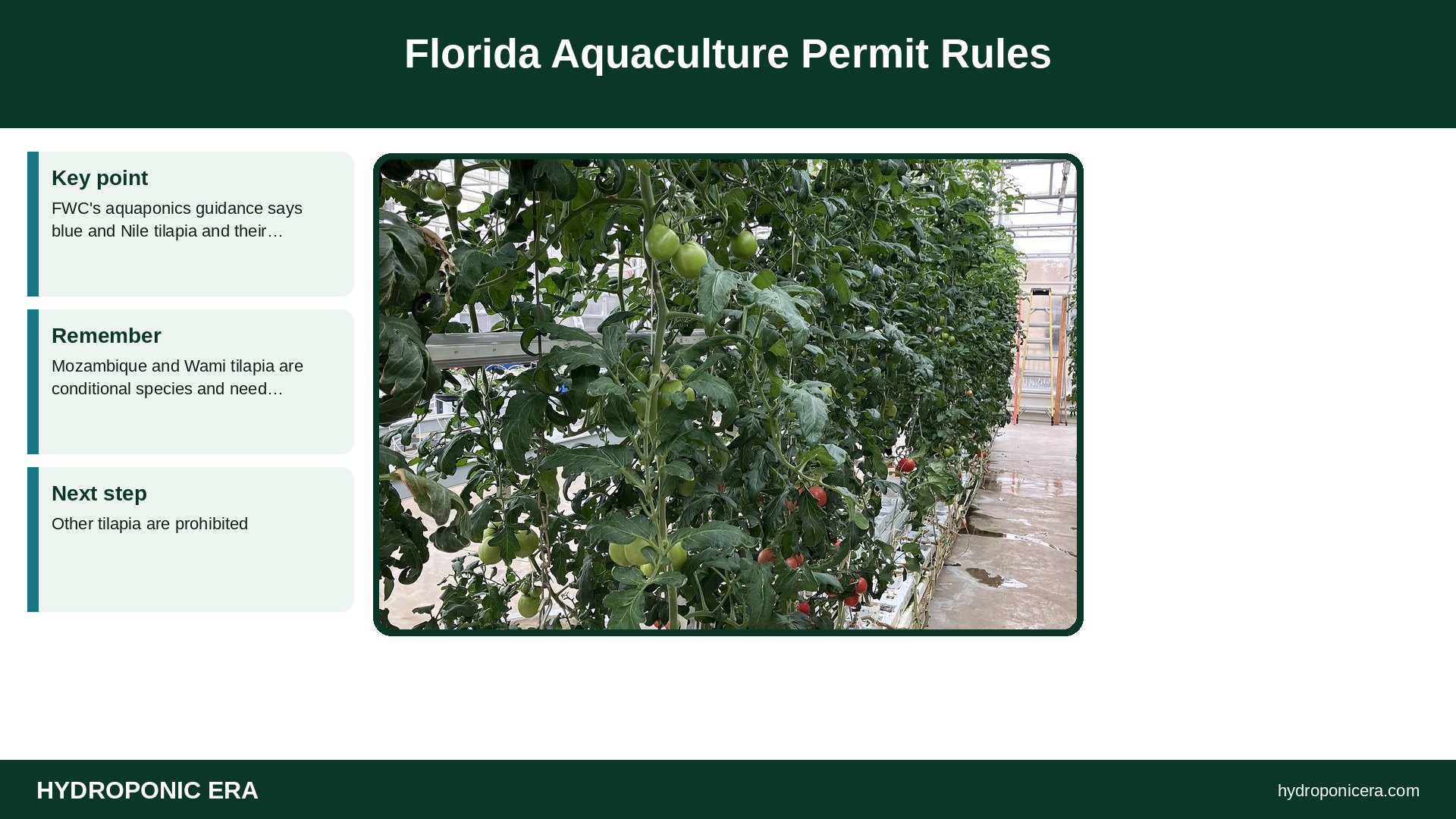
FWC’s aquaponics guidance says blue and Nile tilapia and their hybrids may be kept without a permit in the Northeast, North Central, South, and Southwest FWC regions, while the Northwest region needs a conditional species permit. Mozambique and Wami tilapia are conditional species and need authorization. Other tilapia are prohibited. Commercial growers must hold an FDACS Aquaculture Certificate of Registration and follow Florida’s Aquaculture Best Management Practices. Selling restricted species may need additional authorizations and food permits.
California Aquaculture Permit Rules
CDFW requires a Restricted Species Permit to import, possess, or transport species on the restricted list in California Code of Regulations, Title 14, Section 671. Blue and Nile tilapia are among the listed species. A UC Davis food safety fact sheet notes some tilapia species are allowed only in certain southern counties and that aquaculturists must register with CDFW. Restricted species generally must be held in closed systems.
Other States
Every state handles this differently. Some regulate aquaculture through the department of agriculture, others through natural resources or fish and wildlife, and some split the job. Common steps include:
- Find your state’s aquaculture coordinator, often listed by the state agriculture department.
- Check the list of approved, restricted, and prohibited species.
- Ask whether hobby or noncommercial systems are exempt.
- Ask about health certificates for fish brought in from out of state.
- Ask about water discharge and wastewater rules.
- If selling food, contact the state health department or agriculture department.
Your county extension office can help you find the right contacts.
Choosing Fish That Avoid Permit Headaches
If permits are a barrier, look at native species allowed in your state. Bluegill, sunfish, yellow perch, and channel catfish are native in large parts of the US, although they’re still regulated in some places. Goldfish and koi are ornamental fish usually allowed for hobbyists. See best aquaponics fish, bluegill aquaponics, and fish farming for beginners.
Selling Produce and Fish
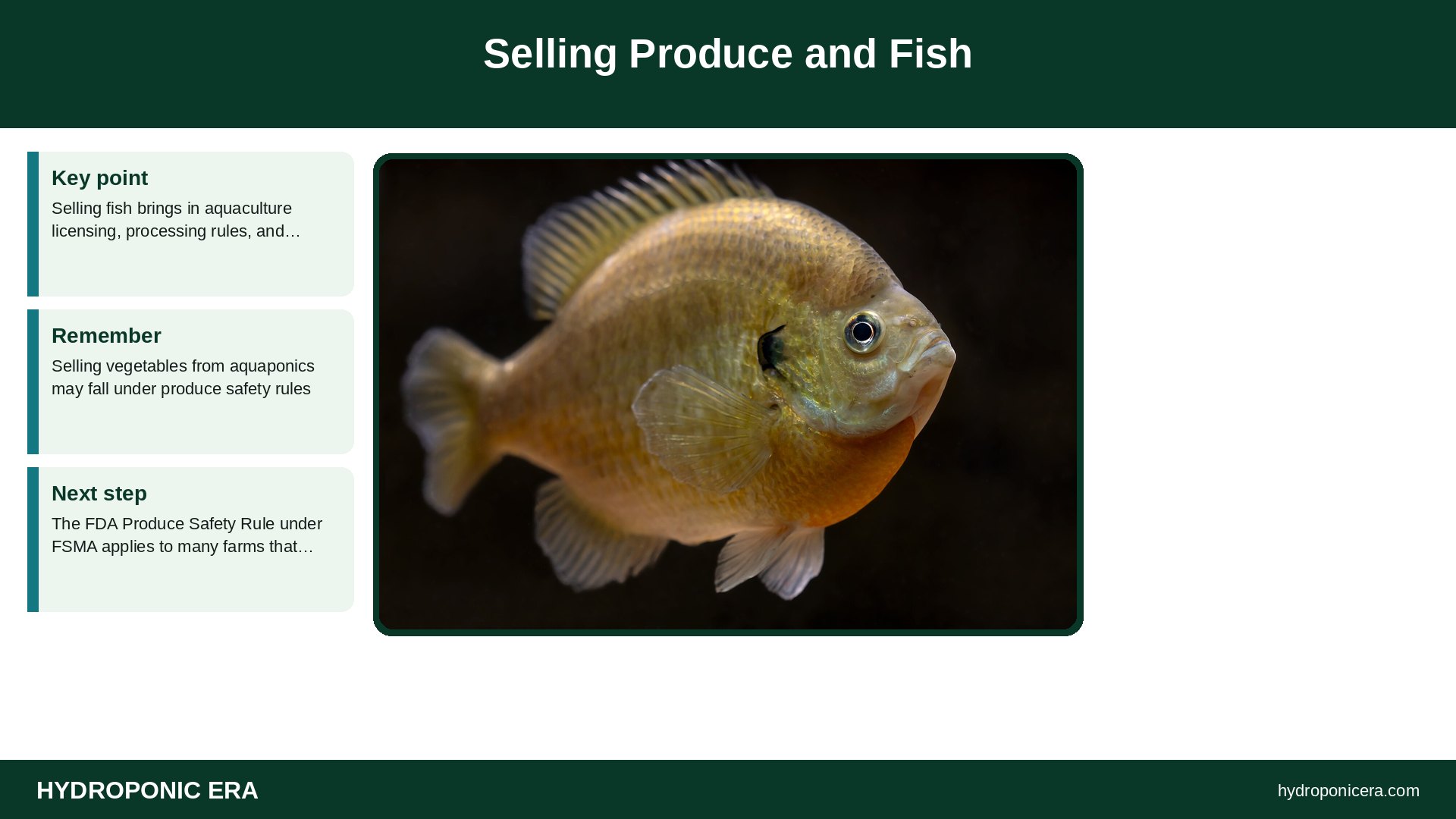
Selling fish brings in aquaculture licensing, processing rules, and food safety requirements. Selling vegetables from aquaponics may fall under produce safety rules. The FDA Produce Safety Rule under FSMA applies to many farms that grow and sell produce, with exemptions based on farm size and sales. Ask your state agriculture department how it applies.
Common Mistakes
- Buying fish online or at a fish market without checking legality.
- Assuming a hobby system is always exempt.
- Releasing fish or system water into ponds or streams.
- Selling a few fish to neighbors without a license.
- Not keeping purchase receipts.
Keep Records for Your Aquaculture Permit
Whether or not your state requires an aquaculture permit, keep a simple file: receipts and invoices for fish purchases, the seller’s license number, species names, dates stocked and harvested, and any health certificates. Texas, for example, requires hobby tilapia keepers to hold the exotic species transport invoice for one year. Records make inspections easy and help if you later apply for a commercial aquaculture permit.
FAQs: Aquaculture Permit
Do I need an aquaculture permit for backyard aquaponics?
It depends on your state and species. Some states exempt noncommercial systems with approved fish.
Can I keep tilapia without a permit in Texas?
TPWD allows certain tilapia in noncommercial recirculating aquaponics with no discharge, under conditions.
Who issues aquaculture permits?
Usually the state fish and wildlife agency, agriculture department, or both.
Do I need a permit to sell aquaponic fish?
Usually yes, plus food safety rules.
Where do I start?
Your state aquaculture coordinator or county extension office.
Sources
- TPWD — Tilapia in aquaponics rule news release
- TPWD — Exotic species permits
- FWC — Aquaponics
- FDACS — Aquaculture food fish
- CDFW — Restricted Species
- UC Davis — Aquaponics food safety fact sheet
- Photo credits (Wikimedia Commons, edited with titles): Raceways at Ennis National Fish Hatchery (51267218370) by USFWS Mountain Prairie (Public domain); Oreochromis-niloticus-Nairobi by Bjørn Christian Tørrissen (CC BY-SA 3.0); Solanum lycopersicum in aquaponics at the NC Greenhouse Nursery by Gogerr (CC BY-SA 4.0); Fish farming on Øksfjorden in Loppa, Troms og Finnmark, Norway, 2022 August by Ximonic (Simo Räsänen) (CC BY-SA 4.0); Bluegill (Lepomis macrochirus) black background by USFWS Mountain Prairie (Public domain)
1 thought on “Aquaculture Permits for Aquaponics: US State Basics”