
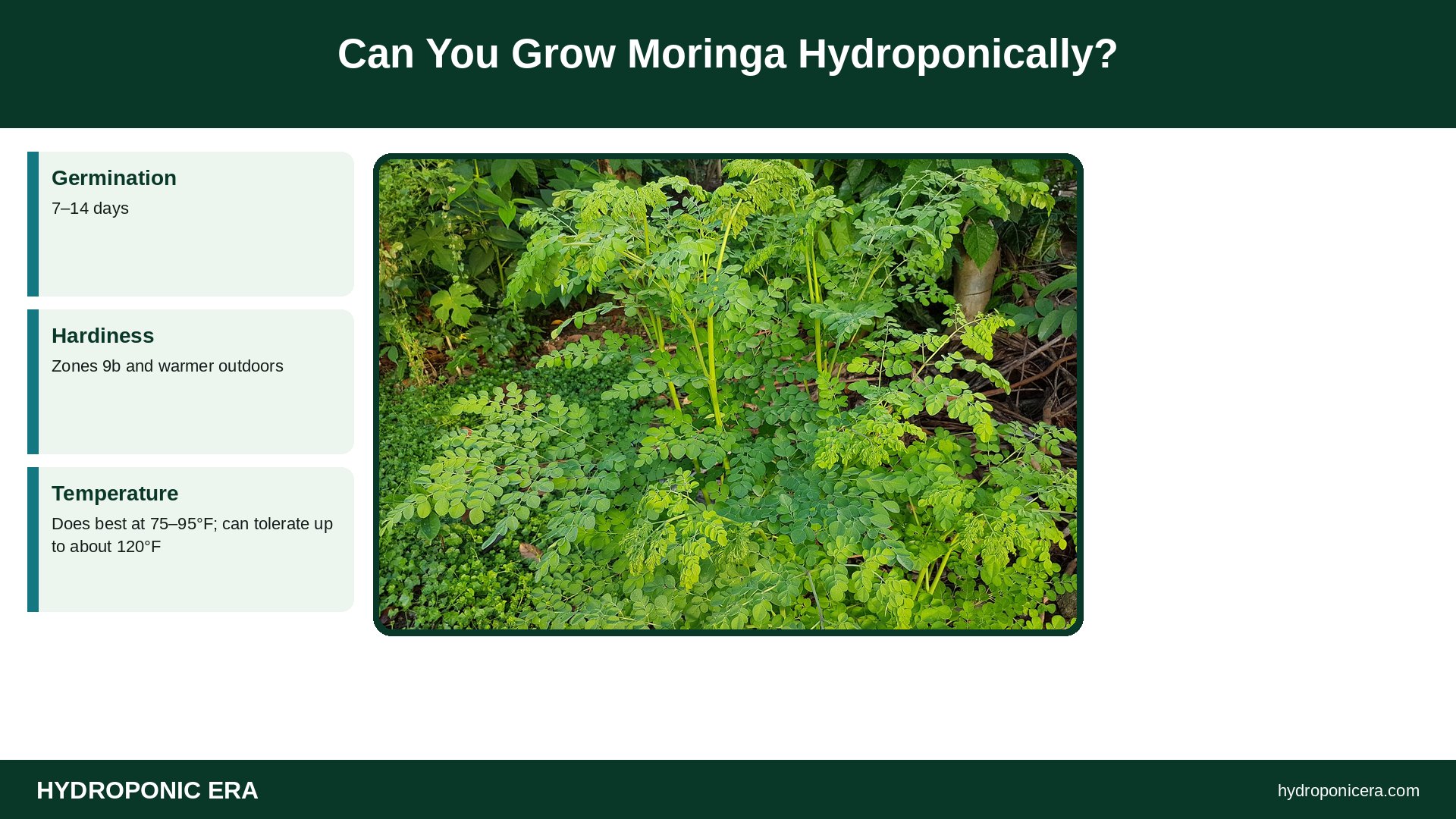
Moringa hydroponics is possible, and moringa is a fast grower, but it’s not a common hydroponic crop. University of California Cooperative Extension describes moringa as a fast-growing, drought-tolerant tree native to India, grown in USDA zones 9b and warmer, with seeds germinating in 7 to 14 days. UC notes it is cold-sensitive, so it’s grown in containers or as an annual in colder areas, and that regular pruning makes it bushier with more leaves. For hydroponics, grow it for leaves in a large, free-draining container with drip feeding, strong light, and warmth.
Key takeaway: Grow moringa for leaves in well-drained media, keep it warm and bright, prune often to keep it bushy, and protect it from cold.
| Need | UC figure or guidance |
|---|---|
| Germination | 7–14 days |
| Hardiness | Zones 9b and warmer outdoors |
| Temperature | Does best at 75–95°F; can tolerate up to about 120°F |
| Cold | Dies if it freezes fully; handles mild frost |
| Container | 1–5 gallon pot for young plants |
| Pruning | More pruning, more leaves |
Can You Grow Moringa Hydroponics Indoors?
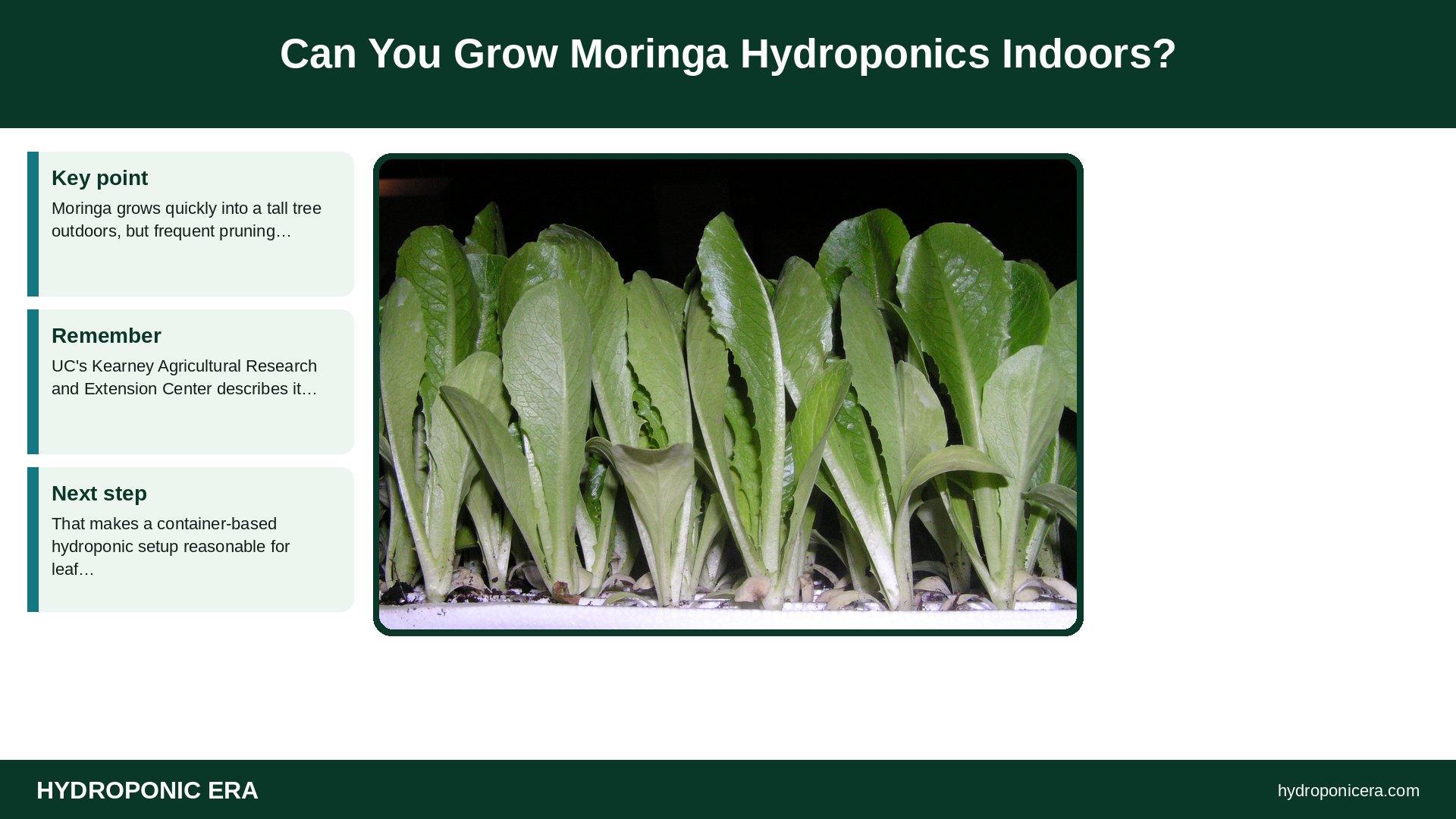
Yes, if it’s kept small. Moringa grows quickly into a tall tree outdoors, but frequent pruning keeps it as a leafy shrub. UC’s Kearney Agricultural Research and Extension Center describes it as easy to grow and notes it can be grown in a 1–5 gallon pot with lots of sun. That makes a container-based hydroponic setup reasonable for leaf harvests.
Best Systems for Moringa Hydroponics
Moringa is drought tolerant and doesn’t like waterlogged roots, so free-draining media is safer than deep water culture. Use perlite, coco, or clay pebbles in a 5-gallon or larger bucket, fed by drip on a timer with runoff draining freely. A Dutch bucket is a good fit. See Dutch bucket hydroponics and growing media.
Starting Moringa Hydroponics From Seed
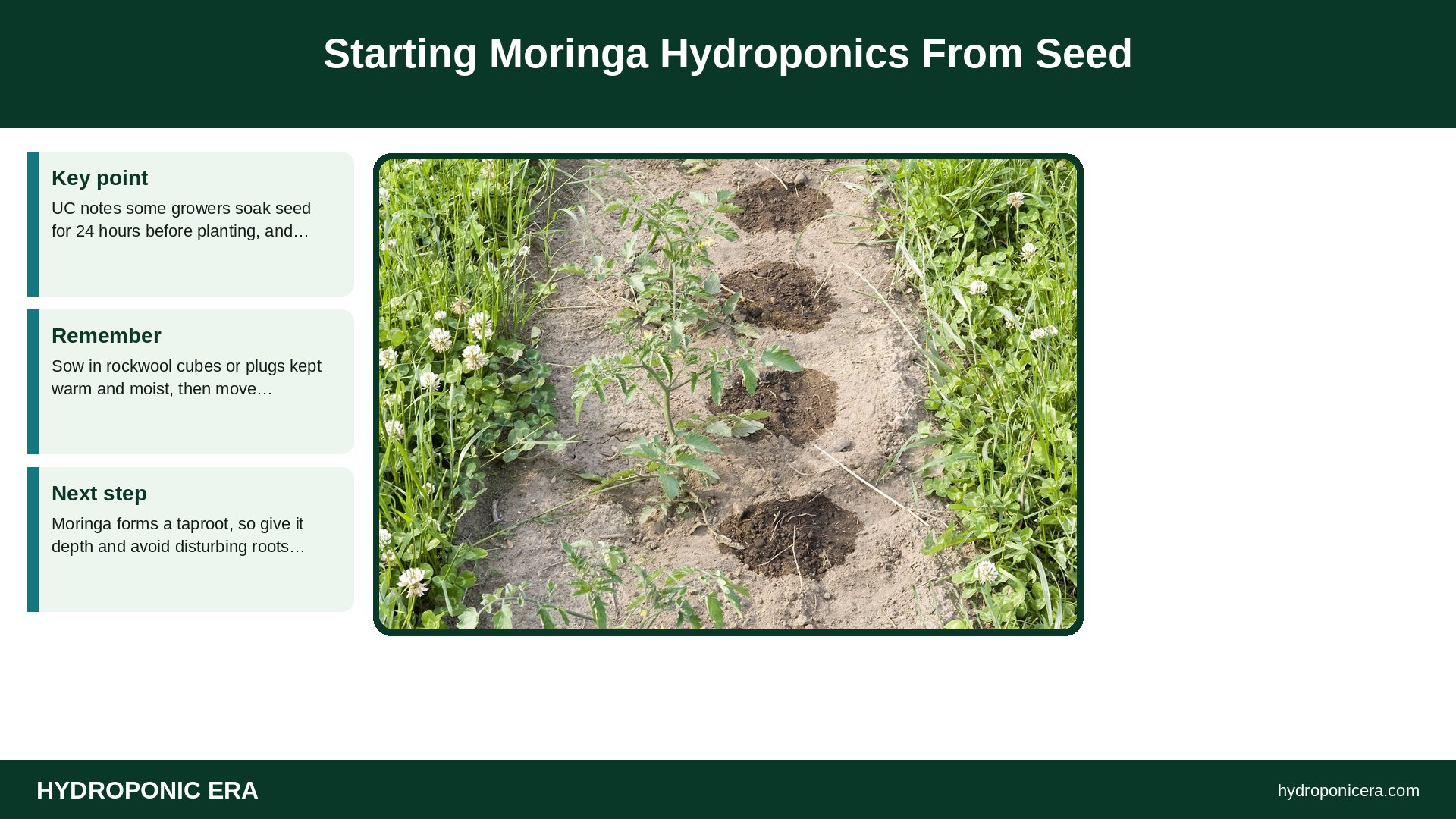
UC notes some growers soak seed for 24 hours before planting, and that seeds germinate in 7 to 14 days. Sow in rockwool cubes or plugs kept warm and moist, then move seedlings into net pots or buckets once roots show. Moringa forms a taproot, so give it depth and avoid disturbing roots during transplanting. See starter sponges.
Temperature and Light for Moringa Hydroponics
UC says moringa does best at 75–95°F and is cold sensitive, dying if it freezes fully. Indoors, keep it warm, away from cold windows in winter, and under strong light. Outdoors in summer, it thrives in full sun. In California, UC notes growers cut plants back to about a foot and cover them with plastic over winter. See LED watts per square foot.
Nutrients for Moringa Hydroponics
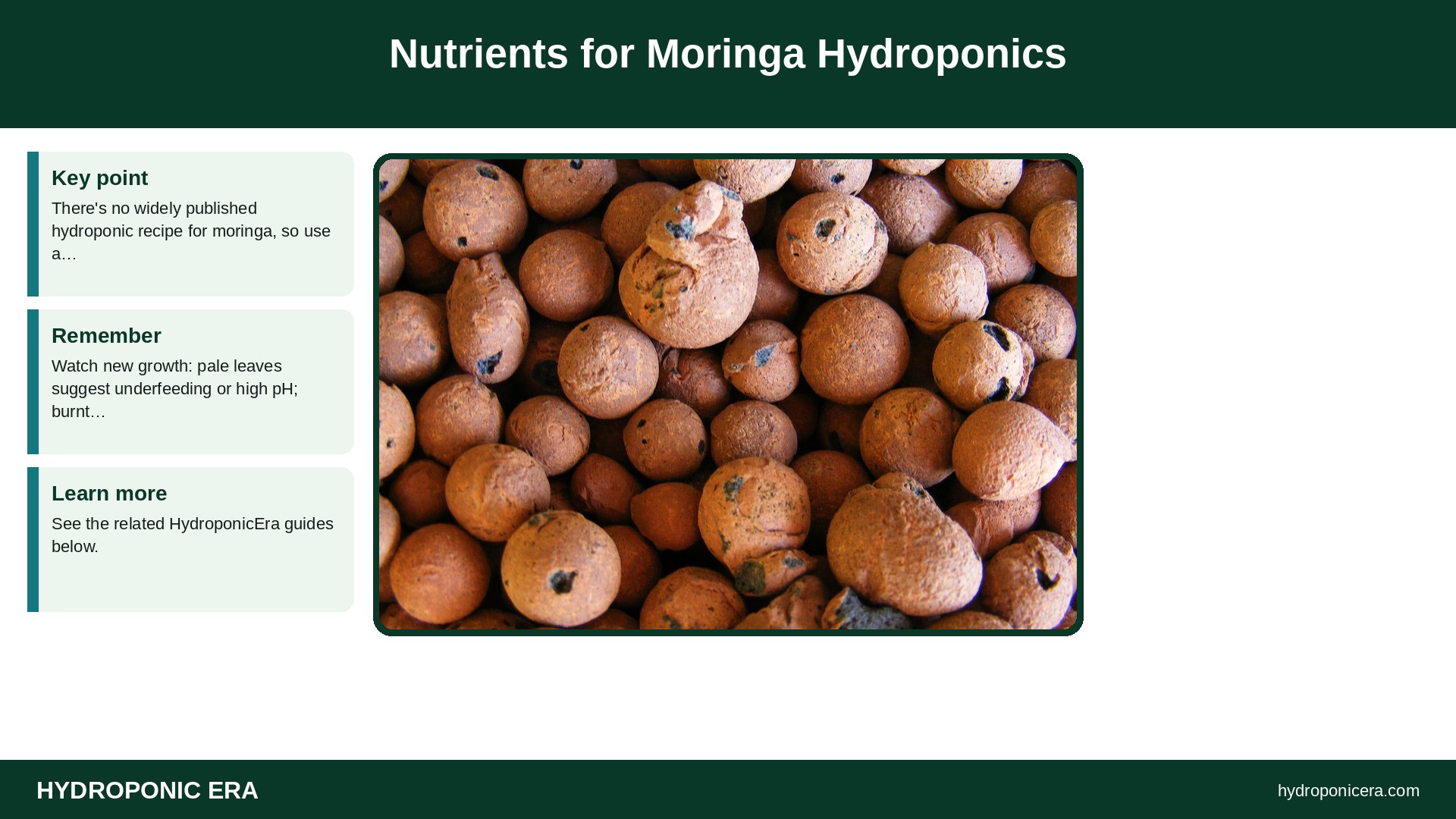
There’s no widely published hydroponic recipe for moringa, so use a general leafy-crop nutrient at moderate strength and keep pH in the usual 5.5–6.5 range. Watch new growth: pale leaves suggest underfeeding or high pH; burnt tips suggest the nutrient is too strong. Adjust in small steps. See how to lower EC.
Pruning and Harvesting Moringa Hydroponics Plants
UC notes that regular pruning gives bushier growth and higher leaf yield, while unpruned plants produce more pods. For a compact indoor plant, pinch or cut the main stem once it’s a couple of feet tall, then harvest branch tips regularly. Strip the small leaflets from stems and use them fresh or dried.
Common Problems
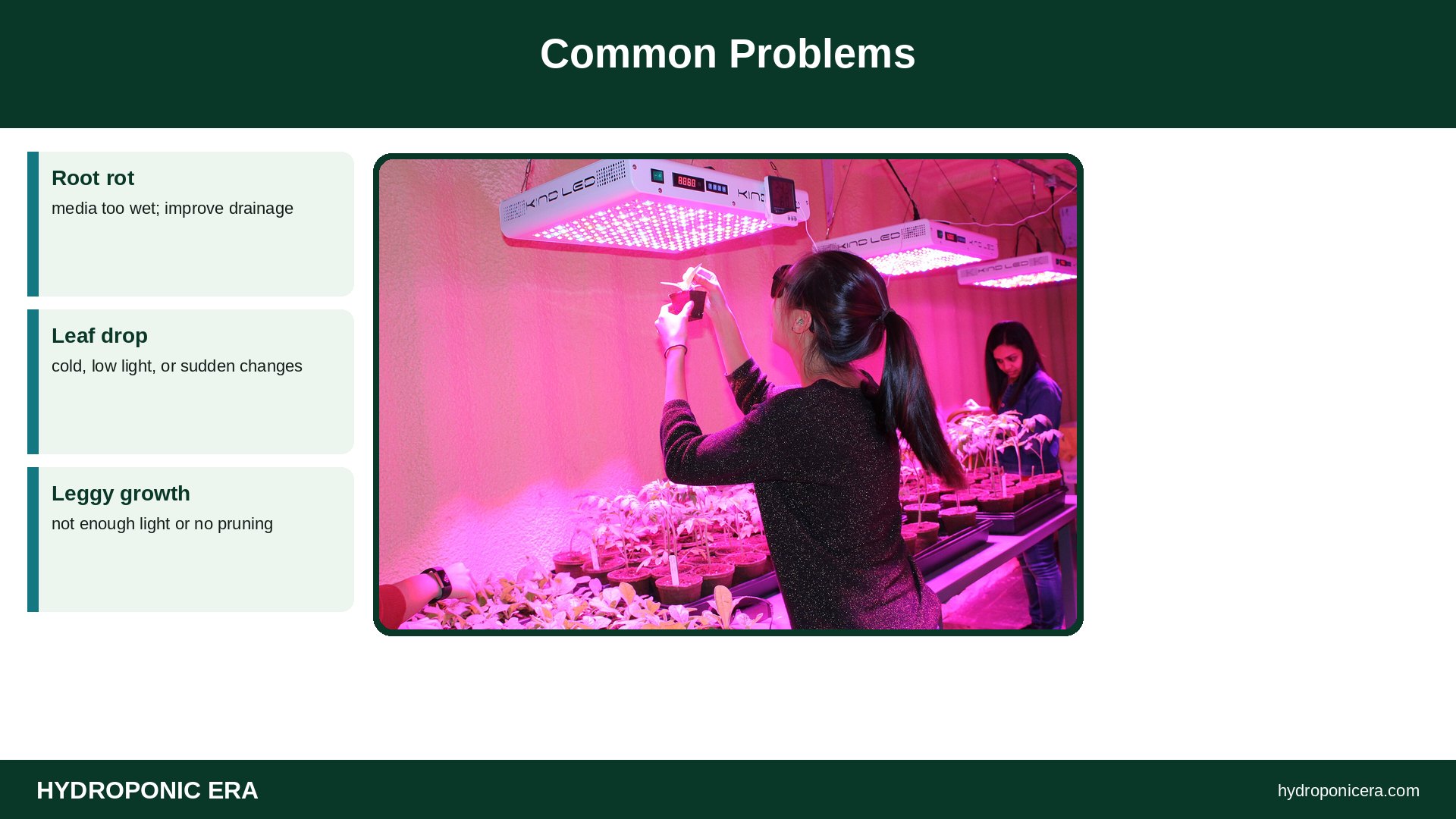
- Root rot: media too wet; improve drainage.
- Leaf drop: cold, low light, or sudden changes.
- Leggy growth: not enough light or no pruning.
- Aphids and mites: check new growth often.
Weekly Routine for Moringa Hydroponics
- Check pH and EC and write them down.
- Make sure emitters flow and media drains freely.
- Harvest and prune tips.
- Inspect new growth for pests.
- Flush media with plain water every few weeks.
Is Moringa Hydroponics Worth It?
For leaf lovers in warm homes, yes. Moringa grows quickly and responds well to pruning, so a single plant can give regular small harvests. In cold climates, expect slower growth in winter unless you supply heat and light. Because research on hydroponic moringa is limited, start small and keep notes.
Beginner Mistakes With Moringa Hydroponics
Common mistakes are keeping roots too wet, letting the plant get cold, and skipping pruning so it shoots up into a thin, tall stem. Treat it as a shrub, not a tree, and it stays productive.
Moringa Hydroponics Harvest Uses
Moringa leaves are small leaflets on long stems. Strip them by running your fingers down the stem, then rinse and use them fresh in soups, eggs, or stir-fries, or dry them in a shady, airy spot and crumble into powder. Harvest regularly; UC notes pruning increases leaf yield, so frequent picking is good for the plant as well as the kitchen.
Equipment Checklist for Moringa Hydroponics
- A 5-gallon or larger bucket with drain.
- Perlite, coco, or clay pebbles.
- A drip pump and timer.
- A pH and EC meter.
- A leafy-crop nutrient.
- Pruning shears.
Most of this gear is reusable from crop to crop, so the first setup costs the most. Buy reliable meters first; they prevent the majority of problems.
Beginner Mistakes With Moringa Hydroponics
Common mistakes are keeping roots too wet, letting the plant get cold, and skipping pruning. Moringa responds well to regular cutting.
Getting Started With Moringa Hydroponics
Start small, change one thing at a time, and keep a simple log of pH, EC, temperature, and what you changed. Most hydroponic problems show up as patterns in those numbers before they show on the plant. Compare your notes with the sources below, and adjust slowly rather than chasing every small swing. A steady routine matters more than any single product or setting.
FAQs: Moringa Hydroponics
Can moringa grow hydroponically?
Yes, in well-drained media with drip feeding.
How fast does moringa germinate?
UC says seeds germinate in 7 to 14 days.
Can moringa survive frost?
Only mild frost; a full freeze can kill it.
How do I keep moringa small?
Prune regularly; UC notes this also boosts leaf yield.
What temperature suits moringa?
UC says it does best at 75–95°F.
Can I eat moringa leaves fresh?
Yes, many people use them fresh or dried.
Sources
- UC Cooperative Extension Central Sierra — Moringa Oleifera (Miracle Tree)
- UC Master Gardeners — Helpline Hot Topic: Moringa
- Photo credits (Wikimedia Commons, edited with titles): Kalamunggay (Moringa oleifera), Philippines by Obsidian Soul (CC0); Lettuce Plugs by Apapac at English Wikipedia (Public domain); Drip irrigation (2552390830) by Dwight Sipler from Stow, MA, USA (CC BY 2.0); Hydroton by Lucis (CC BY-SA 3.0); Terramera scientists working in a climate-controlled growth chamber located in Vancouver, BC. The space uses LED lighting, which supports plant growth. (50188965171) by Simon Fraser University – Communications & Marketing (CC BY 2.0)