
What is the best planted tank substrate? The best planted tank substrate is gravel or sand with grains about 0.03–0.16 inch (0.8–4 mm) over a thin nutrient layer, or an all-in-one aquarium soil. Tropica recommends a 0.2–0.4 inch (0.5–1 cm) nutrient layer, then gravel sloping from 1.2–1.6 inches (3–4 cm) in front to 2.4–3.1 inches (6–8 cm) at the back.
Key takeaway: A good planted tank substrate anchors roots, lets water circulate and holds nutrients near the roots. Use a nutrient layer or aquarium soil for rooted plants, inert gravel or sand on top, and root capsules later. Research shows rooted aquatic plants can take phosphorus from sediment, so substrate choice matters most for heavy root feeders.
| Substrate type | Best for | Notes |
|---|---|---|
| Inert gravel (0.8–4 mm) | Most tanks; easy plants | Needs root tabs for root feeders |
| Sand | Carpets, bottom fish | Fine grains can compact |
| Nutrient layer under gravel | Swords, crypts, carpets | Tropica: 0.5–1 cm layer |
| Aquarium soil | High-tech planted tanks | Rich in nutrients; replace over time |
| None needed | Anubias, java fern, floaters | Grow on wood or float |
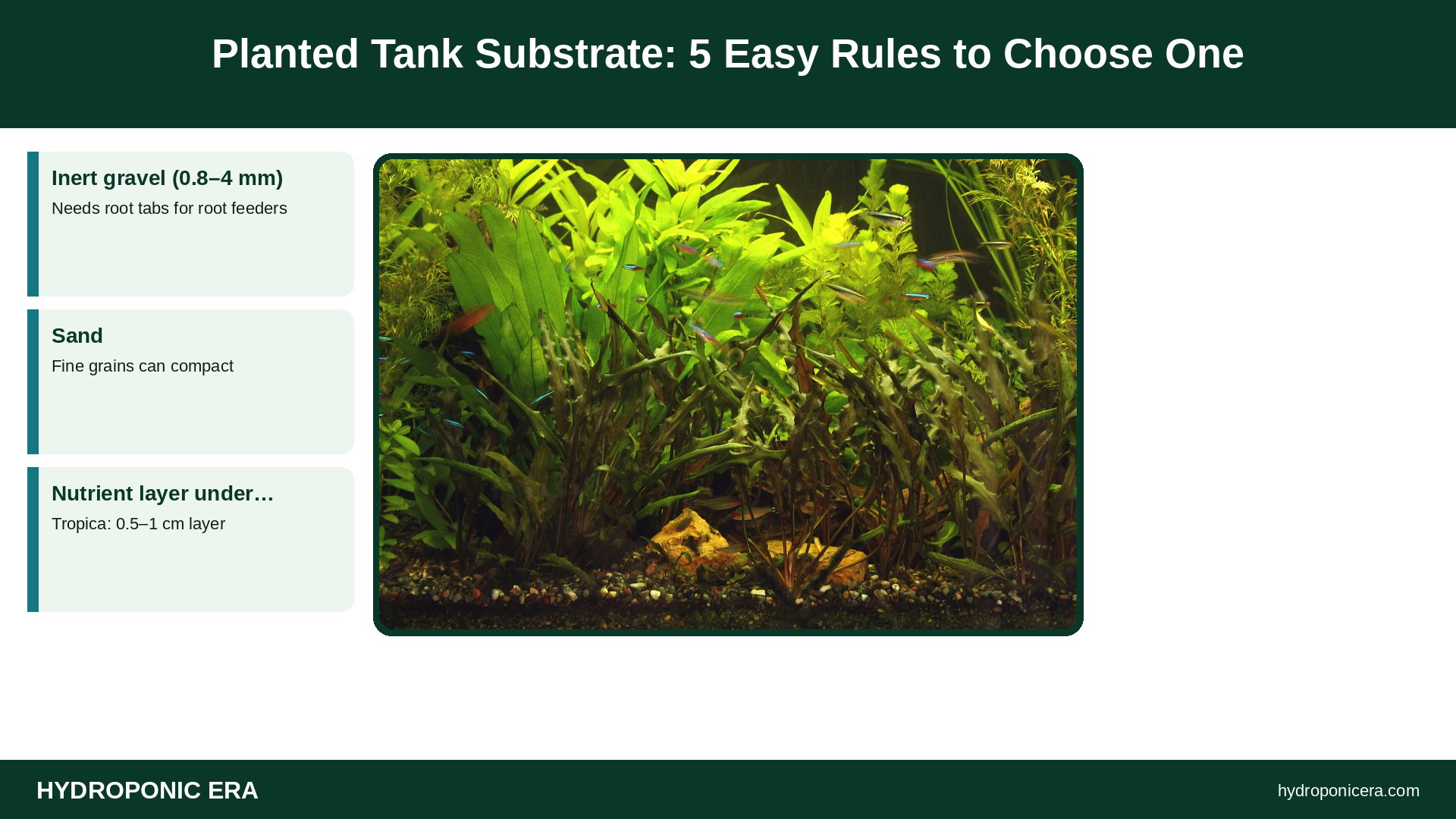
What Does Planted Tank Substrate Do?
Planted tank substrate holds roots, keeps water moving around them and binds nutrients. Tropica explains that substrate retains roots, ensures good water circulation around them and binds nutrients that roots can absorb. A concentrated nutrient substrate adds minerals that create a richer root zone than plain gravel can.
Barko and Smart showed in Freshwater Biology that submersed plants like Egeria, Hydrilla and Myriophyllum, despite small root systems, could get all their phosphorus from sediment when the overlying water held none. Roots matter more than many beginners expect, especially for swords, crypts and other rosette plants that send roots deep into the gravel.
Which Planted Tank Substrate Should You Choose?
Choose a planted tank substrate based on your plants, budget and tank style. Inert gravel works for most tanks and needs fertilizer added later. Nutrient layers or aquarium soils give rooted plants a fast start. Plants grown on wood, like anubias and java fern, need no substrate at all. If you are unsure, start with inert gravel; you can add nutrients later, but you cannot easily remove a rich soil once the tank is planted.
- Beginner tank: inert gravel plus root tabs.
- Rooted plants: nutrient layer under gravel.
- Carpet tank: fine gravel, sand or aquarium soil.
- Low-tech epiphytes: any decorative gravel.
For rhizome plants that skip the substrate, see anubias and java fern.
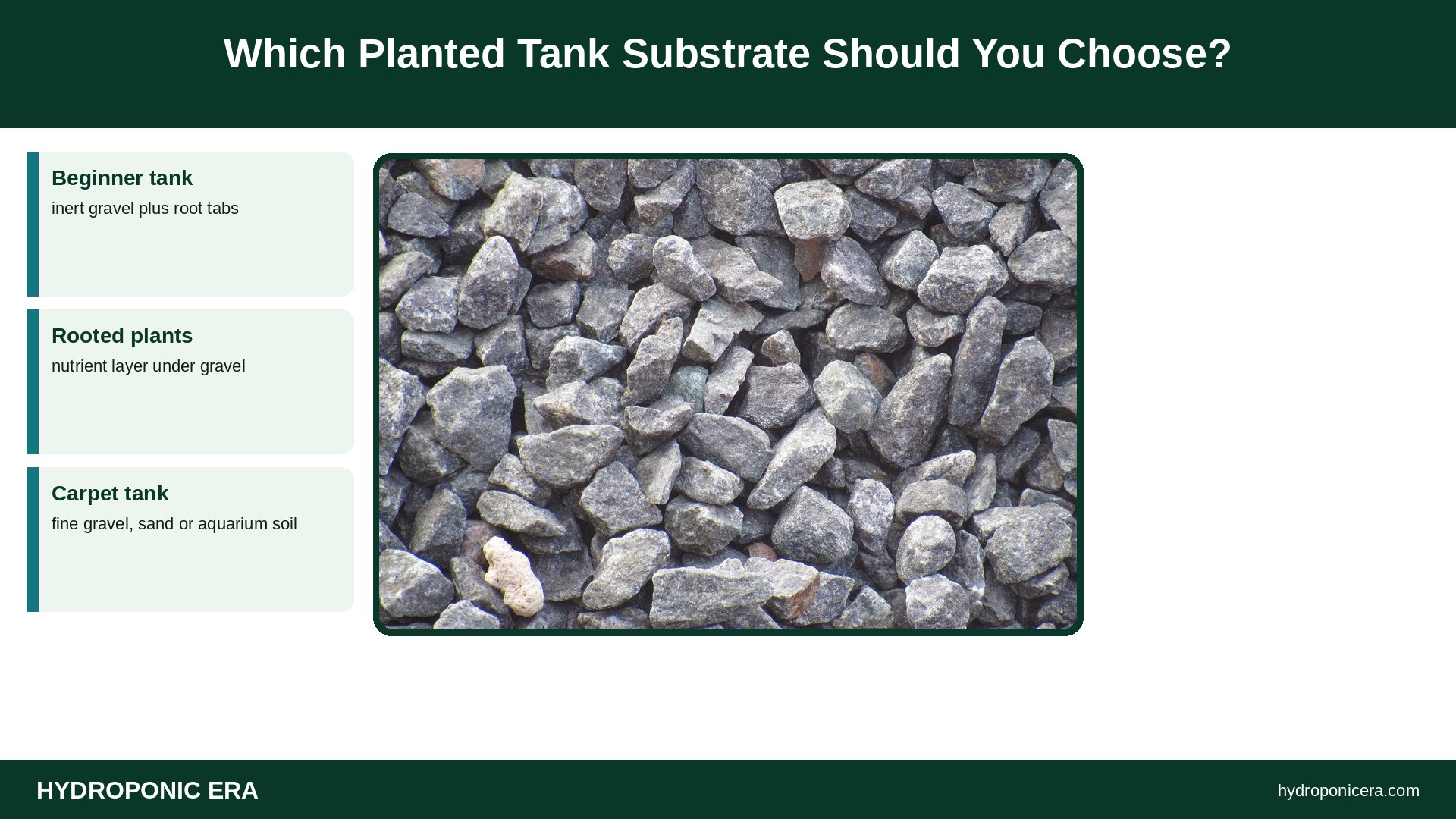
What Grain Size Is Best for Planted Tank Substrate?
The best grain size for planted tank substrate is about 0.03–0.16 inch (0.8–4 mm). Tropica says gravel in that range allows good water circulation, as long as it does not release harmful substances into the water. Very fine sand packs tightly and can starve roots of flow, while large pebbles leave gaps that trap waste.
| Grain size | Circulation | Use |
|---|---|---|
| Under 0.8 mm | Low; may compact | Thin top layer only |
| 0.8–4 mm | Good | Most planted tanks |
| Over 4 mm | High; traps debris | Hardscape areas |
Rinse new gravel well until the water runs clear. For hydroponic gravel uses, compare pea gravel.
How Deep Should Planted Tank Substrate Be?
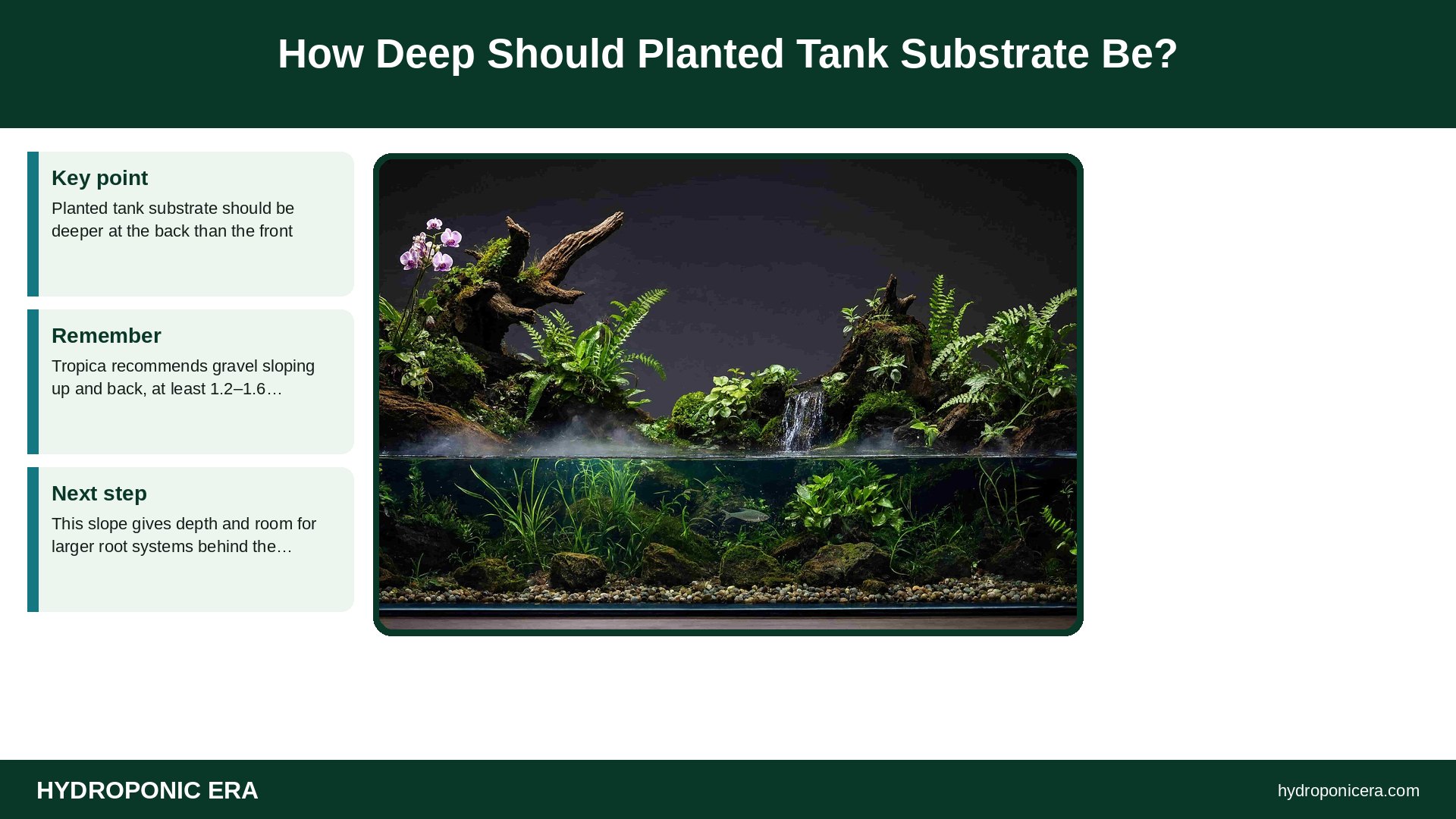
Planted tank substrate should be deeper at the back than the front. Tropica recommends gravel sloping up and back, at least 1.2–1.6 inches (3–4 cm) deep in front and 2.4–3.1 inches (6–8 cm) at the back. This slope gives depth and room for larger root systems behind the foreground plants.
- Spread a 0.2–0.4 inch (0.5–1 cm) nutrient layer where rooted plants will go.
- Cover it with rinsed gravel across the whole floor.
- Slope the gravel from front to back.
- Place rocks and wood, protecting the glass under heavy stones.
- Fill slowly over a plate so the layers do not mix.
Do You Need Root Tabs With Planted Tank Substrate?
You need root tabs if your planted tank substrate is inert or its nutrients run low. Tropica explains that aquarium plants absorb nutrients through both roots and leaves, and that its nutrition capsules release nutrients over 6–9 months. Push capsules near heavy root feeders such as swords and crypts.
- Inert gravel: add capsules from the start.
- Nutrient layer: add capsules after several months.
- Floating or epiphyte plants: use liquid fertilizer instead.
Tropica warns that liquid fertilizer added faster than plants use it can feed algae.
What Mistakes Ruin Planted Tank Substrate?
The most common planted tank substrate mistakes are uneven layers, poor rinsing and too much disturbance. Pulling plants often mixes the nutrient layer into the water and can cloud the tank. Gravel that leaches minerals may shift water chemistry, so buy aquarium-labeled products and test pH after setup.
- Do not vacuum deep into the nutrient layer.
- Do not use garden soil without a cap.
- Do not bury rhizomes of anubias or java fern.
- Test pH and KH in the first weeks.
Track pH changes with our GH and KH water tests guide.
Is sand or gravel better for a planted tank?
Gravel of 0.8–4 mm usually gives better root circulation, per Tropica. Fine sand works for carpets and bottom fish but can compact.
How thick should the nutrient layer be?
Tropica recommends about 0.2–0.4 inch (0.5–1 cm) of nutrient substrate under the gravel, mainly where rooted plants will grow.
Can I use plain gravel for live plants?
Yes. Add root tabs for rooted plants and liquid fertilizer for stem and floating plants.
Do plants absorb nutrients from substrate?
Yes. Barko and Smart found submersed plants could get all their phosphorus from sediment in lab tests where the water held none.
How deep should aquarium gravel be?
Tropica suggests at least 1.2–1.6 inches (3–4 cm) in front and 2.4–3.1 inches (6–8 cm) at the back.
Sources
- Tropica Aquarium Plants. Hardscape and Bottom Layer in the Tank.
- Tropica Aquarium Plants. Fertiliser and CO2 for Your Aquarium.
- Barko, J. W., & Smart, R. M. (1980). Mobilization of sediment phosphorus by submersed freshwater macrophytes. Freshwater Biology.
- Photo credits (Wikimedia Commons, edited with titles): Planted Tank 03 – Flickr – The Wandering Angel by The Wandering Angel from Makati City, Philippines (CC BY 2.0); Gravel Stones by Saral Shots (CC0); Nature Aquarium Aquascape by Dileepkumardr (CC0); PEA GRAVEL by Ranjithkumar Murugesan (CC0)