
What causes pond foam? Pond foam forms when dissolved organic compounds act like soap, lowering surface tension so bubbles last. In garden ponds, the usual sources are decaying plants, fish waste, uneaten food and leaves, whipped up by waterfalls or fountains. Natural foam is light and not slimy. Foam with a detergent smell or slick feel may signal pollution.
Key takeaway: Pond foam is usually harmless: Alberta Environment and Michigan EGLE explain that natural organic surfactants from decaying plants trap air bubbles. In fish ponds, cut the organic load by feeding less, removing debris, cleaning filter foam in pond water and doing partial water changes with dechlorinated water. Rule out soap, fertilizer and other chemicals first.
| Cause | Clue | Fix |
|---|---|---|
| Decaying plants and leaves | Foam after leaf fall or dieback | Net debris, trim dying plants |
| Overfeeding fish | Foam plus cloudy water | Feed less; remove leftovers |
| Turbulence | Foam below waterfalls | Normal; reduce flow if heavy |
| Soft water | Foam forms easily | Natural; Alberta Environment |
| Soap or chemicals | Slick feel, odor, near runoff | Find the source; partial water change |
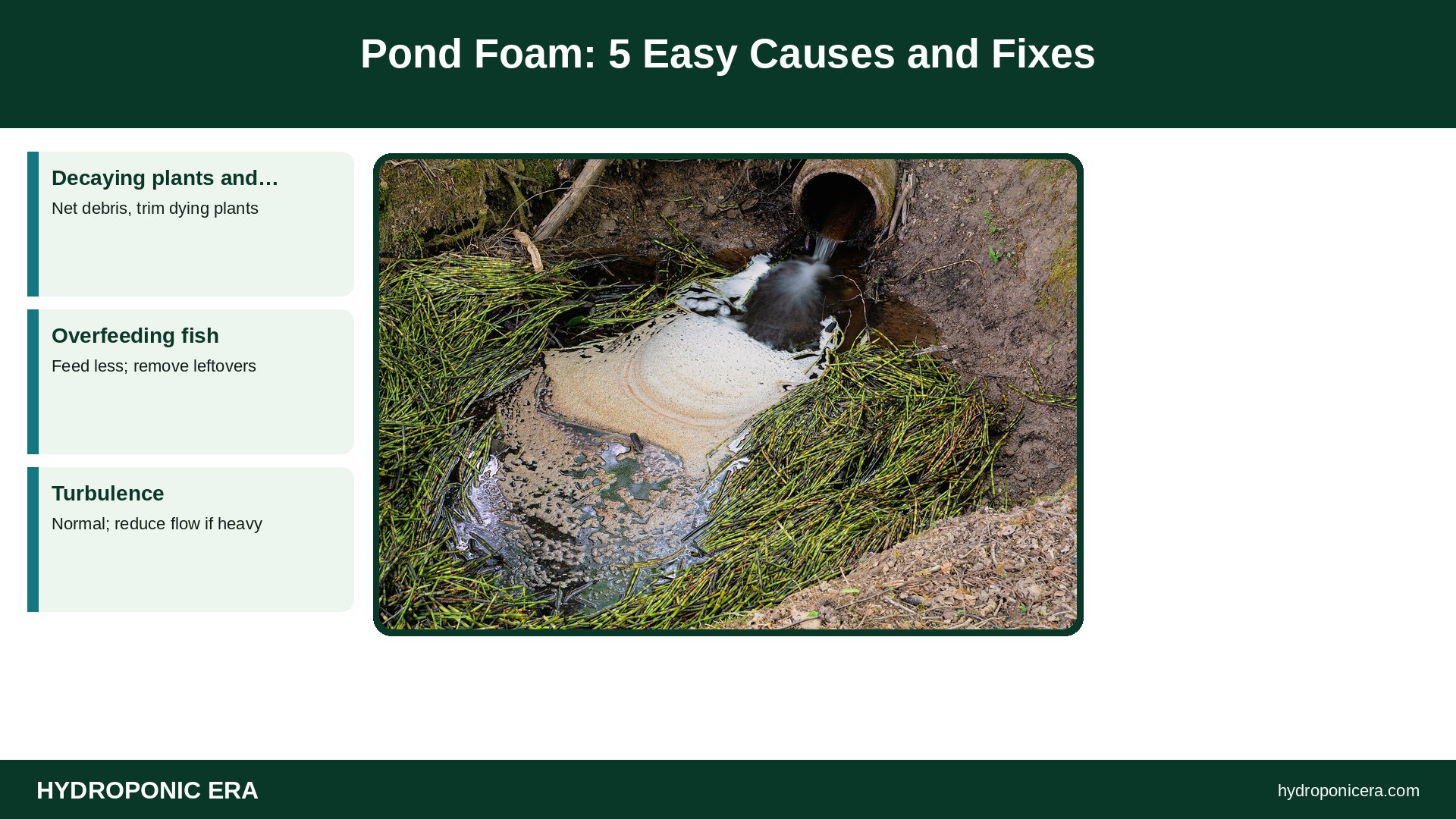
What Causes Pond Foam?
Pond foam is caused by surfactants, natural or synthetic, that lower the water’s surface tension. Alberta Environment explains that surface waters naturally contain dissolved organic compounds, some of which behave like soap, so air bubbles persist. Natural surfactants include fatty acids from plant lipids and lignins from wood. Mixing by waves, currents or waterfalls then builds the bubbles into foam.
Michigan EGLE says lakeshore foam most often comes from the natural die-off of aquatic plants, which release oils that float to the surface and make foam formation easier.
Is Pond Foam Harmful to Fish?
Most pond foam is not harmful by itself, but heavy, persistent foam signals excess organic matter. Michigan EGLE says some foam can indicate pollution from industry, vehicle washing, firefighting materials or construction sediment. Michigan’s health department recommends people and pets avoid contact with foam on surface waters and rinse skin after contact.
- Natural foam: light, persistent, not slimy, near turbulence or decay.
- Possible pollution: soapy smell, slick feel, near runoff or a wash area.
- Fish warning signs: gasping at the surface or hanging near the waterfall.
Low oxygen is the real danger in a dirty pond; an air pump with an air stone adds oxygen. Michigan EGLE adds that natural foam usually coincides with onshore winds, and streaks of foam can form on open water on windy days, so wind direction is a useful clue.
How Do You Get Rid of Pond Foam?
Get rid of pond foam by lowering the organic load, not by masking it. Remove the sources of dissolved organics, keep the biological filter healthy and replace a portion of the water. Anti-foam products may break bubbles fast, but foam returns if the waste that feeds it stays in the pond.
- Skim off foam and floating debris with a net.
- Remove leaves, dead plant parts and sludge.
- Cut fish feeding until uneaten food stops collecting.
- Rinse filter foam in a bucket of pond water, not tap water.
- Do a partial water change with dechlorinated water.
- Retest ammonia and nitrite after a few days.
K-State Extension advises using dechlorinator before adding life to the pond, because it neutralizes chlorine, chloramines, ammonia and heavy metals.
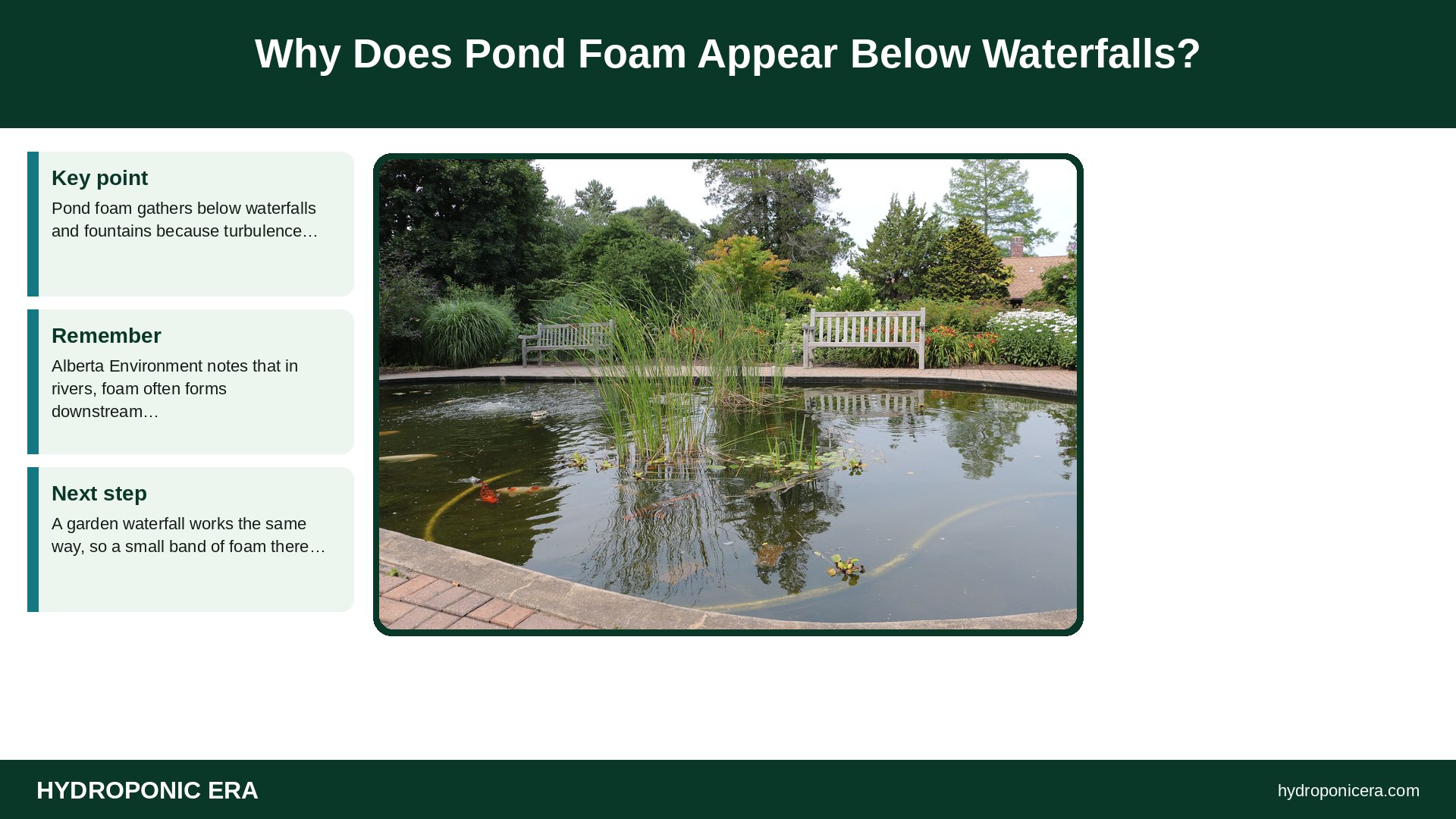
Why Does Pond Foam Appear Below Waterfalls?
Pond foam gathers below waterfalls and fountains because turbulence mixes air into the water. Alberta Environment notes that in rivers, foam often forms downstream of rapids, in eddies and below waterfalls and dams. A garden waterfall works the same way, so a small band of foam there can be normal.
- Reduce pump flow if foam builds up fast.
- Point the return so it does not churn one spot.
- Check that the filter is not clogged and bypassing.
For flow sizing, see our aquaponics pump size guide.
Does Water Hardness Affect Pond Foam?
Water hardness can change how much pond foam forms. Alberta Environment explains that calcium and magnesium ions bind to negatively charged surfactants, so harder water foams less, while softer waters may foam more often. If your pond uses soft rainwater, some foam may be more common even when the pond is healthy.
K-State Extension shows how to raise carbonate hardness with sodium bicarbonate (baking soda) and recommends retesting until readings stay in range.
How Do You Prevent Pond Foam?
Prevent pond foam by managing the waste that feeds it. Michigan EGLE says foam is common in waters with high organic content, especially in late fall and winter when plant material decays, and in dark, tannin-stained water from woody areas. K-State Extension adds that beneficial bacteria break down pond debris and a filter improves water quality by removing debris.
- Feed only what fish eat in a few minutes.
- Net leaves in autumn and trim dying plants.
- Keep the filter running nonstop.
- Keep lawn fertilizer and soap away from the pond.
- Add plants like water lettuce to absorb excess nutrients.
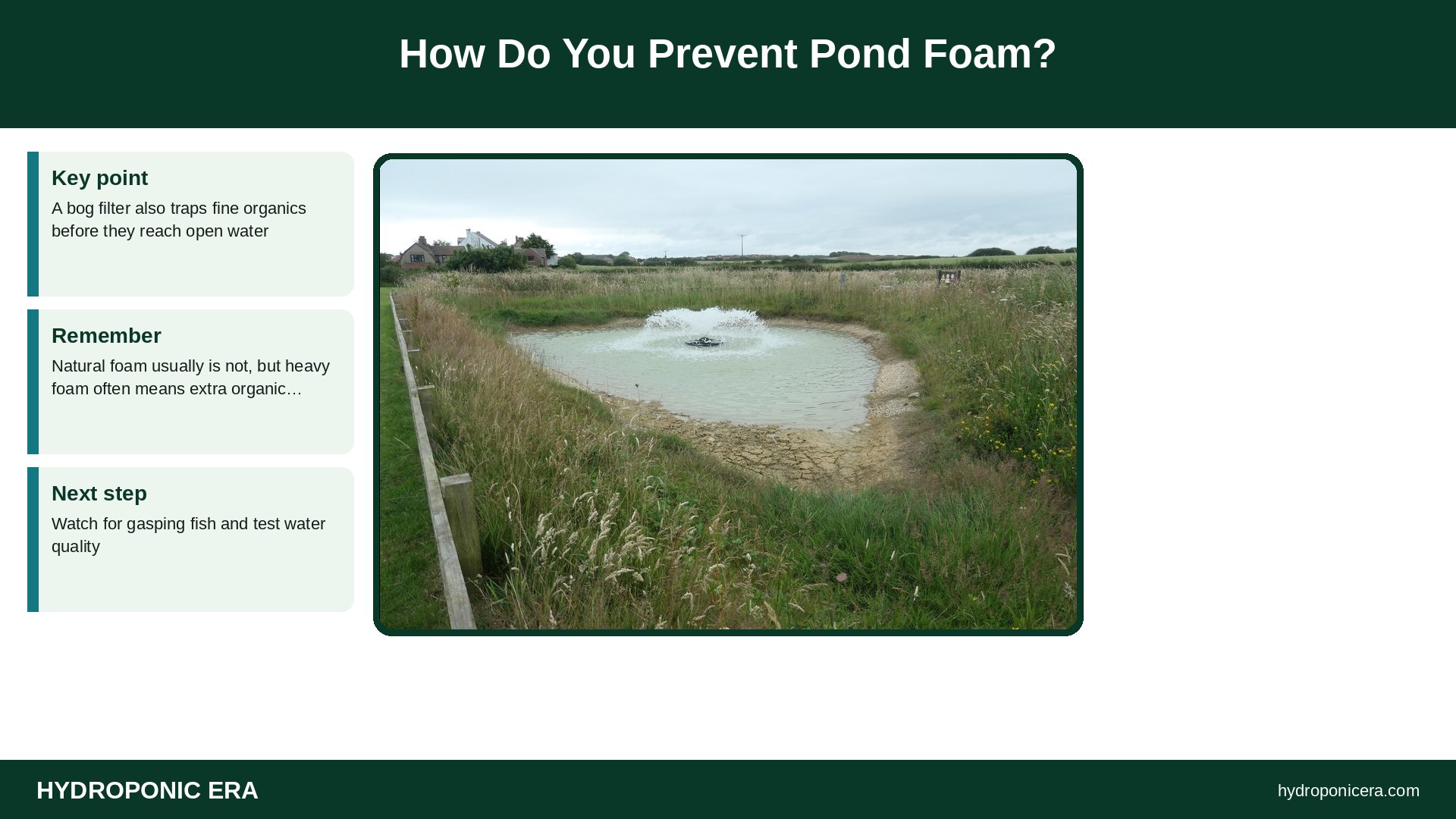
A bog filter also traps fine organics before they reach open water.
Is pond foam bad for fish?
Natural foam usually is not, but heavy foam often means extra organic waste, which can lower oxygen. Watch for gasping fish and test water quality.
Why does my pond foam after rain?
Rain can wash leaves, soil and other organic matter into the pond, and runoff may carry fertilizer or soap. Michigan EGLE notes construction sediment can also cause foam.
Does overfeeding cause pond foam?
It can. Uneaten food and extra fish waste add dissolved organics that act as surfactants, the same process Alberta Environment describes in lakes.
Will a water change remove pond foam?
A partial water change dilutes dissolved organics. Use dechlorinator, as K-State Extension advises, and fix the waste source.
Is anti-foam safe for ponds?
Products labeled for fish ponds break bubbles, but they do not remove the cause. Follow the label and reduce organic waste.
Sources
- Alberta Environment. Foam on Surface Waters.
- Michigan Department of Environment, Great Lakes, and Energy. Foam: A Naturally Occurring Phenomenon.
- Kansas State University. MF2911 Water Gardening: Biological Balance.
- Photo credits (Wikimedia Commons, edited with titles): 20200509State forest Saarbrücken 11 by Flocci Nivis (CC BY-SA 4.0); Pond-edge plants at Achamore Garden – geograph.org.uk – 5446824 by M J Richardson (CC BY-SA 2.0); Deep Cut Gardens Koi Pond by FossilDS (CC0); Small pond with aerating fountain – geograph.org.uk – 6559394 by Christine Johnstone (CC BY-SA 2.0)