
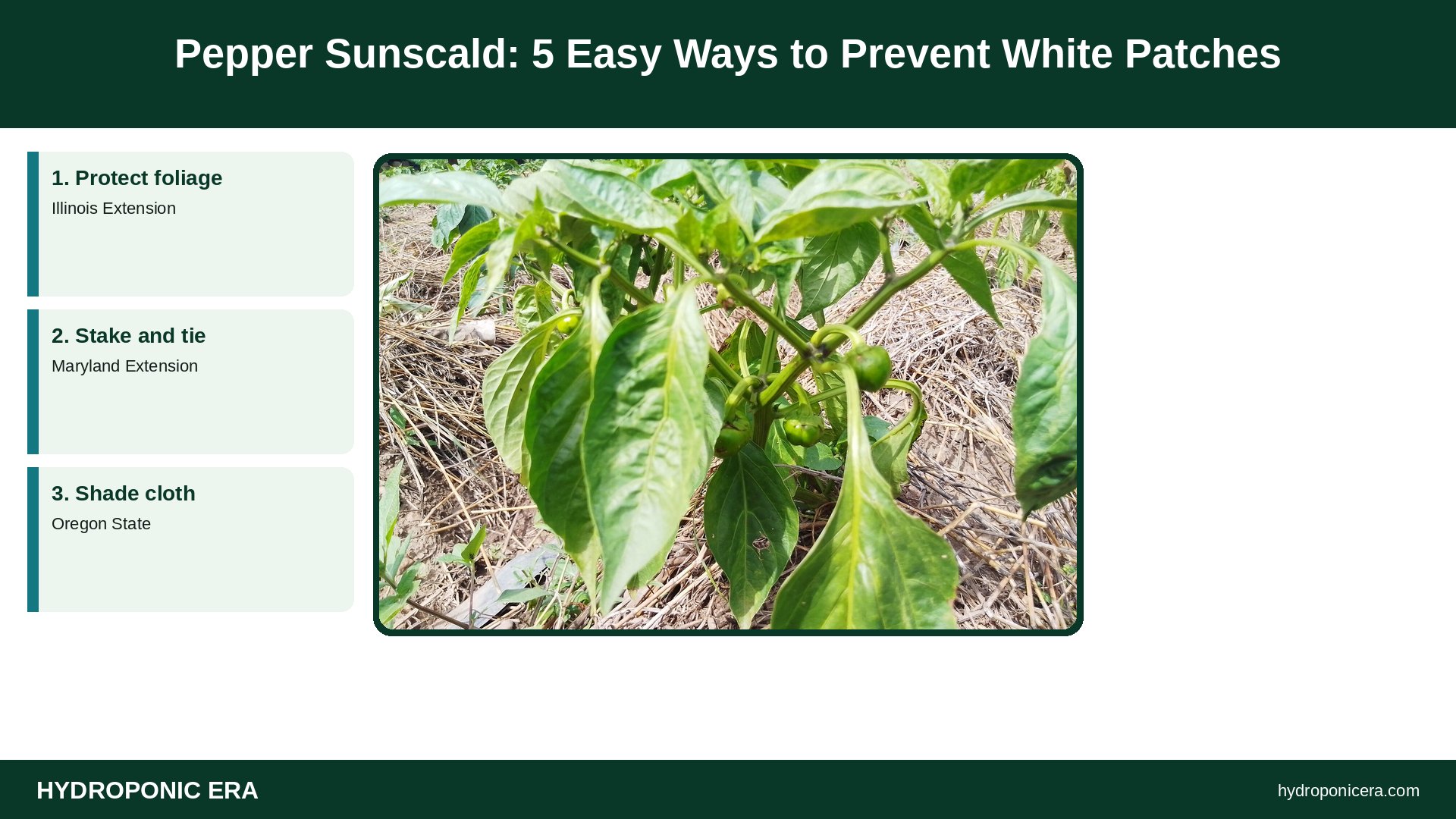
What causes pepper sunscald? Pepper sunscald is sun injury, not a disease: fruit suddenly exposed to intense direct sunlight in hot weather develops pale, papery, sunken patches. It follows leaf loss, heavy pruning or leaning plants. Prevent it by keeping dense foliage, staking plants and adding shade cloth for late-afternoon sun, as Illinois, Maryland and Oregon State Extension advise.
Key takeaway: Keep leaves over fruit, stake and tie plants, avoid heavy pruning, and shade the hottest afternoon sun.
| Prevention | Why it works | Source |
|---|---|---|
| 1. Protect foliage | Leaf-spot diseases strip shade from fruit | Illinois Extension |
| 2. Stake and tie | Stops plants leaning and exposing fruit | Maryland Extension |
| 3. Shade cloth | Blocks hot late-afternoon sun | Oregon State |
| 4. Prune lightly | Heavy pruning removes fruit cover | Illinois Extension |
| 5. Feed for leaf growth | A dense canopy shields fruit | Oregon State |
| 6. Pick carefully | Broken stems suddenly expose fruit | Illinois Extension |
What Does Pepper Sunscald Look Like?
Pale, papery patches on the sunny side. University of Illinois Extension describes irregular, light-colored scalded areas on any part of the fruit exposed to direct sun. They become slightly sunken or wrinkled and creamy white on older fruit, light brown on young fruit, and dry thin and papery in hot weather. Oregon State says patches are light brown or white.
What Causes Pepper Sunscald?
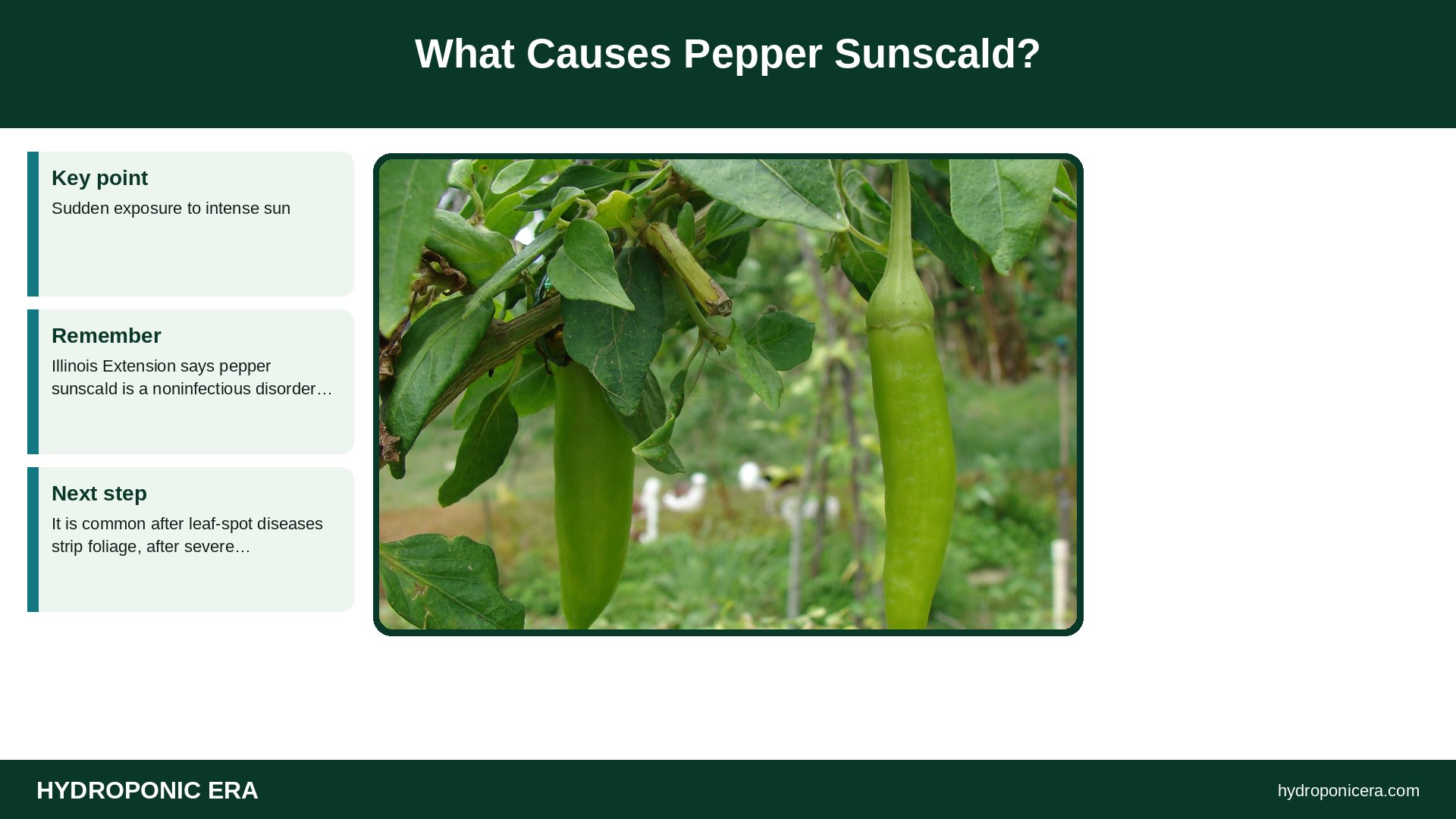
Sudden exposure to intense sun. Illinois Extension says pepper sunscald is a noninfectious disorder that is worst during extreme heat. It is common after leaf-spot diseases strip foliage, after severe pruning, and when wilt diseases kill lower leaves. Even healthy plants scald if stems break or are disturbed during hot, dry weather, exposing fruit that was shaded.
Why Do Healthy-Looking Plants Still Get Sunscald?
Leaning plants. University of Maryland Extension’s Jerry Brust found growers puzzled by sunscald on plants with thick foliage. Wind pushes plants to one side, and previously shaded fruit is suddenly exposed, even briefly. Brust reports pepper sunscald is most common on green fruit, and Oregon State adds that fruit growing above a thin canopy is at higher risk.
Does Staking Prevent Pepper Sunscald?
Yes, dramatically. In Brust’s Maryland comparison, a staked and tied section had under 2 percent sunscald-damaged fruit, while a nontied section of the same variety, planted the same day, had 17 percent. Stakes need be no taller than the plants, with one string run between stakes along a row of 4 or 5 plants.
For indoor growers, our guide to hydroponic pepper pruning explains how to support plants without stripping leaf cover.
Should You Use Shade Cloth for Peppers?
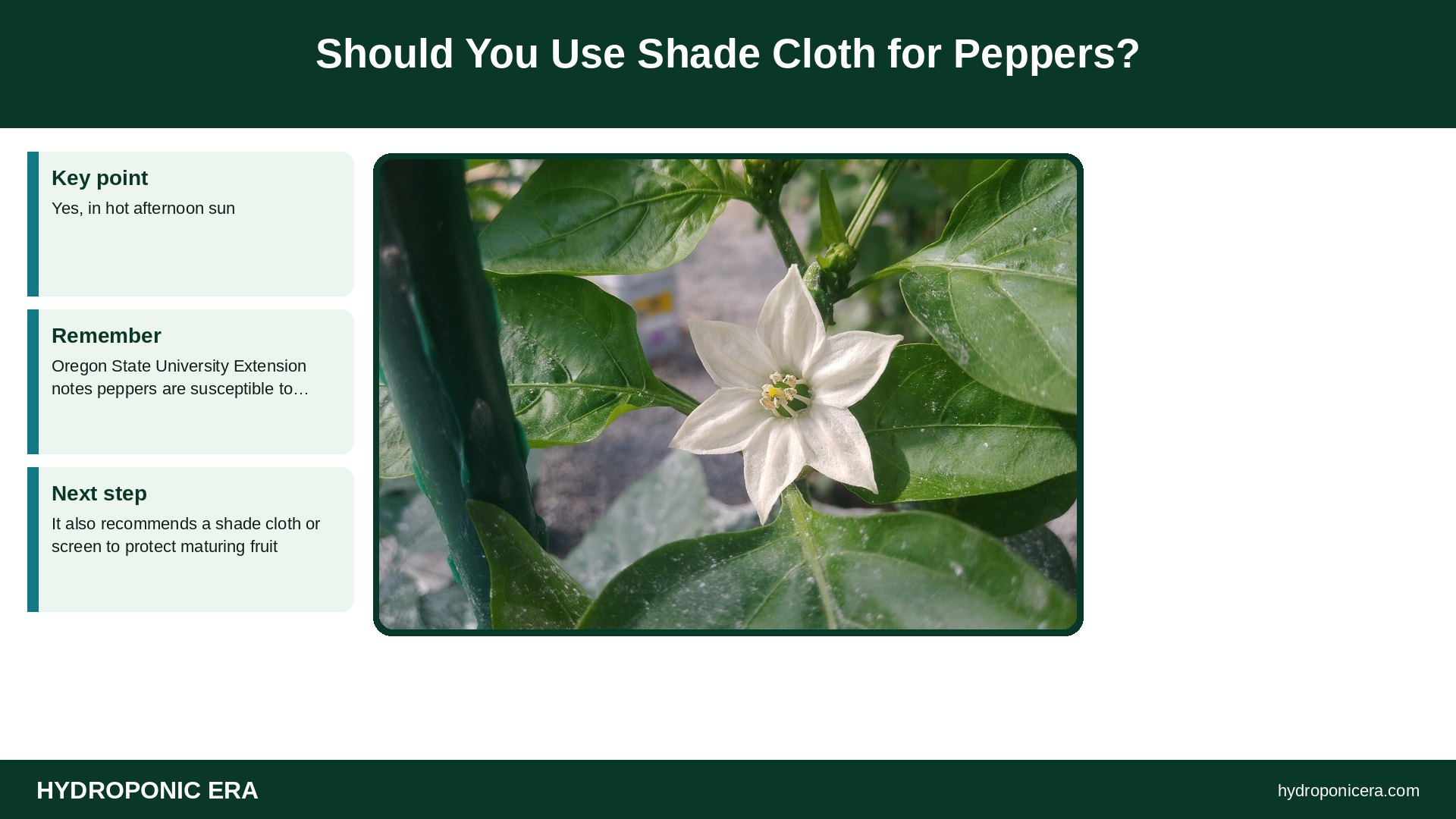
Yes, in hot afternoon sun. Oregon State University Extension notes peppers are susceptible to sunscald from hot, late-afternoon sun and suggests shade cloth or planting where trees or buildings cast afternoon shade. It also recommends a shade cloth or screen to protect maturing fruit. Keep cloth above the canopy so air still moves around plants.
Can Pruning Cause Pepper Sunscald?
Yes, if you remove too much. Illinois Extension lists severely pruned plants among those likely to scald because pruning removes leaves that shade fruit. It also recommends varieties with luxuriant foliage and fruit that hang downward, which are less prone than upright-fruited types. Remove only damaged or crowding leaves, and leave the canopy over developing fruit.
Can You Eat Peppers With Sunscald?
Sometimes, if the spot is dry and clean. Illinois Extension warns secondary fungi such as Alternaria, Cladosporium and others grow over scalded tissue, giving it a black, gray or green mold, and can cause the whole fruit to decay. Brust adds that infected fruit can become a soupy, smelly mess. Cut away small, firm spots; discard moldy or soft fruit.
How Is Sunscald Different From Blossom End Rot?
Location and cause. Sunscald appears on the side facing the sun, while blossom end rot forms at the bottom (blossom end) and is linked to calcium supply and uneven moisture. Oregon State cautions that too much nitrogen, used to push leaf growth, may encourage blossom end rot, so feed moderately.
Compare symptoms in our guide to blossom end rot in hydroponics, and see hydroponic nutrients for peppers for balanced feeding.
Does Nitrogen Affect Pepper Sunscald?
Yes, in both directions. Illinois Extension notes that insufficient nitrogen after fruit set can aggravate sunscald, because thin plants shade fruit poorly. Oregon State recommends adequate fertility for good leaf growth but warns too much nitrogen may encourage blossom end rot. Aim for steady, moderate feeding that keeps a full canopy over the developing fruit.
What Should You Check After a Heat Wave?
- Look for leaning or broken stems and retie them.
- Inspect the sun-facing side of green fruit for pale spots.
- Remove moldy or soft fruit to limit rot.
- Add shade cloth before the next hot afternoon.
FAQ About Pepper Sunscald
Is pepper sunscald contagious?
No. Illinois Extension calls it noninfectious, though secondary fungi can invade the damaged tissue.
Can leaves get sunscald too?
Yes. Oregon State says transplants not hardened off can scald leaves when first moved outdoors.
Which peppers resist it?
Illinois Extension favors varieties with dense foliage and fruit that hang downward.
Does sunscald happen under grow lights?
It is mainly a sun and heat problem, but avoid moving shaded plants into much stronger light suddenly.
Do tomatoes get sunscald too?
Yes. Illinois Extension describes similar yellow or white patches on sun-exposed tomato fruit.
Sources
- University of Illinois Extension — Sunscald of Pepper and Tomato, RPD No. 939
- University of Maryland Extension, Jerry Brust — Sunscald Very Prevalent in Peppers This Year (PDF)
- Oregon State University Extension, Edmunds, Myers and Peachey — Grow Your Own Peppers, EC 1227 (PDF)
- Photo credits (Wikimedia Commons, edited with titles): Green Bell pepper plant by Azorbli (CC BY-SA 4.0); Starr-080610-8291-Capsicum annuum-green fruit-Community Garden Sand Island-Midway Atoll (24291176534) by Forest and Kim Starr (CC BY 3.0 us); PepperFlower4K by Bst9jkj (CC0); Red bell pepper by AntanO (CC BY-SA 4.0)
1 thought on “Pepper Sunscald: 5 Easy Ways to Prevent White Patches”