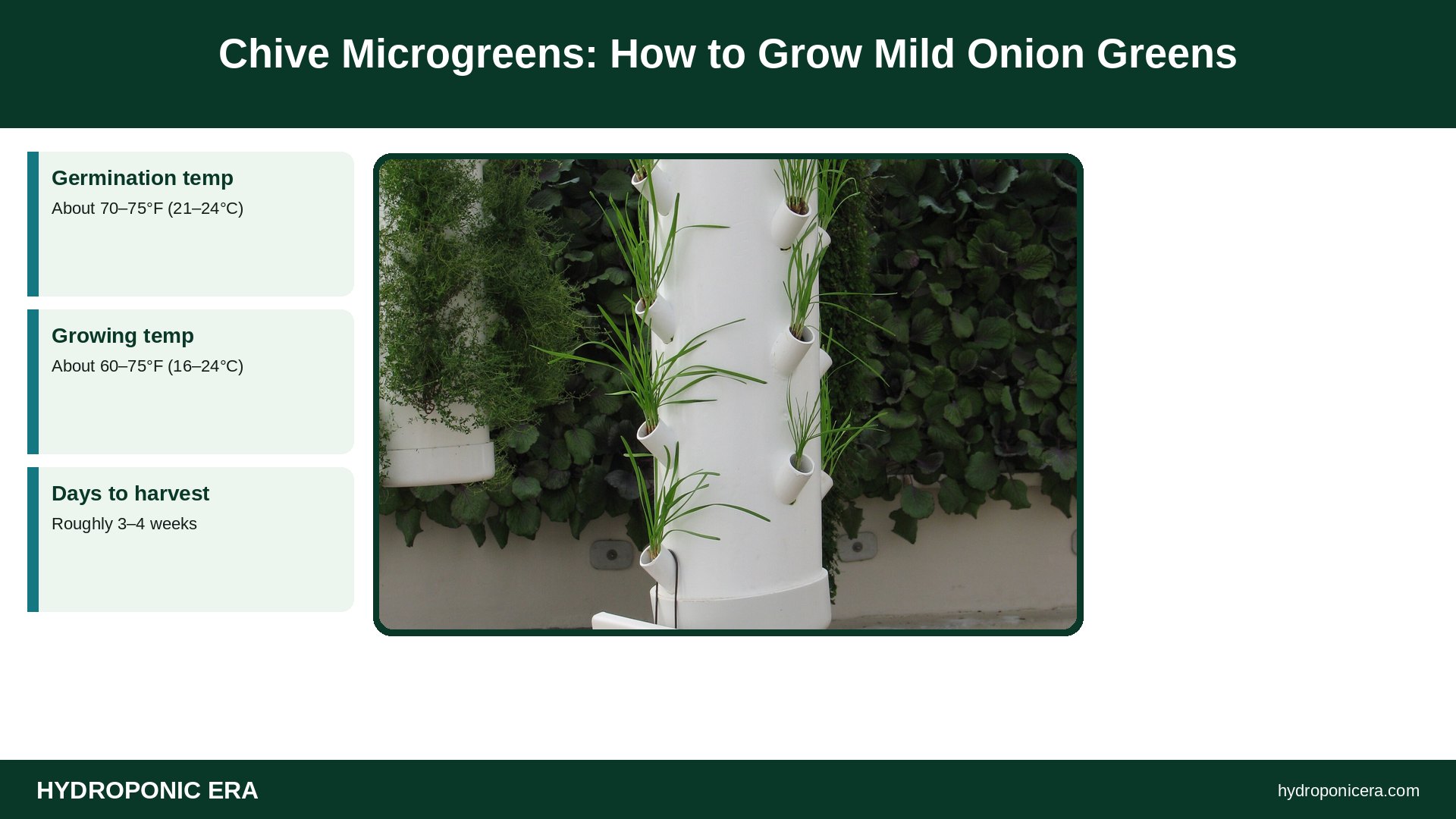
How do you grow chive microgreens? Chive microgreens grow from seed sown thickly on moist mix or a mat, kept covered and dark until they sprout, then moved under bright light. They are slow, usually ready in about three to four weeks, and taste like mild onion. Harvest at 2–3 in (5–8 cm) tall.
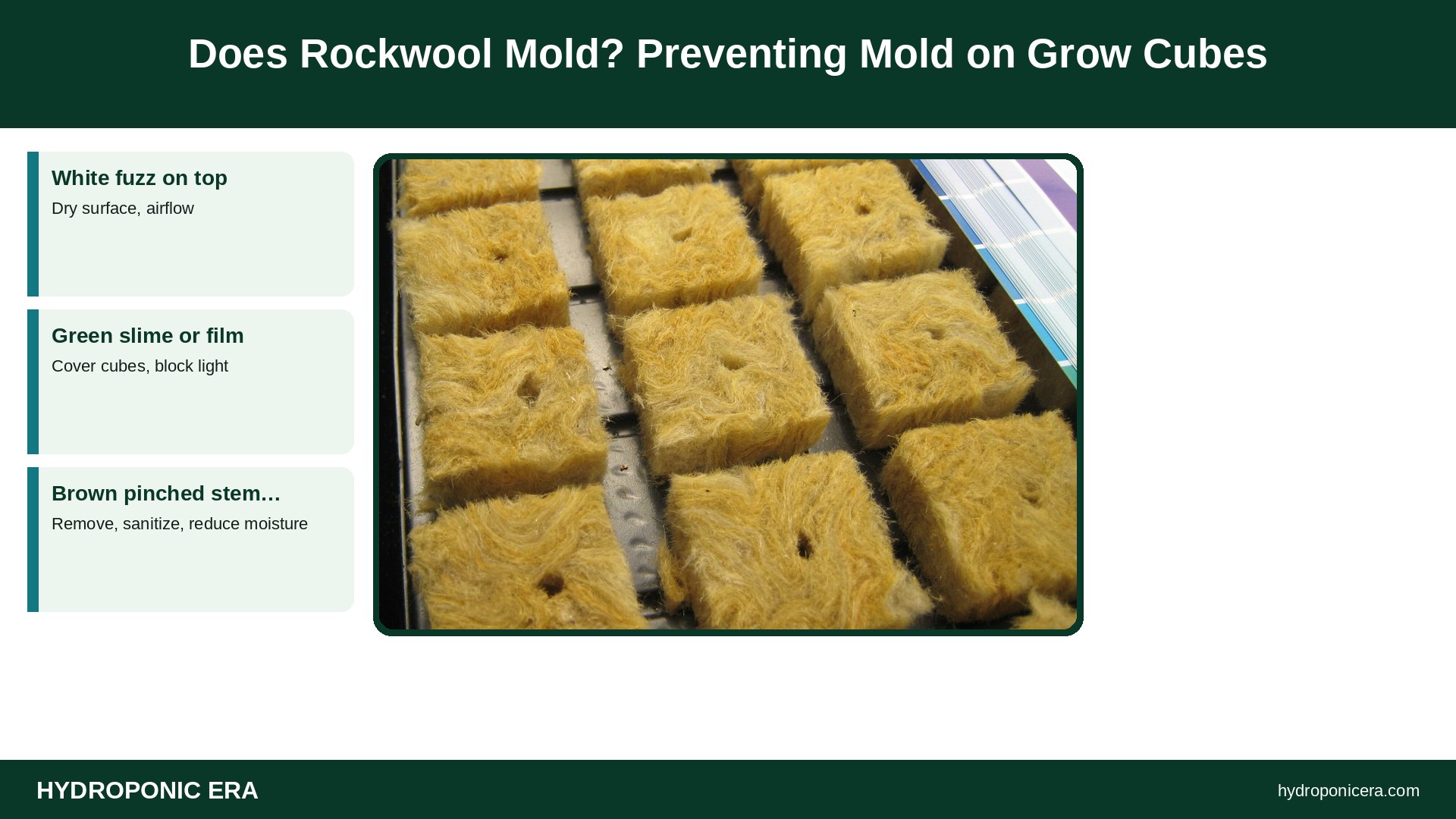
Rockwool mold is usually a harmless-looking layer of white fuzz or green algae on the surface of rockwool cubes, caused by constant moisture, light hitting the cube, warm stagnant air, and organic residue such as nutrients or decaying roots. White fuzz is often saprophytic mold feeding on residue; green film is algae. Neither is necessarily killing your plant, but both signal conditions that also favor damping-off, fungus gnats, and root rot. Fix it by letting the surface dry slightly between waterings, covering cubes from light, improving airflow, and starting with clean, properly pre-soaked rockwool.

How does sphagnum moss propagation work? Sphagnum moss propagation means rooting cuttings in damp, long-fiber sphagnum instead of water or soil. The moss holds moisture and air around the node, so roots form without rot. Soak the moss, wring it out, tuck the node in, and keep it humid.
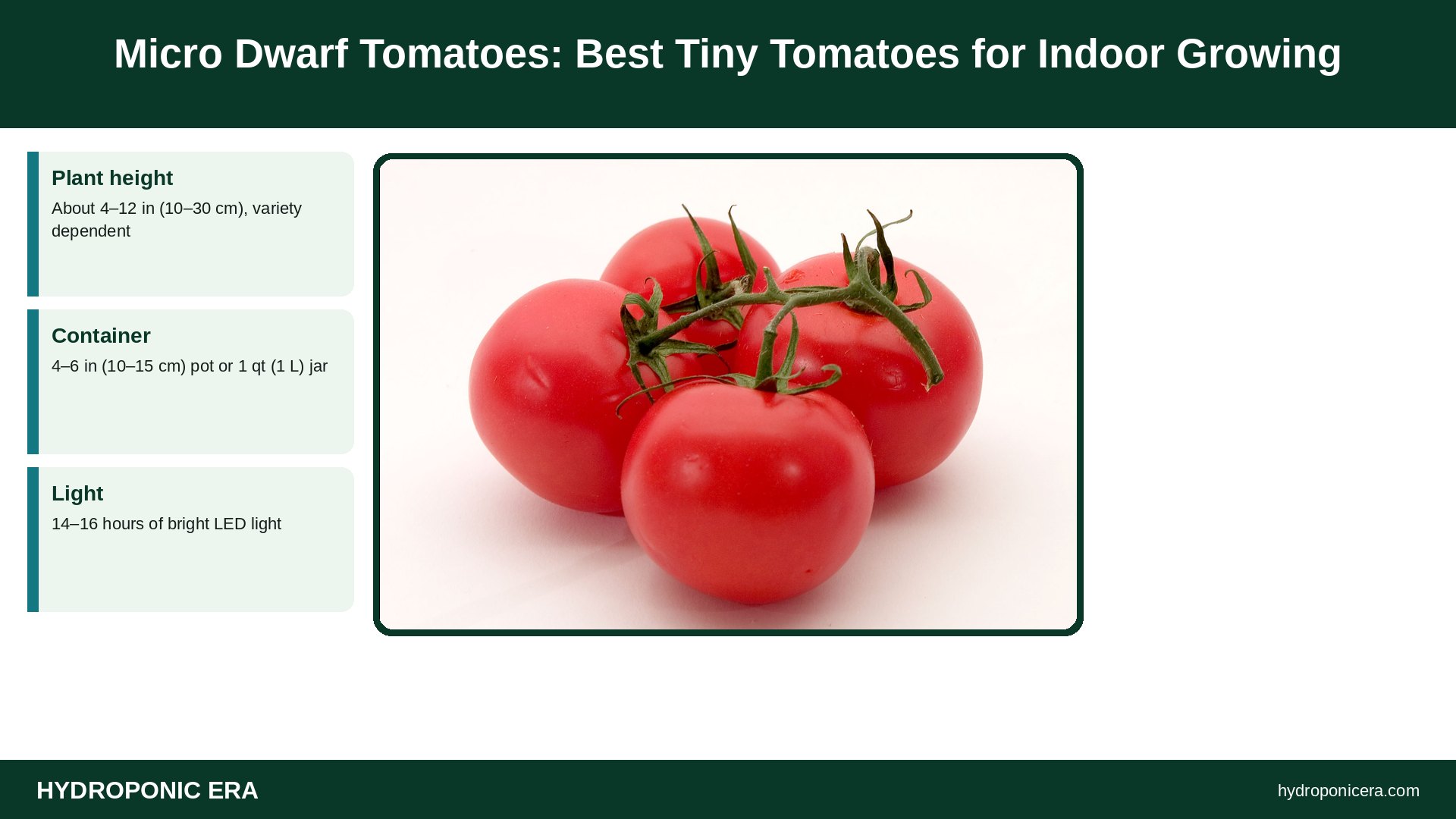
What are micro dwarf tomatoes? Micro dwarf tomatoes are tiny, compact plants that stay roughly 4–12 in (10–30 cm) tall and fit in a small pot or hydroponic site. The best known is Micro-Tom, released by the University of Florida in 1989. They suit windowsills, grow shelves and small Kratky jars indoors.
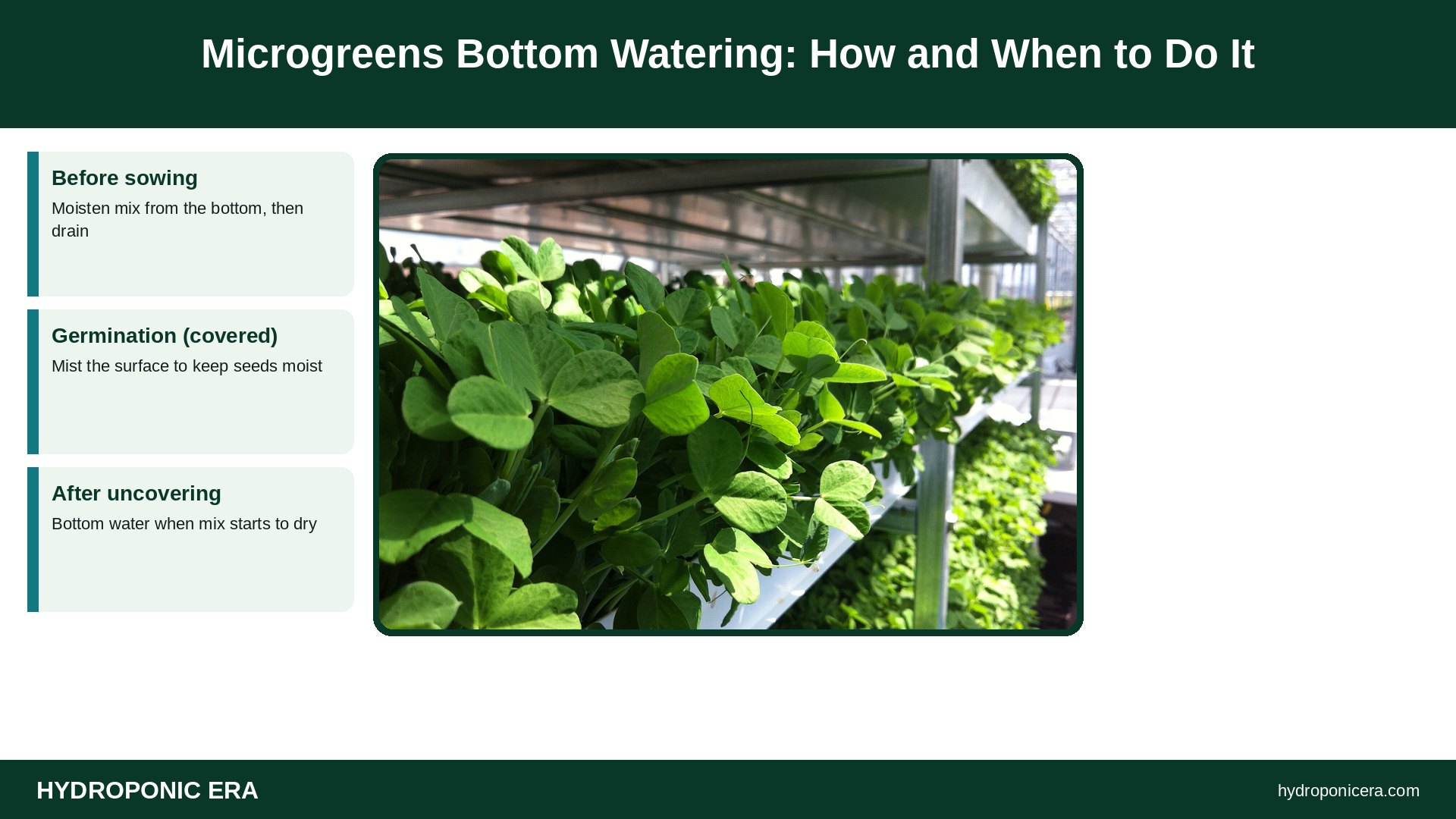
How does microgreens bottom watering work? Set a tray with drainage holes into a second tray of water for a few minutes, let the growing mix soak water up from below, then drain the extra. Microgreens bottom watering keeps leaves and stems dry, which Penn State and Mississippi State Extension recommend to limit mold and keep greens clean.
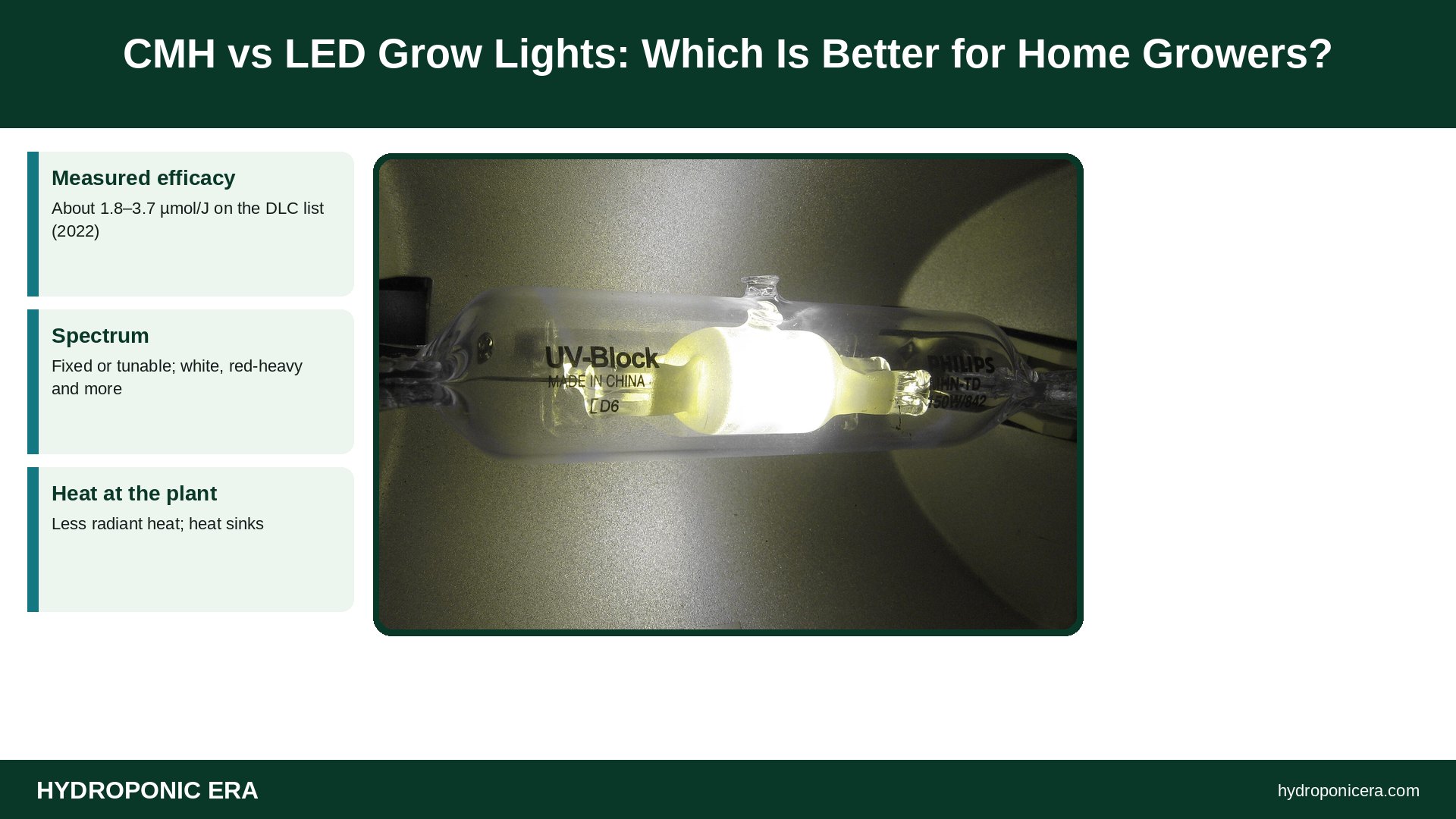
CMH vs LED: which grow light is better? For most growers in 2026, LED wins. In CMH vs LED tests, the best ceramic metal halide fixtures measured about 1.46–1.58 µmol/J, while many LED fixtures on the DesignLights Consortium list exceed 2.5 µmol/J. CMH costs less up front, but uses more power and adds heat.
Can you grow hydroponic ginseng? Yes, mostly as a research and specialty crop. Hydroponic ginseng is usually grown from one-year-old roots in aerated nutrient tanks under low light at about 68–72°F (20–22°C). Studies show it can produce leaves and young roots rich in ginsenosides within weeks, but it won’t replace the multi-year roots sold as traditional ginseng.
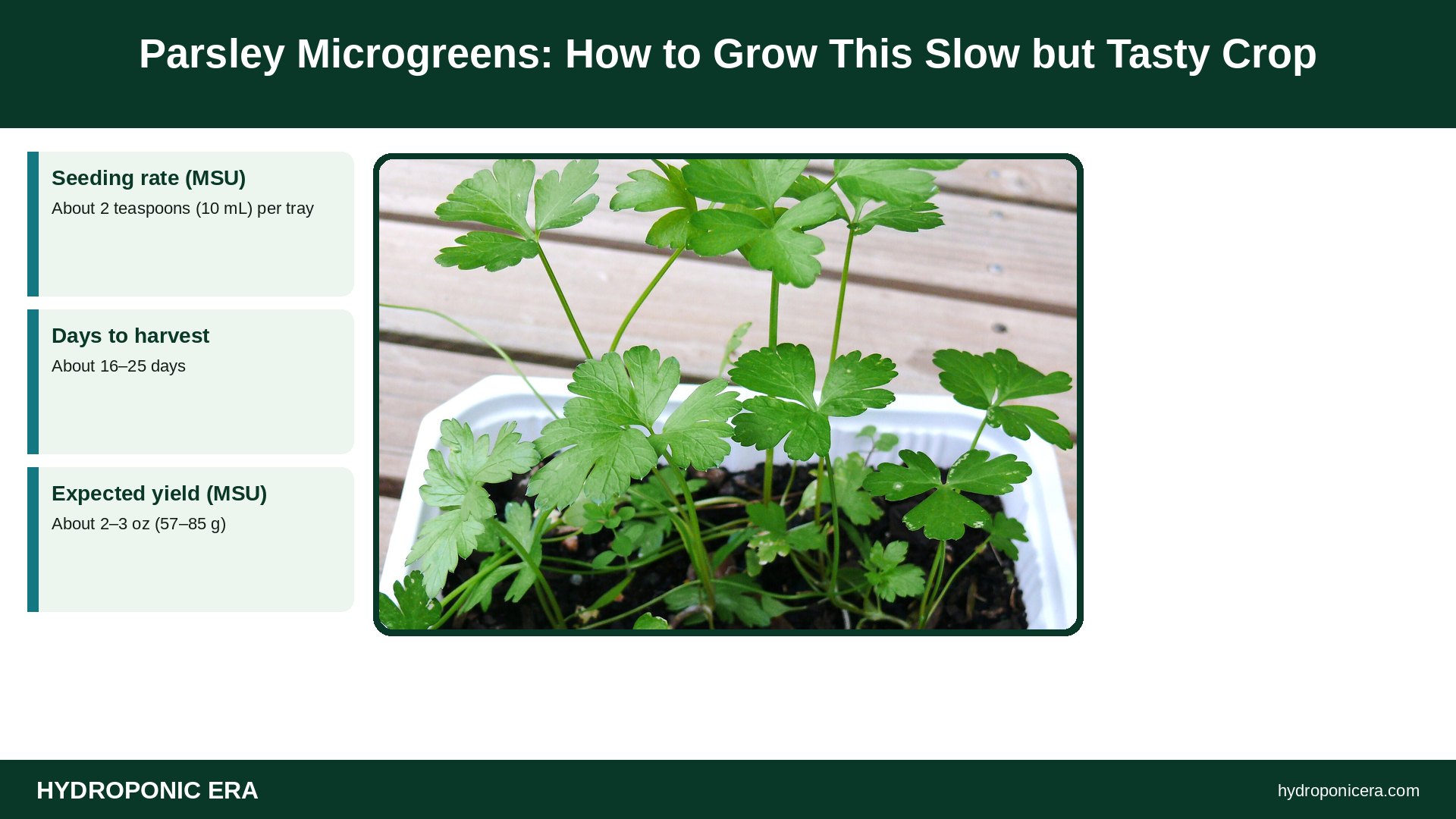
How do you grow parsley microgreens? Parsley microgreens are slow but easy. Sow about 2 teaspoons (10 mL) of seed on moist mix in a tray, keep it covered and dark until sprouts appear, then give strong light. Mississippi State University Extension lists parsley in the 16–25 day group, with an expected yield of about 2–3 oz (57–85 g) per tray.
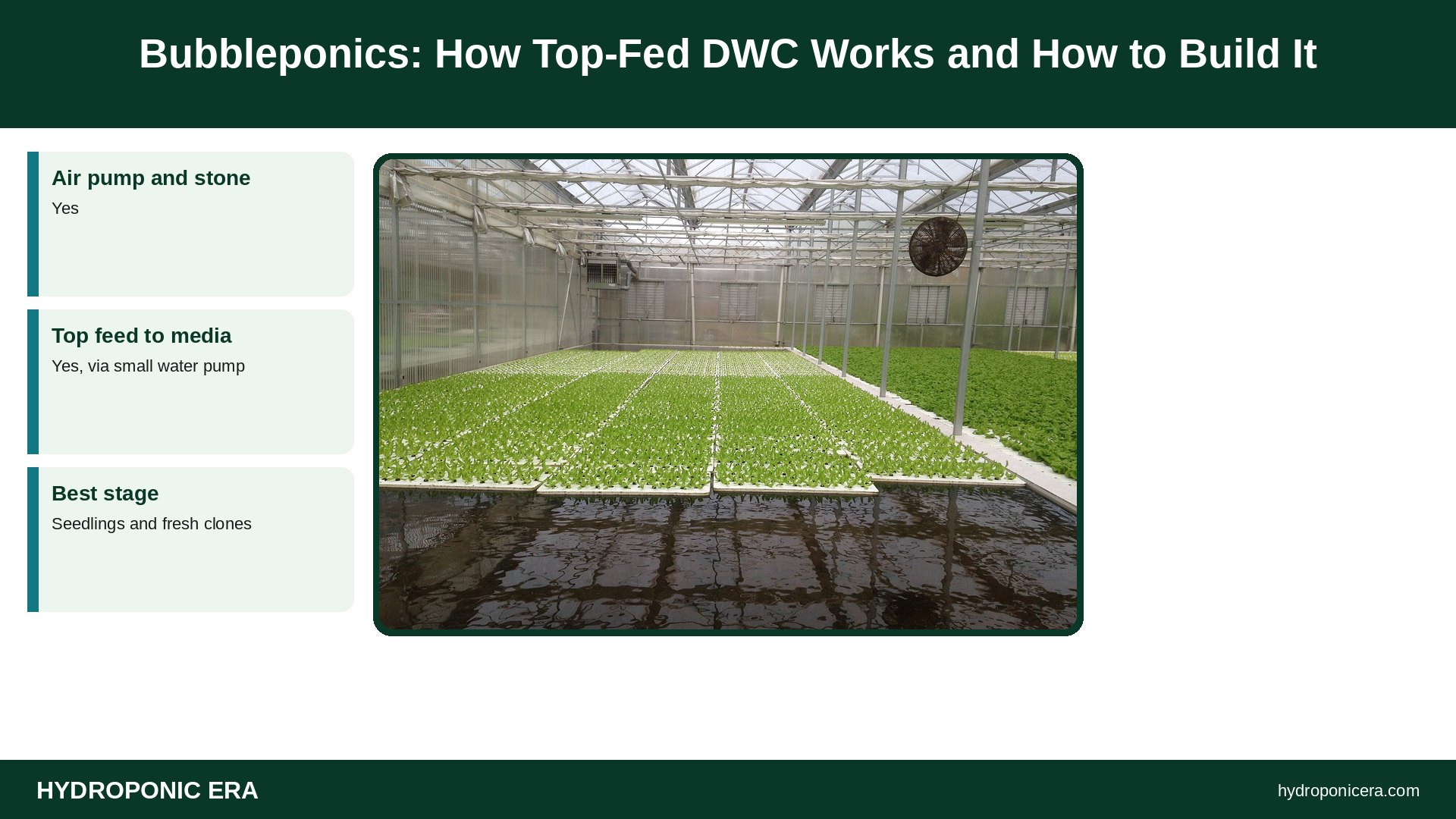
What is bubbleponics? Bubbleponics is a top-fed form of deep water culture (DWC). Roots hang in an aerated nutrient reservoir like normal DWC, but a small pump also drips or sprays solution onto the top of each plant’s media. That top feed helps young seedlings and clones before their roots reach the water, then it becomes optional.
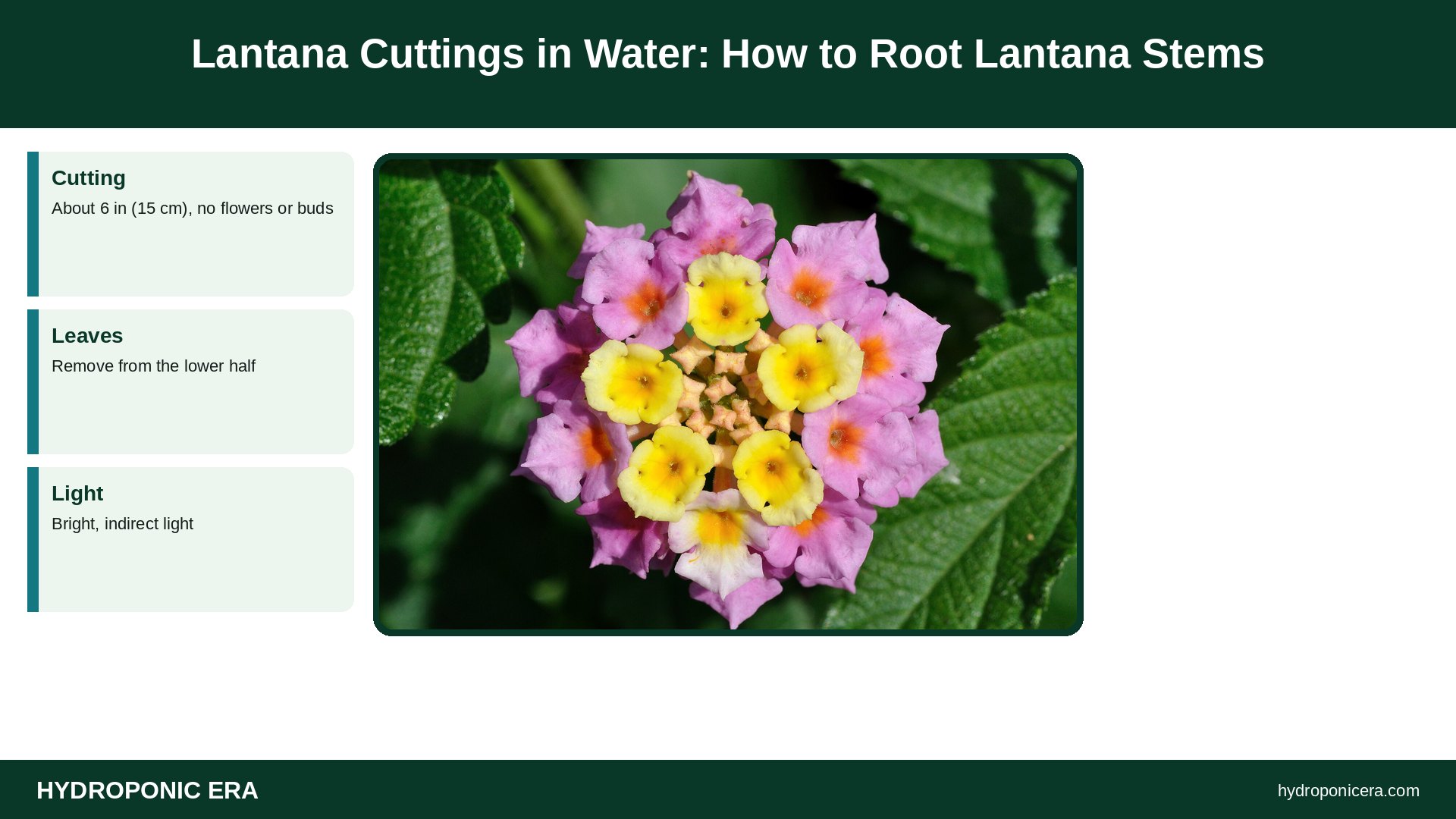
Can you root lantana cuttings in water? Yes. Lantana cuttings in water root in several weeks. University of Minnesota Extension says to clip about 6 in (15 cm) of a stem without flowers, remove the lower leaves, and set it in water. Once roots form, pot it in well-drained soil.