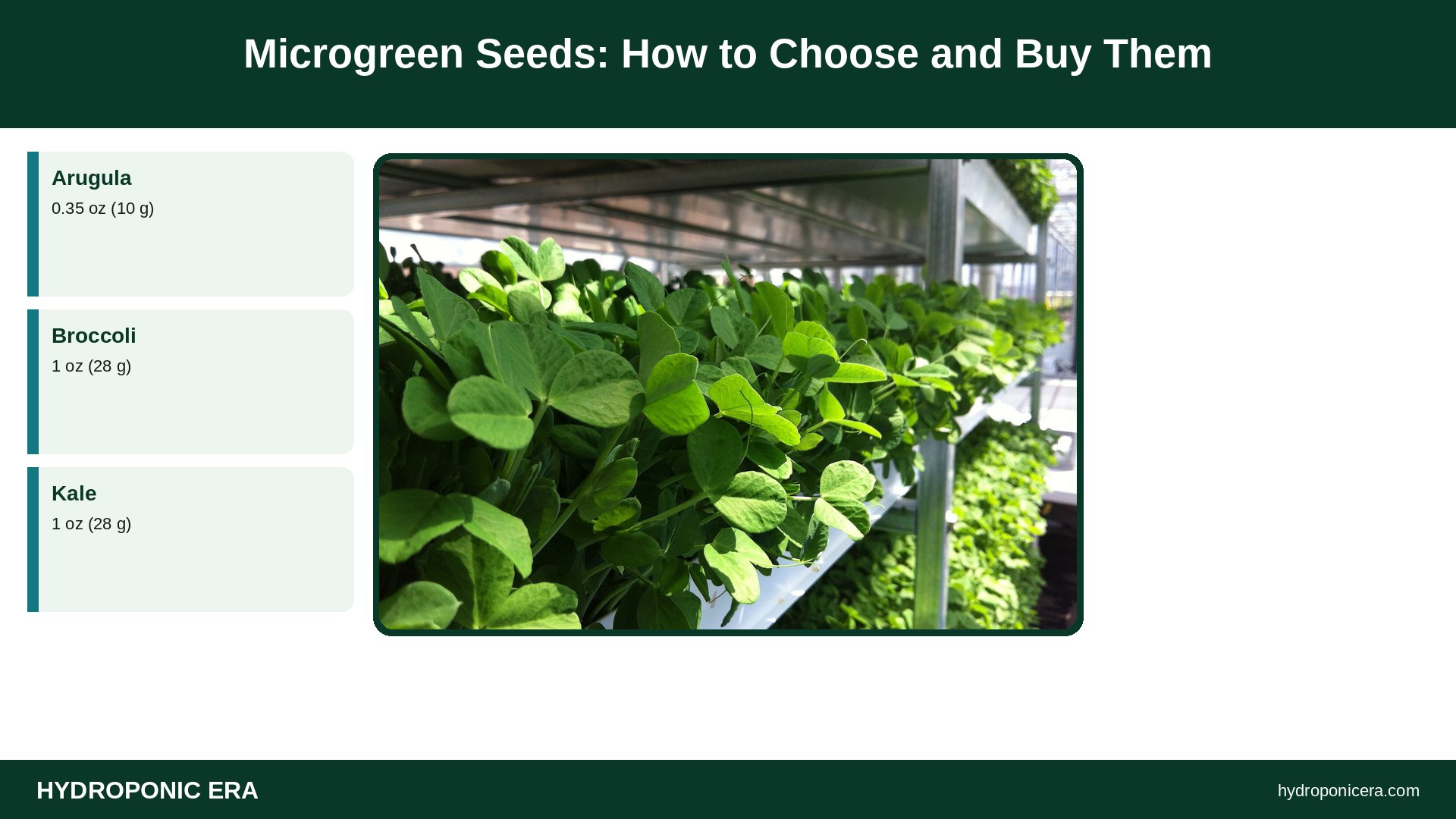
What are the best microgreen seeds? Choose untreated microgreen seeds sold specifically for microgreens or sprouting. Easy starters are radish, broccoli, kale, arugula, pea and sunflower. Utah State University suggests about 1–1.5 oz (28–42 g) of most small seeds per 10×20 in (25×50 cm) tray, 5.3 oz (150 g) of pea, and harvest in roughly 8–12 days.
Can you grow Little Gem lettuce hydroponically? Yes. Little Gem lettuce is a compact mini romaine that suits NFT, deep water culture and Kratky. Keep pH 5.6–6.0, EC near 1.2 mS/cm, air around 75°F (24°C) by day and water below 77°F (25°C), space plants about 6 inches (15 cm) apart, and harvest roughly 40 days after transplant.
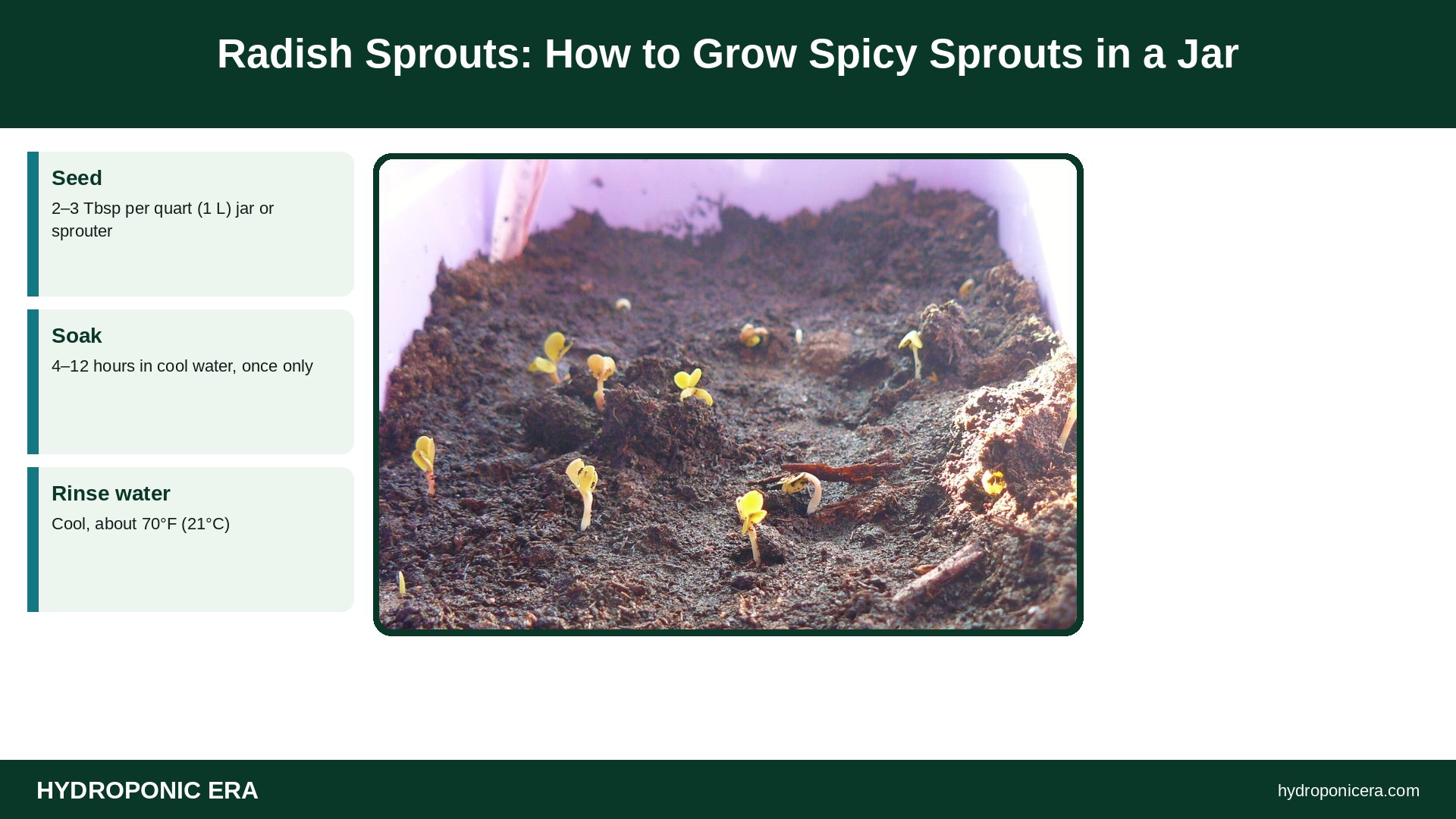
How do you grow radish sprouts? Soak about 3 tablespoons of radish seed in cool water for 4–12 hours, then drain. Rinse and drain every 8–12 hours, moving the jar to indirect light on day 3 or 4. Radish sprouts are ready in about 5–6 days when leaves open and green. Remove hulls, dry and refrigerate.
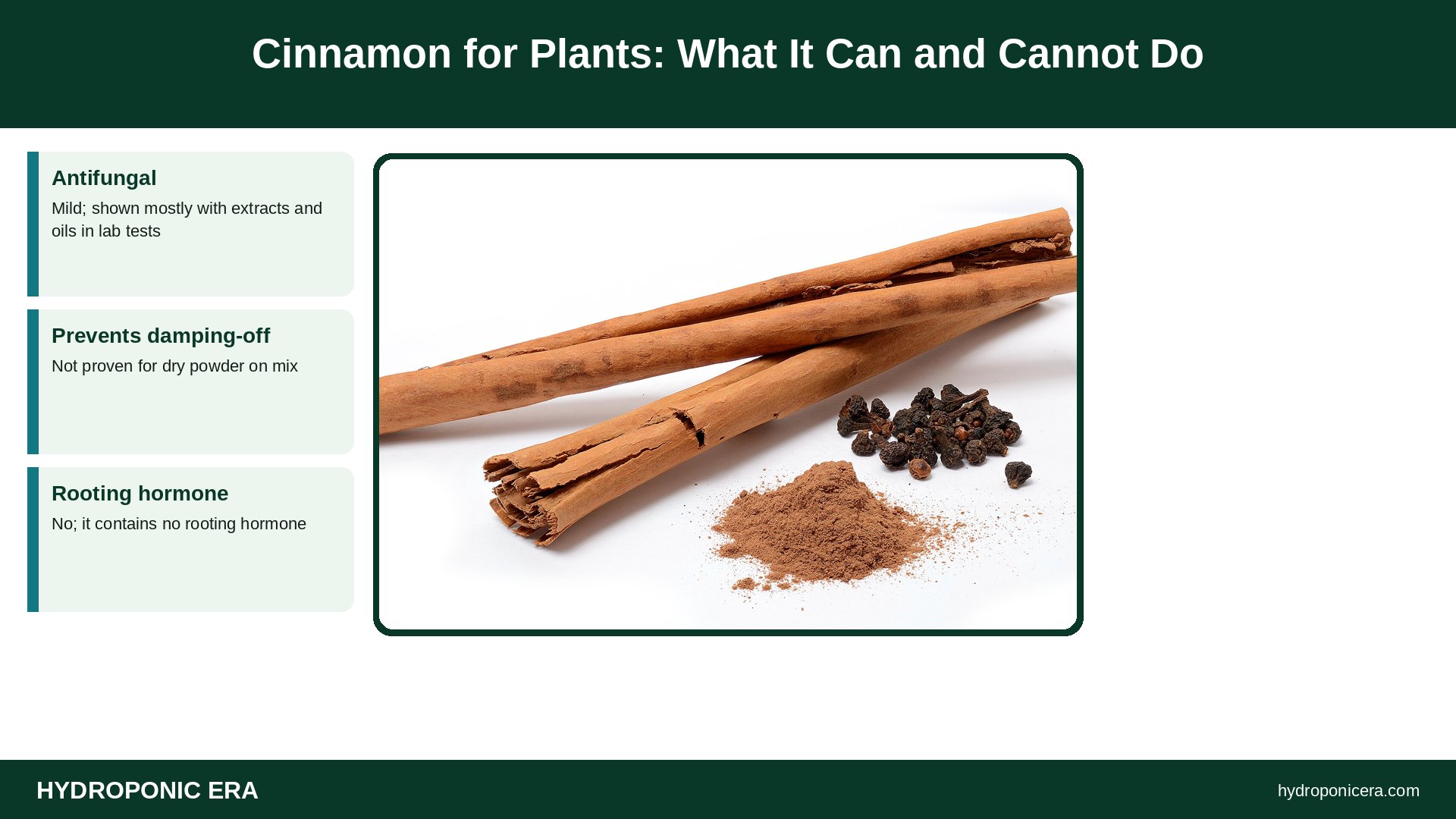
Does cinnamon for plants work? Partly. Cinnamon has mild antifungal properties, and lab studies show cinnamon extracts and oils can suppress some fungi. But no study shows grocery cinnamon powder reliably prevents damping-off at home, and cinnamon is not a rooting hormone. Use it as a small extra, never instead of sanitation.
Yellow leaves on hydroponic tomatoes usually come from one of five things: a nutrient deficiency (nitrogen, magnesium, iron, or potassium), pH outside roughly 5.5–6.5, root stress from warm or poorly oxygenated water, a leaf disease such as early blight, Septoria leaf spot, or leaf mold, or simple aging of shaded lower leaves. Look at where the yellowing starts. Older, lower leaves point to mobile nutrients like nitrogen and magnesium. Young, upper leaves point to iron, pH, or root problems. Spots with rings or dark centers point to disease.
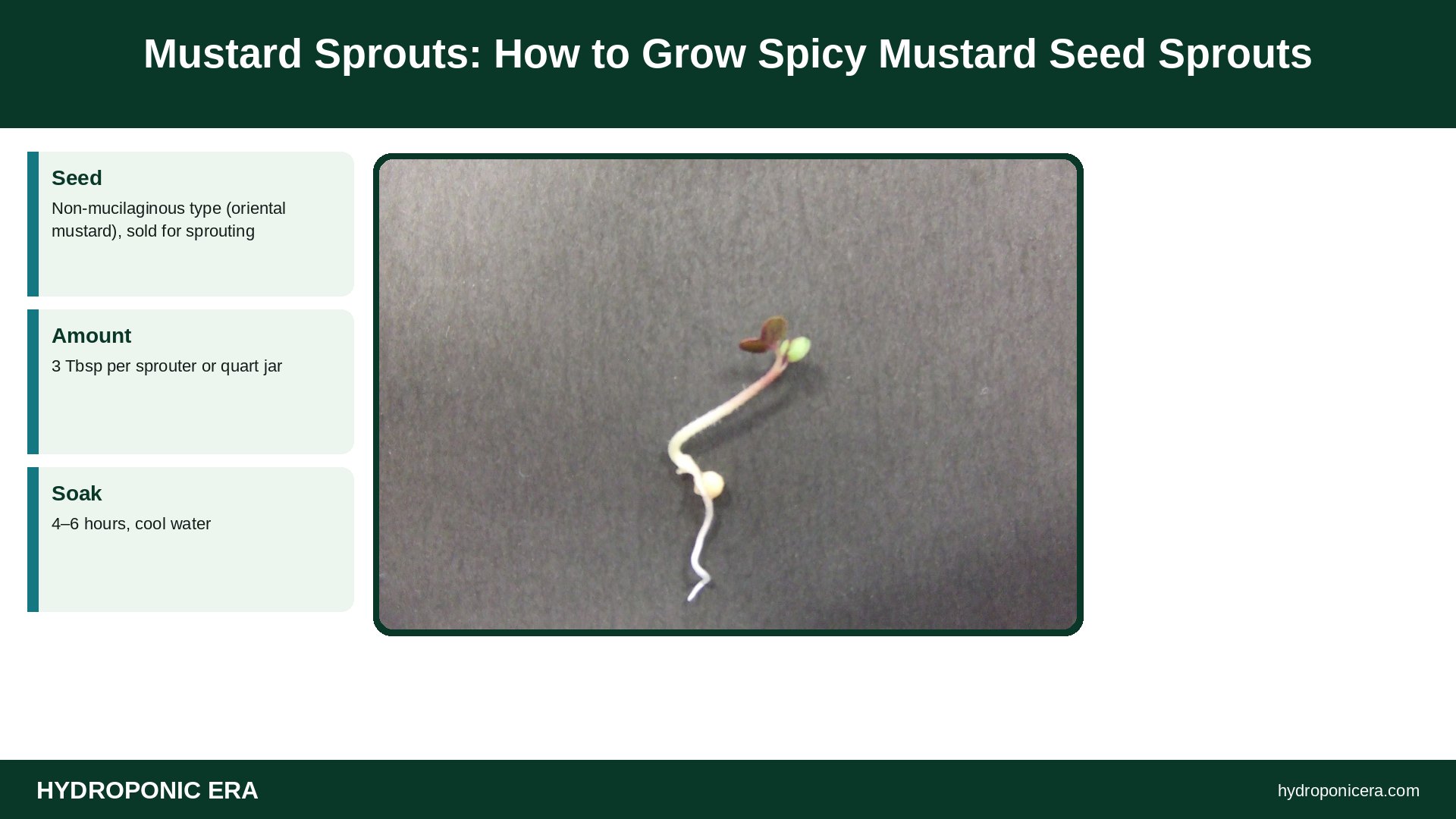
How do you grow mustard sprouts? Soak about 3 tablespoons of non-mucilaginous mustard seed, such as oriental mustard, in cool water for 4–6 hours. Drain, then rinse and drain every 8–12 hours in a jar or sprouter. Mustard sprouts are ready in about 3–6 days, when leaves open and green. Remove hulls and refrigerate.
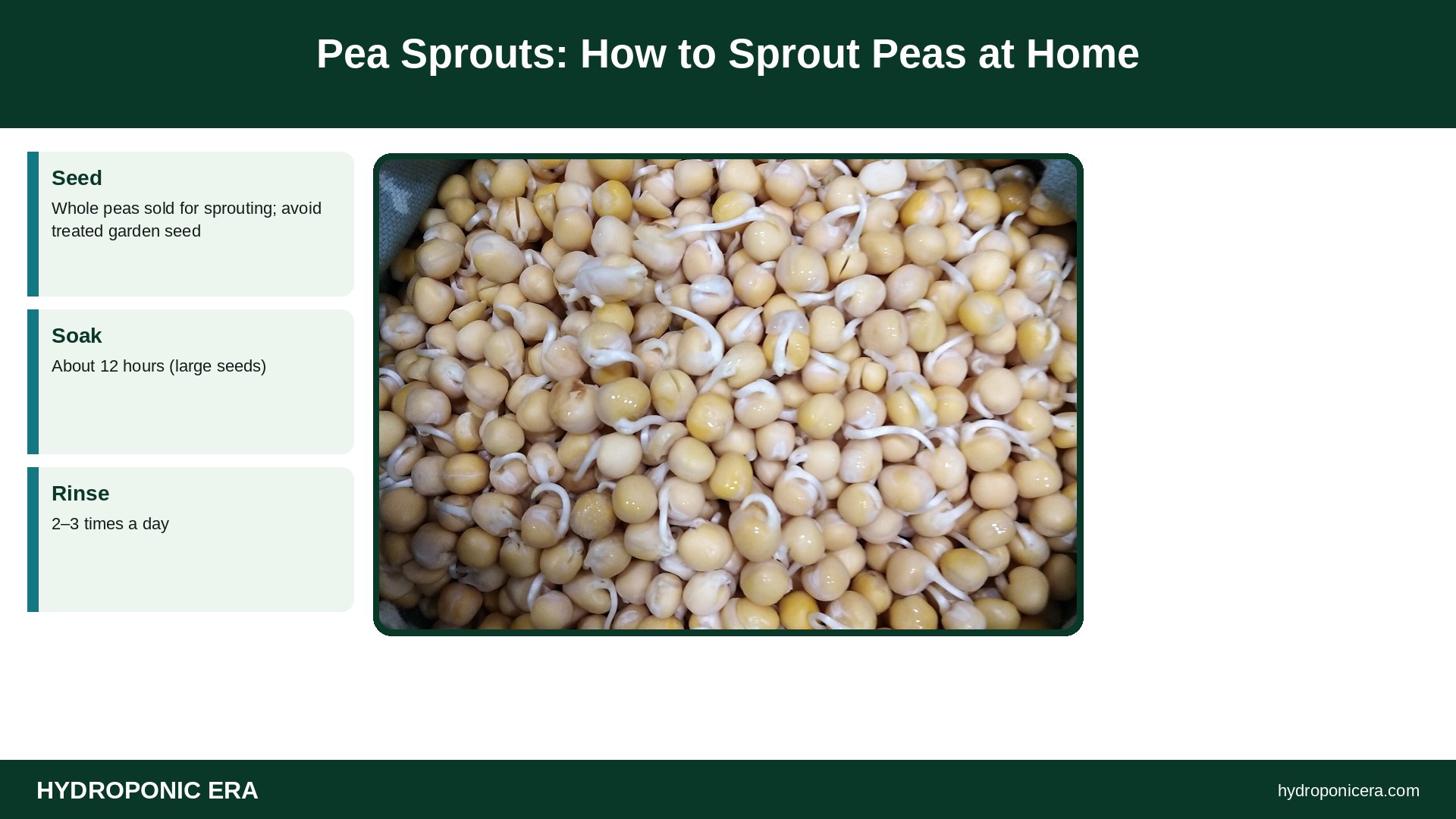
How do you grow pea sprouts? Soak whole dried peas sold for sprouting in room-temperature water for about 12 hours, drain, and keep them in a jar or tray in a dark spot. Rinse and drain two or three times a day. Pea sprouts are ready in about 3–6 days, once short roots appear. Refrigerate them and eat within a few days.
What are the best seed starting trays? The best seed starting trays are divided cell flats that sit inside a solid tray, with drainage holes in every cell and a clear dome for germination. University of Minnesota Extension recommends one seedling per cell so roots don’t tangle. Fill cells with sterile seed-starting mix, water from below, and remove the dome once seedlings reach it.
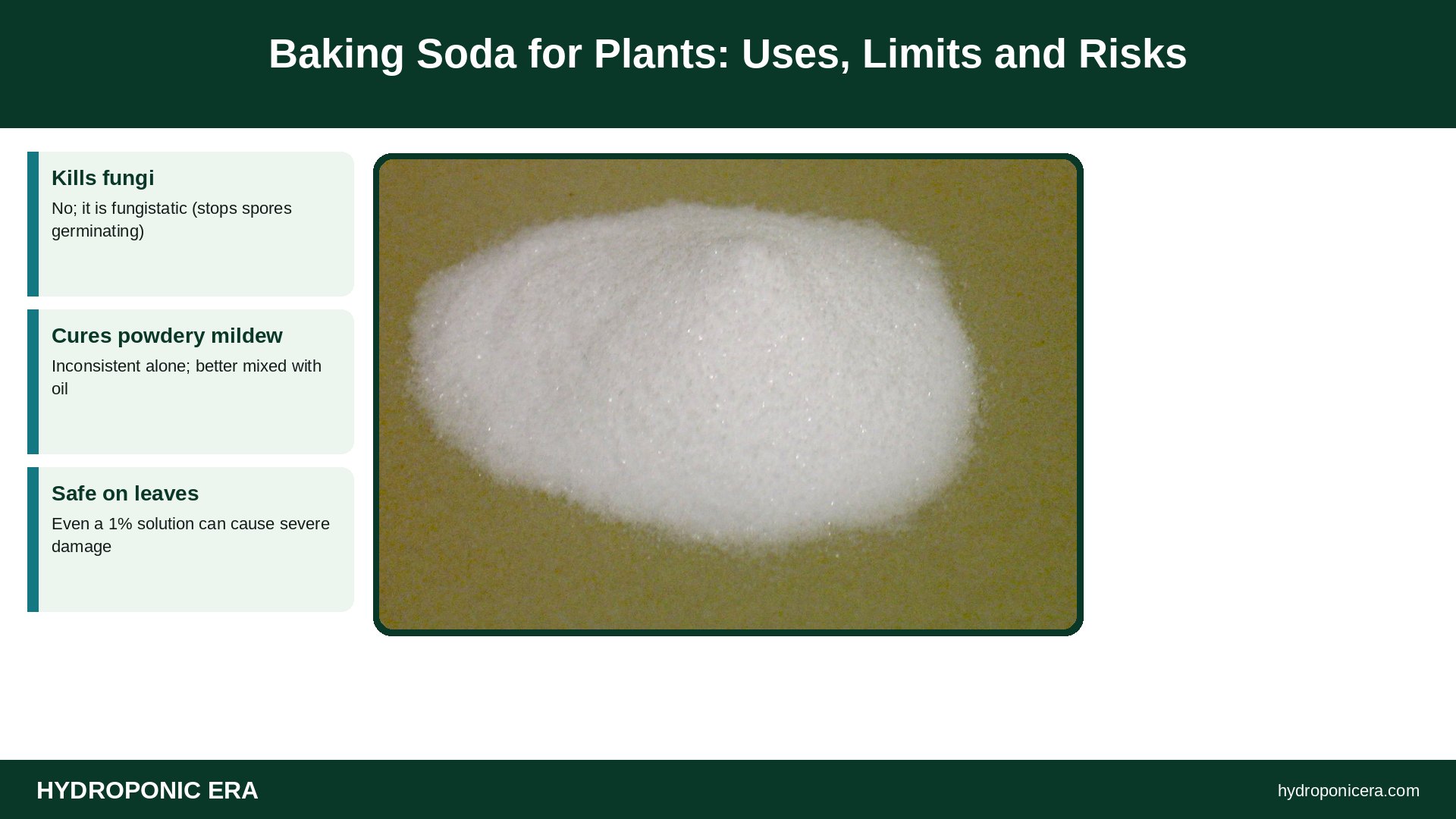
Does baking soda work on plants? Only a little. Baking soda for plants (sodium bicarbonate) can slow powdery mildew, but research reviewed by Washington State University found it rarely works alone and can burn leaves at just 1%. Purdue Extension says it is ineffective against most diseases without oil and leaves sodium behind. Potassium bicarbonate products or sulfur are better choices.
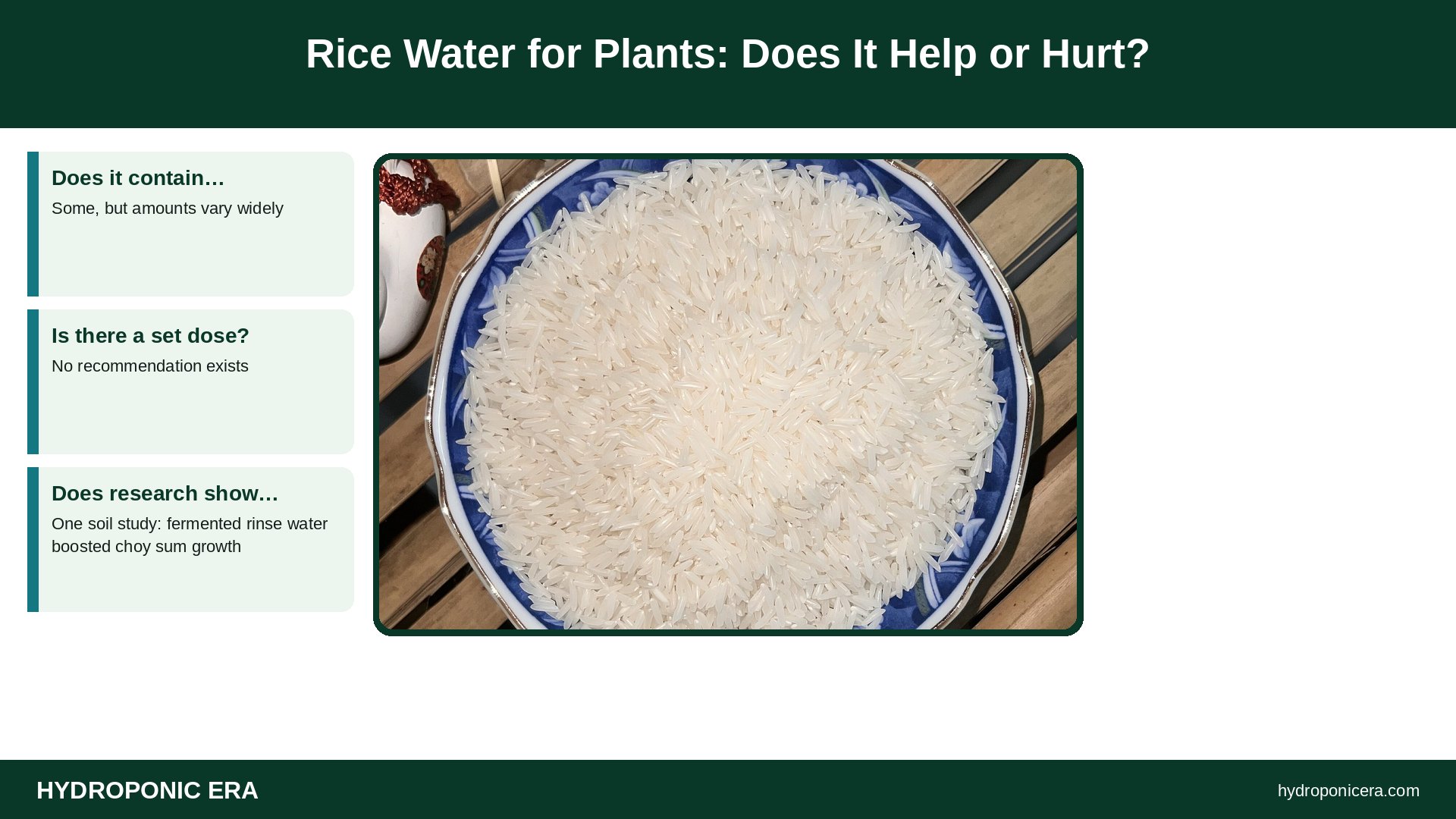
Is rice water good for plants? Rice water for plants may add small amounts of nutrients, but its strength varies by batch. University of Maryland Extension has no local research on it and suggests a fertilizer with a known dose for houseplants and food crops. One 2022 soil study found fermented rice rinse water helped choy sum grow. Don’t add it to hydroponic reservoirs.