
The best strawberry varieties for hydroponics are day-neutral types, because they flower and fruit year-round under steady indoor light instead of waiting for short days. ‘Albion’, ‘San Andreas’, ‘Monterey’, and ‘Seascape’ are the most widely used day-neutral cultivars from the University of California breeding program. For growers starting from seed, alpine strawberries such as ‘Mignonette’ and F1 seed varieties such as ‘Delizz’ are compact and fruit within months. June-bearing types like ‘Chandler’ give big flushes but only once a year.
Key takeaway: Pick day-neutral plants from a certified nursery for steady harvests indoors, and choose alpine or F1 seed types if you want to start from seed.
Best Strawberry Varieties for Hydroponics Compared
| Variety | Type | Fruit | Strengths |
|---|---|---|---|
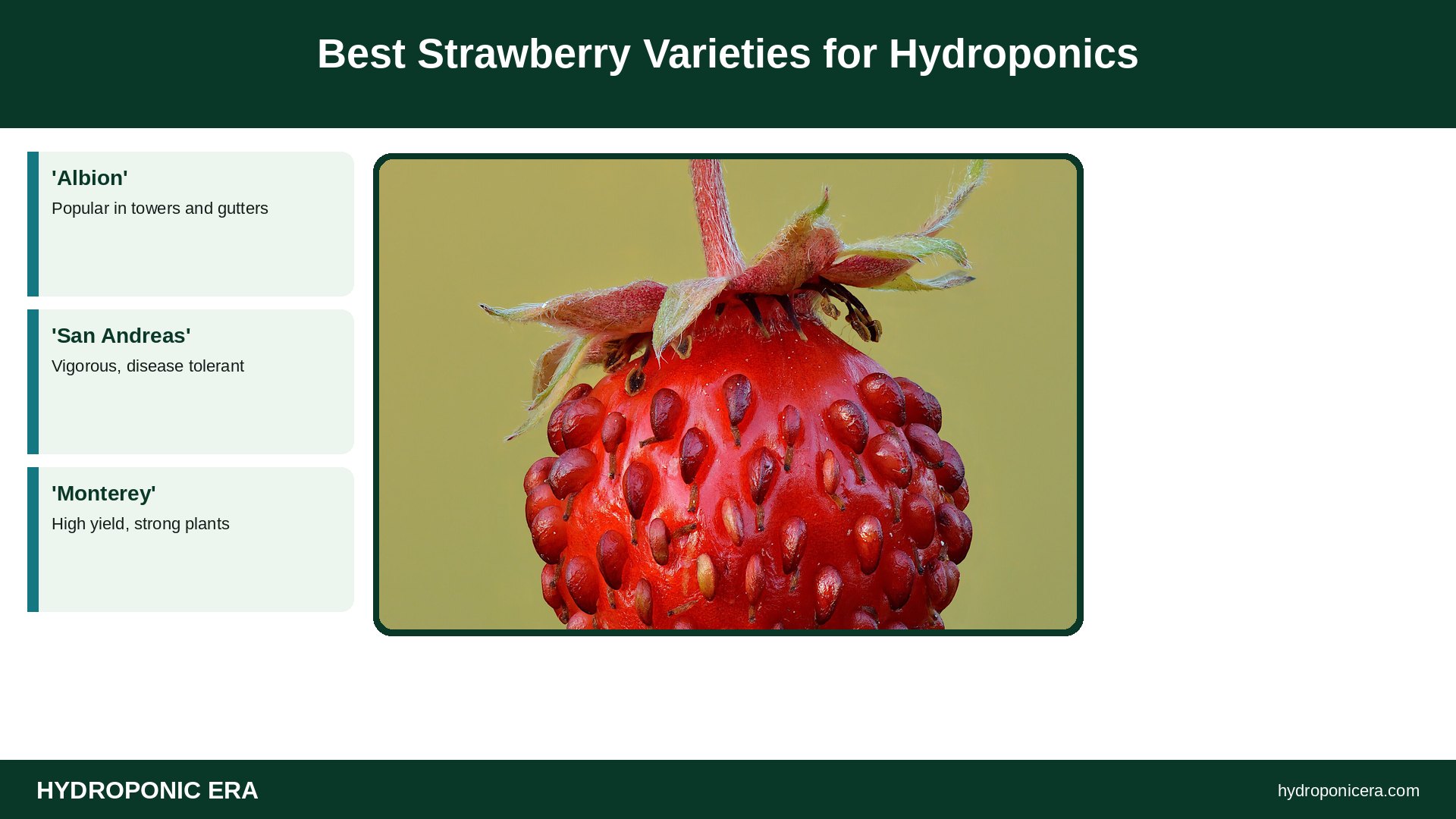
| ‘Albion’ | Day-neutral | Large, firm, sweet | Popular in towers and gutters |
| ‘San Andreas’ | Day-neutral | Large, good flavor | Vigorous, disease tolerant |
| ‘Monterey’ | Day-neutral | Large, very sweet | High yield, strong plants |
| ‘Seascape’ | Day-neutral | Medium-large | Tolerates heat swings |
| ‘Evie-2’ | Day-neutral | Medium | Heavy cropping in containers |
| ‘Mignonette’ | Alpine (from seed) | Small, intense | No runners, compact |
| ‘Delizz’ | F1 seed | Medium | Compact, fruits first year |
| ‘Chandler’ | June-bearing | Large | One big seasonal flush |
Day-Neutral vs June-Bearing vs Everbearing

Strawberries respond to day length. June-bearing (short-day) varieties form flower buds as days shorten in fall and fruit once the next spring. Older “everbearing” types fruit in two or three flushes. Day-neutral varieties form flowers regardless of day length, as long as temperatures stay moderate, roughly 50–85°F.
That makes day-neutral plants the best fit for indoor and greenhouse hydroponics, where you control light and temperature. The Ohio State University indoor berry program has studied day-neutral strawberries in controlled-environment systems for this reason.
Best Strawberry Varieties for Hydroponics Towers and Gutters
In vertical towers and NFT gutters, plants hang in small pockets with limited root room. Compact, high-yielding day-neutrals like ‘Albion’ and ‘Monterey’ do well. Remove most runners so the plant puts energy into fruit. See hydroponic tower gardens and rain gutter hydroponics.
Starting From Plants vs Seed
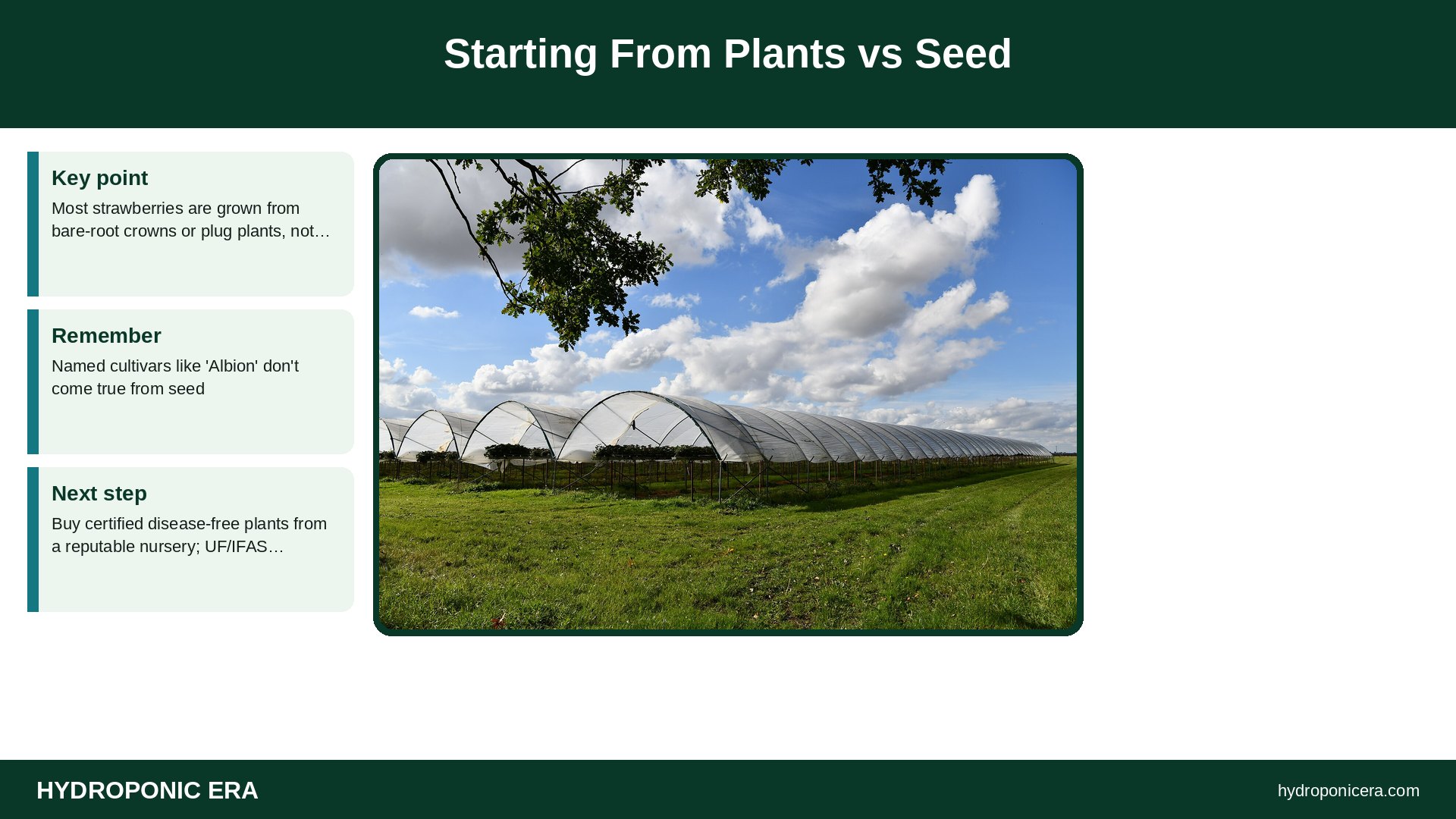
Most strawberries are grown from bare-root crowns or plug plants, not seed. Named cultivars like ‘Albion’ don’t come true from seed. Buy certified disease-free plants from a reputable nursery; UF/IFAS stresses clean plant stock because viruses and soil diseases travel with transplants.
From seed, alpine varieties and modern F1 hybrids are the realistic options. They take 3–4 months to fruit. See how to grow strawberries hydroponically.
Growing Conditions for Any Variety
| Factor | Target |
|---|---|
| EC | 1.0–1.5 mS/cm |
| pH | 5.5–6.2 |
| Air temperature | 65–75°F day, 55–65°F night |
| Light | 12–16 hours; DLI about 15–20 mol/m²/day |
| Root zone | Well drained; crown above the water line |
See nutrients for strawberries. Keep the crown dry; buried or wet crowns rot.
Pollination Matters for Fruit Shape

Strawberry flowers are self-fertile, but each seed on the fruit surface needs pollen for the berry to swell evenly. Indoors, poor pollination gives lumpy, small fruit. Brush flowers gently with a soft paintbrush or use a small fan for air movement. See indoor pollination.
Managing Runners
Day-neutrals make fewer runners than June-bearers, but they still send some. Cut them off for better fruiting, or root a few into new pots to replace old plants. Most growers replace plants every 12–18 months, as yields drop with age. See runners and day-neutral management.
Best Strawberry Varieties for Hydroponics in Warm Rooms
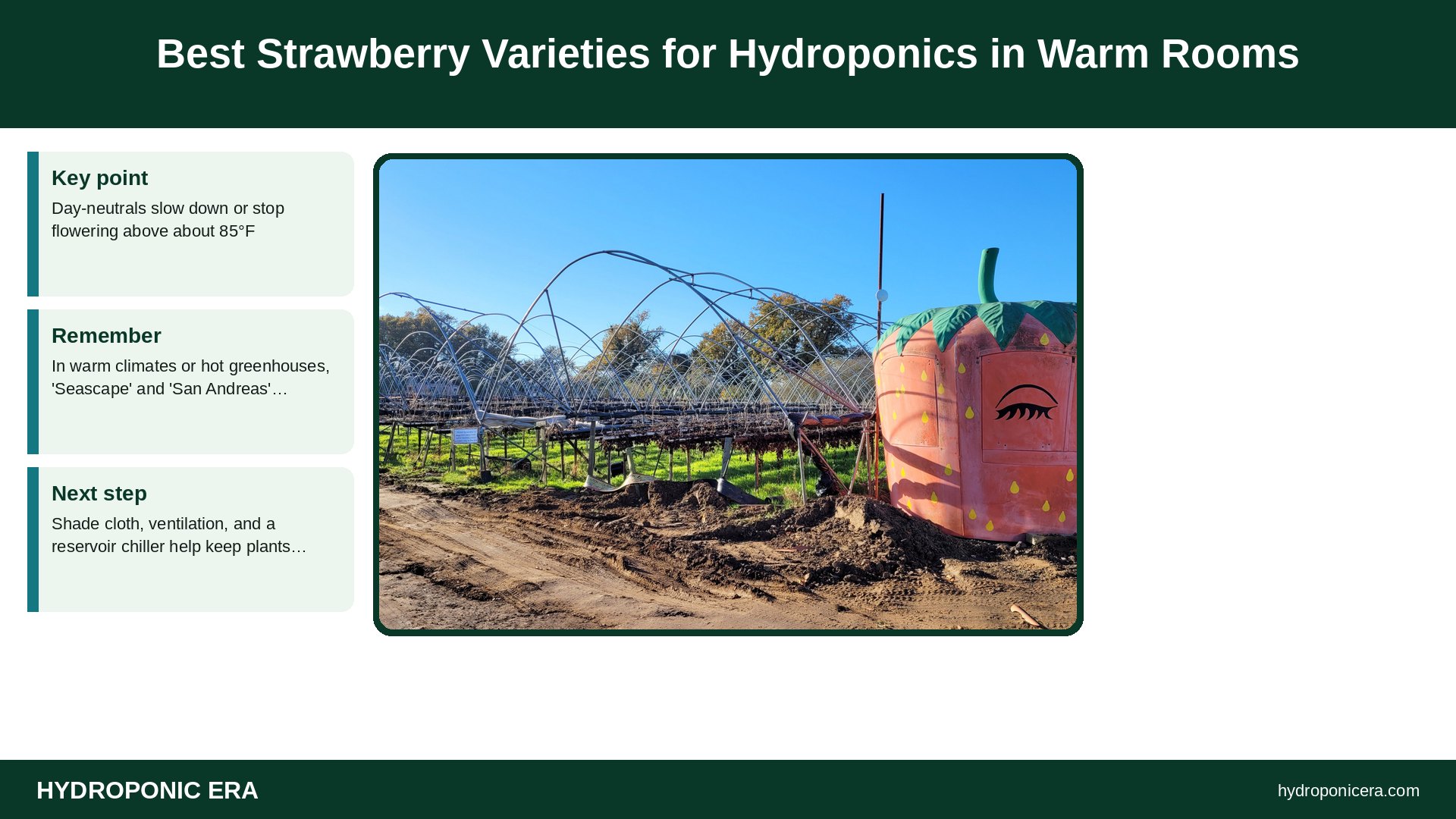
Day-neutrals slow down or stop flowering above about 85°F. In warm climates or hot greenhouses, ‘Seascape’ and ‘San Andreas’ cope better than some others, but cooling still matters. Shade cloth, ventilation, and a reservoir chiller help keep plants flowering. See hydroponics in hot climates.
Common Problems by Variety
- ‘Albion’: can lose vigor in heat; keep temperatures moderate.
- ‘Seascape’: fruit can soften in humid conditions; harvest promptly.
- Alpines: small yields per plant; grow more plants per square foot.
- All types: gray mold on fruit in humid rooms. See botrytis gray mold.
Yield and Harvest
A healthy day-neutral plant can give about 1/2 to 1 pound of fruit over several months indoors, with light as the biggest factor. Pick berries when they are fully red, ideally in the morning, and refrigerate them right away. Remove damaged fruit so it doesn’t spread mold to healthy fruit.
Choosing Among the Best Strawberry Varieties for Hydroponics
For most home growers, start with ‘Albion’ or ‘Monterey’ plants from a certified nursery. If you can’t find plants, start an F1 seed variety. If you want flavor above all, add a few alpine plants. Grow two varieties side by side and keep notes on yield, flavor, and disease.
Planting Crowns in a Hydroponic System
Bare-root crowns arrive dormant. Soak the roots in clean water for about 30 minutes, trim roots to about 4–5 inches, and remove dead leaves. Set each crown so the base of the crown sits just above the media or net pot rim; the roots go down into the media, but the growing point must stay in the air. Start feeding at about EC 0.8 and raise it to 1.2 or so once new leaves unfold, which usually takes 1–2 weeks.
Plug plants are easier. They already have active roots, so they can go straight into the system at the normal strength. Remove the first flowers for 3–4 weeks after planting so plants build roots before fruiting.
Plant Spacing and Light
In gutters and towers, space plants about 8–10 inches apart. In a tent, plan about one plant per square foot of light footprint. Strawberries need more light than lettuce to set sweet fruit: aim for a DLI of about 15–20 mol/m²/day. Under weak light, even the best strawberry varieties for hydroponics produce few flowers and sour fruit. See PPFD and DLI.
Cold Treatment for June-Bearers
If you grow June-bearing varieties, they need a period of short days and cool temperatures to form flower buds, and plants from nurseries are often chilled before shipping for this reason. Indoors, that means about 8-hour days and temperatures near 50–60°F for several weeks. This is one more reason home growers usually skip June-bearers and choose day-neutral types.
FAQs
What are the best strawberry varieties for hydroponics?
Day-neutral types such as ‘Albion’, ‘San Andreas’, ‘Monterey’, and ‘Seascape’.
Can I grow strawberries from seed hydroponically?
Yes, with alpine or F1 seed varieties.
Do June-bearing strawberries work indoors?
They work, but fruit only once a year.
Which strawberry is best for towers?
Compact day-neutrals like ‘Albion’.
What EC do strawberries need?
About 1.0–1.5 mS/cm.
How long do plants last?
Replace them every 12–18 months.
Sources
- The Ohio State University — Indoor Berry Production
- The Ohio State University — Indoor Berry Fertigation
- UF/IFAS Extension — Strawberry Production
- UF/IFAS Extension — The UF/IFAS Strawberry Clean Plant Program
- Photo credits (Wikimedia Commons, edited with titles): Fragaria vesca fruit – Keila by Ivar Leidus (CC BY-SA 4.0); Terrington St. Clement, Hydroponic strawberry growing – geograph.org.uk – 7897514 by Michael Garlick (CC BY-SA 2.0); Terrington St. Clement, Hydroponic strawberry growing – geograph.org.uk – 7897514 by Michael Garlick (CC BY-SA 2.0); Strawberry plants with ripe and unripe fruit growing in a garden by Shixart1985 (CC BY 2.0); Pick your own strawberries – geograph.org.uk – 7028196 by Jonathan Billinger (CC BY-SA 2.0)