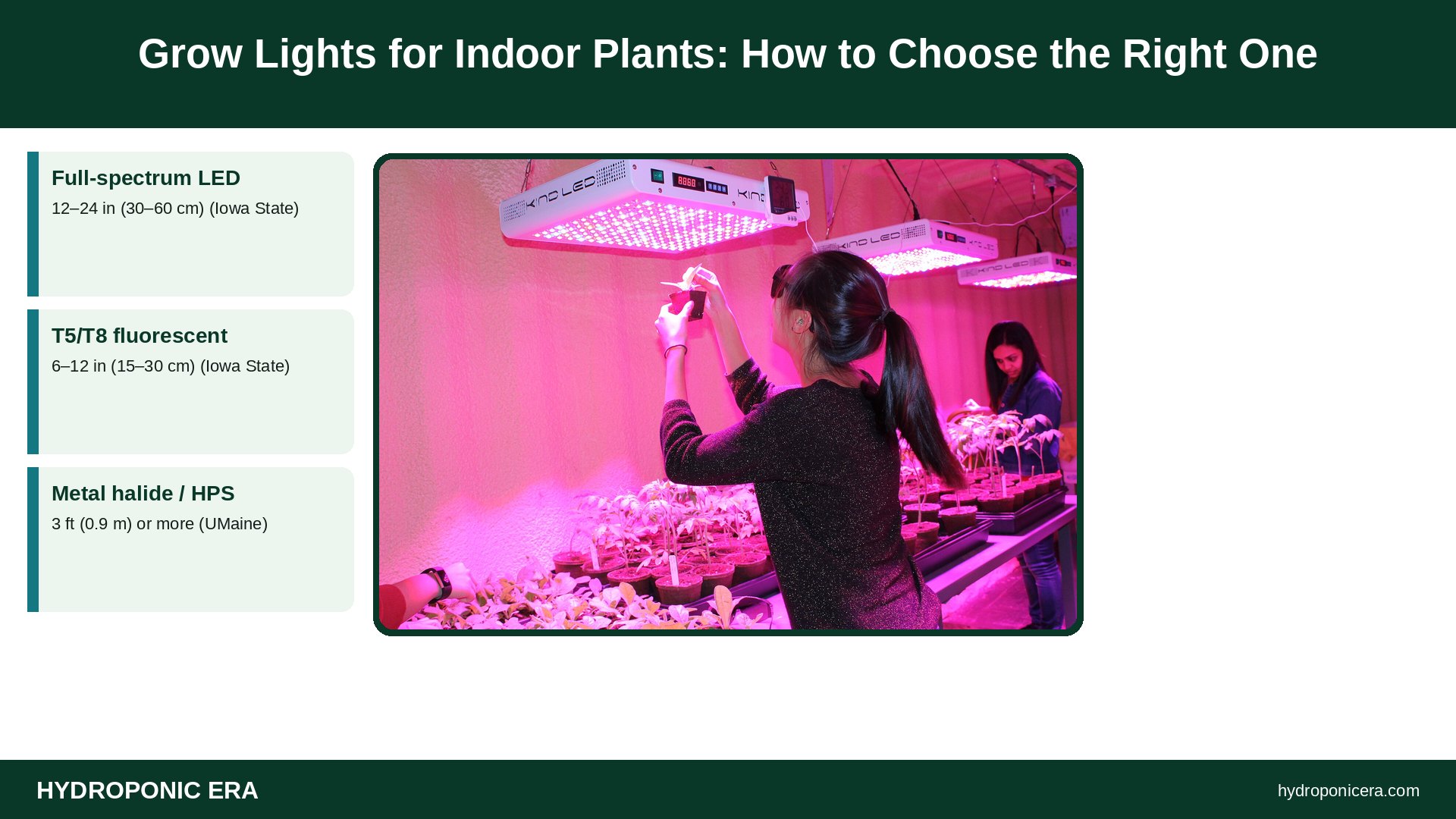
What are the best grow lights for indoor plants? Full-spectrum white LED grow lights are the best choice for most indoor plants. They run cool, use little power and last long. Iowa State Extension suggests hanging LEDs about 12–24 inches (30–60 cm) from foliage and running them on a timer for 12–14 hours a day, never more than 16 for most home setups.
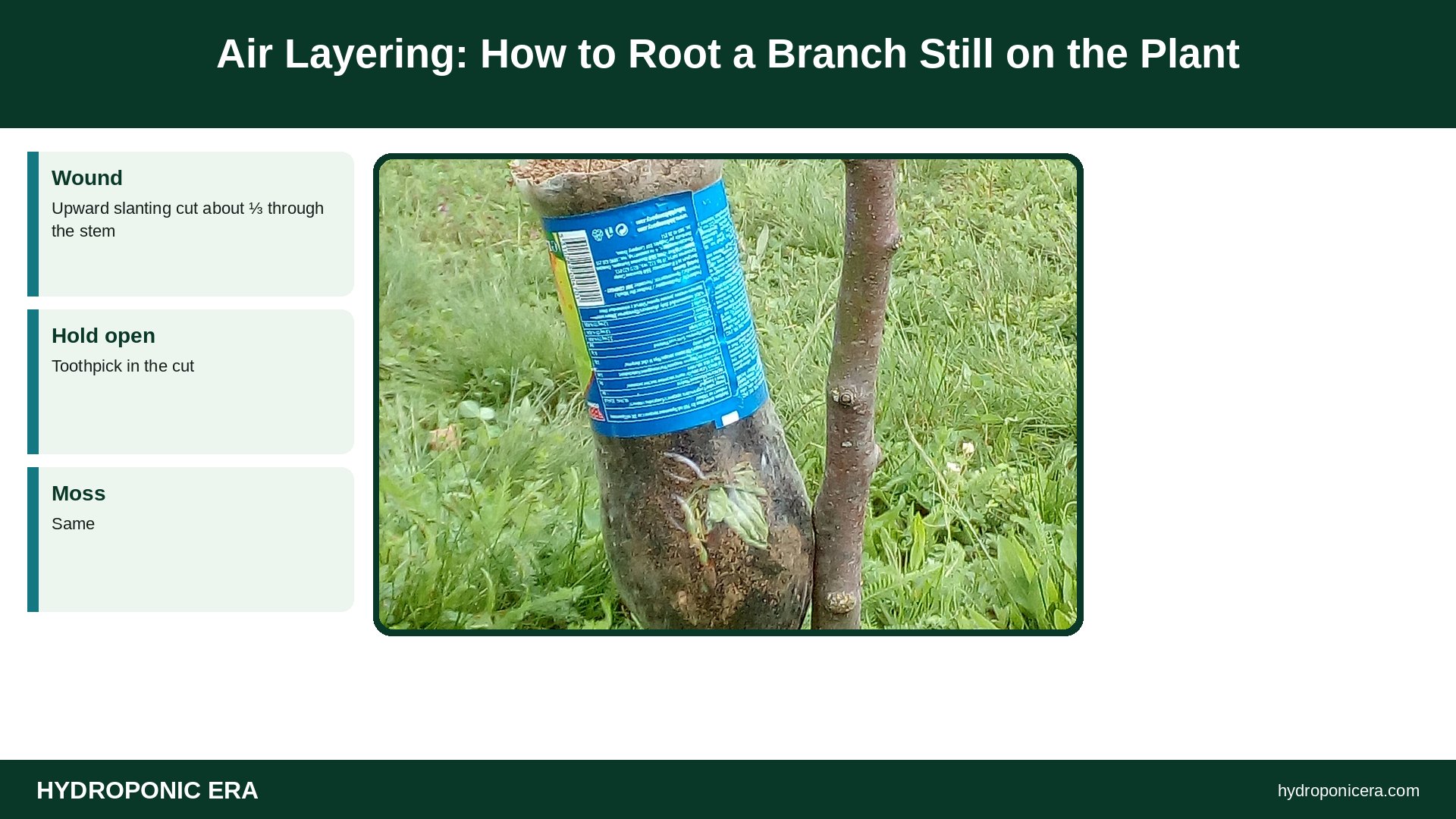
What is air layering? Air layering is a way to root a branch while it is still attached to the parent plant. You wound the stem, wrap moist sphagnum moss and plastic around it, wait for roots, then cut below them and pot the top. It suits rubber plants, fig trees and leggy houseplants.
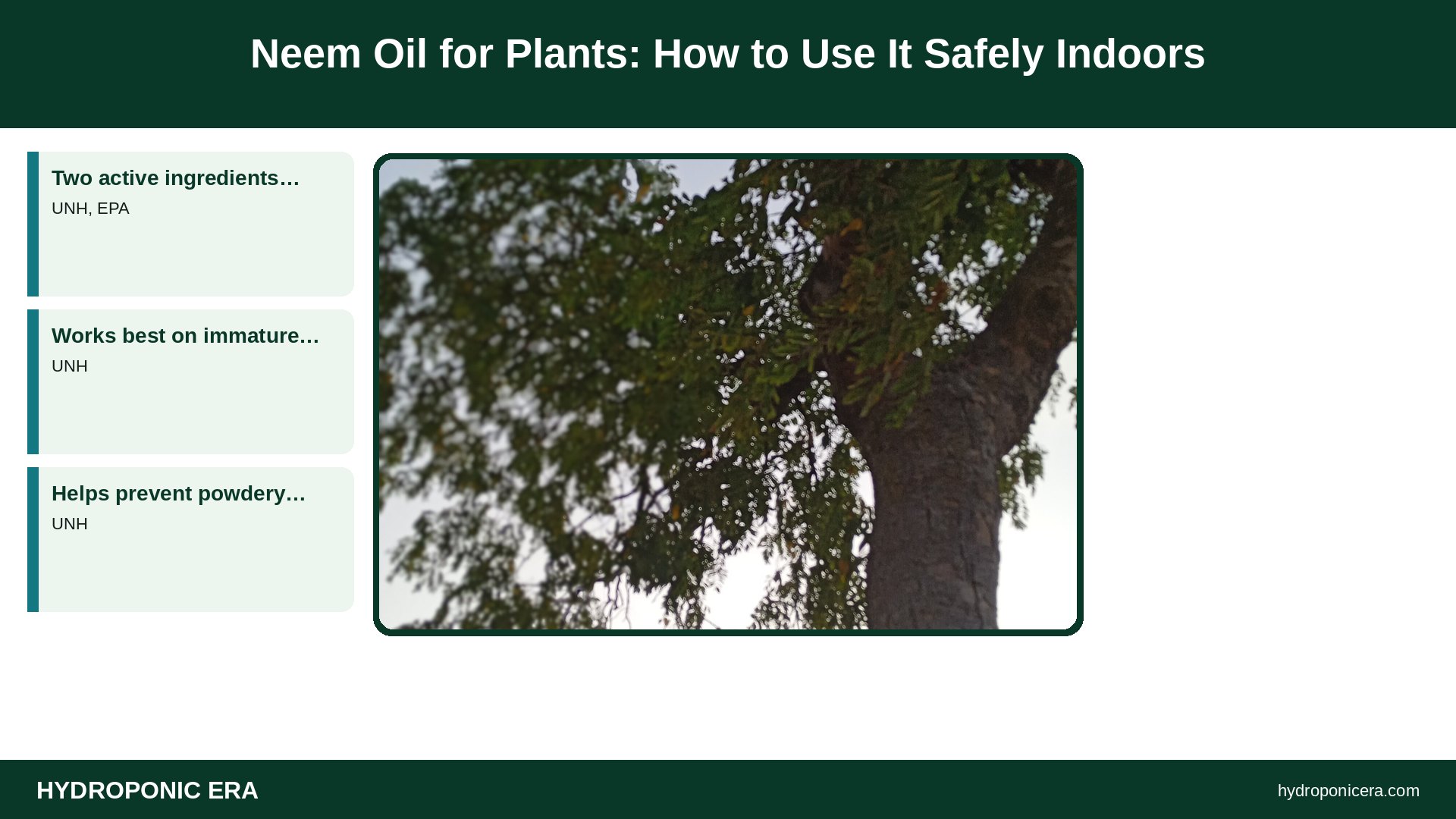
Is neem oil for plants safe and effective? Yes, when used by the label. Neem oil for plants comes from neem tree seeds and controls soft-bodied pests such as aphids, mealybugs, thrips and whiteflies, mainly young stages, by smothering them and disrupting feeding and growth. It also helps limit powdery mildew. Test a small area first, because neem can burn leaves.
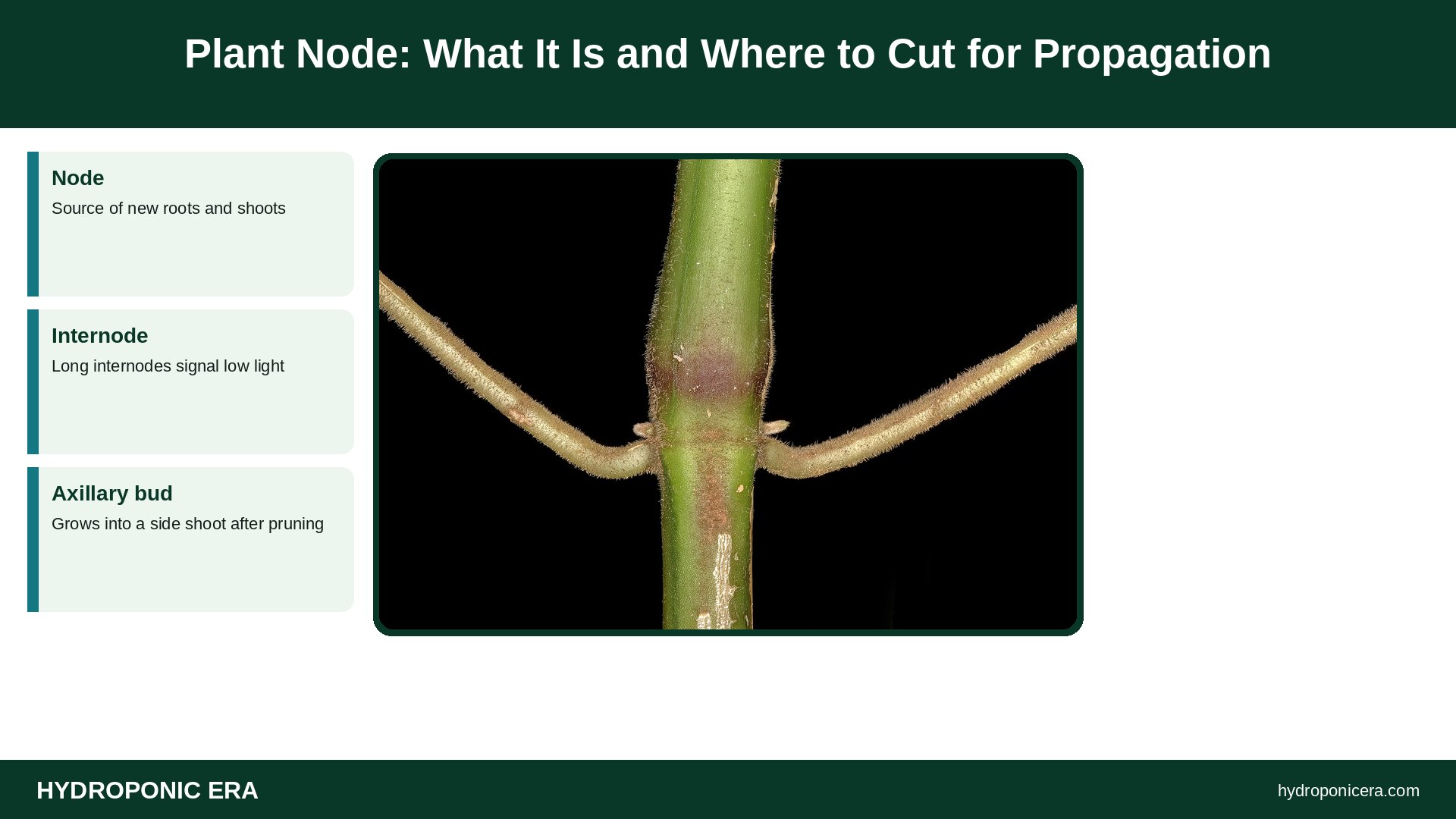
What is a plant node? A plant node is the point on a stem where leaves attach and buds form. The stretch of stem between two nodes is the internode. Nodes hold cells that grow new shoots, leaves and often roots, so cut just below a node and keep one under water or mix.
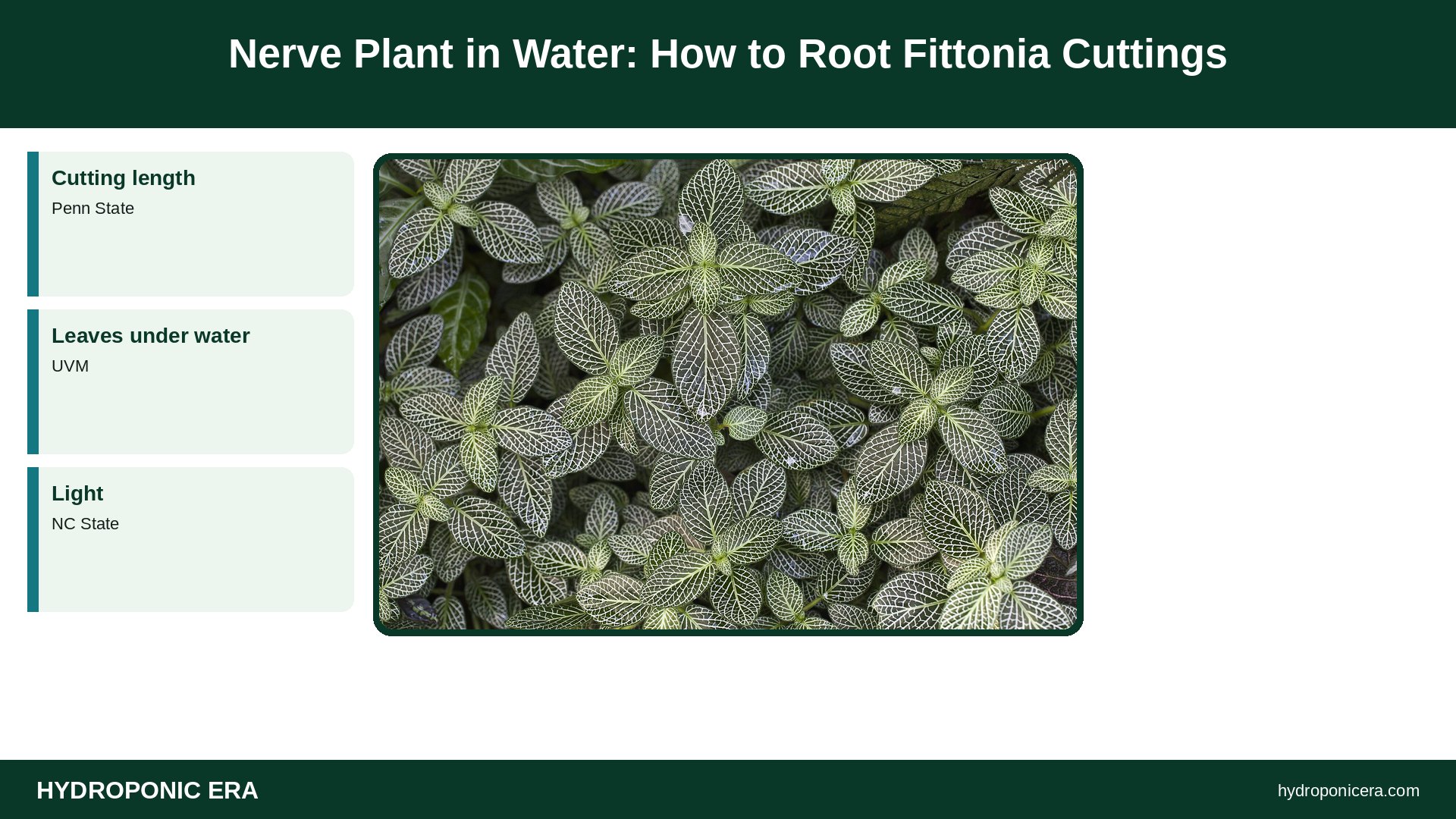
Can you grow a nerve plant in water? Yes. Nerve plant (Fittonia) roots easily from stem cuttings in water because its creeping stems naturally root at the nodes. Take a 2–3 inch (5–8 cm) tip with at least two nodes, strip the lower leaves, set it in room-temperature water in bright, indirect light, and change cloudy water. Pot it once roots pass 2–3 inches (5–8 cm).
How does a self watering planter work? A self watering planter has a water reservoir under the potting mix. Water rises into the root zone by capillary action, the same way a sponge soaks up liquid, while an overflow hole stops the reservoir from flooding the roots. You refill through a fill tube instead of watering the surface, which keeps moisture steady.
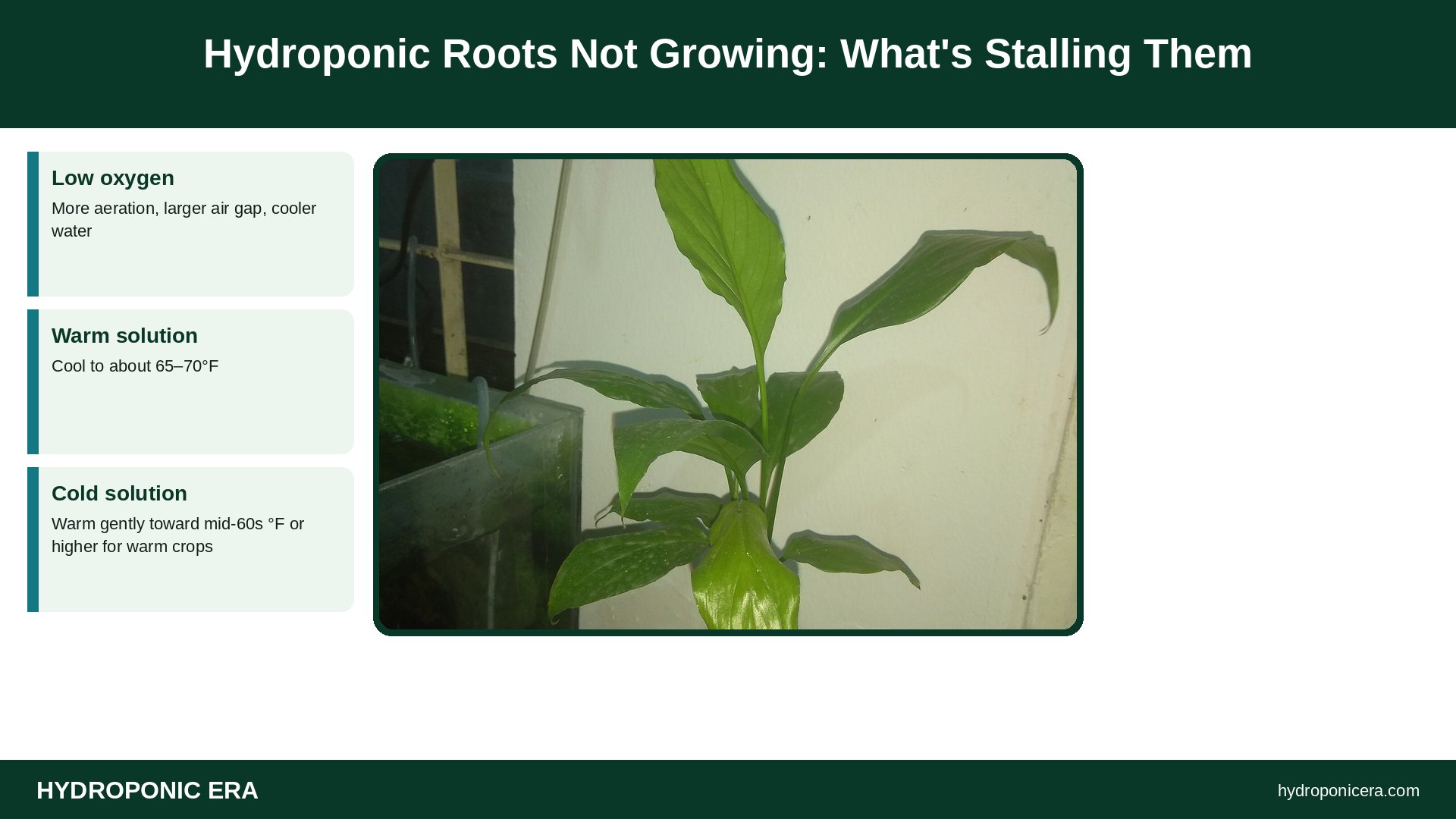
When hydroponic roots not growing is the problem, the usual culprits are low dissolved oxygen, warm or cold nutrient solution, pH or EC outside the crop’s range, root rot or other disease, roots not yet reaching the water, light leaking into the root zone, or transplant shock. Healthy roots in deep water culture and NFT are white to cream, firm, and branch steadily. Start by checking water temperature (aim for roughly 65–70°F), aeration, pH, and EC, then look closely at root color and smell.
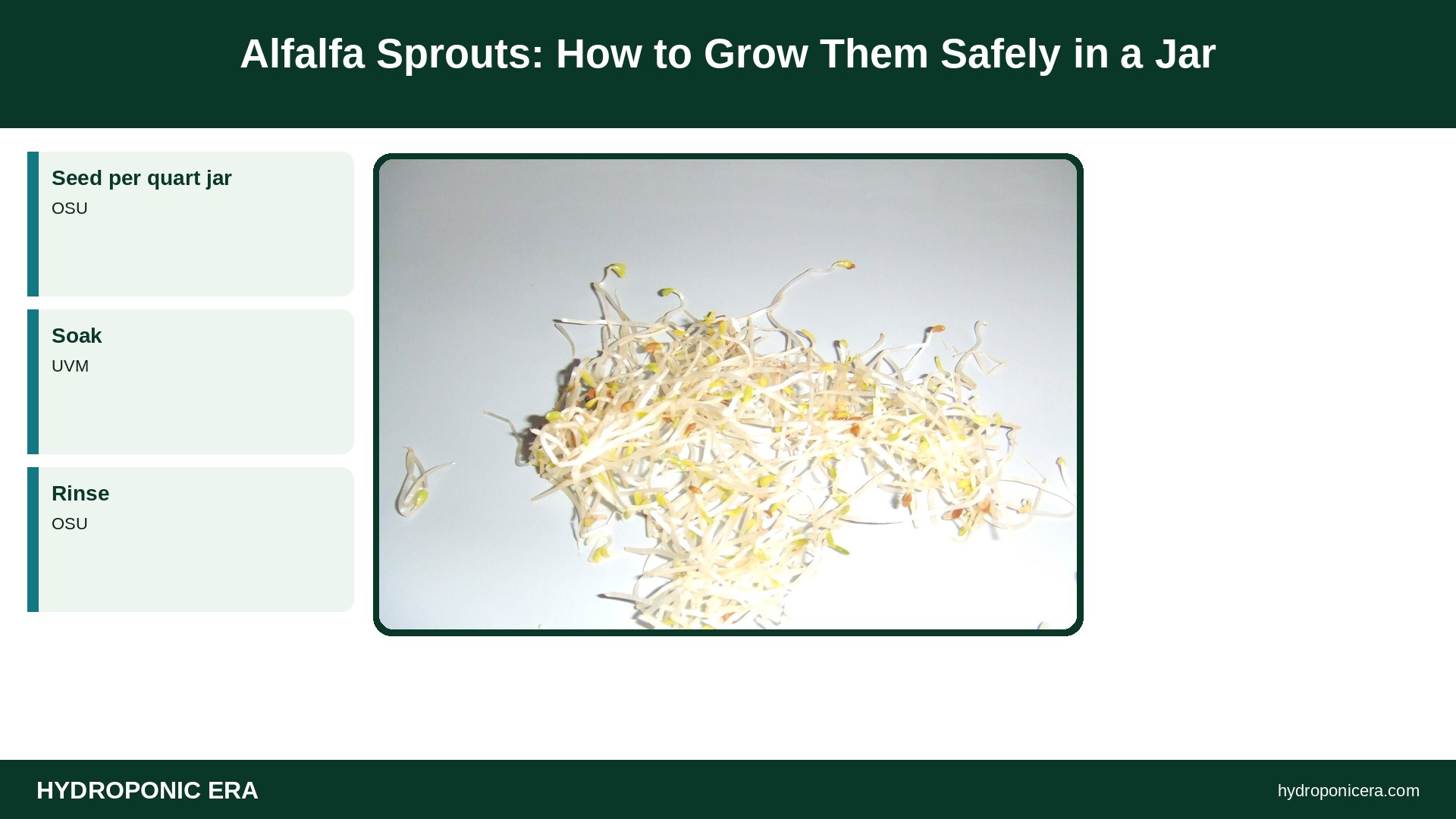
How do you grow alfalfa sprouts at home? Soak about 3 tablespoons of sprouting-grade alfalfa seed for 6–8 hours, drain it, then rinse and drain three to four times a day in a jar kept at 70–85°F (21–29°C). Oregon State University says alfalfa sprouts are ready in 3–5 days at 1–2 inches (2.5–5 cm) long, yielding about 1 quart (0.95 L).
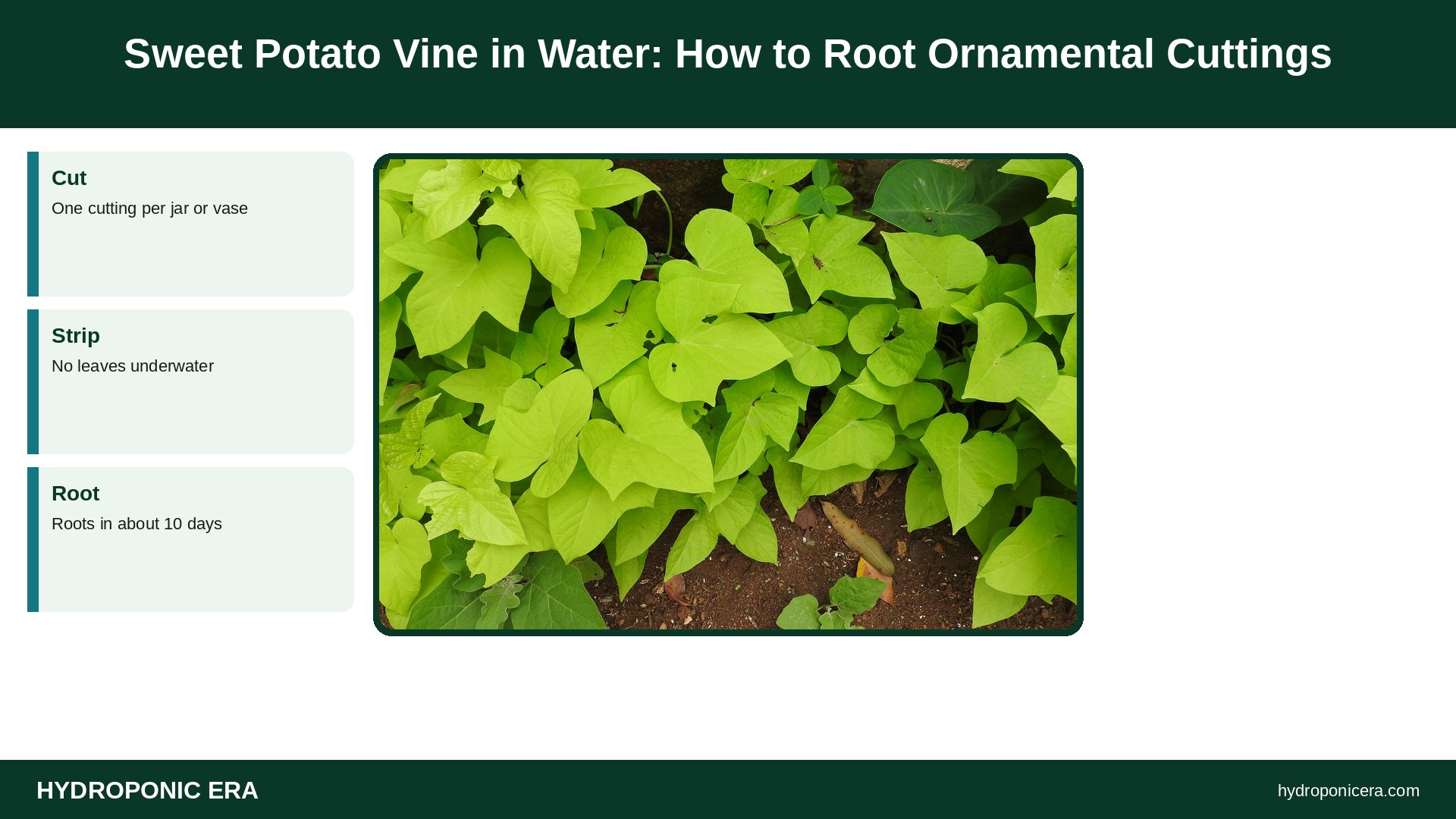
Can you grow sweet potato vine in water? Yes. Ornamental sweet potato vine roots quickly in water from stem cuttings. Cut a trailing piece with several leaf nodes, strip the lower leaves, and stand the bare stem in a jar. Clemson Extension says roots form within about 10 days, and the cuttings can be planted in two to three weeks.
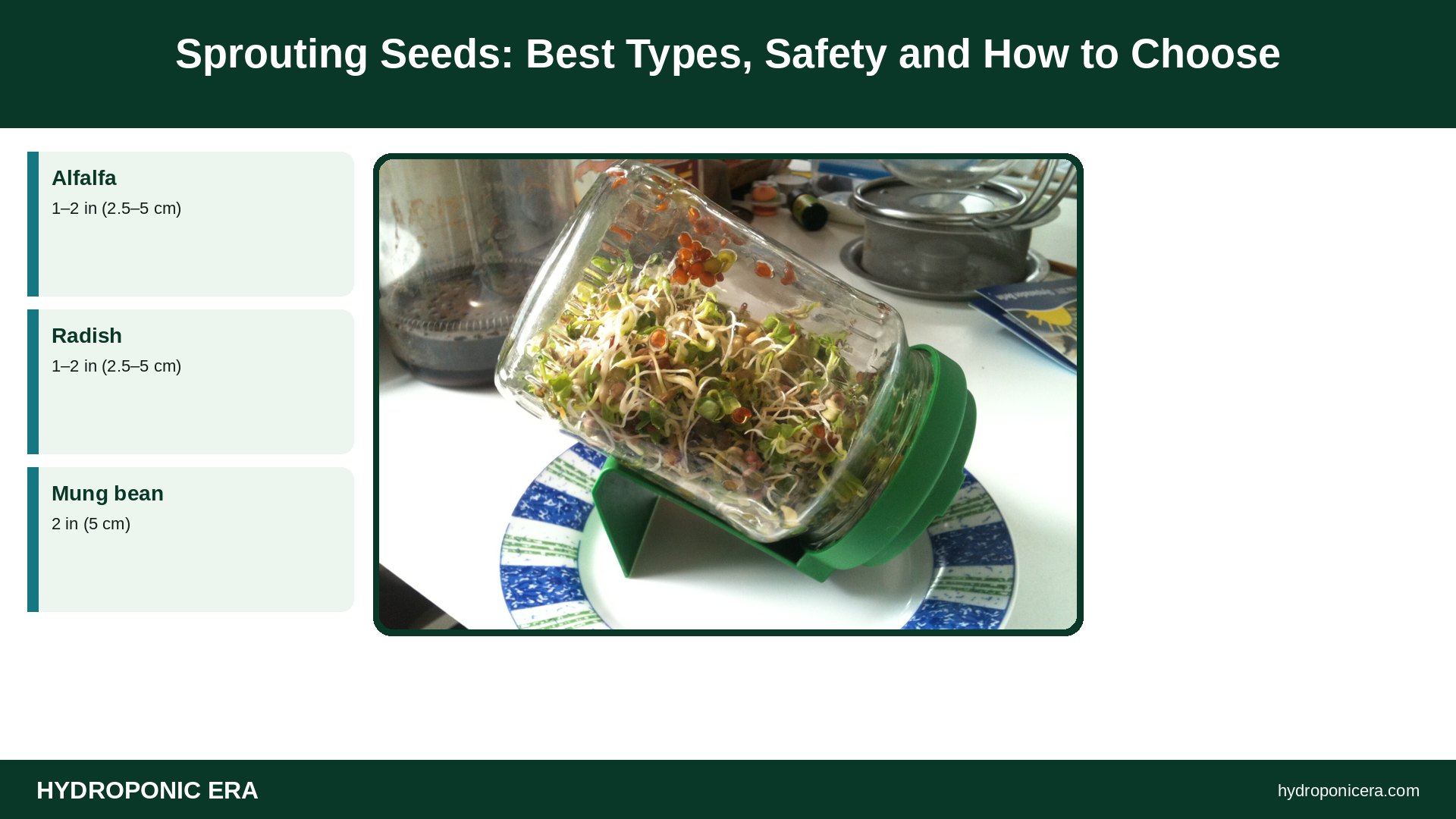
What are sprouting seeds? Sprouting seeds are seeds sold for eating as sprouts, such as alfalfa, broccoli, radish, mung bean, lentil and clover. You soak them, then rinse and drain them for about 3–5 days until short shoots form. Buy seed labeled for sprouting, ideally pathogen-tested, because UC food safety experts trace most sprout illness outbreaks to contaminated seed.