fish emulsion — Fish Emulsion in Hydroponics: Can You Use It?

You can use fish emulsion in hydroponics, but it’s tricky. Fish emulsion is an organic fertilizer made from fish byproducts, and much of its nitrogen is in organic forms that microbes must break down before plants can absorb it. In a standard sterile hydroponic system, that leads to cloudy, smelly solution, biofilm, clogged pumps, and inconsistent feeding. It works best in organic or “bioponic” systems with established beneficial microbes, in media beds, or as a small supplement, not as the only nutrient in a deep water culture bucket.

microgreen trays — Microgreen Trays: Sizes, Types and How to Choose

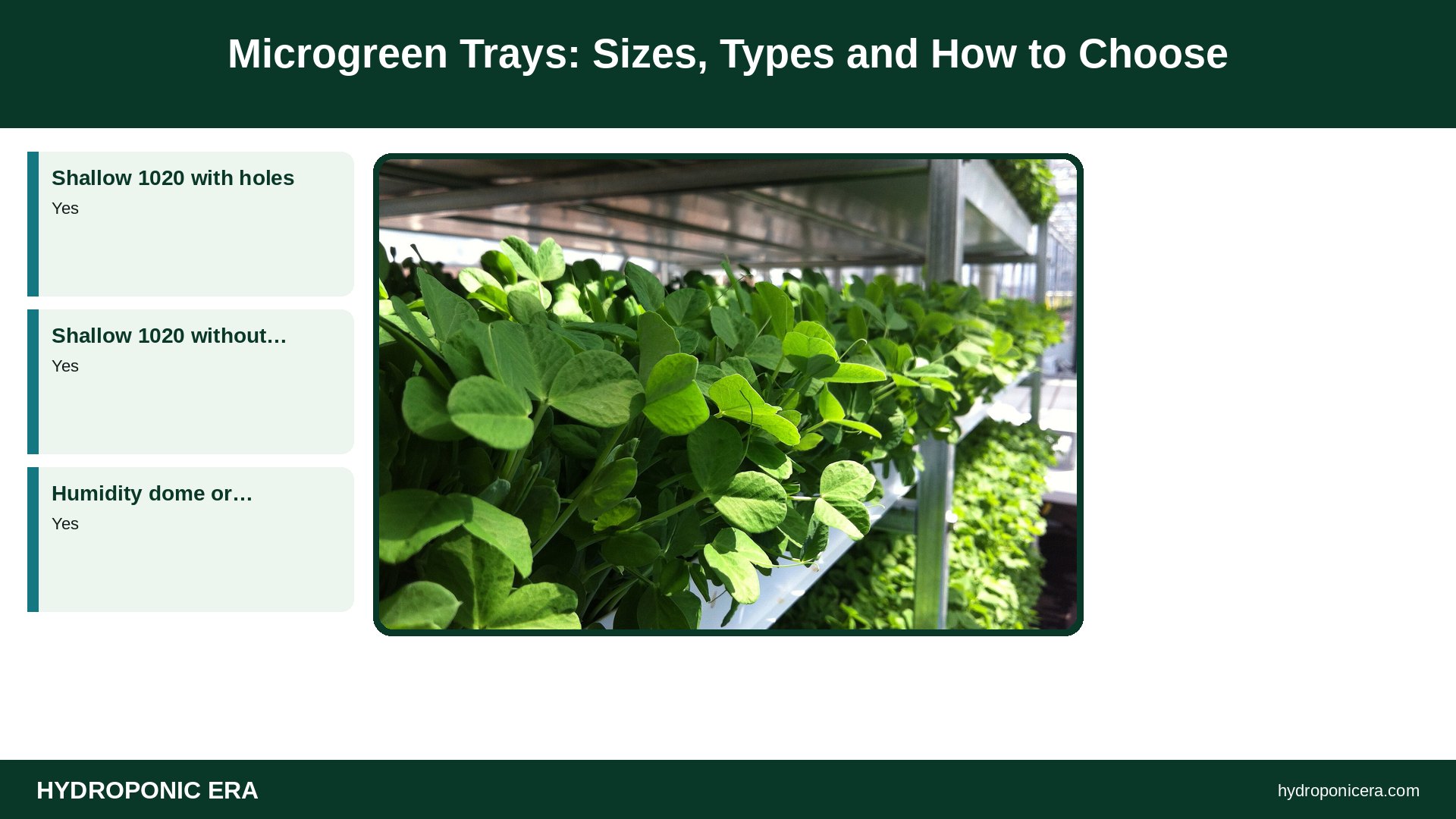
What are the best microgreen trays for home growing? The best microgreen trays are shallow 10 × 20 inch (25 × 51 cm) “1020” flats about 1–1.5 inches (2.5–4 cm) deep, used as a pair: one with drainage holes for the growing mix and one without holes underneath as a water reservoir. Add a lid or a third tray for germination and blackout, and choose thick, reusable, food-grade plastic.

alocasia in water — Alocasia in Water: Corms, Roots and Long-Term Care

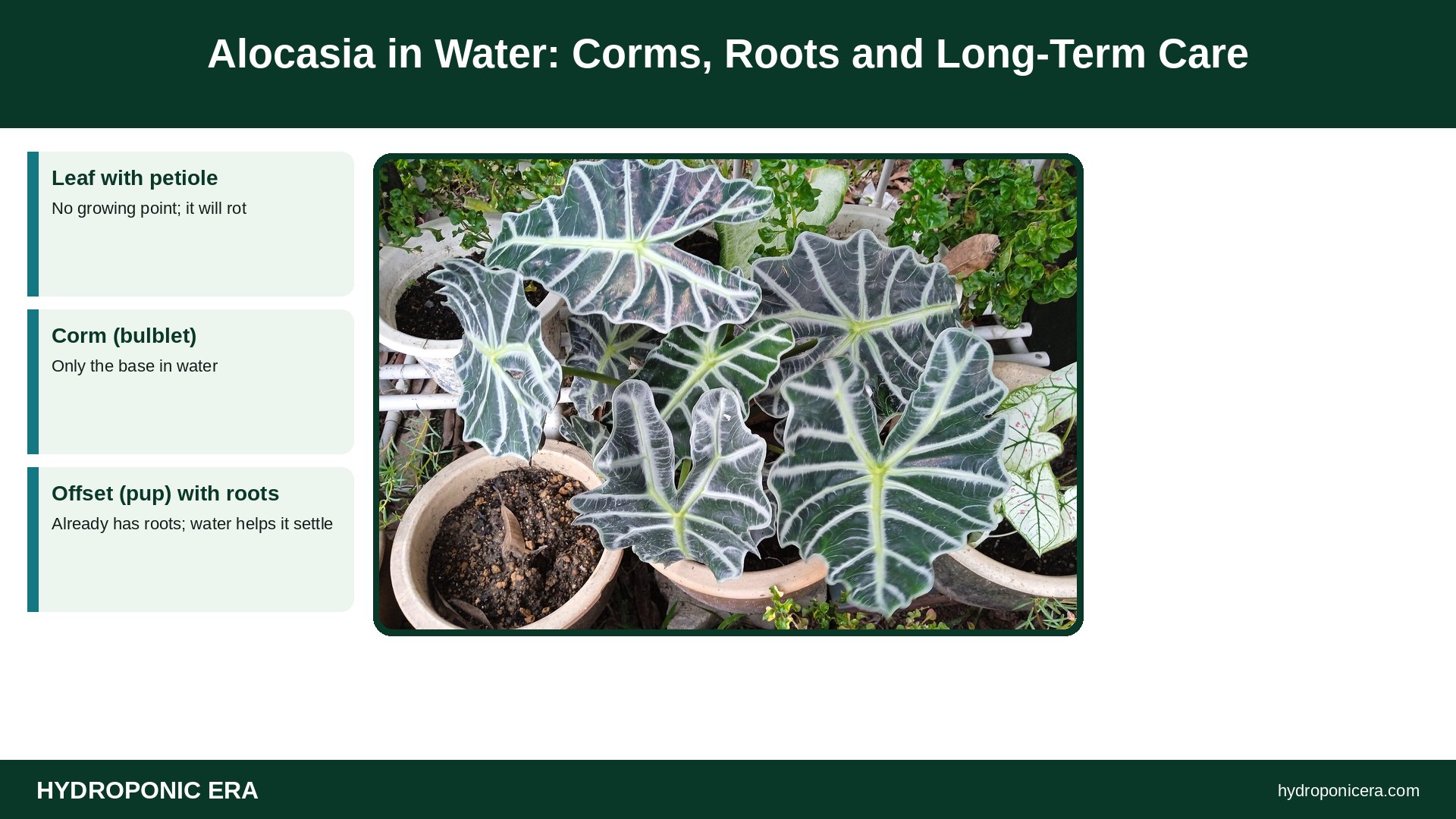
Can alocasia grow in water? Partly. Alocasia leaves and stems won’t root as cuttings, but alocasia in water works for sprouting the small corms (bulbs) that form around the roots, and for rooting divided offsets. Set a corm so only its base touches water, keep it warm at 68–77°F (20–25°C) in bright, indirect light, and move sprouted corms to airy, well-drained mix.