beet microgreens — Beet Microgreens: Growing Red-Stemmed Greens

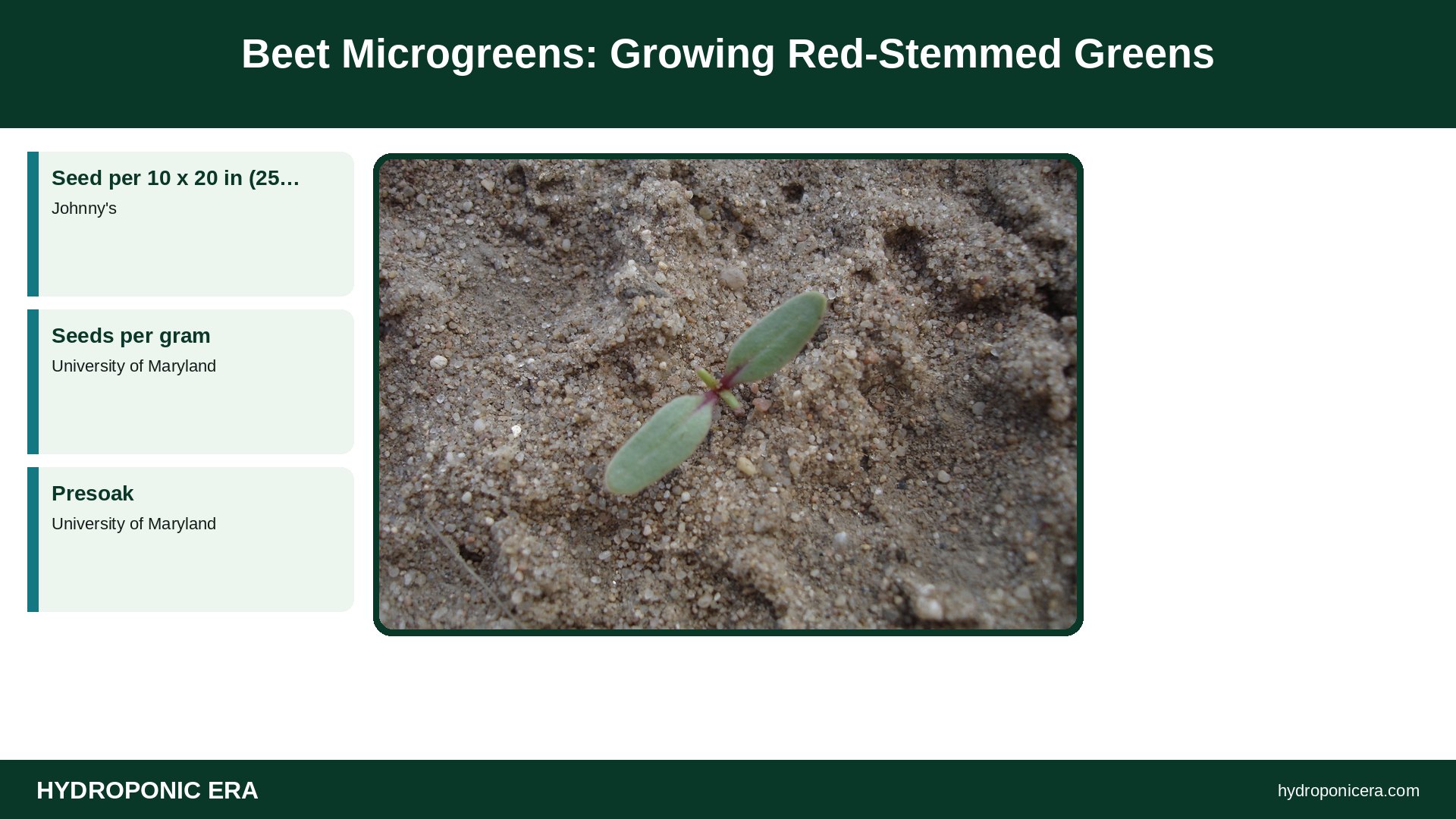
Beet microgreens are known for bright red stems and an earthy flavor. Soak the seed for 6–12 hours, sow about 20–25 grams per 10 x 20 inch (25 x 51 cm) tray, keep it covered until most seedlings emerge, then grow under light until harvest at about 12–23 days. Varieties like Bull’s Blood give red leaves and stems, while Early Wonder Tall Top gives green leaves with red stems. Beet seed is actually a cluster of seeds, so sowing is lighter than it looks and sprouting can be uneven.
mustard microgreens — Mustard Microgreens: Fast, Spicy and Easy

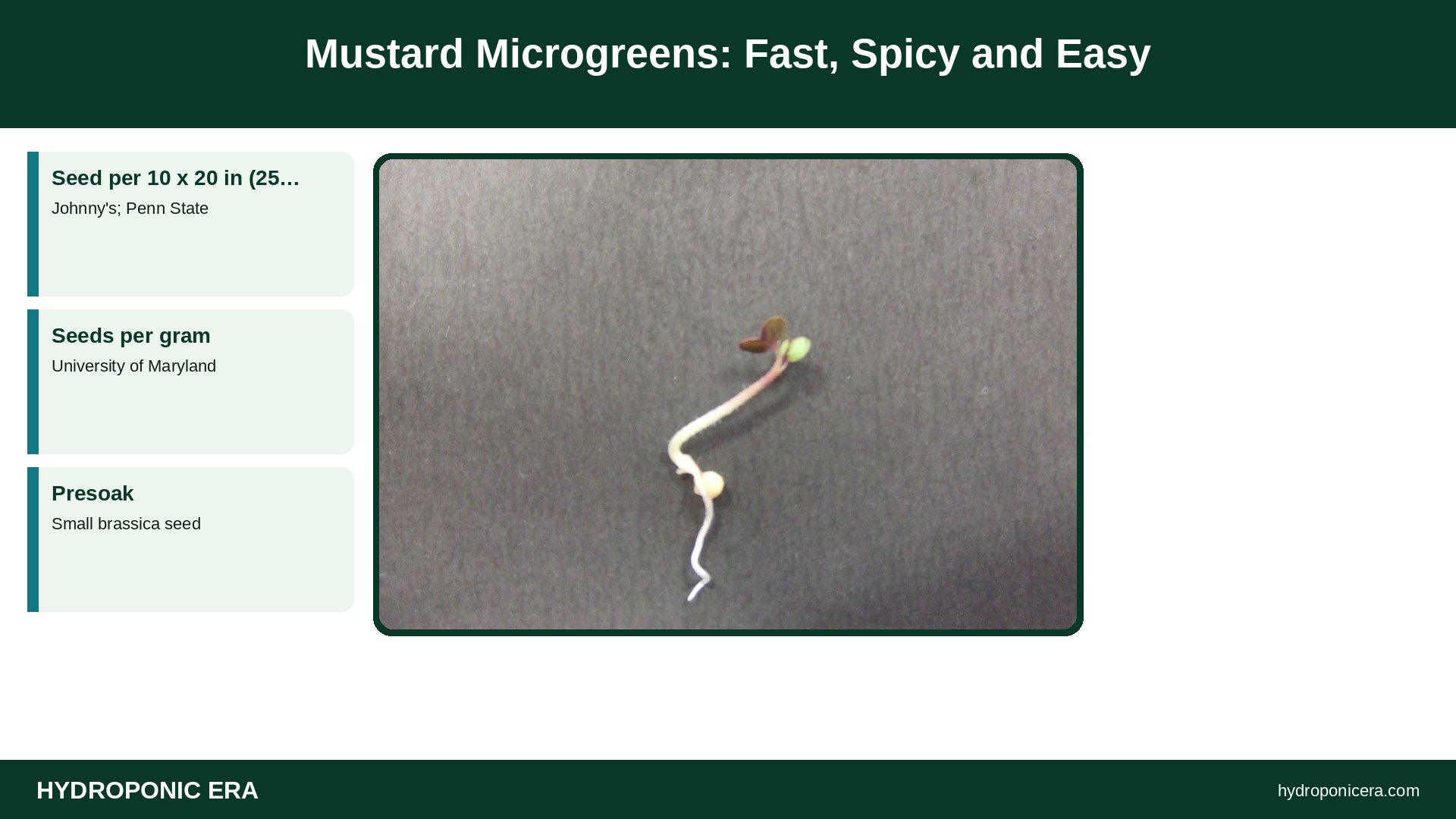
Mustard microgreens are among the fastest and most productive microgreens: sow about 8–15 grams of seed per 10 x 20 inch (25 x 51 cm) tray with no soaking, keep it covered 1–2 days, and harvest in about 10–14 days. They taste spicy, like a mild wasabi or horseradish, and come in green, red and frilly types. In Penn State’s trials, Red Rain mustard gave the highest yield of 18 microgreens tested, about 0.44 lb (201 g) per tray.

cilantro microgreens — Cilantro Microgreens: Slow Seeds, Big Flavor

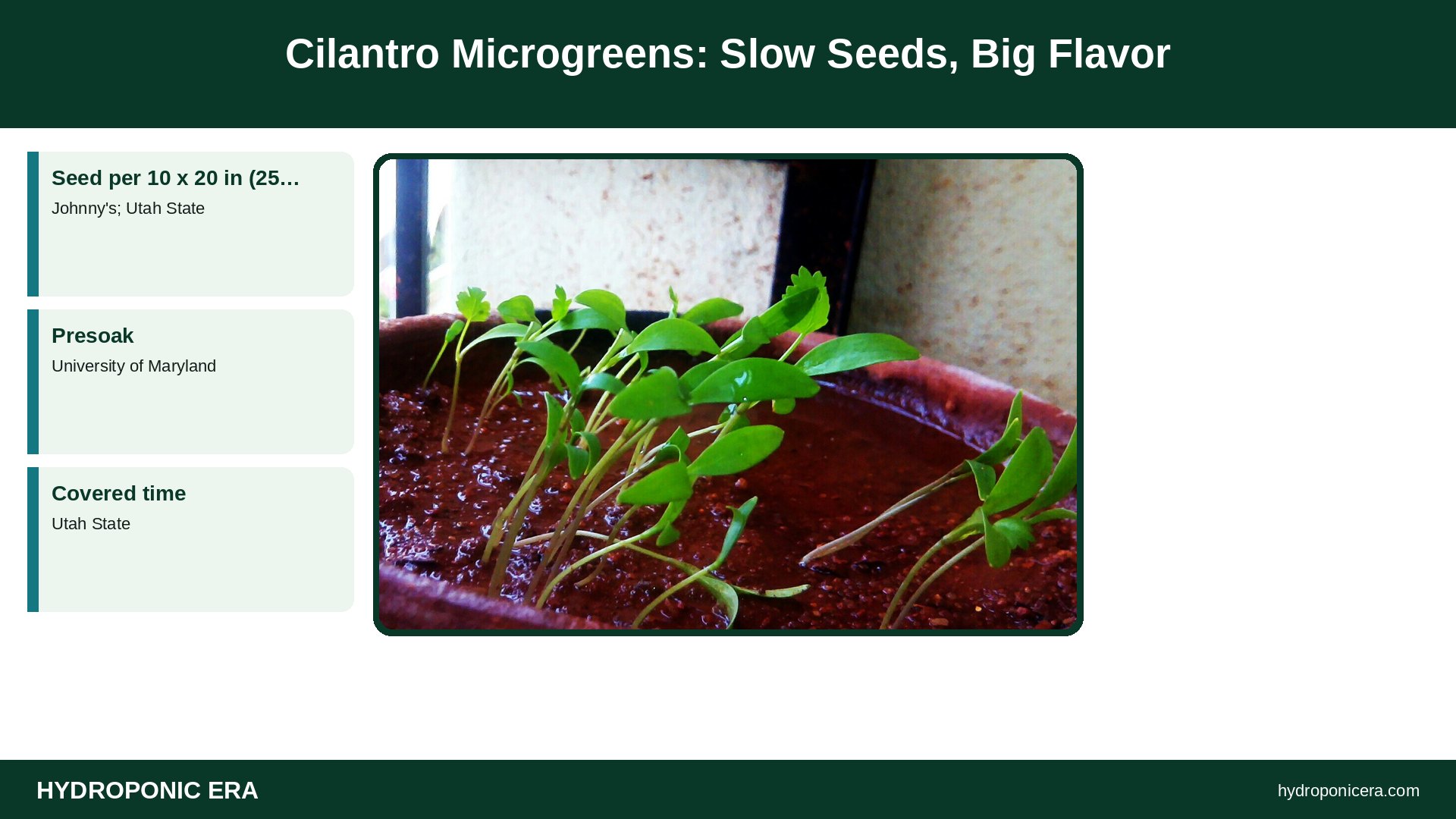
Cilantro microgreens are slow but worth it: expect about 16–28 days from sowing to harvest, with a long germination of up to 1–2 weeks. Sow about 26–28 grams of seed per 10 x 20 inch (25 x 51 cm) tray, ideally split or “monogerm” seed, which Johnny’s says germinates faster and sheds its seed coat more readily. Soaking whole seed for 6–12 hours can speed germination. Cilantro microgreens taste like mature cilantro and were the top source of carotenoids among 25 microgreens tested by USDA researchers.

arugula microgreens — Arugula Microgreens: How to Grow Spicy Greens

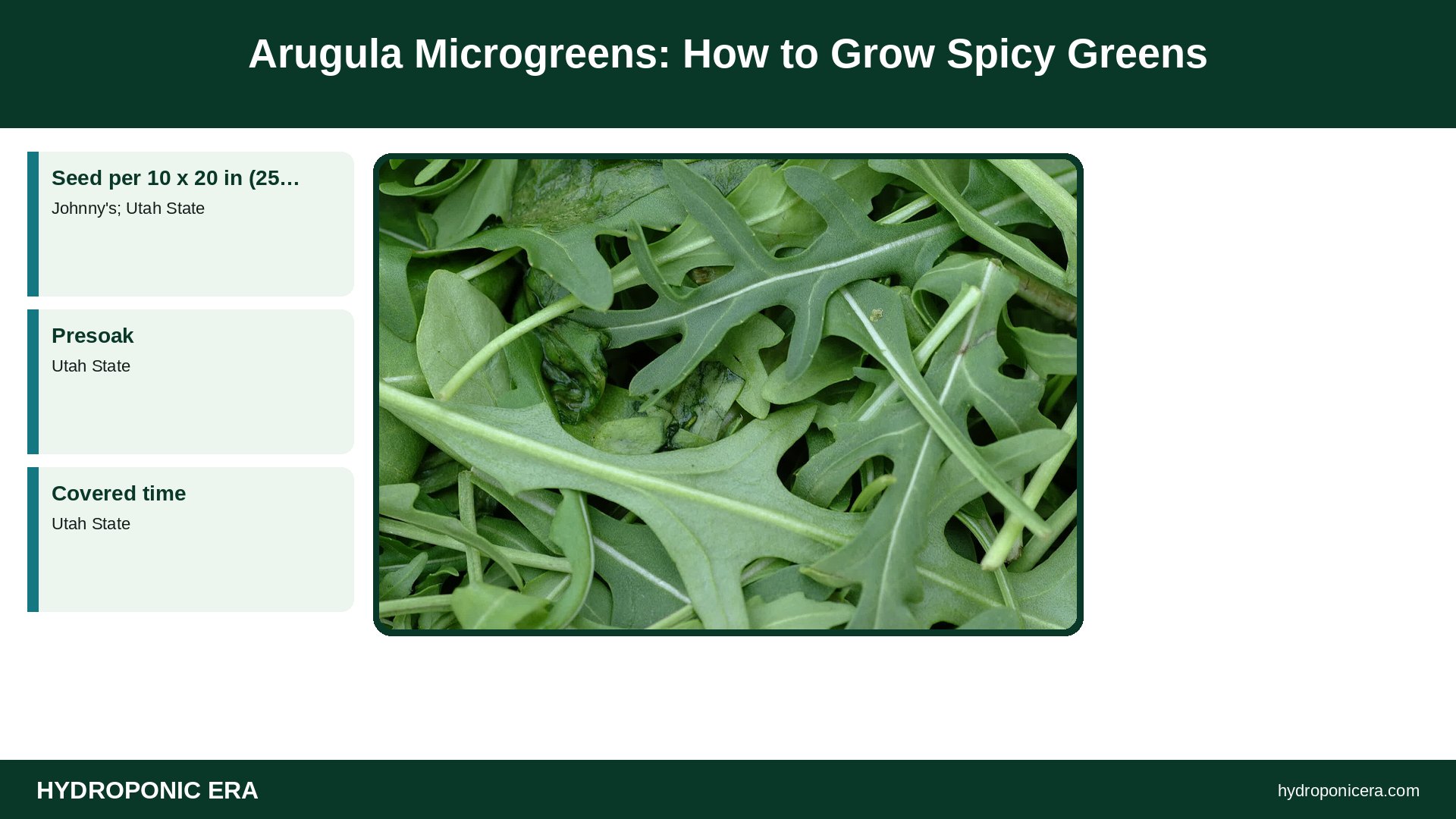
Arugula microgreens are fast, peppery greens you can harvest in about 6–14 days. Sow about 10 grams of seed per 10 x 20 inch (25 x 51 cm) tray with no soaking, keep it covered for 1–2 days, then grow under moderate light. Arugula is one of the cheapest microgreens to grow, at about $0.17 of seed per tray in Utah State’s bulk pricing, and it tolerates lower light than most crops.

science fair — Hydroponics Science Fair Project: Ideas and Hypotheses

A hydroponics science fair project works best when it tests one variable at a time, such as nutrient strength, light hours, pH, or soil versus hydroponics, and measures a clear result like plant height, leaf count, or fresh weight. Lettuce, basil, and radish are ideal test plants because they grow quickly. A simple Kratky setup made from cups or plastic tubs is cheap, safe, and easy to replicate, so students can run several identical containers per group for fair, repeatable results.

kale microgreens — Kale Microgreens: How to Grow and Harvest

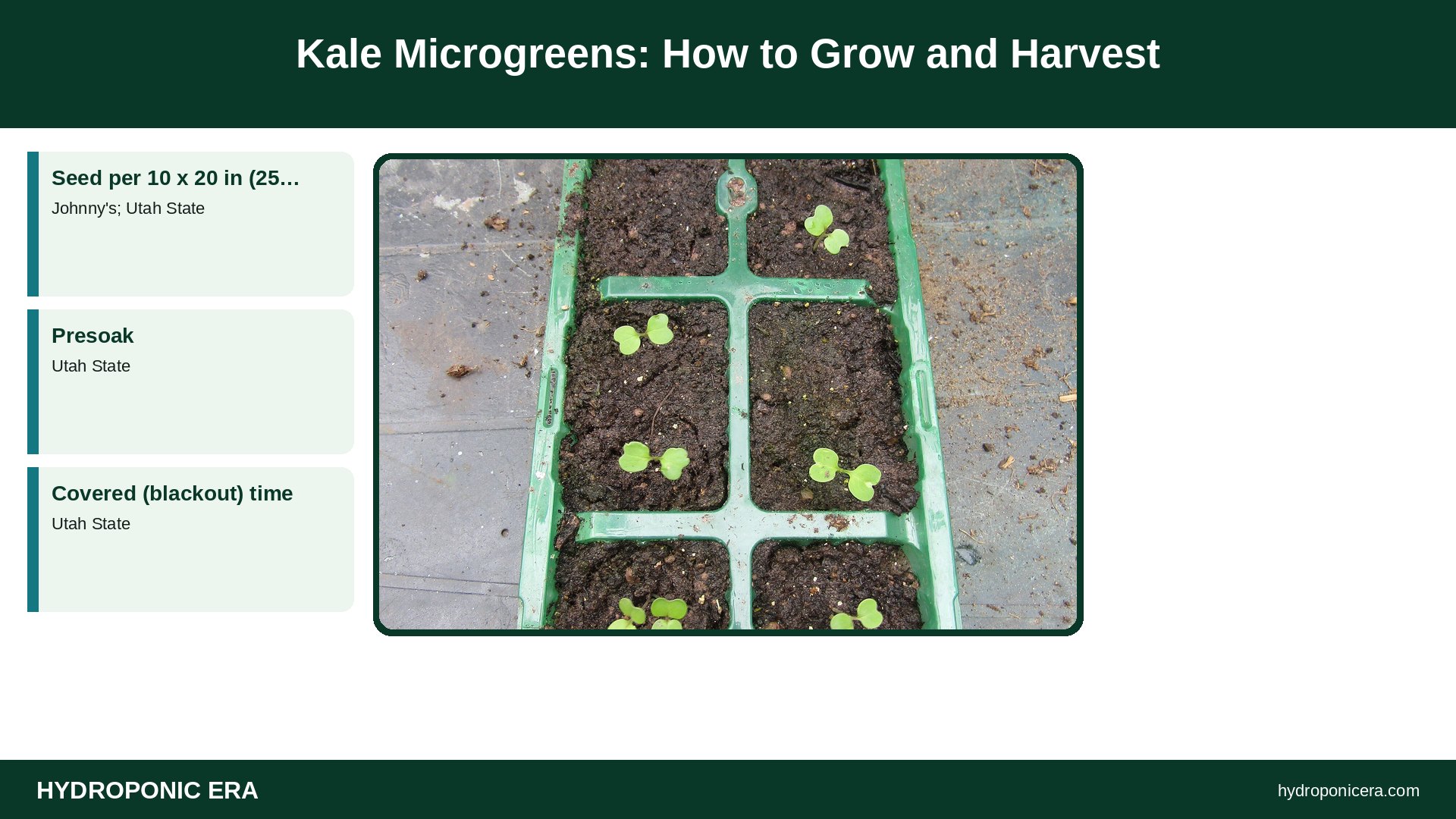
Kale microgreens are one of the easiest microgreens to grow: sow about 10–28 grams of seed per 10 x 20 inch (25 x 51 cm) tray, keep it covered for 1–2 days, then grow under strong light for about 8–14 days total until the first true leaves appear. No soaking is needed. They taste mild, slightly nutty and less bitter than mature kale, and come in green, red and purple types such as Red Russian, Toscano and Purple Reign.

microgreens on paper towels — Microgreens on Paper Towels: Does It Work?

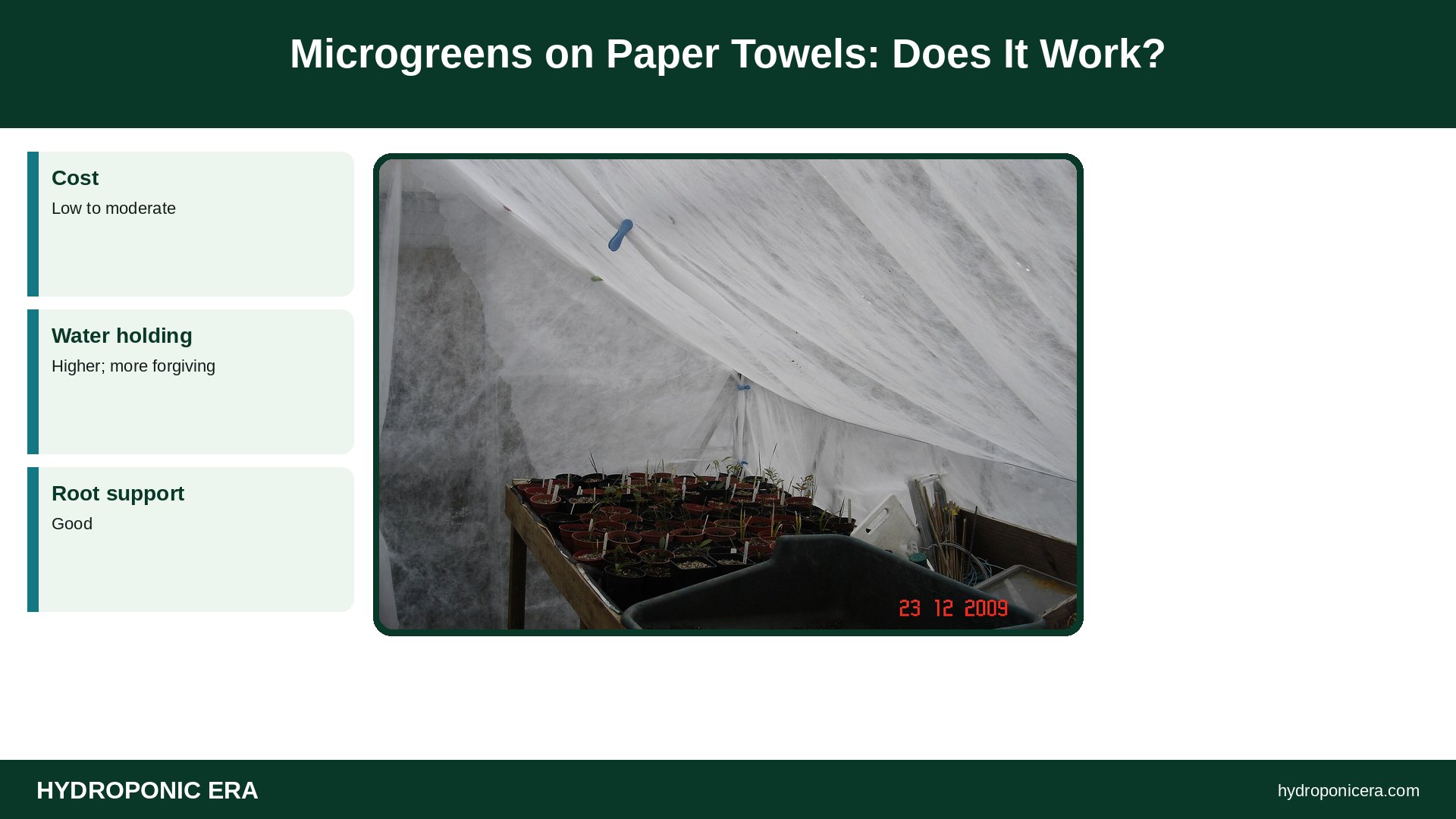
Microgreens on paper towels do work for small, quick harvests. Line a shallow container with 2–4 layers of damp paper towel, scatter seeds evenly, cover them until they sprout, then move them to a bright window or grow light and keep the towels moist but not soggy. University of California Cooperative Extension and the University of Saskatchewan both describe this method. It suits fast crops like radish, broccoli, cress and mustard. For bigger yields, stronger roots and less mold, a hemp mat or coir works better.

can you regrow microgreens — Can You Regrow Microgreens After Cutting?

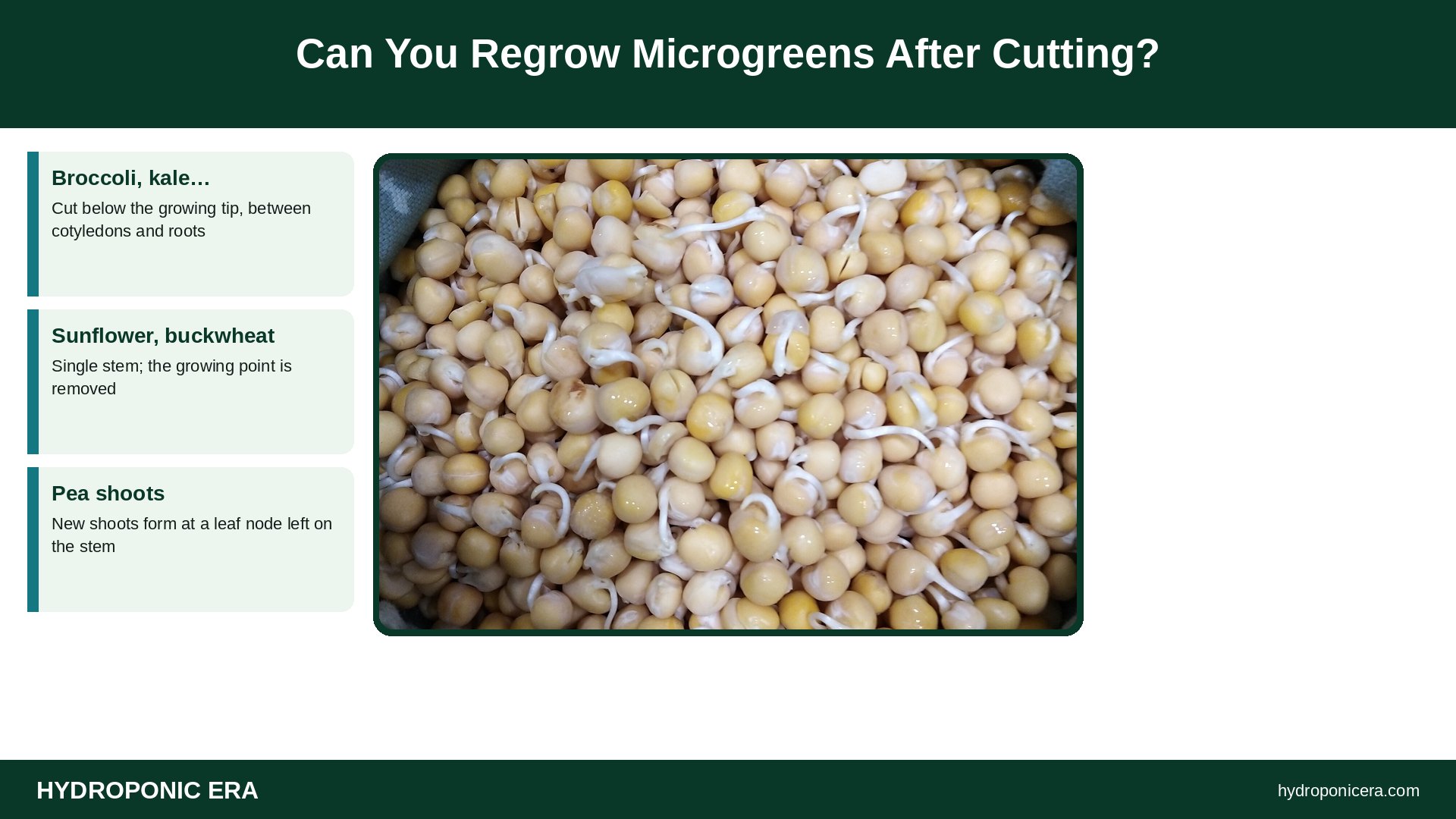
Can you regrow microgreens? Mostly no. Most microgreens, including broccoli, radish, kale, mustard, sunflower and amaranth, are cut below their growing point, so the stem can’t make new leaves. University of Maryland Extension states plainly that harvested microgreen seedlings will not regrow. The main exceptions are pea shoots and a few others cut above a leaf node, which can give a smaller second cut. For a steady supply, re-sow a fresh tray every few days instead of trying to regrow one.

how long do microgreens last — How Long Do Microgreens Last? Fridge Storage Guide

How long do microgreens last? Freshly cut microgreens usually last about 5–10 days in the refrigerator, and up to 10–14 days when kept dry, sealed and cold at about 41°F (5°C) in the dark. At room temperature they last only about 2–4 days, according to Penn State Extension. To make them last, harvest when the leaves are dry, don’t wash until you’re ready to eat, store them in a sealed container in the fridge, and keep the temperature steady to avoid condensation.

microgreens vs sprouts — Microgreens vs Sprouts: Growing, Safety and Nutrition

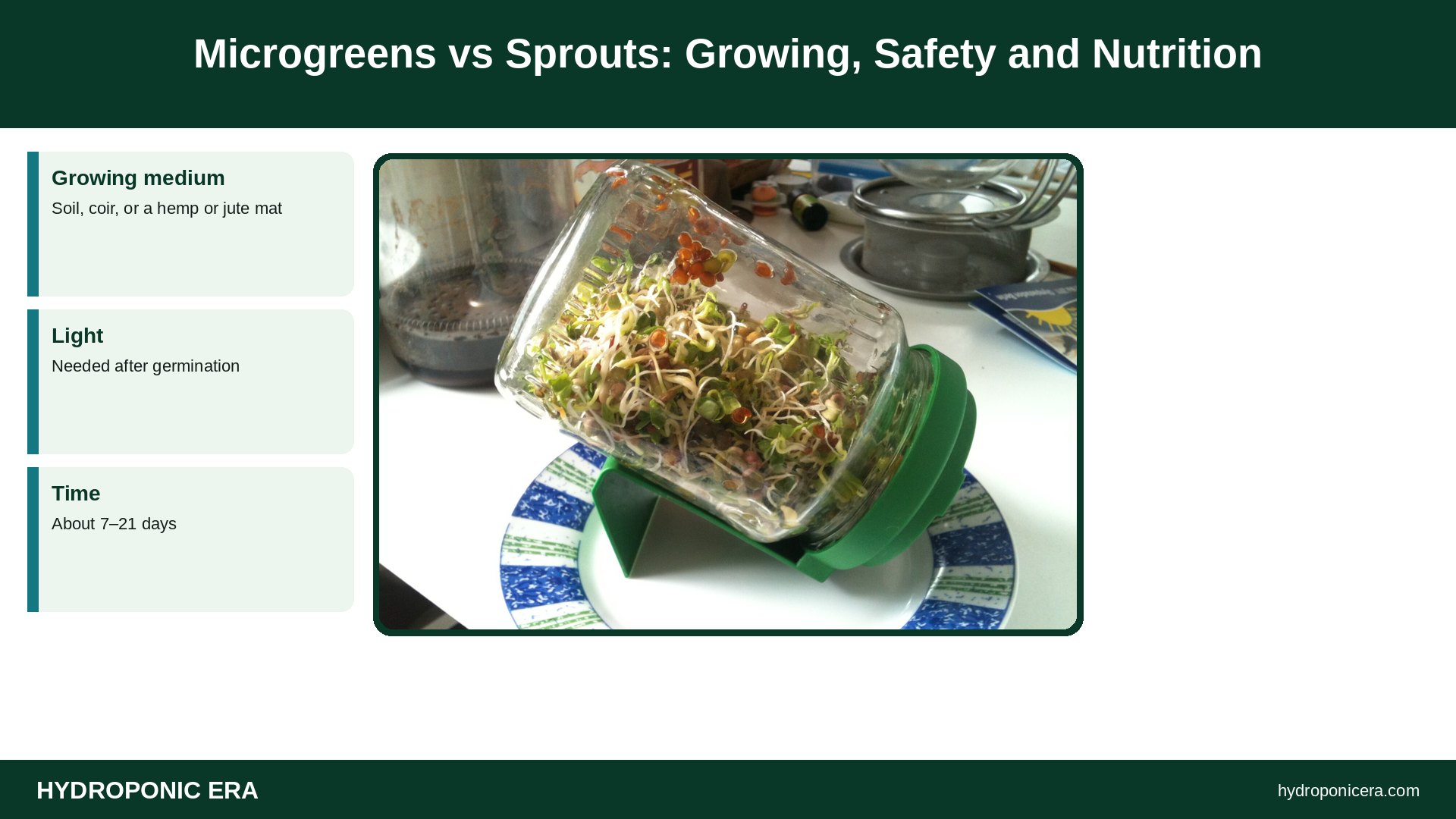
Microgreens vs sprouts comes down to how they’re grown and what you eat. Sprouts are germinated seeds grown in water, usually in a jar, for 2–7 days and eaten whole, roots and all. Microgreens are grown in soil, coir or a mat with light for about 7–21 days, and only the stems and leaves are cut and eaten. Microgreens have green leaves, more flavor and generally lower food safety risk, because sprouts grow in the warm, wet conditions that the FDA says are ideal for bacteria like Salmonella , Listeria and E. coli .