led vs hps — LED vs HPS Grow Lights: Efficiency, Heat and Cost

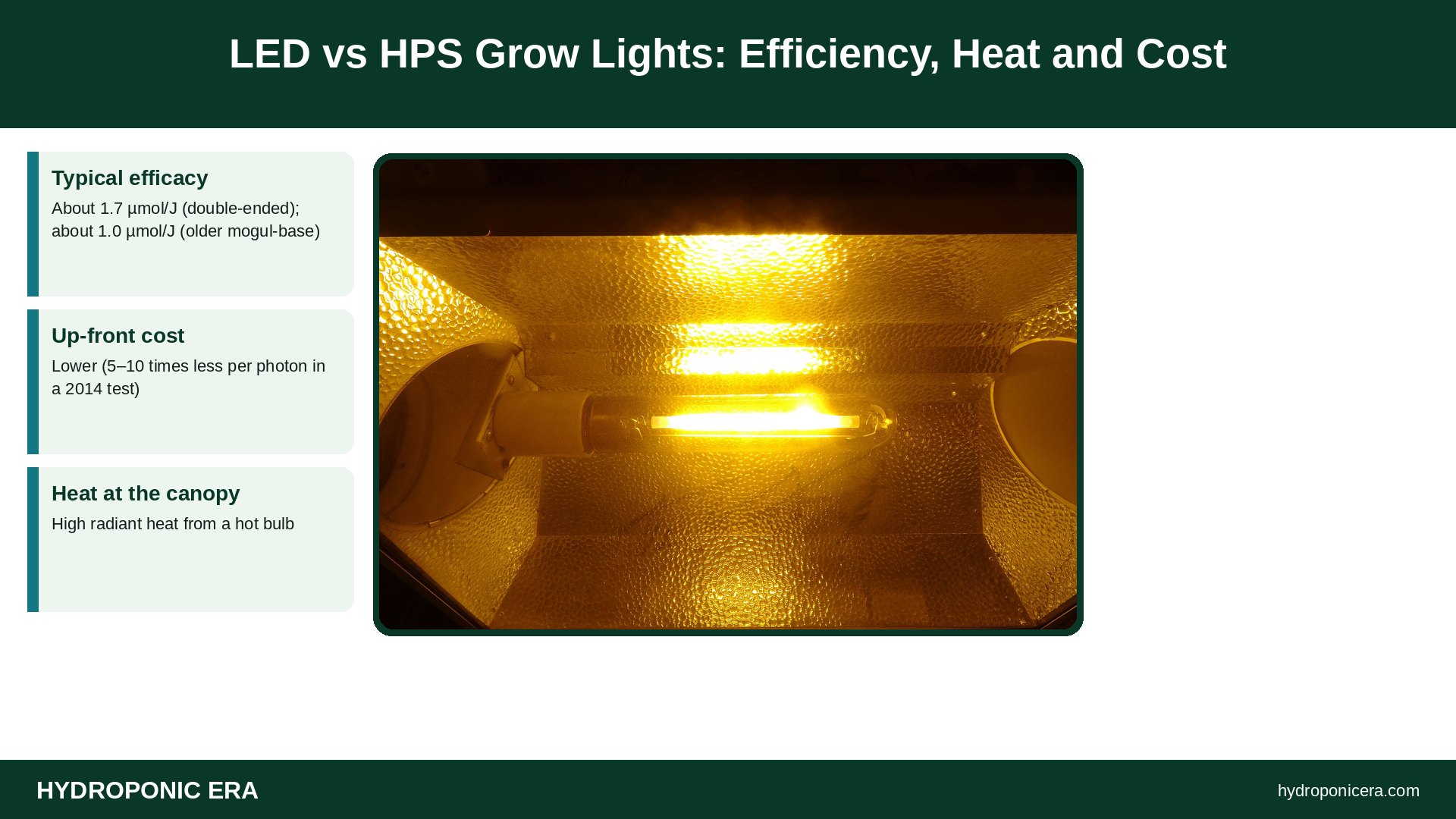
LED vs HPS comes down to this: modern LED grow lights turn electricity into plant light more efficiently than high pressure sodium (HPS), run cooler at the canopy and last longer, while HPS fixtures cost far less up front and add useful heat in a cold greenhouse. Peer-reviewed tests show the best double-ended HPS fixtures top out near 1.7 µmol/J, while today’s typical LED fixtures deliver about 2–3 µmol/J. For a home grow room, tent or hydroponic shelf in the US, LED is the better buy in almost every case.
foliage pro — Dyna-Gro Foliage-Pro in Hydroponics: Dosing Guide

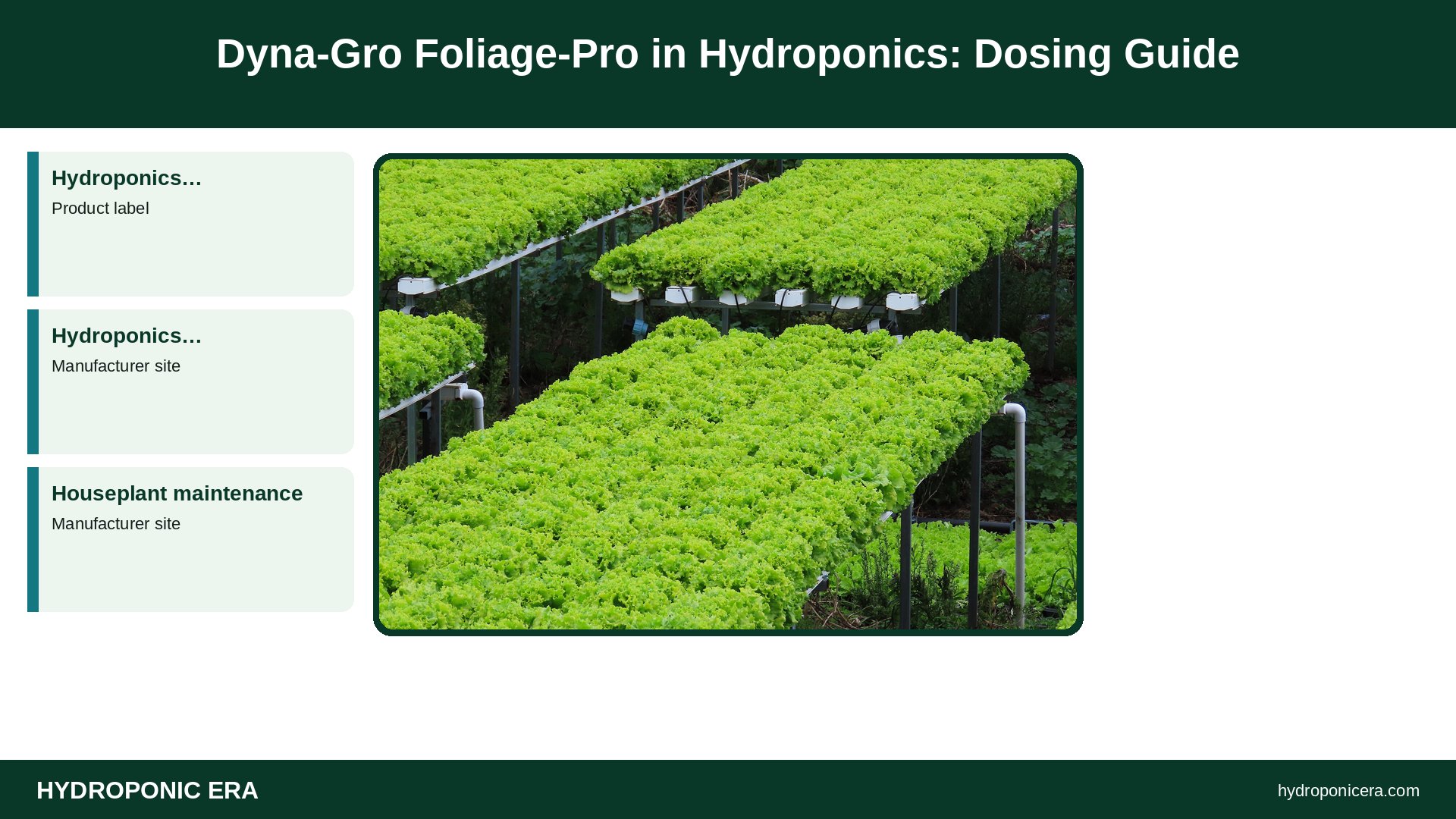
Dyna-Gro Foliage Pro 9-3-6 is a one-part liquid fertilizer containing all the macro and micronutrients plants need, which is why many growers use it as a simple hydroponic base nutrient. The label rate for hydroponics is 2–3 teaspoons per gallon for recirculating systems and about 1 teaspoon per gallon for non-recirculating (drain-to-waste) systems. Many home growers start lower, around 1–2 teaspoons per gallon for leafy greens, then adjust based on EC readings and plant response. It works especially well for lettuce, herbs, and houseplants.

full spectrum grow lights — Full Spectrum Grow Lights: What They Are and Why They Matter

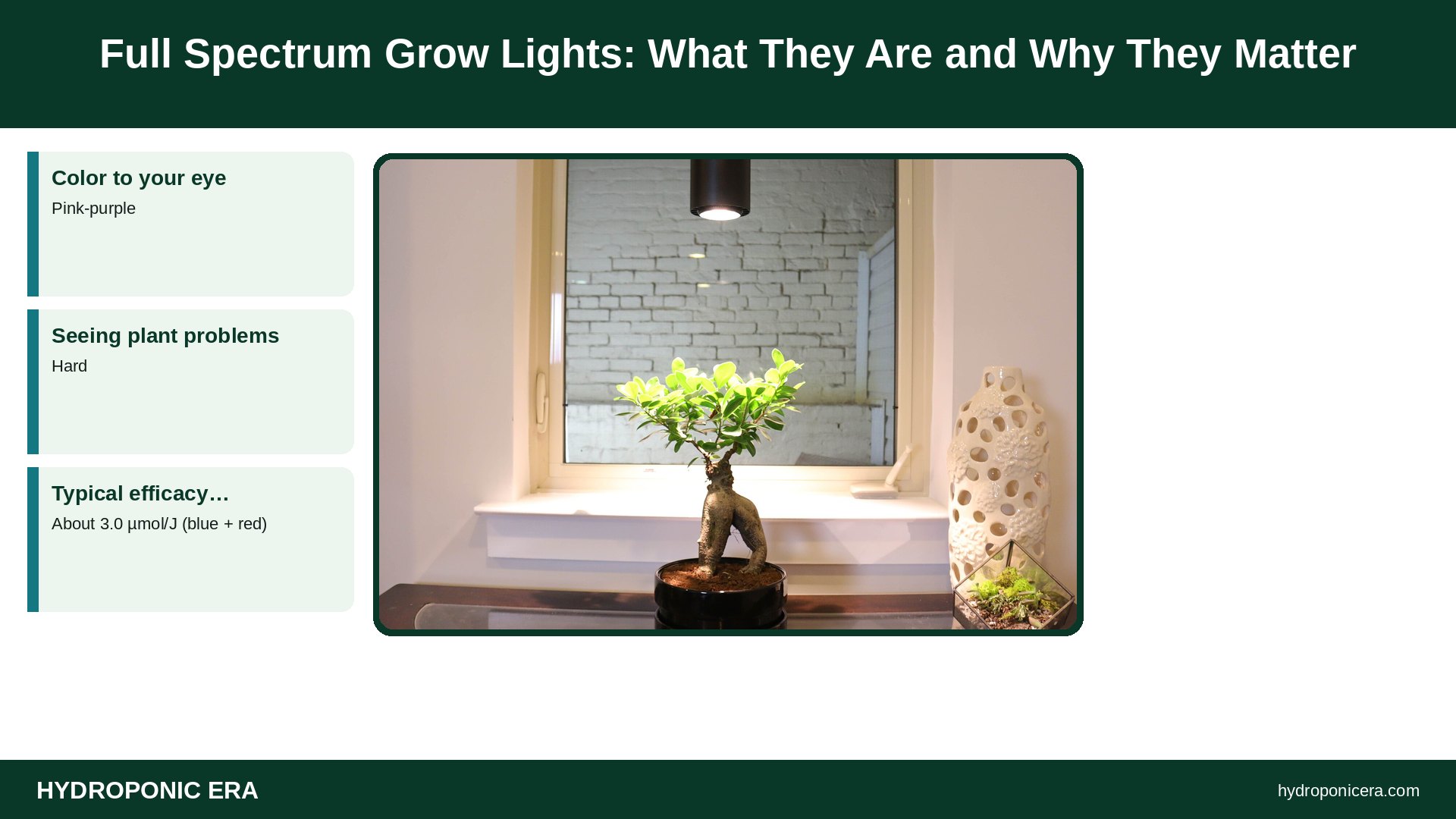
Full spectrum grow lights are grow lights, usually white LEDs, that emit a broad mix of colors similar to sunlight instead of just red and blue. That makes plants look natural, makes pests and deficiencies easier to spot, and is easier on your eyes. “Full spectrum” has no legal definition, though, so it doesn’t guarantee a good light. Judge a fixture by its PPFD (how much usable light reaches the plants) and its efficacy in µmol/J, not by the label or by lumens. A good modern full-spectrum LED delivers about 2.5 µmol/J or more.

onion microgreens — Onion Microgreens: Slow but Worth It

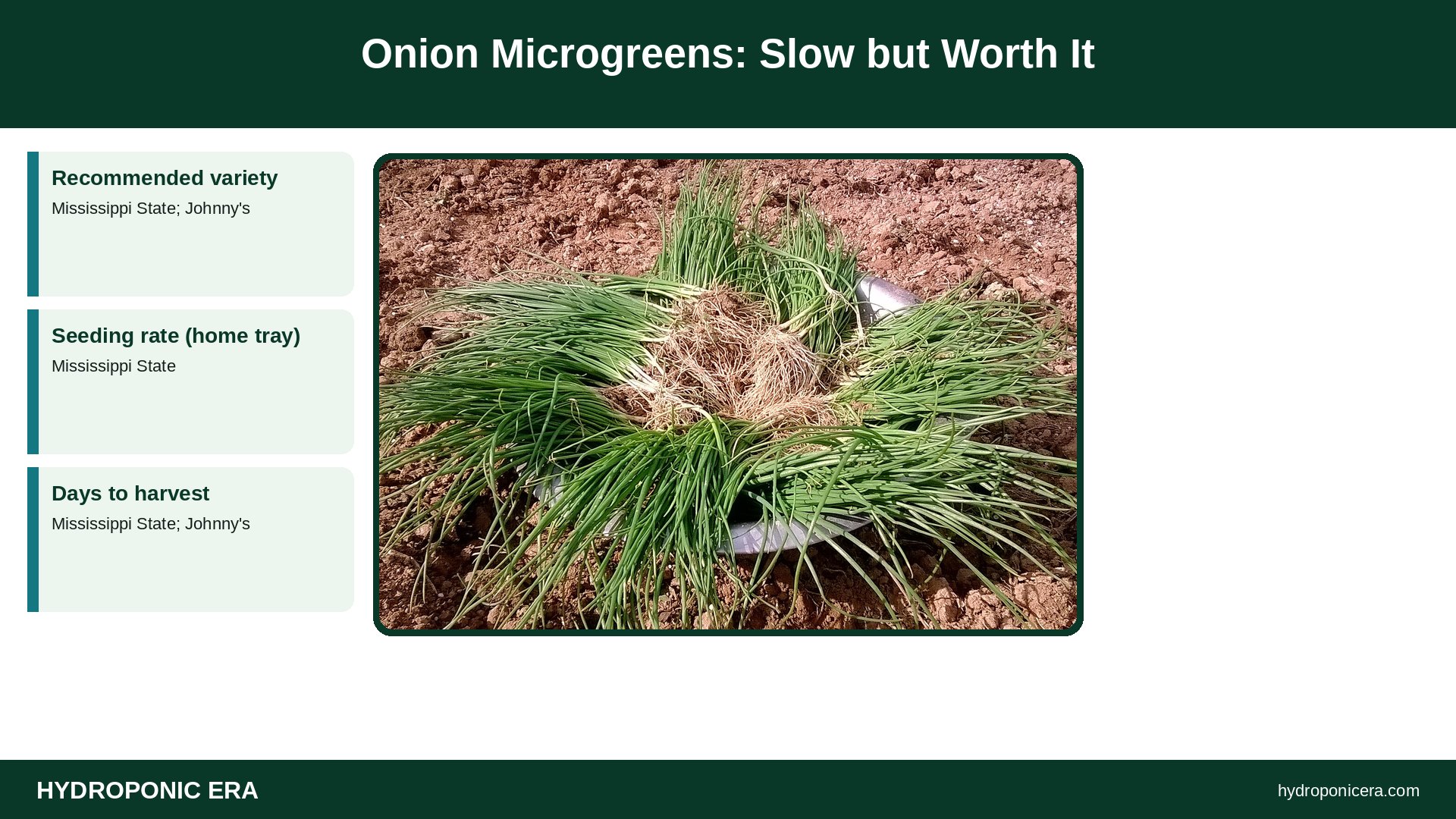
Onion microgreens are thin, grass-like green threads with a fresh, mild onion flavor. They’re slow: Mississippi State Extension and Johnny’s put scallion microgreens in the 16–25 day group. Sow about 2 tablespoons of seed per 10 x 20 inch (25 x 51 cm) tray, prime or pre-sprout the seed for more even germination, keep it covered and moist until the “loops” appear, then give light. Unlike most microgreens, scallion microgreens can be recut several times at about 2-week intervals.

alfalfa microgreens — Alfalfa Microgreens: Growing Beyond Sprouts

Alfalfa microgreens are delicate, mild greens grown from the same tiny seed used for alfalfa sprouts, but grown on media under light and cut above the roots. Sow about ½–¾ oz (14–21 g) of seed per 10 x 20 inch (25 x 51 cm) tray with no soaking, keep it covered 2–3 days until it germinates, then grow under light. Harvest times vary: one seed seller lists 8–12 days, while Johnny’s puts alfalfa in its slow group at 16–25 days. Because raw alfalfa sprouts have caused many outbreaks, use seed sold for sprouting and keep everything clean.

cress microgreens — Cress Microgreens: The Fastest Peppery Greens

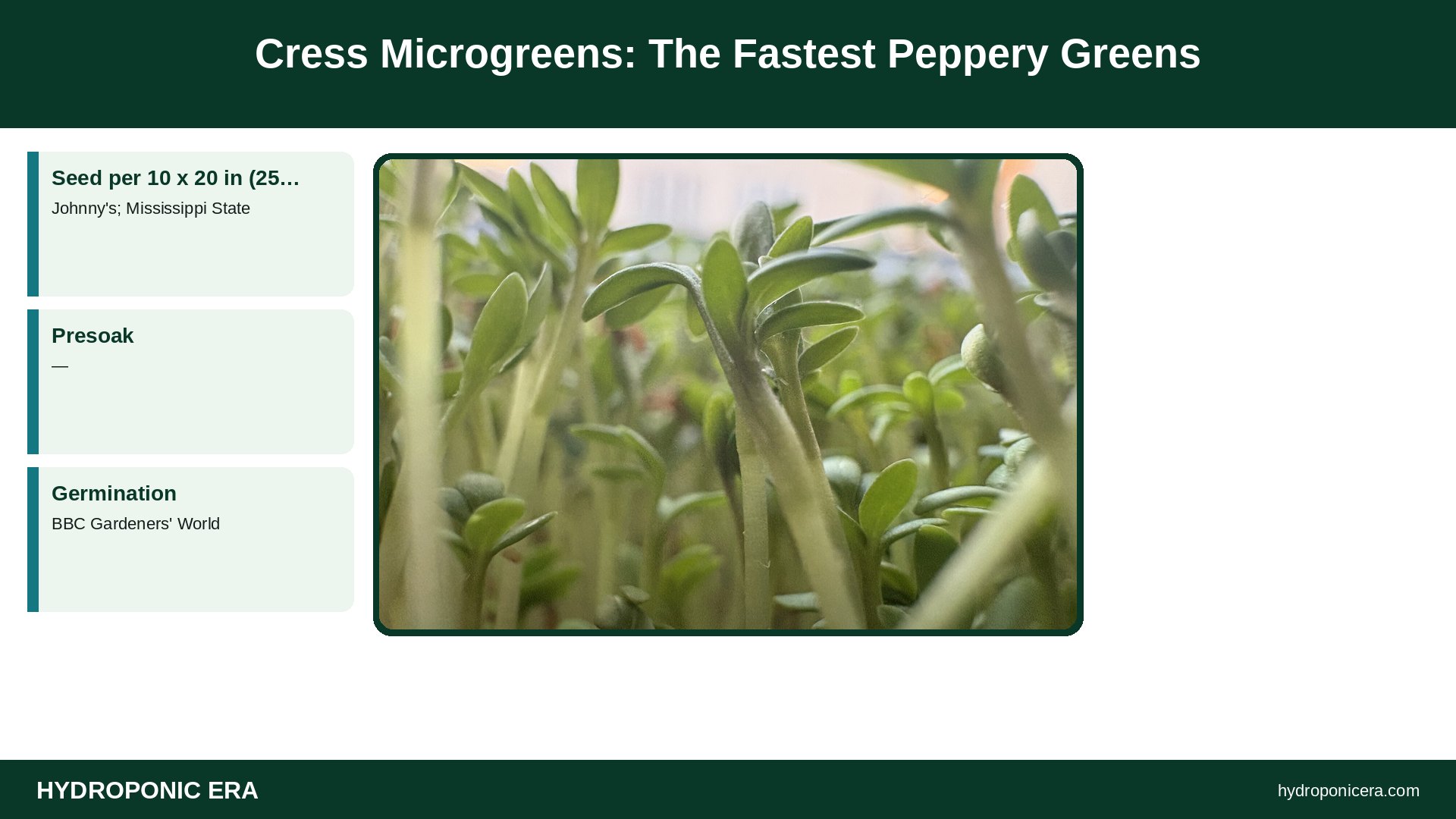
Cress microgreens are the fastest microgreens you can grow: garden cress ( Lepidium sativum ) germinates in a day or two indoors and can be cut in about 4–14 days. Sow about 10 grams of seed per 10 x 20 inch (25 x 51 cm) tray, or 2–3 teaspoons, on damp media, paper towel or cotton, keep it covered until it sprouts, then give light. Cress has a sharp, peppery bite and was one of the higher-yielding crops in Penn State’s microgreen trials.

buckwheat microgreens — Buckwheat Microgreens: How to Grow Tender Greens

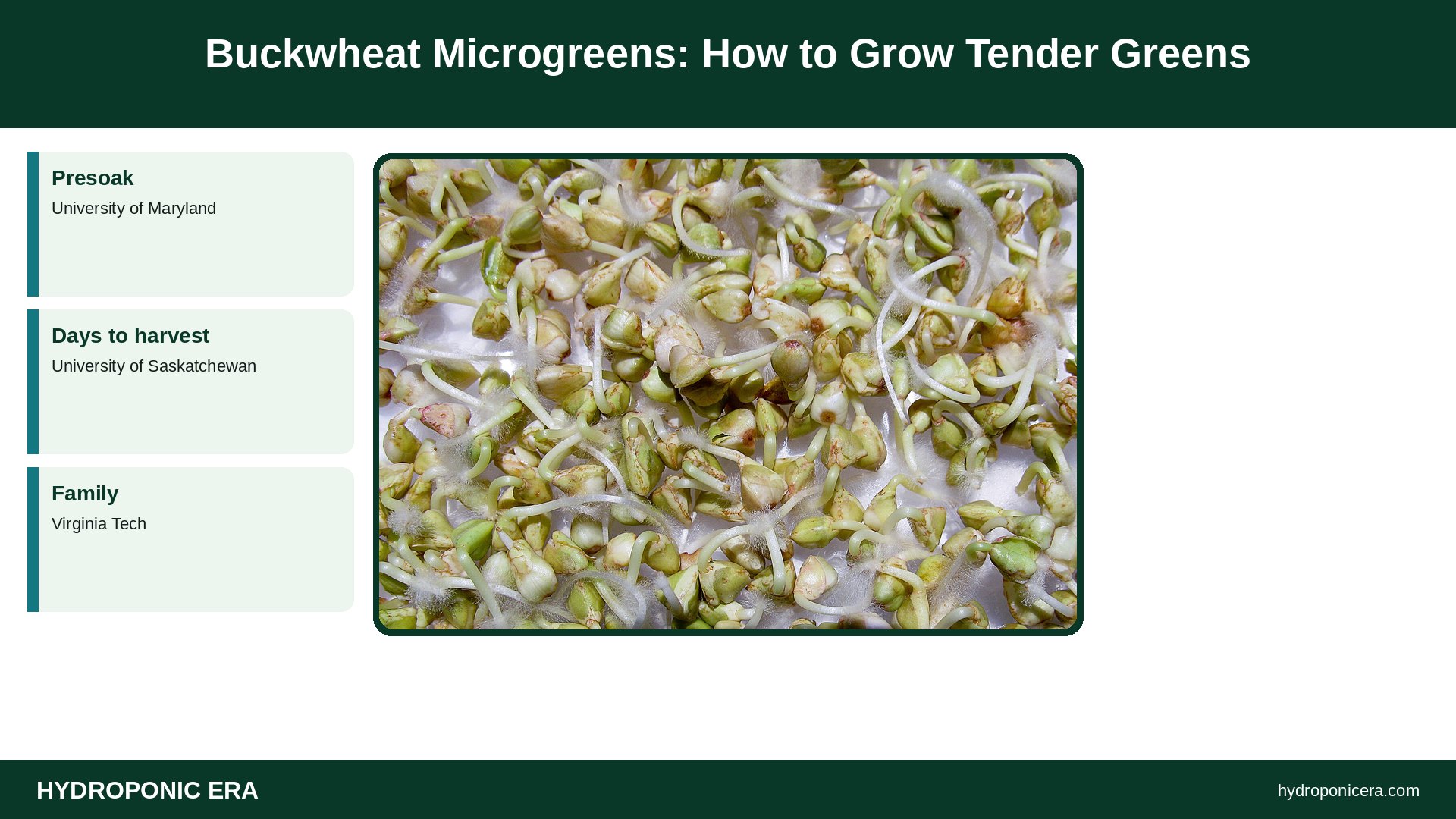
Buckwheat microgreens are tender, lemony-tasting greens with pink-red stems and broad, heart-shaped leaves. Soak the seed for 6–12 hours, sow it thickly on moist media, cover and weight it for a few days, then grow under light and harvest when the cotyledons open, often within about 1–2 weeks. Buy unhulled seed sold for sprouting or microgreens. One caution: buckwheat greens contain fagopyrin, a compound that can cause light sensitivity, so enjoy them in normal portions rather than by the bowlful.

chia microgreens — Chia Microgreens: Growing Mucilaginous Seeds

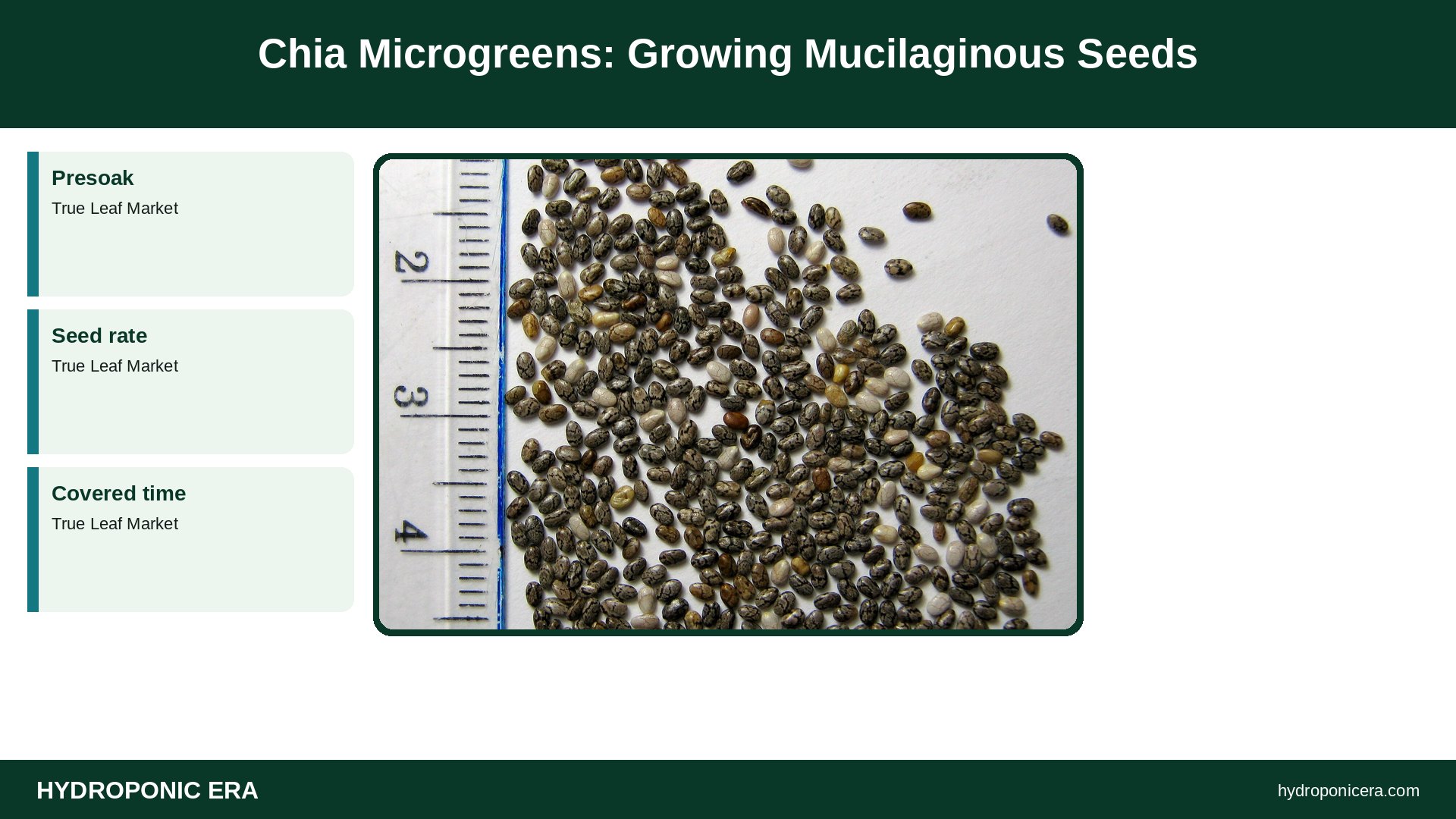
Chia microgreens are mild, fresh-tasting greens grown from the same chia seeds you eat. Don’t soak the seed: chia forms a gel within minutes of getting wet, so sprinkle it dry onto a fully saturated mat or fine media, mist it, and keep it covered and damp for about 4–5 days. Then give it light and harvest at about 7–14 days. The gel actually helps: University of Kentucky research found chia seeds with their mucilage germinated faster than seeds with it removed.

red cabbage microgreens — Red Cabbage Microgreens: How to Grow

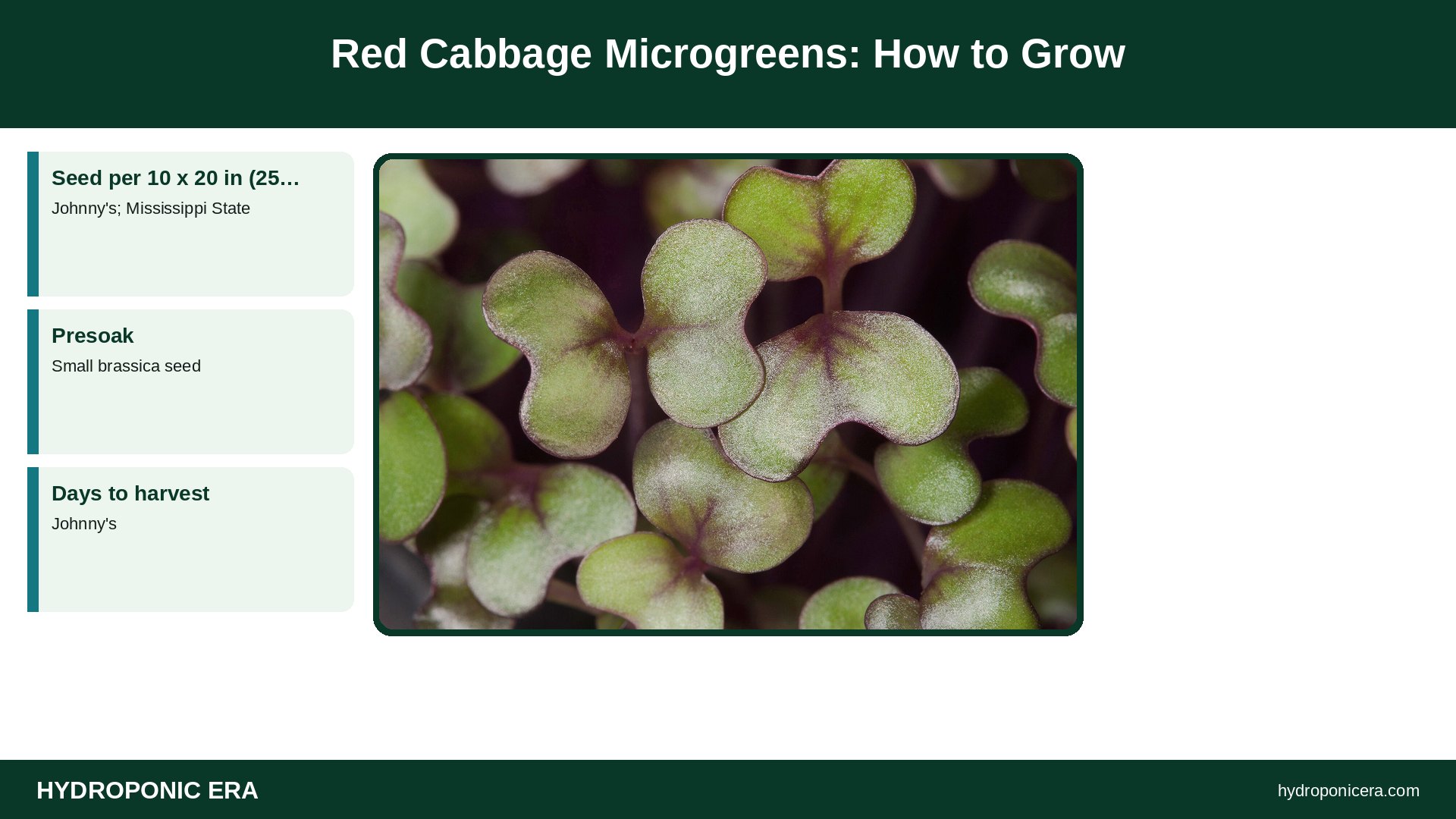
Red cabbage microgreens are easy, fast and colorful: sow about 10–15 grams of seed per 10 x 20 inch (25 x 51 cm) tray with no soaking, cover for 1–2 days, and harvest in about 10–14 days when the purple-stemmed seedlings show glossy cotyledons. They taste mild, like a sweet cabbage. Red cabbage also had the highest vitamin C of 25 microgreens in a USDA-led study, and in a separate USDA mouse study, red cabbage microgreens lowered LDL cholesterol in animals on a high-fat diet.

amaranth microgreens — Amaranth Microgreens: Growing Bright Red Greens

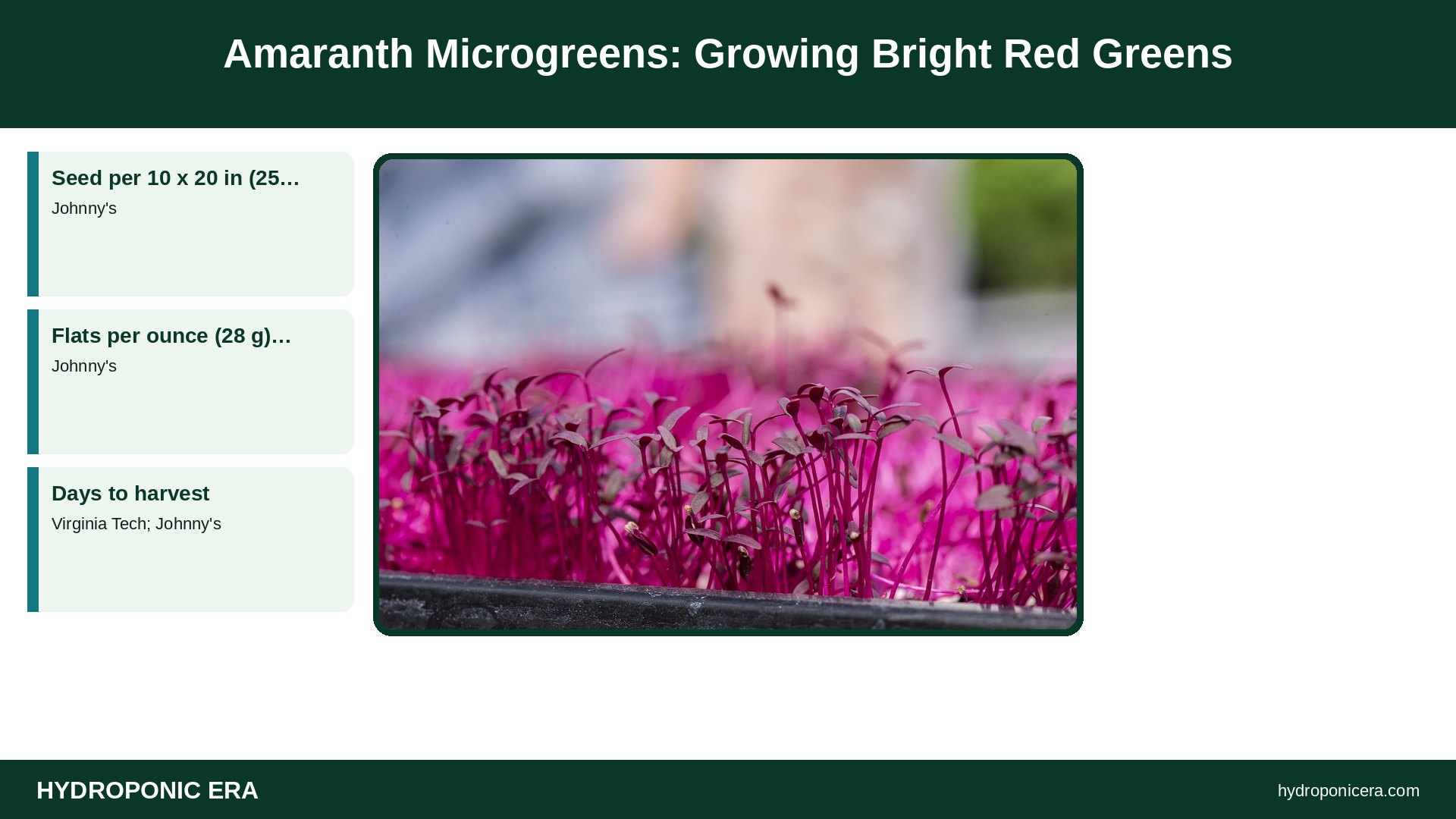
Amaranth microgreens are tiny, bright magenta seedlings with a mild, earthy flavor. Sow about 7–8 grams of seed per 10 x 20 inch (25 x 51 cm) tray on the surface of moist media, keep them warm and covered for a few days, and harvest at about 10–17 days. They’re delicate and slow to bulk up, but Garnet Red amaranth had the highest vitamin K of 25 microgreens in a USDA-led nutrient study, and few crops beat its color.