
Red cabbage microgreens are easy, fast and colorful: sow about 10–15 grams of seed per 10 x 20 inch (25 x 51 cm) tray with no soaking, cover for 1–2 days, and harvest in about 10–14 days when the purple-stemmed seedlings show glossy cotyledons. They taste mild, like a sweet cabbage. Red cabbage also had the highest vitamin C of 25 microgreens in a USDA-led study, and in a separate USDA mouse study, red cabbage microgreens lowered LDL cholesterol in animals on a high-fat diet.
Key takeaway: Grow red cabbage like broccoli. It’s beginner-friendly, cheap per tray and adds purple color to any mix.
| Red cabbage microgreens at a glance | Value | Source |
|---|---|---|
| Seed per 10 x 20 in (25 x 51 cm) tray | About 10.5 g; or 2–3 teaspoons | Johnny’s; Mississippi State |
| Presoak | No | Small brassica seed |
| Days to harvest | About 13.5 days; fast group 10–15 days | Johnny’s |
| Yield per tray | About 8.5 oz (241 g) (Johnny’s); 0.23 lb (106.1 g) (Penn State, unlit greenhouse) | Johnny’s; Penn State |
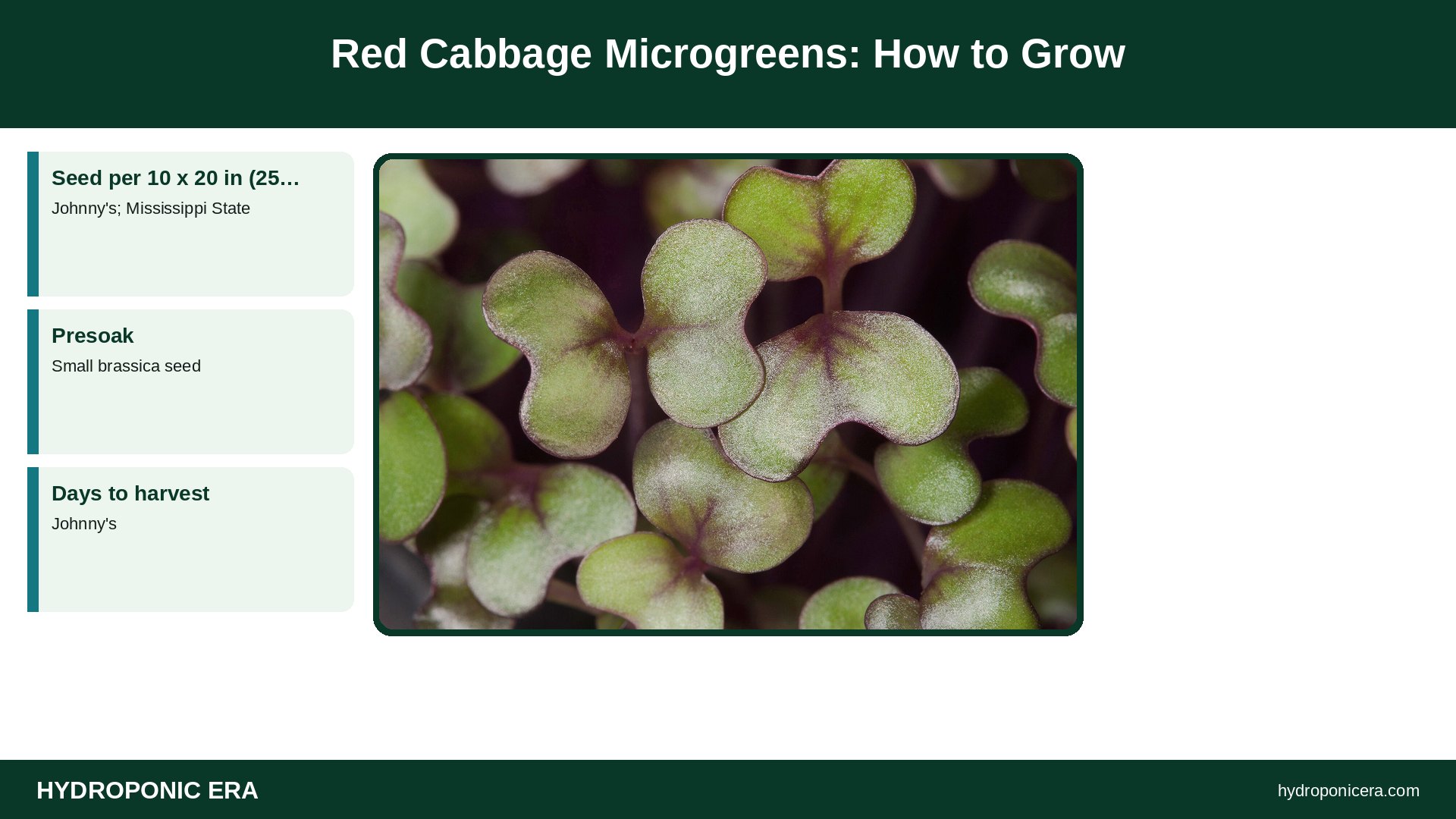
| Look | Glossy, dark green leaves, purple stems | Johnny’s |
| Flavor | Mild | Johnny’s |
Why Grow Red Cabbage Microgreens?
- Easy: small, reliable brassica seed that germinates in about 36 hours at 72°F (22°C), per Maryland Extension.
- Cheap: Johnny’s trial used about 10.5 g of seed per tray, and 1 oz (28 g) sowed about three flats.
- Colorful: purple stems and blue-green leaves, often with a purple blush.
- Nutritious: highest vitamin C among the 25 microgreens tested by Xiao et al. (2012).
How to Grow Red Cabbage Microgreens
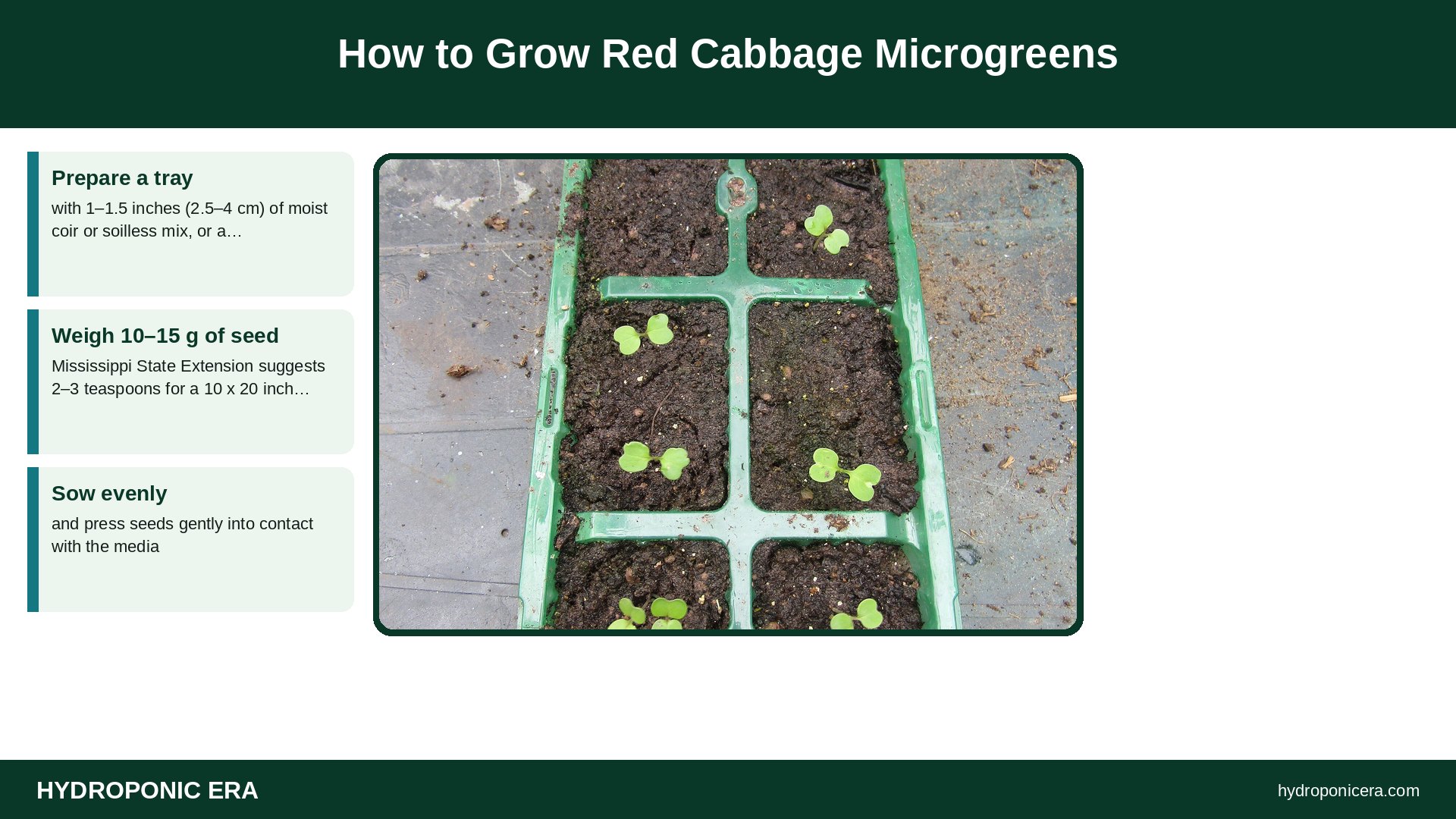
- Prepare a tray with 1–1.5 inches (2.5–4 cm) of moist coir or soilless mix, or a soaked hemp mat.
- Weigh 10–15 g of seed. Mississippi State Extension suggests 2–3 teaspoons for a 10 x 20 inch (25 x 51 cm) tray if you don’t have a scale.
- Sow evenly and press seeds gently into contact with the media.
- Mist, cover and weight lightly for 1–2 days.
- Keep warm: Johnny’s suggests about 75°F (24°C) soil until germination.
- Uncover and give light for 16–18 hours.
- Bottom water to keep leaves dry.
- Harvest at 10–14 days when cotyledons are open and stems are deep purple.
Getting the Best Purple Color
Red cabbage gets its color from anthocyanin pigments, which plants build up more under strong light. Grown in dim light, red cabbage microgreens stay greener with paler stems. Give them light in the upper part of Virginia Cooperative Extension’s general DLI range of 9–16 mol/m²/day, and keep the lamp close enough to avoid stretching. Cooler temperatures after germination, around 60–70°F (16–21°C) air as Penn State recommends, also help keep stems compact. See microgreens light requirements.
Nutrition and Research
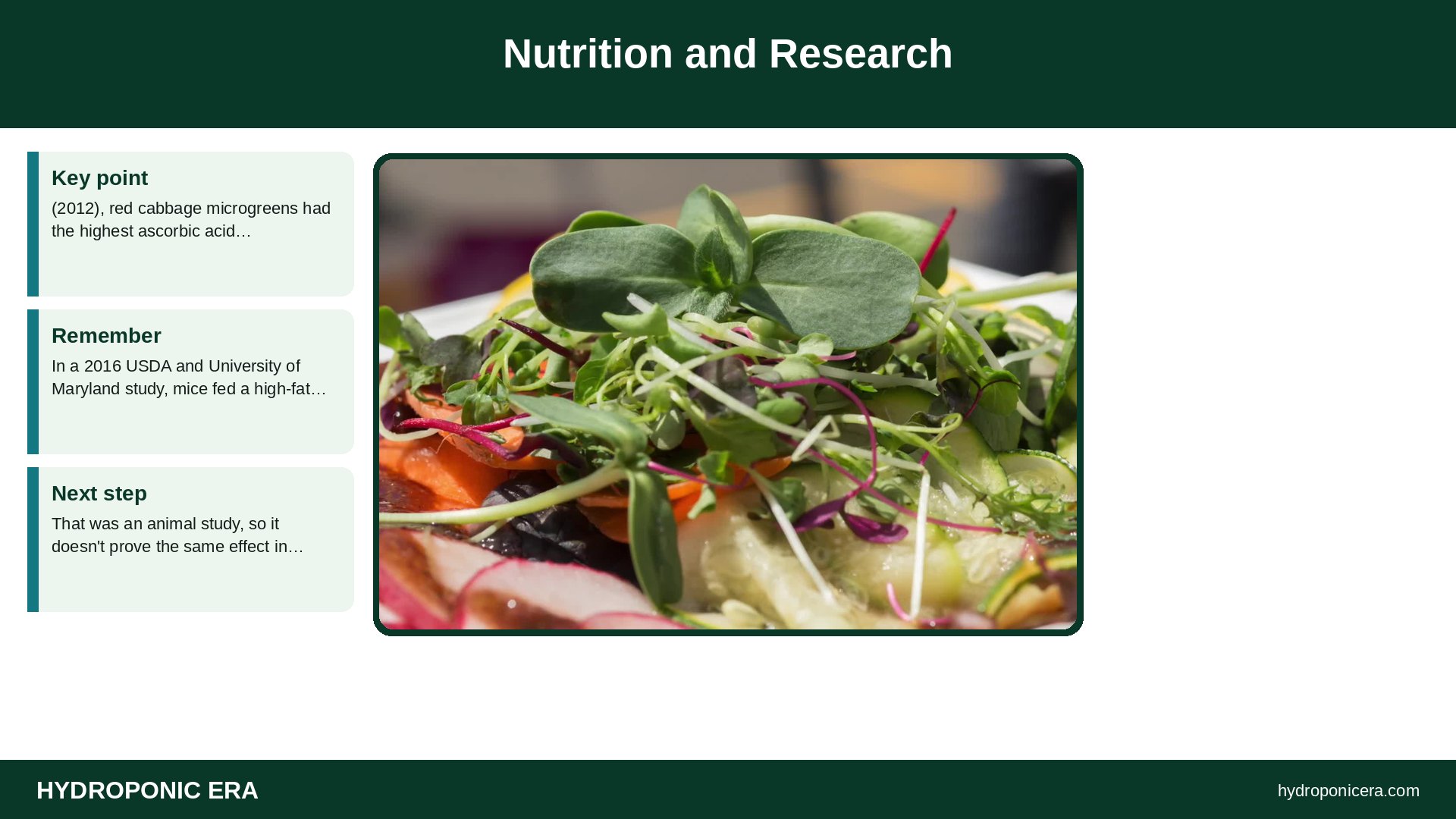
In Xiao et al. (2012), red cabbage microgreens had the highest ascorbic acid (vitamin C) of 25 commercial microgreens; the range across all 25 was 20.4–147.0 mg per 100 g fresh weight. In a 2016 USDA and University of Maryland study, mice fed a high-fat diet with red cabbage microgreens for 8 weeks gained less weight and had lower circulating LDL cholesterol, liver cholesterol esters and liver inflammatory markers (Huang et al., 2016). That was an animal study, so it doesn’t prove the same effect in people, but it adds to the evidence that these greens are worth eating.
Yield and Cost
| Source | Seed per tray | Yield per tray | Days |
|---|---|---|---|
| Johnny’s 2017 trial | 10.5 g | About 8.5 oz (241 g) | 13.5 |
| Penn State, greenhouse, no supplemental light | 10–15 g | 0.23 lb (106.1 g) | About 14 |
Yields vary with light, seed lot and harvest size. Red cabbage yields less than broccoli in Johnny’s trial (about 11.5 oz (326 g) from 13 g), but its color and nutrition make it popular in mixes. See microgreen seed density and broccoli microgreens.
Common Problems
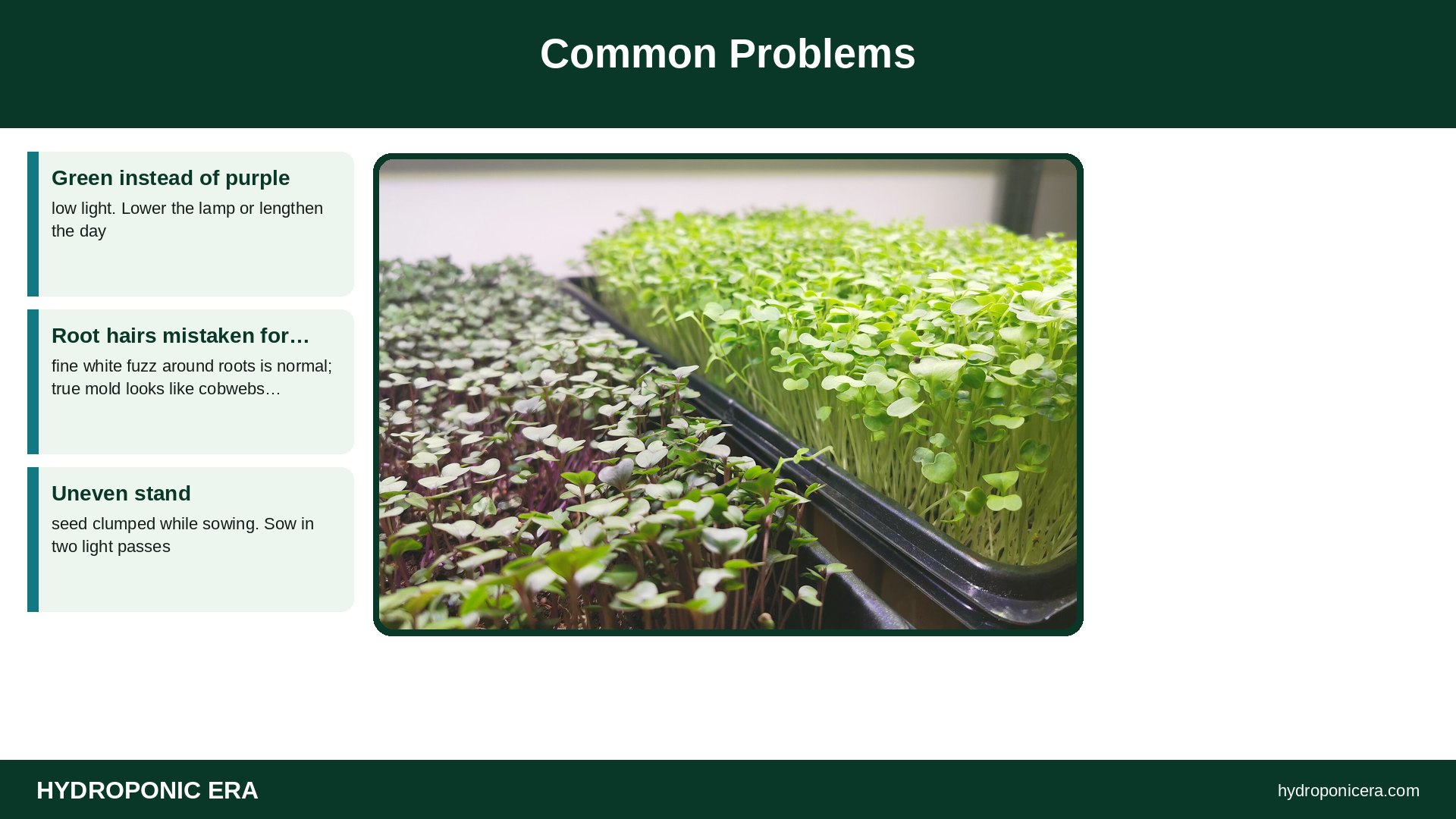
- Green instead of purple: low light. Lower the lamp or lengthen the day.
- Root hairs mistaken for mold: fine white fuzz around roots is normal; true mold looks like cobwebs on the media and leaves. See microgreens mold.
- Uneven stand: seed clumped while sowing. Sow in two light passes.
- Collapse in patches: damping-off. Improve airflow and avoid overwatering. See damping-off.
- Hulls on leaves: press seed in firmly and keep weighted during the first day.
Harvesting and Storage
Cut just above the media with sharp scissors once the cotyledons are fully open, before the true leaves get large. Store unwashed in a sealed container in the fridge and wash right before eating. Penn State reports microgreens kept at 41°F (5°C) in the dark can last 10–14 days. See how to harvest microgreens and how long microgreens last.
How to Use Red Cabbage Microgreens
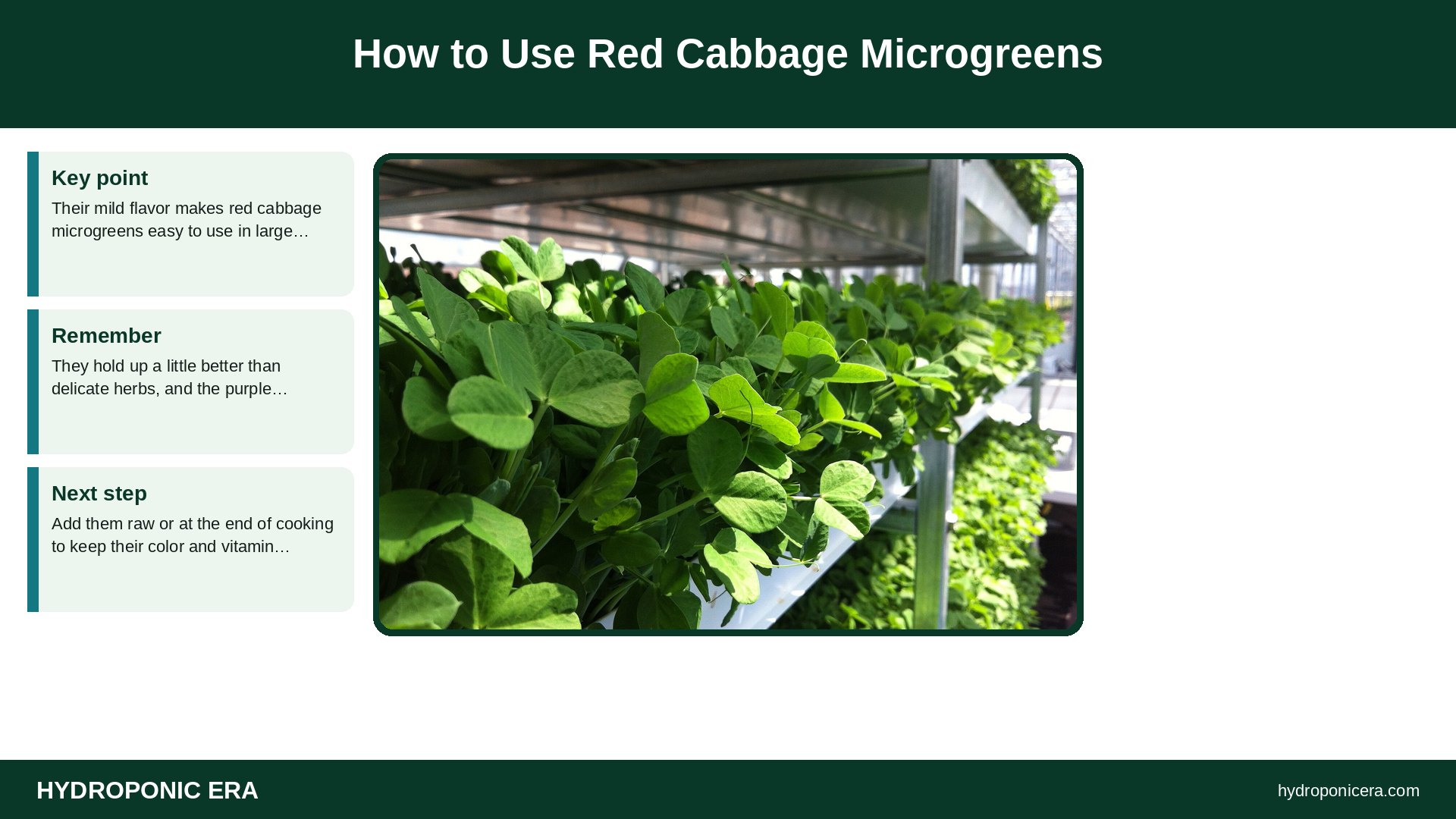
Their mild flavor makes red cabbage microgreens easy to use in large handfuls: salads, slaws, sandwiches, wraps, tacos, smoothies and grain bowls. They hold up a little better than delicate herbs, and the purple stems contrast nicely with green microgreens like broccoli and pea shoots. Add them raw or at the end of cooking to keep their color and vitamin C. See best microgreens to grow.
Red Cabbage Microgreens vs Other Brassicas
Red cabbage, broccoli, kale and kohlrabi are all the same species, Brassica oleracea, so they grow almost the same way in the tray. Johnny’s notes many brassica varieties yield similar amounts per flat, so once you master red cabbage microgreens you can rotate through the others easily. See kale microgreens.
Planning a Weekly Supply
Johnny’s 2017 trial gives a good planning baseline: about 10.5 g of seed per tray, about 13.5 days to harvest, and roughly three flats per 1 oz (28 g) of seed. For a steady supply, sow a new tray every 7 days and keep two trays in rotation. One is in the blackout or early light stage while the other is ready to cut. Red cabbage finishes in the same window as broccoli, kale and arugula in that trial, so you can sow them together for a mixed tray of purple and green.
Growing Red Cabbage Microgreens on a Mat
Johnny’s notes that all microgreens are suitable for hydroponic growing, and red cabbage works well on a hemp or other fiber mat in a tray with no drainage holes. Soak the mat fully, sow the seed on top, mist, and cover for 1–2 days. After the seedlings are uncovered, add just enough water to keep the mat moist, without letting it sit in a puddle, because thin mats dry out faster than 1 inch (2.5 cm) of soilless mix. Check the tray daily. Mats also give cleaner stems at harvest, since there’s no soil to wash off.
FAQs
How long do red cabbage microgreens take?
About 10–14 days.
Do red cabbage seeds need soaking?
No; sow them dry.
How much seed per tray?
About 10–15 g, or 2–3 teaspoons, per 10 x 20 inch (25 x 51 cm) tray.
Why aren’t my microgreens purple?
They need more light to build purple pigments.
Are red cabbage microgreens high in vitamin C?
Yes; they ranked highest of 25 microgreens in a USDA-led study.
What do they taste like?
Mild and slightly sweet, like young cabbage.
Sources
- Xiao et al. (2012), Journal of Agricultural and Food Chemistry — Vitamin and Carotenoid Concentrations of Edible Microgreens
- Huang et al. (2016), Journal of Agricultural and Food Chemistry — Red Cabbage Microgreens Lower Circulating LDL in Mice Fed a High-Fat Diet
- Johnny’s Selected Seeds — Micro Greens Yield Trial 2017
- Johnny’s Selected Seeds — Microgreens Comparison Chart
- Penn State Extension — Growing Microgreens
- Mississippi State University Extension — Growing Microgreens for the Mississippi Gardener
- University of Maryland Extension — Growing Microgreens and Baby Greens Indoors
- Photo credits (Wikimedia Commons, edited with titles): Red Cabbage Microgreens by Peggy Greb (Public domain); -2020-10-01 Swede beet seedlings (Brassica napus subsp. Rapifera), Trimingham by Kolforn (CC BY-SA 4.0); 20160617-AMS-LSC-9000 (61-sec.) (27334710733) by U.S. Department of Agriculture (Public domain); Mikrolistki – brokuł i rzodkiewka na tacach plastikowych by Teogenesis (CC BY-SA 4.0); Lufa Farms Microgreens in Trays by Lufa Farms (CC BY-SA 2.0)