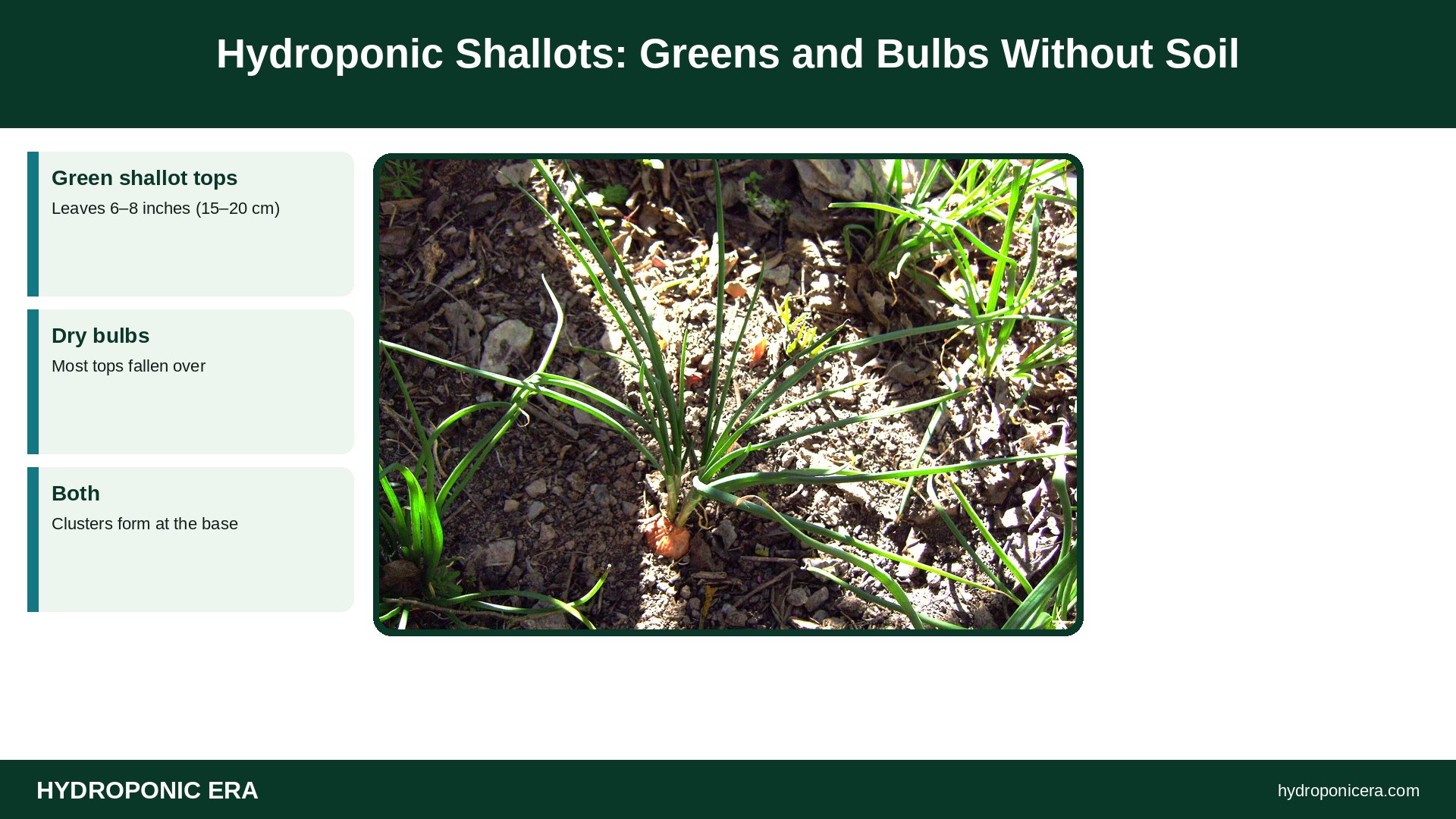
Hydroponic shallots are easy to grow for green tops and possible to grow for full bulbs. Plant individual shallot bulbs (sets) in net cups or a media bed with the pointed tip up and the base just touching moisture. Green shoots are ready to snip in about 50–60 days, when they’re 6–8 inches (15–20 cm) tall, according to Utah State University Extension. For dry bulbs, keep the plants growing until the tops fall over, then stop feeding, lift, cure for 1–2 weeks and store cool and dry. One set can split into a cluster of up to 10–15 bulbs.
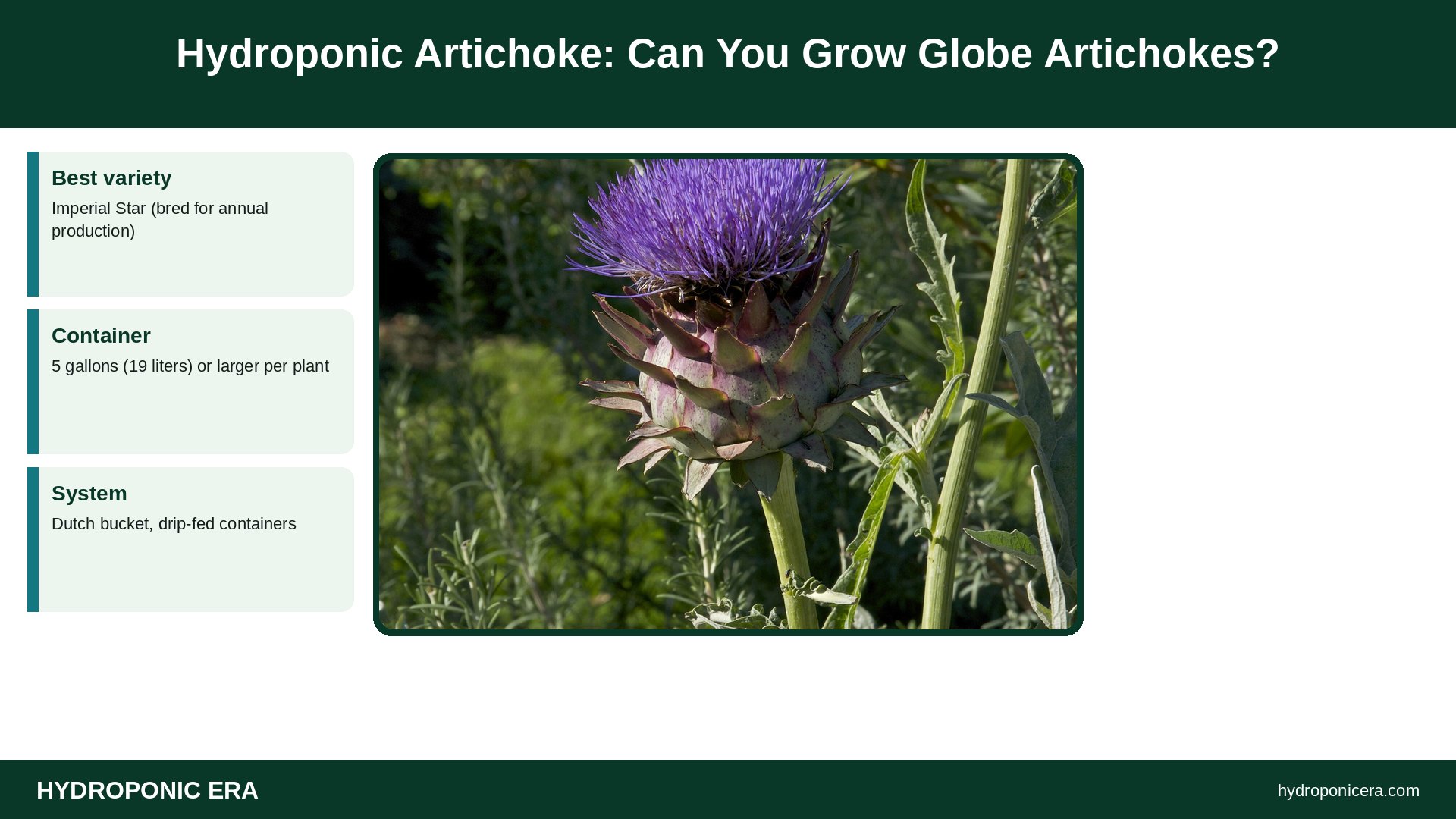
Hydroponic artichoke growing is possible, but it’s a big-plant project. A globe artichoke can grow 4–5 feet (1.2–1.5 m) tall and over 3 feet (91 cm) wide, so it needs a large container, such as a 5-gallon (19-liter) bucket or bigger, fed by drip or a Dutch bucket system. The key step most growers miss is vernalization: young plants need about 500 hours (roughly 3 weeks) of temperatures between 35 and 50°F (2–10°C) to form buds in the first year, according to University of Maine Cooperative Extension. Choose an annual variety like Imperial Star and plan on 4–5 months from seed to harvest.
Kelp and seaweed extracts can be added to hydroponic nutrient solutions in small amounts as biostimulants, not as main fertilizers. Research shows that some seaweed extracts, especially from the brown alga Ascophyllum nodosum, can improve stress tolerance, root growth, or yield in certain crops, but results vary by product, dose, and crop. In recirculating systems, kelp products can also feed biofilm, cloud the solution, and clog pumps or emitters. For most home growers, kelp is optional: try it at low doses, monitor closely, and never rely on it to replace a complete nutrient.
Sand culture hydroponics grows plants in clean, inert sand that is watered with a complete nutrient solution, which then drains away. The sand only anchors roots; all the food comes from the solution. It’s one of the oldest soilless methods, refined at US agricultural experiment stations in the 1920s and 1930s. Sand holds more water than gravel, so it suits drip and wick setups, but fine sand can block air. Use medium to coarse silica sand of about 0.01–0.08 inch (0.25–2 mm) that is free of lime, and let every watering drain fully.
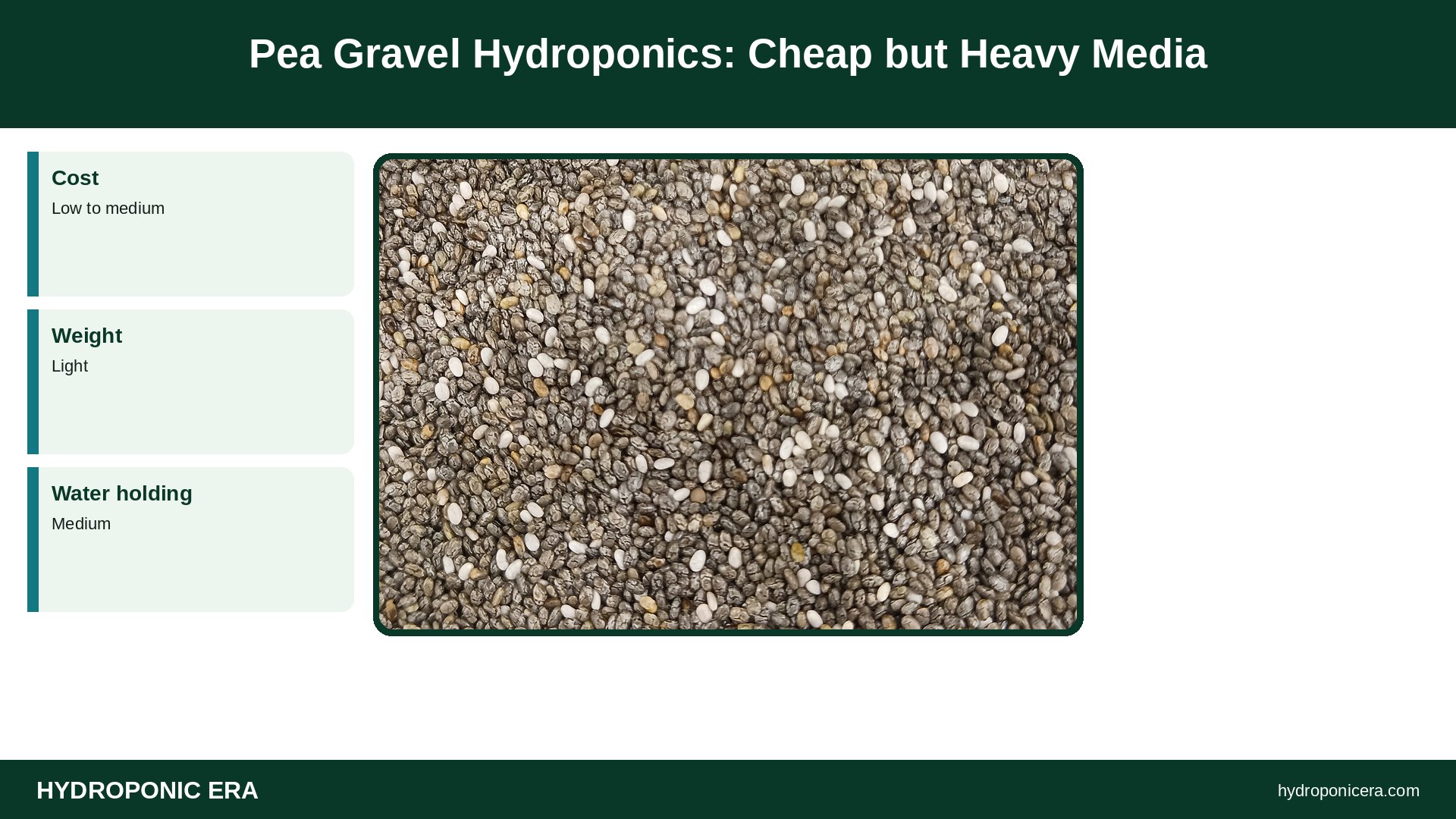
Pea gravel hydroponics uses small, rounded stones, usually about 1/4–3/8 inch (6–10 mm), as the growing medium. It’s one of the oldest and cheapest hydroponic media: gravel culture was the most widely used soilless method in Hawaii, according to a University of Hawaii extension circular. Gravel drains fast, never breaks down and anchors tall plants well. The downsides are weight, low water holding and the risk that limestone gravel will push your pH up. Use only washed, non-calcareous gravel and pick a flood-and-drain or drip system.
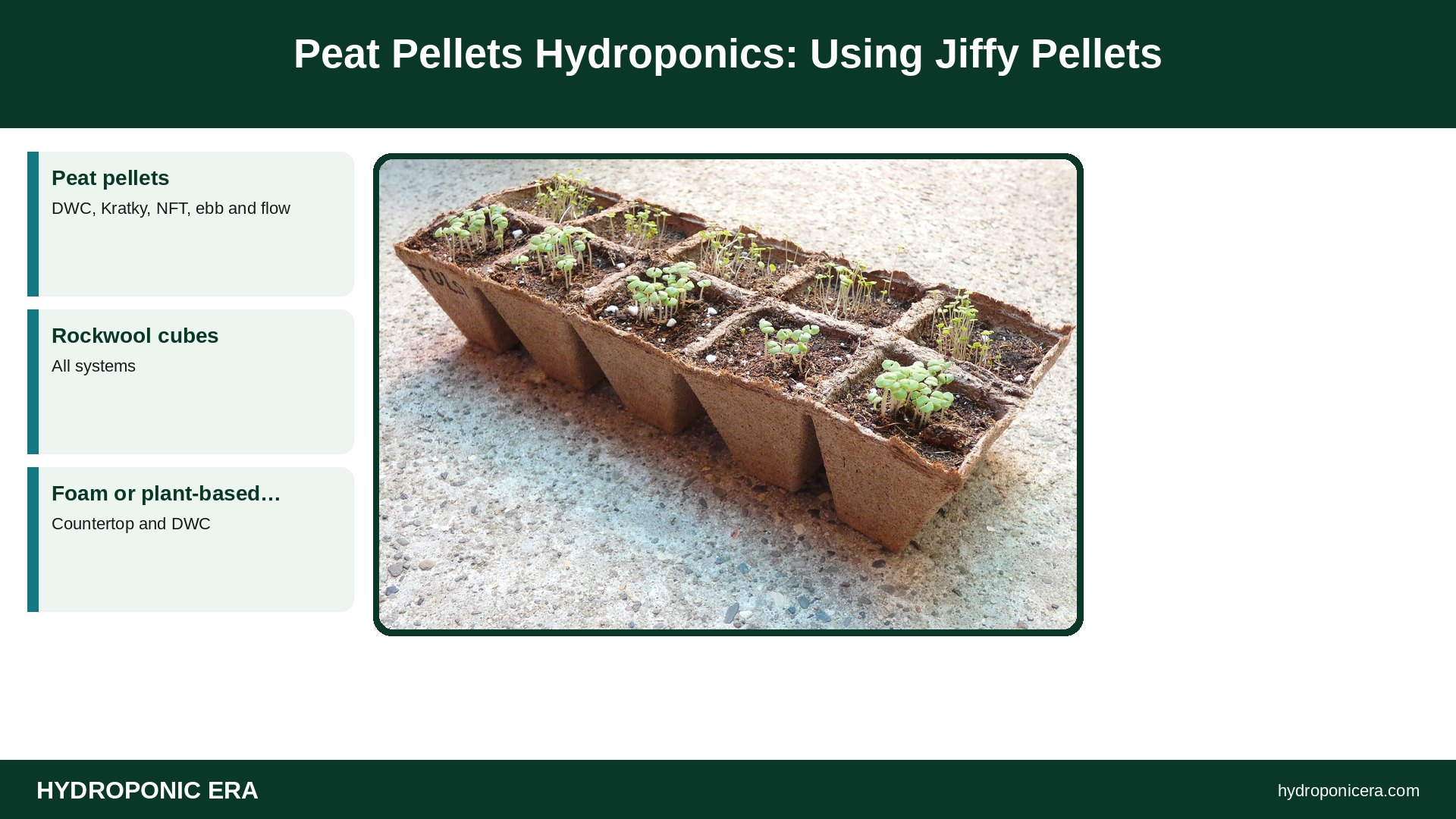
Peat pellets hydroponics means starting seeds in compressed peat discs, often sold as Jiffy pellets, and then moving the rooted pellet into a hydroponic system. It works well. Pellets swell in water in about 10 minutes, hold moisture without drowning seeds and let you transplant with almost no root disturbance. A University of Georgia study in deep water culture even found peat-based plugs outgrew rockwool for lettuce and arugula. The main risk is loose peat breaking off into the water, so contain the pellet in a net cup and keep the mesh on.
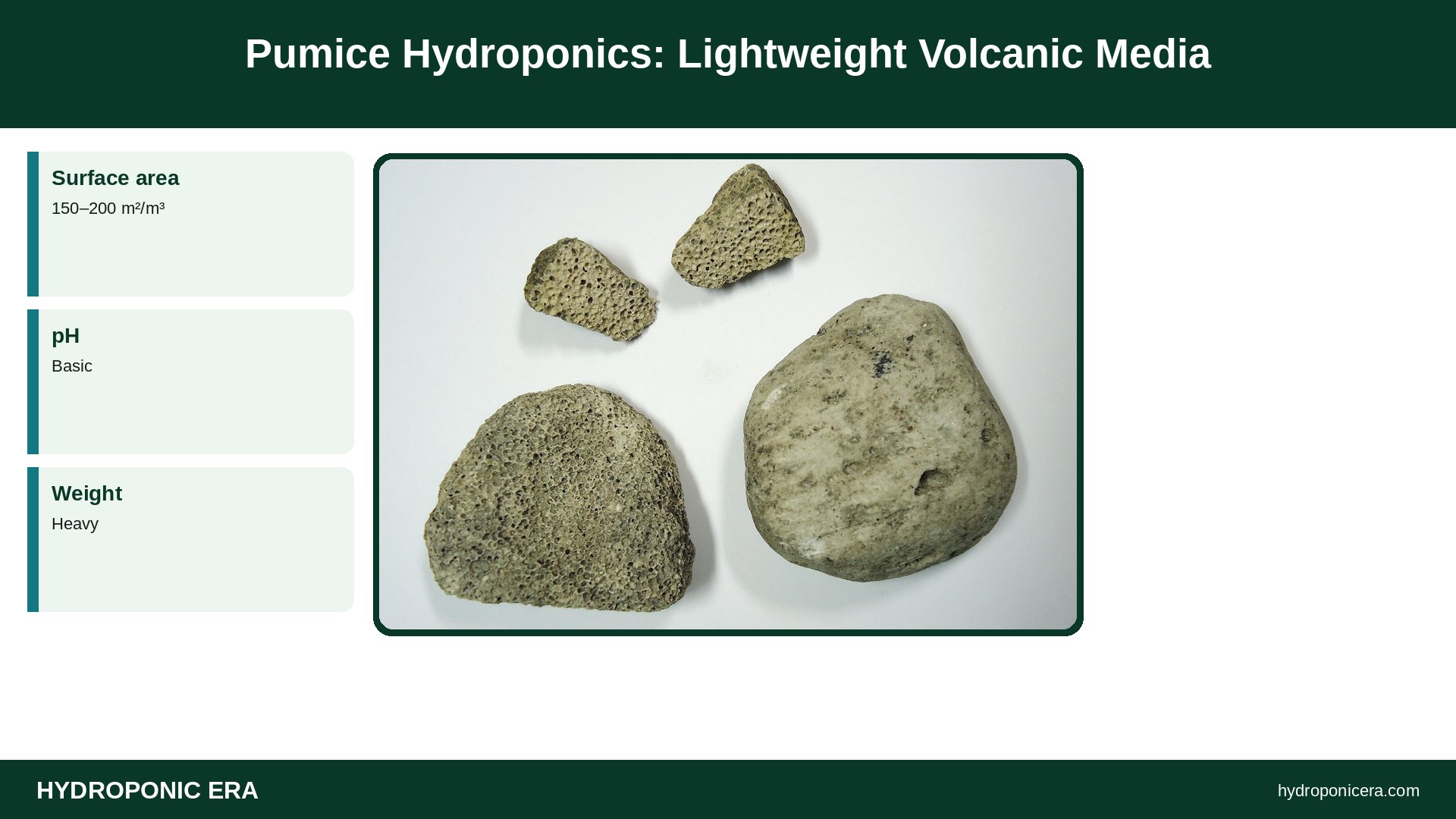
Pumice hydroponics uses crushed pumice, a light, porous volcanic rock, as the growing medium. Pumice is chemically close to inert, holds a moderate amount of water inside its pores, drains freely and lasts for years without breaking down. The UN Food and Agriculture Organization (FAO) lists pumice as a neutral-pH, lightweight, long-lasting medium that is easy to work with. Studies show tomatoes grow well in pumice-based beds, and it is a strong, cheaper alternative to clay pebbles in drip, ebb and flow and aquaponics media beds.
Growstones hydroponics means growing plants in Growstones, a lightweight, porous aggregate made from recycled glass. It holds more air than perlite, wicks and holds water inside its pores and can be reused. Research found Growstones produced tomato and cucumber yields equal to rockwool, with a drier root zone and less Pythium. The main catch: new Growstones can push water pH above 10, so rinse and soak them before planting and check pH for the first few weeks.
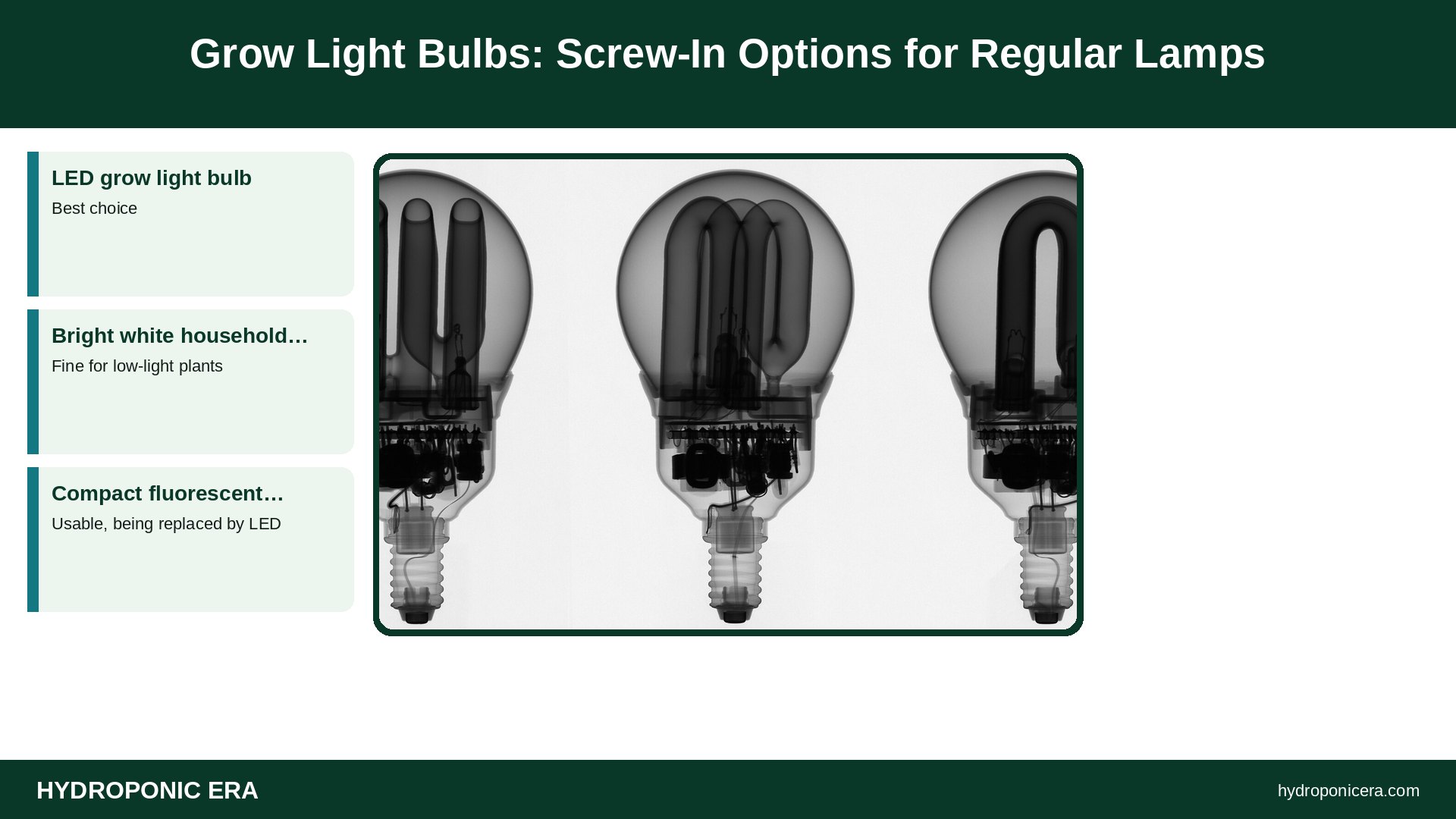
Grow light bulbs are screw-in bulbs made to fit a regular lamp socket (in the US, usually the standard E26 medium base) while putting out light that plants can use. The best choice today is an LED grow light bulb: it runs cool, uses little power and lasts for years. A single bulb works for one to a few houseplants, a small herb pot or a seedling flat placed close underneath. Skip incandescent bulbs, which Iowa State University Extension calls poor sources of plant light because they are inefficient, run hot and are weak in blue.
Yes, regular LED lights grow plants. Plants don’t care whether a bulb says “grow light” on the box; they respond to how much photosynthetic light reaches their leaves and for how many hours. A bright white household LED or a 4-foot LED shop light can grow seedlings, herbs, lettuce and houseplants if you keep it close and run it long enough. University of New Hampshire Extension says LED shop lamps work fine for starting seedlings, because failure under lamps is usually about light quantity, not spectrum. The catch: most regular LED lights are too weak for fruiting crops like tomatoes and peppers.