
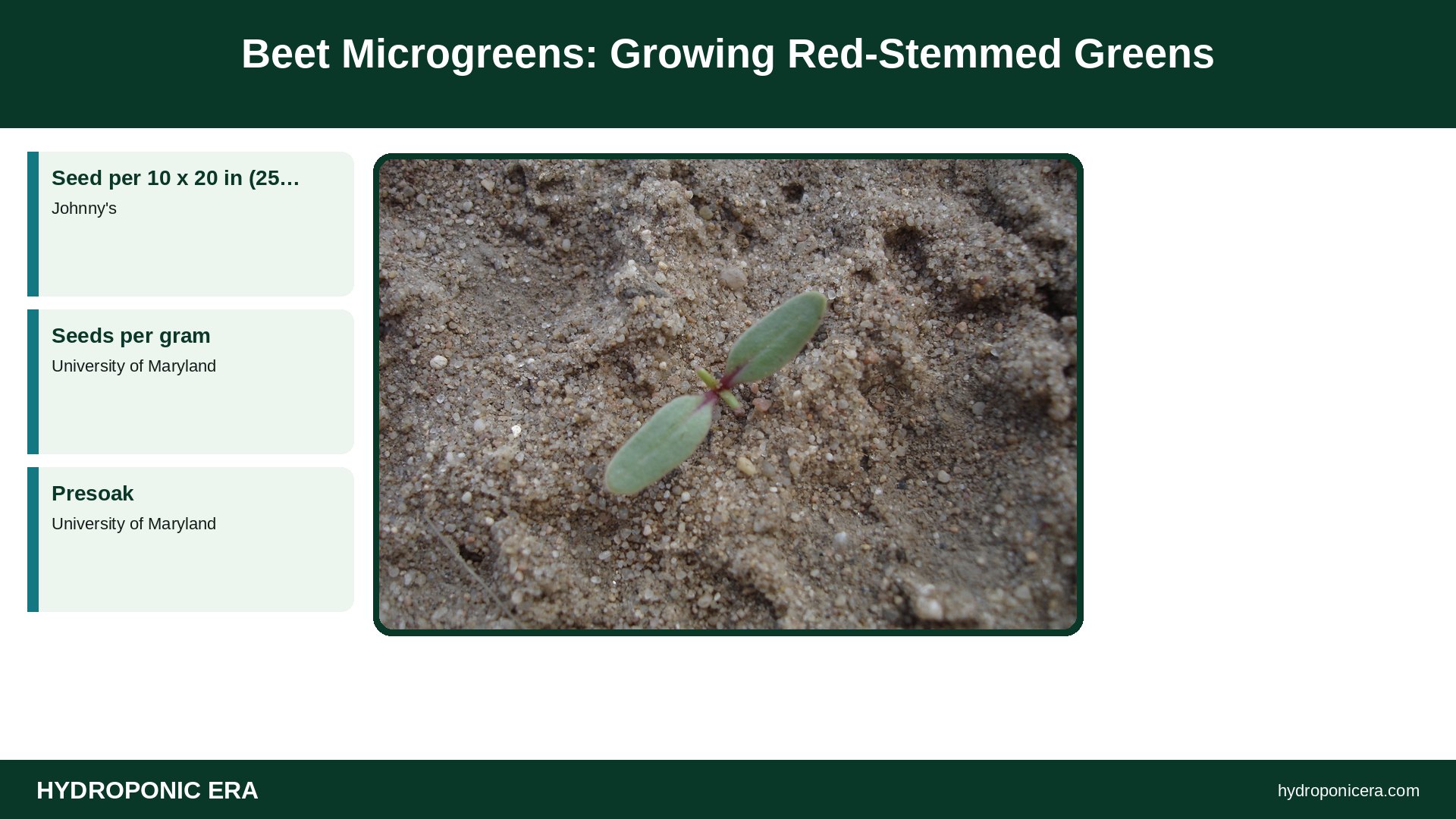
Beet microgreens are known for bright red stems and an earthy flavor. Soak the seed for 6–12 hours, sow about 20–25 grams per 10 x 20 inch (25 x 51 cm) tray, keep it covered until most seedlings emerge, then grow under light until harvest at about 12–23 days. Varieties like Bull’s Blood give red leaves and stems, while Early Wonder Tall Top gives green leaves with red stems. Beet seed is actually a cluster of seeds, so sowing is lighter than it looks and sprouting can be uneven.
Key takeaway: Soak, sow on a moist media, and press the seed firmly. Beets are slower than brassicas, so stagger them with fast crops.
| Beet microgreens at a glance | Value | Source |
|---|---|---|
| Seed per 10 x 20 in (25 x 51 cm) tray | About 23 g (Bull’s Blood) | Johnny’s |
| Seeds per gram | About 53 | University of Maryland |
| Presoak | 6–12 hours | University of Maryland |
| Days to harvest | 12–23 days; 17 days in Johnny’s trial | Virginia Tech; Johnny’s |
| Yield per tray | About 7.5 oz (213 g) | Johnny’s |
| Flavor | Earthy | Johnny’s |
Best Varieties for Beet Microgreens
Johnny’s lists several beet microgreens in its slow-growing group (16–25 days), all described as “lofty,” meaning tall-growing, with an earthy flavor:
- Bull’s Blood: red leaves and red stems, the most dramatic choice.
- Early Wonder Tall Top: bright green leaves with red stems.
- Red Beet: bright green leaves with red stems.
- Red Leaf: red and dark green leaves with a red blush and red stems.
- Yellow: bright green leaves with yellow stems.
- Chard and Beet, Rainbow: red and green leaves with yellow, pink, red and orange stems.
Beets belong to the amaranth family along with Swiss chard and amaranth, a group Maryland Extension calls especially well suited to microgreens.
Understanding Beet Seed
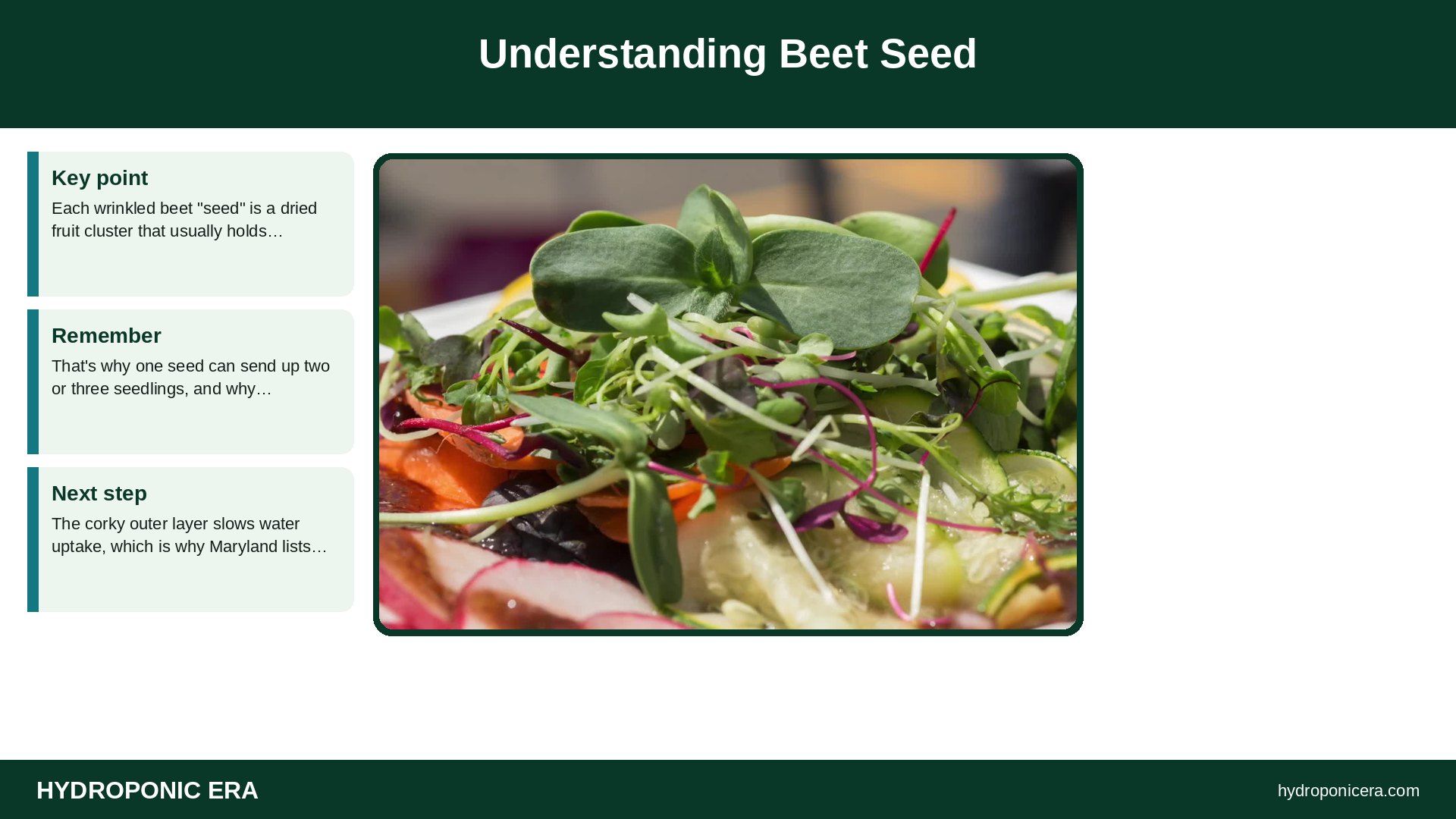
Each wrinkled beet “seed” is a dried fruit cluster that usually holds more than one true seed. That’s why one seed can send up two or three seedlings, and why germination looks patchy at first. The corky outer layer slows water uptake, which is why Maryland lists beet and Swiss chard among the seeds that germinate faster after soaking 6–12 hours. Beet seed is also big: Maryland counts about 53 seeds per gram and 1,500 per ounce (28 g), compared with about 281 per gram for broccoli. That’s why beets need more grams per tray than most brassicas.
How to Grow Beet Microgreens
- Soak the seed 6–12 hours in clean water, then drain.
- Prepare a tray with 1–1.5 inches (2.5–4 cm) of moist coir or soilless mix. Media holds water better than a thin mat for this slower crop.
- Weigh about 20–25 g of seed and spread it evenly.
- Press firmly so each cluster touches the media. Some growers add a very thin layer of media on top to help shed hulls.
- Cover and weight until most seedlings emerge, usually several days for beets, misting if the surface dries.
- Uncover once most seedlings have emerged, and give 16–18 hours of light.
- Bottom water to keep the leaves dry.
- Harvest at 12–23 days, when the narrow cotyledons are fully open.
Light and Temperature
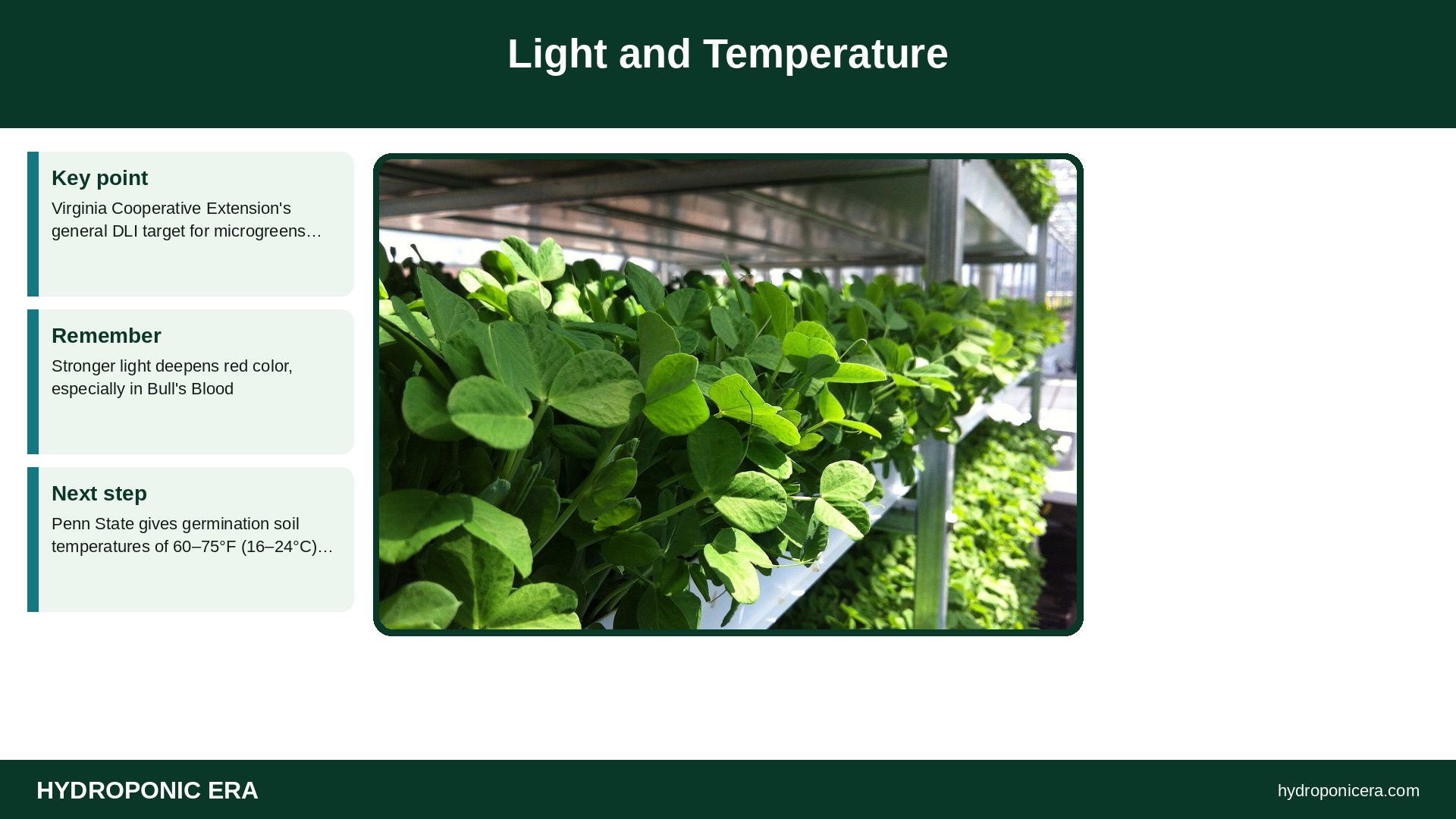
Virginia Cooperative Extension’s general DLI target for microgreens is 9–16 mol/m²/day. Stronger light deepens red color, especially in Bull’s Blood. Penn State gives germination soil temperatures of 60–75°F (16–24°C) and air of 60–70°F (16–21°C); Maryland says microgreens grow well at 70–75°F (21–24°C). Keep humidity moderate; Virginia Tech suggests 50–70%. See microgreens light requirements.
Dealing With Seed Hulls
Beet hulls often ride up on the leaves. To reduce them:
- Press seed firmly into the media and keep it weighted during the first days in the dark.
- Keep the blackout period long enough that stems lift the leaves clear of the media.
- Mist the tops a day or two before harvest; damp hulls loosen and fall off.
- Brush the canopy gently with your palm before cutting.
Yield and Cost
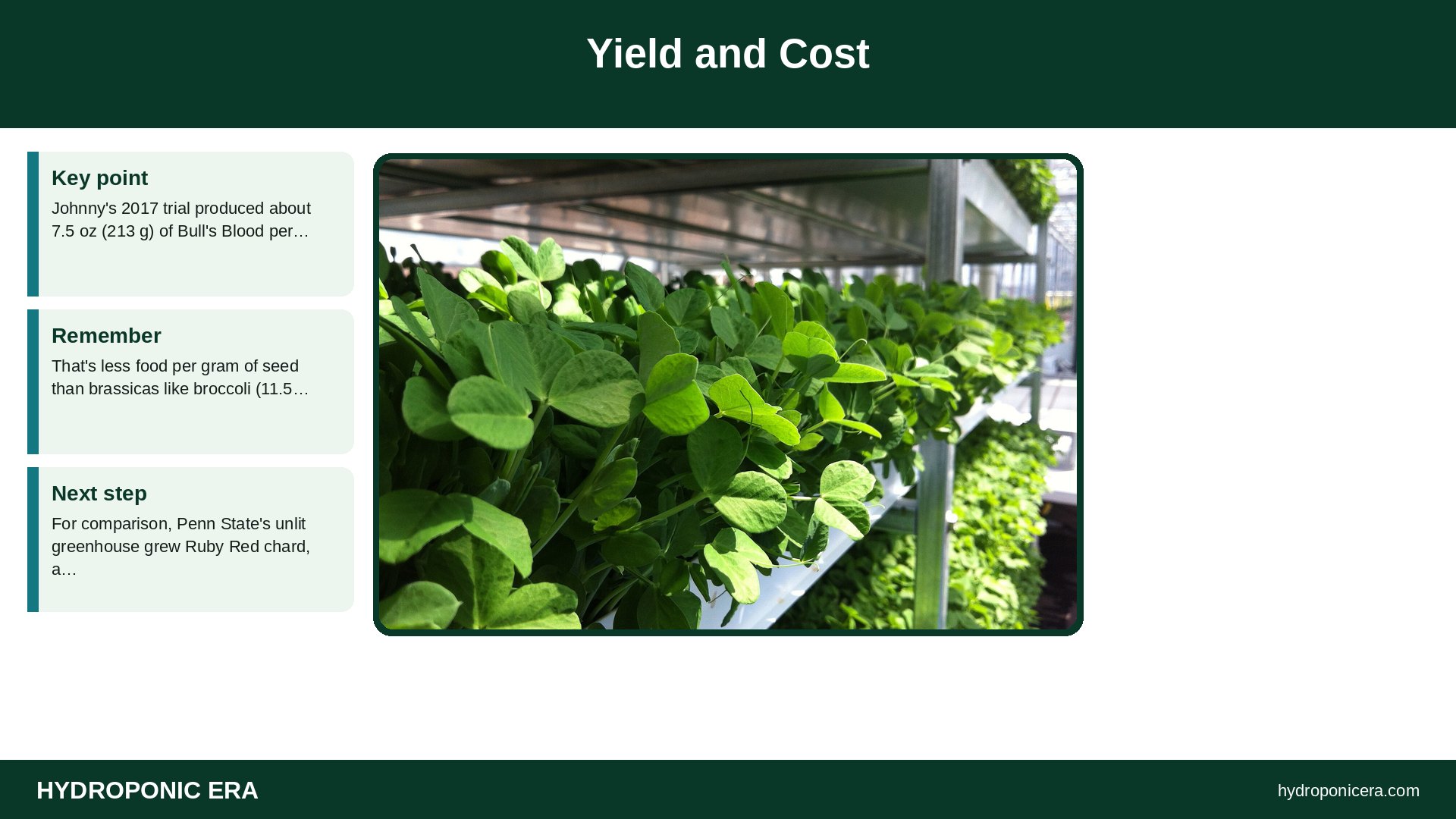
Johnny’s 2017 trial produced about 7.5 oz (213 g) of Bull’s Blood per tray from 23 g of seed, ready in about 17 days, and noted 1 oz (28 g) of seed sows about one flat. That’s less food per gram of seed than brassicas like broccoli (11.5 oz (326 g) from 13 g). For comparison, Penn State’s unlit greenhouse grew Ruby Red chard, a close relative, at about 0.16 lb (70.6 g) per tray. Beets earn their place through color and flavor rather than bulk. See microgreen seed density.
Common Problems With Beet Microgreens
| Problem | Likely cause | Fix |
|---|---|---|
| Slow, uneven sprouting | Hard seed clusters | Soak 6–12 hours; keep moist |
| Hulls on leaves | Shallow sowing | Press firmly; mist before harvest |
| Weak red color | Low light | Brighter light, longer photoperiod |
| Mold during long cover | Too wet | Vent covers; avoid overwatering |
| Seedlings toppling | Damping-off | Lower density; bottom water |
See microgreens mold and damping-off.
Flavor and Uses
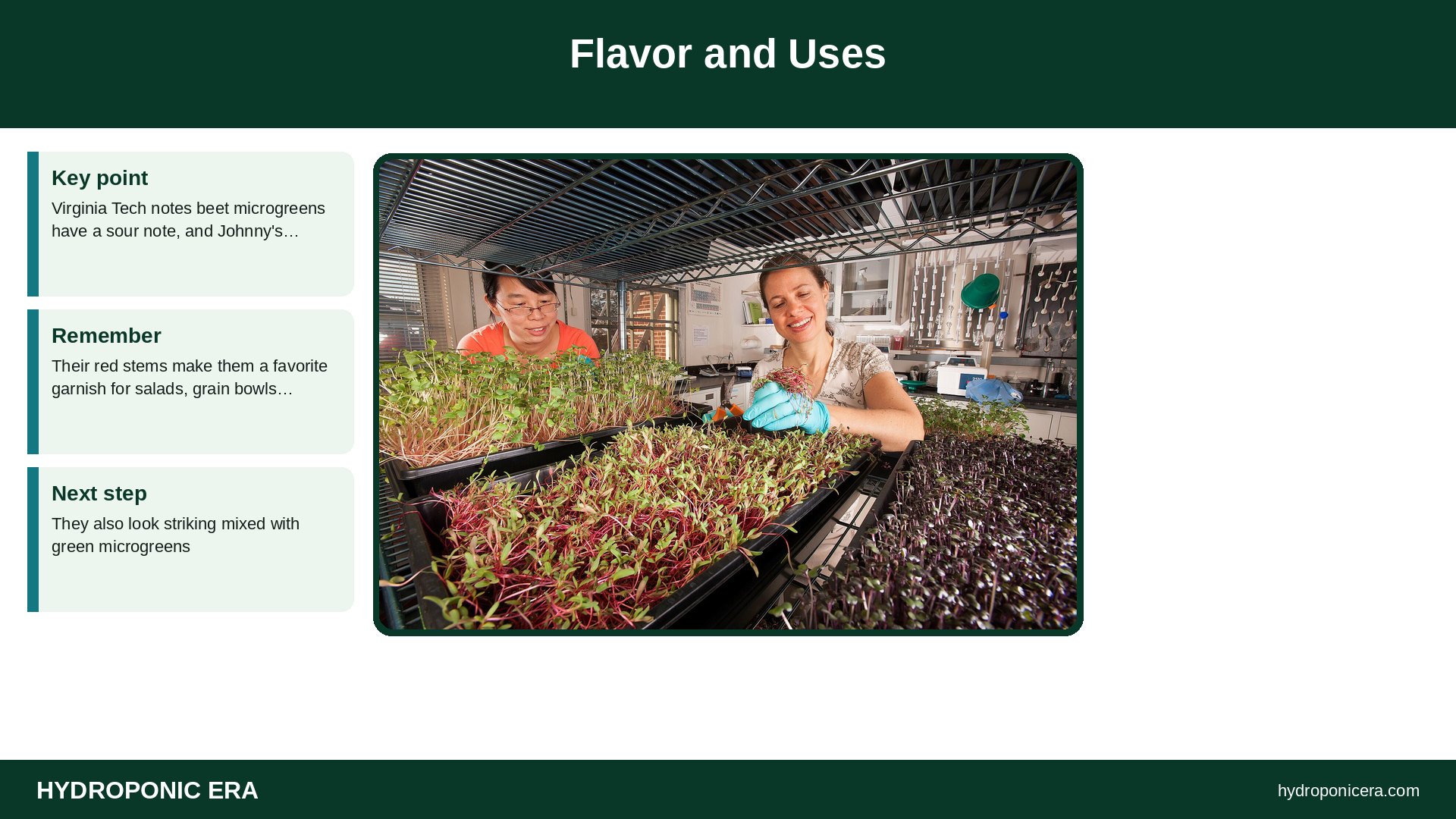
Virginia Tech notes beet microgreens have a sour note, and Johnny’s calls them earthy. Their red stems make them a favorite garnish for salads, grain bowls, goat cheese toasts, soups and roasted vegetables. They also look striking mixed with green microgreens. Store unwashed in a sealed container in the fridge and wash before eating. See how to harvest microgreens and how long microgreens last.
Beet microgreens take a little more patience than radish or broccoli, but the color pays off. Soak the seed, press it firmly, give good light and you’ll get trays of ruby stems in two to three weeks. See best microgreens to grow.
Beet Microgreens vs Chard Microgreens
Swiss chard is the same species as beet (Beta vulgaris), so the two grow almost identically. Johnny’s trial grew Bright Lights chard at about 31.5 g of seed per tray, with a yield of about 9.5 oz (269 g) in 16.5 days, slightly faster and heavier than Bull’s Blood beet. Chard offers yellow, pink and orange stems, while beet gives deeper red and a more earthy taste. Johnny’s even sells a rainbow chard and beet blend for a mixed tray. If you like the look of beet microgreens but want more variety, alternate trays of both.
Planning Your Beet Tray
In Johnny’s 2017 trial, Bull’s Blood beet took about 17 days, several days longer than fast brassicas like broccoli (about 12.5 days). Grow beet in its own tray rather than mixing it with faster crops, or the brassicas will be past their best before the beets are ready.
FAQs
How long do beet microgreens take?
About 12–23 days from sowing.
Should I soak beet seeds?
Yes, 6–12 hours speeds germination.
Why do several seedlings grow from one beet seed?
Each beet seed is a cluster that often holds more than one seed.
How much beet seed per tray?
About 20–25 g per 10 x 20 inch (25 x 51 cm) tray.
Which beet variety is reddest?
Bull’s Blood has red leaves and stems.
Do beet microgreens taste like beets?
They have a mild, earthy beet flavor.
Sources
- Johnny’s Selected Seeds — Microgreens Comparison Chart
- Johnny’s Selected Seeds — Micro Greens Yield Trial 2017
- University of Maryland Extension — Growing Microgreens and Baby Greens Indoors
- Virginia Cooperative Extension — Introduction to Microgreen Production
- Penn State Extension — Growing Microgreens
- Photo credits (Wikimedia Commons, edited with titles): Beta vulgaris cotyledons by Tepeyac (CC BY-SA 3.0); 20160617-AMS-LSC-9000 (61-sec.) (27334710733) by U.S. Department of Agriculture (Public domain); Lufa Farms Microgreens in Trays by Lufa Farms (CC BY-SA 2.0); Lufa Farms Microgreens in Trays by Lufa Farms (CC BY-SA 2.0); Liping Kou observes microgreens by Peggy Greb (Public domain)