Rise Gardens vs Gardyn comes down to layout, capacity, and how you like to grow. Gardyn Home 4 is a vertical column that grows 30 plants in about 2 square feet using proprietary yCube pods, with cameras, sensors, and an AI assistant. Rise Gardens’ full-size Rise Garden 3 is a horizontal, furniture-style unit with 1–3 levels (16 plants per level to start, expandable) that accepts any seeds in net cups. Gardyn suits small spaces and hands-off growers; Rise suits families and tinkerers who want more capacity and seed freedom.
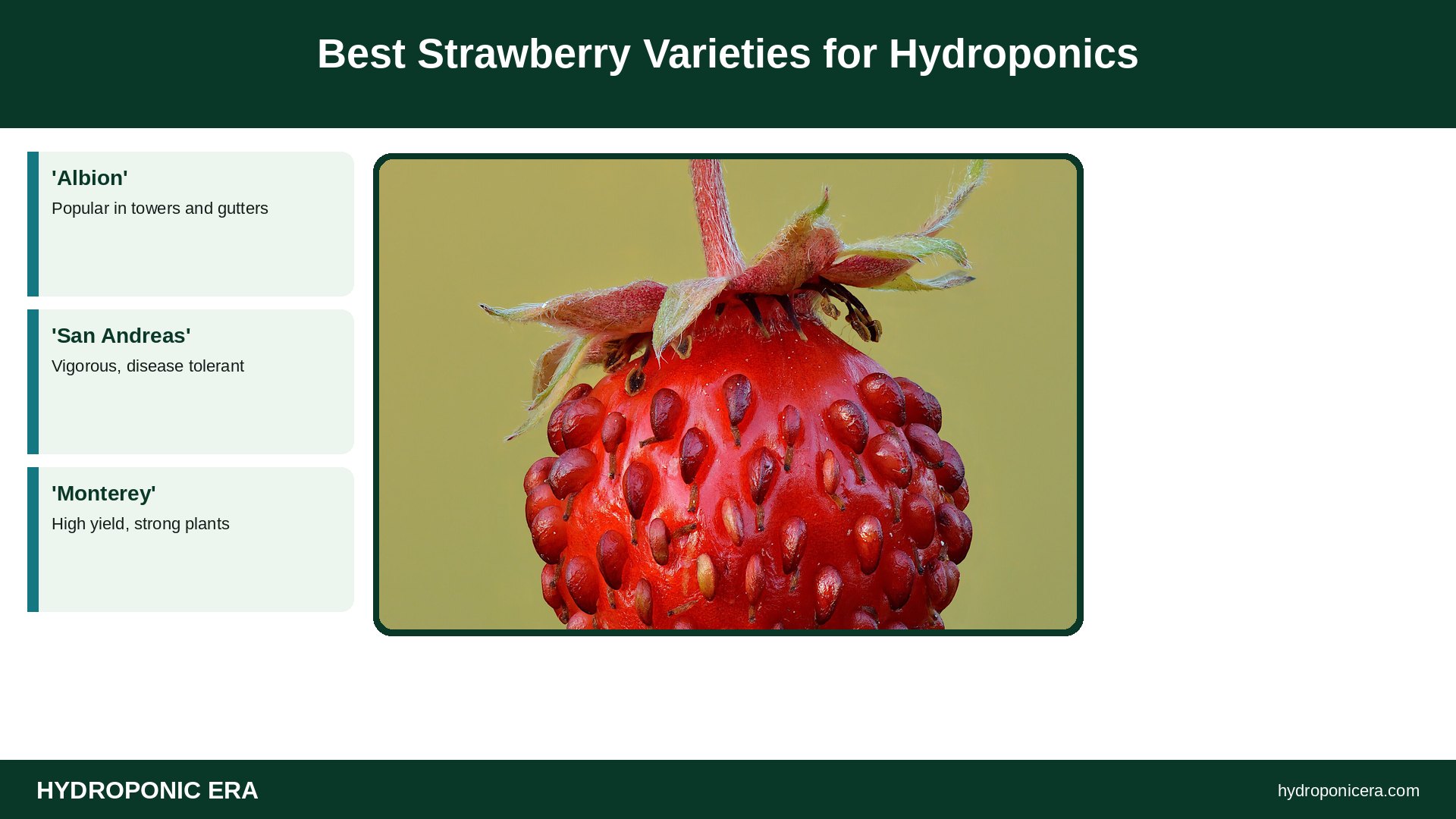
The best strawberry varieties for hydroponics are day-neutral types, because they flower and fruit year-round under steady indoor light instead of waiting for short days. ‘Albion’, ‘San Andreas’, ‘Monterey’, and ‘Seascape’ are the most widely used day-neutral cultivars from the University of California breeding program. For growers starting from seed, alpine strawberries such as ‘Mignonette’ and F1 seed varieties such as ‘Delizz’ are compact and fruit within months. June-bearing types like ‘Chandler’ give big flushes but only once a year.
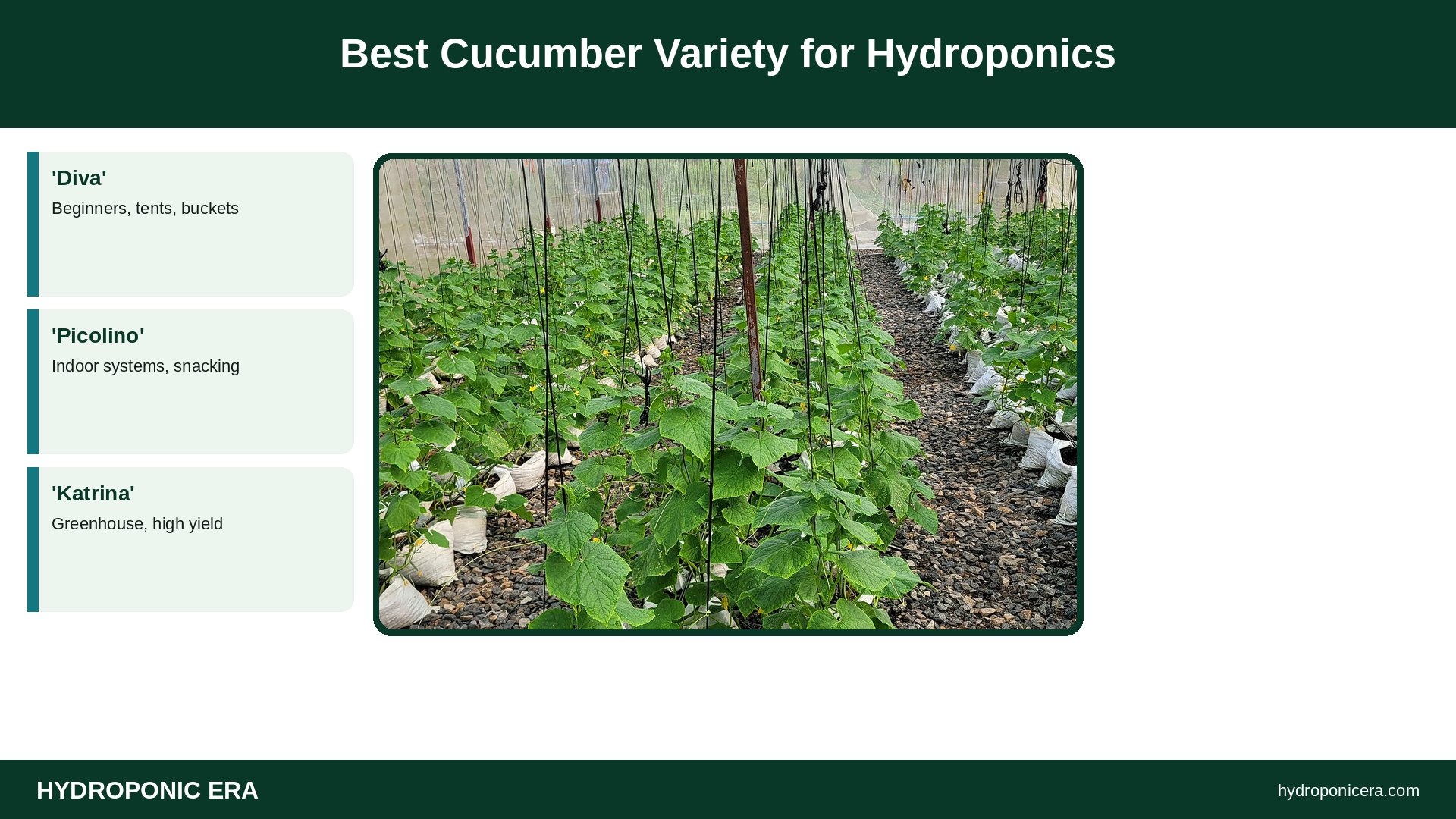
The best cucumber variety for hydroponics is a parthenocarpic (seedless, self-fruiting) greenhouse type, because it sets fruit without bees or hand pollination. For most home growers, a Beit Alpha cucumber such as ‘Diva’ or a mini snacking type such as ‘Picolino’ is the easiest choice. For larger greenhouse systems, long English (European) cucumbers such as ‘Tyria’ give the classic 12–14-inch fruit. Standard garden slicers like ‘Marketmore’ need pollination and are better left to outdoor beds.
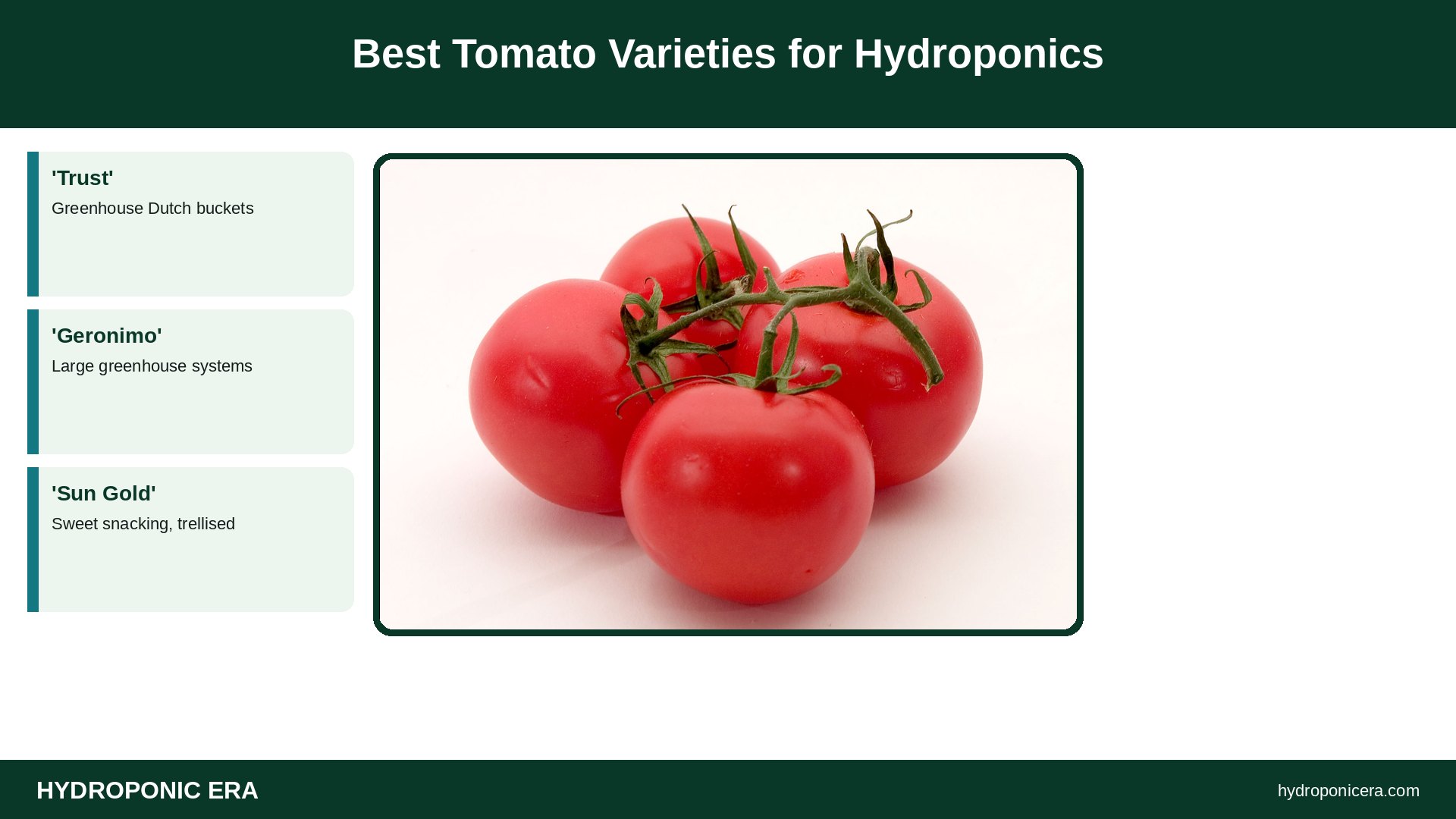
The best tomato varieties for hydroponics are indeterminate greenhouse hybrids for tall systems and compact determinate or dwarf types for small indoor setups. For big beefsteak fruit, greenhouse growers rely on varieties such as ‘Trust’ and ‘Geronimo’. For cherry tomatoes, ‘Sun Gold’ and ‘Sweet Million’ are reliable and sweet. For tabletop kits and windowsills, ‘Tiny Tim’, ‘Red Robin’, and ‘Micro Tom’ stay under 12–18 inches. Pick by the space you have, how much light you can give, and whether you want slicing or snacking tomatoes.
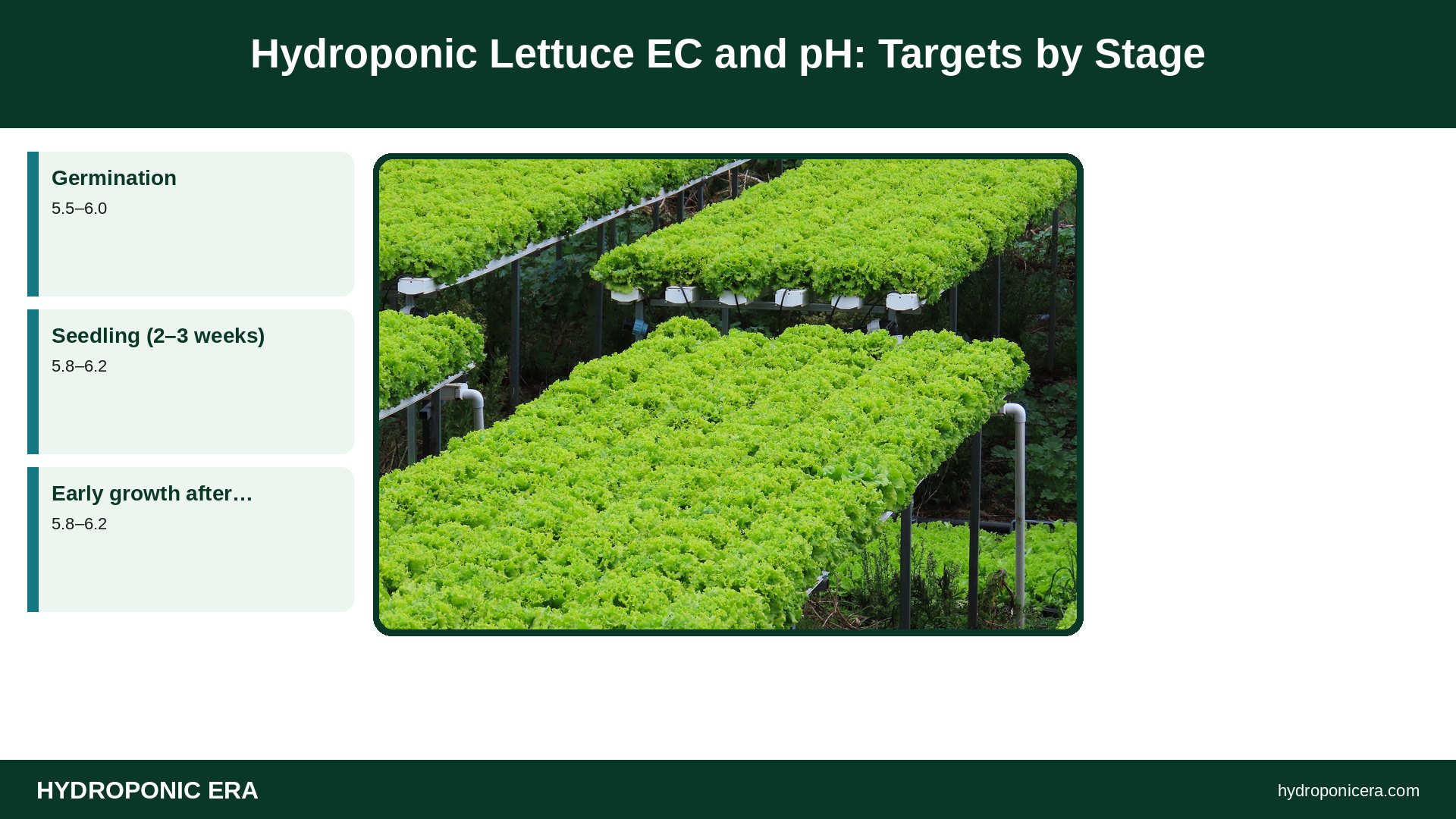
For hydroponic lettuce EC , aim for about 1.2–1.8 mS/cm with pH 5.8–6.2 during most of the crop, which is the range UF/IFAS Extension recommends for lettuce in small hydroponic systems. Start seedlings lower, around 0.6–1.0 mS/cm, and move to the full range after transplant. In hot weather, run toward the low end to reduce tip burn; in cool weather, the high end is fine. On a 500-scale ppm meter, 1.2–1.8 mS/cm reads 600–900 ppm.
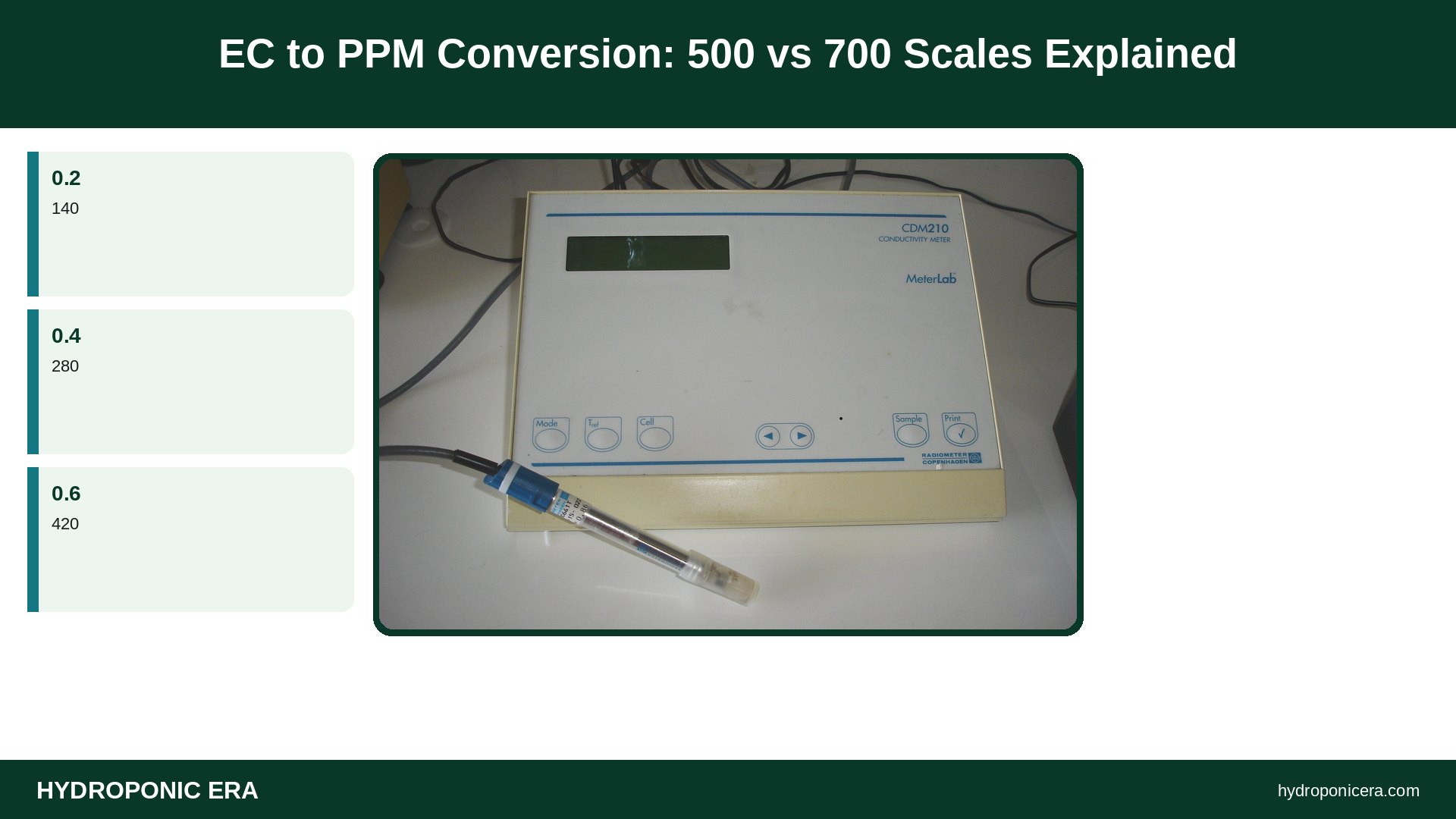
The EC to ppm conversion is simple once you know your meter’s scale: multiply EC in mS/cm by 500 for the NaCl (500) scale, by 640 for the 640 scale, or by 700 for the KCl or “442” (700) scale. So EC 1.0 mS/cm reads 500, 640, or 700 ppm depending on the meter. If your EC is in microsiemens (µS/cm), divide by 1,000 first. Because these are estimates, not true measurements of dissolved solids, compare charts by EC whenever you can.
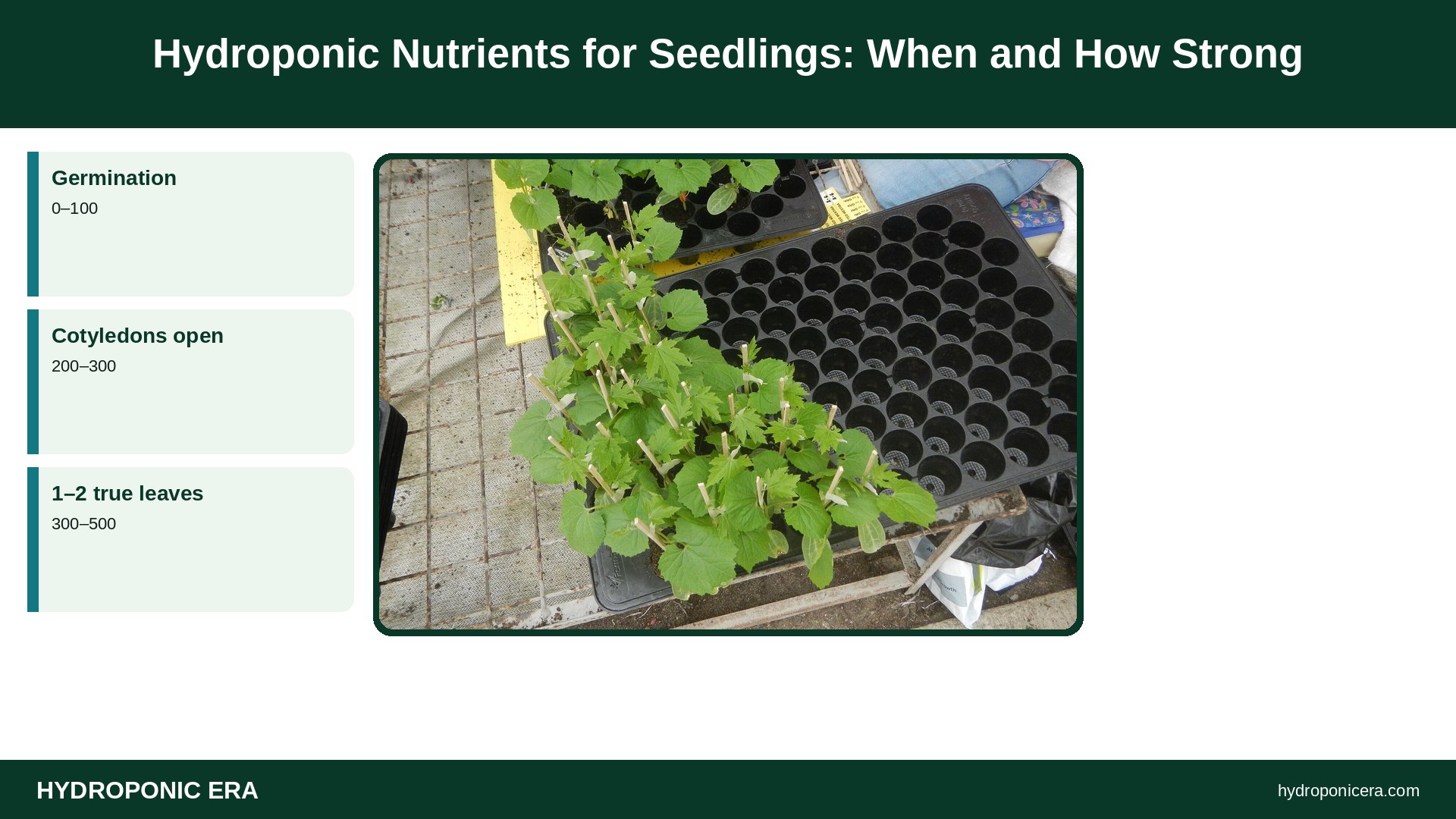
Hydroponic nutrients for seedlings should start weak and late. Use plain, pH-adjusted water until the cotyledons open, then feed a complete hydroponic nutrient at about one quarter to one half of the label’s full rate, roughly EC 0.5–1.0 mS/cm (250–500 ppm on a 500-scale meter), at pH 5.8–6.2. Raise strength gradually after the first true leaves form. Seeds carry their own food at first, and young roots burn easily, so too much nutrient too early causes more failures than too little.
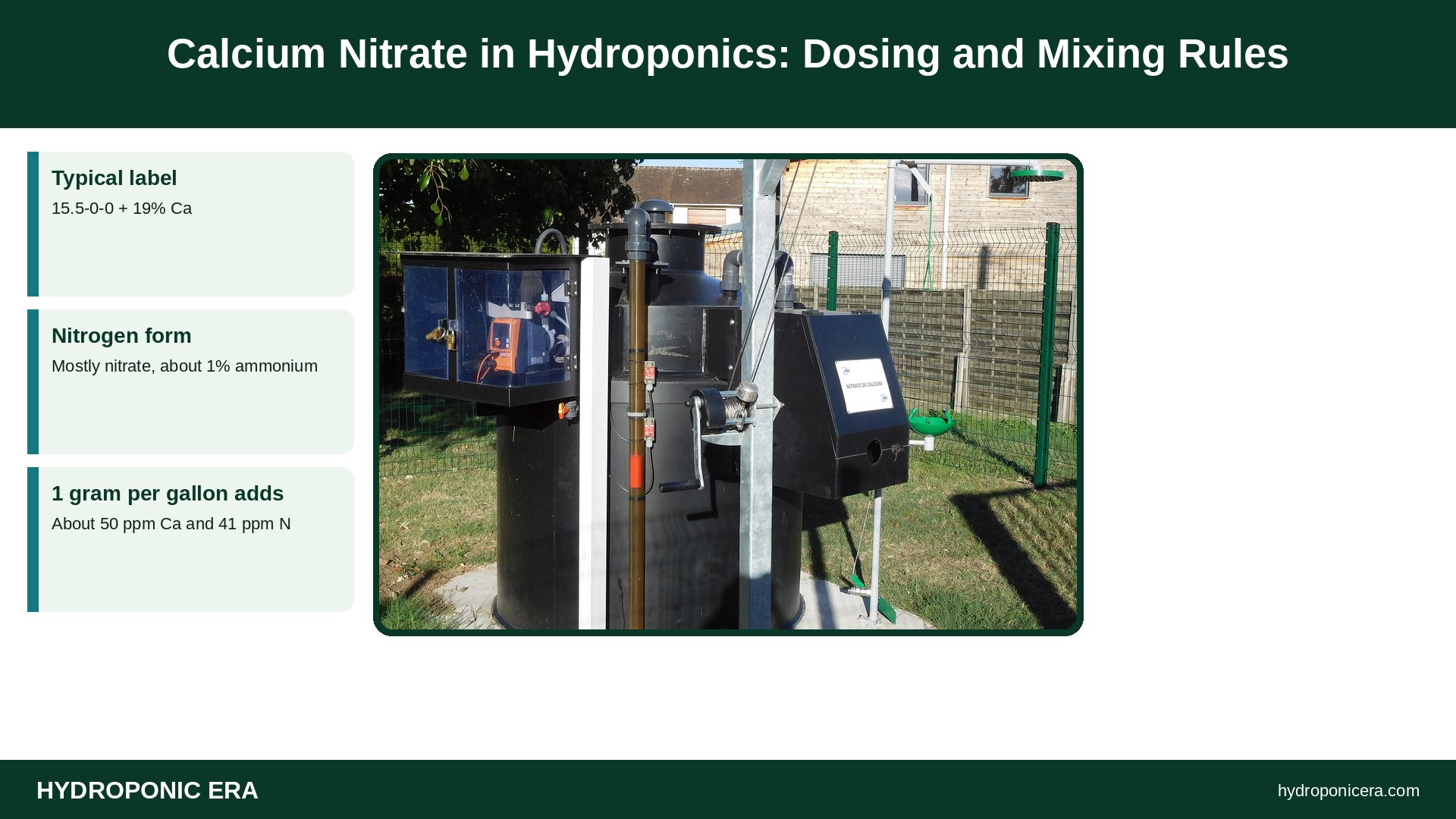
Calcium nitrate hydroponics feeding is the standard way to supply calcium and nitrate nitrogen in water culture. Greenhouse-grade calcium nitrate contains about 19% calcium and 15.5% nitrogen, and it dissolves completely. A common home dose is about 2.4 grams per gallon alongside an equal amount of a base fertilizer such as Masterblend 4-18-38, which adds roughly 120 ppm calcium and 98 ppm nitrogen. The most important rule is to dissolve it separately; never mix concentrated calcium nitrate with sulfates or phosphates.
Hoagland solution is the classic plant nutrient recipe published by D.R. Hoagland and D.I. Arnon at the University of California in 1938 and revised in 1950. Full-strength Hoagland No. 1 supplies roughly 210 ppm nitrogen, 235 ppm potassium, 200 ppm calcium, 31 ppm phosphorus, 48 ppm magnesium, and 64 ppm sulfur, plus trace elements. It is made from separate stock solutions of potassium nitrate, calcium nitrate, monopotassium phosphate, magnesium sulfate, iron, and a micronutrient mix. Most home growers today use it at half strength, or buy a modern premix that copies its ratios.
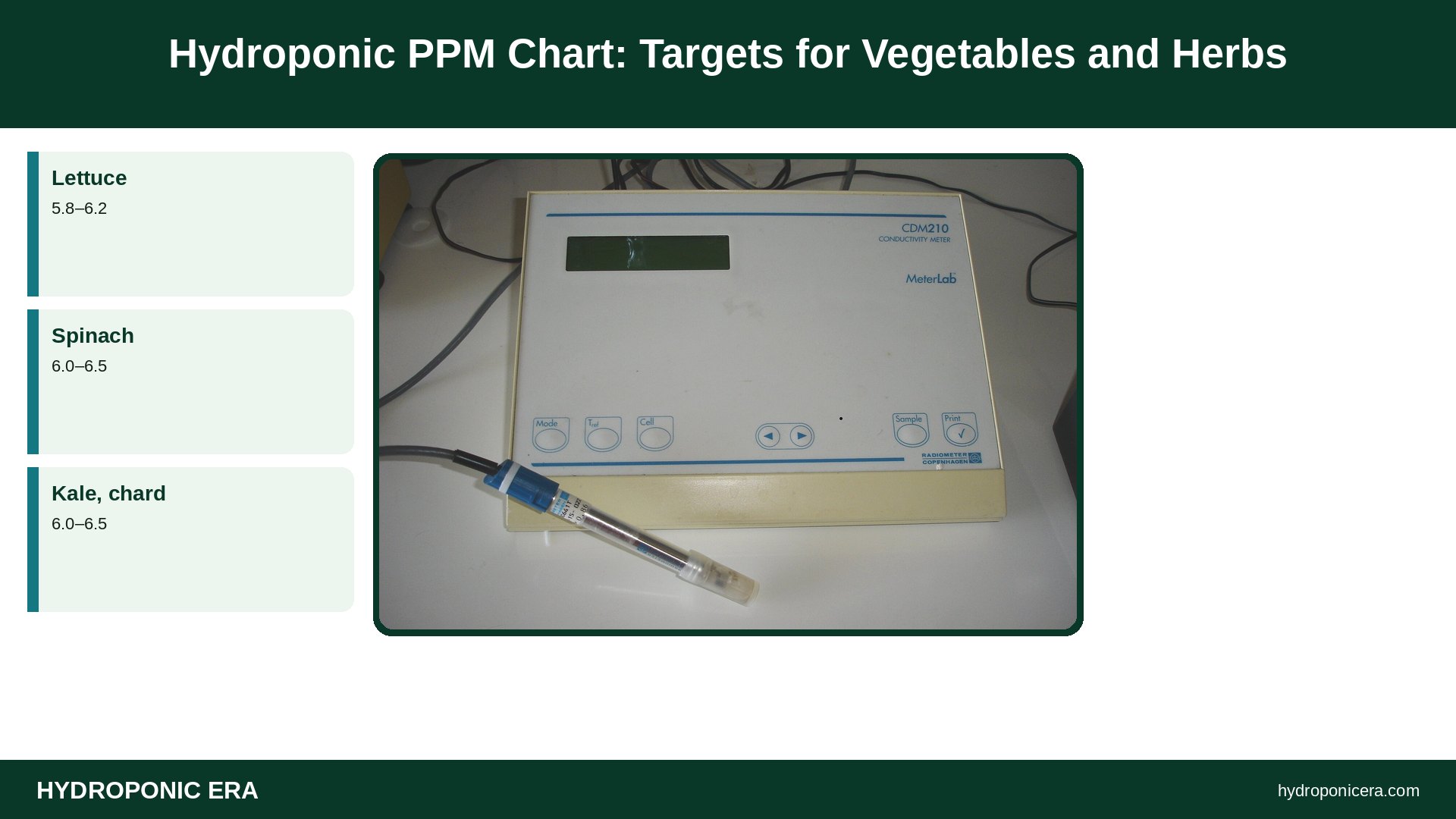
A hydroponic ppm chart tells you how strong your nutrient solution should be for each crop. As a rule of thumb, lettuce and leafy greens run about 560–840 ppm, herbs 700–1,120 ppm, and fruiting crops like tomatoes, peppers, and cucumbers 1,400–2,450 ppm on the common 700 scale (EC 0.8–3.5 mS/cm). Because meters use different conversion factors, the most reliable approach is to read EC and use ppm only with the scale printed on your meter. The chart below uses both.