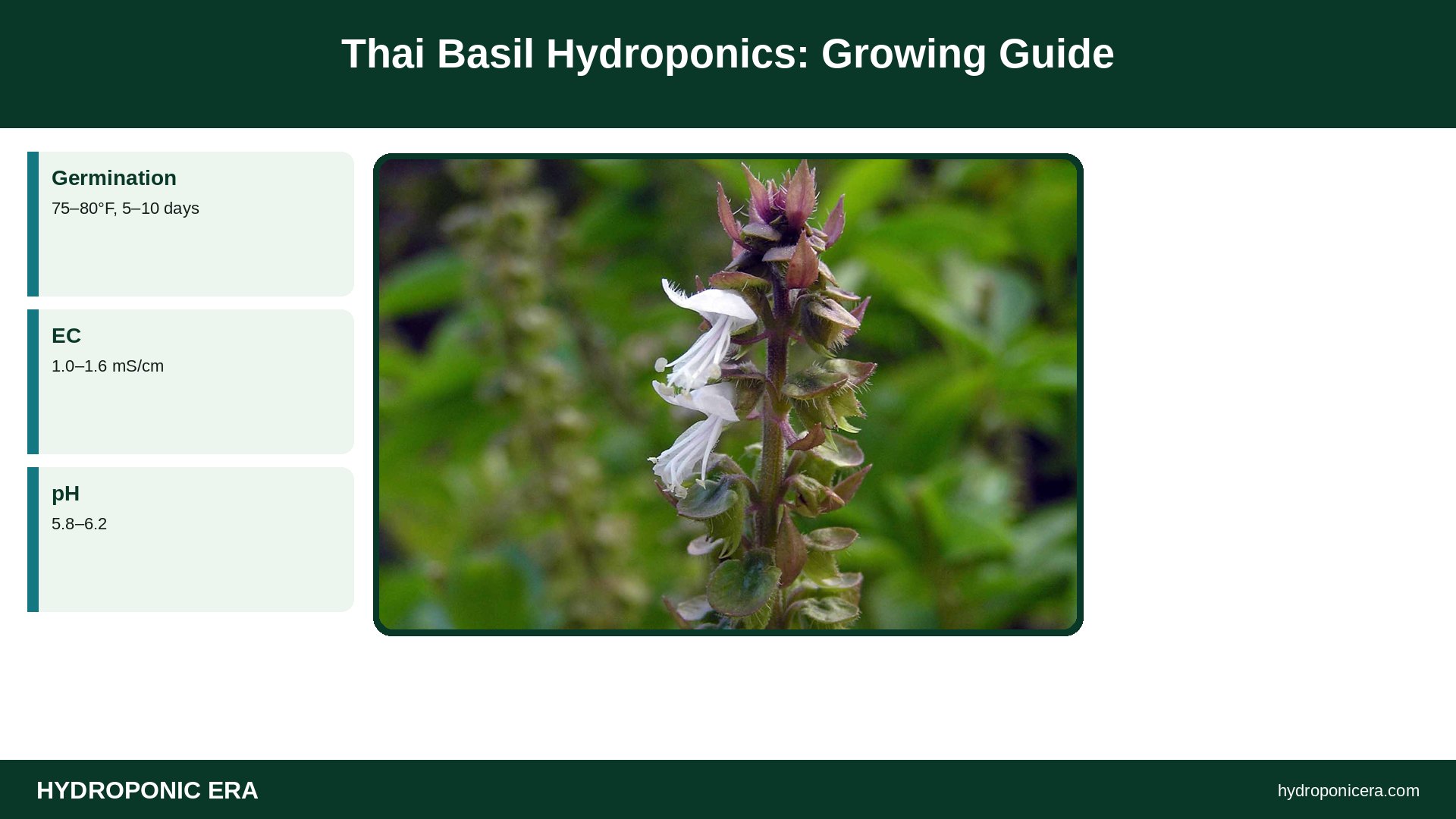
Thai basil hydroponics works much like growing sweet basil: start seeds in rockwool or sponges at 75–80°F, transplant at 2–3 true leaves into DWC, NFT, Kratky, or a tower, and keep the solution at EC 1.0–1.6 mS/cm and pH 5.8–6.2. Give 14–16 hours of strong light and air temperatures of 70–85°F. Thai basil (Ocimum basilicum var. thyrsiflora) has purple stems, narrower leaves, and an anise-licorice flavor. It flowers readily, so pinching tops and flower spikes every week is the key to a long harvest.
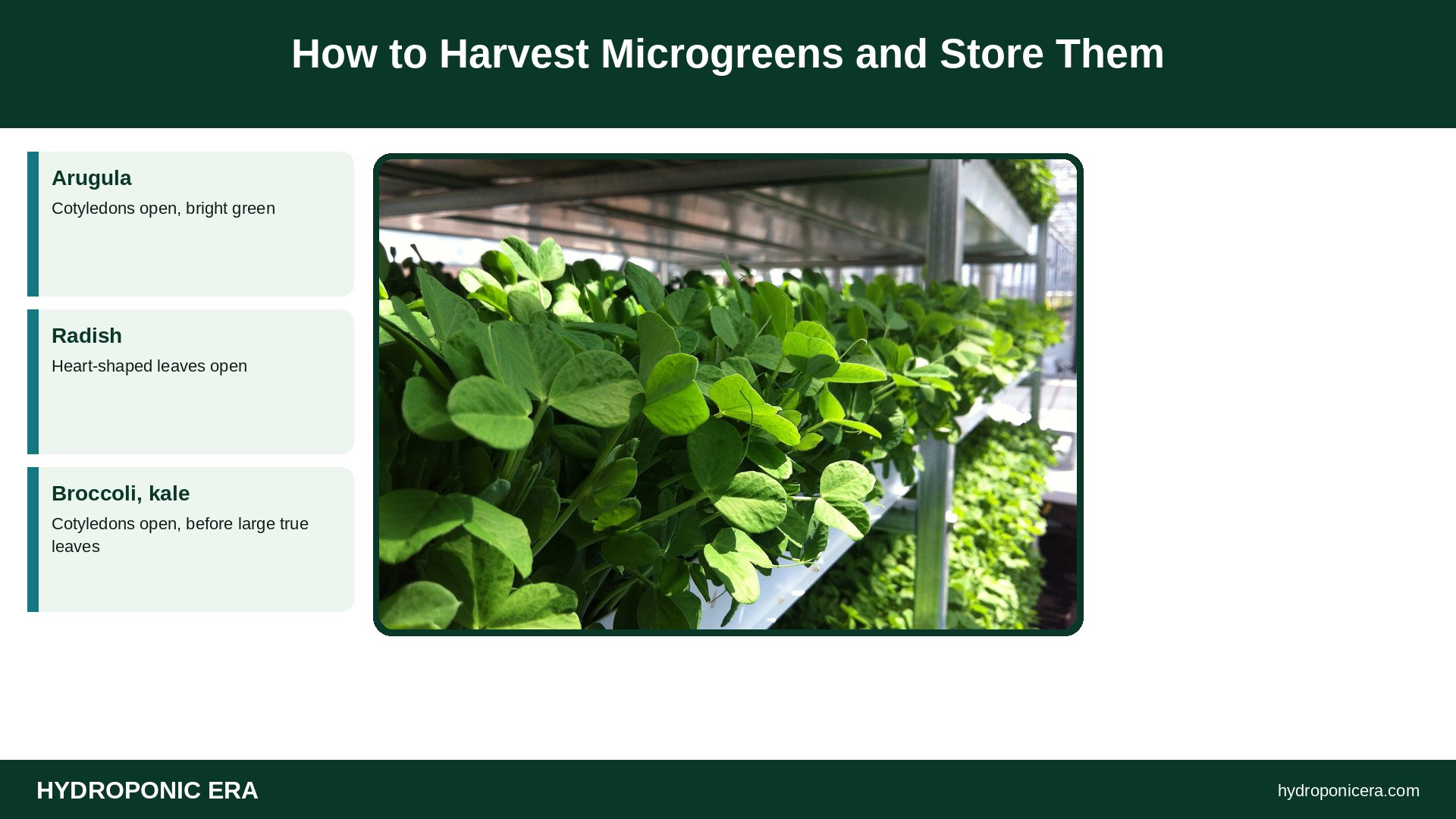
Here is how to harvest microgreens : wait until the seed leaves (cotyledons) are fully open, usually 7–14 days after sowing depending on the crop, stop watering 8–12 hours before cutting so leaves are dry, then hold a handful and cut straight across about 1/4 to 1/2 inch above the medium with clean, sharp scissors or a knife. Collect the greens in a clean container, cool them right away, and store them at 35–40°F in a sealed container lined with a paper towel. Most microgreens keep 5–10 days.
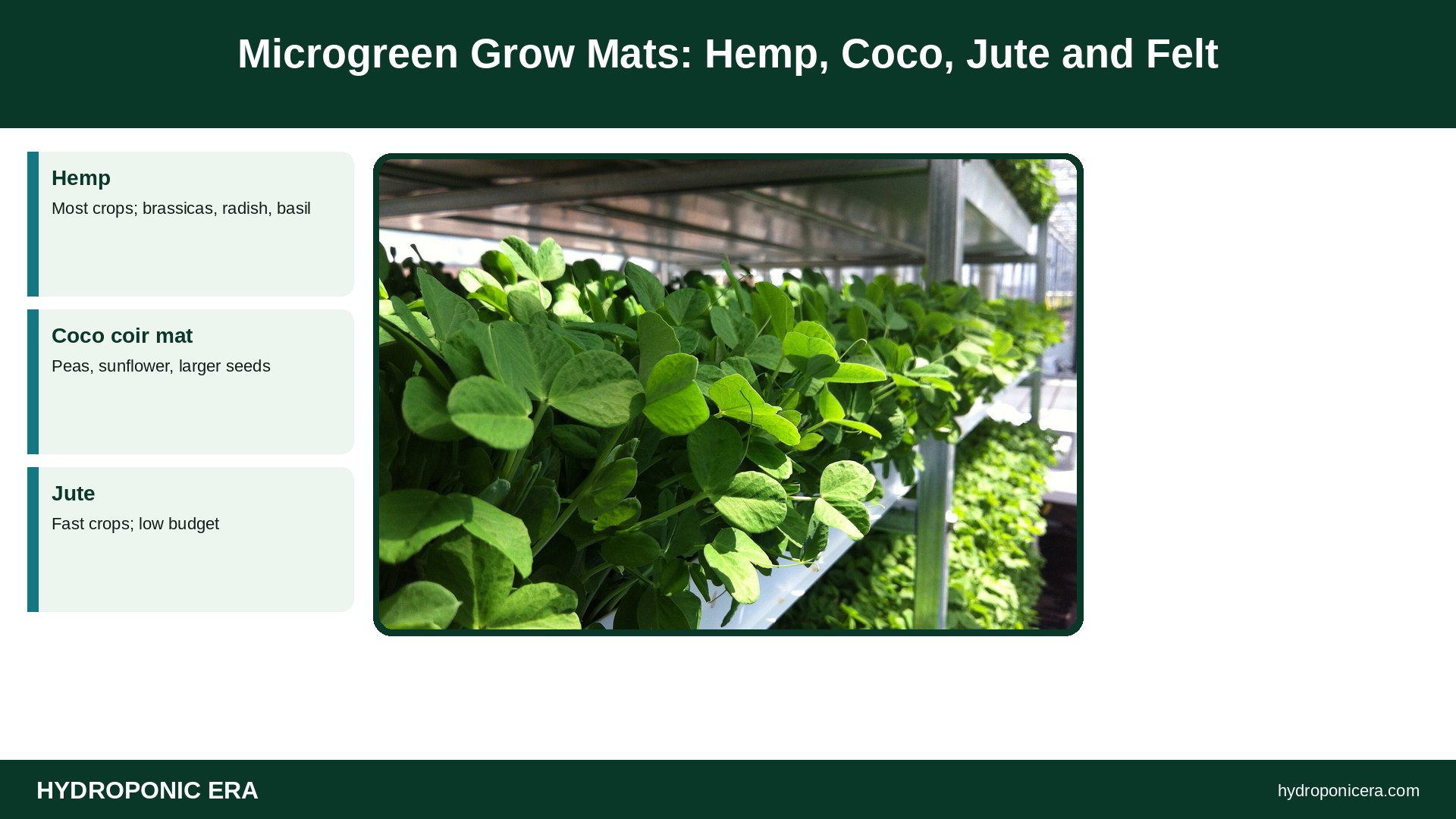
Microgreen grow mats are thin, soil-free pads that hold water and give roots something to grip in a hydroponic tray. The main types are hemp, coco coir, jute, felt (synthetic fiber), and biostrate-style blends. For most home growers, hemp mats are the best all-round choice: they hold moisture well, are compostable, and work for nearly every crop. Coco mats suit larger seeds like peas and sunflowers, jute is cheap but dries quickly, and reusable felt pads save money but need careful cleaning.
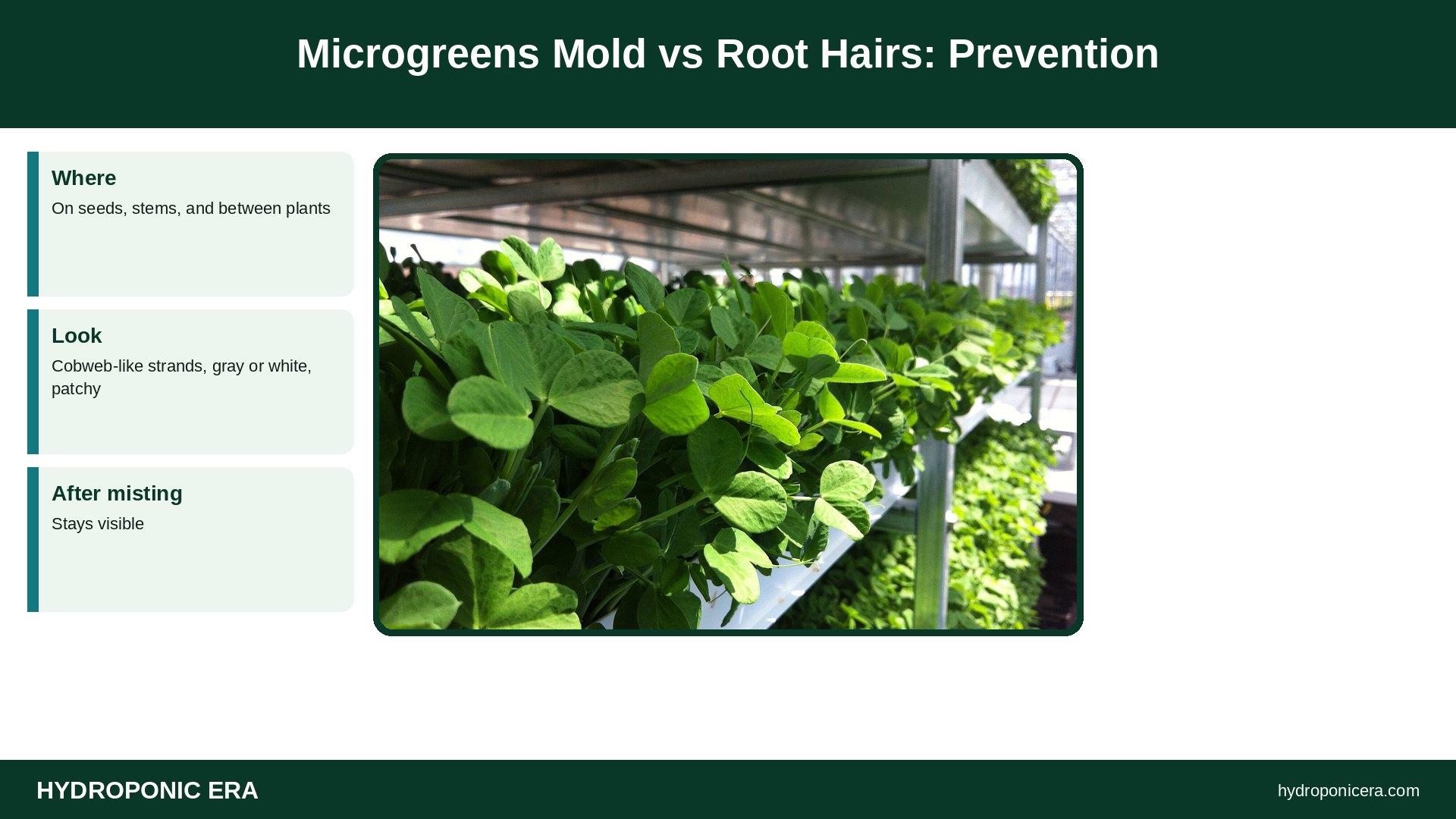
Microgreens mold usually shows up as gray, white, or fuzzy cobweb-like growth that spreads across seeds and stems, smells musty, and leaves seedlings collapsing in patches. It is caused by too much moisture, dense sowing, warm still air, and dirty trays or seed. The fix is to remove affected trays, then prevent it with bottom watering, lighter seeding, constant airflow, cooler temperatures around 68–72°F, and clean equipment. Before you panic, check whether the “mold” is actually root hairs, which are harmless.
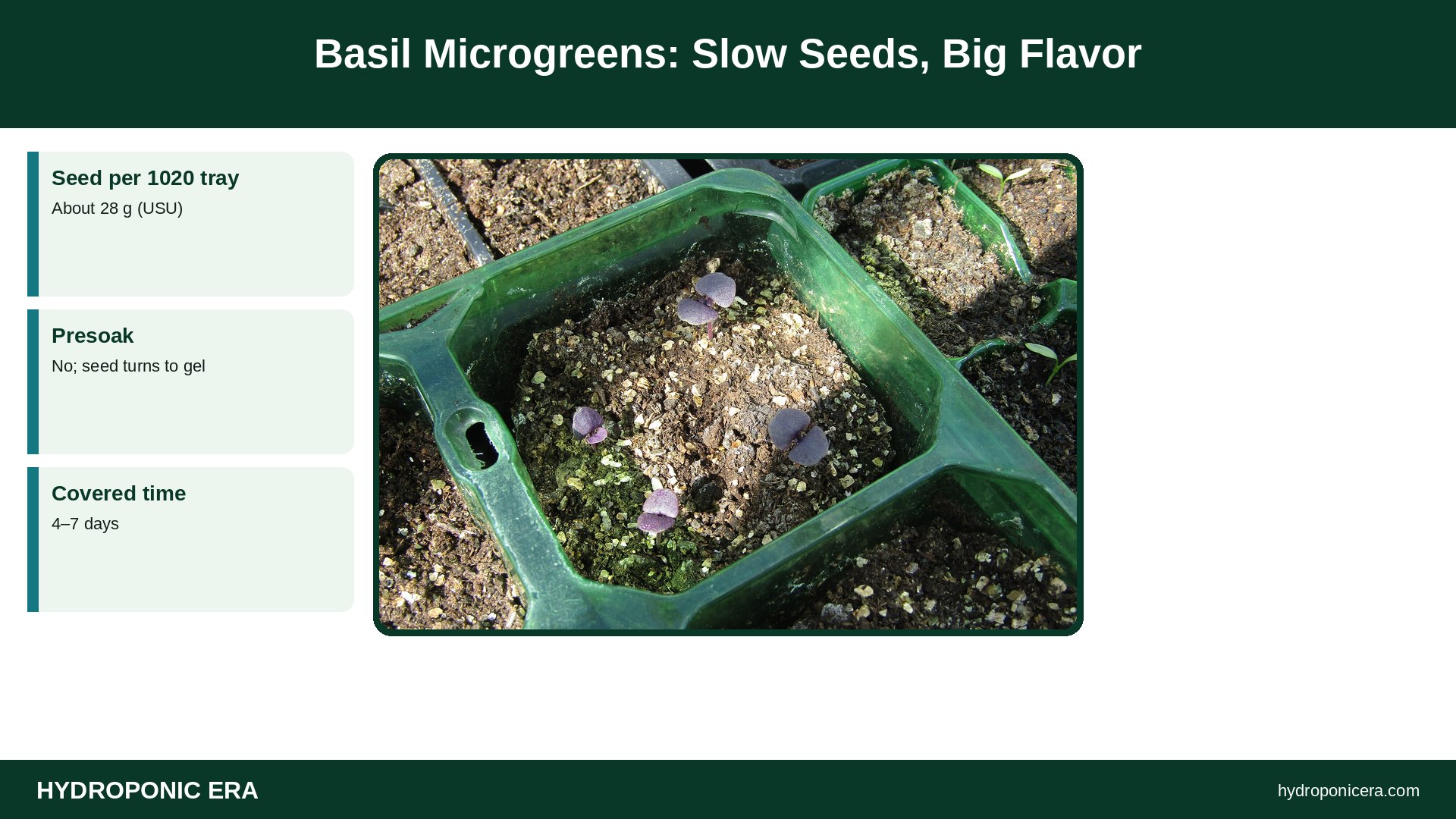
Basil microgreens take longer than most microgreens but deliver intense basil flavor in a tiny leaf. Sow about 28 grams of basil seed per 1020 tray (Utah State University Extension’s home rate) on a moist medium without soaking, keep the tray covered for 4–7 days, then grow under strong light and harvest at about 12–16 days. Basil seed forms a sticky gel when wet, so sow it dry onto a damp surface and mist gently. Keep the room warm, around 72–75°F, since basil germinates slowly in cool conditions.
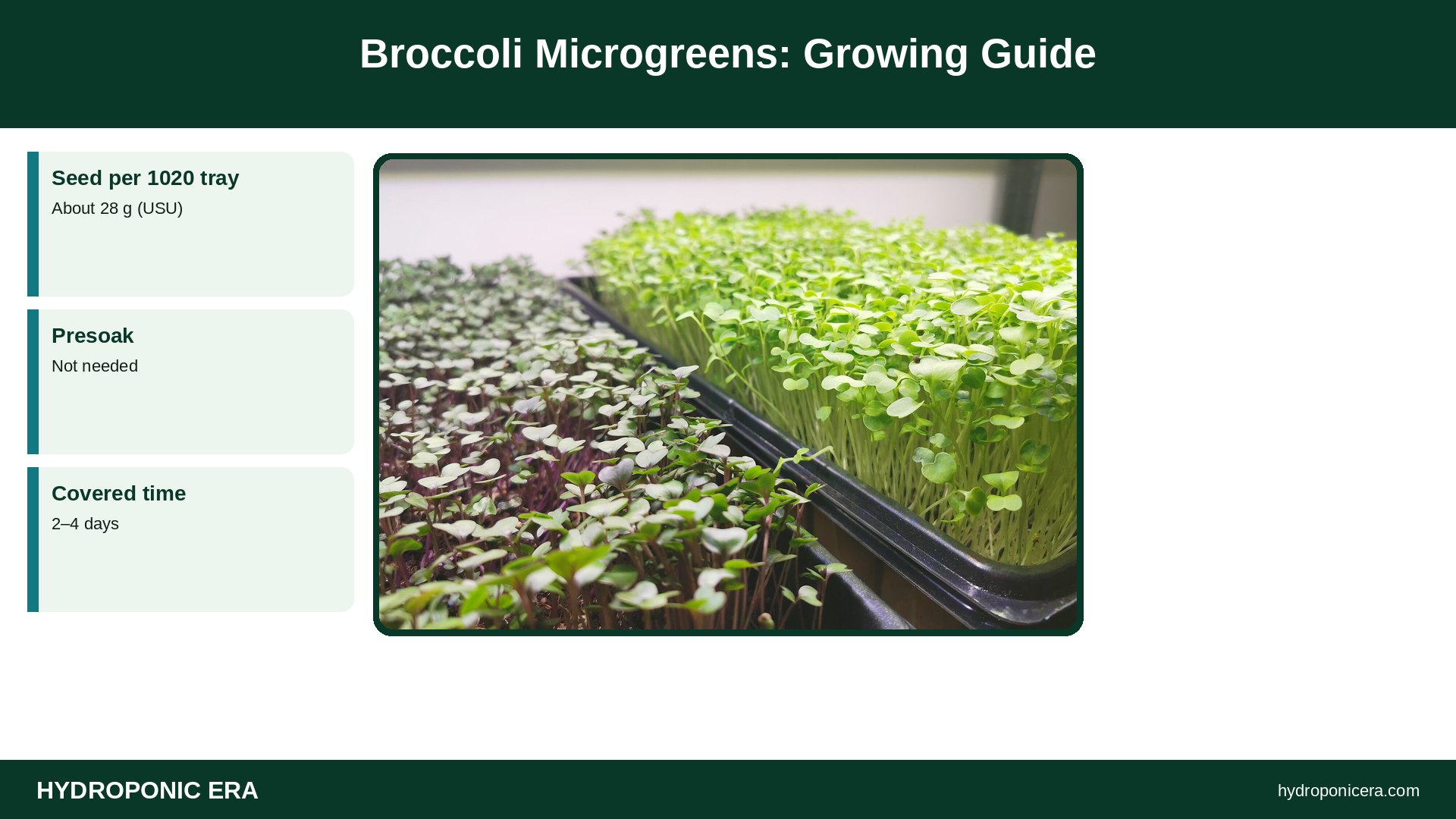
Broccoli microgreens are easy, mild, and quick: scatter about 28 grams of untreated broccoli seed over a moist 1020 tray (Utah State University Extension’s home rate), keep it covered for 2–4 days, then grow under light and harvest at 8–12 days when the seed leaves are fully open. No soak is needed. They taste like mild broccoli or cabbage and are popular because young broccoli is a rich source of glucoraphanin, the compound that forms sulforaphane, as Johns Hopkins researchers showed in sprouts.
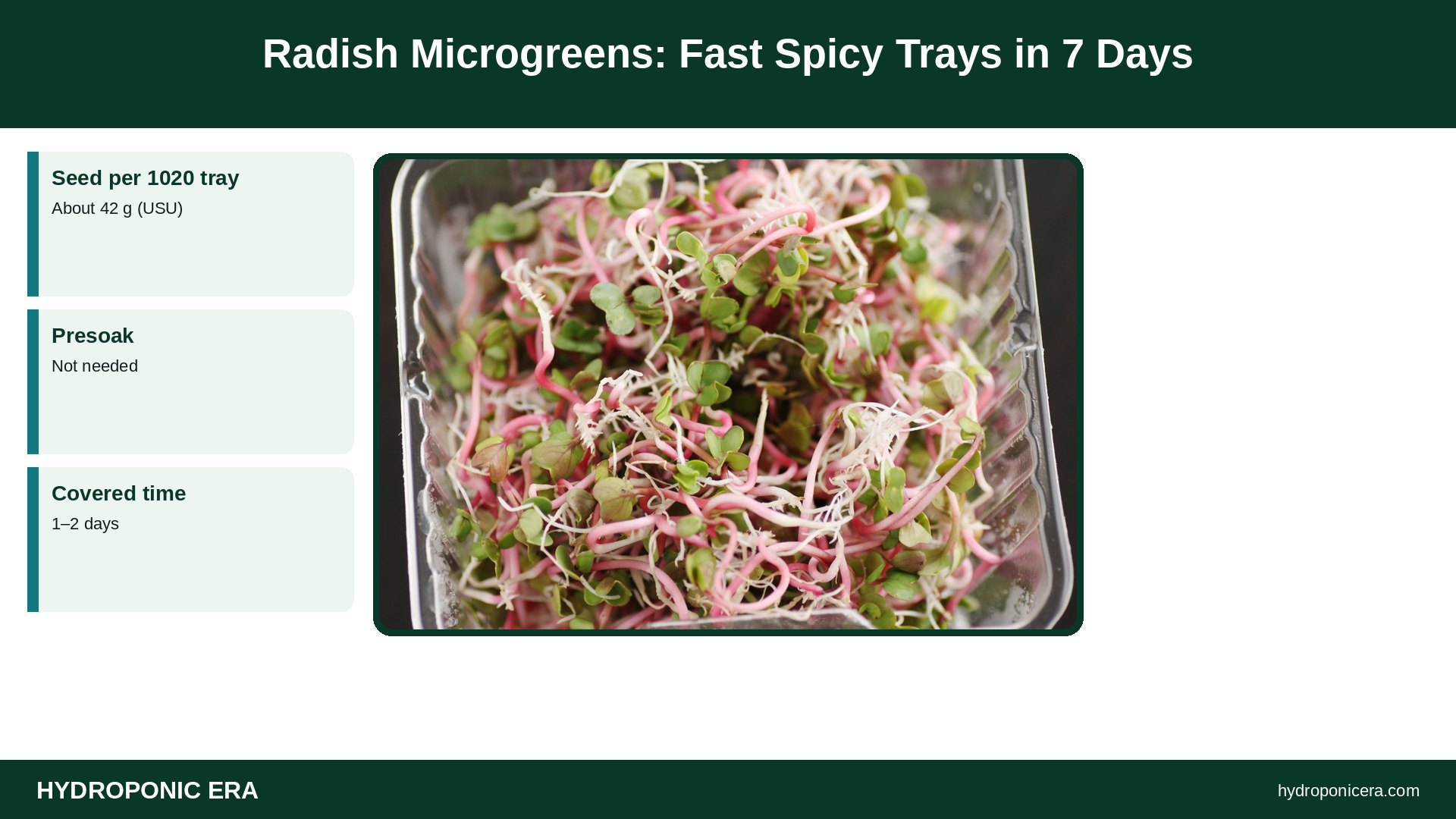
Radish microgreens are among the fastest and easiest microgreens: sow about 42 grams of seed on a moist 1020 tray (Utah State University Extension’s home rate), keep it covered for 1–2 days, then grow under light and harvest at 8–12 days, when the heart-shaped seed leaves are open. No soak is needed. They taste spicy and crisp, and colored varieties such as ‘Rambo’ (purple) and ‘Hong Vit’ (pink stems) make some of the prettiest trays you can grow.
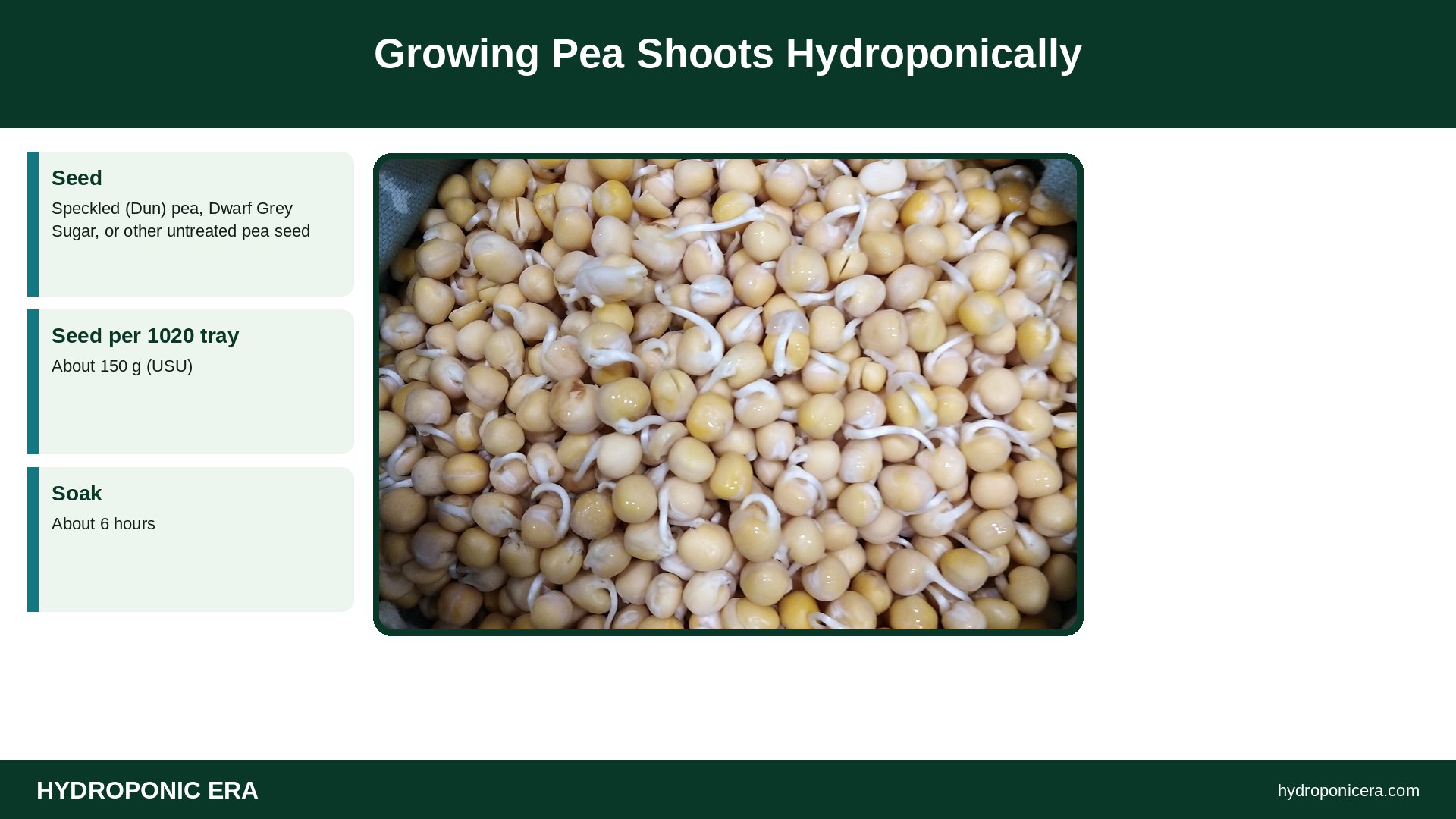
To grow pea shoots hydroponically, soak whole field or snow pea seed for about 6 hours, spread it thickly on a moist mat or shallow medium in a 1020 tray, keep it covered for about 3 days, then grow it under light and harvest when shoots are 3–6 inches tall. Utah State University Extension lists about 150 grams of seed per tray and a harvest at 8–10 days; many growers let them go to 12–14 days for longer, sweeter shoots. Cut above the lowest leaf so some trays give a smaller second cut.
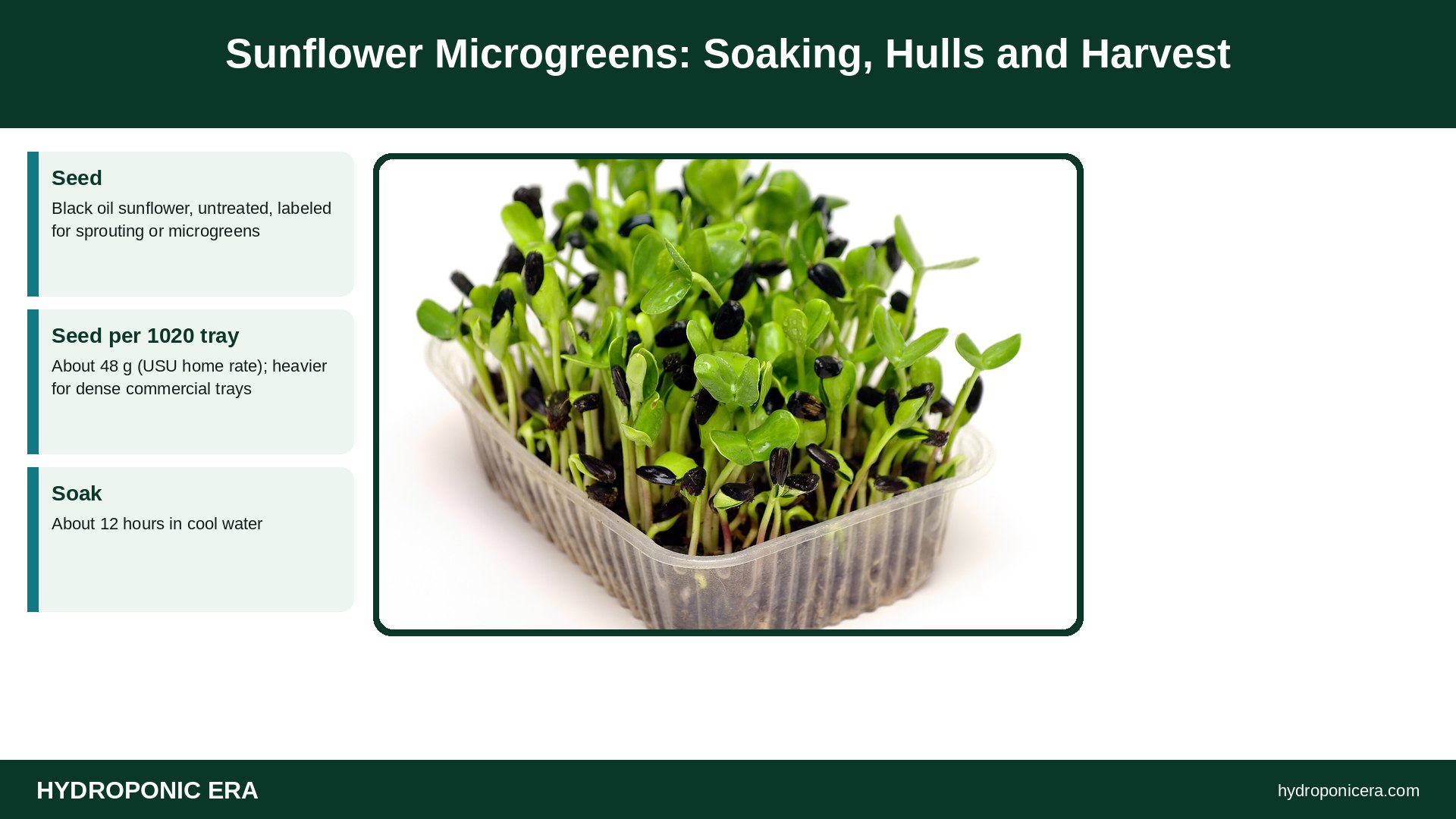
Sunflower microgreens are grown from black oil sunflower seed soaked for about 12 hours, spread on a moist tray, kept covered and weighted in the dark for about 3 days, and then grown under light until harvest at 9–10 days. Utah State University Extension lists 48 grams of seed per 10-by-20-inch (1020) tray as a home starting rate; many growers sow more densely for thicker trays. Cut just above the medium when the two seed leaves are fully open and before true leaves appear, and knock off hulls before harvest.
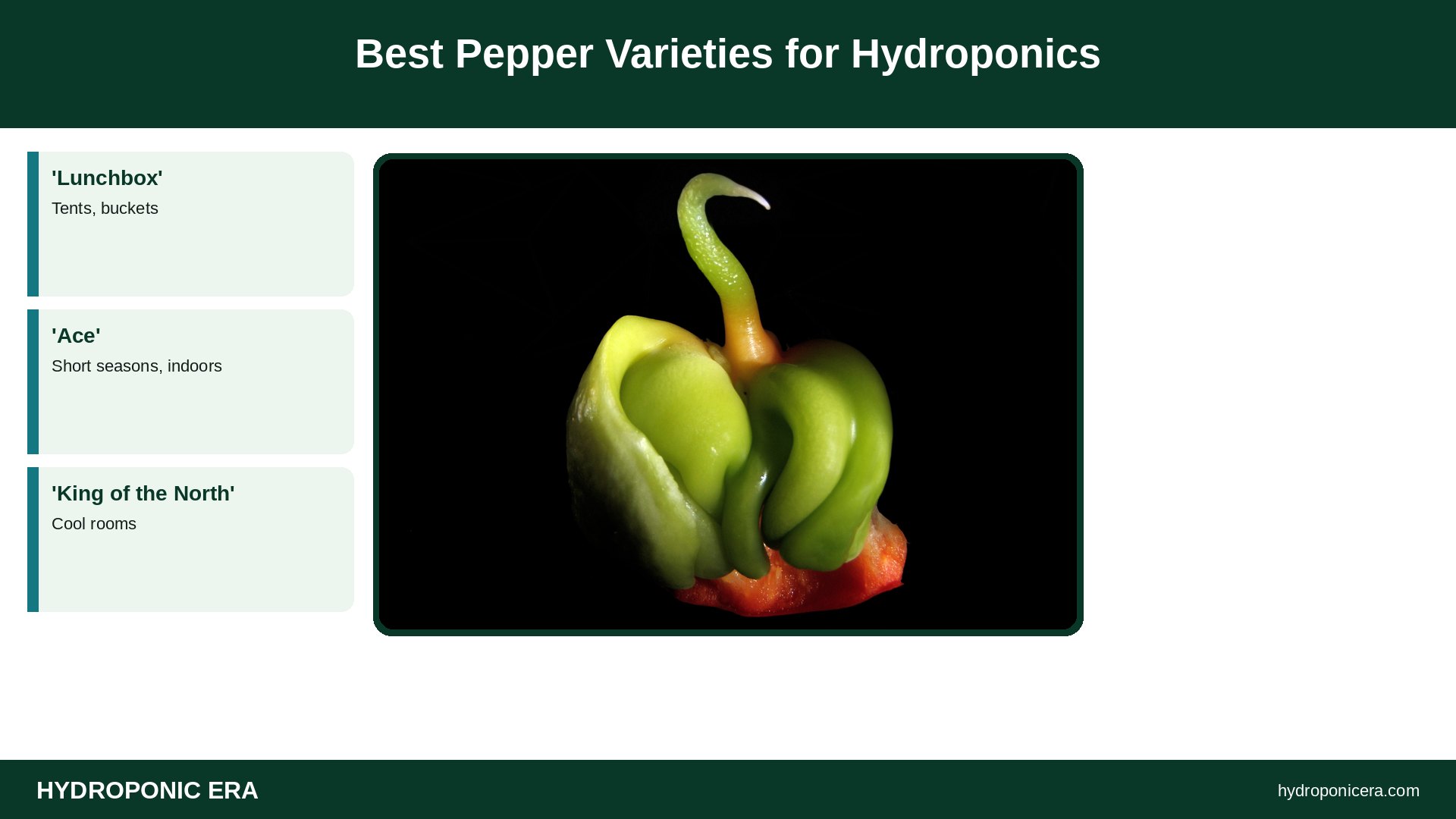
The best pepper varieties for hydroponics are compact, early, and productive plants that stay under about 3 feet. For sweet peppers, snacking types such as ‘Lunchbox’ and early bells such as ‘Ace’ and ‘King of the North’ fruit reliably indoors. For hot peppers, jalapeños, ‘Thai Hot’, cayenne, and shishito are easy and heavy-yielding. Greenhouse bell hybrids give the biggest blocky fruit but need tall trellises and strong light. Peppers grow slowly at first, so choose varieties that mature in 60–80 days from transplant.