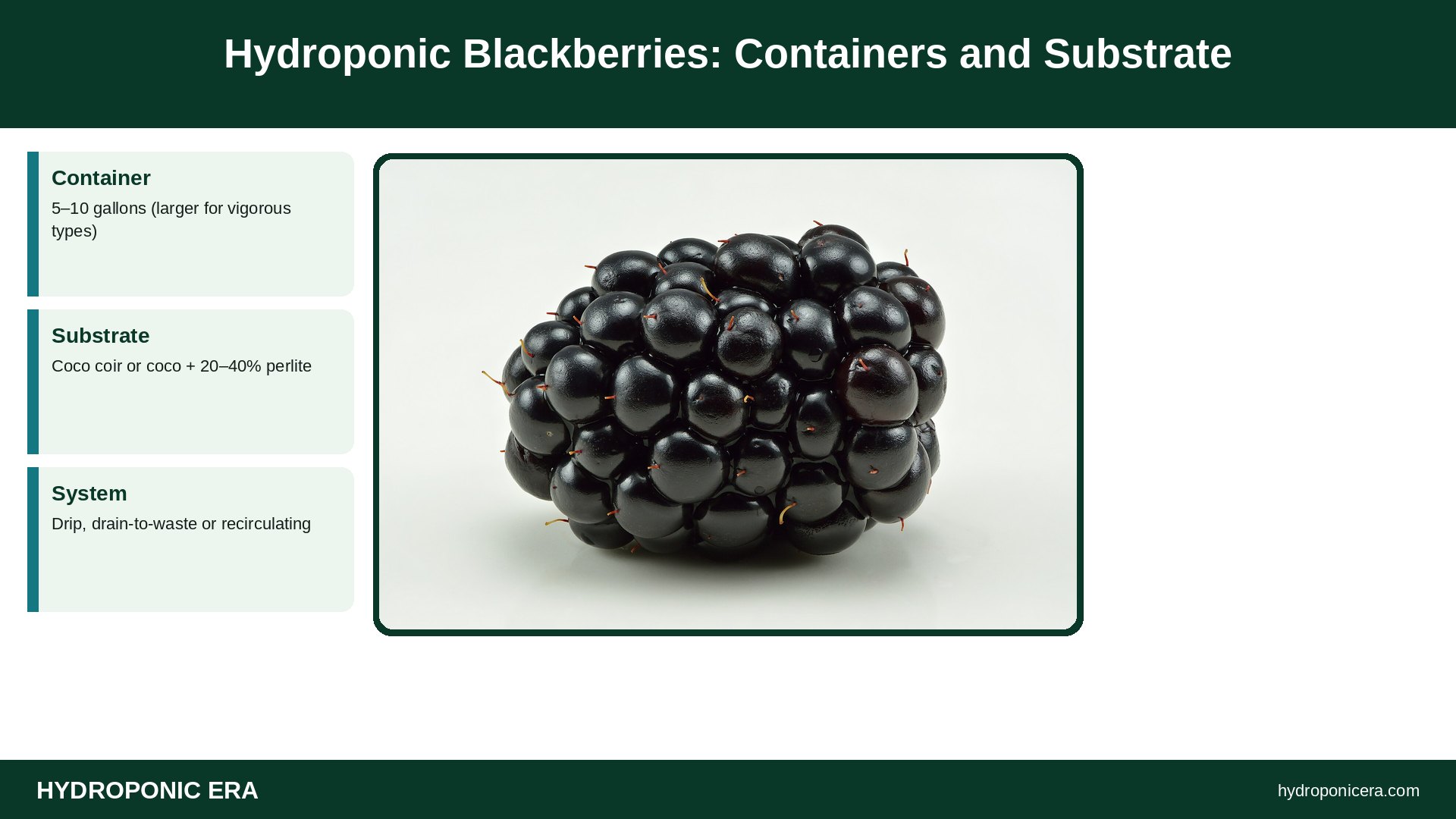
Hydroponic blackberries are best grown in large containers of soilless substrate, not in water-only systems. Use 5- to 10-gallon pots or grow bags filled with coco coir or a coco-perlite mix, feed through drip irrigation at EC 1.0–1.6 mS/cm and pH 5.5–6.2, and pick thornless cultivars. Primocane-fruiting varieties can fruit in the first year on new canes, while floricane types fruit on second-year canes. Blackberries need full sun or very strong light, a trellis, and yearly cane pruning, so they suit greenhouses, patios, and high tunnels better than small indoor tents.
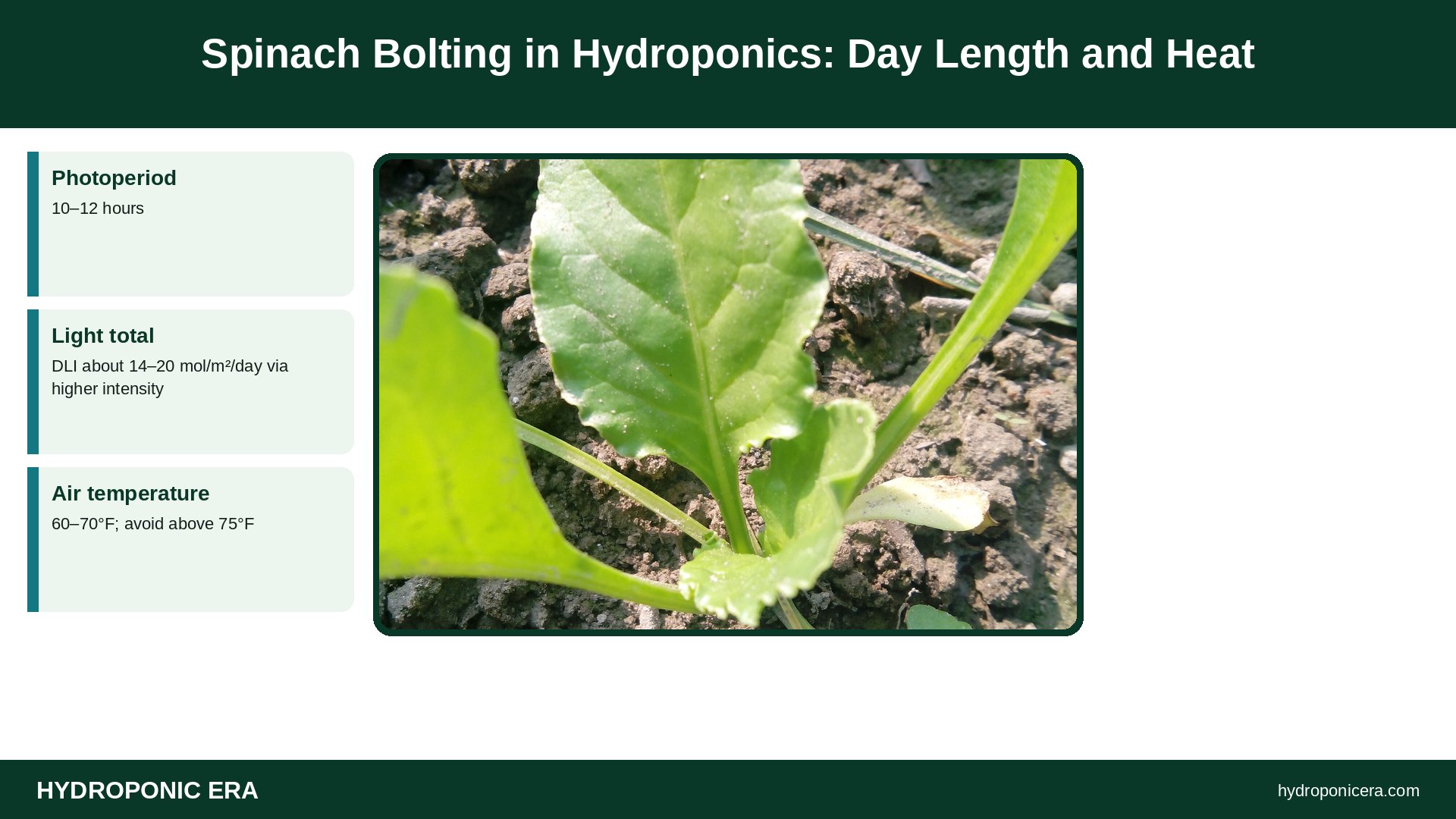
Spinach bolting in hydroponics happens when the plant switches from making leaves to sending up a flower stalk, and it is triggered mainly by long days and heat. Spinach is a long-day plant: once days stretch past roughly 12–14 hours, especially with air above about 75°F, it starts to bolt. To prevent it, give 10–12 hours of strong light instead of 16, keep air around 60–70°F and the solution below about 68°F, choose bolt-resistant varieties, and harvest as baby leaf at 3–5 weeks. Once a stalk forms, harvest right away; you can’t reverse it.
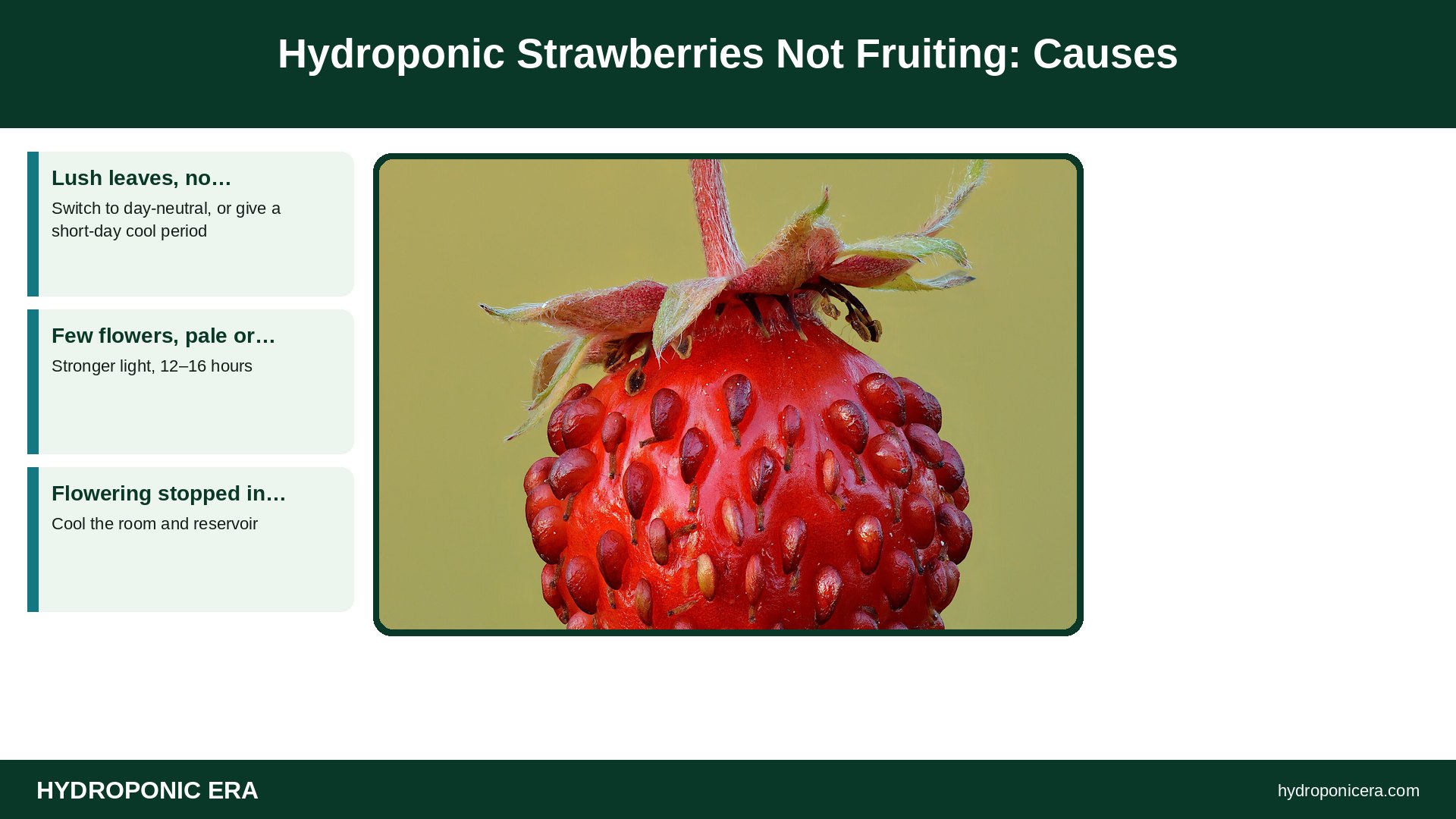
When hydroponic strawberries not fruiting is the problem, the usual causes are the wrong variety type (June-bearers waiting for short days), too little light, temperatures above about 85°F or below 50°F, young plants still establishing, too much nitrogen, poor pollination, or old, exhausted plants. Start by confirming you have a day-neutral variety, then check light (aim for a DLI around 15–20 mol/m²/day), temperature, and your nutrient balance. Most plants start flowering within 4–8 weeks of planting once conditions are right.
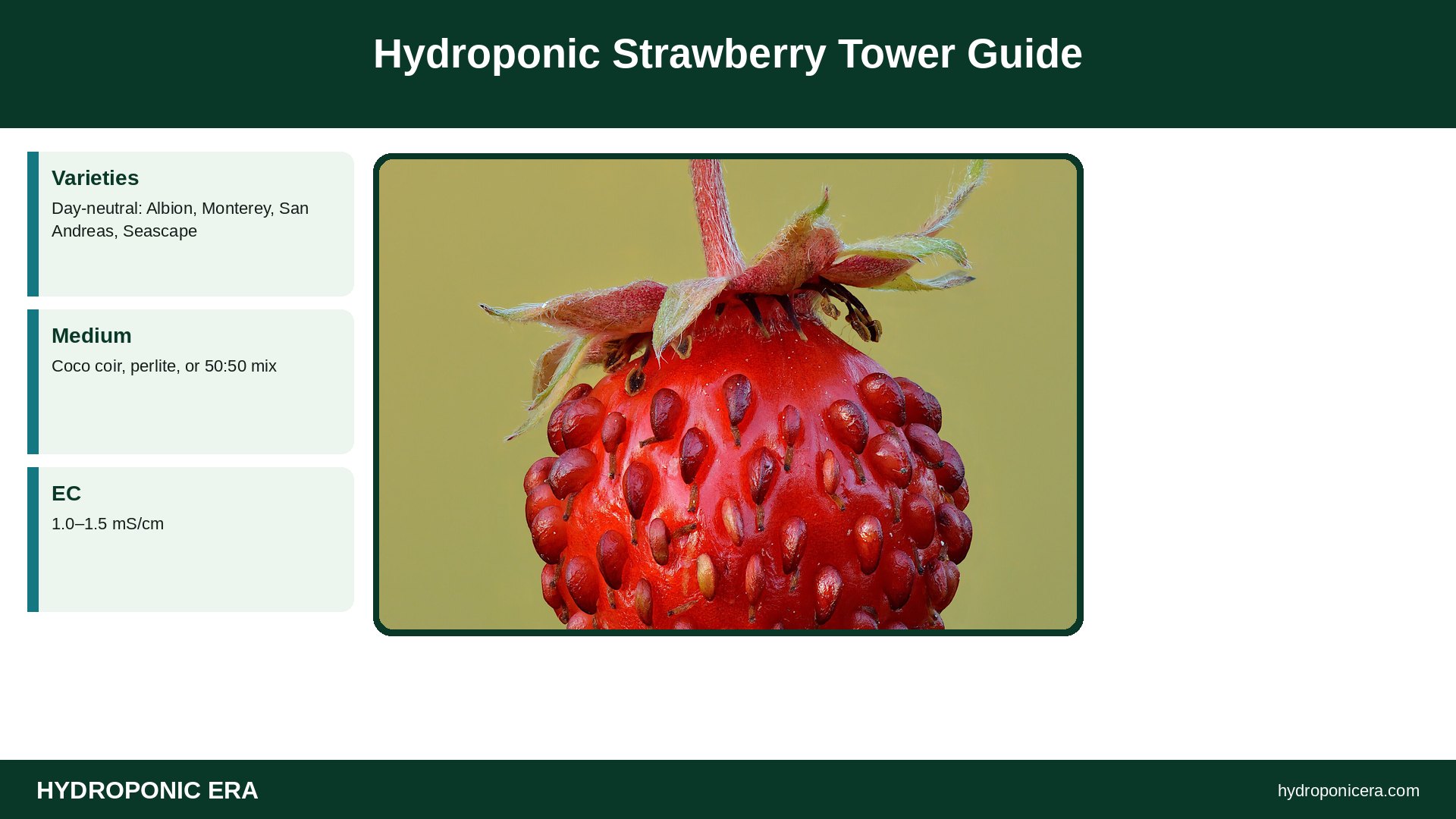
A hydroponic strawberry tower grows 20–50 plants in stacked pockets around a vertical column, with a pump lifting nutrient solution to the top so it trickles down past the roots and drains back to a reservoir. Use day-neutral varieties such as ‘Albion’ or ‘Monterey’, a light, free-draining medium like coco coir, perlite, or a coco-perlite mix in each pocket, and feed at EC 1.0–1.5 mS/cm and pH 5.5–6.2. Run the pump on a timer, give the tower strong light from all sides, and keep each plant’s crown above the medium.
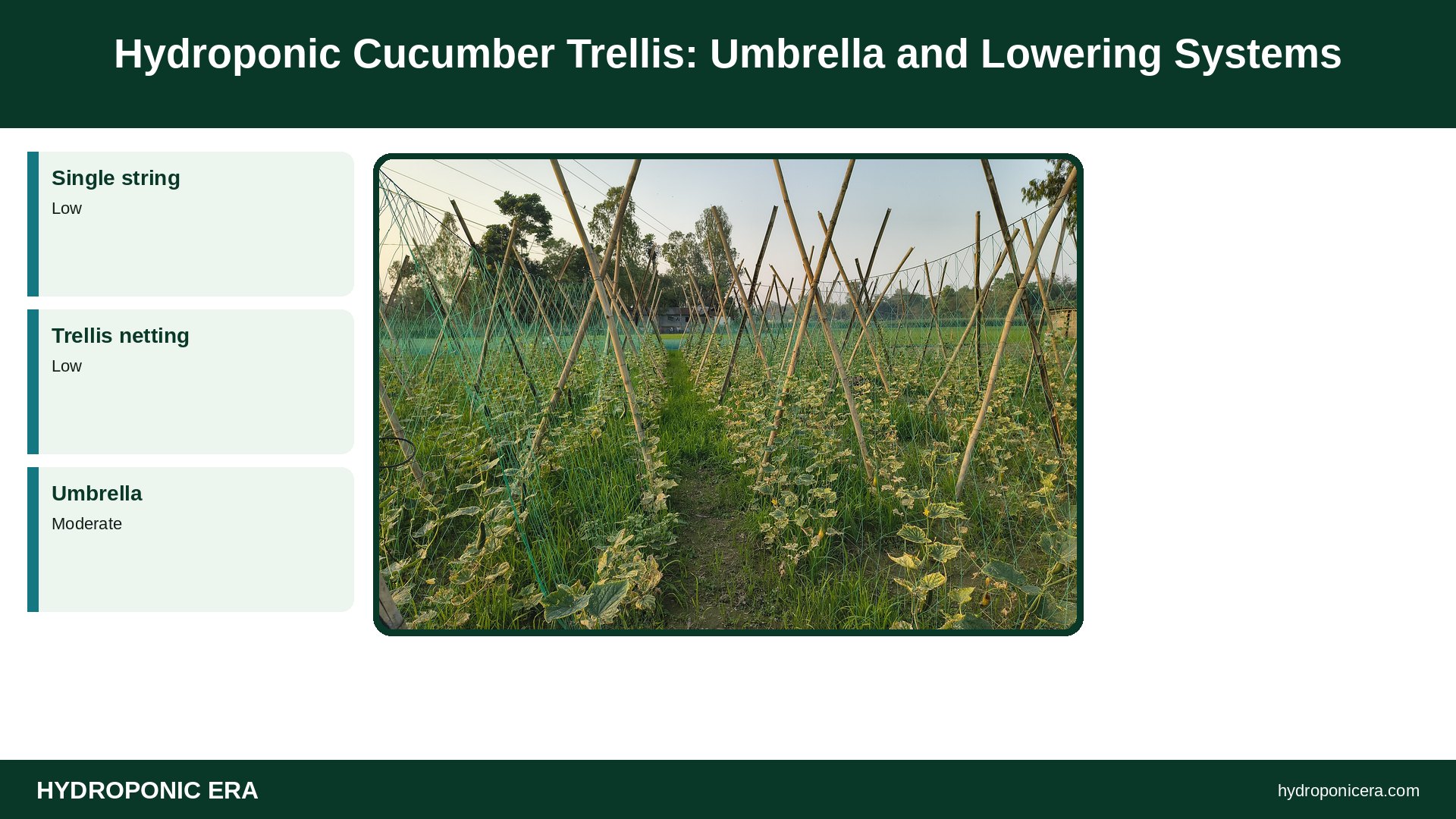
A hydroponic cucumber trellis usually means a vertical string or netting tied to a strong overhead wire 6–8 feet high, with each plant trained to a single main stem. The two common greenhouse systems are the umbrella system, where the stem is stopped at the wire and two side shoots hang down, and the lowering (high-wire) system, where the stem keeps growing and is lowered along the row. In tents and small spaces, a single string or a 6-inch-square trellis net works well for mini and Beit Alpha cucumbers.
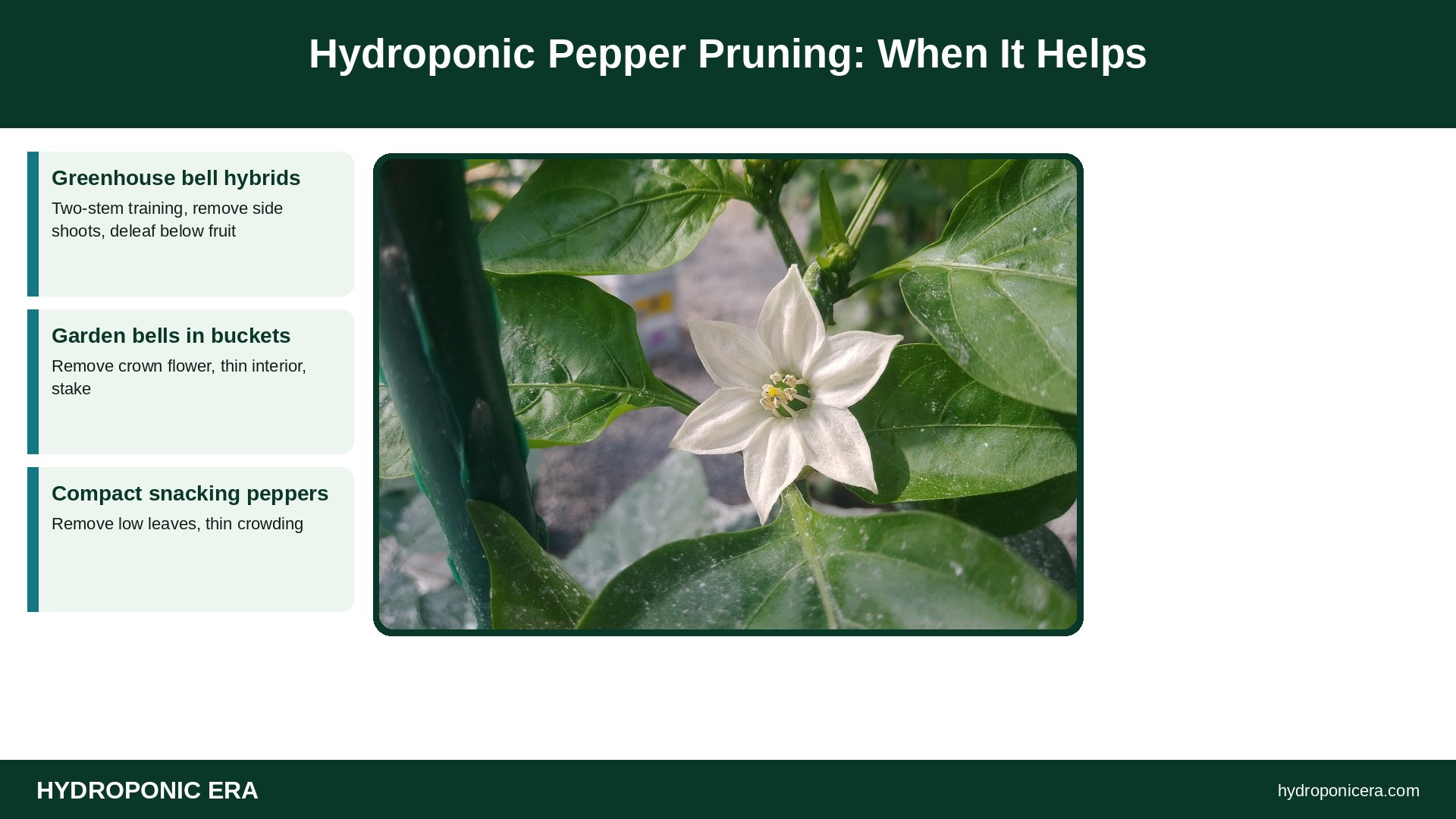
Hydroponic pepper pruning helps most with large greenhouse bell peppers and less with compact or hot varieties. For big bells, train each plant to two (sometimes three) main stems, remove side shoots and the first “crown” flower, and strip leaves below the lowest fruit. For compact sweet and hot peppers in buckets or kits, prune lightly: remove leaves that touch the water, thin crowded interior shoots for airflow, and pinch the tip of young plants once if you want a bushier shape. Over-pruning small peppers usually reduces yield.
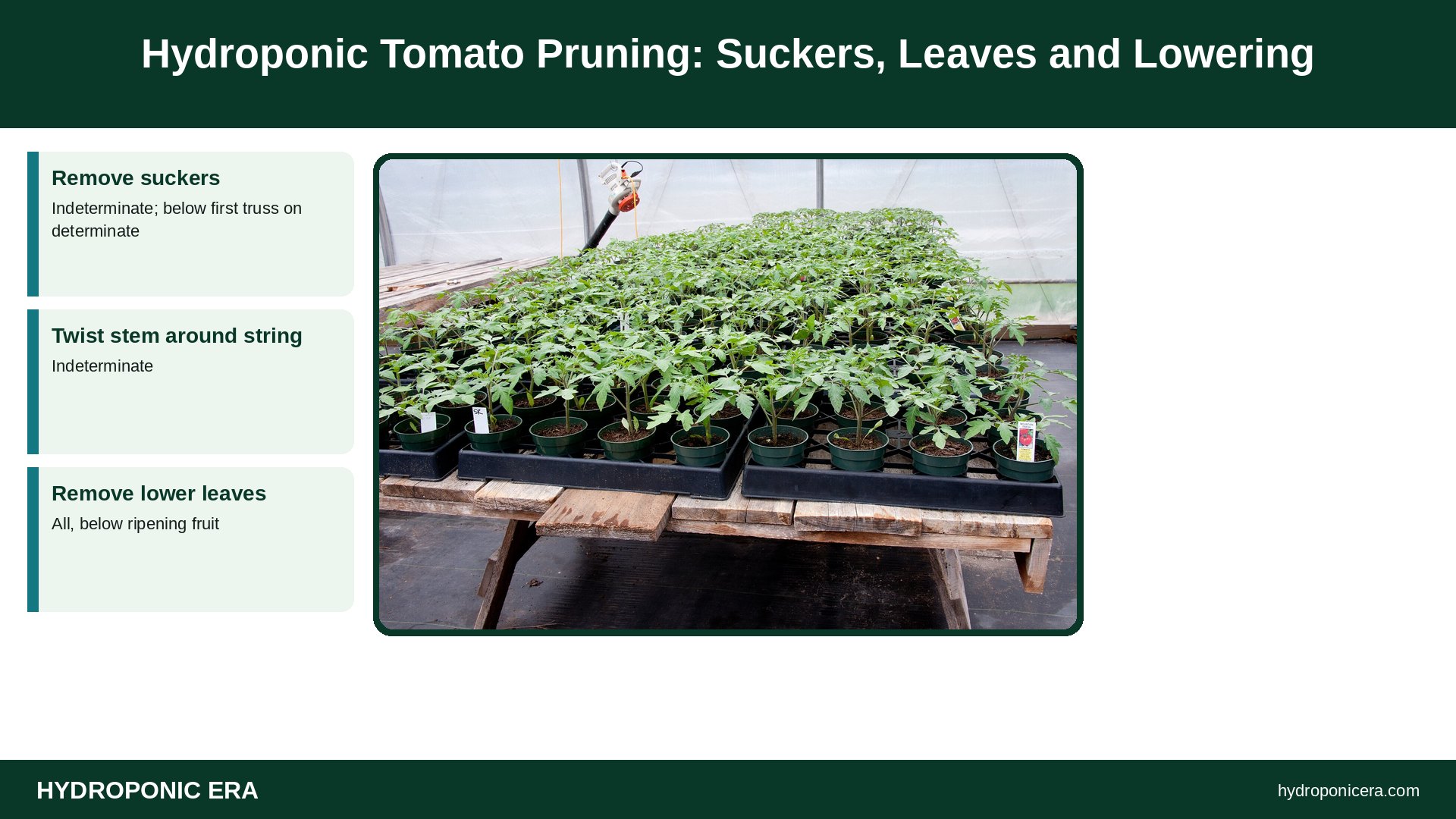
Hydroponic tomato pruning for indeterminate plants means training each plant to one (or two) main stems, snapping off side shoots (suckers) when they are 1–3 inches long, removing leaves below the lowest ripening fruit cluster, and lowering the stem along the support wire as it reaches the top. Do it once or twice a week, in the morning, with clean hands or tools. Determinate and dwarf tomatoes need much less pruning: remove only suckers below the first flower cluster and any yellow or touching-water leaves.
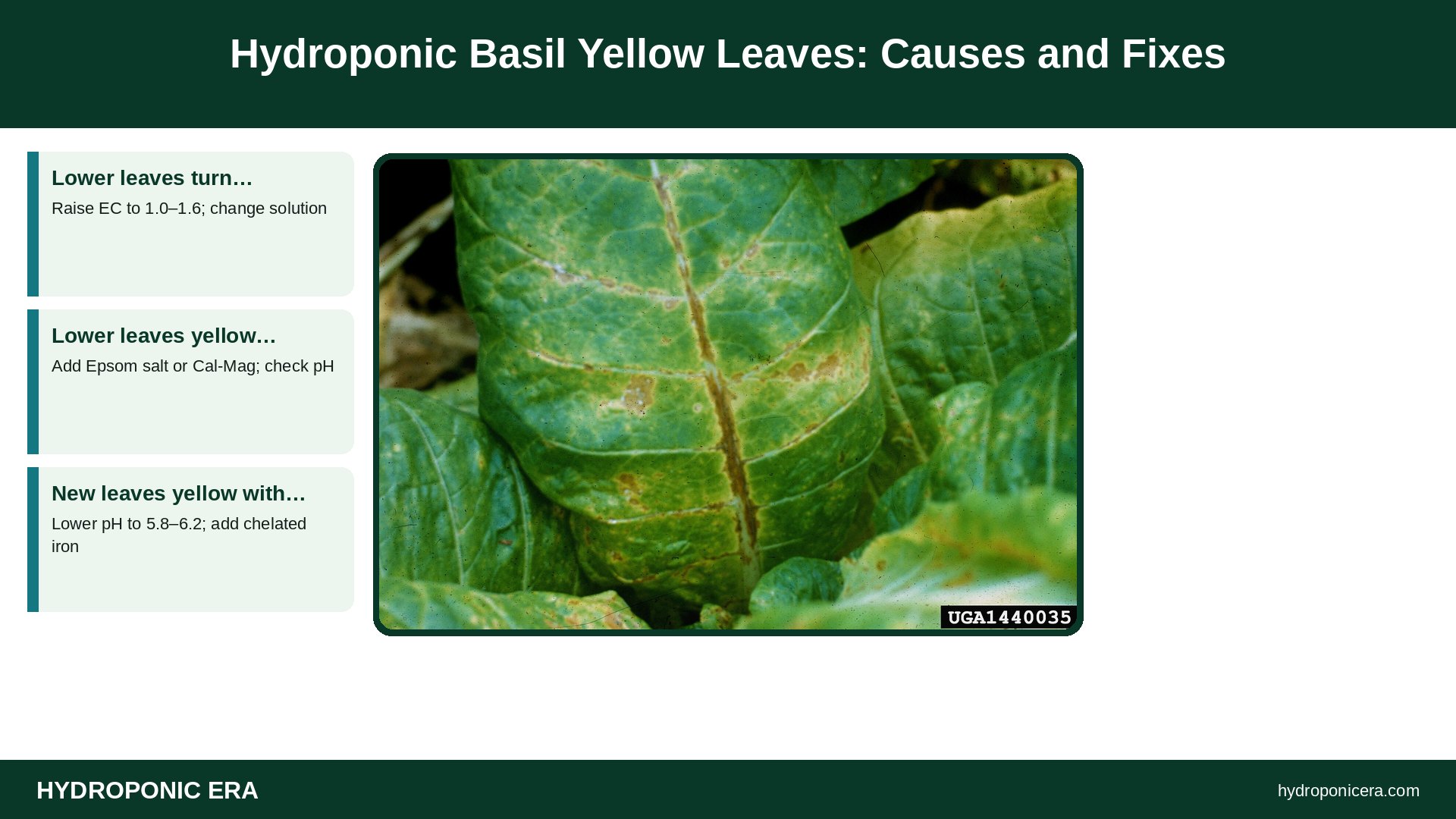
When basil yellow leaves show up in hydroponics, the most common causes are nitrogen deficiency (older, lower leaves yellow first), iron or magnesium deficiency (yellowing between veins), pH outside 5.8–6.2 locking out nutrients, root rot from warm or poorly oxygenated water, too little light, and cold damage. Start by checking pH and EC, then look at the roots: healthy basil roots are white and smell fresh. Where the yellow appears on the plant tells you which cause is most likely.
In the AeroGarden Harvest vs Bounty comparison, the big differences are grow height, pod count, and light power. The Harvest family grows 6 pods with about 12 inches of grow height (18 inches on the Harvest XL), which suits herbs and lettuce. The Bounty family grows 9 pods with up to 24 inches of grow height and a stronger light, so it can handle cherry tomatoes, peppers, and bigger herb gardens. Choose Harvest for a compact herb garden; choose Bounty if you want fruiting plants or more variety.
Pruning hydroponic basil is simple: once a plant has 3–4 pairs of true leaves and stands about 6 inches tall, cut the main stem just above the second or third leaf pair, leaving the small side shoots at that node to grow into two new stems. Repeat on each new stem every 1–2 weeks, remove flower buds as soon as they appear, and never take more than about a third of the plant at once. This turns a single tall stem into a bushy plant that keeps producing for months in DWC, NFT, Kratky, or tower systems.