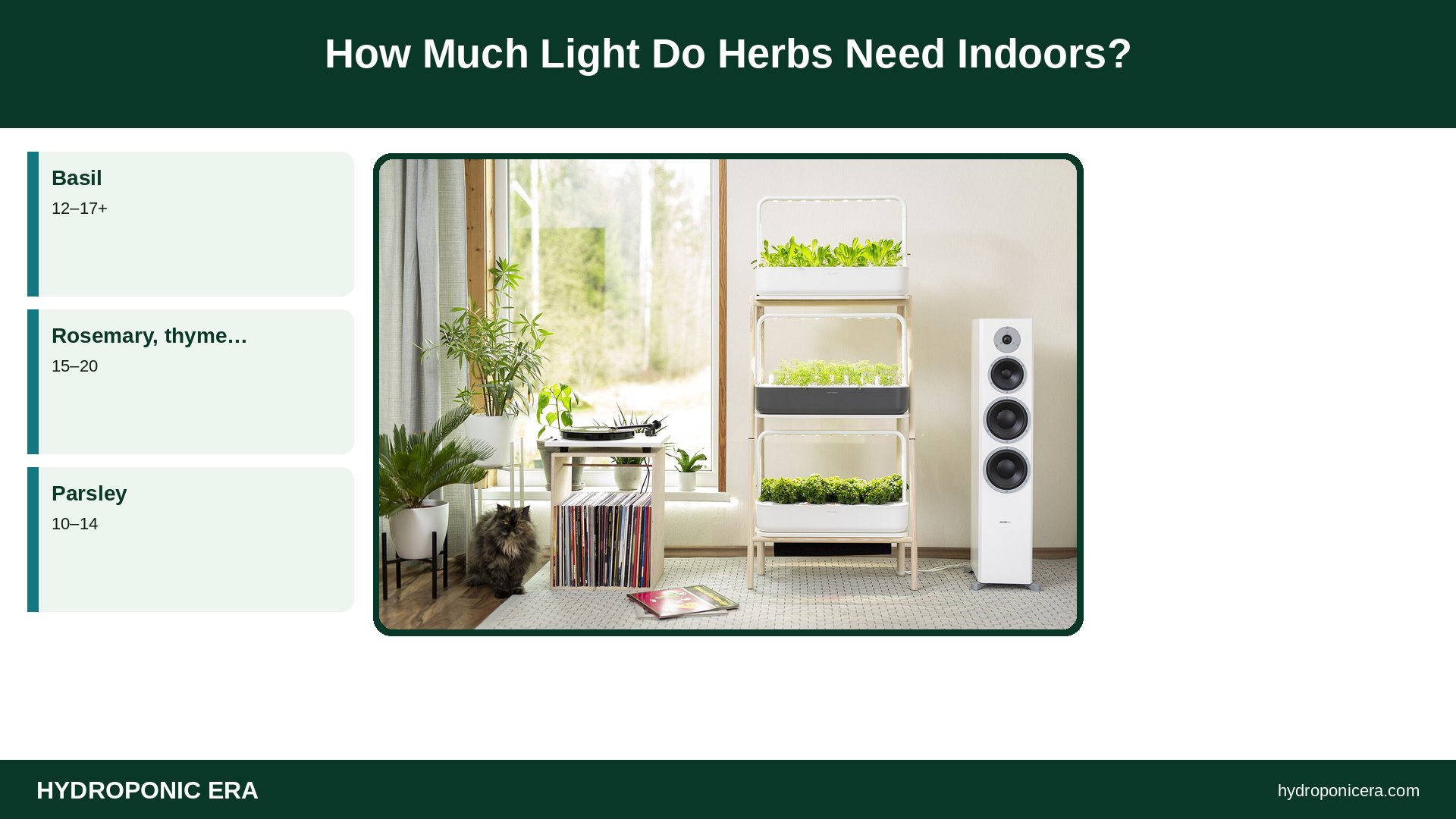
How much light do herbs need? Most culinary herbs need the equivalent of at least 6 hours of direct sun a day, which indoors means a daily light integral (DLI) of about 10–17 mol/m²/day, or roughly 200–400 µmol/m²/s of PPFD for 14–16 hours under grow lights. Basil, rosemary, thyme, oregano and sage sit at the high end; parsley, cilantro, chives, mint and dill tolerate the lower end. A south-facing window in winter rarely gives enough, so most indoor herbs grow better with an LED.
The best grow lights for hydroponic lettuce are full-spectrum white LED fixtures that deliver about 200–300 µmol/m²/s of PPFD at the canopy for 14–16 hours a day, which adds up to a daily light integral (DLI) of roughly 12–17 mol/m²/day. Cornell’s CEA lettuce program uses a target of about 17 mol/m²/day for fast greenhouse lettuce. For a 2 by 4 foot shelf, a quality LED drawing about 100–150 watts is usually enough; seedlings need only about 100–200 µmol/m²/s.
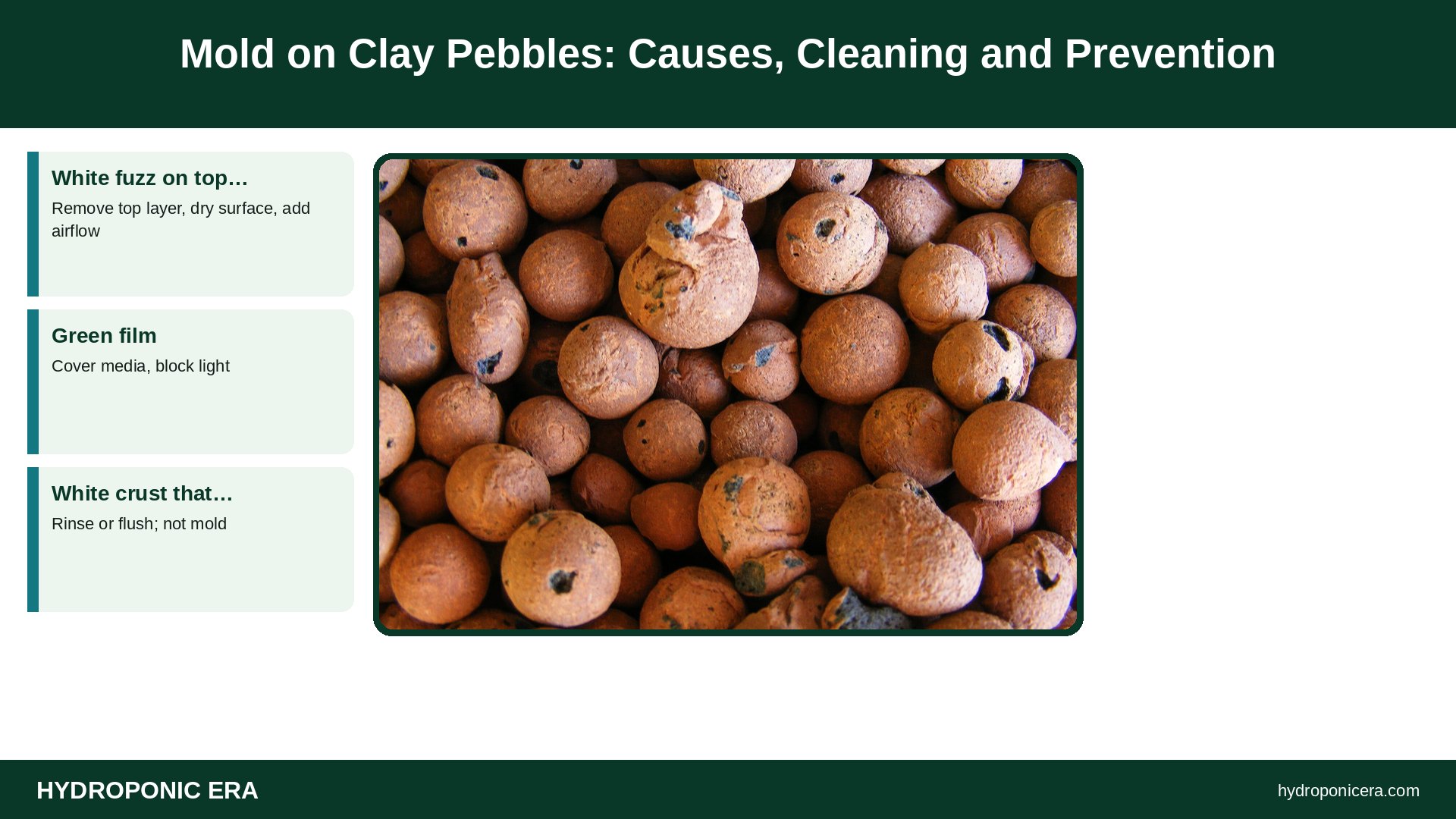
Mold on clay pebbles is usually a harmless white or gray fuzz of saprophytic fungi feeding on organic debris, algae or nutrient residue at the moist, lit surface of the media. It shows up when the top layer stays wet, gets light, and has little airflow. To fix it, scrape off or replace the affected top layer, let the surface dry between waterings, cover or shade the media from light, increase airflow, and clean the pebbles thoroughly between crops. Mold that smells bad, is slimy or comes with brown roots points to root rot, which needs a full system cleanup.
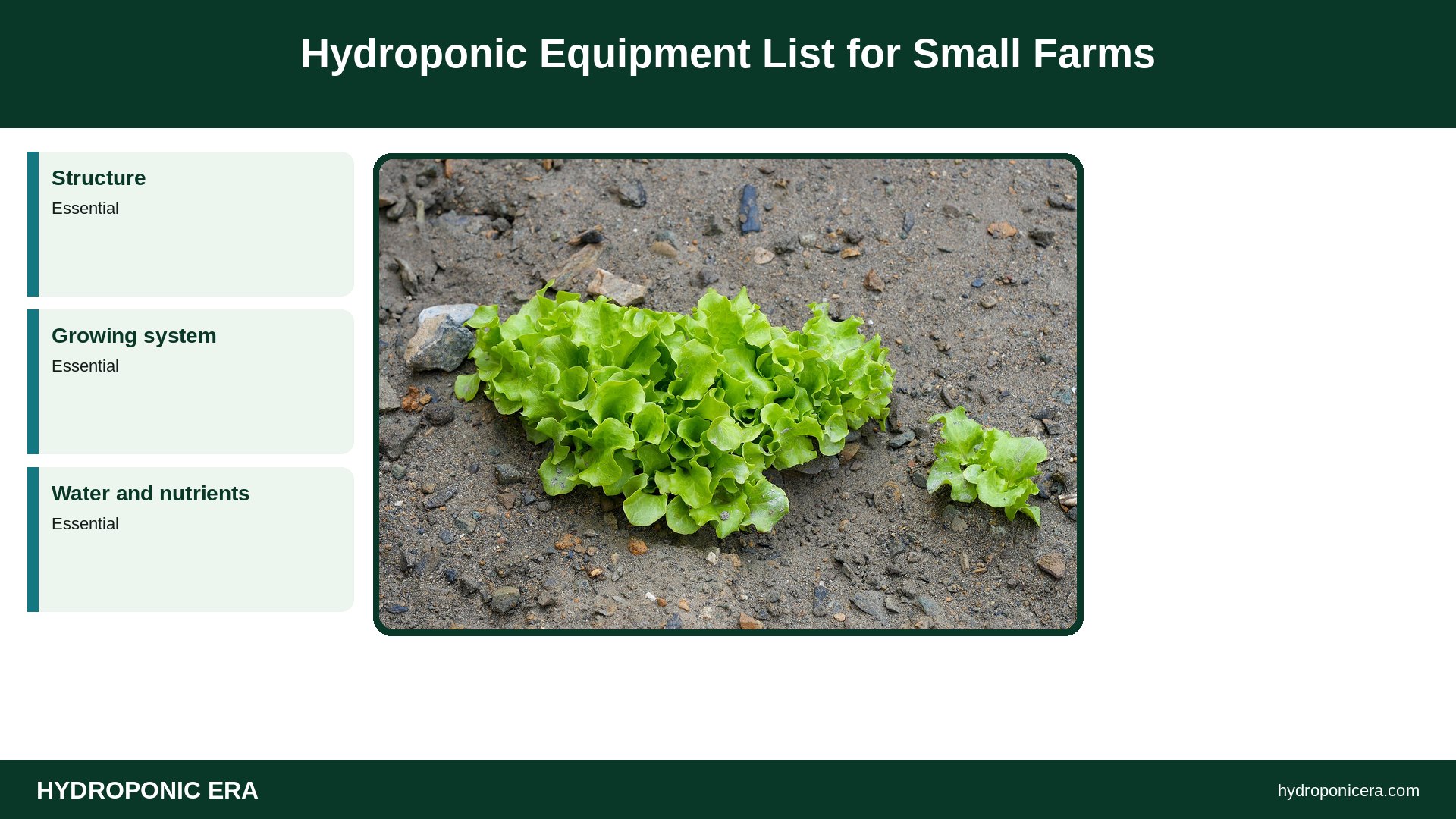
A complete hydroponic equipment list for a small farm covers seven areas: the growing structure (greenhouse, high tunnel or indoor room), the growing system (NFT channels, rafts, Dutch buckets or towers), water and nutrient handling (reservoirs, pumps, filters, injectors, meters), climate control (heating, cooling, fans, shade and controllers), lighting where needed, propagation gear, and harvest and post-harvest equipment such as a wash station, cooler and packaging. Start with the crop and market, then size each item to that plan rather than buying a kit first.
A DIY aeroponic cloner is a lidded tote with a small submersible pump that feeds a ring of misting sprayers inside, so cuttings held in foam collars hang with their stems in a fine spray of water. You can build one in an afternoon for about $40–$70 with a 10–18 gallon opaque tote, a 160–250 GPH pump, 1/2-inch PVC, 360° sprayers, and 2-inch neoprene collars. Keep the water at about 68–75°F, run the pump continuously or on a short-cycle timer, and most soft cuttings such as basil, mint, tomato and pepper root in 7–14 days.
The best raft foam board for deep water culture is rigid polystyrene about 1–2 inches thick, either extruded (XPS) or expanded (EPS) bead board, cut to fit the tank with a small gap at the edges and drilled with holes sized for your net pots. For lettuce, space holes about 6–8 inches apart; for herbs, 4–6 inches; for baby greens, 2–3 inches. Commercial growers use purpose-made polystyrene rafts, while home growers often use insulation board, which works but should be food-contact or unfaced, rinsed well and kept out of direct heat.
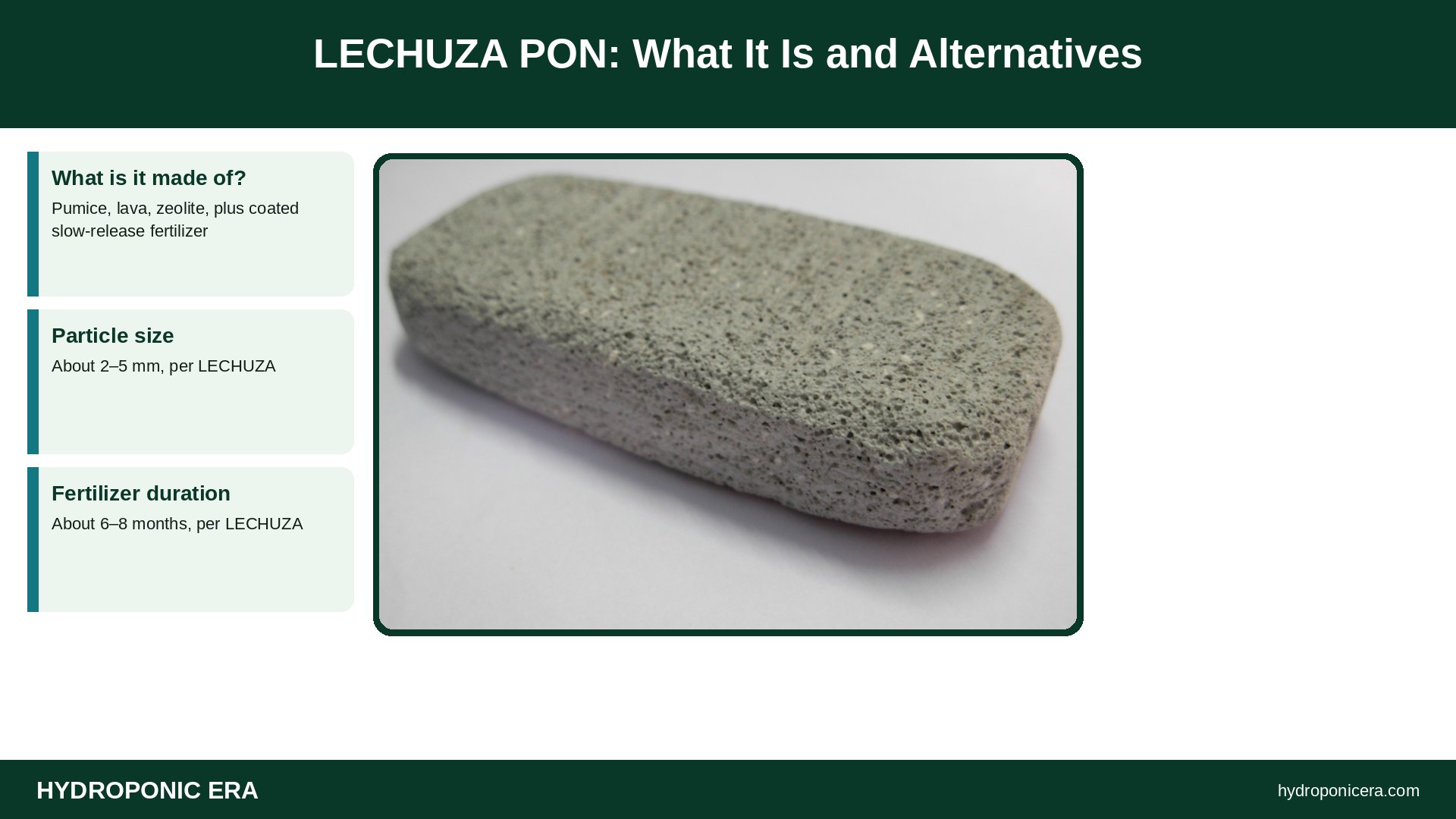
LECHUZA PON is a mineral, soil-free plant substrate made by the German planter brand LECHUZA. According to the manufacturer, it consists of pumice, lava, and zeolite with a coated slow-release fertilizer that feeds plants for roughly 6–8 months. It’s designed for LECHUZA self-watering planters but works in ordinary pots too. Popular alternatives include fertilizer-free LECHUZA BASICPON, pon-style mixes from other brands, DIY pumice-lava-zeolite blends, and LECA (clay pebbles) for semi-hydroponics.
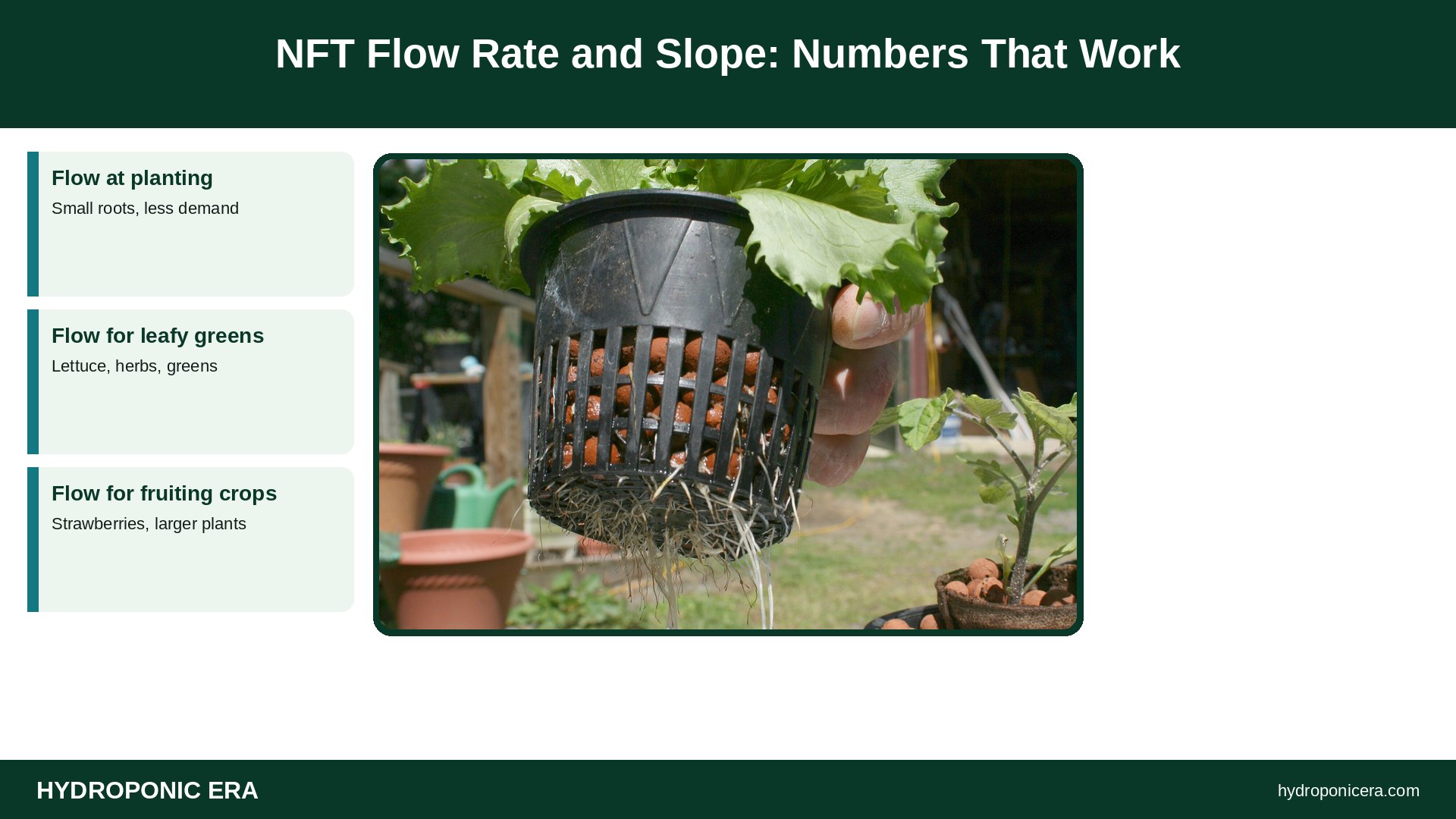
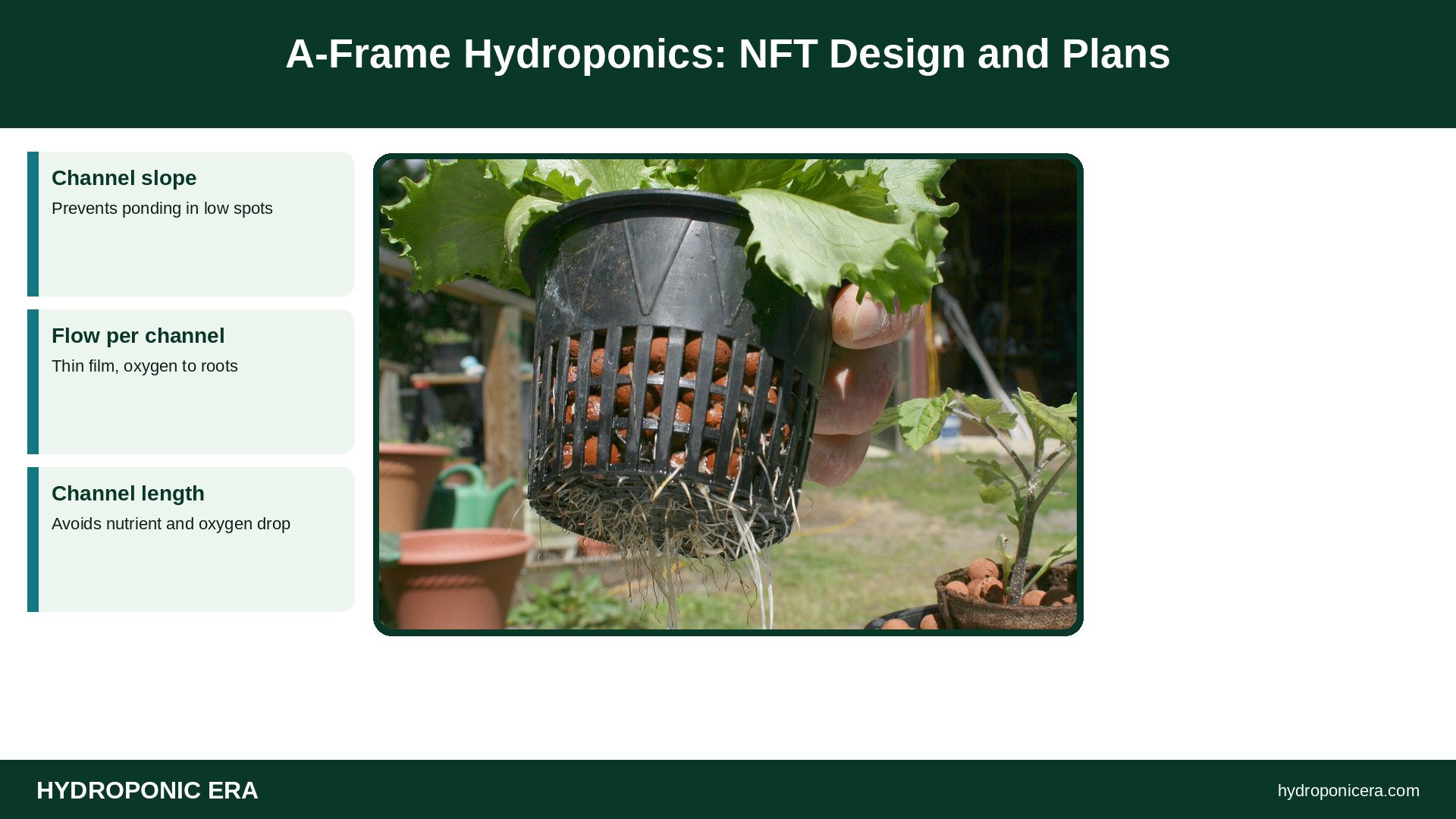
A good NFT flow rate for most home and greenhouse channels is about 0.5–1 liter per minute (roughly 8–16 gallons per hour) per channel, with the lower end for seedlings and lettuce and up to about 2 liters per minute (32 GPH) as a practical maximum for large fruiting crops. Pair that NFT flow rate with a channel slope of about 1:30 to 1:40 (2.5–3.3%) so the solution forms a thin film that never ponds, and keep channels under roughly 40 feet long.
A frame hydroponics is a space-saving form of NFT (nutrient film technique) where sloped channels are mounted on two leaning sides of a triangle-shaped frame, like a tent. A pump lifts nutrient solution to the top of each channel, a thin film runs down past the roots, and the solution drains back to a reservoir below. A frame hydroponics roughly doubles the plants you can grow per square foot of floor compared with a flat NFT table, and it works best for lettuce, leafy greens, herbs and strawberries in a greenhouse or outdoors with good sun on both faces.
Hydroponic goji berries are possible, but expect a slow, long-term project rather than a quick crop. Goji (Lycium barbarum) is a woody, spiny shrub that grows best in a large container of free-draining substrate such as coco coir with perlite, fed by drip at a moderate EC around 1.0–1.8 mS/cm and pH near 6.5–7.0, under full sun or very strong light. Plants typically start fruiting in their second year and reach full production in years 3–5, according to extension guides. Water-only systems like DWC are a poor fit.