
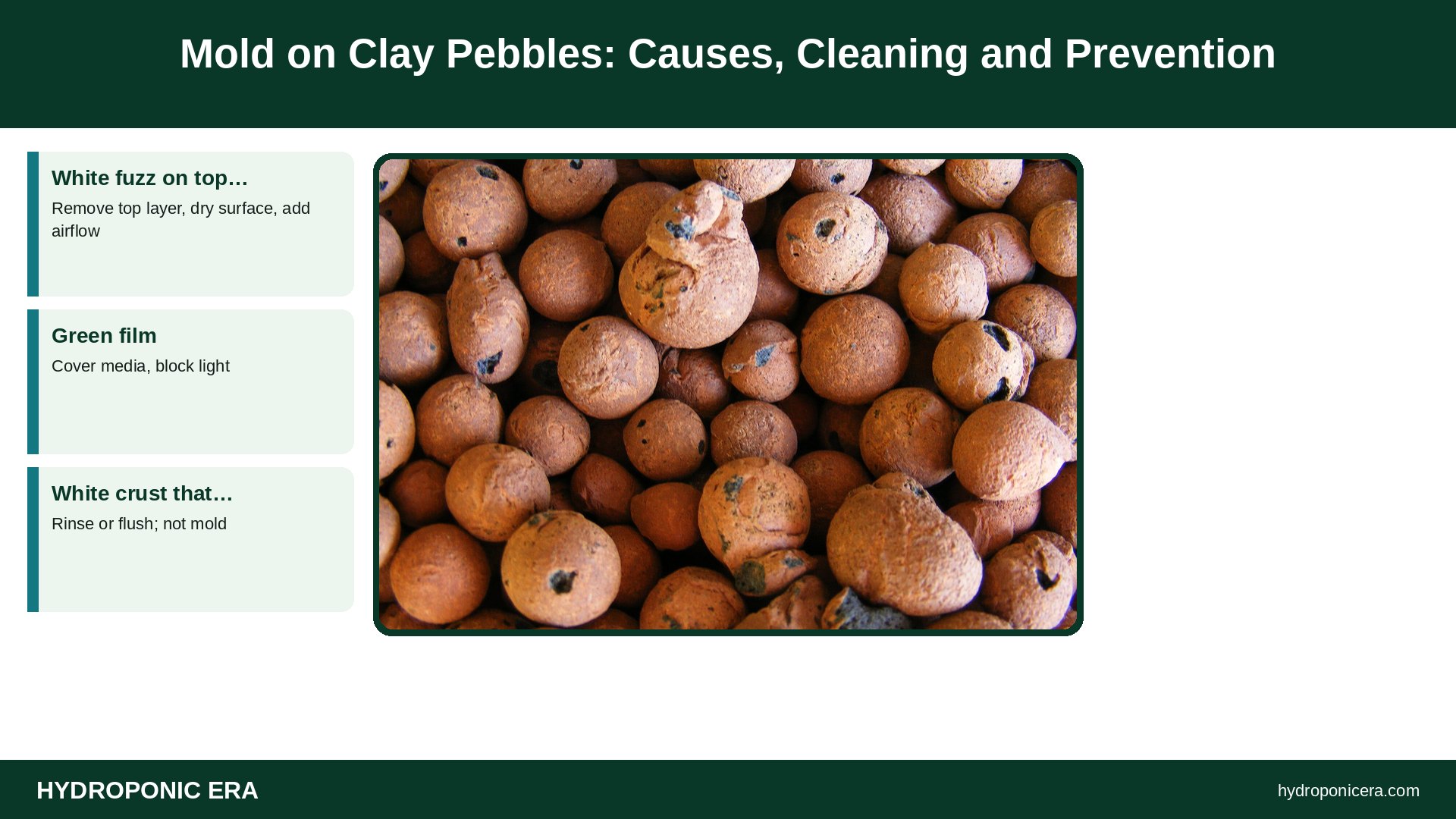
Mold on clay pebbles is usually a harmless white or gray fuzz of saprophytic fungi feeding on organic debris, algae or nutrient residue at the moist, lit surface of the media. It shows up when the top layer stays wet, gets light, and has little airflow. To fix it, scrape off or replace the affected top layer, let the surface dry between waterings, cover or shade the media from light, increase airflow, and clean the pebbles thoroughly between crops. Mold that smells bad, is slimy or comes with brown roots points to root rot, which needs a full system cleanup.
Key takeaway: Fuzz on top of the pebbles is a surface moisture problem. Brown, slimy roots and a sour smell are a root zone problem. Treat them differently.
| What you see | Likely cause | What to do |
|---|---|---|
| White fuzz on top pebbles | Saprophytic mold, wet surface | Remove top layer, dry surface, add airflow |
| Green film | Algae from light | Cover media, block light |
| White crust that crumbles | Mineral or nutrient salt buildup | Rinse or flush; not mold |
| Black or dark gray spots | Mold on dead roots or debris | Remove debris, clean pebbles |
| Slime and sour smell | Bacteria, root rot | Clean system, check roots |
Why Mold on Clay Pebbles Happens
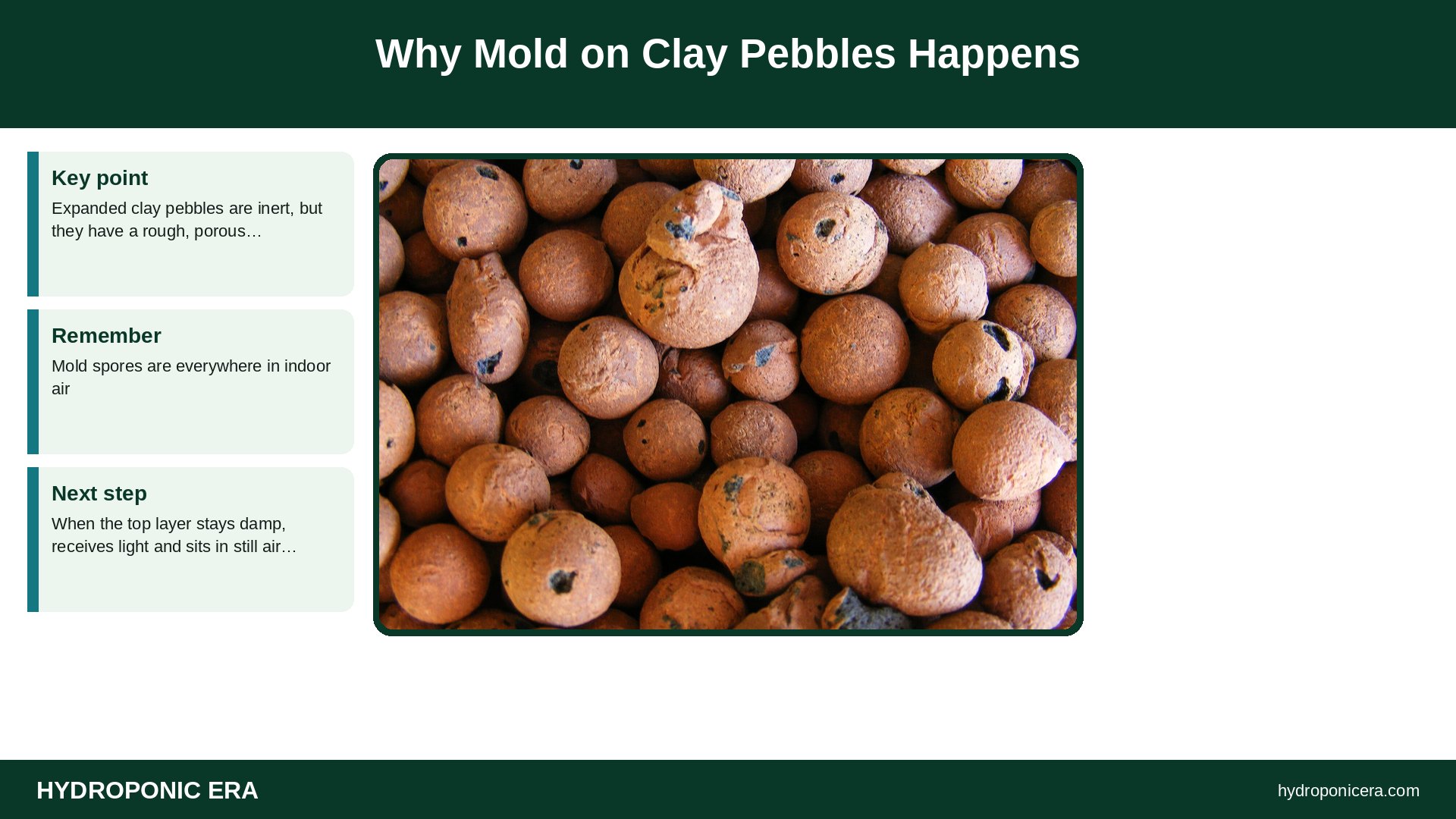
Expanded clay pebbles are inert, but they have a rough, porous surface that holds water and traps dust, root hairs, algae and dried nutrient salts. Mold spores are everywhere in indoor air. When the top layer stays damp, receives light and sits in still air, those spores have everything they need. Systems that drip or flood to the top of the media, such as ebb and flow, drip and Dutch buckets, are most prone. See clay pebbles (Hydroton).
Is Mold on Clay Pebbles Dangerous?
Most surface mold is not a plant pathogen. It feeds on dead organic matter and doesn’t attack healthy roots. But it signals conditions that also suit harmful organisms, including damping-off fungi and water molds such as Pythium. Colorado State University Extension notes that root diseases in hydroponics are favored by warm solution, low oxygen and poor sanitation. If plants look healthy and roots are white, surface mold is a cosmetic and hygiene issue; if roots are brown or plants wilt, act fast.
Mold vs Salt Buildup
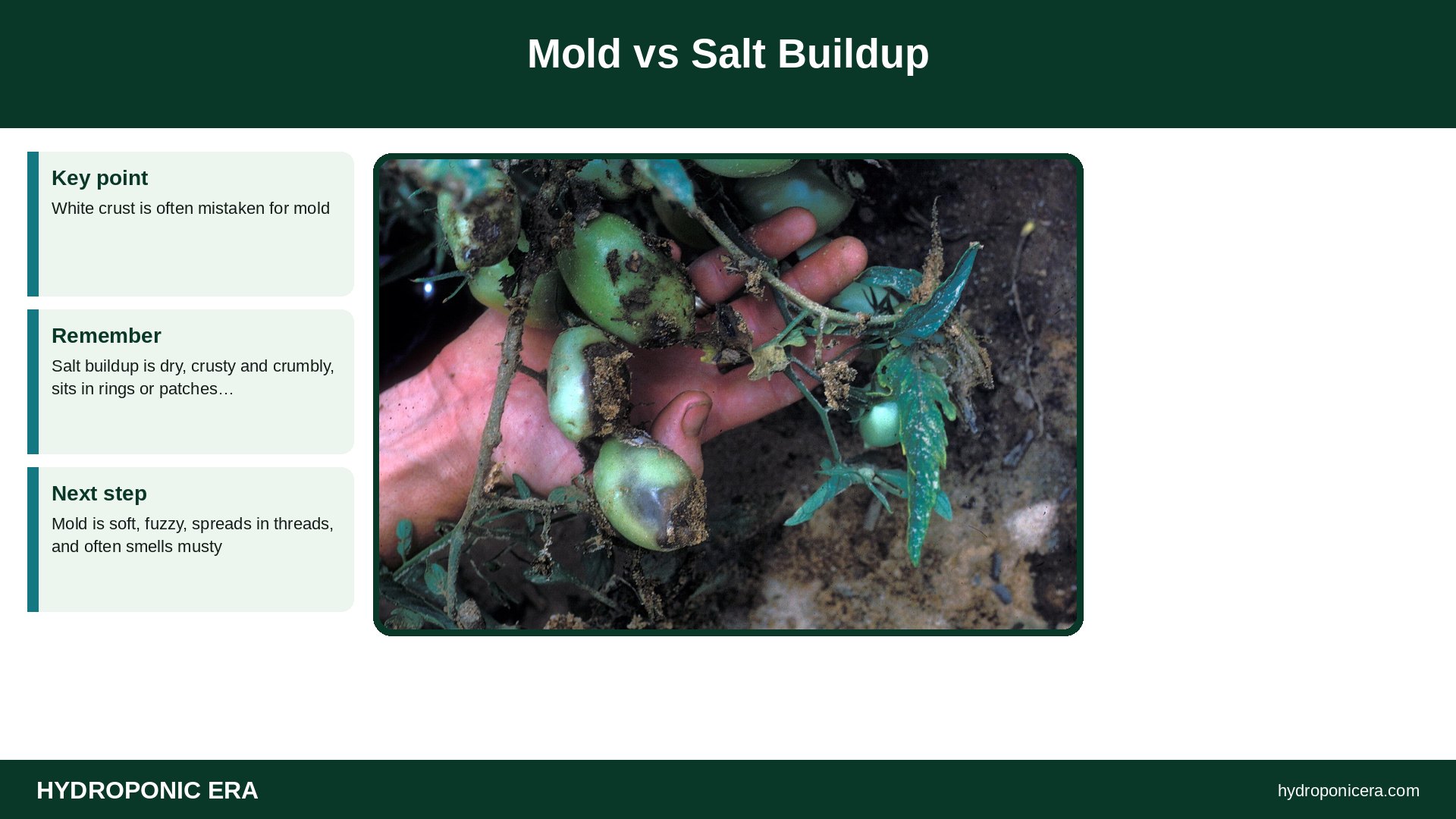
White crust is often mistaken for mold. Salt buildup is dry, crusty and crumbly, sits in rings or patches where water evaporates, and dissolves when you rinse with water. Mold is soft, fuzzy, spreads in threads, and often smells musty. Rub a pebble between your fingers: grit means salt, fluff means mold. See salt crust on media and white fuzz on roots.
How to Remove Mold on Clay Pebbles
- Scoop out the top 1–2 inches of affected pebbles, working gently around stems.
- Replace them with clean, rinsed pebbles, or leave the top layer drier.
- Wipe the edges of the pot or bucket where mold grows.
- Check roots. White and firm is fine; brown and slimy needs treatment.
- Increase airflow over the surface with a small fan.
- Reduce how often water reaches the very top layer.
Preventing Mold on Clay Pebbles
- Rinse new pebbles before first use to remove dust. See media pre-rinse.
- Let the top dry: set drippers or flood height so the top inch stays drier.
- Block light: use opaque pots, lids, or a top layer of dry pebbles.
- Add airflow: a gentle fan across the canopy. See airflow and fans.
- Control humidity: keep relative humidity around 50–70% for most crops.
- Remove debris: pick up dead leaves and roots from the surface.
- Keep the solution clean and cool, around 65–72°F.
Cleaning Clay Pebbles Between Crops
Reusing pebbles saves money, but they must be cleaned well.
- Shake out old roots and soak pebbles in water to loosen debris.
- Scrub or tumble them in a bucket, then rinse until the water runs clear.
- Soak in a dilute disinfectant, such as a weak bleach solution or hydrogen peroxide, following label rates.
- Rinse thoroughly with clean water.
- Dry completely in the sun or a warm spot before storage.
See cleaning and sterilizing, bleach in hydroponics and hydrogen peroxide.
When to Throw Pebbles Away

Discard pebbles that held a crop with confirmed root rot or virus if you can’t sanitize them well, and pebbles that have crumbled into fine bits. Fines clog drippers and hold too much water, which brings mold back. Pebbles are cheap compared with a lost crop.
Mold on Clay Pebbles in Semi-Hydro Houseplants
In LECA-grown houseplants, mold is common when the water reservoir is too high or the pot sits in a dim, still corner. Keep the water level at about a quarter to a third of the pot height, flush monthly, and give the plant brighter light. See semi-hydroponics with LECA.
Related Pests
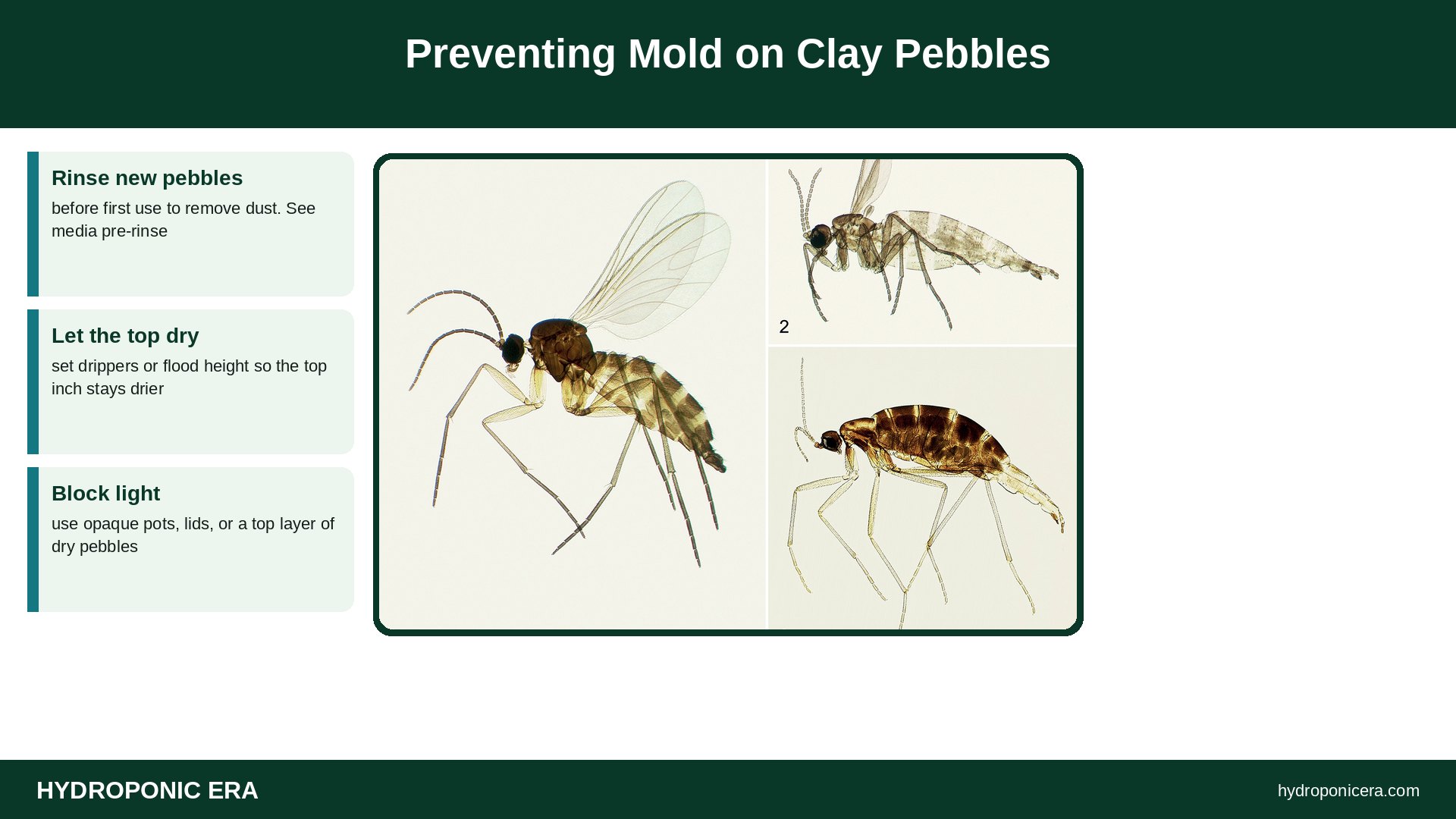
Damp, moldy media attracts fungus gnats and springtails. Both are signs of excess surface moisture. See fungus gnats and springtails.
Mold on Clay Pebbles by System Type
Ebb and flow: the whole bed floods several times a day, so the top layer rarely dries. Lower the flood height so water stops about an inch below the surface, and shorten or space out flood cycles in cool weather. See flood and drain timing.
Drip and Dutch buckets: emitters wet the same small spot over and over, which is where mold on clay pebbles usually starts. Move emitters closer to the stem and under the top layer, or add a few dry pebbles on top as a mulch.
Net pots in DWC or Kratky: pebbles stay wet from wicking and humidity under the lid. Use a thin layer of pebbles, keep the lid closed to block light, and leave an air gap between the water and the bottom of the pot.
Aquaponics media beds: some fungal growth is normal on fish waste solids. Keep solids filtered and worms in the bed to break down debris. See aquaponics media beds.
Seedlings and Mold on Clay Pebbles
Young seedlings are most at risk, because damping-off fungi thrive in the same warm, wet, still conditions as surface mold. Start seeds in plugs, transplant them into pebbles once roots show, and keep the top of the pot drier for the first week. Water from below if you can. If seedlings collapse at the soil line, remove them and clean the area. See damping-off in seedlings.
A Weekly Check
Once a week, look at the top of each pot, smell the media, lift one plant to check the roots, and wipe the rims. Catching mold on clay pebbles early means you only replace a handful of pebbles instead of the whole bed.
FAQs
Is white mold on clay pebbles harmful?
Usually not to healthy plants, but it signals excess moisture.
How do I tell mold from salt?
Salt is crusty and dissolves in water; mold is fuzzy and spreads.
Can I reuse moldy pebbles?
Yes, after scrubbing, disinfecting, rinsing and drying.
Does hydrogen peroxide kill mold on pebbles?
It helps as part of cleaning; follow label rates and rinse.
Why does mold keep coming back?
The top layer is too wet, lit or still. Fix moisture and airflow.
Should I worry about green film?
That’s algae from light; block light to the media.
Sources
- Colorado State University Extension — Root Disease Problems and Management in Hydroponic Systems
- UConn Integrated Pest Management — Damping-off of Ornamental and Vegetable Seedlings
- UConn Greenhouse IPM — Springtails in the Greenhouse
- Photo credits (Wikimedia Commons, edited with titles): Hydroton by Lucis (CC BY-SA 3.0); Hydroton by Lucis (CC BY-SA 3.0); Tomaten Rhizoctonia damping-off, blight and rot (Rhizoctonia solani), J.G.Kühn by University of Georgia Plant Pathology , University of Georgia, Bugwood.org J.G. (CC BY 3.0); Sciaridae (10.3897-zookeys.957.46528) Figures 1–3 by Menzel F, Gammelmo Ø, Olsen KM, Köhler A (2020) The Black Fungus Gnats (Diptera, (CC BY 4.0); Springtails eating Amanita muscaria – Ecola State Park by Casey Helton (CC BY-SA 4.0)