A hydroponic shelving system is a rack, usually a steel wire shelving unit, fitted with grow lights under each shelf and a small hydroponic setup on each level. A standard 48 × 18 inch wire rack with three or four tiers can hold several Kratky tubs, an ebb and flow tray, or short NFT channels, turning a few square feet of floor into a productive vertical garden for lettuce, herbs, microgreens, and seedlings. The keys are weight capacity, shelf spacing, light coverage, and keeping water away from electrical connections.
Mason jar hydroponics is the simplest way to grow herbs or a single lettuce head without a pump: fill a quart or half-gallon jar with nutrient solution, set a 2- or 3-inch net pot in the mouth so the roots touch the liquid, and block light from the glass. This is the Kratky (non-circulating) method developed at the University of Hawaii. As the plant drinks, the water level drops and an air gap forms, so roots get oxygen without an air stone. A quart jar grows one basil, mint, or leaf lettuce plant to harvest with one or two top-ups.
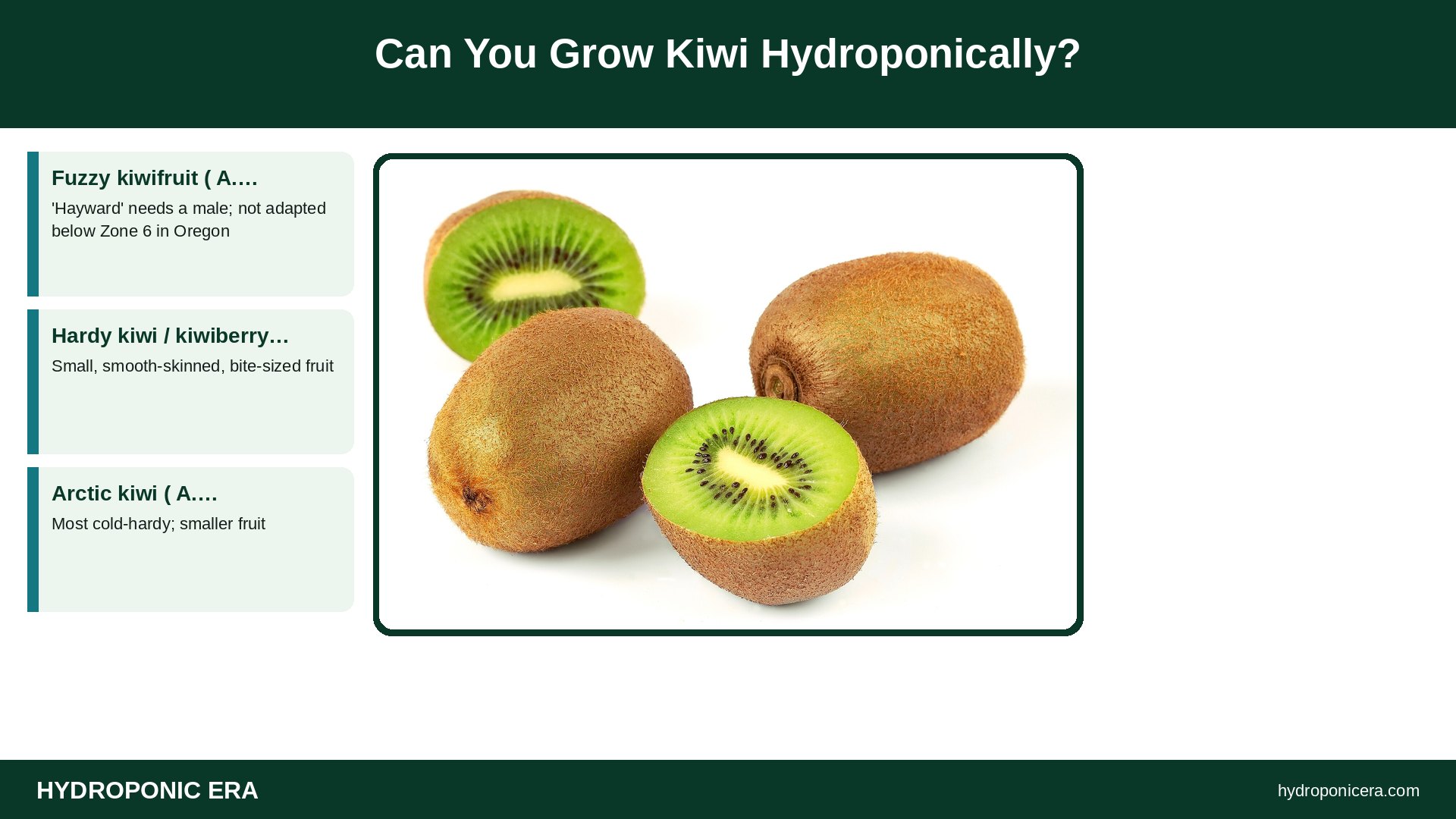
Kiwi hydroponics is possible in principle but rarely practical: kiwi vines are large, long-lived, need a sturdy trellis, and most need separate male and female plants. Oregon State University Extension explains that kiwifruit plants are dioecious, with male and female vines, that males don’t fruit but are needed to pollinate females, and that you should plant a male and female of the same species. OSU adds that nurseries sometimes mislabel plants, so you may not know until bloom. If you try, use a self-fruitful hardy kiwi in a large drip-fed container with a strong trellis, and plan for a winter rest.
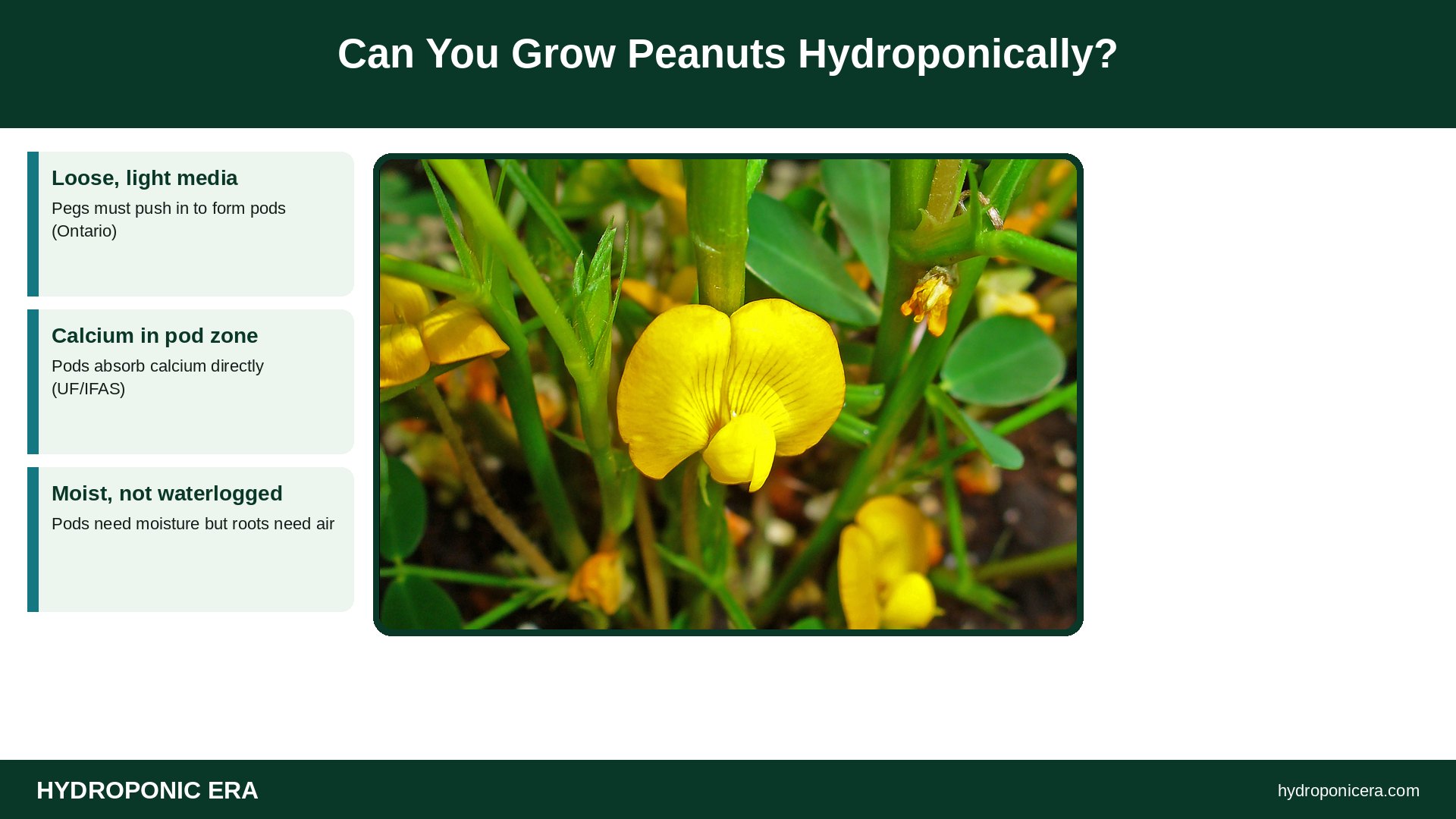
Peanuts hydroponics is mostly an experiment, because peanuts form their pods underground. After a flower is pollinated, a stalk called a peg grows down into the soil, then the tip swells into a pod, a process described in Ontario’s peanut production guide. A pure water system gives pegs nothing to push into. UF/IFAS also explains that developing pods absorb calcium directly from the soil around them, not just through the roots. If you try it, grow plants in a deep tray of loose, moist media like coarse sand, perlite, or coco so pegs can enter and pods can form, and add calcium to the pegging zone.
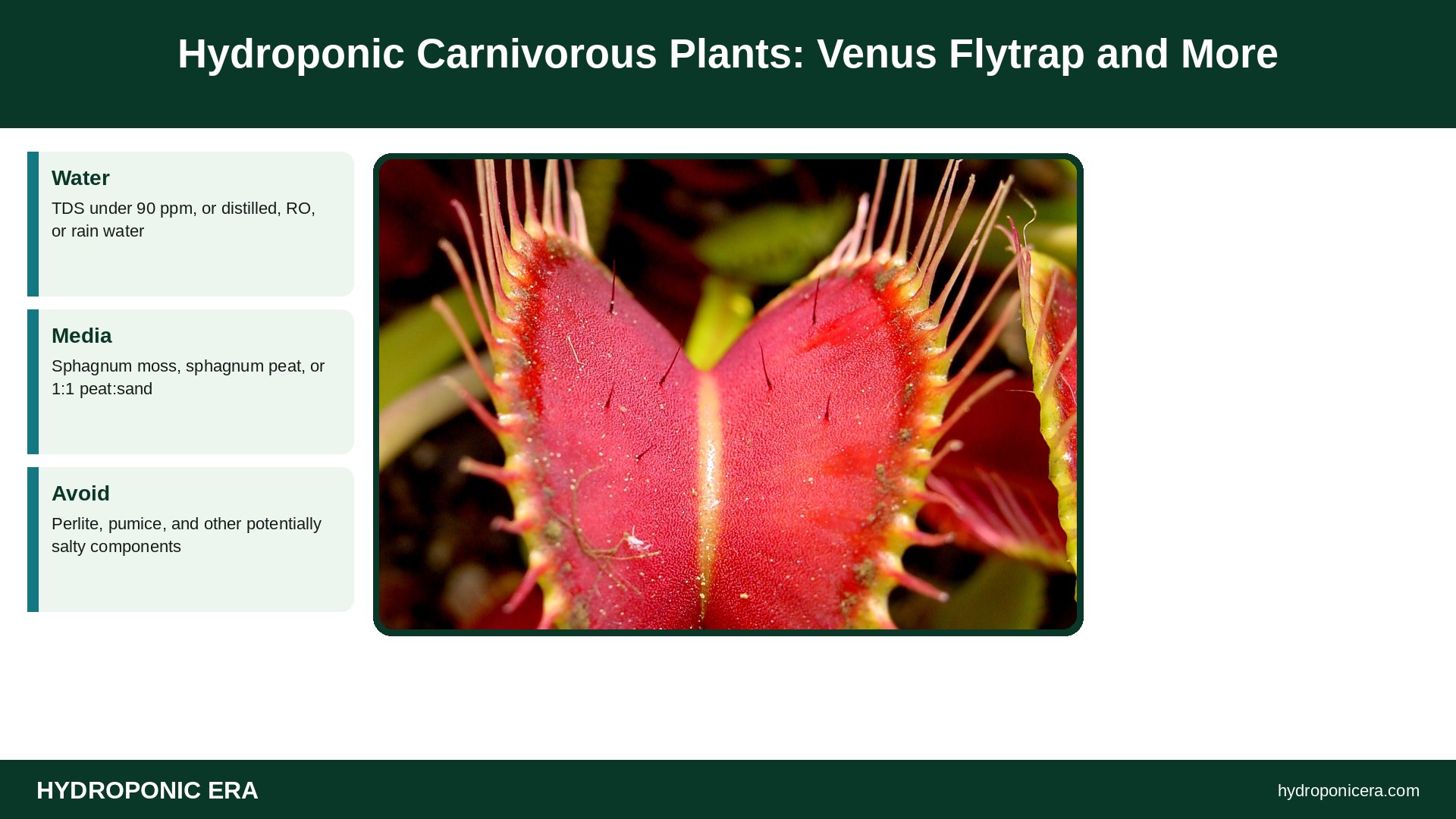
Hydroponic carnivorous plants need a different approach from almost every other hydroponic crop: they should not get nutrient solution. Venus flytraps, pitcher plants, and sundews evolved in poor, wet soils and get extra nutrients from insects. The International Carnivorous Plant Society says to use water with total dissolved solids below about 90 ppm, or distilled, reverse osmosis, or clean rain water, and warns not to fertilize flytraps unless you’re prepared to lose them. The workable “hydroponic” method is the tray method: plants in low-nutrient media, sitting in a shallow tray of pure water.
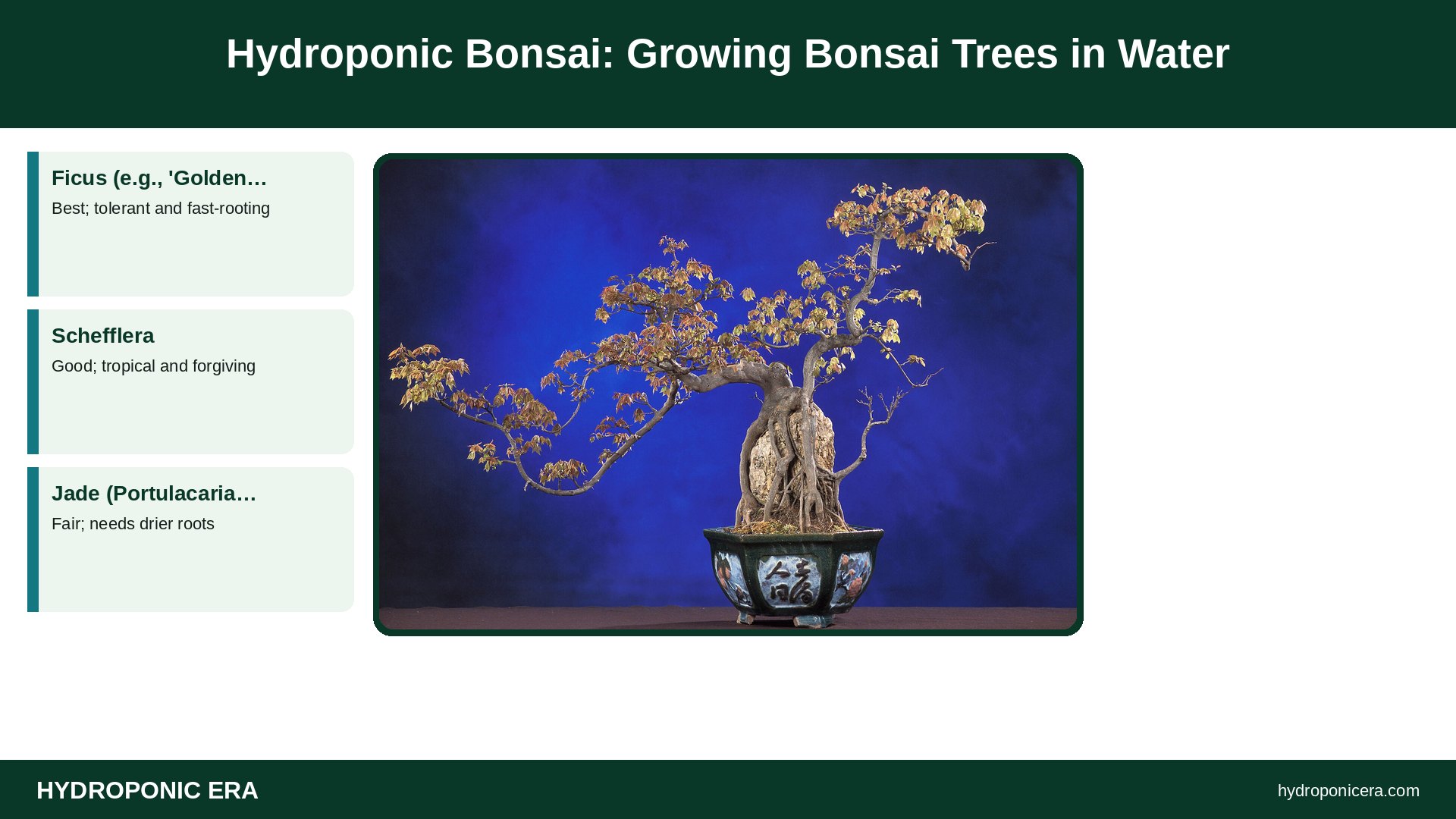
Hydroponic bonsai usually means a tropical bonsai, most often a ficus, grown in an inert, free-draining medium such as LECA (clay pebbles), lava rock, or pumice with a weak nutrient solution, a method often called semi-hydroponics. It’s uncommon in traditional bonsai, which relies on fast-draining soil mixes, but ficus adapts well. NC State Extension describes ‘Golden Gate’ ficus as one of the best bonsai for indoor use, preferring bright, indirect light, warm temperatures of 65–80°F, moist but never soggy roots, and extra humidity from a pebble tray. Temperate bonsai like junipers need outdoor winter dormancy and aren’t suited to indoor hydroponics.
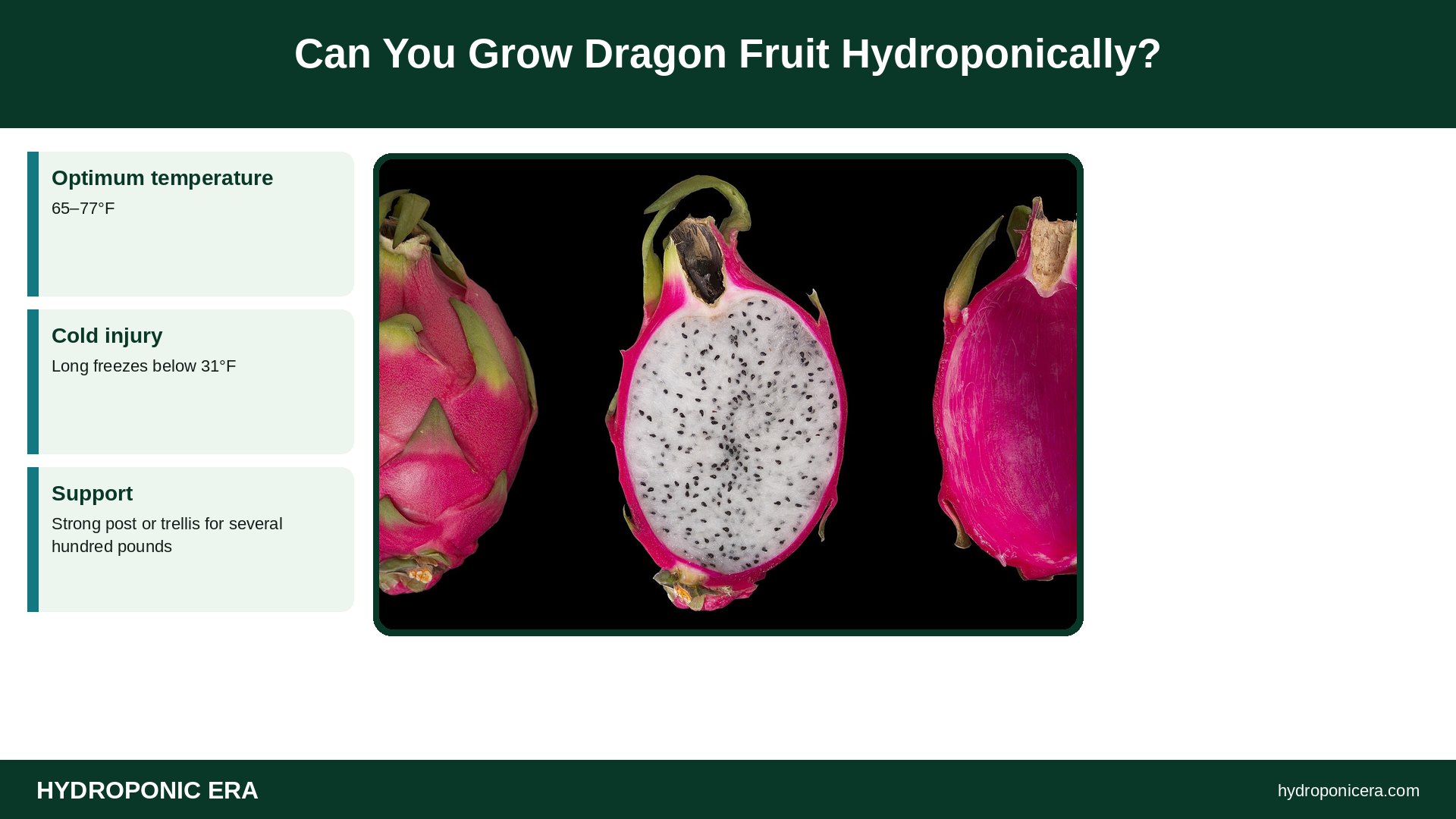
Dragon fruit hydroponics is possible but unusual: dragon fruit (pitaya) is a climbing cactus that needs a strong support, warmth, and well-drained roots. UF/IFAS gives 65–77°F as the estimated optimum growing temperature, notes plants can be injured by long freezes below 31°F, and says a mature plant can weigh several hundred pounds on its trellis. UF also notes cuttings grow fast and many fruit within 6–9 months, and that some varieties are self-incompatible, so planting two or three different types helps fruit set. For hydroponics, use a large drip-fed container of coarse, fast-draining media with a sturdy post.
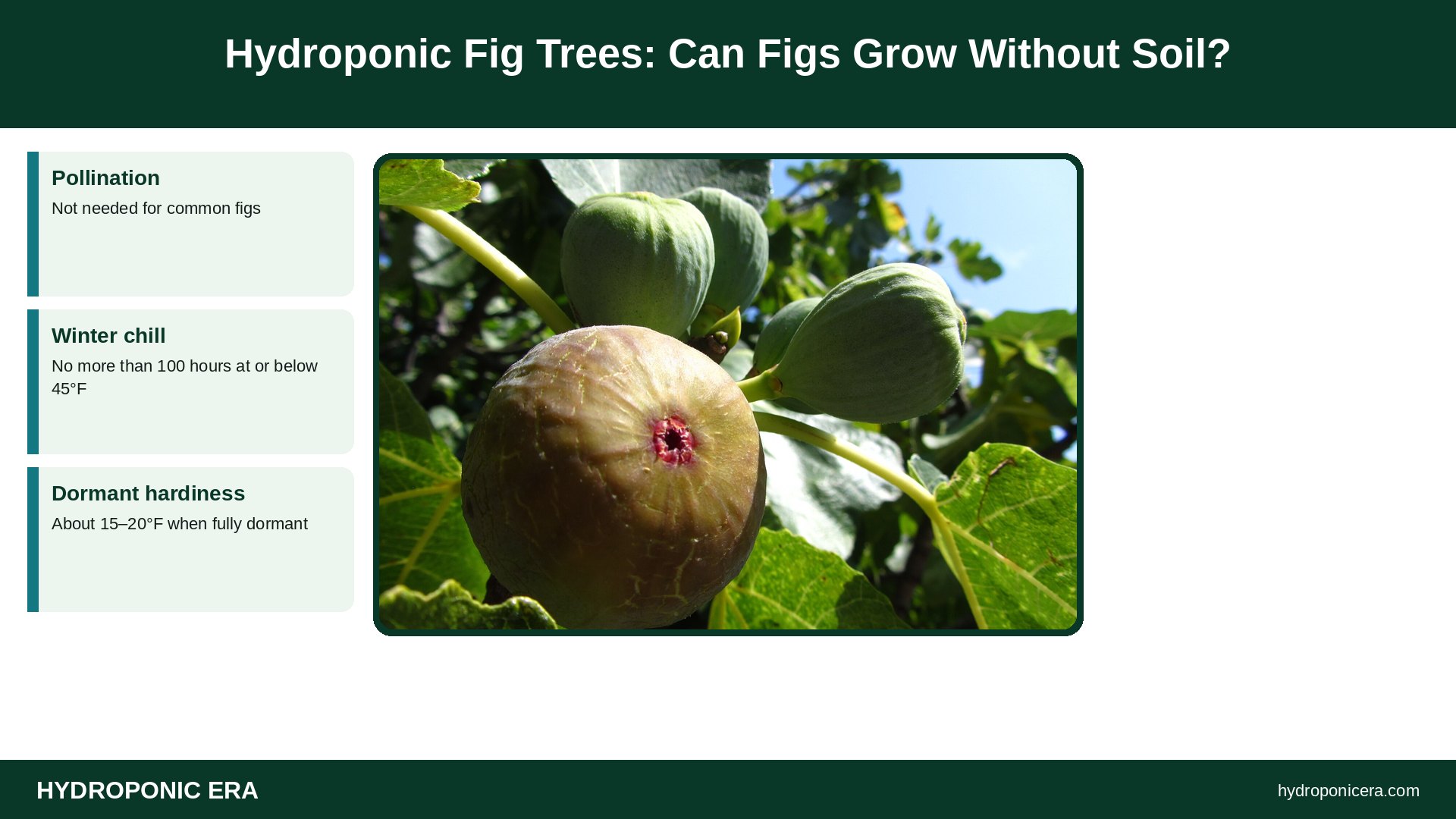
A hydroponic fig tree is one of the more practical fruit-tree projects, because figs stay manageable in containers, common fig varieties set fruit without pollination, and their winter chilling needs are low. UF/IFAS says common fig cultivars have only female flowers and don’t require pollination, that figs need no more than 100 hours at or below 45°F in winter, and that fully dormant trees are hardy to about 15–20°F. Grow a compact common fig such as ‘Celeste’ or ‘Brown Turkey’ in a large container of coarse media with drip feeding, full sun or strong light, and a cool winter rest.
A hydroponic water level indicator shows how much nutrient solution is left in your reservoir without lifting the lid. The common types are a float gauge (a stick on a float that rises and falls), a clear sight tube on the side of the tank, electronic float switches or sensors that trigger alarms, and smart sensors that send alerts to your phone. A cheap DIY water level indicator can be built from a fishing bobber, a wooden dowel, and a straw, or from clear vinyl tubing on a bulkhead fitting.
For AeroGarden replacement parts, start with the brand itself: AeroGarden is part of ScottsMiracle-Gro, and the company says its gardens, seed pods, and accessories are stocked and supported. The parts that most often need replacing are pumps, LED light hoods, power adapters, grow decks, and seed pods. AeroGarden says LED hoods don’t need replacing until individual diodes fail, and that diodes have a 2–4 year lifespan. Before ordering, find your exact model name, run the built-in pump test, and match connectors, because parts differ between Harvest, Bounty, and older models.