On hydroponic vs soil taste , the research doesn’t show a clear winner: variety, ripeness, harvest timing, and growing conditions usually matter more than whether roots sit in soil or water. A 2011 sensory pilot study published in Food and Nutrition Sciences found no overall differences in taste, odor, visual quality, or texture between hydroponic lettuce and conventionally or organically field-grown lettuce. For tomatoes, a Journal of the Science of Food and Agriculture study found harvest date and maturity had larger effects on quality than growing in soil versus rockwool. Grow a flavorful variety, pick it ripe, and don’t overfeed.
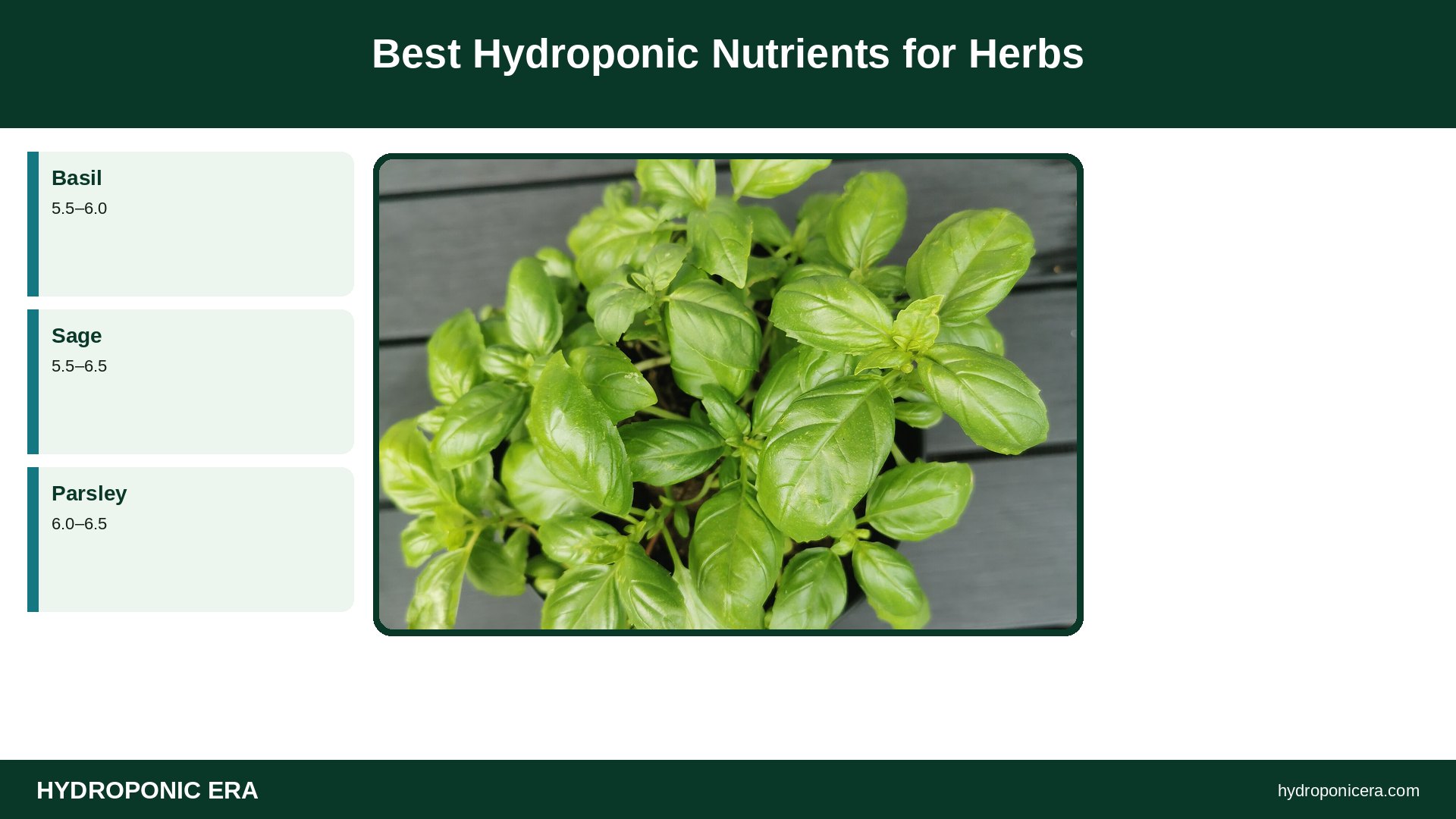
Hydroponic nutrients for herbs should be a complete, mild mix, since most herbs grow best at a lower EC than fruiting crops. Oklahoma State University lists basil at EC 1.0–1.6 mS/cm and pH 5.5–6.0, sage at 1.0–1.6 and pH 5.5–6.5, and parsley at 1.8–2.2 and pH 6.0–6.5. A general-purpose hydroponic base or a leafy-greens formula, mixed at reduced strength, works for most kitchen herbs. Too strong a mix burns leaf tips and can weaken flavor.
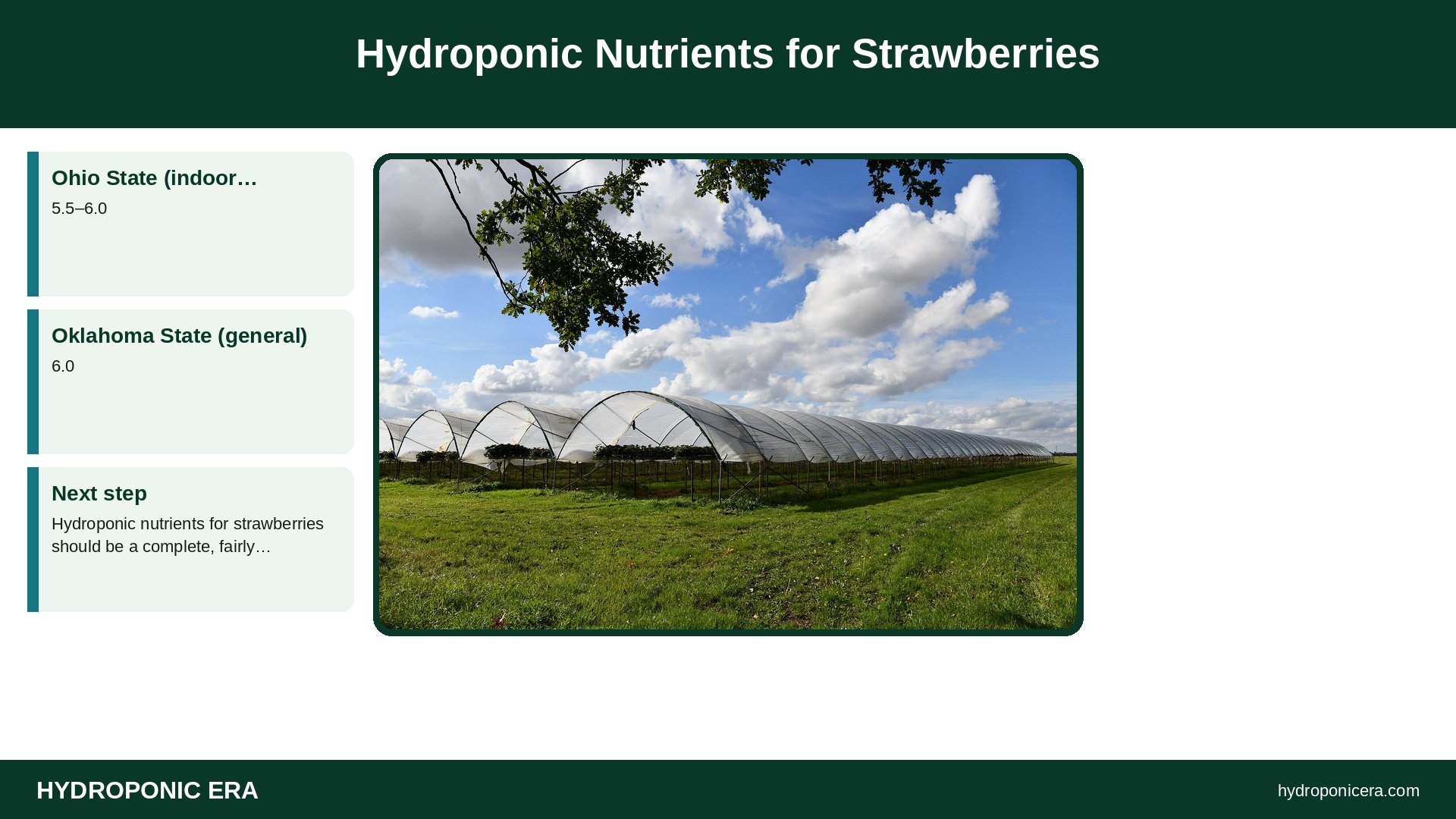
Hydroponic nutrients for strawberries should be a complete, fairly mild mix, because strawberries are sensitive to salt buildup. Ohio State University’s indoor berry program uses strawberry solutions at an EC of about 1.0 dS/m (mS/cm) at full strength, much lower than the roughly 2.4 used for tomatoes, keeps pH at 5.5–6.0, and notes growers often flush the root zone with water when root-zone EC goes above 1.2. Oklahoma State’s general table lists a higher range of 1.8–2.2 and pH 6.0. Start low, watch the plants, and raise strength only if they need it.
Hydroponic nutrients for peppers should be a complete mix with steady calcium and more potassium once fruit sets. Oklahoma State University lists peppers at an EC of 0.8–1.8 mS/cm and pH 5.5–6.0, a lower EC range than tomatoes. University of Tennessee and UF Extension note bell peppers can be grown in soilless systems on a schedule similar to tomatoes, but that when conditions aren’t right peppers often drop blooms or small fruit. Start in the lower EC range for young plants, raise it as plants fruit, and keep pH steady.
Hydroponic nutrients for tomatoes should supply a complete mix with extra potassium and steady calcium, rising in strength as fruit clusters form. UF/IFAS’s tomato formulation (Hochmuth) raises nitrogen from 70 ppm at transplant to 150 ppm late in the season and potassium from 120 to 200 ppm, with a final pH of 5.8–6.2. Oklahoma State lists tomatoes at an EC of 2.0–4.0 mS/cm and pH 6.0–6.5. For home growers, a two- or three-part hydroponic base or a tomato-specific mix with calcium nitrate does the job.
The CANNA Aqua feeding schedule for recirculating systems uses CANNA Aqua Vega A and B in rooting and vegetative growth, then Aqua Flores A and B once flowers or fruit form. CANNA’s US grow schedule lists Vega at 9.3 mL per gallon of each part during rooting (days 1–5), 10.7 mL/gal from days 6–25, and 12.2 mL/gal in the next two weeks, then Flores at 12.9 mL/gal of each part, dropping to 11.4 mL/gal late in the cycle. Target total EC runs from 1.6 to about 2.5 mS/cm, and CANNA recommends pH 5.5–6.2.
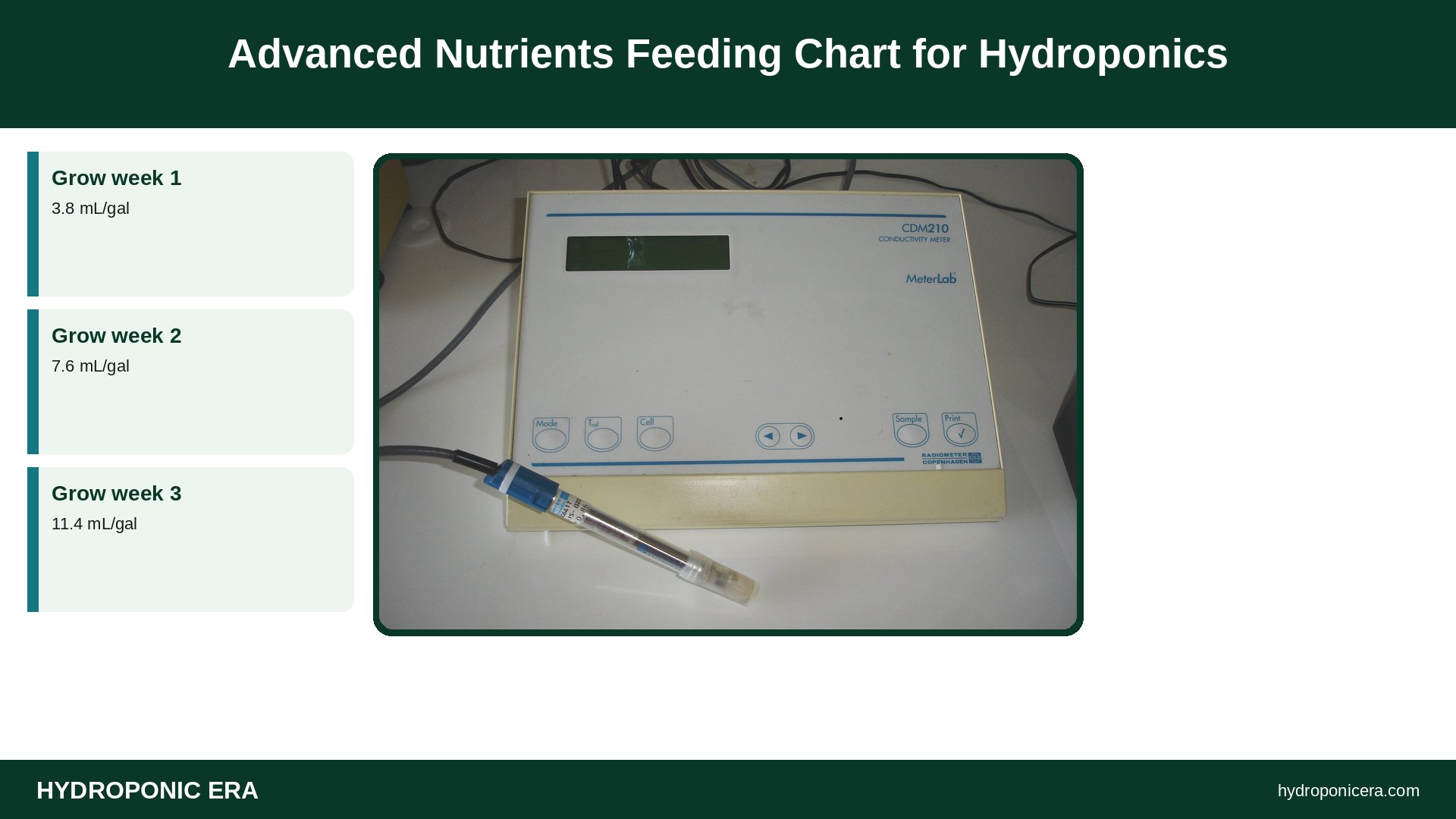
The Advanced Nutrients feeding chart for pH Perfect Grow, Micro, Bloom is simple: mix all three parts 1:1:1, start at 1 mL per liter of each in week 1 of the grow phase, step up to 2, 3, then 4 mL/L by week 4, and hold 4 mL/L of each through the bloom phase. In US units that’s about 3.8 mL per gallon of each part rising to about 15 mL per gallon. Advanced Nutrients says to add Micro first, then Grow, then Bloom, and to shake bottles first. For a custom schedule by reservoir size and stage, use the company’s official nutrient calculator.
Tea plant hydroponics means growing Camellia sinensis , the shrub behind green, black, white, and oolong tea, in soilless media. It’s possible but rare, and it’s a slow project. Washington State University says tea, like blueberries, prefers well-drained, acidic conditions with pH 4.5–5.5, and that pH above 5.5 harms growth. WSU recommends a deep container larger than 5 gallons, notes tea forms a shallow root system with many fine roots, and says plants take 3–4 years before the first harvest in temperate areas. For hydroponics, use coarse, acidic-friendly media, drip feeding, and a lower pH target than most crops.
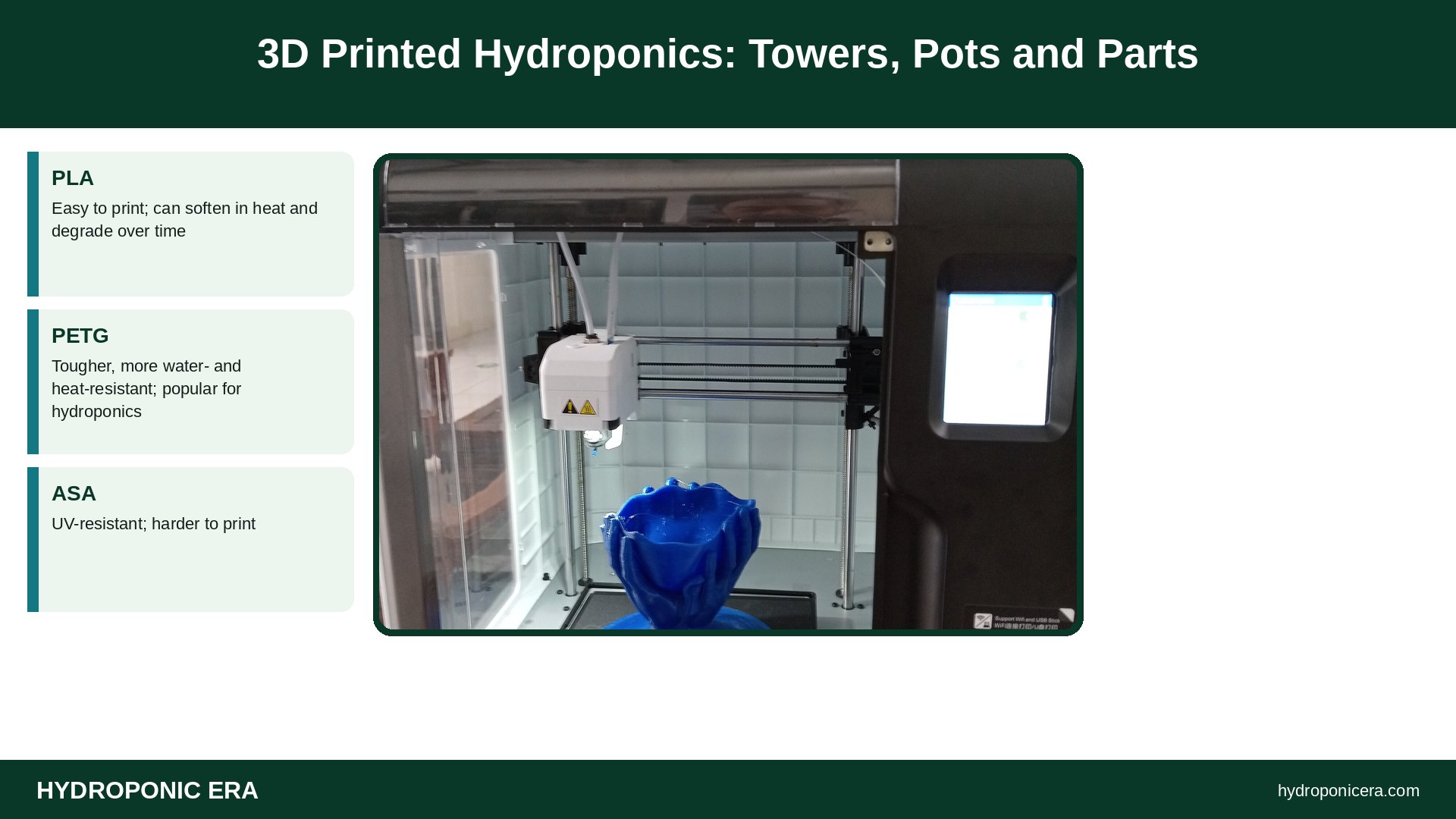
3D printed hydroponics lets you make custom net cups, tower sections, NFT end caps, seed-starter trays, and brackets at home, usually in PETG, which handles water and light better than PLA. The key concern is that the parts touch water used to grow food. Oklahoma State University’s Food and Agricultural Products Center and printer maker Prusa both warn that layer lines and gaps in FDM prints can harbor bacteria and that filament isn’t automatically food safe. Choose food-contact-rated filament where possible, print with smooth surfaces, use opaque colors, and clean and replace parts regularly.
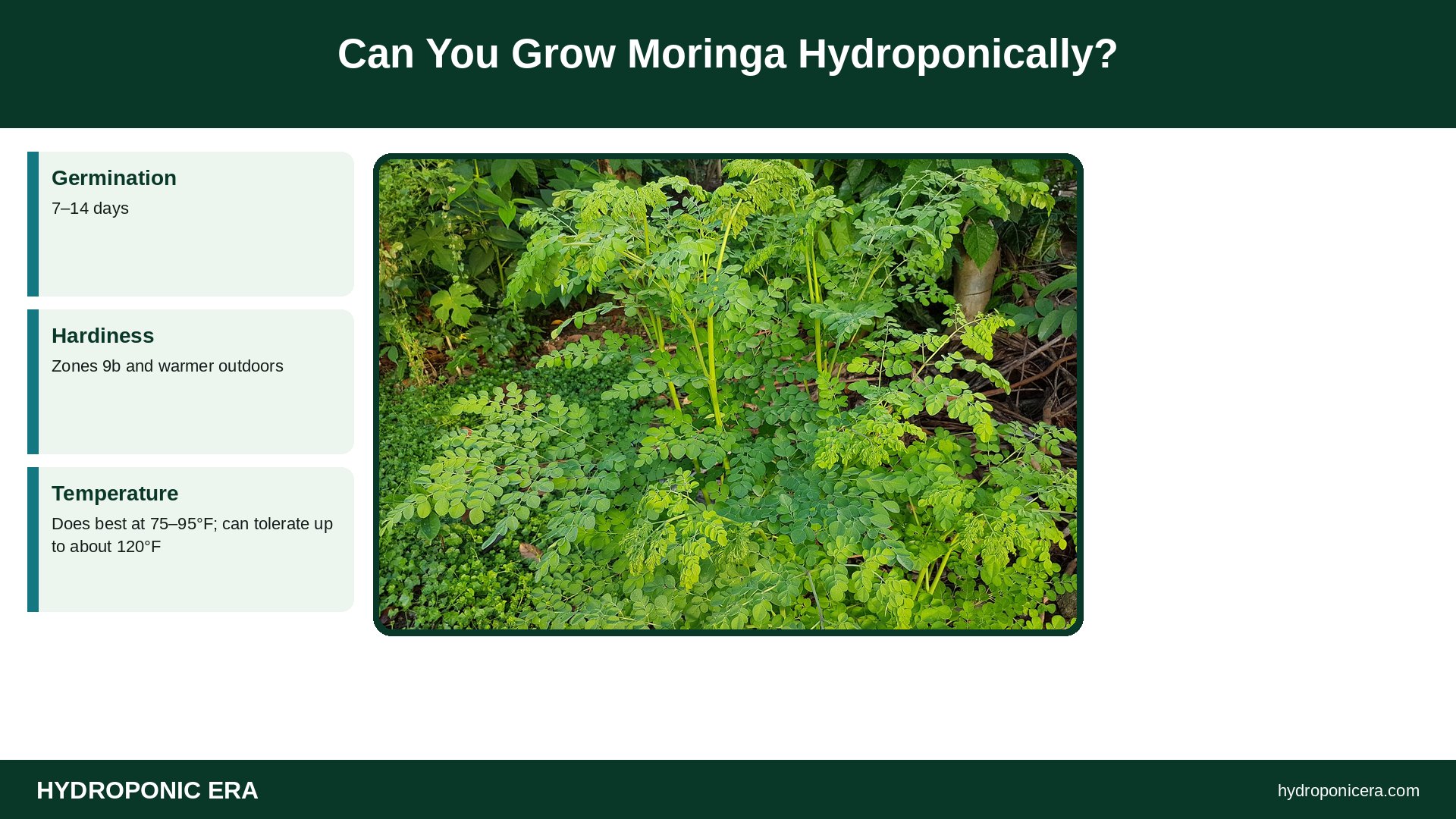
Moringa hydroponics is possible, and moringa is a fast grower, but it’s not a common hydroponic crop. University of California Cooperative Extension describes moringa as a fast-growing, drought-tolerant tree native to India, grown in USDA zones 9b and warmer, with seeds germinating in 7 to 14 days. UC notes it is cold-sensitive, so it’s grown in containers or as an annual in colder areas, and that regular pruning makes it bushier with more leaves. For hydroponics, grow it for leaves in a large, free-draining container with drip feeding, strong light, and warmth.