hydroponic banana tree — Hydroponic Banana Trees: Dwarf Varieties Indoors

A hydroponic banana tree can work if you choose a dwarf variety such as ‘Dwarf Cavendish’ and grow it in a large, free-draining container fed by drip, with full-sun-level light, warmth, and plenty of water. Bananas are big, thirsty, frost-tender plants: UF/IFAS says they perform best in moist, fertile conditions in full sun, need regular water but are harmed by continuously wet soil, and are damaged by frost. Indoors, most plants are grown for their leaves; fruit needs a large, warm, bright space and patience.
watts per square foot — LED Grow Light Watts per Square Foot (and Why PPFD Matters More)

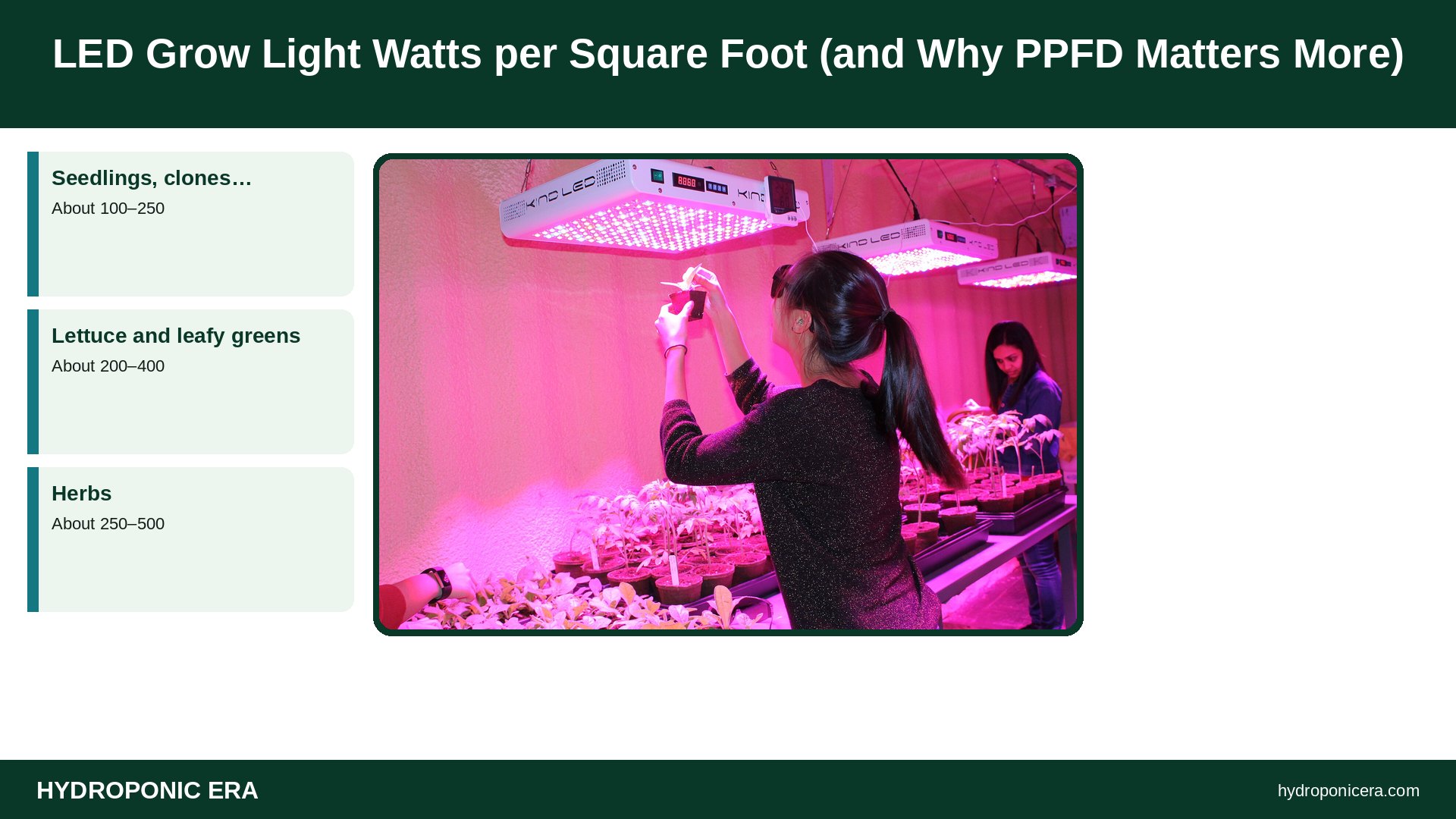
A common rule of thumb for LED grow lights is roughly 20–40 actual watts per square foot for leafy greens and seedlings, and about 30–50 or more watts per square foot for fruiting crops. But watts measure electricity, not light. Two fixtures with the same wattage can deliver very different light levels, so PPFD (photosynthetic photon flux density, in µmol/m²/s) and DLI (daily light integral) are the numbers that actually predict growth. Use watts per square foot as a rough first filter, then confirm with PPFD.

hydroponic coffee plant — Hydroponic Coffee Plants: Growing Coffee Indoors

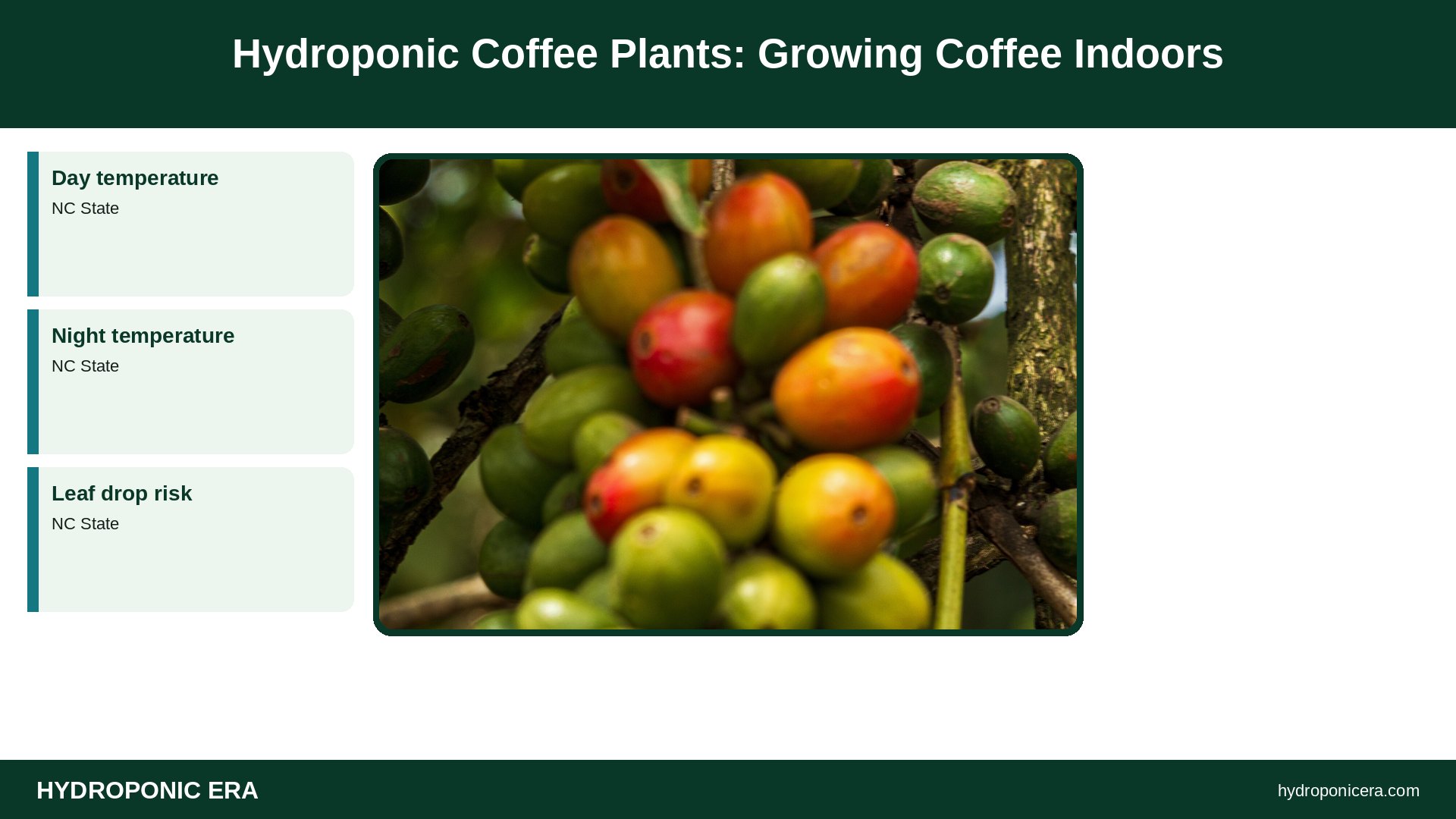
A hydroponic coffee plant is a realistic houseplant project: Coffea arabica grows well in containers of free-draining media like perlite, coco, or clay pebbles with drip or semi-hydro watering. NC State Extension says coffee prefers daytime temperatures of 70–80°F, nights of 60–65°F, bright light with some shade, high humidity, and consistently moist but not soggy roots, and that leaves may drop below 55°F. The Missouri Botanical Garden notes plants first flower at about 3–4 years old, so beans take patience.

papaya hydroponics — Can You Grow Papaya Hydroponically?

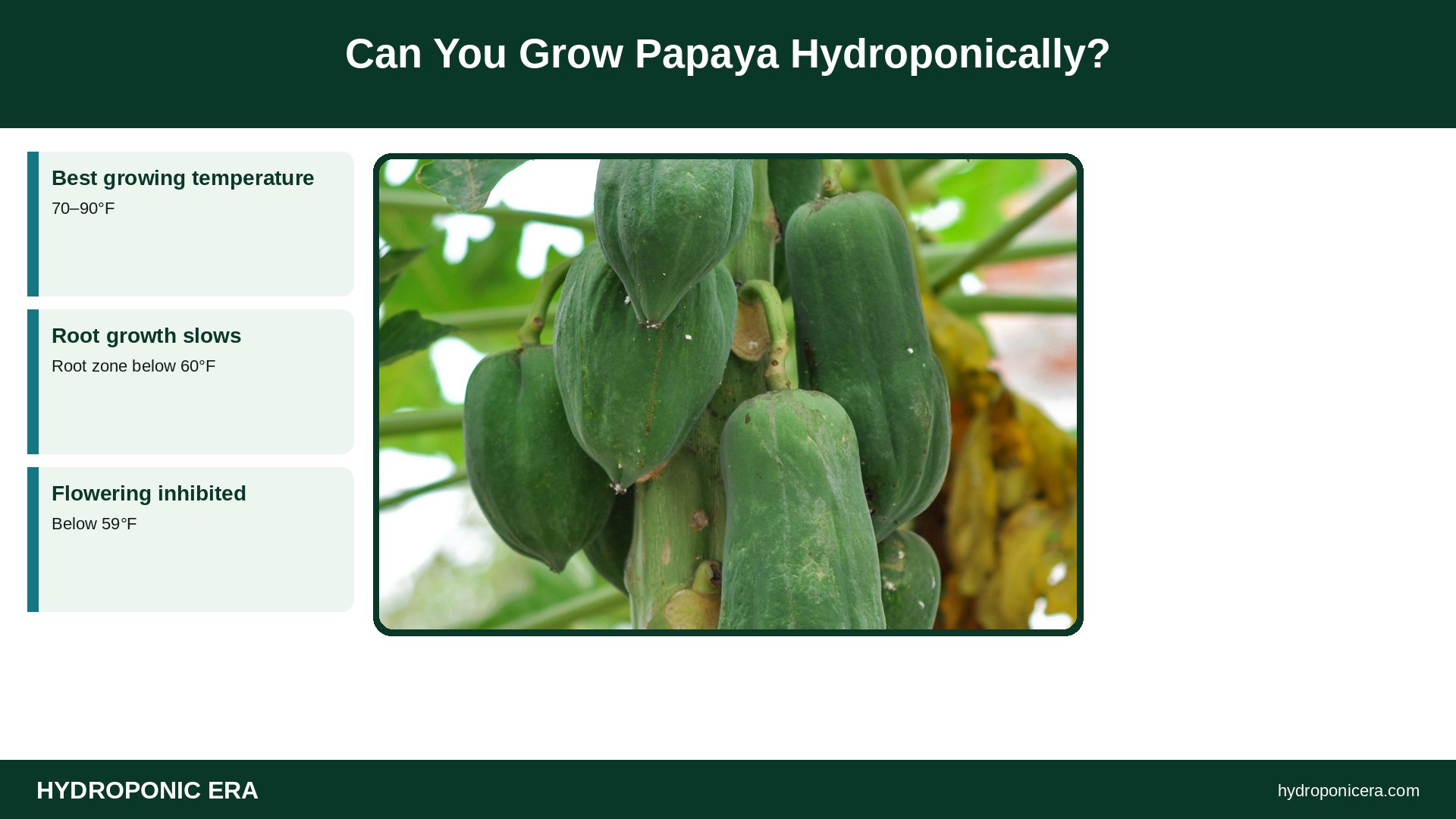
Papaya hydroponics is possible but uncommon at home, because papaya is a fast-growing tropical plant that can top 30 feet outdoors and needs constant warmth. UF/IFAS says papaya grows and fruits best at 70–90°F, root growth slows when the root zone drops below 60°F, flowering suffers below 59°F, and plants are damaged or killed below 31°F. If you want to try it, use a dwarf variety in a large, drip-fed container of coarse media, keep the root zone warm, give full-sun-level light, and expect a short-lived plant.

rhubarb hydroponics — Can You Grow Rhubarb Hydroponically?

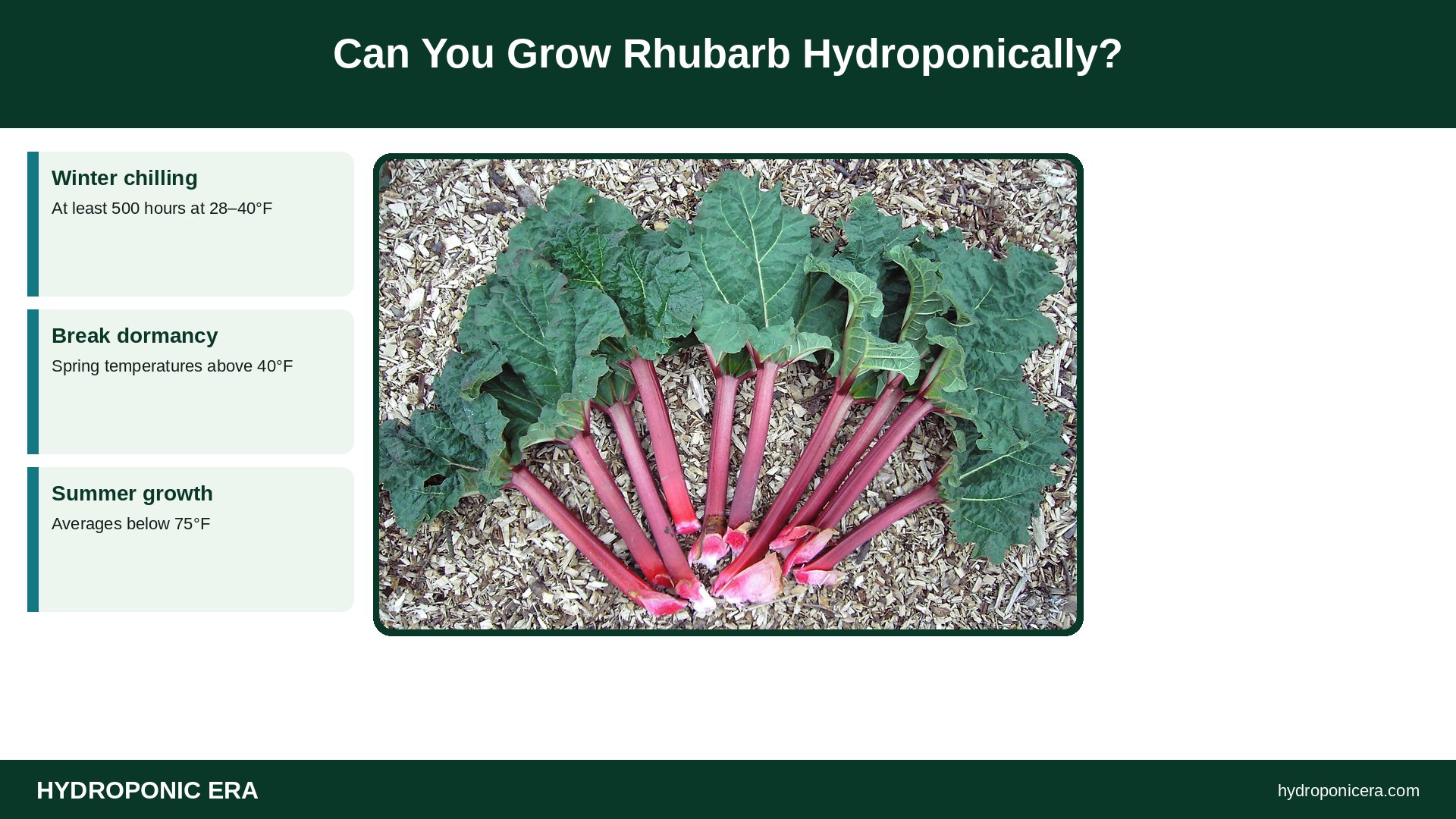
Rhubarb hydroponics is possible but uncommon, and it’s one of the harder crops to grow indoors year-round. Rhubarb is a large, cool-season perennial that needs a winter rest: Oregon State University Extension says it needs at least 500 hours of winter temperatures between 28°F and 40°F to form new leaf buds, spring temperatures above 40°F to break dormancy, and summer temperatures averaging below 75°F. A mature plant can reach 2½–3 feet tall and 3–3½ feet wide. If you try it, grow a single crown in a large drip-fed container of coarse media, and give it a cold dormant period each winter.

hydroponic winter squash — Hydroponic Winter Squash: Butternut and Spaghetti

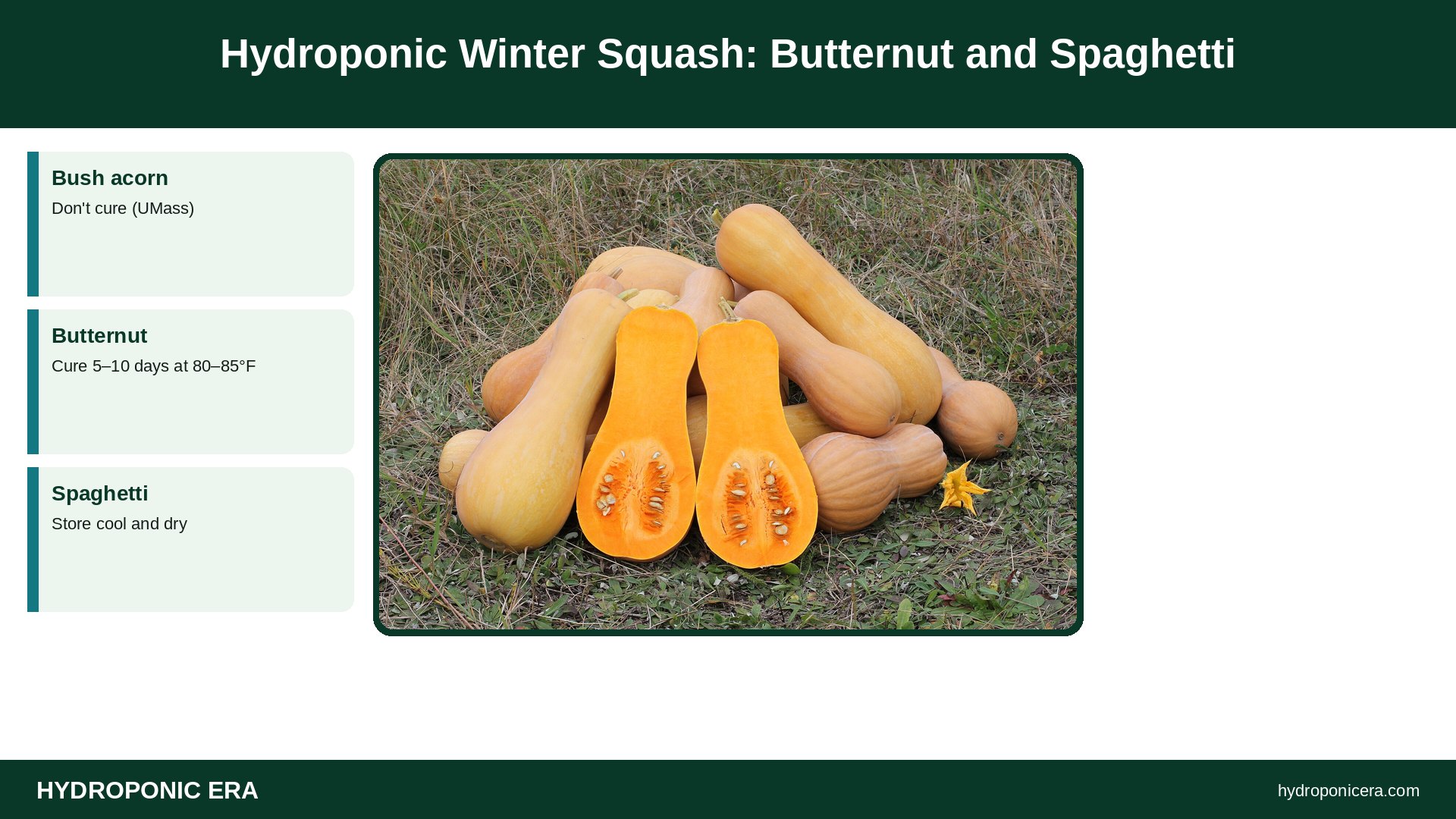
Hydroponic winter squash such as butternut, acorn, spaghetti, and kabocha can grow in large Dutch buckets or media beds with drip feeding, but the vines are big, hungry, and need a lot of space and light. Choose compact or bush varieties, train vines up a strong trellis, support fruit in slings, and hand-pollinate indoors. After harvest, UMass Extension recommends curing most winter squash at 80–85°F with 80–85% humidity for about 5–10 days, then storing at 50–60°F; acorn squash shouldn’t be cured.

hydroponic onions — Hydroponic Onions From Seed: Growing Bulb Onions

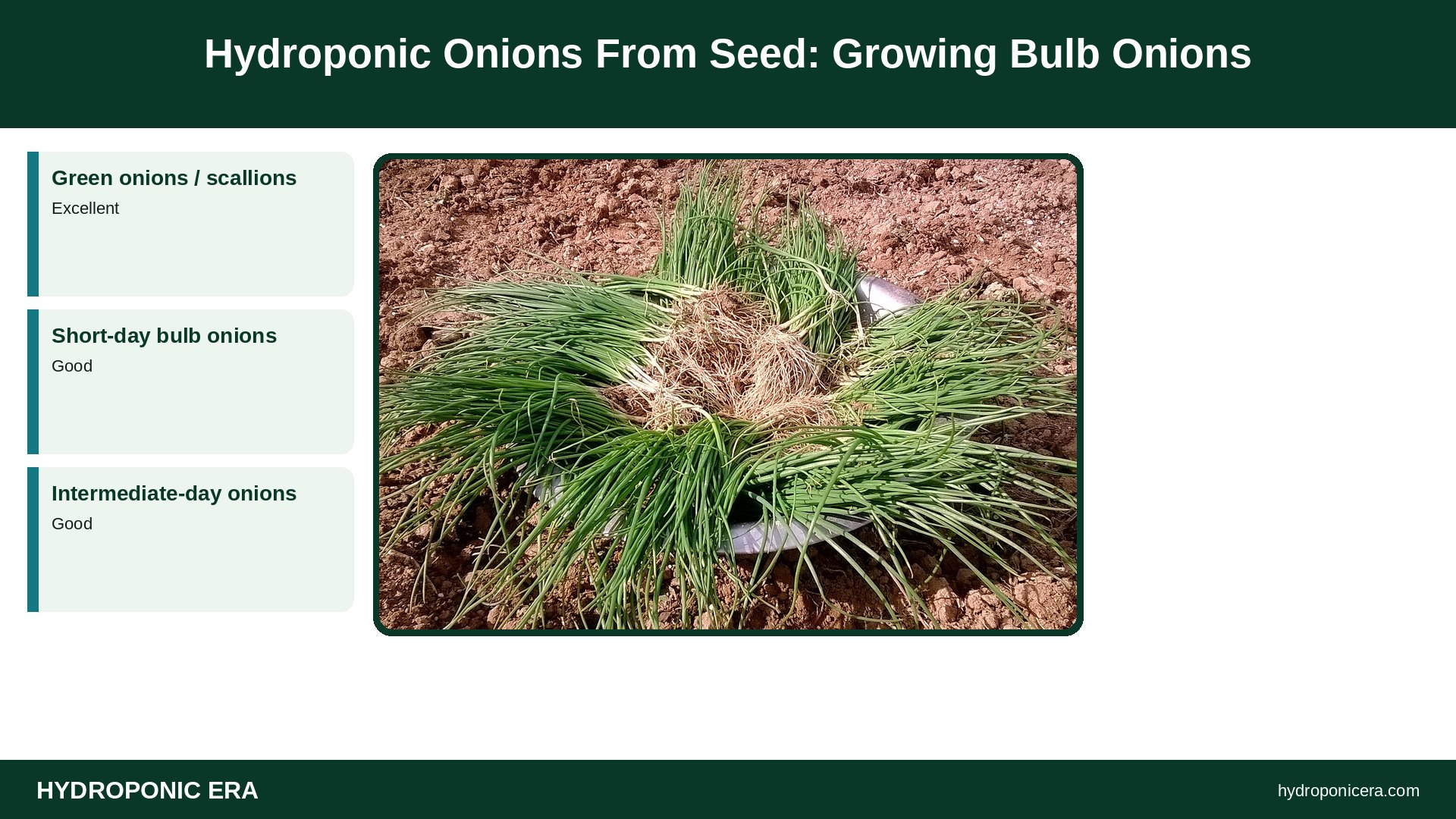
Hydroponic onions are easiest grown as green onions (scallions), which regrow quickly in DWC, NFT, or Kratky systems. Bulb onions are harder: they need a deep, well-drained medium and the right day length for the variety. University of Maryland Extension explains that onions bulb in response to day length: short-day types start forming bulbs at about 10–12 hours of daylight, intermediate types at roughly 12–15 hours, and long-day types need 14 hours or more. Indoors, you control day length with grow lights, so match the light schedule to the variety you plant.

hydroponic flowers — Hydroponic Flowers: Best Ornamentals to Grow

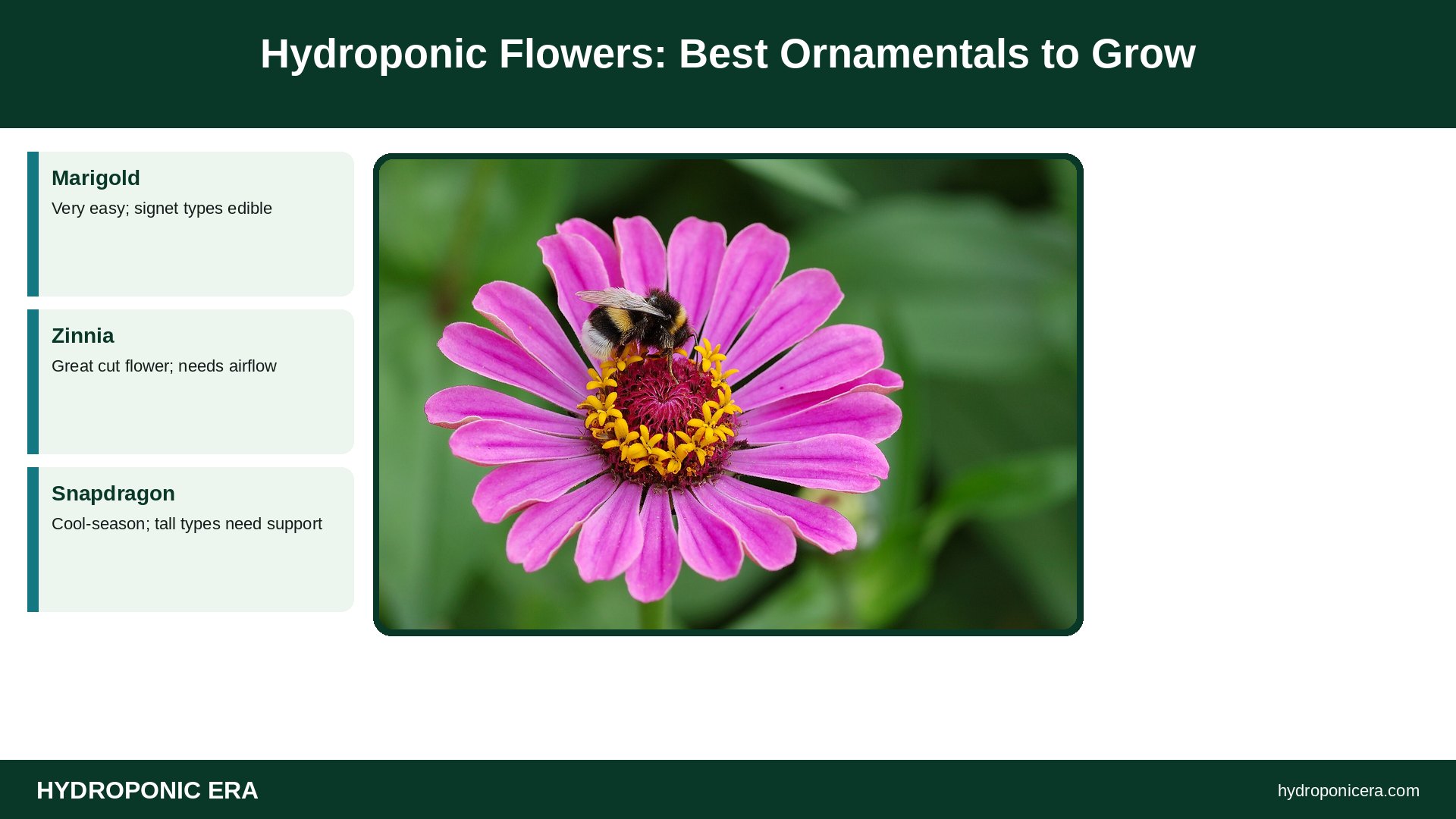
Hydroponic flowers are easy to grow if you pick compact annuals that bloom fast, such as marigolds, zinnias, snapdragons, nasturtiums, petunias, and pansies, and grow them in a simple DWC tote, Kratky container, tower, or Dutch bucket with a complete nutrient, pH around 5.5–6.5, and bright light. Start seeds in plugs, transplant when roots show, and deadhead to keep blooms coming. University extension guides note zinnias germinate in about 1–2 weeks at 70–80°F, and snapdragon seed should be surface-sown because it needs light to germinate.

hydroponic dwarf fruit trees — Hydroponic Dwarf Fruit Trees: What Works Indoors

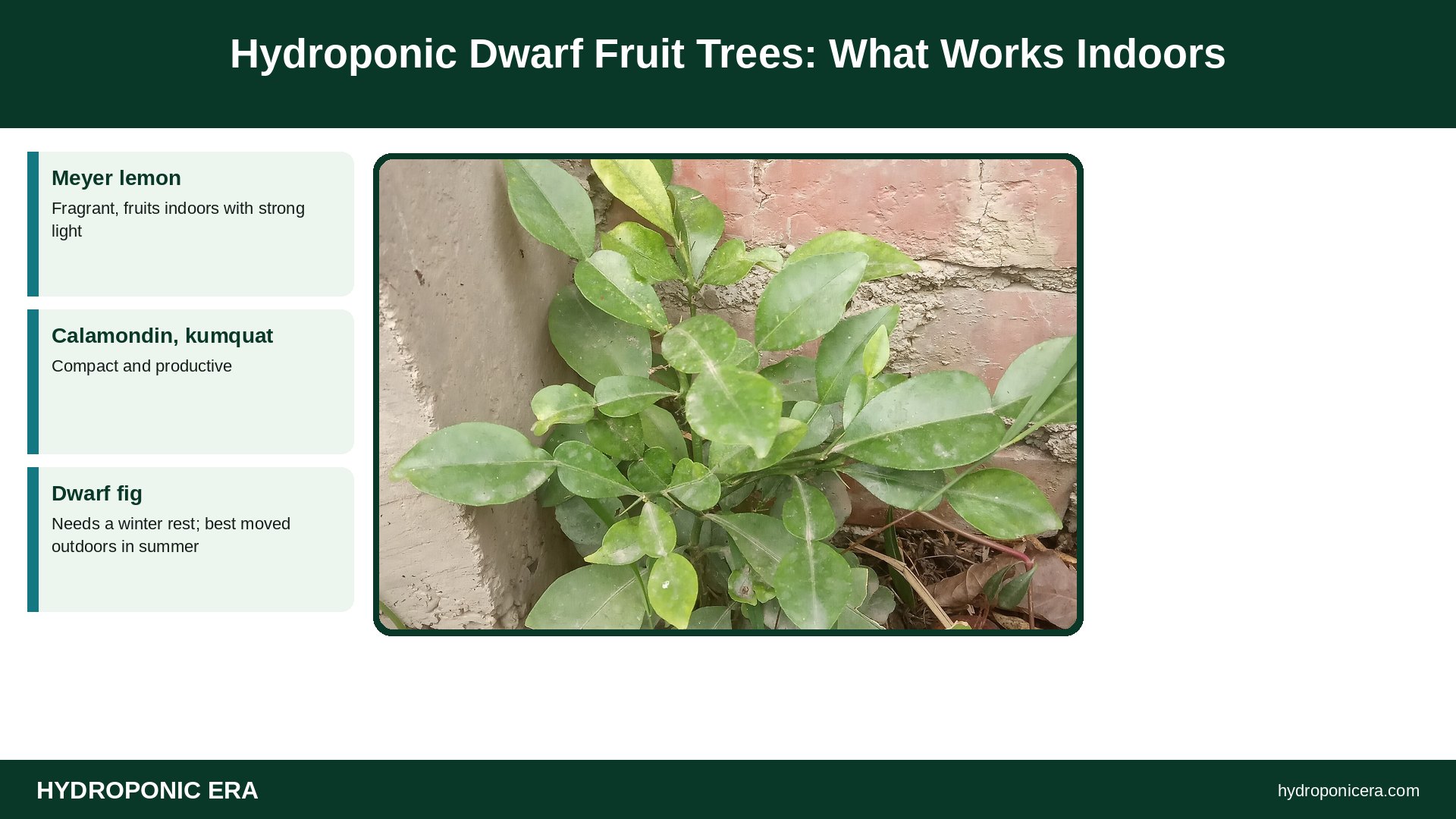
Hydroponic dwarf fruit trees can work indoors, but the realistic choices are a handful of compact, container-friendly trees, mainly dwarf citrus like Meyer lemon, calamondin, and kumquat, plus figs, grown in a large drip-fed or Dutch-bucket style container filled with coarse media such as perlite, coco, or clay pebbles. Pure water systems like DWC are risky for trees because woody roots rot easily in warm, wet conditions. University of Maryland Extension says dwarf citrus can be kept as 3- to 6-foot houseplants but need at least 6 hours of direct sun, preferably 8–12, plus consistent moisture without waterlogging and hand pollination indoors.

led grow lights — T5 vs LED Grow Lights for Hydroponics

For most hydroponic growers, LED grow lights now beat T5 fluorescents: LEDs produce more usable light per watt, last longer, run cooler at the canopy, and come in full-spectrum fixtures that cover seedlings through fruiting. In the T5 vs LED question, T5 tubes still make sense for cheap seedling shelves, clones, and microgreens, especially if you already own fixtures. For anything bigger or longer-running, a quality LED usually saves money over time.