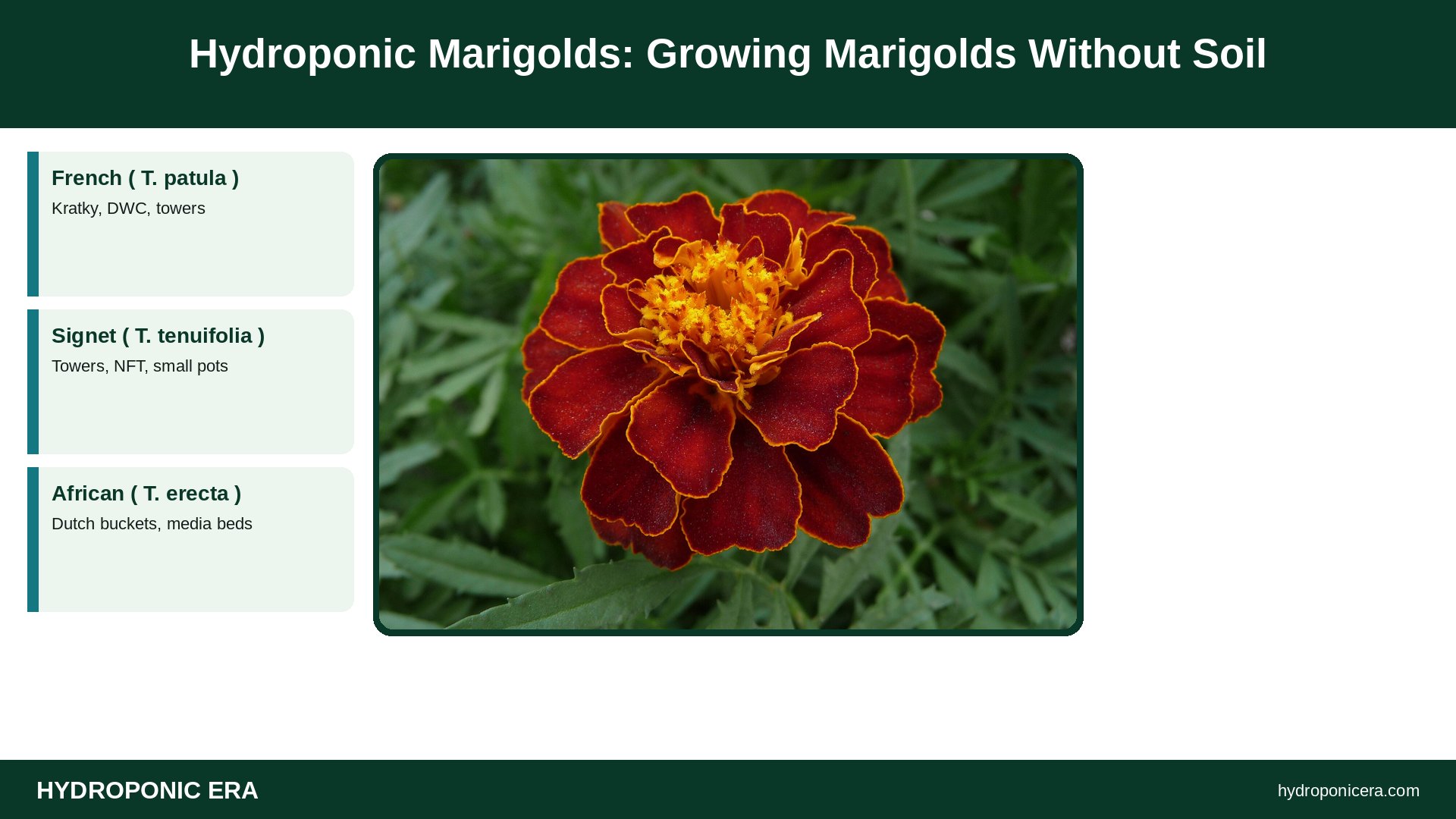
Hydroponic marigolds grow easily in most systems, from Kratky buckets to Dutch buckets and media beds, as long as they get full sun or strong grow lights. Marigolds ( Tagetes ) are fast annuals that germinate in about a week in warm conditions and bloom for months with deadheading. North Carolina State Extension lists African marigold ( Tagetes erecta ) as a full-sun annual, and UF/IFAS notes signet marigold seed germinates in about one week at 70–75°F. Compact French and signet marigolds are best for small indoor systems; tall African marigolds need deeper media and support.
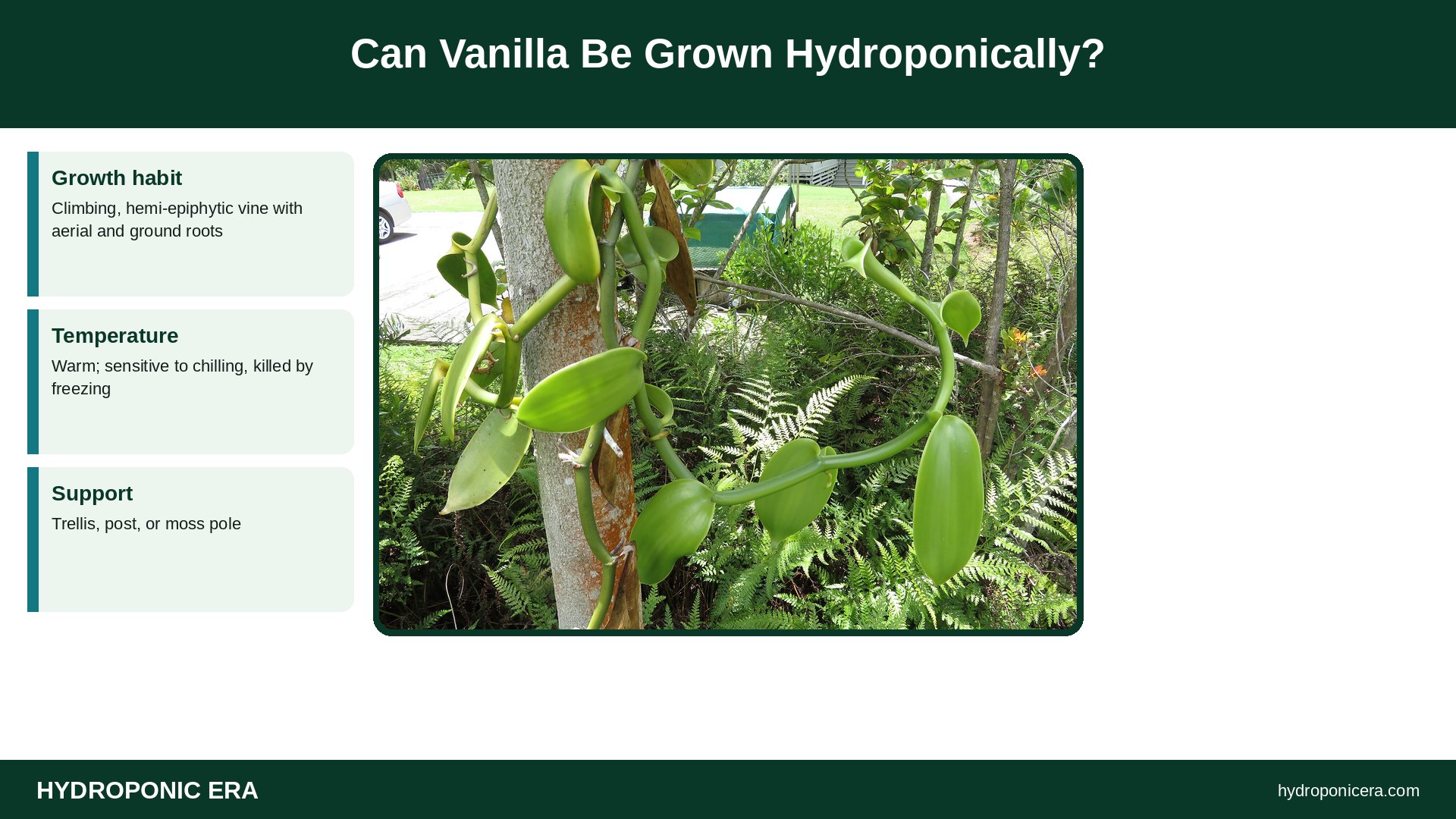
Can vanilla hydroponics work? You can keep a vanilla orchid ( Vanilla planifolia ) alive and growing in a semi-hydroponic setup, such as clay pebbles (LECA) with a reservoir, much like other orchids. But growing vanilla for beans at home is a long project, hydroponic or not.
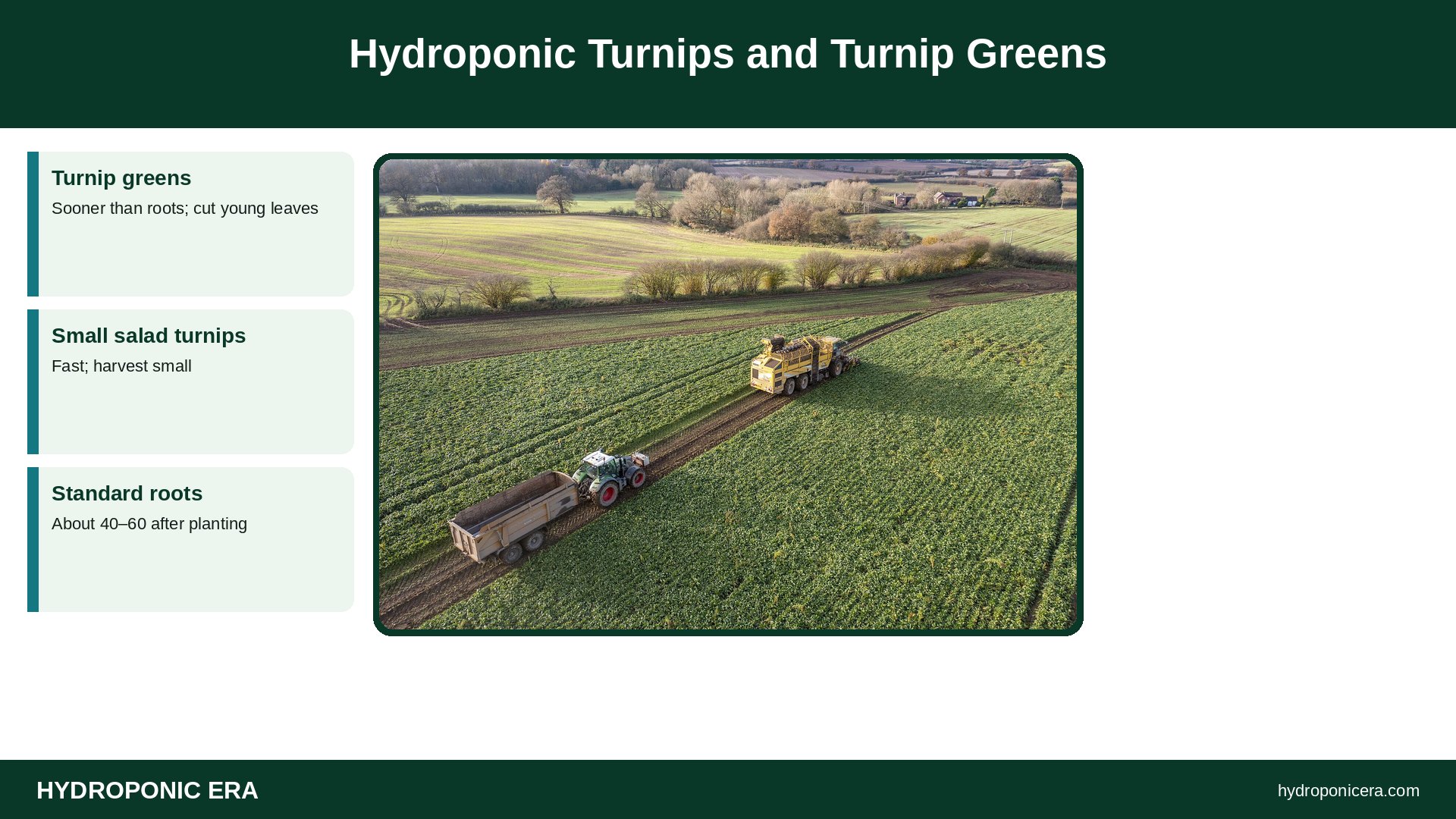
Hydroponic turnips are easy if you grow them for greens, and possible for roots with the right system. Turnips are a fast, cool-season crop: Texas A&M AgriLife lists turnips as a cool-season crop harvested about 40–60 days after planting, and notes temperatures above 75°F reduce yield and quality. Greens can be cut sooner. For greens, any lettuce-style system works, including raft, NFT, or Kratky. For roots, use a deep media bed or Dutch bucket filled with perlite, coco, or a perlite-vermiculite mix so the root has something to swell in and stays out of standing water.
Hydroponic tulips are grown by chilling bulbs, then setting them on trays or vases with their base just touching water or a dilute calcium nitrate solution until they root and bloom. It’s a real commercial method: Cornell University’s flower bulb program notes that about 30–35% of the Dutch cut tulip crop is forced hydroponically. The key is cold. Cornell describes giving dry bulbs about 75–80% of their cold requirement first, often 12–14 weeks depending on the cultivar, then rooting them in water at about 40°F for 2–4 weeks before moving them to warmth to flower, about three weeks later.
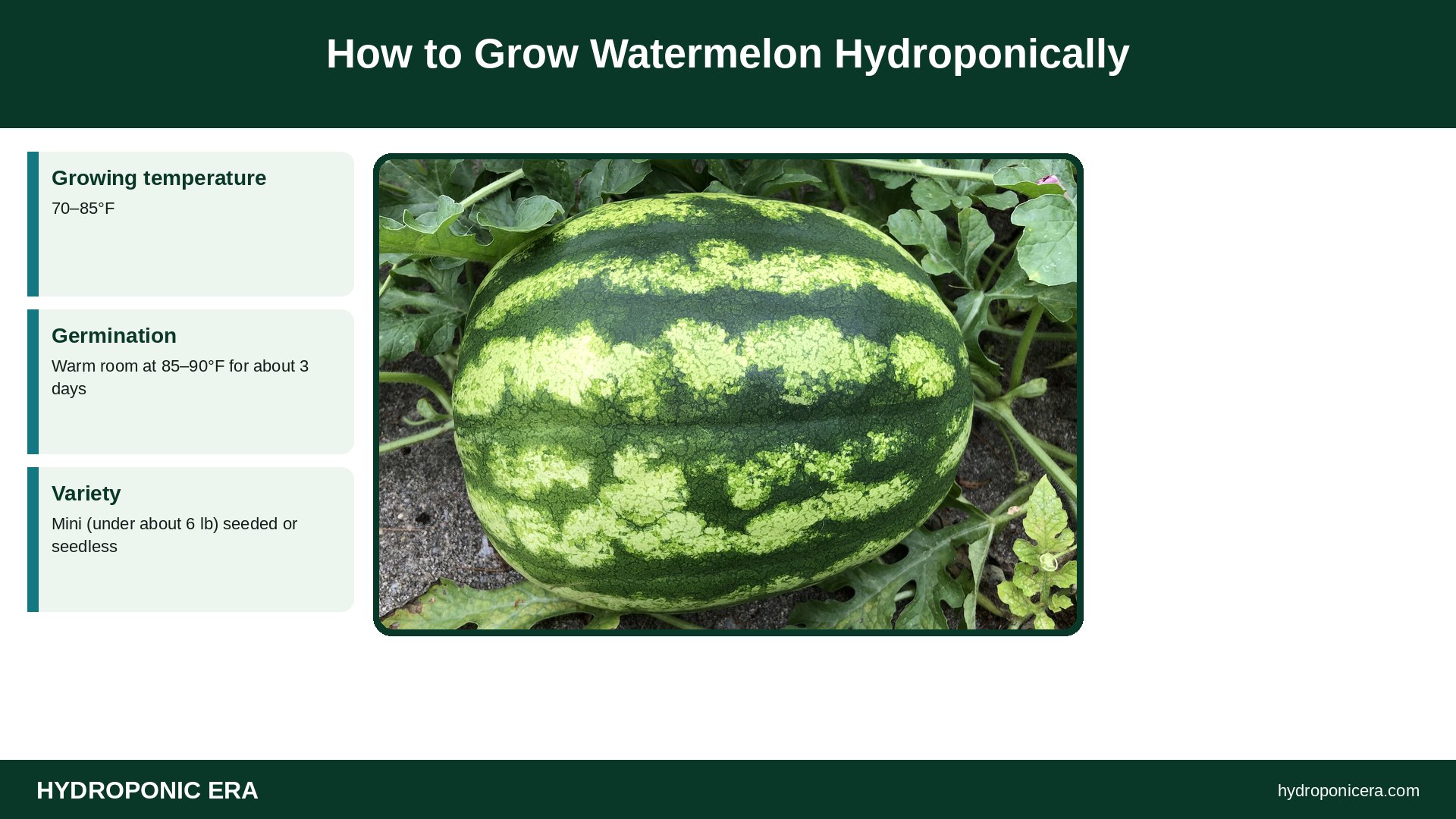
Hydroponic watermelon is possible in a greenhouse, high tunnel, or large indoor space if you grow compact personal-size varieties vertically on a trellis, support each fruit in a sling, and hand-pollinate. Use a large media-based system such as Dutch buckets with perlite or coco, rather than small channels, because vines grow big and roots need room. University of Missouri Extension gives 70–85°F as the optimal growing temperature for melons and watermelons and notes trellising allows higher plant populations in protected structures. Mini watermelons under about 6 pounds, such as seeded ‘Sweet Beauty’ or seedless minis, suit vertical growing best.
The fastest answer to how to lower EC in hydroponics is to dilute: add plain, low-EC water to the reservoir, mix, and re-measure. If the reservoir is full, remove some nutrient solution first, then refill with fresh water. If EC is far too high or has crept up for weeks, drain and replace the whole solution at the target strength. For lettuce, UF/IFAS Extension gives a target of 1.2–1.8 mS/cm. Because EC is roughly proportional to concentration, replacing a fraction of the solution with plain water lowers EC by about that fraction.
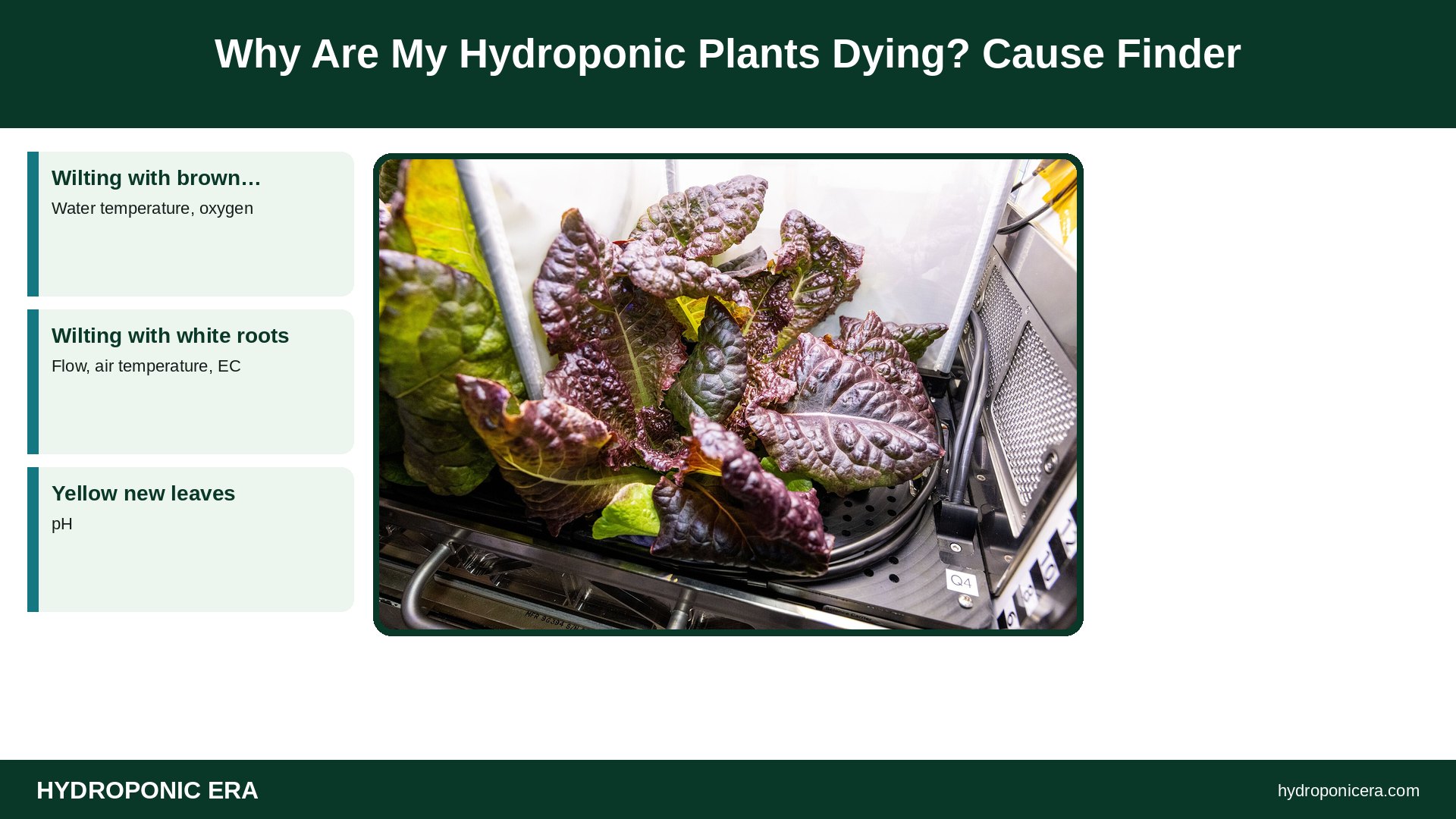
When hydroponic plants dying is the problem, the cause is usually in the root zone: warm or oxygen-poor water leading to root rot, pH out of range, nutrient strength too high or too low, or a pump or air failure. Check the roots first. Healthy roots are white or cream and firm. Colorado State’s PlantTalk says root rot, most often caused by Pythium , first shows as wilting or tip burn, with brown roots that have sparse root hairs. Then check water temperature (68–72°F is the optimum root zone per Colorado State), pH, EC, and whether the pump and air stones are running.
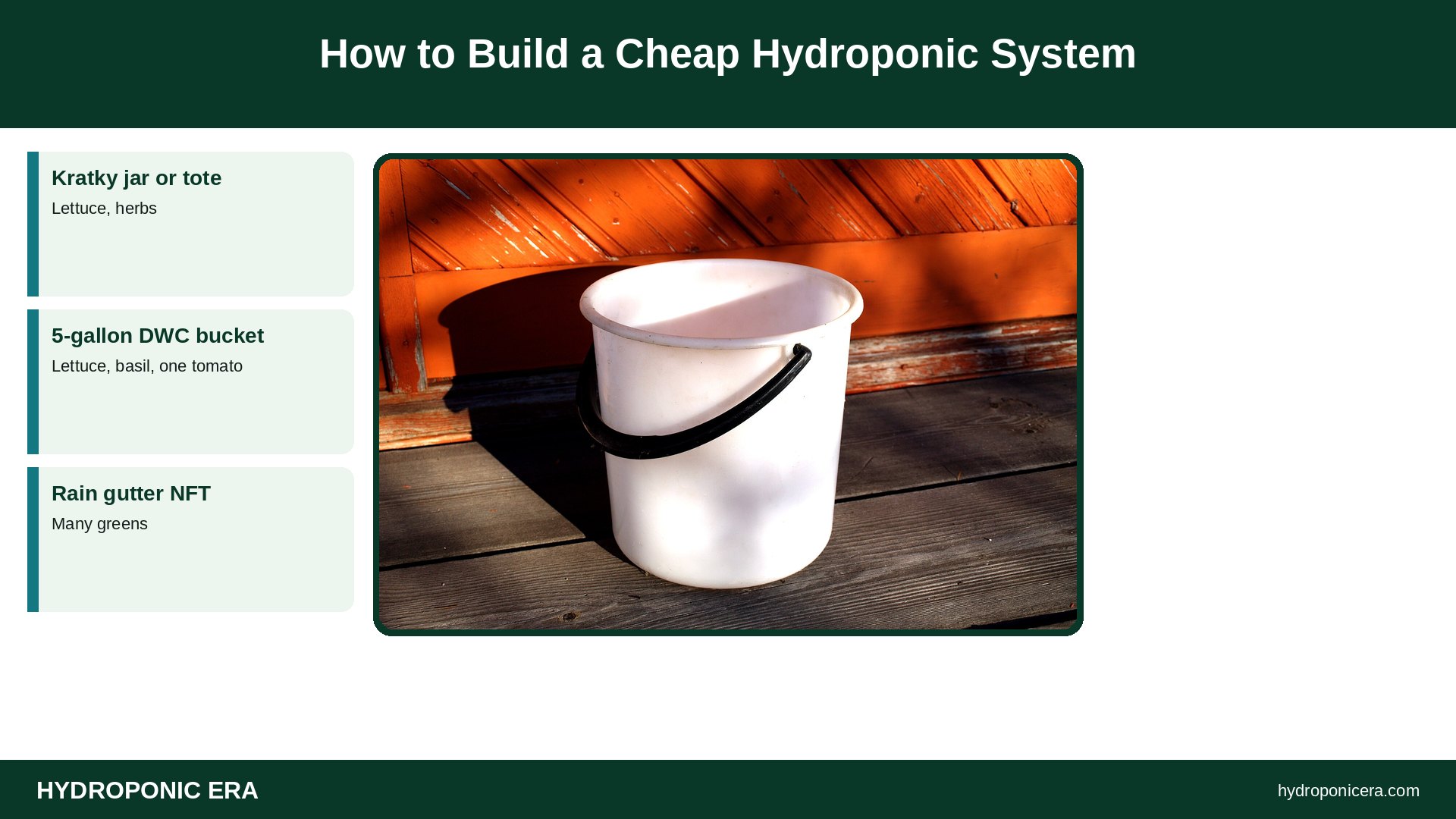
The cheap hydroponic system that works best for beginners is a Kratky setup: an opaque bucket or tote, a lid with holes for net cups, nutrient solution, and seedlings. It needs no pump or electricity and can cost under about $20 if you reuse containers. The next step up is a single 5-gallon bucket deep water culture (DWC) system with an aquarium air pump and air stone. Either can grow lettuce, herbs, and greens well. The parts you shouldn’t skimp on are a decent hydroponic nutrient, a pH test, and an opaque, food-safe container.
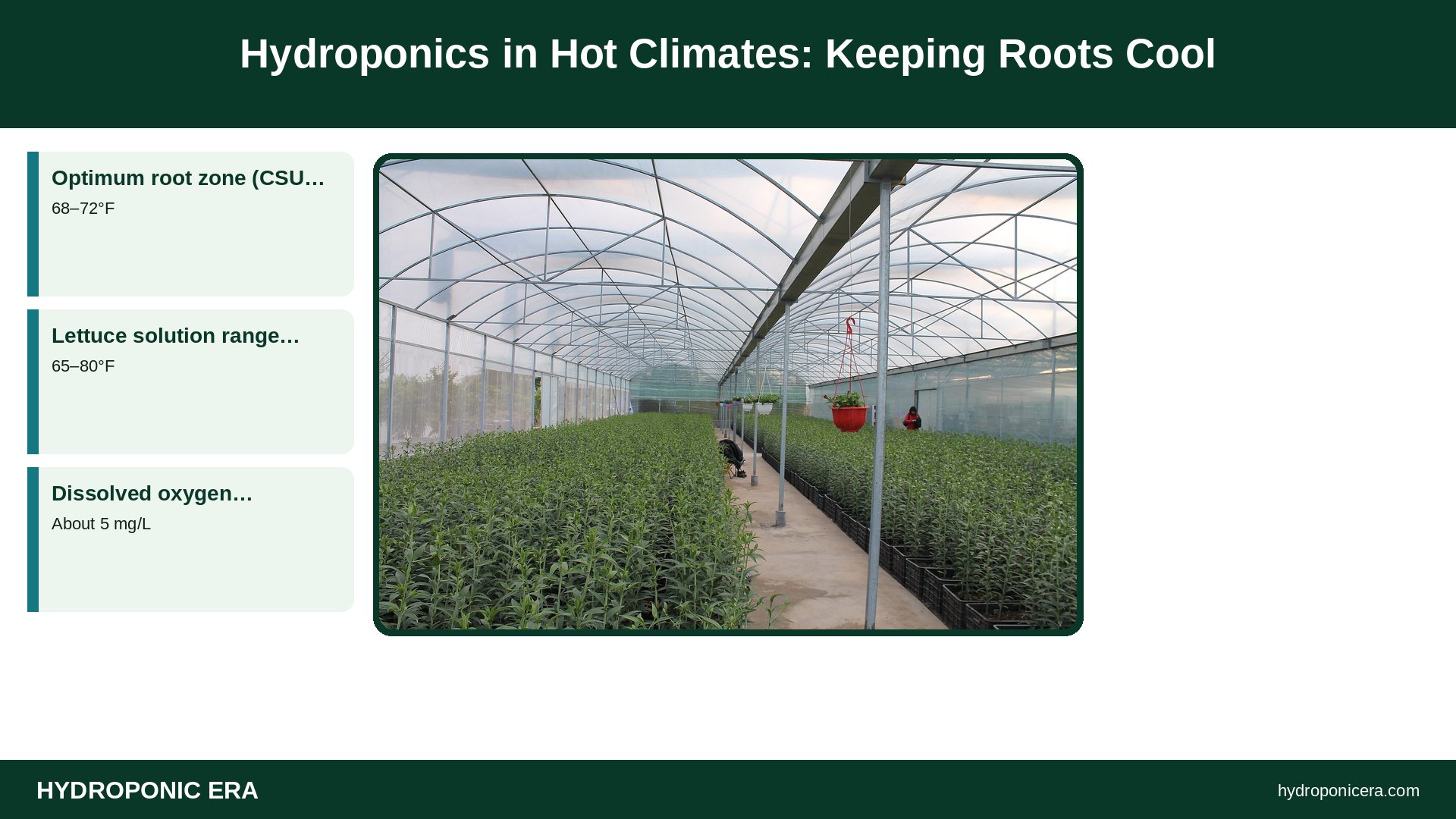
Hydroponics in hot climates succeeds when you keep the root zone cool and oxygenated, because warm nutrient solution holds less dissolved oxygen and favors root rot. Colorado State’s PlantTalk calls 68–72°F the optimum root zone temperature, and UF/IFAS Extension suggests keeping lettuce solutions between 65 and 80°F with dissolved oxygen around 5 mg/liter. In hot US regions like Texas, Arizona, and Florida, that means shading and insulating reservoirs, burying or enlarging them, aerating heavily, choosing heat-tolerant crops in summer, and saving lettuce for cooler months.
Yes, outdoor hydroponics works well, especially for lettuce, herbs, tomatoes, peppers, and strawberries, as long as you manage the factors indoor growers don’t face: heat, rain, wind, pests, and sun on the reservoir. Free sunlight is the biggest advantage. The biggest risk is warm nutrient solution, which holds less oxygen and favors root rot. Colorado State’s PlantTalk says a root zone of about 68–72°F is optimum, and UF/IFAS Extension suggests keeping lettuce solutions between 65 and 80°F. Shade and insulate the reservoir, use light-colored containers, and grow in spring and fall in hot regions.