banana peel water for plants — Banana Peel Water for Plants: Does It Work?

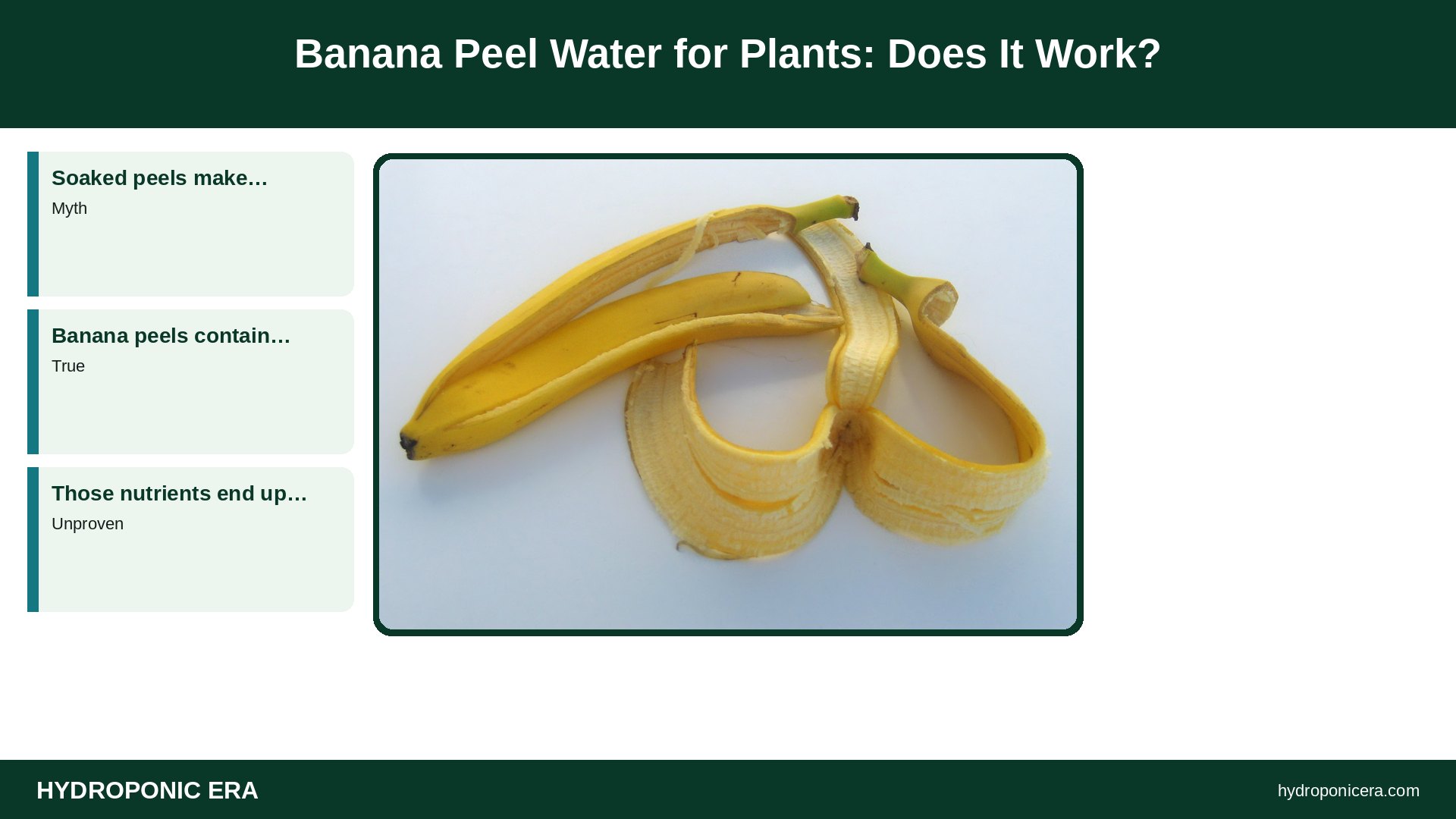
Banana peel water for plants is mostly a myth. Banana peels do contain potassium, but University of Maryland Extension says it is “not aware of any research” showing that soaking peels makes fertilizer-strength water. A Clemson Extension director adds that nobody knows what, if anything, leaches into the jar. Compost the peels instead, and feed plants with a labeled fertilizer based on a soil test.

aspirin for plants — Aspirin for Plants: What the Research Shows

Aspirin for plants is based on real science but oversold online. Plants use salicylic acid (SA), the compound aspirin breaks down into, as a signal to switch on their own defenses. However, University of Minnesota Extension Master Gardeners found the evidence “very thin” that spraying aspirin helps tomatoes. The only replicated home-garden trial we found, at the University of Rhode Island, couldn’t test disease control because no disease occurred. Aspirin is not a disease cure.

superthrive hydroponics — Superthrive Hydroponics: Does It Actually Work?

Superthrive hydroponics use is popular, but the evidence is mixed. Superthrive’s label ingredients include vitamin B1 (thiamine), a small amount of the synthetic auxin NAA (1-naphthaleneacetic acid), nitrogen and kelp. Extension research says vitamin B1 alone does not stimulate root growth in whole plants, while auxins like NAA can affect rooting. If you try it, use the maker’s low rates (¼ tsp per gallon for seedlings and clones), keep your base nutrients unchanged, and judge it with a side-by-side test.

hydroponic nutrient calculator — Hydroponic Nutrient Calculator: Do the PPM Math

A hydroponic nutrient calculator turns a target concentration (ppm) into grams of fertilizer per gallon, or the reverse. The core formula is short: grams per US gallon = target ppm × 3.785 ÷ (nutrient % × 10) . For example, 150 ppm nitrogen from calcium nitrate at 15.5% N needs about 3.7 g per gallon. Free tools like HydroBuddy do the same math for whole recipes, but an EC meter still has the final word.

hydroponic nutrients in soil — Hydroponic Nutrients in Soil: Can You Use Them?

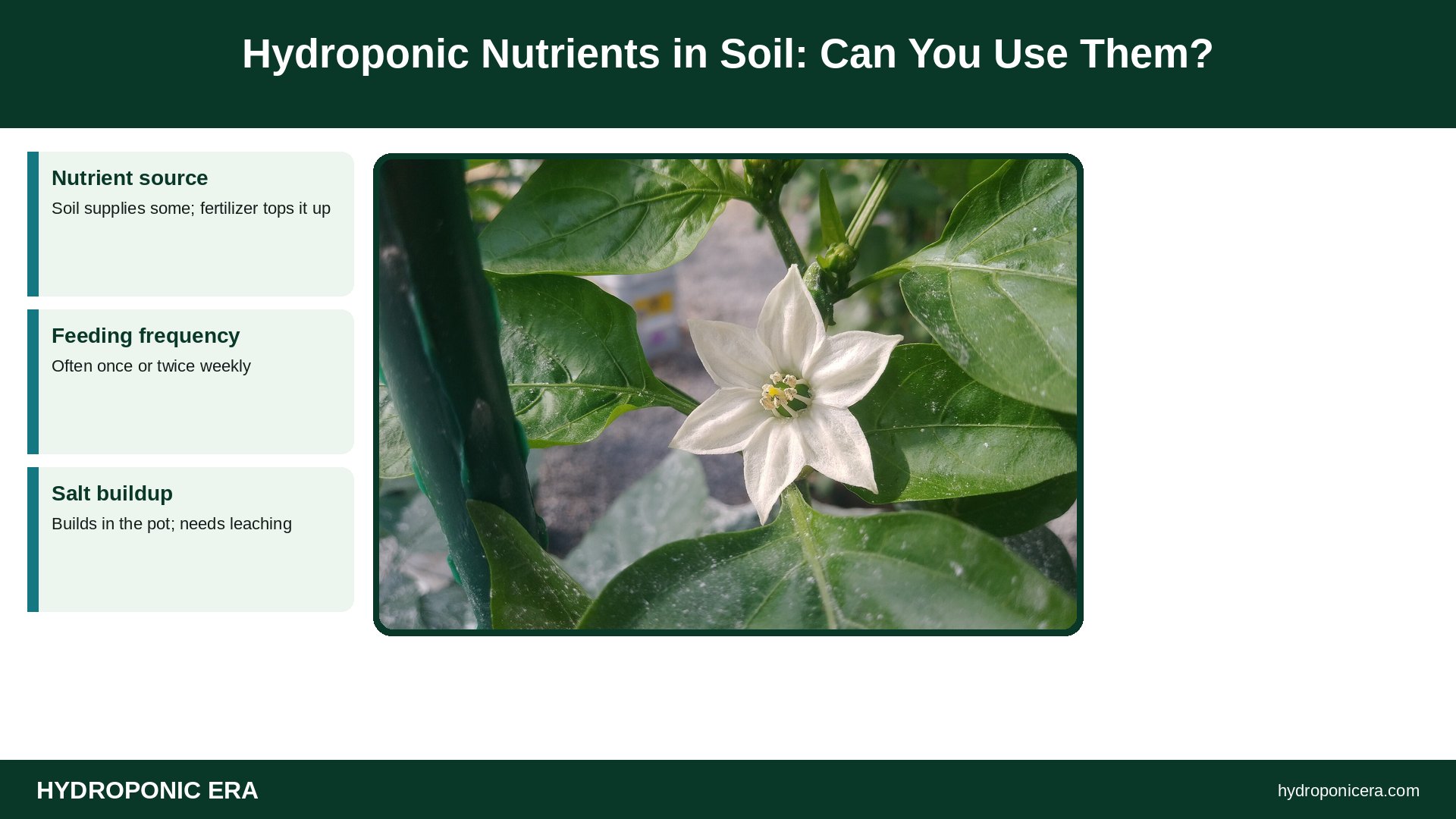
Yes, you can use hydroponic nutrients in soil . They’re complete, water-soluble fertilizers, and plants take up the same mineral ions either way. The catch is that soil and potting mix already hold nutrients and trap salts, so full hydroponic strength fed every watering can cause salt buildup and tip burn. Follow any soil directions on the label, feed once or twice a week with plain water between, and leach pots every two to three months.

maxigro feeding schedule — MaxiGro Feeding Schedule: How Much per Gallon

The MaxiGro feeding schedule on the General Hydroponics label is simple: 1–2 teaspoons per gallon of fresh water (5–10 grams per 4 liters). In hydroponics, change the reservoir weekly. In soil, feed once or twice a week with plain water in between. Use mild strength for delicate plants and full strength for robust ones, then switch to MaxiBloom when plants begin flowering or setting fruit.

epcot hydroponics — Epcot Hydroponics: Inside Living with the Land

Epcot hydroponics is real. At The Land pavilion in Epcot’s World Nature area, Walt Disney World’s Living with the Land boat ride passes working greenhouses where crops grow in hydroponic and other soilless systems, and the paid Behind the Seeds walking tour takes you inside. A peer-reviewed paper describes about 0.4 hectare (roughly 1 acre) of intensive growing area there, using a wide variety of hydroponic techniques and biological pest control.

grow pumpkins hydroponically — Can You Grow Pumpkins Hydroponically?

Can you grow pumpkins hydroponically ? Technically yes, but pumpkins are one of the crops that struggle in home hydroponics. Vines sprawl for feet, plants need strong sun-level light and warm conditions, and female flowers must be pollinated. Epcot’s greenhouse grows pumpkins hydroponically, but that’s a professionally run commercial greenhouse. At home, your best odds are a miniature variety in a Dutch bucket or large drip-fed container, in a greenhouse or sunny outdoor spot, with hand pollination.

grow sunflowers hydroponically — Can You Grow Sunflowers Hydroponically?

Yes, you can grow sunflowers hydroponically . A 2023 study in Ornamental Horticulture grew cut sunflowers in an NFT system with commercial-quality results, using EC 1.8–2.2 mS/cm and pH 5.5–6.5. For home growers, the easiest options are sunflower microgreens on a tray, or pollenless cut-flower varieties in Dutch buckets or deep media with very strong light. Single-stem cut-flower types reach harvest in about 50–95 days depending on cultivar, and stems often run 2 to 4 feet tall.