how to grow cat grass — How to Grow Cat Grass Without Soil (No Mold)

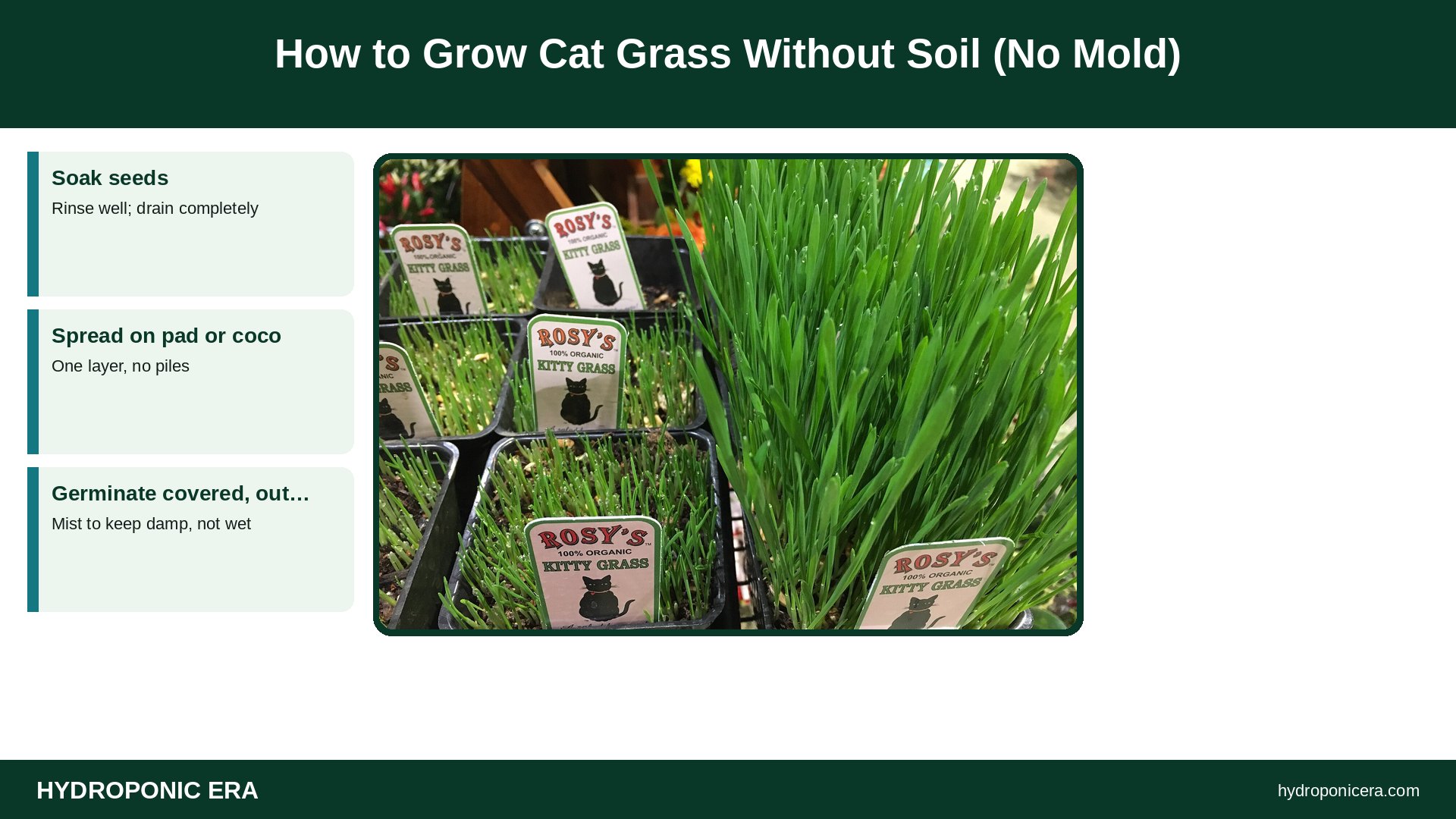
Here’s how to grow cat grass without soil: soak oat, wheat, barley or rye seeds, spread them in a single layer on a damp soilless pad or coco coir in a draining tray, keep them moist but never waterlogged, and give them bright light once they sprout. Sprouts appear in about 3–7 days, and grass is ready in 10–14 days at about 4 inches tall. Most mold comes from too much water and poor airflow. Offer it in moderation, and ask your vet if your cat has health issues.

how to grow duckweed — How to Grow Duckweed Indoors for Chickens or Food

Here’s how to grow duckweed indoors: float a starter culture on dechlorinated water in a shallow, still container, add a very dilute nutrient solution, give it bright light, and harvest a portion every few days so it never covers more than the surface can support. Duckweed can double in as little as 3 days under ideal conditions. Grow it only in closed containers, never release it into ponds or streams, and use only clean, controlled cultures for feed or food.

does hydroponics use less water — Does Hydroponics Use Less Water? The Real Numbers

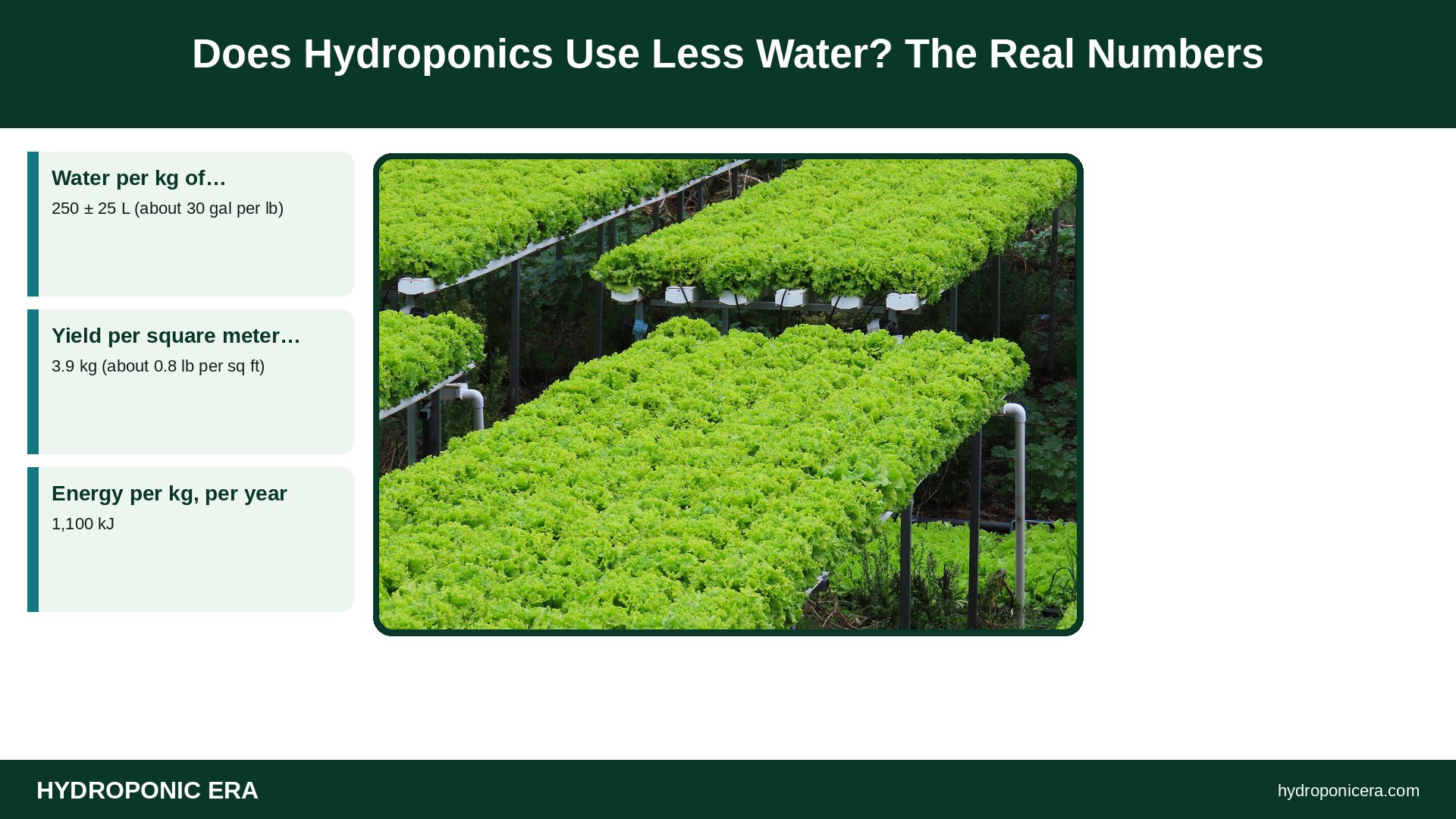
Does hydroponics use less water? Yes, per pound of food, a well-run recirculating system usually does. The best-known US comparison, a 2015 study of lettuce in Yuma, Arizona, modeled about 20 liters of water per kilogram for greenhouse hydroponics versus about 250 liters per kilogram for field lettuce. That’s roughly 13 times less water per unit of harvest. The catch is energy: the same study estimated hydroponic lettuce needed about 82 times more energy per kilogram.

controlled environment agriculture — Controlled Environment Agriculture (CEA), Explained

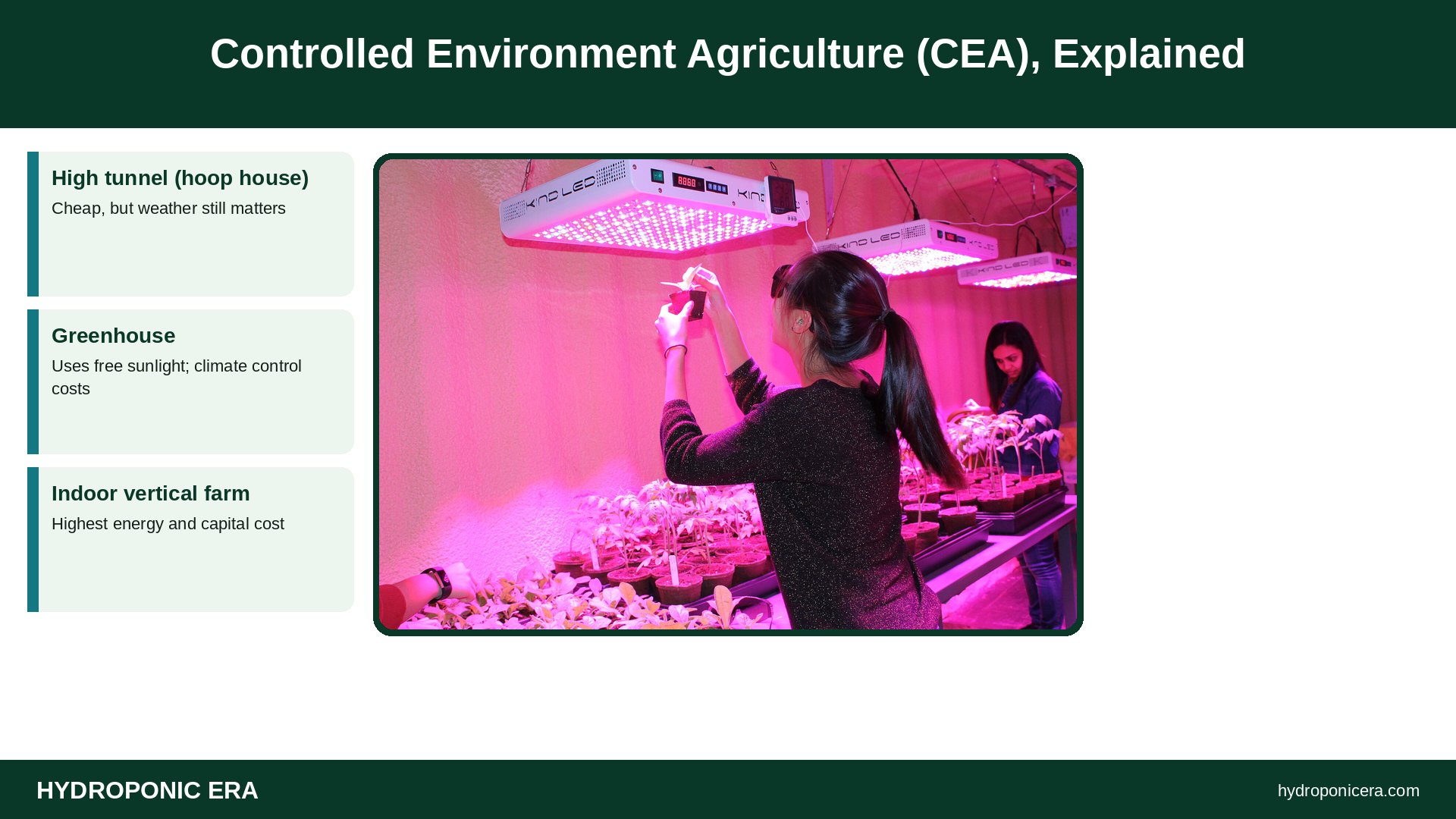
Controlled environment agriculture (CEA) means growing crops inside a structure where people can control some or all of the growing conditions: light, temperature, humidity, carbon dioxide, water and nutrients. Greenhouses, high tunnels, indoor vertical farms, container farms and growth chambers are all forms of it. Hydroponics is a root-zone method often used inside CEA, but the two aren’t the same thing; some CEA crops still grow in soil.

rooftop farming — Rooftop Farming: How US City Farms Grow on Roofs

Rooftop farming means growing food on a building’s roof, either in soil beds laid over a green-roof system or in a rooftop greenhouse, which is often hydroponic. In the US, Brooklyn Grange farms soil on three New York City rooftops, while Gotham Greens grows leafy greens hydroponically in rooftop greenhouses in New York and Chicago. Every project starts with the same step: a licensed structural engineer must confirm the roof can carry the load.

hydroponic grapes — Hydroponic Grapes: Can You Grow Grapes Without Soil?

Hydroponic grapes are experimental, not a proven home crop. The most advanced work comes from Australia’s CSIRO, where researchers grew dwarf table-grape “microvines” in coco coir bags under LED light and harvested first fruit 145 days after transplanting. Microvines have mostly been research plants. Regular grapevines are large, long-lived woody vines that usually need winter chilling, so at home the realistic approach is a container vine in soilless media on drip, grown outdoors or in a greenhouse. Treat any attempt as a trial, with no yield guarantees.

hydroponic lemon tree — Hydroponic Lemon Tree: Growing Citrus Without Soil

A hydroponic lemon tree is possible: grow a dwarf lemon, usually a Meyer, in a large container of well-drained soilless media such as coco and perlite, fed by drip or careful hand watering with a dilute, complete nutrient. It needs at least 6 hours of direct sun (8–12 is better), 65–75°F days and protection below 32°F. Before you buy or move a tree, know the law: citrus quarantines in states such as Florida, California, Texas and Arizona restrict moving citrus plants. Buy from a licensed local nursery and never ship or carry citrus across state lines without checking.

grow raspberries hydroponically — How to Grow Raspberries Hydroponically

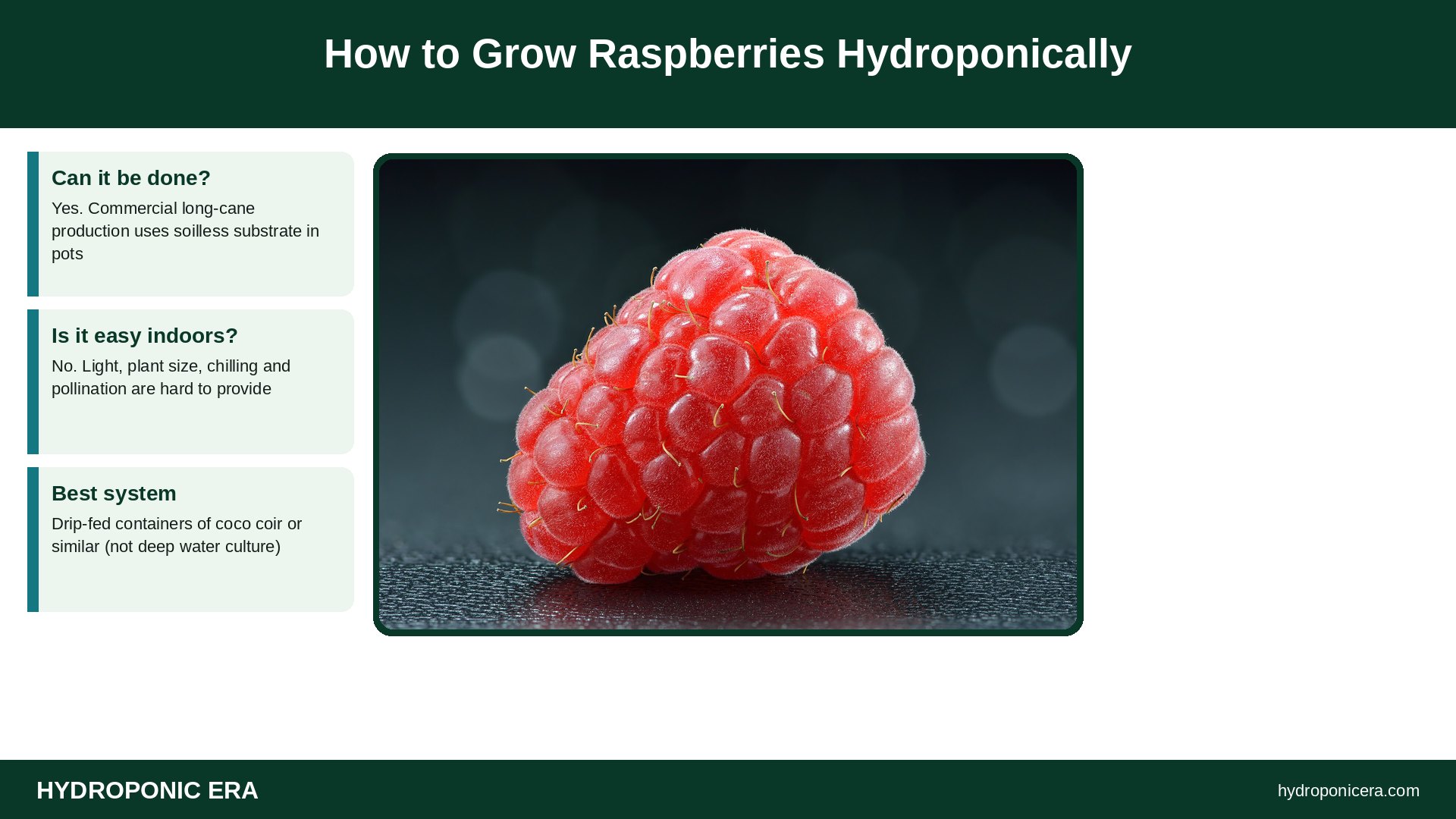
You can grow raspberries hydroponically , but it’s a long-term project, not a quick countertop crop. Raspberries have a perennial root system with biennial canes, they want full sun and good drainage, and many types need winter chilling to fruit. Commercial growers succeed with “long-cane” plants in coco coir or bark-filled pots under high tunnels, fed by drip. At home, the most realistic route is a compact or everbearing variety in a large container of soilless mix on drain-to-waste drip, outdoors or in a greenhouse.

fluoride in water for plants — Fluoride in Water for Plants: Which Ones Get Hurt?

Fluoride in water for plants is harmless for most crops, but a short list of sensitive plants can develop brown leaf tips and scorched margins from fluoridated tap water. Dracaena (corn plant), spider plant, Tahitian bridal veil, yucca, lilies, tulips and gladiolus are the classic victims. If you grow them, water with rainwater, distilled or reverse osmosis (RO) water, skip perlite and superphosphate, and keep the root zone pH from running low.

vegetables to grow indoors in winter — Vegetables to Grow Indoors in Winter: 12 Easy Picks

The best vegetables to grow indoors in winter are fast, low-light, cool-tolerant crops: microgreens, pea shoots, loose-leaf lettuce, arugula, spinach, Asian greens, baby kale, Swiss chard, scallions, radishes and hardy herbs like parsley and chives. A sunny south window helps, but in most US homes you’ll get far better results with a simple LED grow light on a 14- to 16-hour timer.