The best hydroponics course for most US beginners is a short university program: the University of Arizona’s online Introduction to Hydroponics ($299, self-paced) or Oregon State’s Introduction to Hydroponics ($285, asynchronous). For careers, look at CEA Works ($500 for four courses) or Arizona’s annual CEA Short Course. None is a license; they build skills.
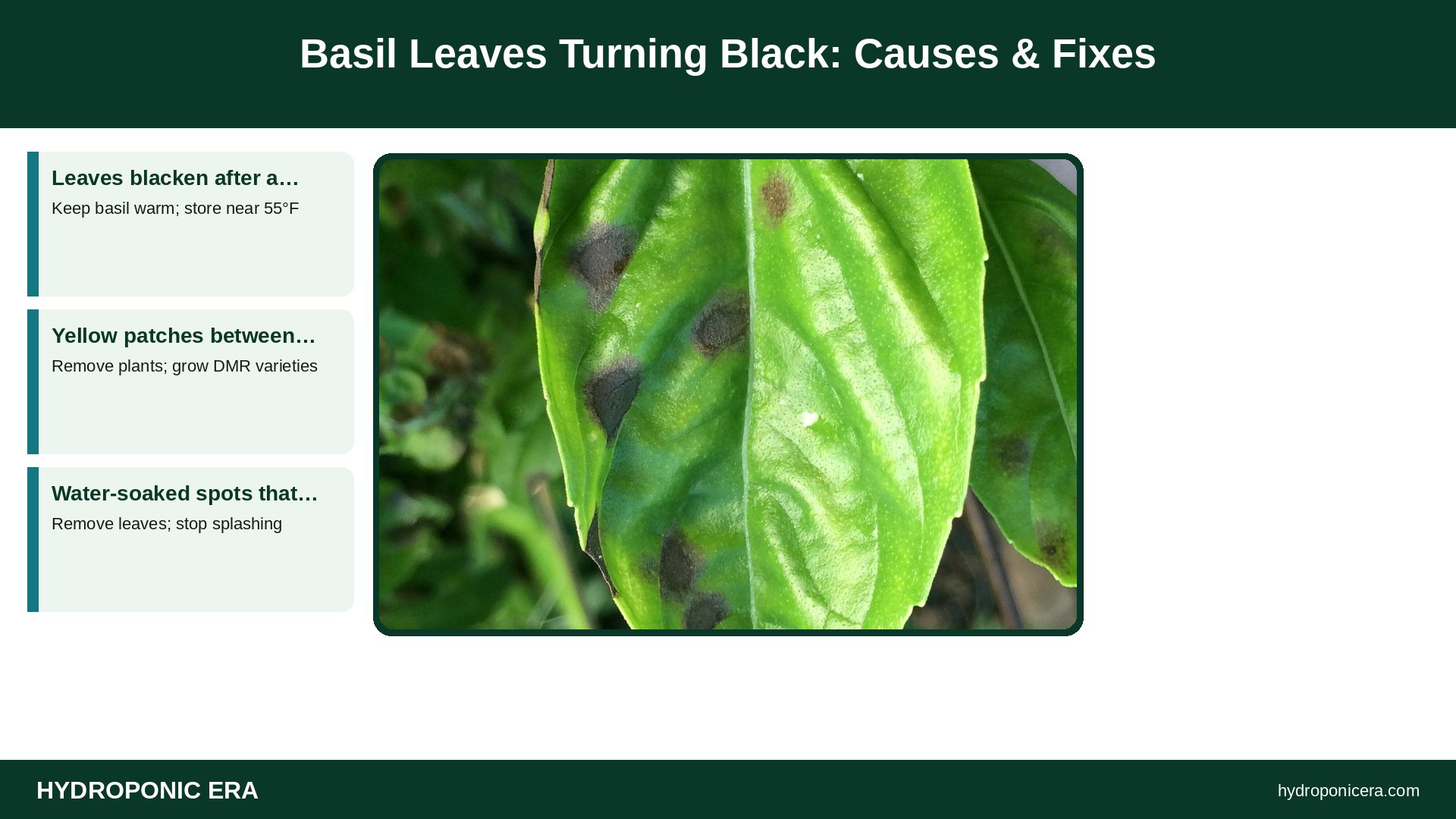
Basil leaves turning black usually point to one of five causes. The most common are cold injury below about 50°F and fridge storage. Downy mildew and bacterial leaf spot ( Pseudomonas cichorii ) cause black spots too, and thrips damage can look similar. Check the leaf underside, the temperature log and where the spots started. Then fix the cause.
Here’s how to store hydroponic lettuce : leave the roots on, set the head in a closed container or bag, and refrigerate it at 32–40°F with high humidity. Don’t wash it until just before eating. Stored this way, most leaf lettuce stays crisp for about two to three weeks. Closed packaging matters more than the roots.
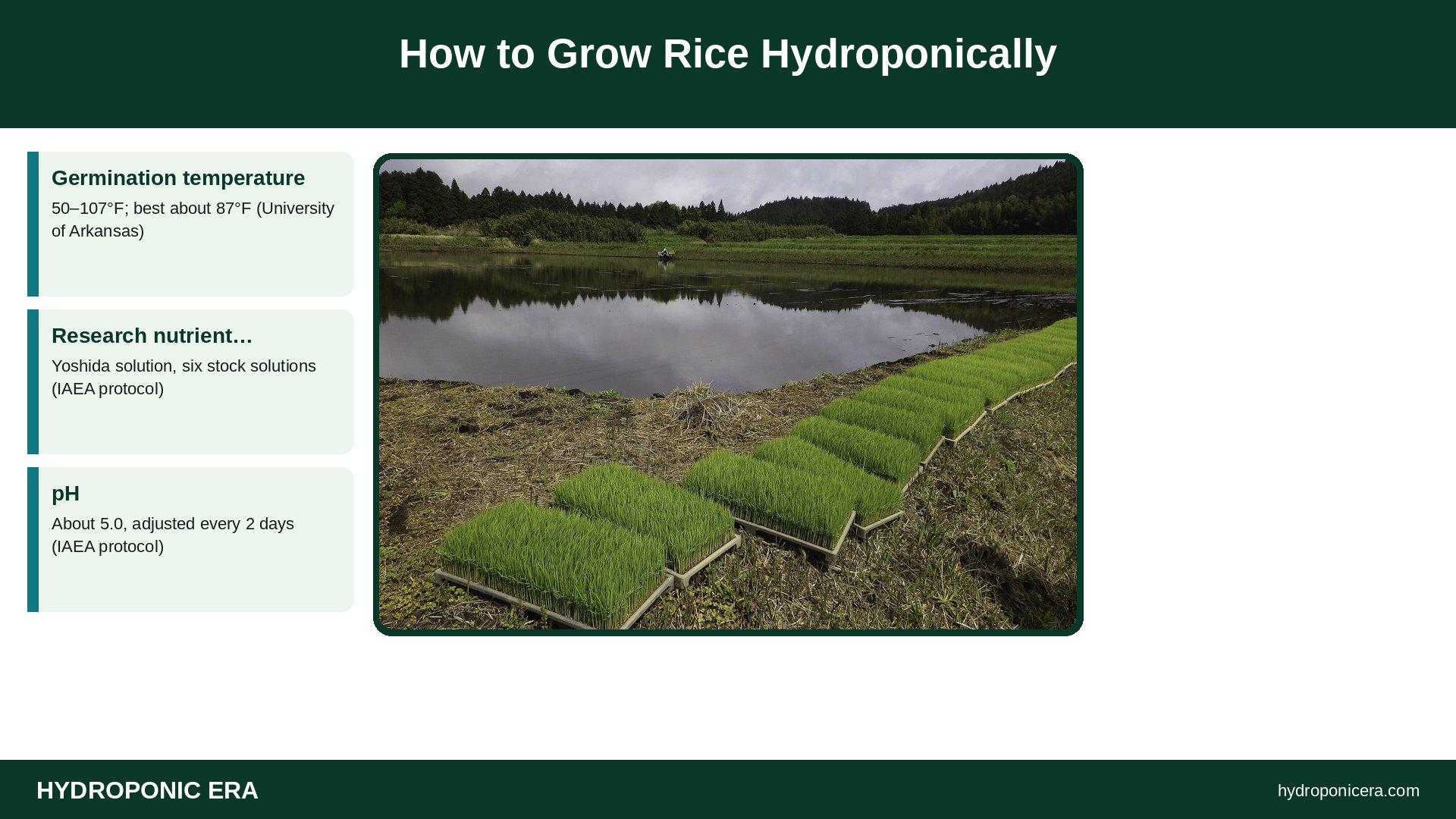
Here’s how to grow rice hydroponically : germinate seed on mesh over water in the dark, switch to a half-strength nutrient solution after a few days, then grow plants in a dark-walled tank with full-strength solution at about pH 5.0, warm temperatures and very bright light. Expect 105–145 days to grain. It’s doable at home but challenging.
Here’s how to grow wheatgrass without soil: soak hard red winter wheat seeds for about 12 hours, rinse until tiny roots show, spread them densely on a damp soilless pad or mix, and keep them warm (70–75°F) and out of direct sun for a few days. Then move them to bright light. Harvest in about 7–10 days.
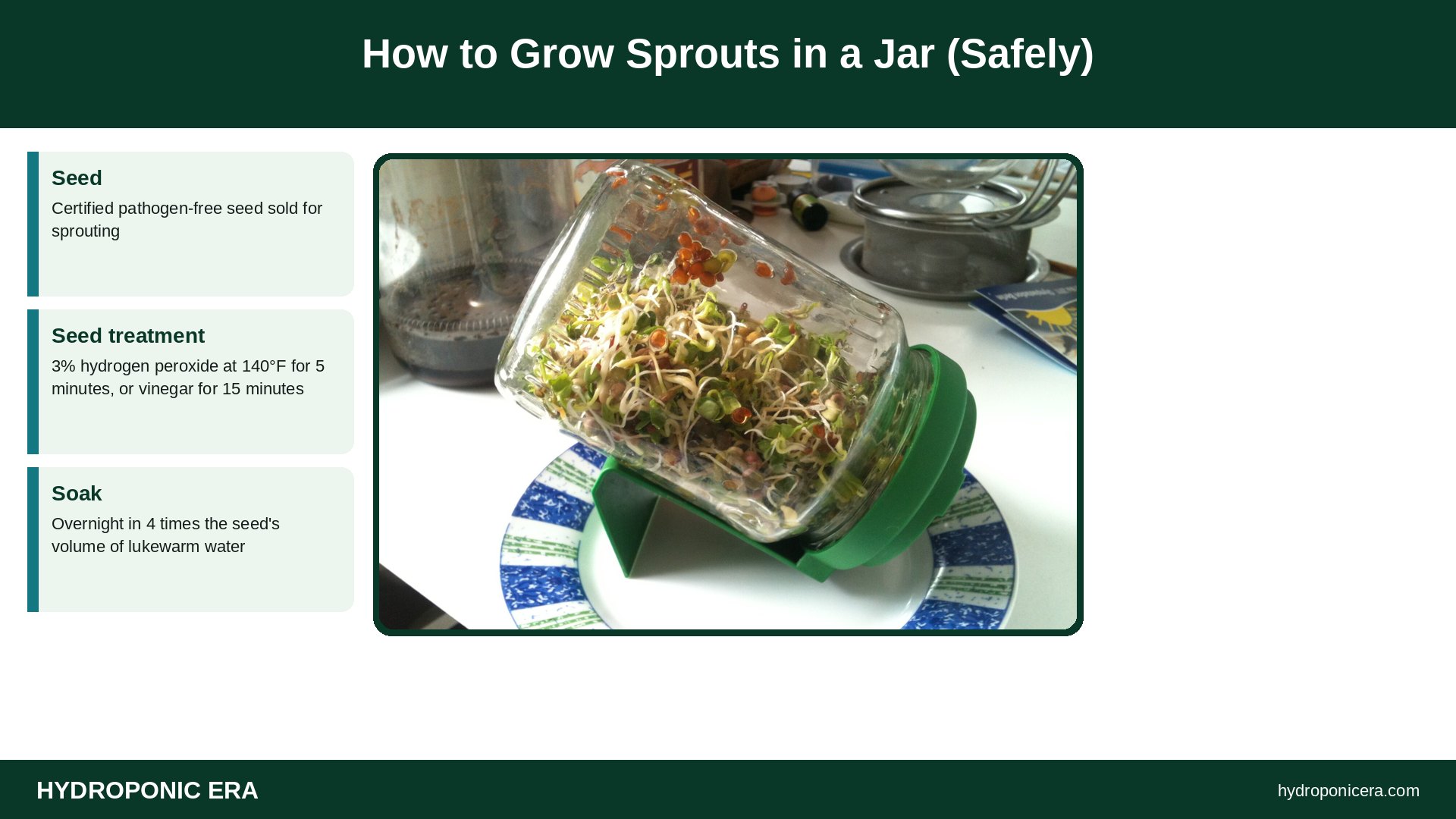
Here’s how to grow sprouts in a jar safely: buy certified pathogen-free sprouting seed, sanitize the seed and jar, soak the seed overnight, then drain, cap with mesh and rinse at least three times a day. Sprouts are ready in 3–4 days at 1–2 inches. Raw sprouts carry real food-poisoning risk, so high-risk people should eat them cooked.
Container farming cost starts at roughly $215,000 to buy a turnkey hydroponic shipping-container farm in 2026, or about $3,000 a month to lease through a farm-as-a-service plan. Then add power (tens of thousands of kWh a year), about 25 labor hours a week, seeds, packaging and delivery. Profit depends far more on your selling price than on the box.
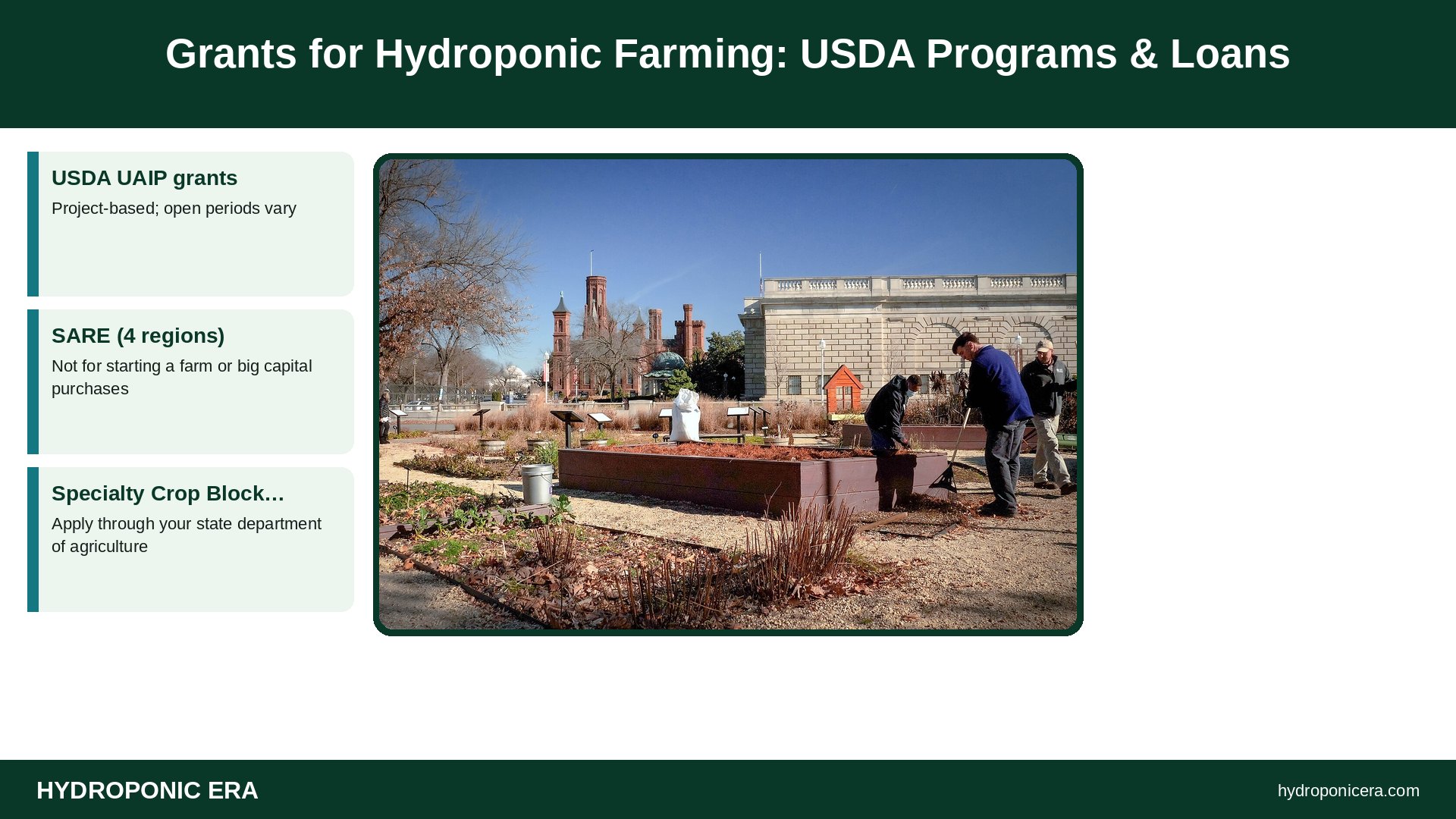
Grants for hydroponic farming exist, but they’re competitive, project-based and rarely cover simply starting a farm. In the US, look at USDA Urban Agriculture and Innovative Production grants, regional SARE grants, and Specialty Crop Block Grants through your state. FSA loans are often the realistic funding path, and EQIP high tunnel support excludes hydroponics.
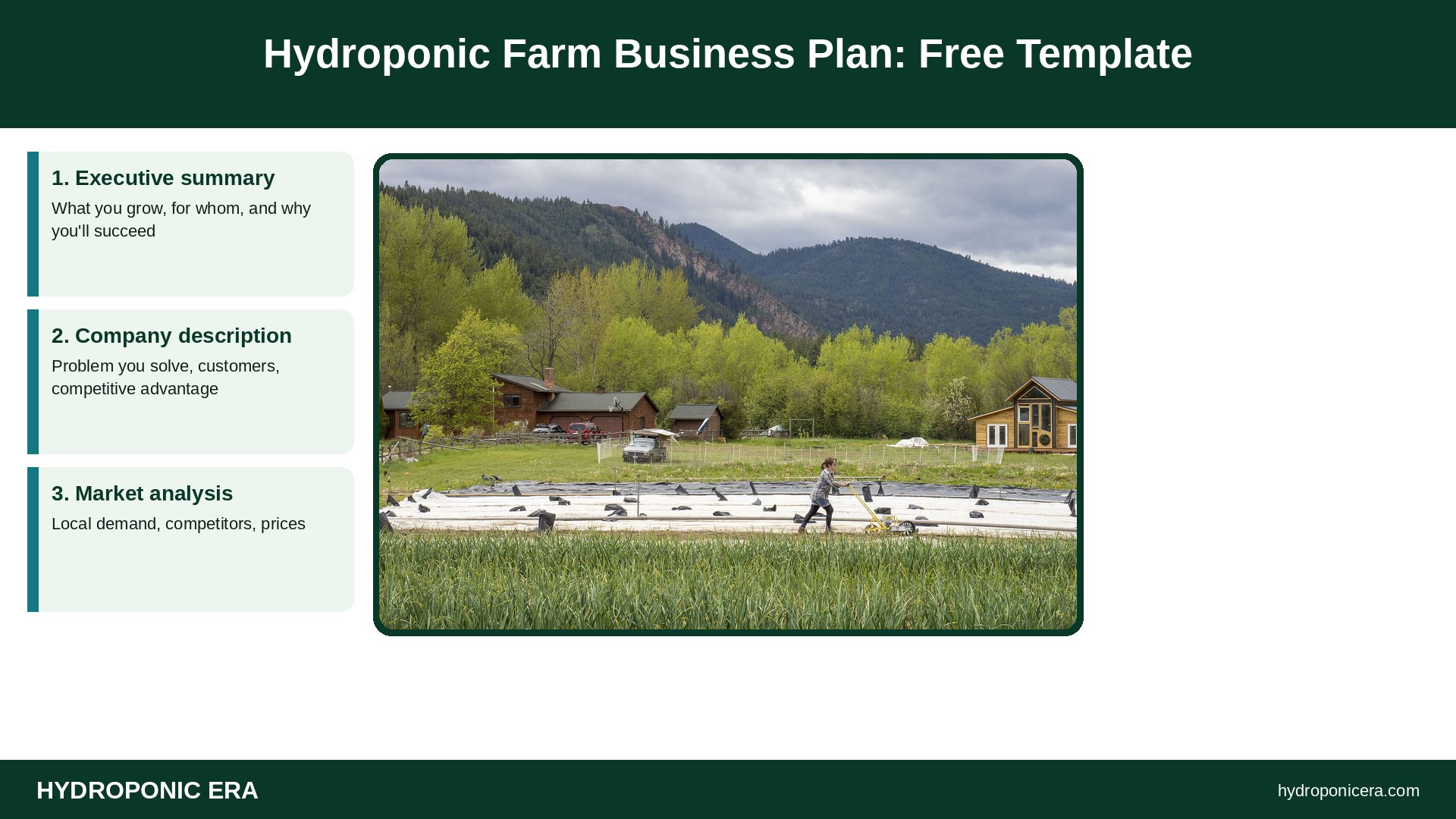
A hydroponic farm business plan should follow the SBA’s traditional structure: executive summary, company description, market analysis, management, products, marketing and sales, funding request and financial projections. Add a production plan covering your system, crops, yields and labor. Build it on local prices and buyer conversations, not brochure yields.
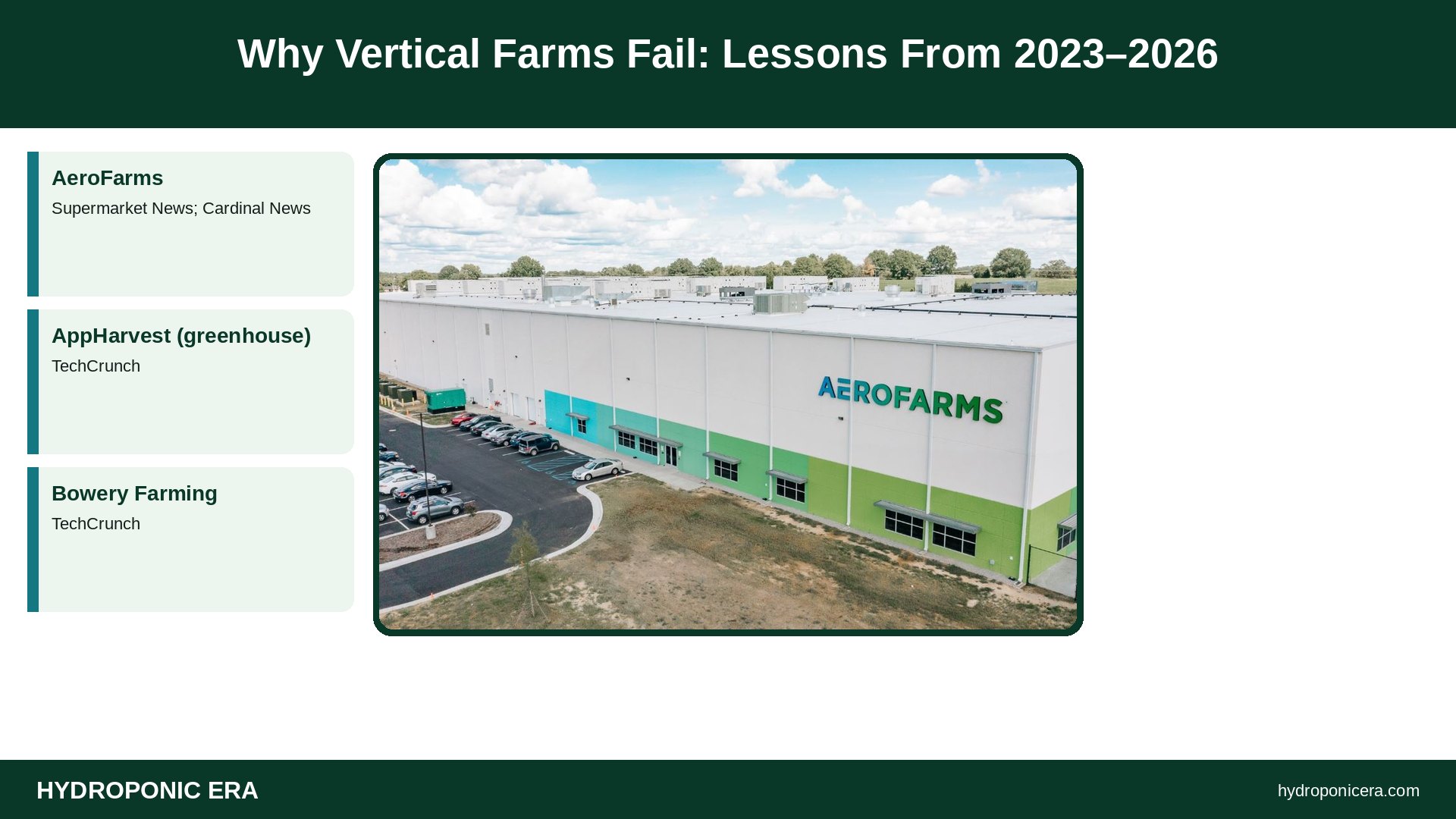
Why vertical farms fail usually comes down to money: high capital costs, heavy electricity and labor bills, and leafy greens that sell for supermarket prices. From 2023 to 2026, Bowery, AeroFarms, Plenty, 80 Acres Farms and Freight Farms all closed or went through bankruptcy. Survivors narrowed their crops, sold premium products, or found new owners.