Hydroponic farms in the US are a major part of protected food production. USDA’s 2024 Census of Horticultural Specialties counted 3,731 operations selling food crops grown under protection, and about 60% of that production came from hydroponic systems. Lettuce and tomatoes lead. Big names include Gotham Greens, Little Leaf Farms and BrightFarms, mostly in sunlit greenhouses.
Here’s how to grow wasabi hydroponically : start with clean plantlets, keep the nutrient solution cool (about 54–59°F), give flowing, oxygen-rich water and heavy shade, and feed lightly. Wasabi hates heat. It’s a slow specialty crop; WSU Extension reports harvests at 16–20 months in traditional water beds.
Raspberry Pi hydroponics monitoring is a weekend project: the Pi can’t read analog sensors directly, so pair it with an ADS1115 converter for pH and TDS probes, add a waterproof DS18B20 for water temperature, calibrate with buffer solutions, and log readings with Python. Keep every signal at 3.3 V or less, and treat cheap sensors as trend tools.
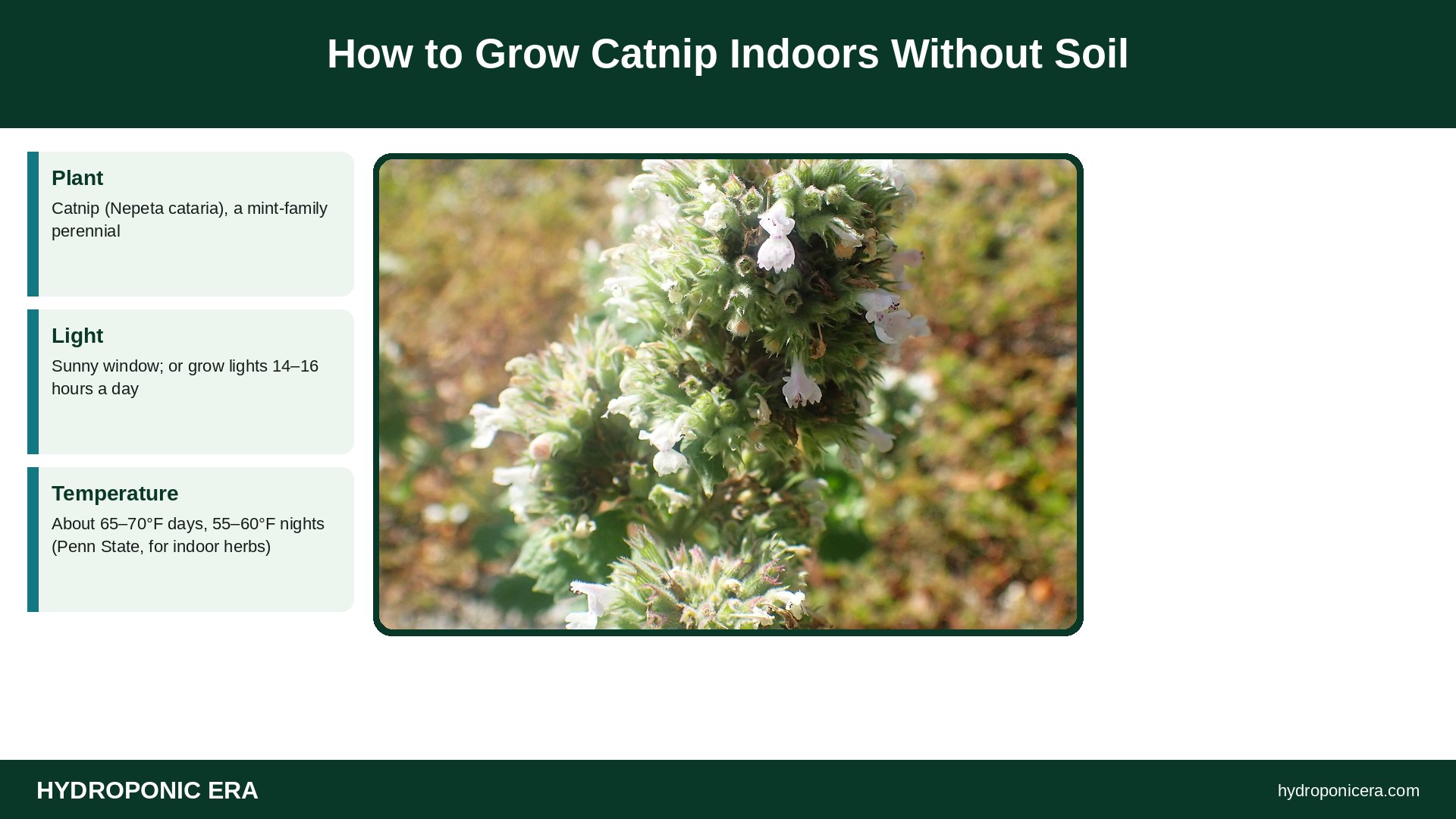
Here’s how to grow catnip indoors : sow seed or plant a division in a pot with drainage and well-drained mix, give it a sunny south or west window or grow lights for 14–16 hours a day, water when the mix starts to dry, and pinch often. Keep it out of your cat’s reach until it’s established.
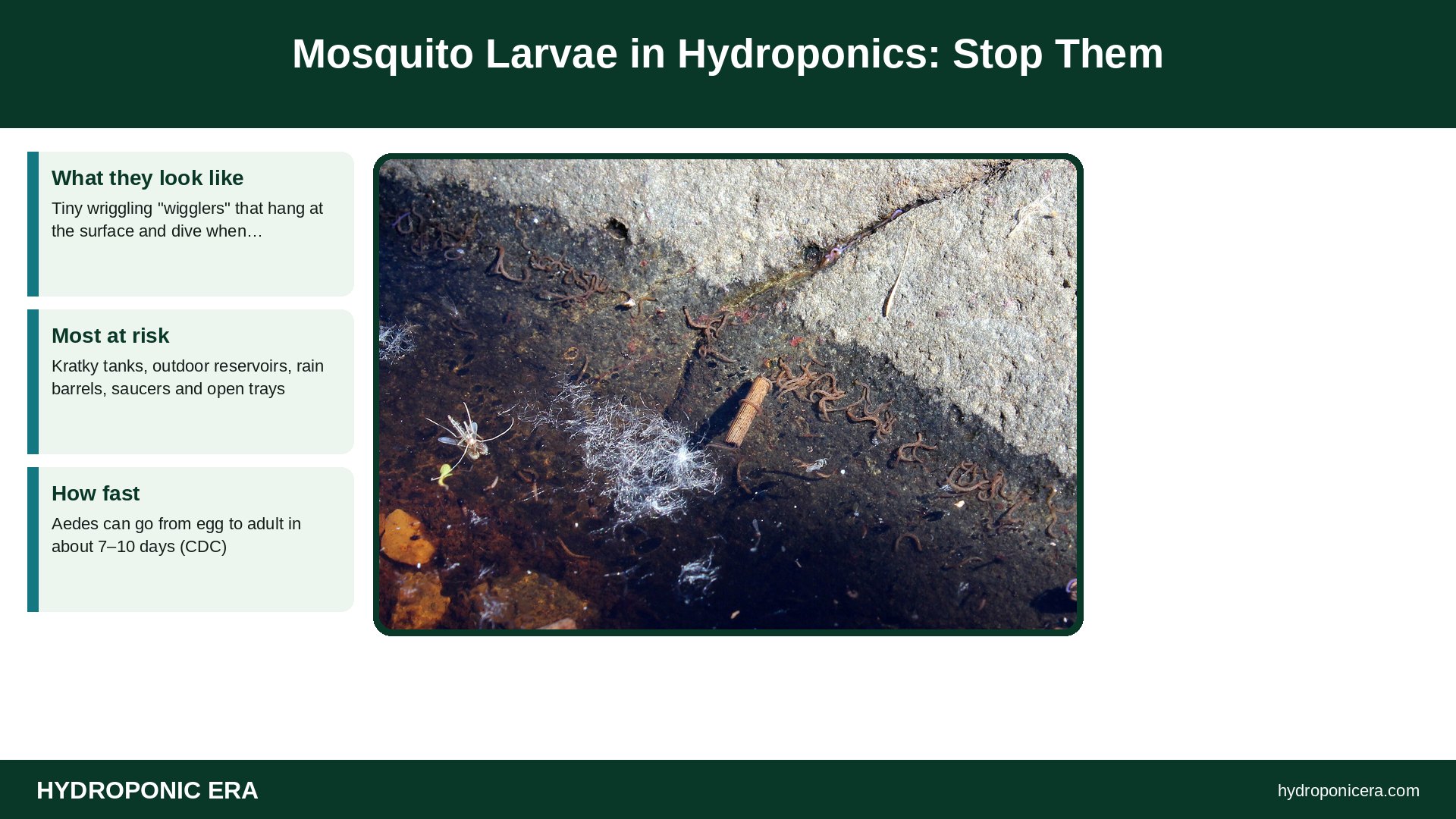
To stop mosquito larvae in hydroponics , close every opening where a mosquito could reach still water. Seal lids, plug empty net-pot holes and screen overflows. Dump or cover standing water nearby. If larvae still appear, a Bti product labeled for your use kills them without harming people, according to the EPA.
Here’s how to grow saffron indoors : buy firm Crocus sativus corms in late summer, plant them right away in deep pots or crates (or soilless trays), keep them cool and bright through fall, then pick the flowers and dry the three red stigmas. Expect a small harvest; it takes about 150–170 flowers to make one gram of saffron.
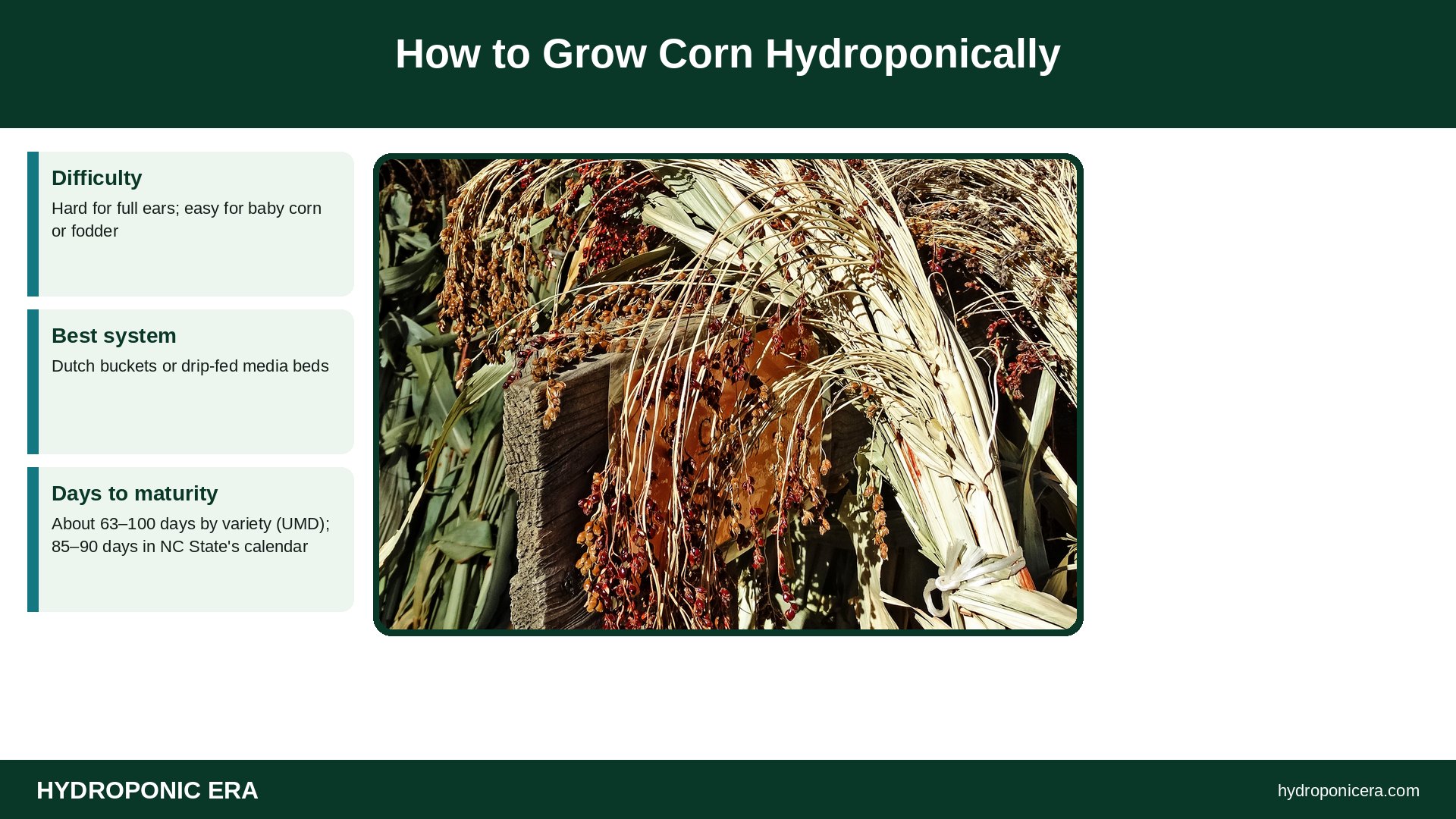
If you’re wondering how to grow corn hydroponically , the honest answer is: it works best in large Dutch buckets or drip-fed media, with strong light, plenty of nitrogen and hand pollination. Sweet corn is tall, hungry and wind-pollinated, so indoor ears are often small. Baby corn and corn fodder are far easier wins.
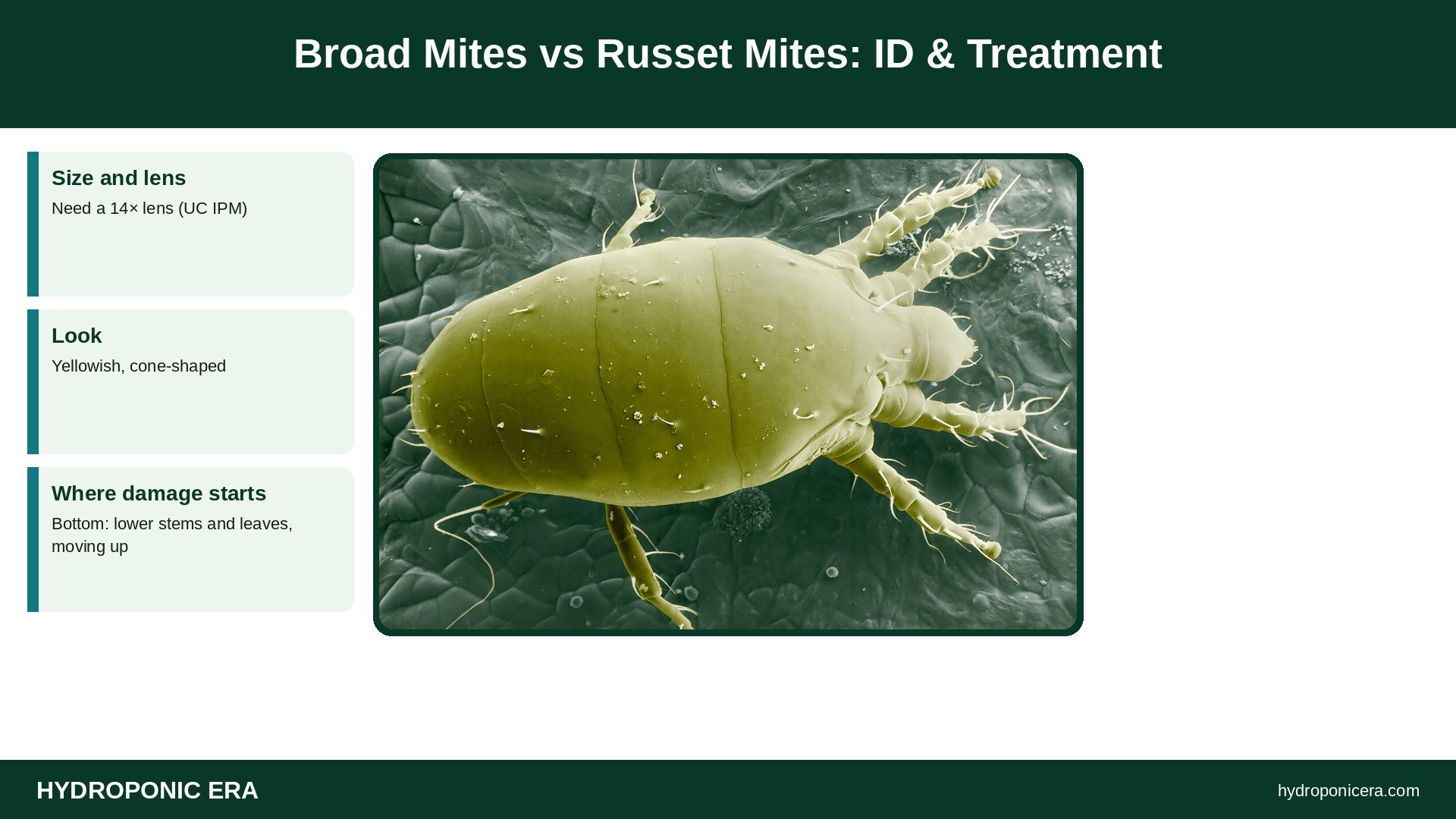
Broad mites attack the newest growth, leaving young leaves twisted, cupped and bronzed. Russet mites start low on the plant and turn stems and lower leaves greasy bronze as they move up. Both are too small to see without a 14–20× lens. Control starts with confirming the mite, removing badly hit shoots, using predatory mites and choosing a true miticide.
Tomato brown rugose fruit virus (ToBRFV) is a highly contagious tobamovirus of tomatoes and peppers. It spreads mainly on hands, tools, clothing and seed, and there’s no cure. Infected plants show mottled, crinkled leaves and brown, rough patches on fruit. Bag and destroy infected plants, disinfect everything they touched, and replant with clean seed. It doesn’t harm people.
Fusarium wilt hydroponics problems start when a soilborne fungus, Fusarium oxysporum, enters roots and blocks the plant’s water-conducting tissue. Look for yellowing and wilting, often on one side, plus brown streaks inside the stem. There’s no cure for infected plants, so remove them, disinfect the system, and use resistant varieties and clean starts.