who invented hydroponics — Who Invented Hydroponics? A Short History

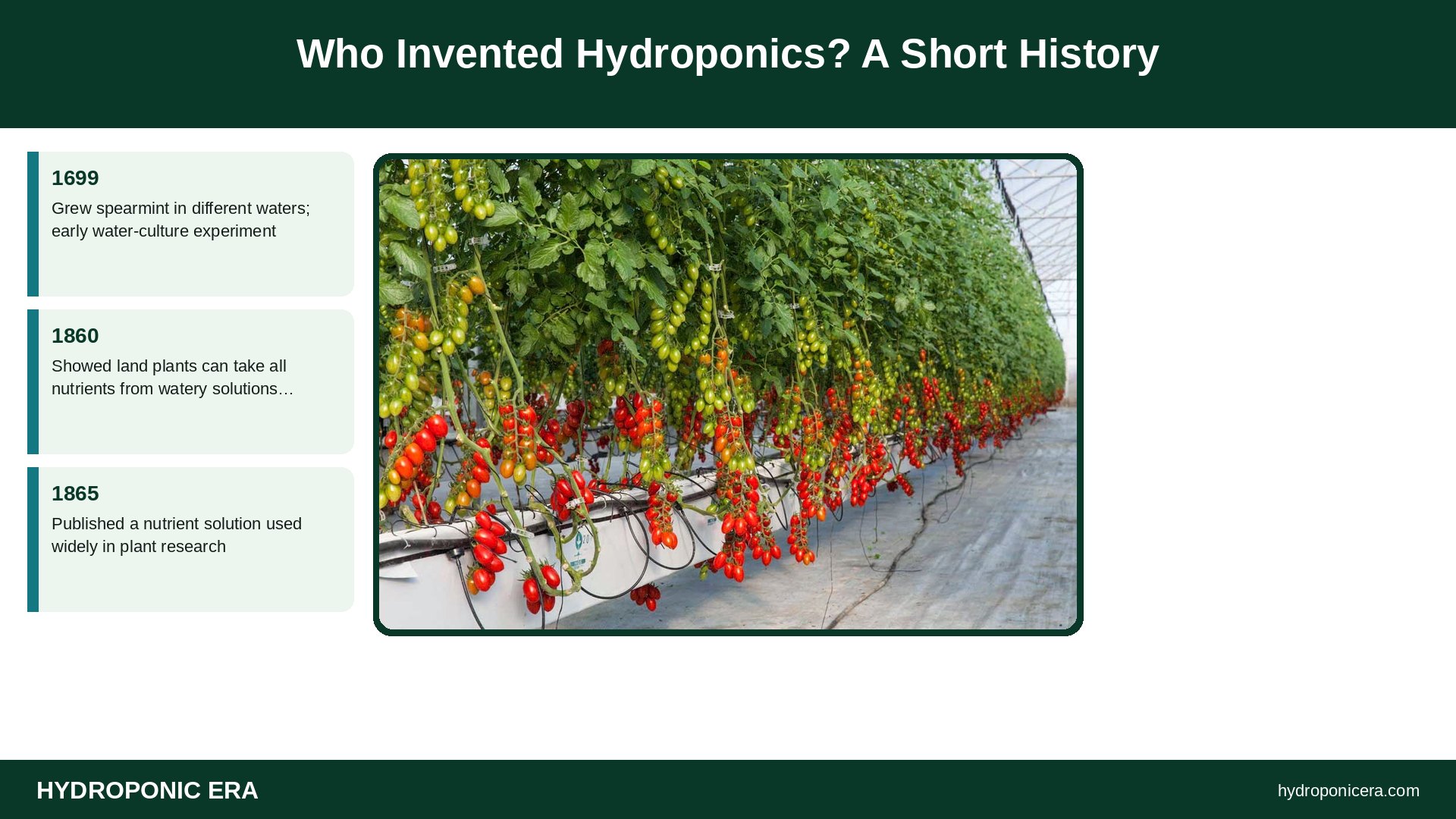
Who invented hydroponics? No single person. Scientists grew plants in water for centuries, Julius von Sachs and Wilhelm Knop proved around 1860 that plants could live on mineral solutions alone, and William F. Gericke of the University of California turned the lab method into practical crop production in the late 1920s and 1930s, popularizing the word “hydroponics.”

are hydroponic vegetables healthy — Are Hydroponic Vegetables Healthy? Nutrition Facts

Are hydroponic vegetables healthy? Yes. Hydroponic vegetables contain the same vitamins, minerals and fiber as soil-grown ones of the same variety. Research shows small differences in either direction, and those depend more on variety, light, nutrient management, harvest timing and freshness than on soil itself. Eating more vegetables matters far more than how they were grown.

best hydroponic nutrients — Best Hydroponic Nutrients (2026): Top Picks by Grower Type

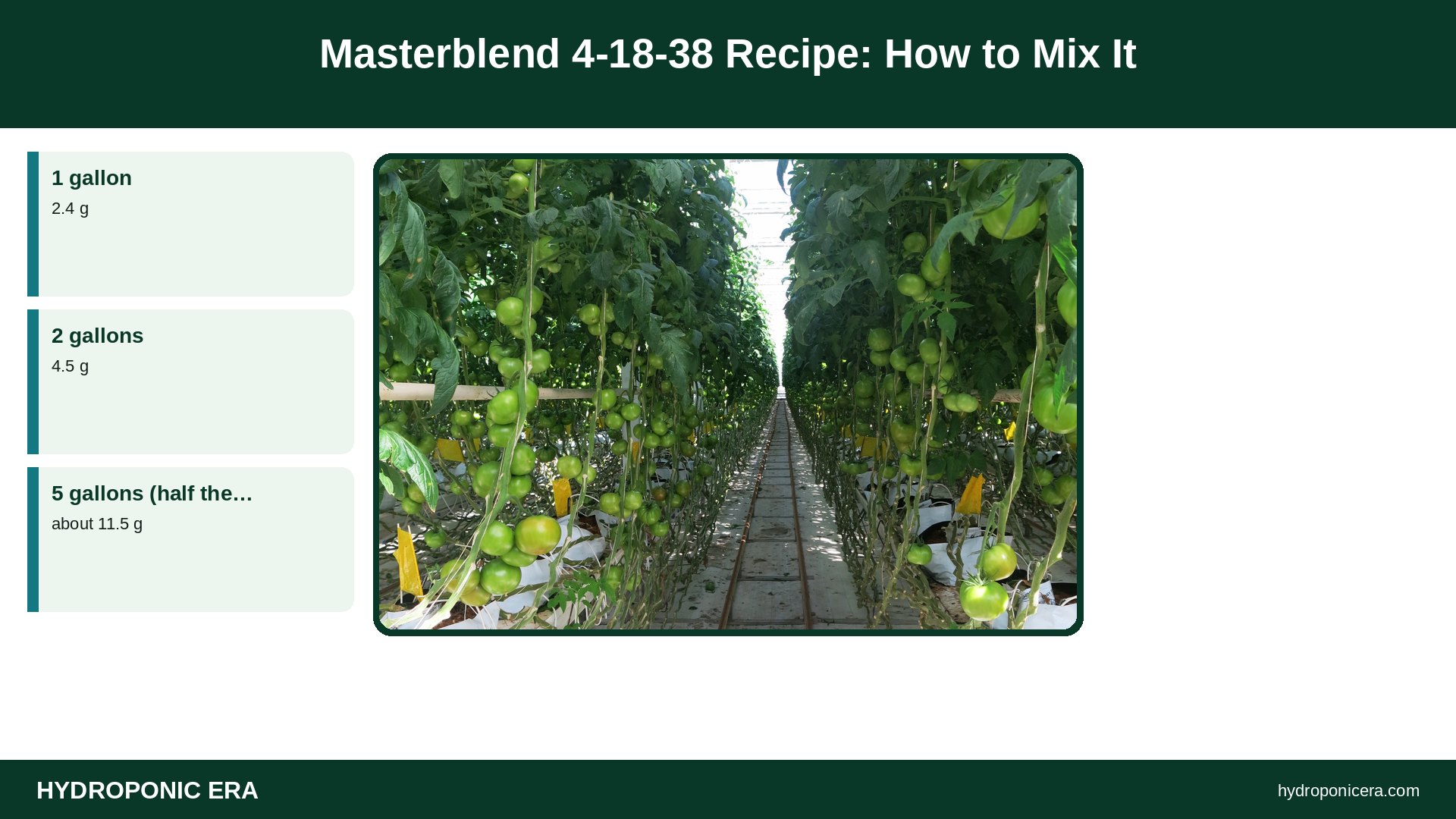
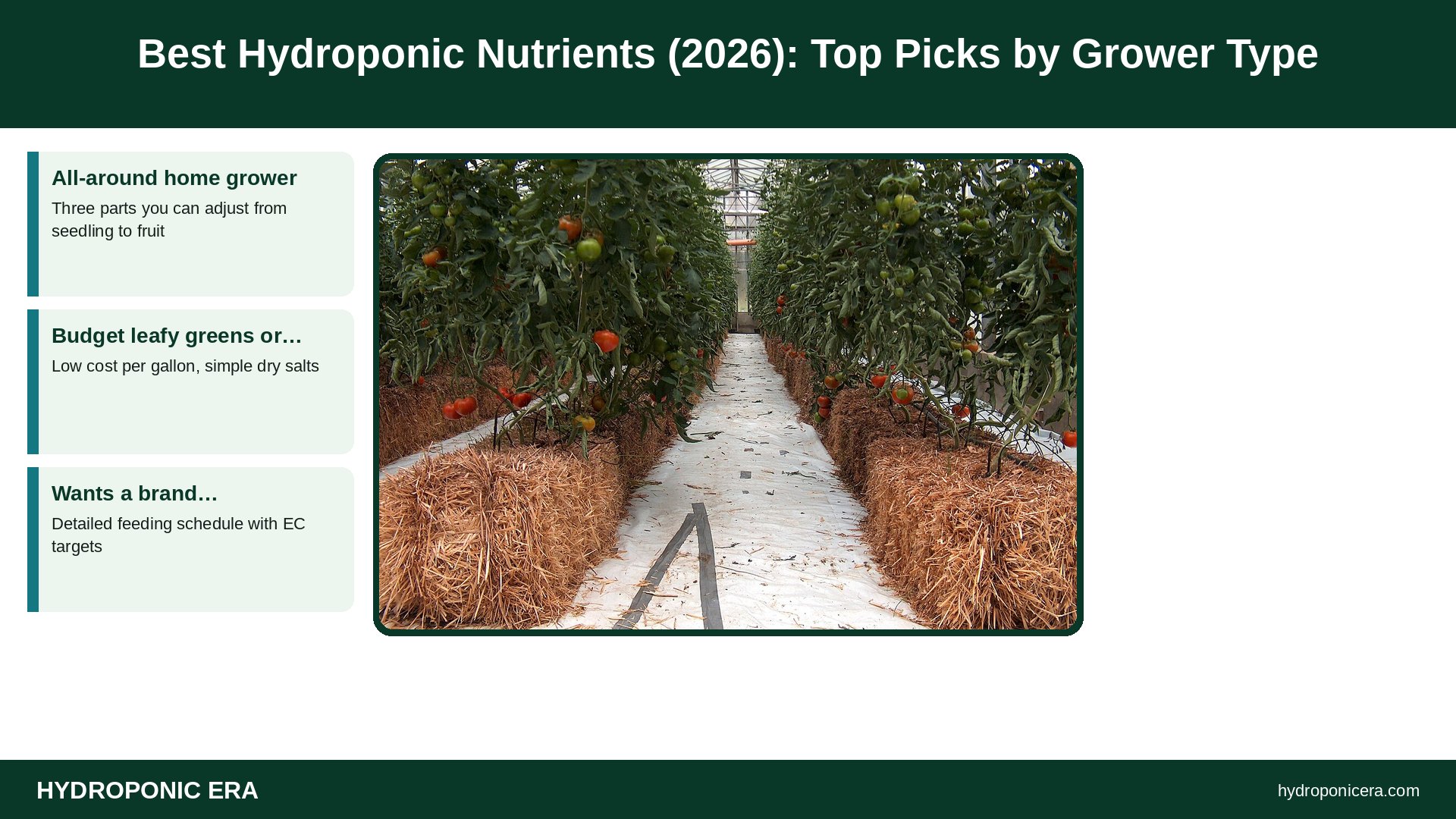
The best hydroponic nutrients are complete, water-soluble formulas made for soilless growing, meaning they supply calcium, magnesium and chelated micronutrients, not just N-P-K. For most US home growers, General Hydroponics Flora Series is the most flexible pick, Masterblend 4-18-38 with calcium nitrate and Epsom salt is the budget pick, and the FoxFarm hydro trio suits growers who want a brand schedule.

miracle gro hydroponics — Miracle-Gro Hydroponics: Can You Use It Safely?

Miracle Gro hydroponics is possible in a pinch, but it isn’t a good long-term plan. Miracle-Gro Water Soluble All Purpose Plant Food (24-8-16) supplies its nitrogen as ammonium and urea, lists no calcium or magnesium, and was made for soil. A complete hydroponic nutrient, or a 4-18-38 kit with calcium nitrate and Epsom salt, grows healthier plants for about the same effort.

flora series feeding chart — GH Flora Series Feeding Chart Explained

The Flora Series feeding chart from General Hydroponics tells you how many milliliters of FloraMicro, FloraGro and FloraBloom to add per gallon at each growth stage. Seedlings start near 1.8 mL/gal of each part. Vegetative feeds lean on Micro and Gro, and bloom feeds lean on Bloom. Always add Micro to the water first, then Gro, then Bloom, and check EC and pH last.

rdwc system — RDWC System: How Recirculating DWC Works

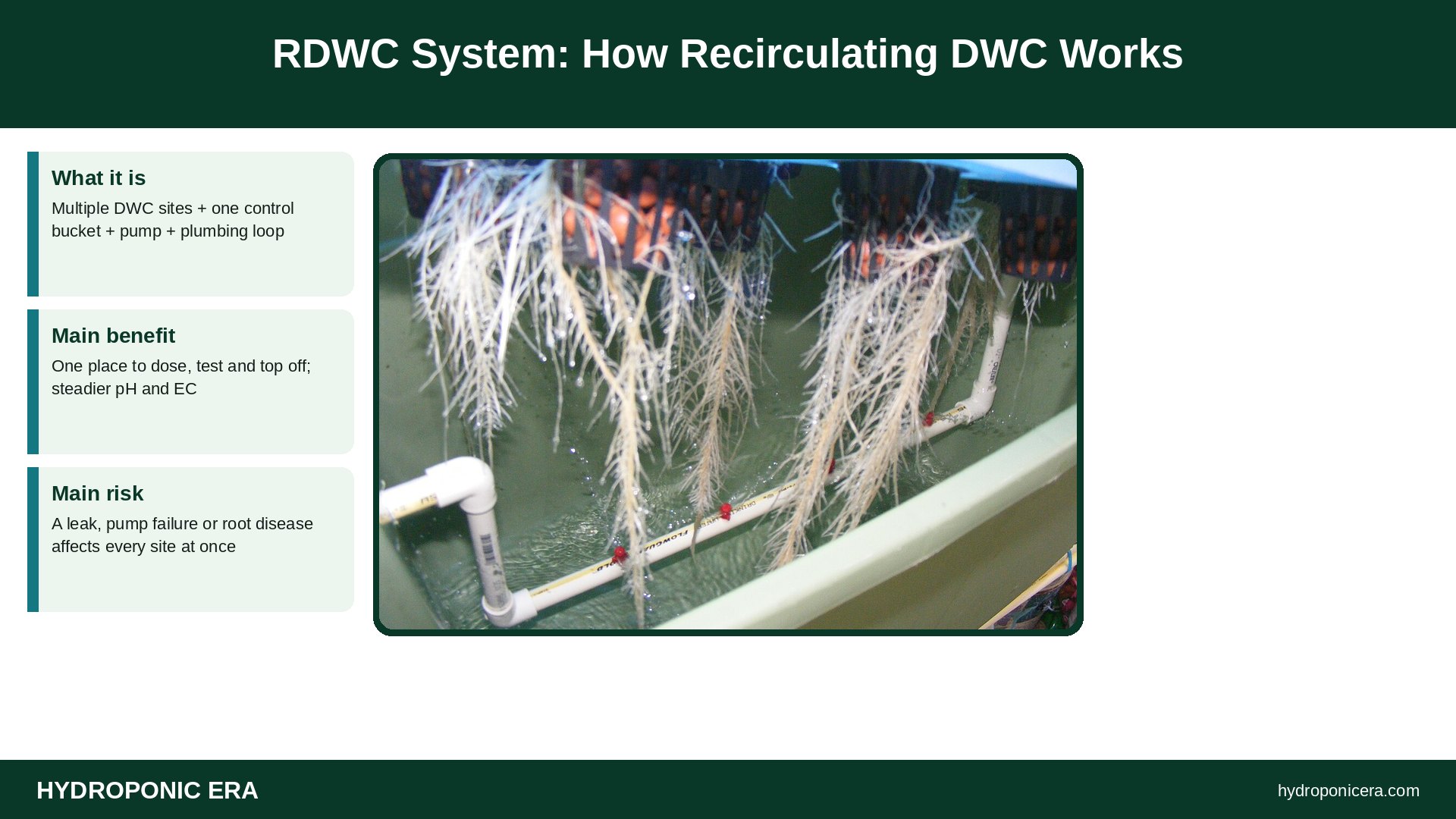
An RDWC system (recirculating deep water culture) links several aerated DWC buckets to one control bucket with pipes, so a single pump keeps the same nutrient solution moving through every plant site. You check pH, EC and temperature in one place instead of in each bucket, and the larger shared volume stays more stable.

wick system hydroponics — Wick System Hydroponics: How It Works + DIY Build

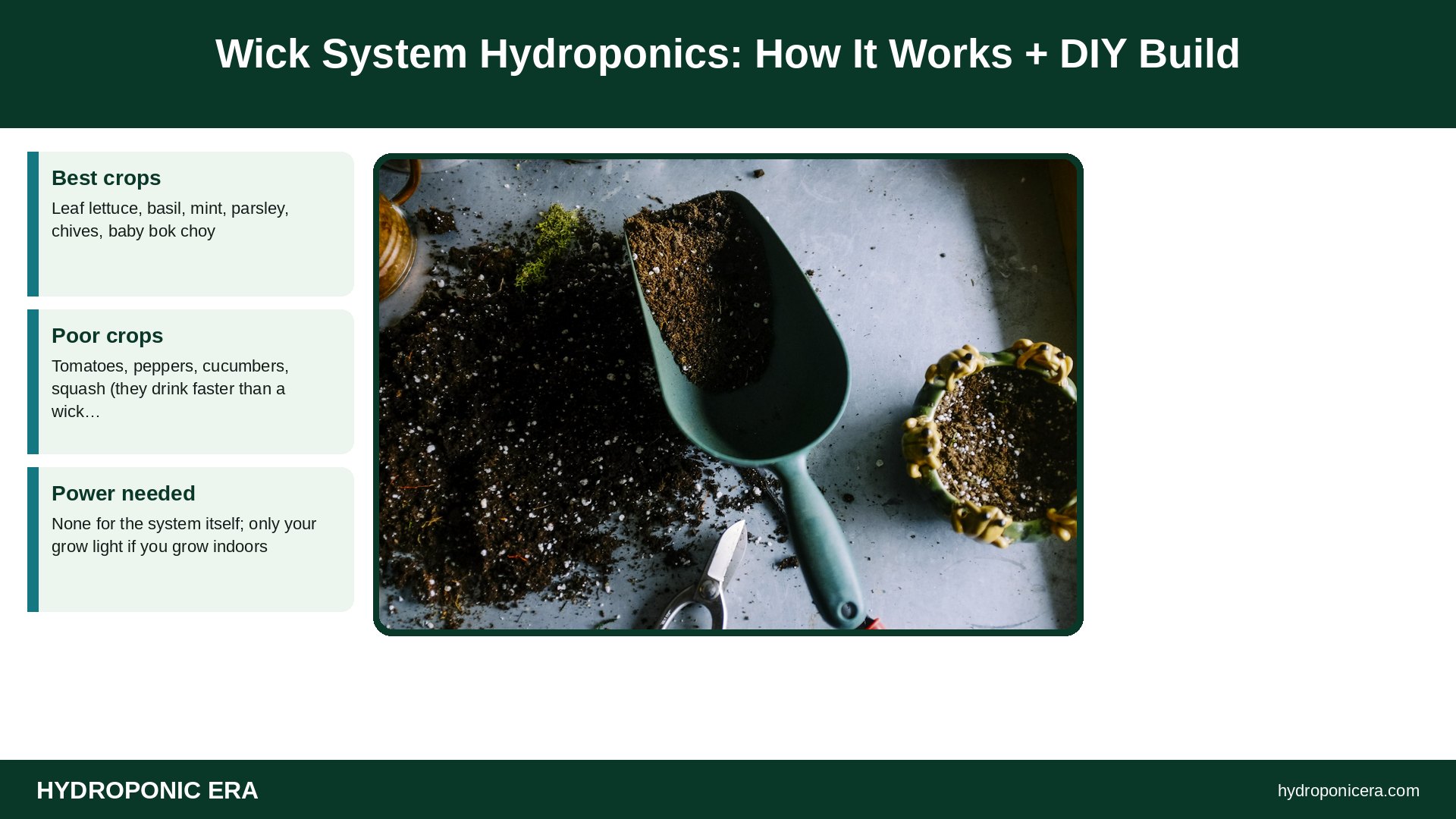
Wick system hydroponics is the simplest passive way to grow without soil: a cotton or nylon wick pulls nutrient solution from a reservoir up into a soilless medium by capillary action, with no pump, timer or electricity. It works well for lettuce, herbs and other small, light feeders, but it can’t keep up with thirsty fruiting plants such as tomatoes.