
Is Brazilian pennywort easy to grow? Yes. Brazilian pennywort (Hydrocotyle leucocephala) is one of the easiest aquarium plants. Flowgrow rates it very easy and fast growing, with an ideal range of 68–82°F (20–28°C) and pH 6–7.5. It grows rooted as a stem plant or floating at the surface, and new shoots root readily from cuttings.
Key takeaway: Brazilian pennywort is a fast, forgiving plant with round leaves on trailing stems. Grow it rooted, tied near wood or floating, keep water around 68–82°F (20–28°C), trim often and add iron if leaf edges yellow. It is invasive in some tropical countries, so never dump trimmings outdoors.
| Fact | Brazilian pennywort detail | Source |
|---|---|---|
| Botanical name | Hydrocotyle leucocephala, family Araliaceae | Flowgrow |
| Native range | Wet, boggy areas of Central and South America | Flowgrow |
| Difficulty | Very easy; fast growth | Flowgrow |
| Temperature | Best 68–82°F (20–28°C); tolerates 41–86°F (5–30°C) | Flowgrow |
| Water | pH 6–7.5; KH 2–15 °dKH | Flowgrow |
| Light | Medium to high | Flowgrow |
| Forms | Rooted stem, floating or emersed | Flowgrow |
What Is Brazilian Pennywort?
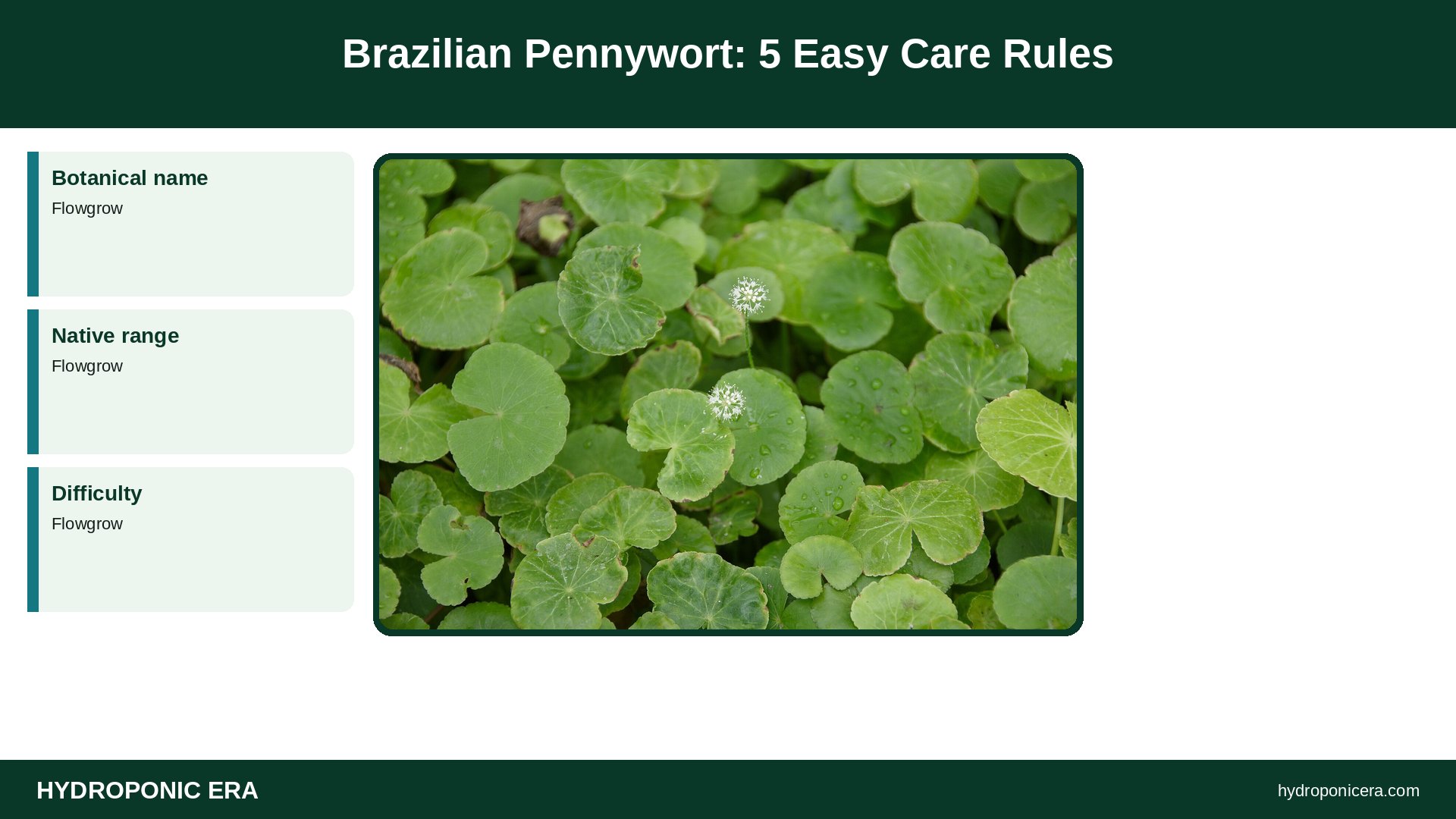
Brazilian pennywort is Hydrocotyle leucocephala, a creeping herb in the family Araliaceae. Flowgrow says it is native to wet and boggy areas in Central and South America and has been in the aquarium hobby for a very long time. Its round, kidney-shaped leaves grow along a trailing, tendril-like stem, and it carries small white flowers.
A 1981 study in Rodriguésia described it in Brazil as a shade species that sprouts, flowers and fruits during the wet season and drops leaves in the dry season.
How Do You Grow Brazilian Pennywort in an Aquarium?
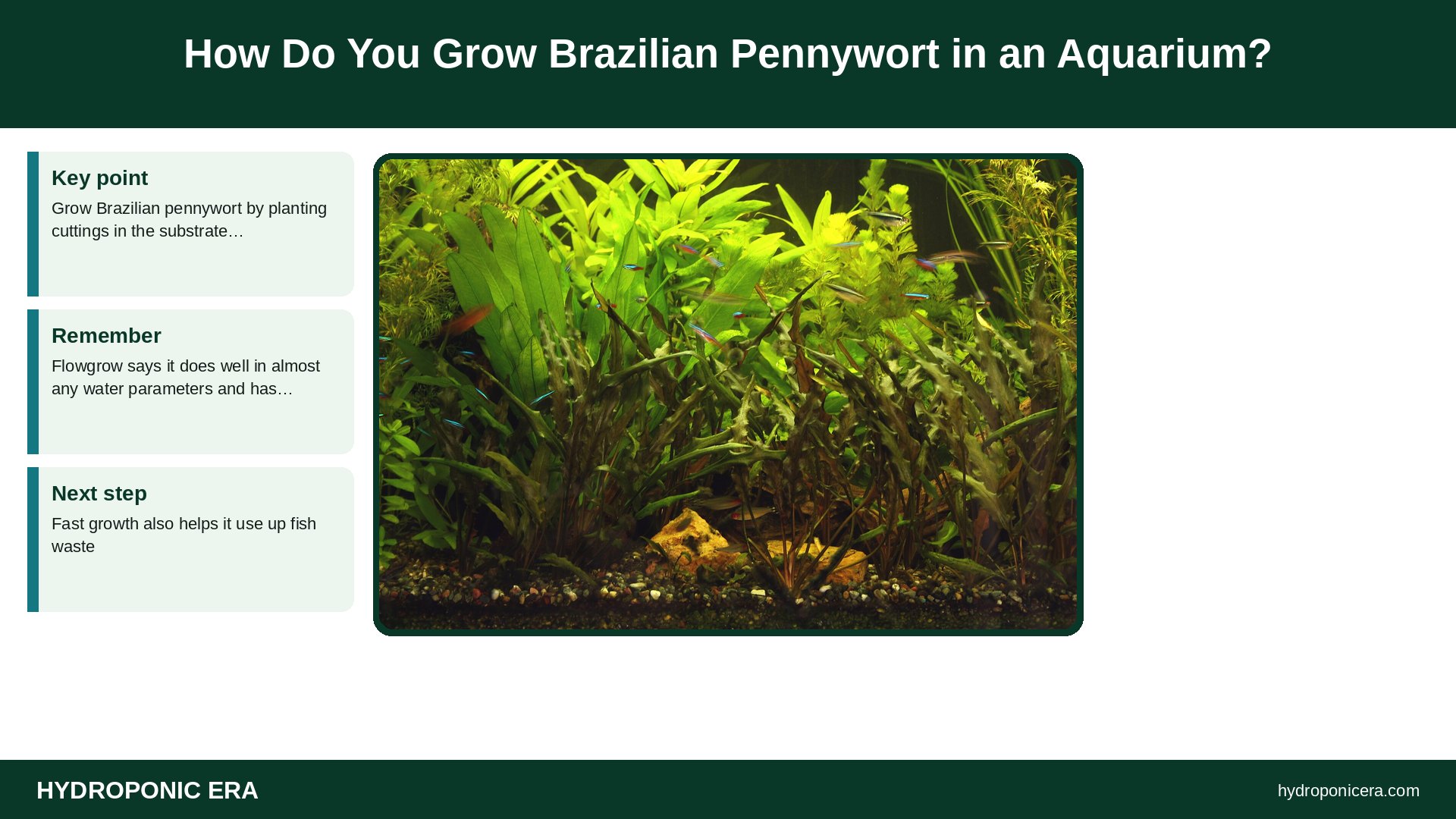
Grow Brazilian pennywort by planting cuttings in the substrate, letting it trail through driftwood or leaving it to float. Flowgrow says it does well in almost any water parameters and has modest light and CO2 needs, but reaches its full potential with good light, CO2 injection and steady nutrients. Fast growth also helps it use up fish waste.
- Rinse new stems and remove any rock wool.
- Push cuttings a short way into the gravel, or let them float.
- Give medium to high light for compact growth.
- Dose a liquid fertilizer that includes iron.
Pair it with a suitable aquarium grow light and, if needed, read our guide to fertilizer for plants in water.
Can Brazilian Pennywort Float?
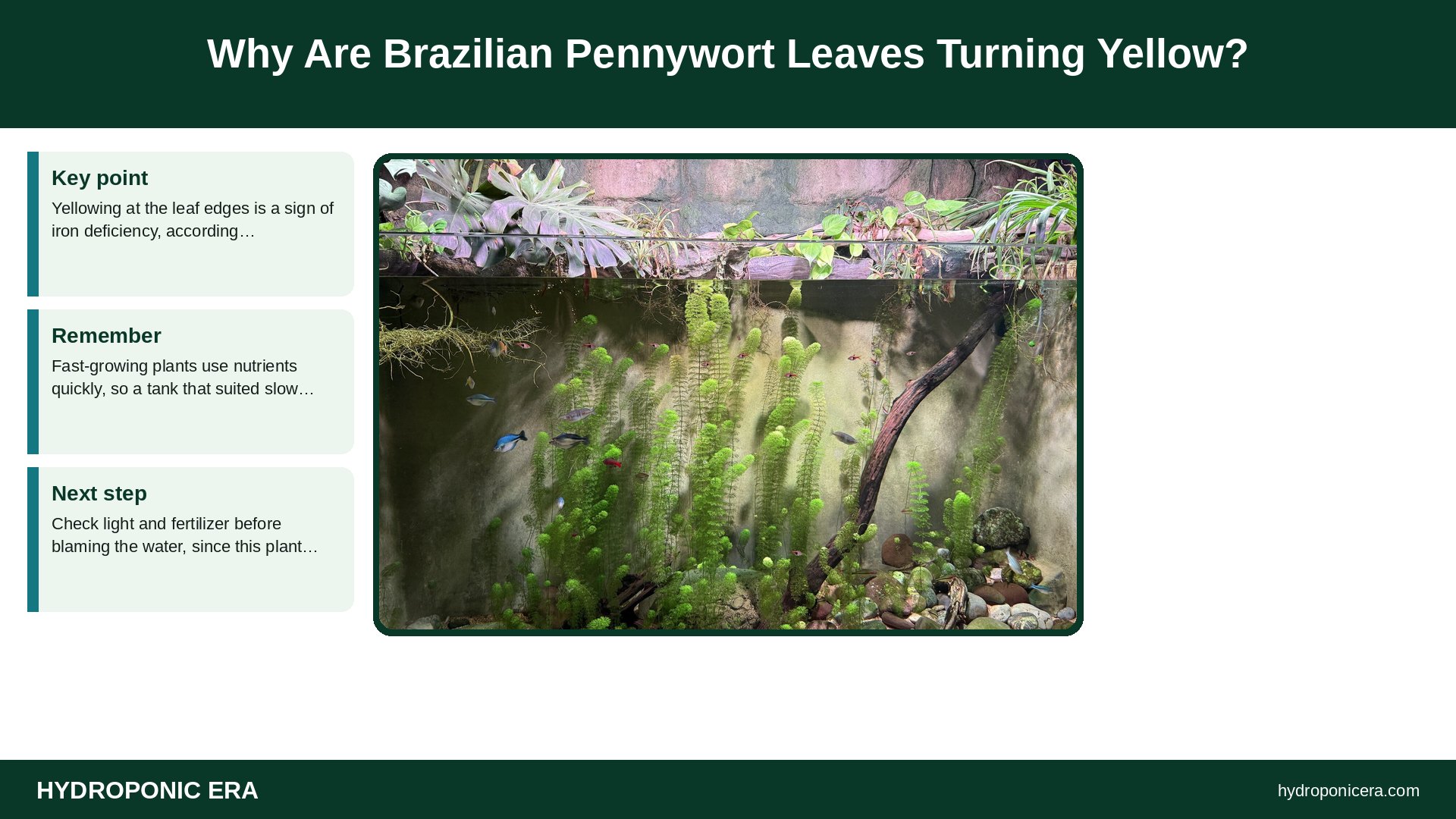
Yes. Brazilian pennywort can float at the water surface as well as grow rooted. Flowgrow lists it as a stem plant that can grow submerged or free-floating, and says it can also be grown as a vertical stem. Floating stems shade the tank and give fish cover, but they can block light from plants below if left to spread.
- Thin floating mats so light still reaches the tank floor.
- Keep floating stems away from filter intakes.
- Combine with other floaters such as frogbit for varied texture.
Why Are Brazilian Pennywort Leaves Turning Yellow?
Yellowing at the leaf edges is a sign of iron deficiency, according to Flowgrow, which says it can be fixed by adding iron fertilizer to the water. Fast-growing plants use nutrients quickly, so a tank that suited slow plants may run short. Check light and fertilizer before blaming the water, since this plant tolerates a wide range. Old lower leaves also fade naturally as stems lengthen, so focus on the color of new growth near the tips.
How Do You Trim and Propagate Brazilian Pennywort?
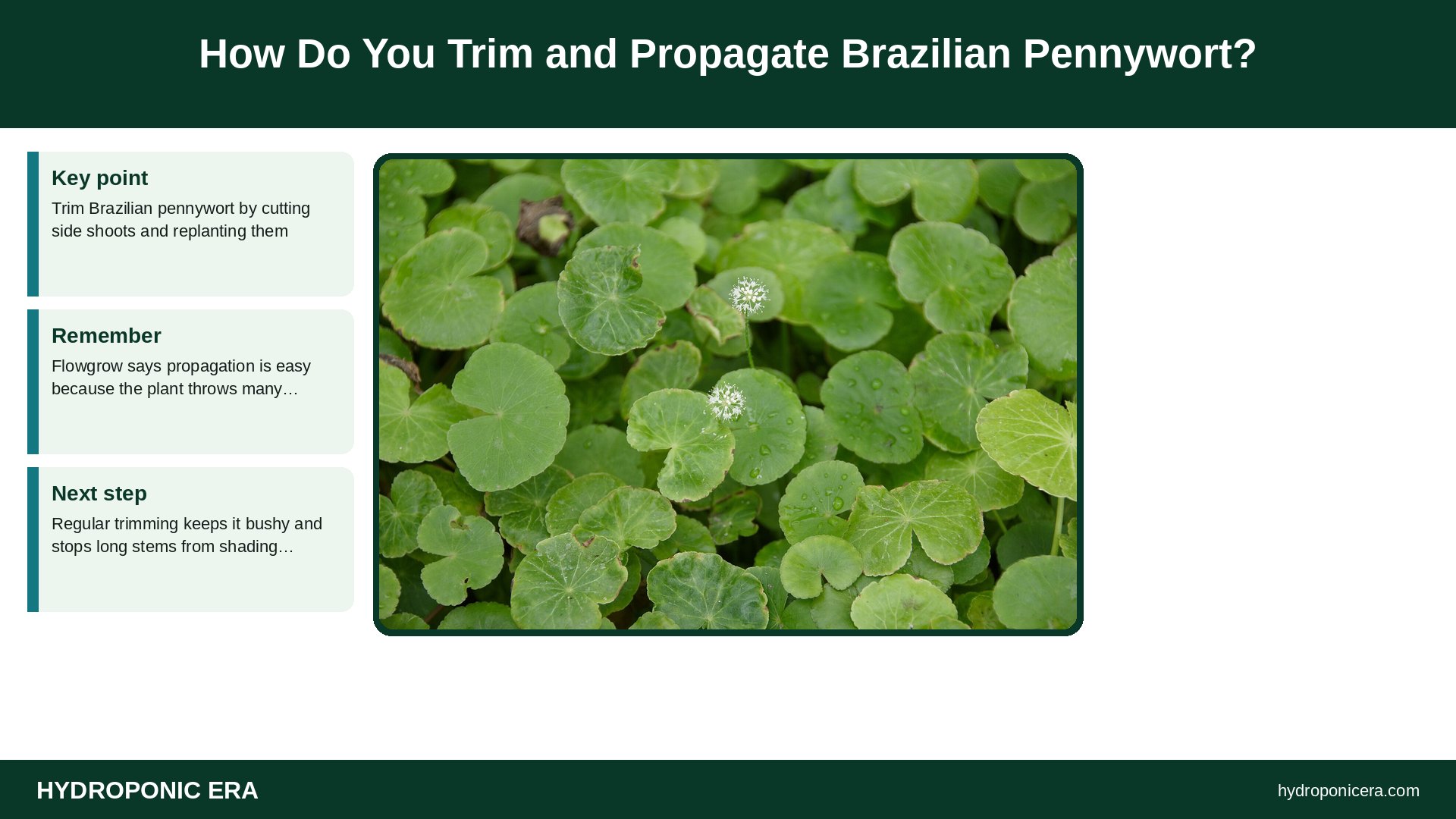
Trim Brazilian pennywort by cutting side shoots and replanting them. Flowgrow says propagation is easy because the plant throws many lateral shoots that can simply be cut off and replanted in the substrate. Regular trimming keeps it bushy and stops long stems from shading slower plants such as anubias, which Flowgrow names as a good companion.
- Cut stems that reach the surface just above a leaf.
- Replant the tops as new cuttings or let them float.
- Remove weak or yellow lower stems.
- Bag extra cuttings for the trash, not the drain.
Flowgrow notes it can also grow emersed, where the creeping land form is especially vigorous and produces many shoots for cuttings.
Is Brazilian Pennywort Edible?
The species itself is edible. Flowgrow notes that its leaves taste a bit peppery and are used as a spice in several countries, even as a base for lemonade. Do not eat plants from an aquarium, though, because tank water carries fish waste, bacteria and any treatments you have dosed. Grow a separate, clean batch if you are curious.
Because it grows fast and soaks up nutrients, this pennywort also suits small aquarium aquaponics setups, where trailing stems can hang from a planter over the tank. Flowgrow lists its suitability for outdoor ponds as unknown, so treat it as an indoor plant.
Is Brazilian Pennywort Invasive?
It can be. A 2024 study in Bioscientist reported that Hydrocotyle leucocephala has been recorded as invasive in Sri Lanka and Nigeria and has spread into Indonesia, where researchers mapped it across Bogor Botanical Gardens. Never release trimmings or tank water into ponds, ditches or streams, especially in warm climates.
Does Brazilian pennywort need CO2?
No. Flowgrow says it does not need high light or CO2, though it grows best with CO2 injection and good nutrients.
What temperature does Brazilian pennywort like?
Flowgrow gives an optimum of 68–82°F (20–28°C), with tolerance from 41–86°F (5–30°C).
Can Brazilian pennywort grow out of water?
Yes. Flowgrow says it can be grown emersed, and the land form grows especially strongly.
Why is my pennywort turning yellow?
Yellow leaf edges usually point to iron deficiency. Add an iron-containing aquarium fertilizer.
Is Brazilian pennywort good for beginners?
Yes. Flowgrow recommends it for beginning aquarium keepers without reservation.
Sources
- Flowgrow Aquatic Plant Database. Hydrocotyle leucocephala, Brazilian pennywort.
- Borgignon, O. J., & Piccolo, A. L. G. Fenologia de Hydrocotyle leucocephala Cham.. Rodriguésia.
- Bioscientist: Jurnal Ilmiah Biologi (2024). Mapping the invasive alien species Hydrocotyle leucocephala in Bogor Botanical Gardens.
- Photo credits (Wikimedia Commons, edited with titles): Hydrocotyle leucocephala B by Wouter Hagens (CC BY-SA 3.0); Planted Tank 03 – Flickr – The Wandering Angel by The Wandering Angel from Makati City, Philippines (CC BY 2.0); A freshwater aquarium containing plants and small fish by Netha Hussain (CC0)