
What causes green pond water? Green pond water is usually a bloom of microscopic planktonic algae fed by sunlight, warm weather and excess nutrients, mainly nitrogen and phosphorus. The lasting fix is to cut nutrient inputs, not to treat the water alone. Iowa State Extension says limiting sediment and nutrients is the best way to manage algae.
Key takeaway: Green pond water is a nutrient problem, not a dirt problem. Reduce fertilizer, fish food, runoff and decaying plant matter, add shade and a vegetated buffer, aerate and use herbicides only as a short-term step because dying algae can drop oxygen and harm fish.
| Cause | What happens | Long-term fix |
|---|---|---|
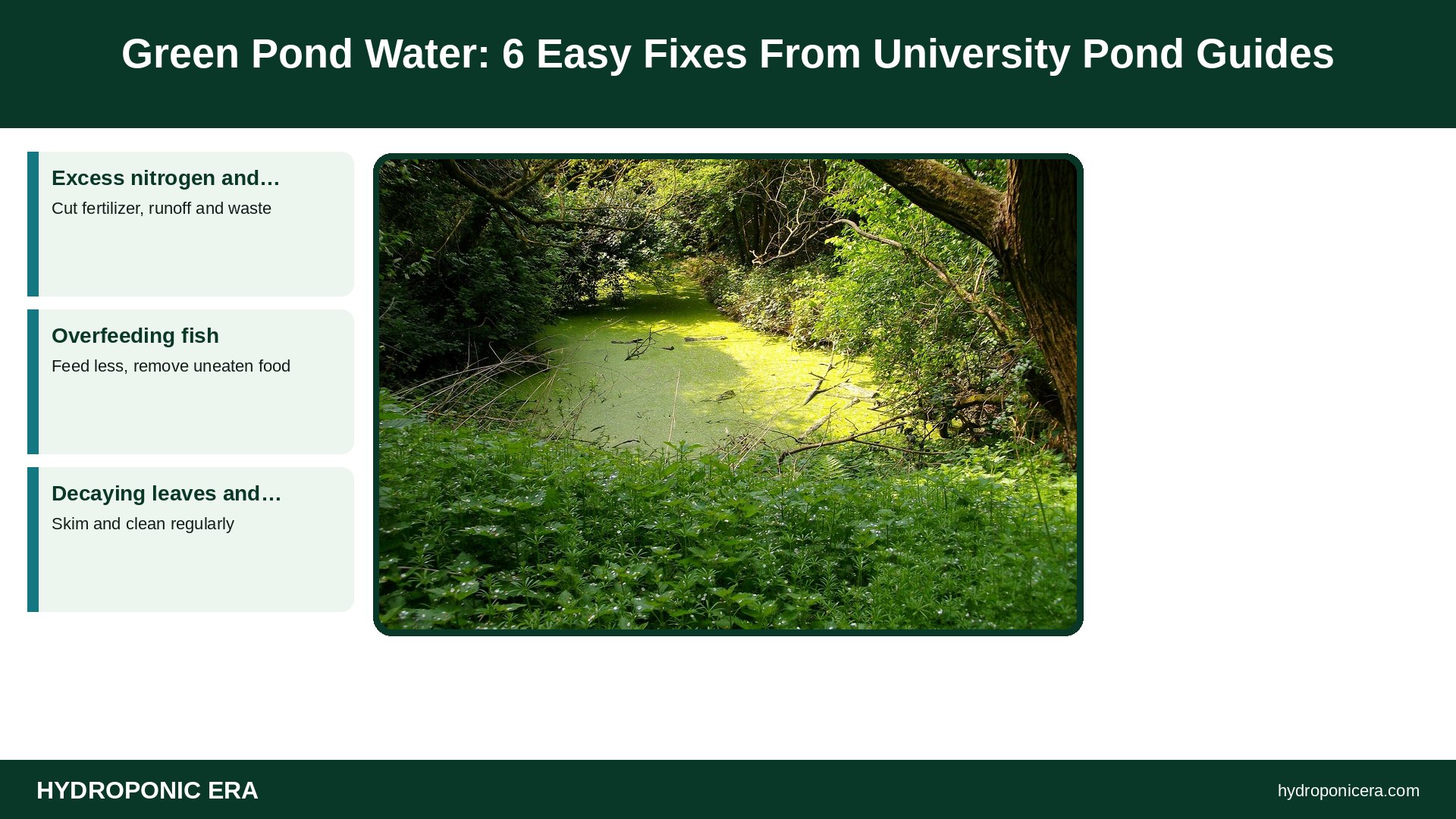
| Excess nitrogen and phosphorus | Algae bloom in warm sun | Cut fertilizer, runoff and waste |
| Overfeeding fish | Extra nutrients build up | Feed less, remove uneaten food |
| Decaying leaves and debris | Releases nutrients | Skim and clean regularly |
| No buffer around pond | Runoff carries nutrients | Plant a buffer strip |
Why Is My Pond Water Green?
Pond water turns green when planktonic algae, tiny free-floating organisms in the top few feet of water, multiply in a bloom. Iowa State Extension says they grow quickly in warm months and thrive when phosphorus and nitrogen are abundant. Sunlight, warm water and nutrients from fertilizer, runoff, animal waste, fish food and decay all feed a bloom.
Some algae is normal. Iowa State notes planktonic algae are part of the food chain, and that 15–25% of a pond’s surface should have vegetation for good fish habitat, so crystal-clear water is not always the goal.
How Do You Fix Green Pond Water Step by Step?
- Find and reduce nutrient sources, such as lawn fertilizer, runoff, livestock, geese and overfeeding.
- Remove debris and leaves, and skim floating algae.
- Add shade with plants or structures, since algae need sunlight.
- Improve circulation and aeration to help bind phosphorus in bottom sediments.
- Plant a buffer strip around the pond.
- Test and track results, and be patient.
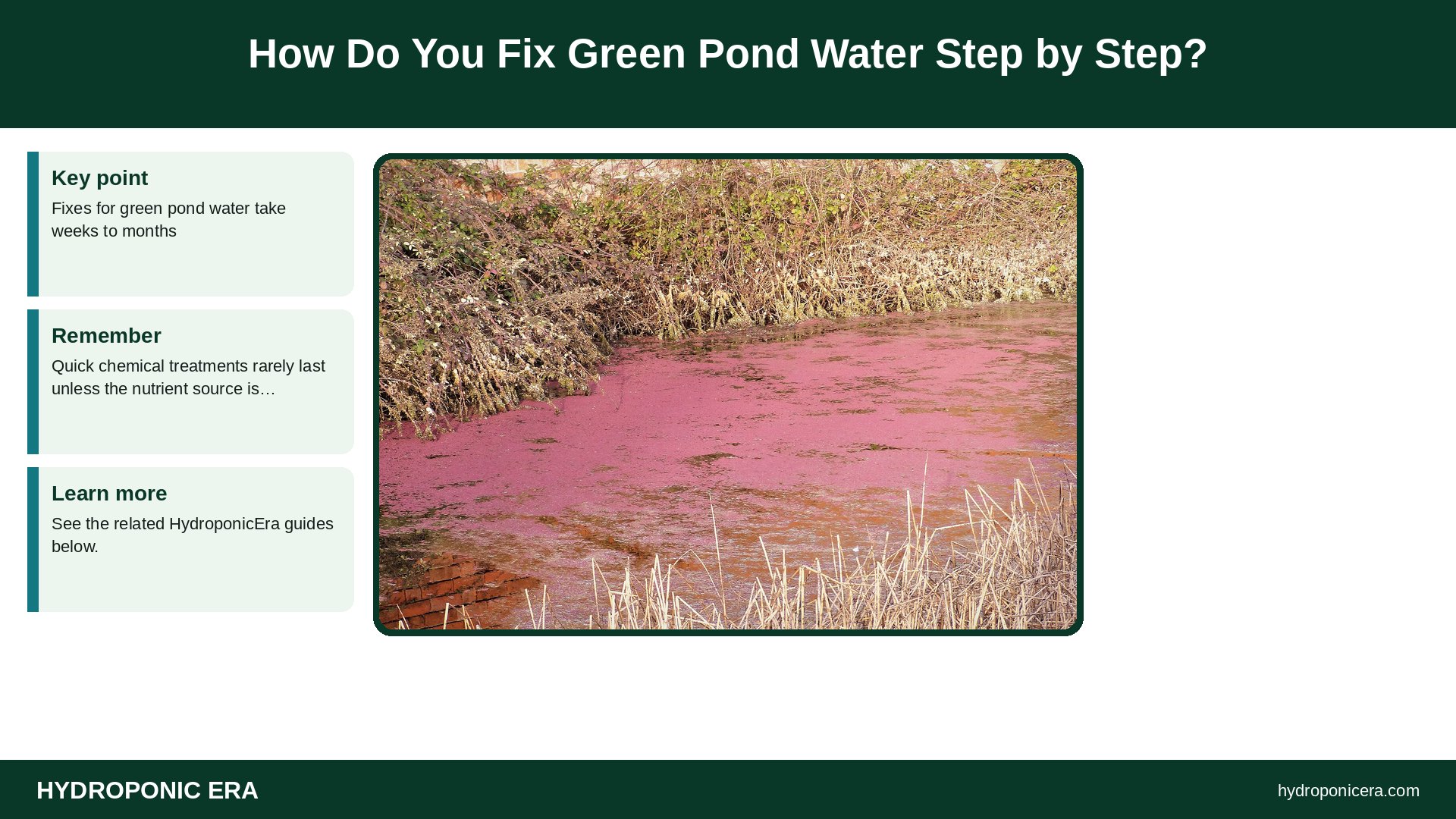
Fixes for green pond water take weeks to months. Quick chemical treatments rarely last unless the nutrient source is dealt with.
Does Aeration Help With Green Pond Water?
Yes. Iowa State Extension says aeration provides oxygen, helps bind phosphorus to bottom sediments and pushes floating plants toward the pond edges. It does not remove nutrients by itself, but it supports a healthier pond. See our guide to water lilies in containers for shade-giving plants that also help.
Surface fountains and diffused air systems are common choices. Choose by pond size and depth, and run them steadily, especially in summer when oxygen is lowest.
What Pond Plants Help Reduce Green Water?
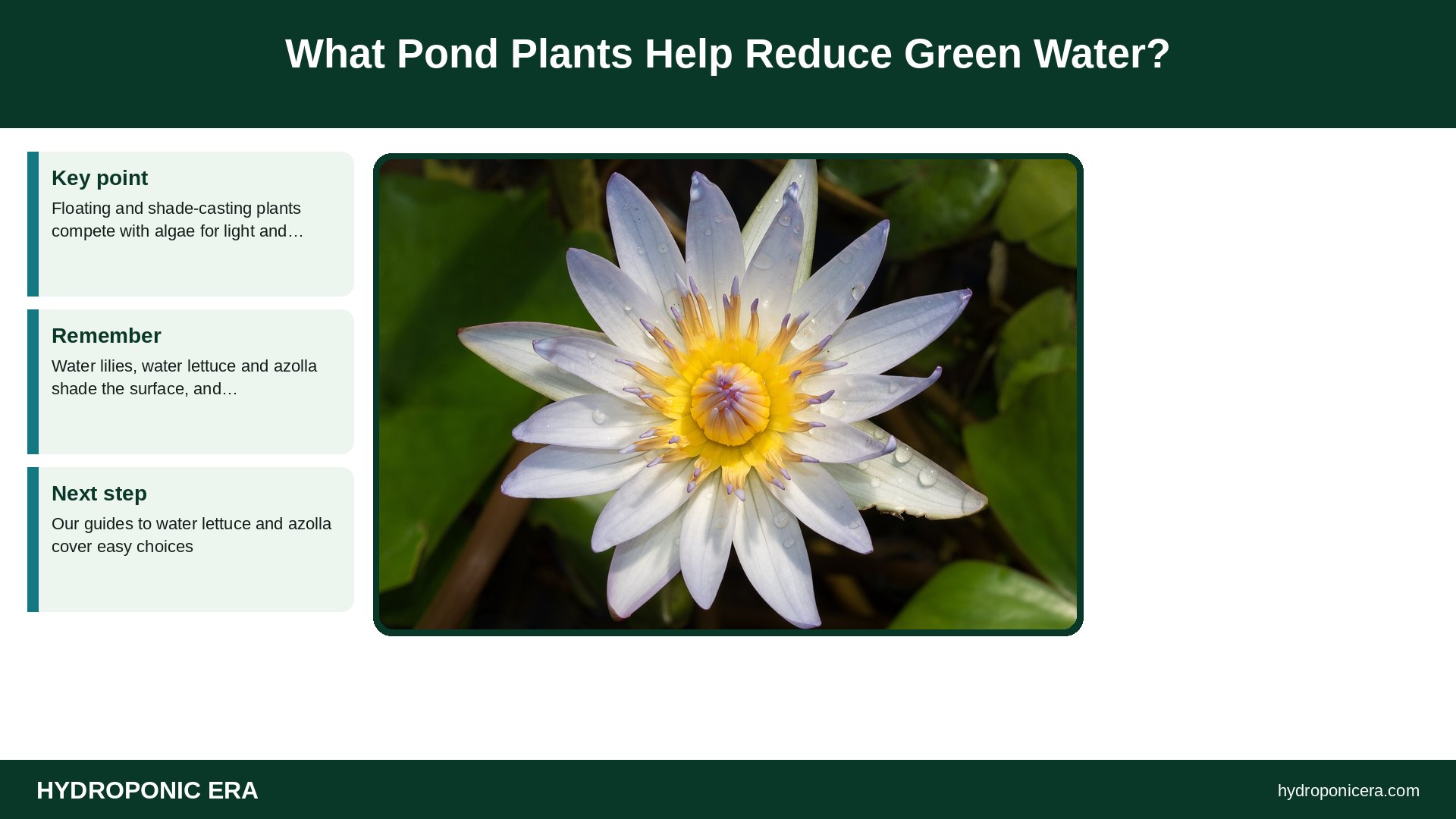
Floating and shade-casting plants compete with algae for light and nutrients. Water lilies, water lettuce and azolla shade the surface, and marginal plants take up nutrients at the edge. Our guides to water lettuce and azolla cover easy choices. Keep some open water for light and fish.
- Cover part of the surface, but leave open water.
- Remove dead plant material every season.
- Do not overplant, since decaying plants add nutrients.
- Choose plants suited to your climate.
Should You Use Algaecide for Green Pond Water?
Algaecides give only a temporary fix. Iowa State and Penn State Extension note that treating algae without fixing nutrient inputs brings the bloom back, and dying algae use up oxygen, which can cause fish kills. Check labels and local rules, treat part of a pond at a time, and keep aerators running if you treat.
UV clarifiers, barley straw and bacteria products are sold for ornamental ponds. Results vary, and none replace cutting nutrients. Read independent evidence before you buy.
Is Green Pond Water Dangerous?
Most green pond water is harmless to fish, but some blooms are blue-green algae, which can be toxic. Iowa State warns that fish kills, a strong odor or thick surface scum may signal a harmful algal bloom. Keep pets and children out of such water, and contact your state environmental or health agency for guidance.
How Do Nutrients Get Into a Pond and Cause Green Pond Water?
A pond is part of a watershed, so water carrying sediment and nutrients moves through the ground and over the surface into it, according to Iowa State Extension. Lawn fertilizer, manure, leaf litter and fish waste all add nitrogen and phosphorus. Each source is small, but together they fuel the bloom that creates green pond water.
Walk the edge of your pond after a heavy rain and look for where water runs in. Muddy streaks, fertilized lawn edges and bare banks all show where nutrients arrive. Fixing the largest source first usually gives the best result for the least effort.
How Do You Measure Progress With Green Pond Water?
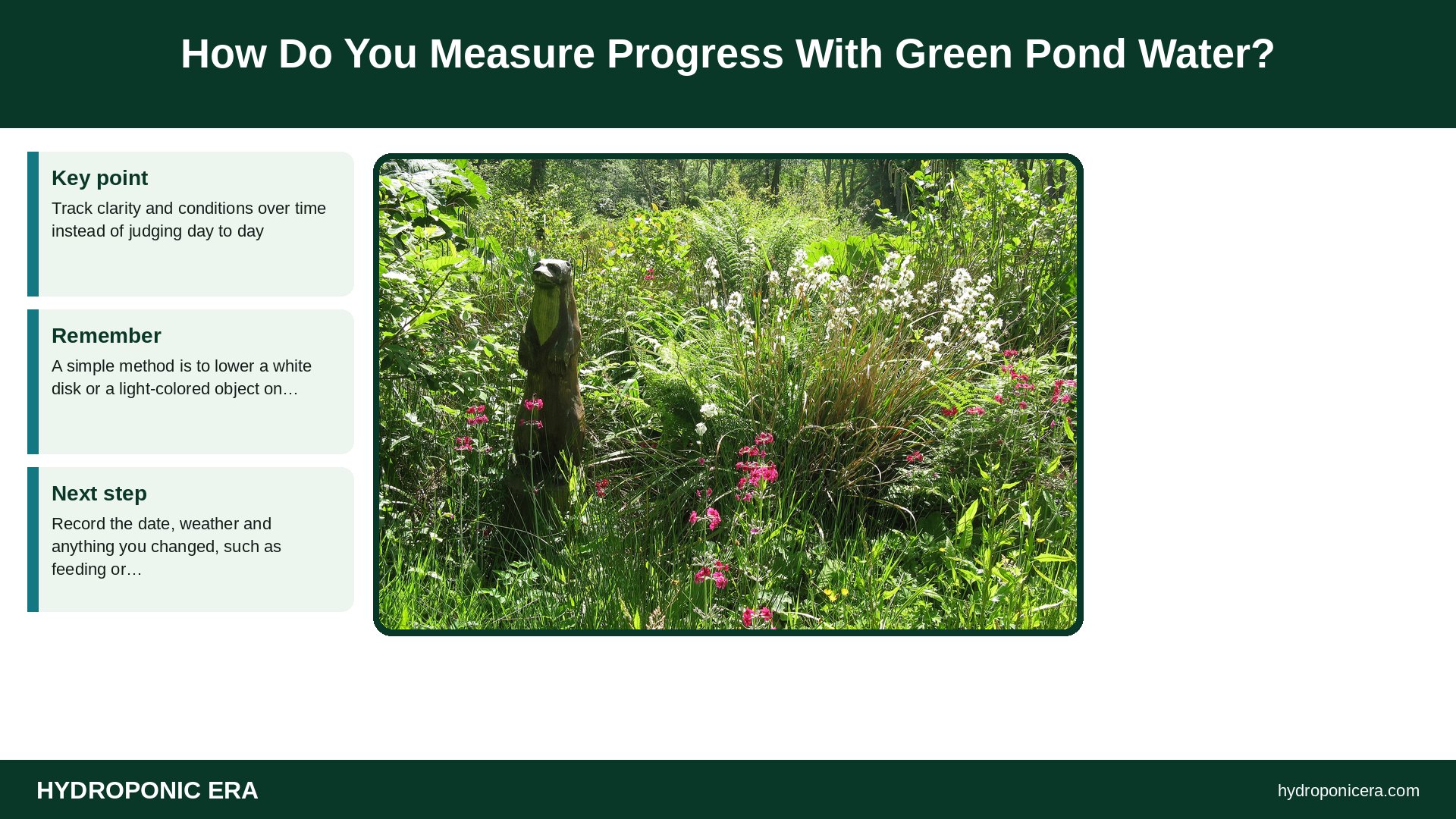
Track clarity and conditions over time instead of judging day to day. A simple method is to lower a white disk or a light-colored object on a string and note the depth where it disappears, then repeat every week or two. Record the date, weather and anything you changed, such as feeding or adding plants.
Take photos from the same spot each month. Seasonal cycles are normal, with more algae in hot weather, so compare the same season from year to year. If clarity does not improve after several months, revisit nutrient sources, circulation and shade. For deeper concerns, a local extension office or pond specialist can help test your water.
How Do You Prevent Green Pond Water Next Year?
Plant a buffer of native perennials around the pond, at least 15 feet (4.6 m) wide, as Iowa State recommends, avoid fertilizing nearby land and keep livestock and geese away. Feed fish lightly, remove debris each fall and maintain aeration. Prevention costs less than repeated treatment.
FAQ About Green Pond Water
Is green pond water bad for fish?
Usually not, but blooms can drop oxygen at night. Watch for fish gasping at sunrise.
How long does it take to clear green pond water?
Weeks to months, depending on how fast you reduce nutrients.
Can I clear green water with algaecide?
Only temporarily, and it can cause oxygen problems.
Does shade help?
Yes, because algae need sunlight to grow.
Is blue-green algae the same as green water?
No. Blue-green algae can be toxic, so avoid contact and seek advice.
Sources
- Iowa State University Extension — Ponds: managing algae and weeds
- Iowa State University Extension — Ponds: managing cloudy or muddy water
- Penn State Extension — Algae in Pennsylvania ponds
- Photo credits (Wikimedia Commons, edited with titles): Pond covered with green algae – geograph.org.uk – 2371127 by Stephen Rogerson (CC BY-SA 2.0); Red Algae bloom on pond (51942054908) by gailhampshire (CC BY 2.0); Daubeny’s water lily at BBG (50824) by Rhododendrites (CC BY-SA 4.0); Pond-edge plants at Achamore Garden – geograph.org.uk – 5446824 by M J Richardson (CC BY-SA 2.0)