
What is a high tunnel, and can you use it for hydroponics? A high tunnel is an unheated, plastic-covered hoop structure that extends the season and blocks rain. You can run hydroponic buckets inside one, but USDA NRCS cost-share requires crops grown in natural soil or permanent raised beds, not hydroponically, so hydroponic growers pay for it themselves.
Key takeaway: A high tunnel is cheaper and simpler than a greenhouse and relies on roll-up sides. It can add weeks to each end of the season, but NRCS funding excludes hydroponic, pot and bench production.
| Feature | High tunnel | Greenhouse |
|---|---|---|
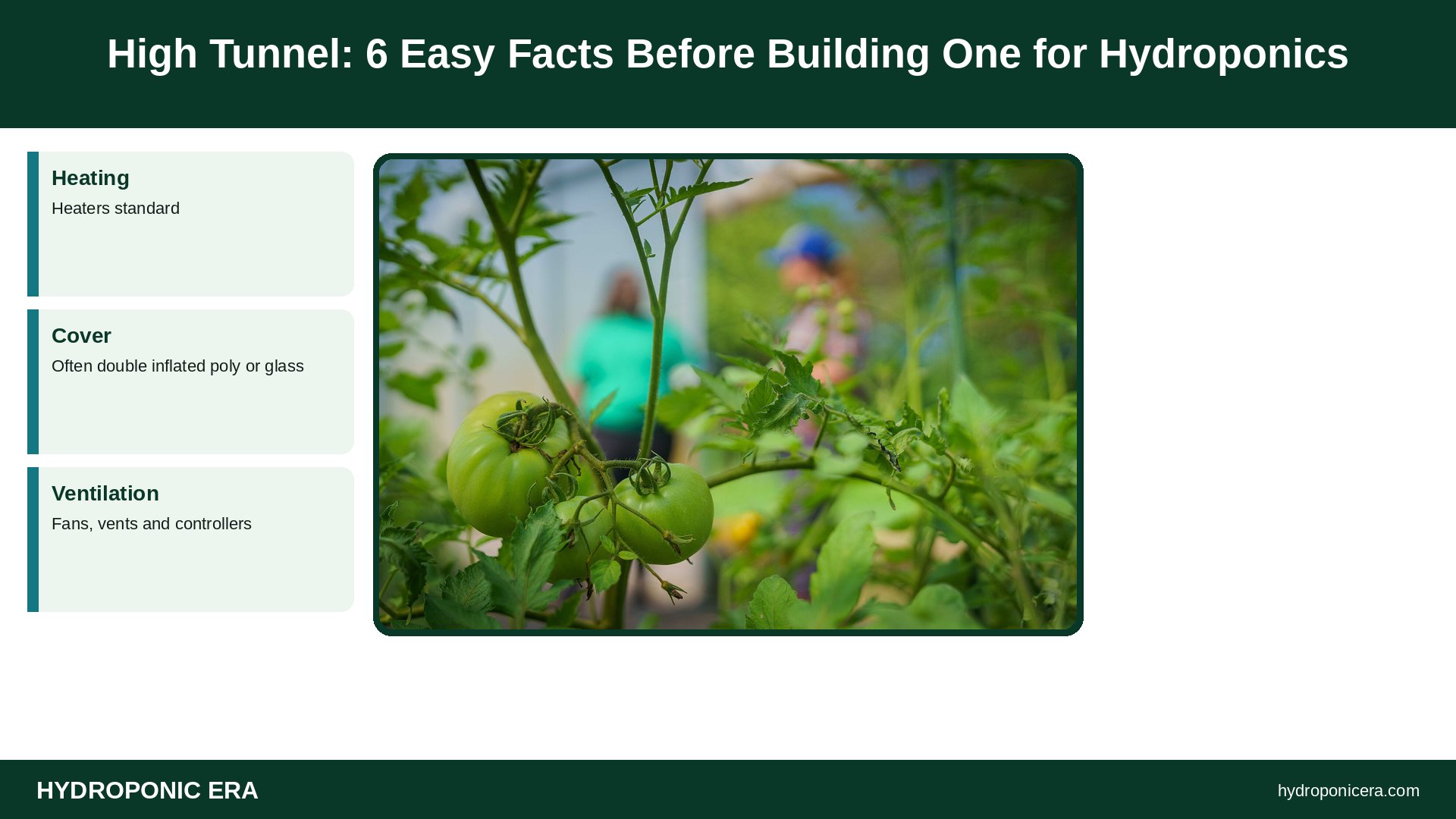
| Heating | Usually none, or portable backup heat | Heaters standard |
| Cover | Single layer of 6-mil polyethylene (Penn State) | Often double inflated poly or glass |
| Ventilation | Roll-up sides and doors, mostly passive | Fans, vents and controllers |
| Growing method | In the ground (NRCS practice) | Containers, benches, hydroponics |
| NRCS EQIP cost-share | Yes, soil-grown crops only | Not under the high tunnel practice |
| Minimum peak height (NRCS) | 6 ft (1.8 m) | Varies |
What Is a High Tunnel?
A high tunnel is an enclosed polyethylene, polycarbonate or fabric-covered structure used to protect crops and extend the season, according to USDA NRCS. Utah State University Extension says high tunnels come 14–30 feet (4.3–9.1 m) wide and 50–150 feet (15–46 m) long, tall enough to stand in. Most are unheated and ventilated by hand.
Penn State Extension notes they usually use a single layer of 6-mil greenhouse-grade polyethylene, while greenhouses typically use air-inflated double layers. A tunnel is sometimes called a hoop house. For a fully controlled structure, see our hydroponic greenhouse for beginners.
Is a High Tunnel the Same as a Greenhouse?
No. NRCS says greenhouses usually contain heaters and plants are grown in containers such as pots and trays, while high tunnels do not use heaters and plants grow in the natural soil. USU adds that high tunnels are not greenhouses because most are unheated and rely on manual ventilation. NRCS also treats them as seasonal, temporary structures.
In practice, the line blurs. Penn State says some high tunnels use computers, fans and heaters. But the more equipment you add, the closer you get to a greenhouse in cost, and NRCS pays only for the structure itself.
Can You Do Hydroponics in a High Tunnel?
Yes, physically, but not with NRCS tunnel money. NRCS states crops must be grown in the natural soil profile or permanent raised beds up to 12 inches (30 cm) deep, and may not be grown on tables, benches, in pots or hydroponically under the conservation practice. If you build with your own funds, Dutch buckets and troughs work inside a structure.
- Dutch buckets: good for tomatoes and cucumbers; see Dutch bucket hydroponics.
- Power: pumps need electricity; NRCS allows it but does not pay for it.
- Freeze risk: reservoirs and lines need protection on cold nights.
How Much Does a Tunnel Extend the Season?
Penn State Extension says a well-managed high tunnel can extend production up to eight weeks before the field season and up to six weeks after the first outdoor frost. USU recommends transplanting cold-sensitive crops like tomatoes and peppers 3–4 weeks earlier than the field, or 5–6 weeks earlier with low tunnels or row covers inside.
The gain depends on your climate and management. Penn State warns that most crops can be damaged below 45°F (7°C), and in midwinter there may not be enough sunlight for growth regardless of temperature. Our vegetables to grow indoors in winter lists cold-season options.
How Do You Ventilate a Hoop Structure?
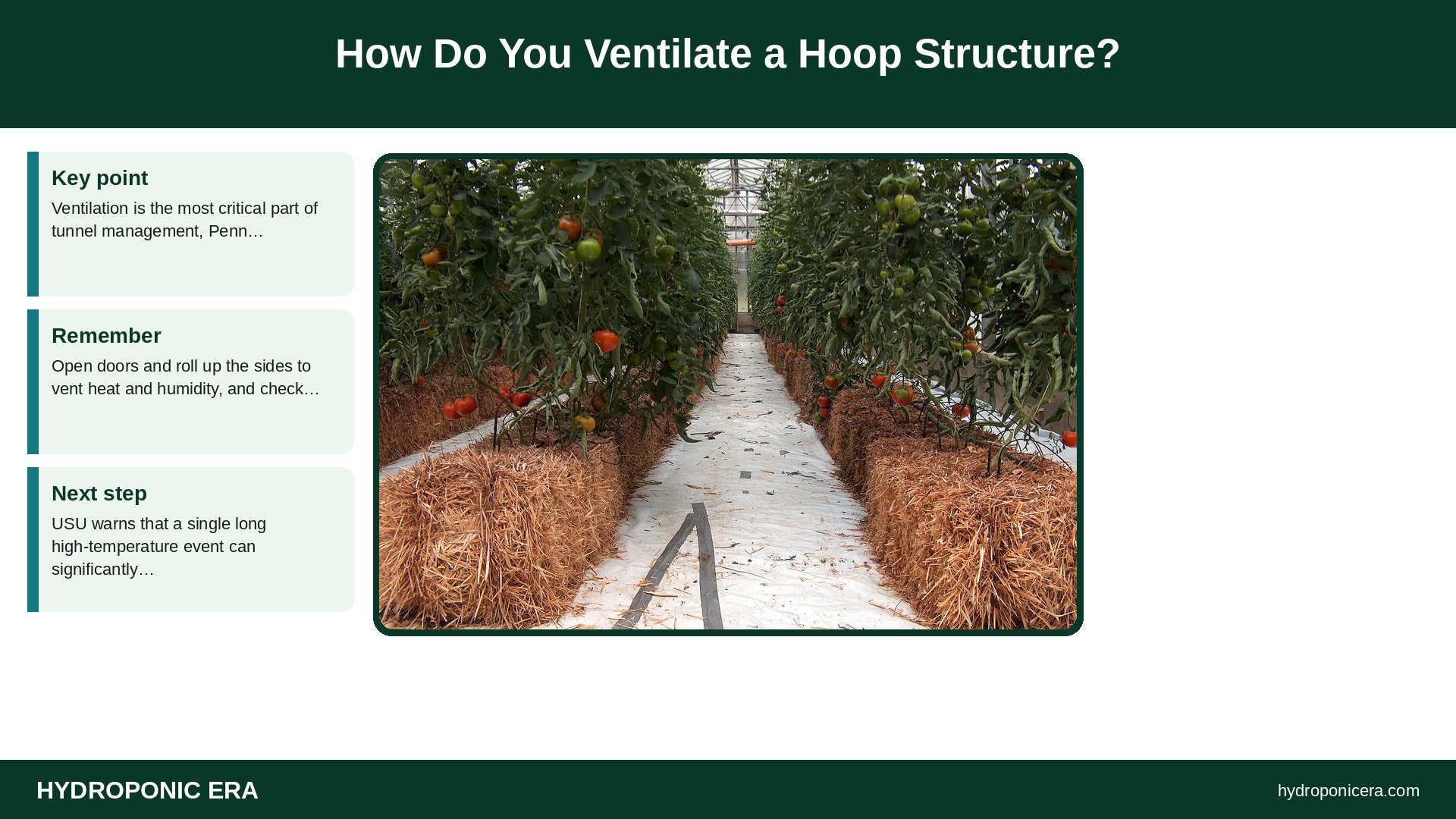
Ventilation is the most critical part of tunnel management, Penn State says. Open doors and roll up the sides to vent heat and humidity, and check internal temperatures several times a day. USU warns that a single long high-temperature event can significantly reduce crop performance. Many growers add thermostatic roll-up motors or fans to automate this.
- Track temperature with a max/min thermometer, as USU suggests.
- Space tunnels so cross-ventilation works and they do not shade each other.
- In summer, USU suggests replacing plastic with 30% shade cloth.
- On cold nights, use row covers, thermal blankets or clean-burning heaters.
Our greenhouse heating guide covers backup heat options.
How Do You Qualify for NRCS High Tunnel Cost-Share?
Work with your local NRCS office through the Environmental Quality Incentives Program (EQIP). Idaho NRCS lists requirements such as land control, agricultural land use, and adjusted gross income under $900,000. The structure must be a new, manufactured kit installed to the NRCS 325 practice standard, with a peak at least 6 feet (1.8 m) tall.
NRCS gives the plastic cover a 5-year life span under the standard. Remember the key rule for hydroponic growers: crops must be soil-grown for the funded tunnel. Check current rules with your state office before buying.
What Grows Best Under Plastic?
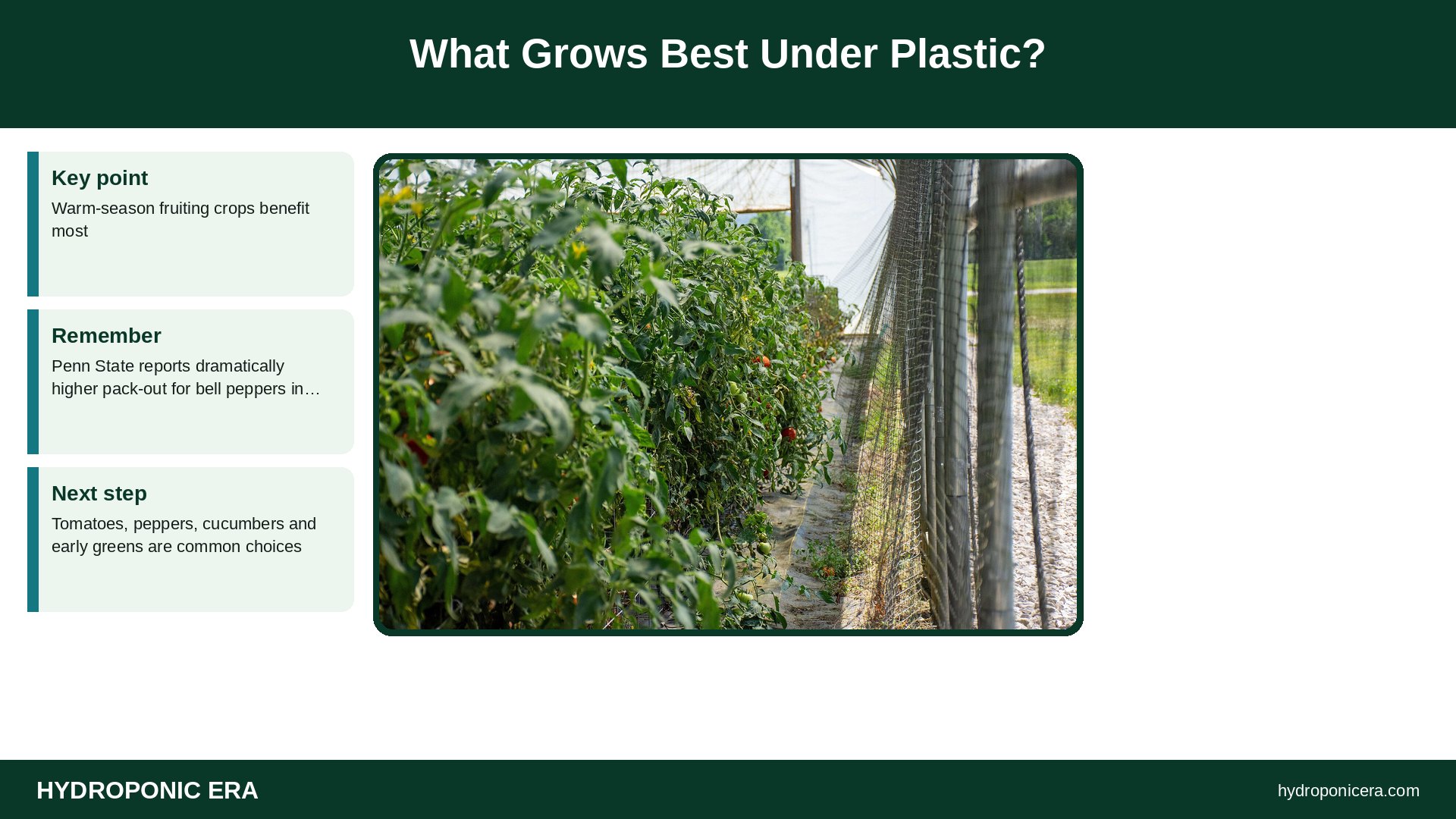
Warm-season fruiting crops benefit most. Penn State reports dramatically higher pack-out for bell peppers in high tunnels and similar advantages for cucumbers. Tomatoes, peppers, cucumbers and early greens are common choices. USU notes bees avoid flying deep into tunnels, so cucumbers and squash may set poorly in the center without help.
Penn State says many growers buy bumblebee colonies to improve fruit set. For hand methods, see indoor pollination. USU adds that excluding rain lowers disease, though powdery mildew and root rots can appear when tunnels are poorly vented.
FAQ About Tunnels and Hydroponics
Does NRCS pay for hydroponic high tunnels?
No. The practice requires crops grown in natural soil or permanent raised beds up to 12 in (30 cm).
How long does tunnel plastic last?
NRCS uses a 5-year life span for the cover.
Do tunnels need heat?
Usually not, but backup heat can save crops on cold nights.
Can I build my own high tunnel for NRCS?
No. NRCS requires a new, commercially manufactured kit.
What size are high tunnels?
USU lists widths of 14–30 ft (4.3–9.1 m) and lengths of 50–150 ft (15–46 m).
Sources
- USDA NRCS Idaho — High Tunnel System FAQ
- Penn State Extension — High Tunnel Production
- Utah State University Extension — High Tunnels
- Photo credits (Wikimedia Commons, edited with titles): Indiana High Tunnel (EQIP) (20220627-NRCS-BJOC-070) by USDAgov (Public domain); Indiana High Tunnel (EQIP) (20220627-NRCS-BJOC-028) by USDAgov (Public domain); Hydroponic g12 by Giancarlo Dessì (CC BY-SA 3.0); Tomatoes grow in a high tunnel at Cornucopia Farms in Scottsburg, Indiana on August 12, 2021 (20210812-NRCS-CSW-005) by USDAgov (Public domain)