
Can you grow napa cabbage hydroponically? Yes. Napa cabbage hydroponics works well in deep water culture or Dutch buckets if plants stay cool, about 60–65°F (16–18°C). Sow seed 1/4–1/2 inch (6–13 mm) deep, avoid more than a week of cold nights to prevent bolting, space plants 12–18 inches (30–45 cm) apart and harvest firm heads in about two months.
Key takeaway: Napa cabbage hydroponics needs steady water, nutrients and calcium plus cool, even temperatures. Cold spells trigger bolting, heat makes loose heads, and uneven moisture causes tipburn.
| Napa cabbage need | Guideline | Source |
|---|---|---|
| Best temperature | 60–65°F (16–18°C) | Clemson HGIC |
| Sowing depth | 1/4–1/2 in (6–13 mm) | UMN Extension |
| Spacing | 12–18 in (30–45 cm) | UMN Extension, Clemson HGIC |
| Days to maturity | About 2 months | UMN Extension |
| Bolting trigger | 10+ days at 35–50°F (2–10°C) | Clemson HGIC, UMN Extension |
| Storage | 32–40°F (0–4°C), 95% humidity | UMN Extension |
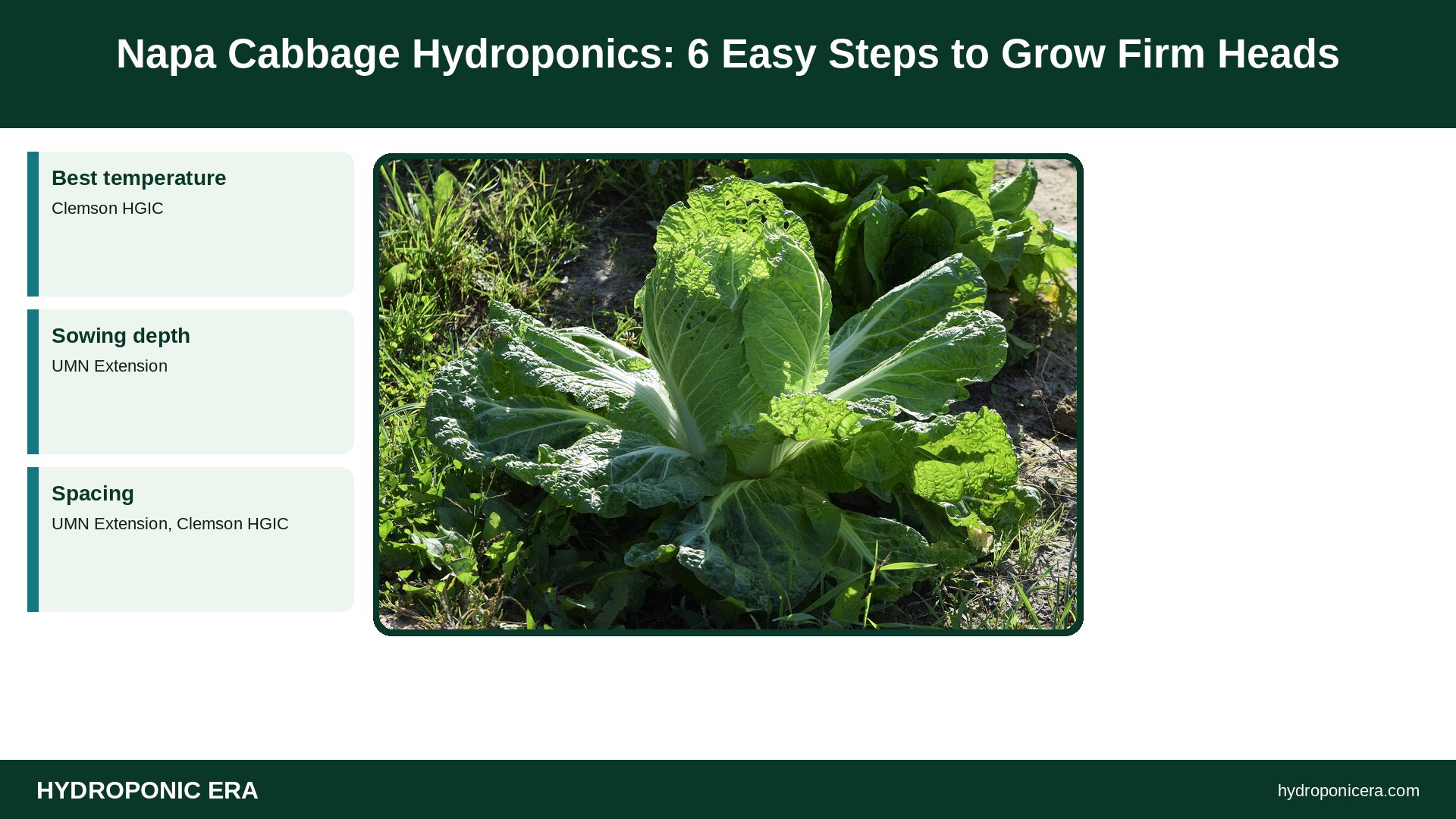
What Is Napa Cabbage?
Napa cabbage, or Chinese cabbage (Brassica rapa pekinensis), forms a tall, dense, barrel-shaped head of pale, thin, tender leaves, according to University of Minnesota Extension. Clemson’s Home and Garden Information Center says napa types are round and barrel-shaped, while Michihili types are taller. The leaves are thinner than round cabbage and have wide, crisp midribs.
It is a different species from round cabbage, which is Brassica oleracea. If you want firm round heads instead, see how to grow cabbage hydroponically. For a faster Asian green, try bok choy.
What Temperature Does Napa Cabbage Hydroponics Need?
Napa cabbage hydroponics needs cool, steady temperatures. Clemson says Chinese cabbage grows best at 60–65°F (16–18°C). UMN warns that hot days during head formation cause narrower leaves and less dense heads. Indoors, a cool room or basement is ideal, and the nutrient reservoir should not run warm, since warm water holds less oxygen.
Cold is risky in a different way. It triggers bolting, covered below. Our heat stress and cold stress guide explains how to stabilize an indoor grow space.
How Do You Start Seeds for Napa Cabbage Hydroponics?
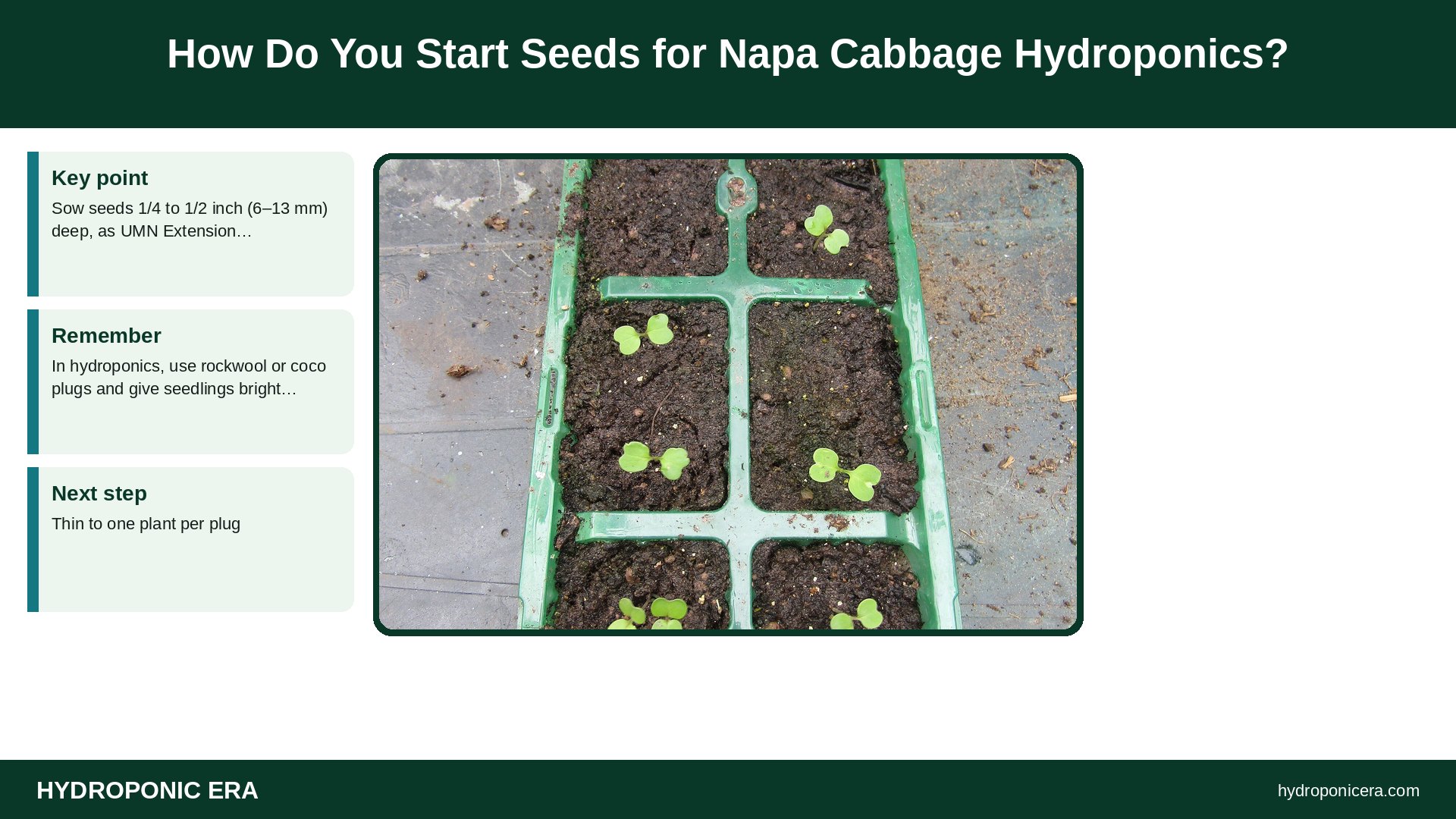
Sow seeds 1/4 to 1/2 inch (6–13 mm) deep, as UMN Extension recommends, and keep the media moist during emergence. In hydroponics, use rockwool or coco plugs and give seedlings bright light right away. Thin to one plant per plug. Transplant when roots show through the plug and plants have a few true leaves.
- Soak plugs in plain or very mild nutrient solution.
- Sow 1–2 seeds per plug, 1/4–1/2 in (6–13 mm) deep.
- Keep plugs moist and at room temperature until sprouts appear.
- Move seedlings under strong light to prevent stretching.
- Thin to one seedling per plug.
- Transplant into net cups once roots emerge.
For plug options, see hydroponic germination methods.
Why Does Napa Cabbage Bolt?
Cold exposure is the main bolting trigger. Clemson says Chinese cabbage will bolt after 10 or more days at 35–50°F (2–10°C) following a favorable growing period. UMN adds that late spring frosts or more than a week of nights below 50°F (10°C) usually cause bolting once warm weather returns. That is why napa is a classic fall crop.
Indoors, the fix is simple: do not let the grow area drop into the 40s °F at night. In napa cabbage hydroponics, a small heater or a warmer room protects young plants. Once a flower stalk forms, the head stops developing, so harvest it right away.
How Do You Prevent Tipburn in Napa Cabbage Hydroponics?
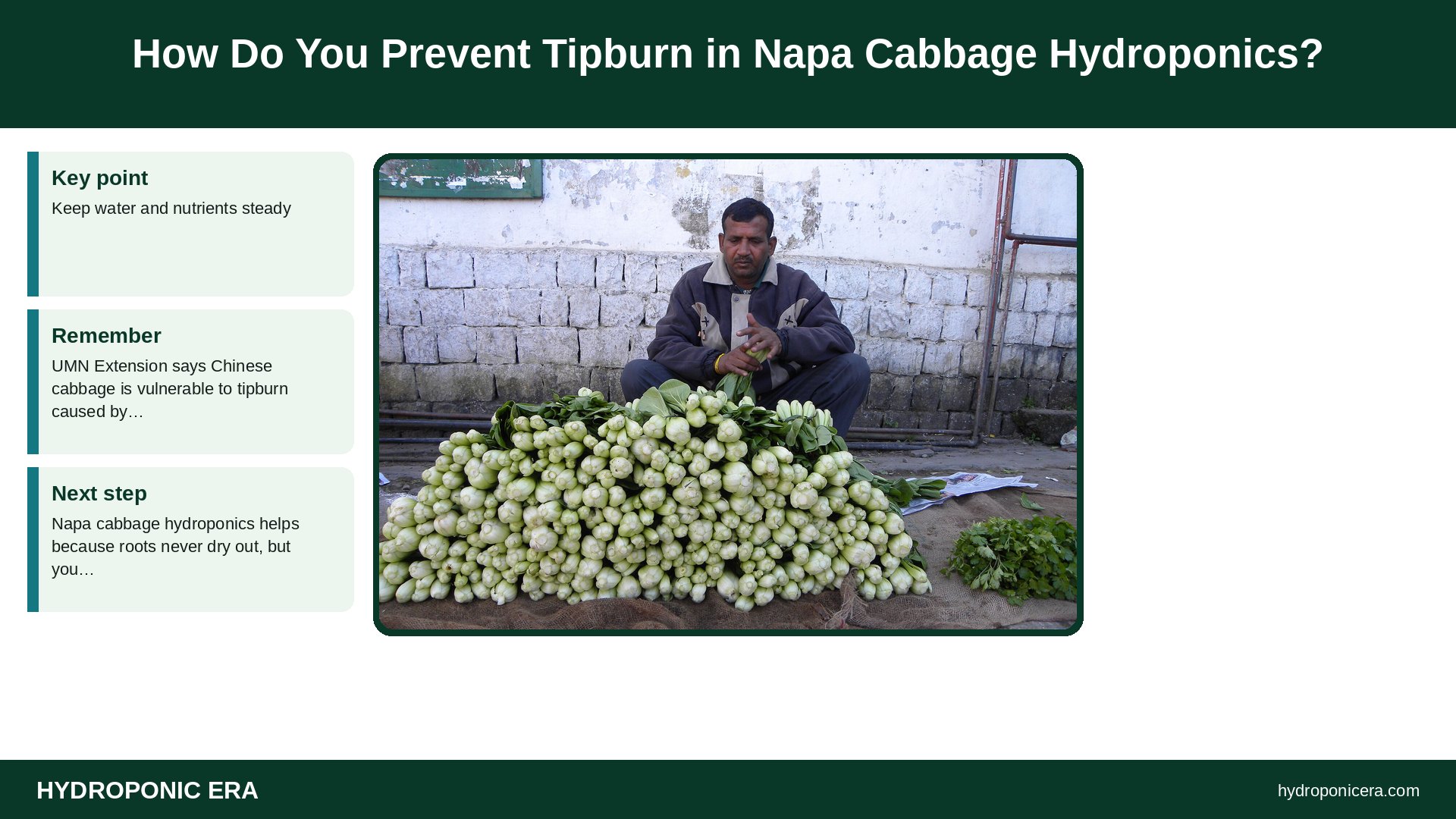
Keep water and nutrients steady. UMN Extension says Chinese cabbage is vulnerable to tipburn caused by uneven moisture, which leads to poor calcium uptake. Napa cabbage hydroponics helps because roots never dry out, but you still need good airflow so leaves transpire and pull calcium into new growth. Keep the solution balanced and topped up.
- Use a complete formula with calcium; see calcium nitrate.
- Run a fan; for lettuce, a similar leafy crop, Kentucky’s hydroponic guide suggests 0.7–2.2 mph (0.3–1.0 m/s) airflow to aid calcium uptake.
- Avoid big swings in reservoir level or strength.
For signs of a shortage, see calcium and magnesium deficiency in hydroponics.
What System Is Best for Napa Cabbage Hydroponics?
A single large container works best for napa cabbage hydroponics because heads get big and need 12–18 inches (30–45 cm) of space. A 5-gallon (19 L) deep water culture bucket, a wide tote or a Dutch bucket all work. NFT channels are usually too tight for full heads unless you grow dwarf varieties or harvest young.
- DWC bucket: see our 5-gallon bucket DWC build.
- Tote: 2–4 plants in a large tote with 18 in (45 cm) between centers.
- Dwarf varieties: UMN suggests 12 in (30 cm) spacing for dwarf types.
When Do You Harvest Napa Cabbage?
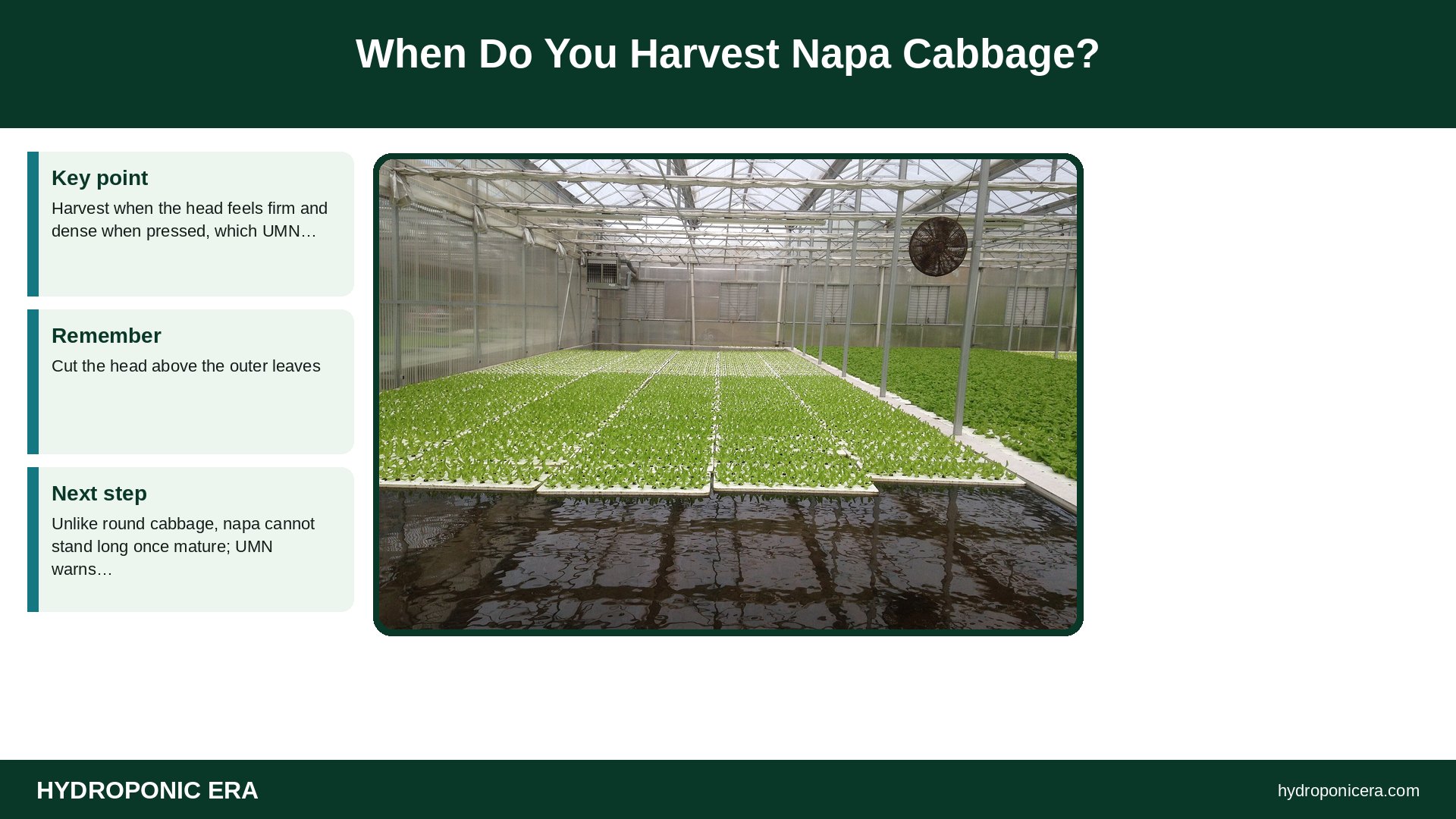
Harvest when the head feels firm and dense when pressed, which UMN Extension says takes about two months from seed. Cut the head above the outer leaves. Unlike round cabbage, napa cannot stand long once mature; UMN warns it may bolt and lose quality, so harvest promptly. Loose heads need more time for inner leaves to fill.
After napa cabbage hydroponics harvests, storage matters. UMN says Chinese cabbage keeps for weeks or months only at 32–40°F (0–4°C) and 95% humidity, conditions colder and moister than a home fridge. Napa is also excellent for kimchi and sauerkraut.
What Pests Affect Napa Cabbage?
UMN Extension lists flea beetles, imported cabbageworm, cabbage looper, diamondback moth larvae and cabbage maggots. Clemson notes Chinese cabbage is more susceptible to Alternaria leaf spot than round cabbage, and black rot is the most serious disease. In napa cabbage hydroponics indoors, aphids and caterpillars are the usual problems. Inspect leaves weekly and remove pests by hand early.
See hydroponic pests: aphids and mites for early control steps.
FAQ About Napa Cabbage
How long does napa cabbage take to grow?
About two months from seed, per UMN Extension.
Is napa cabbage the same as Chinese cabbage?
Yes. Napa is a barrel-shaped type of Chinese cabbage.
Why did my napa cabbage bolt?
Usually cold nights below 50°F (10°C) for a week or more.
How far apart should napa cabbage be?
Clemson suggests 18 in (45 cm) for napa types.
Can napa cabbage grow in summer?
It can, but heat makes heads less dense; cool conditions work best.
Sources
- University of Minnesota Extension — Growing Chinese cabbage and bok choy in home gardens
- Clemson Cooperative Extension HGIC — Cabbage & Chinese Cabbage
- University of Kentucky CCD — Hydroponic Lettuce Production in Controlled Environments (general hydroponic leafy crop practices)
- Photo credits (Wikimedia Commons, edited with titles): Brassica rapa subsp. pekinensis ‘Manoko’ kz01 by Krzysztof Ziarnek, Kenraiz (CC BY-SA 4.0); -2020-10-01 Swede beet seedlings (Brassica napus subsp. Rapifera), Trimingham by Kolforn (Kolforn) I’d appreciate if you could mail me (Kolforn@gmail.com) if you (CC BY-SA 4.0); BOMBMAN, Chinese Cabbage in Mcleodganj by BOMBMAN (CC BY 2.0); Deep water culture by ArcadiYay (CC BY-SA 4.0)