
Quick Answer
solenoid valves automated means using 12V/24V (or specified) electric valves with timers/controllers to start/stop drip or flood lines—understanding fail-closed vs fail-open behavior, water hammer, and filtration needs. Pair with timers/automation, smart plugs/controllers, drip systems, emitters, ATO, and electrical safety.
Key takeaways for solenoid valves automated
- Solenoid valve hydroponics is a practical home-hydro workflow—not filler.
- Match valve voltage and seal materials to nutrient water.
- Fail mode matters—know what happens when power dies.
- Filter upstream; grit kills diaphragms.
- Prefer university/extension sources over forum myths.
- Timers and solenoids automate mistakes as easily as successes—test dry.
- Original ops card keeps Solenoid valve hydroponics decisions consistent.
- Solenoid valve hydroponics fails when growers skip the boring checks.
Related HydroponicEra guides

Why This Matters

solenoid valves automated automation sits between a simple plug-in pump timer and full industrial PLC control. Extension hydroponics primers assume reliable irrigation scheduling; home builders add low-voltage valves on manifolds. Success is plumbing + electrical discipline, not app stickers.
Comparison / Decision Table
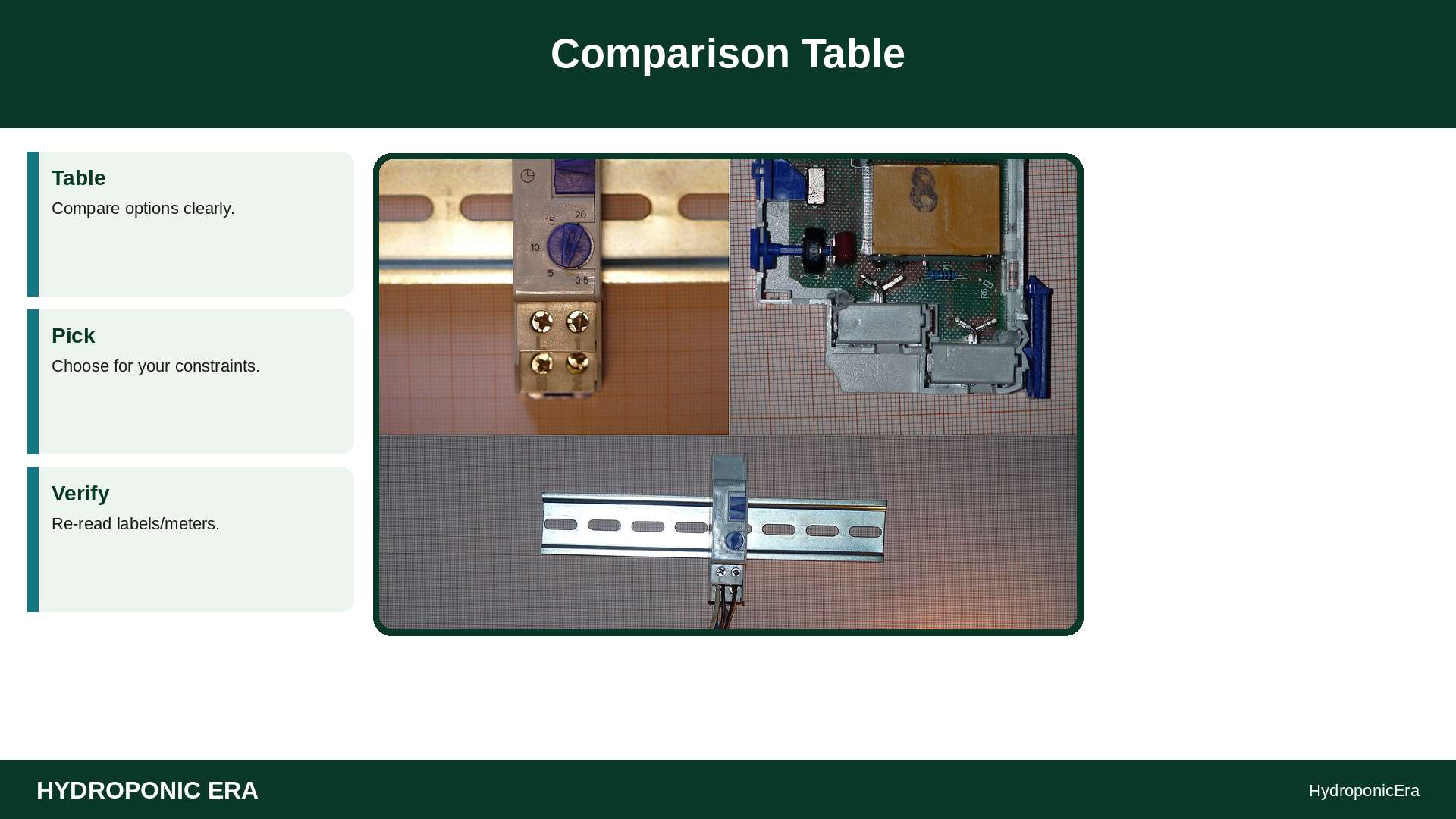
| Use case | Fit | Note |
|---|---|---|
| Drip manifold zones | Strong | One valve per zone; filtered feed |
| Flood table fill | OK | Mind fail mode + overflow path |
| ATO fill from pressure line | Careful | Backflow/air gaps; local plumbing rules |
| Replacing a thinking human entirely | Risky | Sensors + leak trays still required |
Step-by-Step Workflow
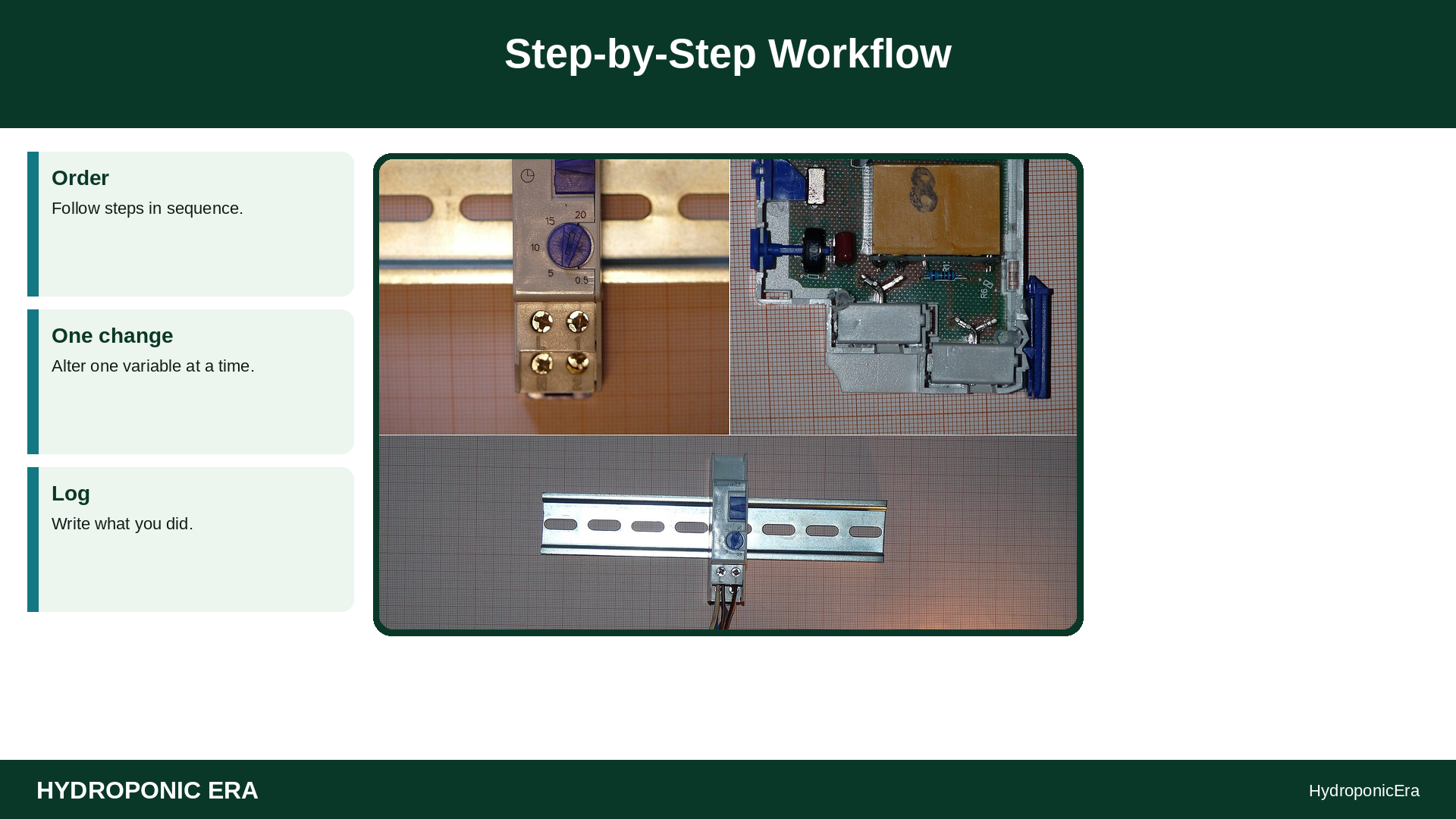
- Choose valve voltage compatible with your controller (commonly 12/24V AC/DC—read the label).
- Confirm elastomer seals tolerate nutrient solution.
- Install a screen filter upstream of the valve.
- Mount with arrow in flow direction; leave service unions.
- Wire with drip loops; keep mains and low-voltage separation clean.
- Program short test pulses into a bucket before plants depend on it.
- Define fail behavior: stuck open flood vs stuck closed drought—mitigate both.
- Add manual bypass for vacations and failures.
- Pair with leak detection trays under manifolds.
- Log zone runtimes so you notice silent failures.
Key Variables
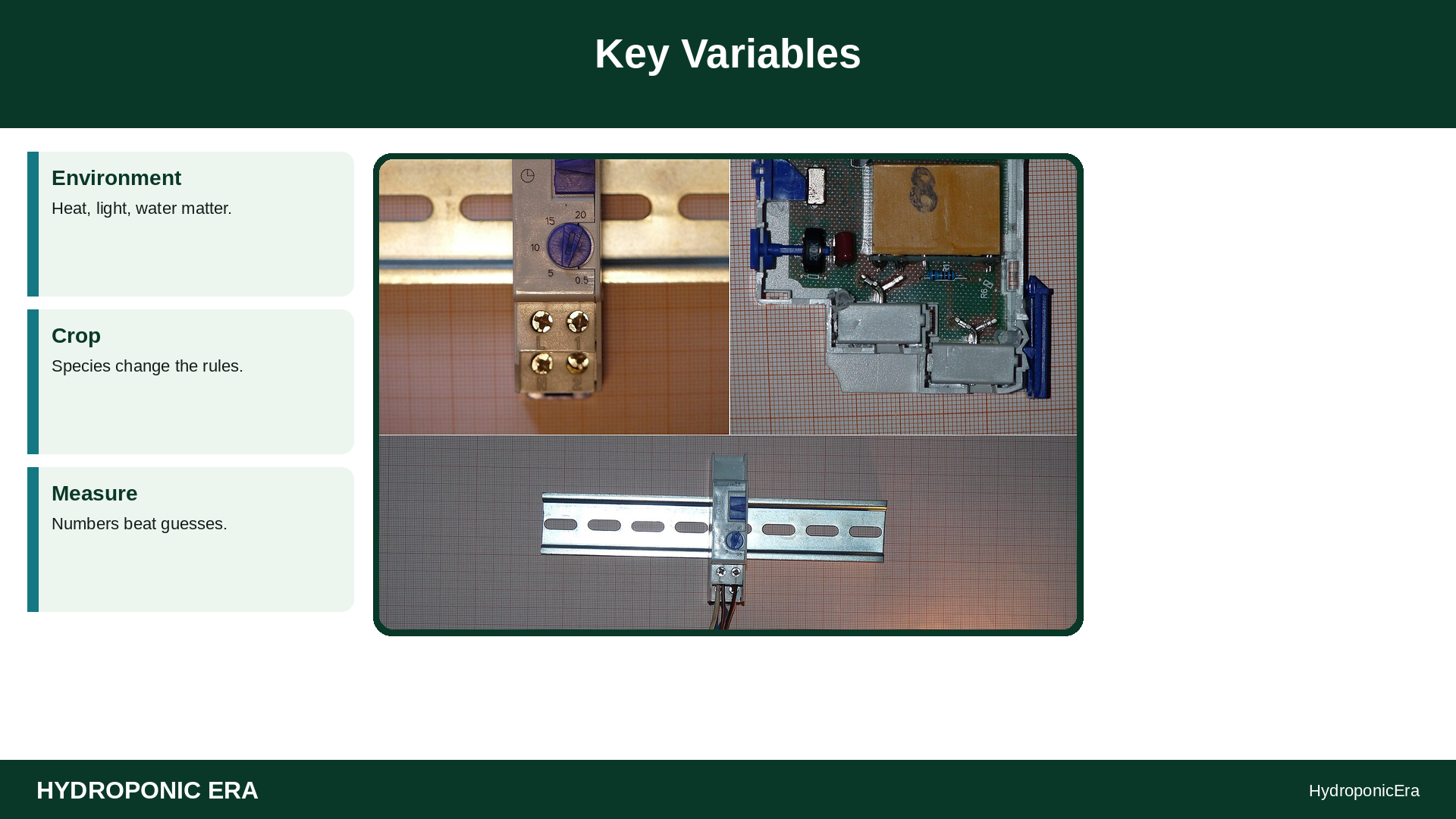
| Variable | Effect | Link |
|---|---|---|
| Filtration | Valve life | screen filters |
| Timer logic | Flood/drought risk | timers |
| Fail mode | Disaster class | leaks, backup |
| Electrical | Shock/fire | electrical |
Common mistakes with solenoid valves automated

- Mains voltage experiments over a wet reservoir
- No filter before a tiny irrigation solenoid
- No overflow path on a fail-open fill
- Assuming Wi-Fi cloud uptime is a flood insurance policy
- Skipping bucket tests
Troubleshooting

| Signal | Action |
|---|---|
| Valve chatters / will not seal | Debris—clean filter; replace diaphragm |
| Zone dry | Coil power, timer, clogged valve, closed bypass |
| Overfill | Stuck open—manual shutoff; redesign fail-safe |
| GFCI trip when valve fires | Electrical inspection—stop DIY guessing |
Practical Framework
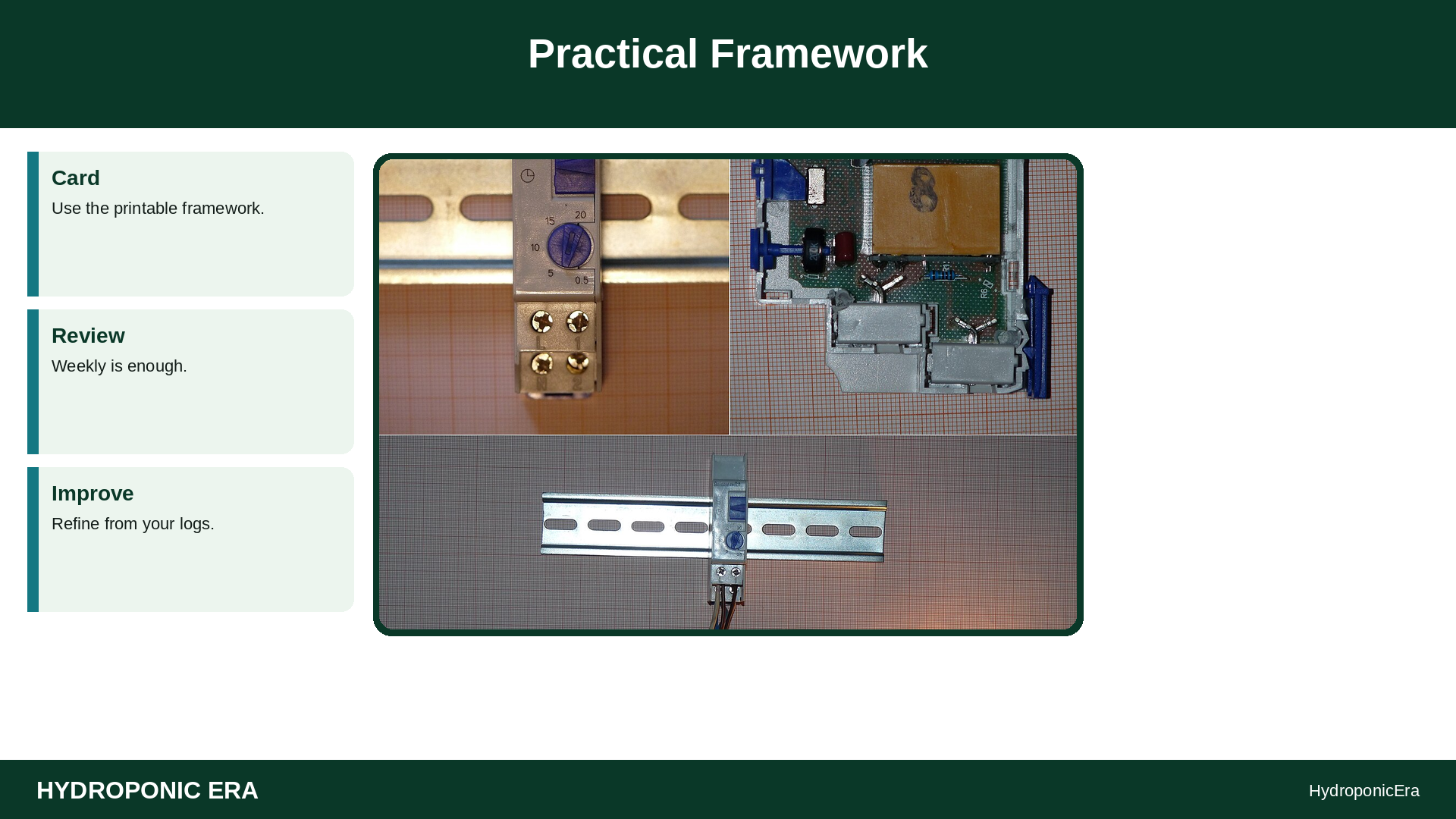
Solenoid card: Voltage match | Filtered | Fail mode known | Bucket tested | Leak tray.
Closing practice for solenoid valve hydroponics: automate only what you have already run successfully by hand.
What to Check Before Automating With a Solenoid Valve
- Valve specs read?
- Filter installed?
- Fail mode mitigated?
- Bucket test passed?
- Manual bypass exists?
- Leak containment ready?
Fail Modes You Must Name
Stuck-open valves flood floors; stuck-closed valves drought plants. Design for both: overflow paths, leak trays, manual bypass, and alarms. A cloud notification is not a substitute for a tray that holds real liters.
Filter grit before the valve. Bucket-test pulses before plants depend on the schedule. Sequence pumps so you do not dead-head against a closed solenoid unless the pump is rated for that abuse.
Electrical Manners
Match coil voltage to the controller. Keep mains and low-voltage workmanship clean with drip loops and GFCI near water. Automation accelerates whatever design you actually built—including the mistakes.

Practice & Field Notes
Commissioning script: valve powered in a bucket → confirm open/close → install filtered line → short plant pulses → inspect for weeping → only then trust overnight schedules. Write the fail mode on tape near the manifold (“fails closed—drought risk” or “fails open—flood risk”).
Keep a manual ball valve bypass within arm’s reach. Controllers fail; hands should not need a screwdriver at 2 a.m. Pair automation with leak containment and timer realism.
If a zone silent-fails, your log of expected runtime versus soil/media moisture (or cup tests) catches it before plants write the bug report in wilt.
Scenario Walkthrough
You automate two drip zones. Zone B floods because the valve failed open overnight—but the tray contained most of it and the local alarm woke you. You shut the manual bypass, replace the valve, and add a second overflow into a visible jug. Automation without containment would have been a downstairs phone call.
Commission every new valve with bucket pulses. Label voltage. Filter upstream. Write the fail mode on tape. Then—and only then—sleep on it.
Key Limits & Honest Scope
This is home automation guidance, not licensed plumbing or electrical advice. Local codes win for potable cross-connections and wiring. Choose valves rated for your voltage, pressure, and water type.
Fail modes kill crops and floors—design containment and manual bypasses. Filters protect diaphragms. Bucket tests protect egos. Cloud apps are helpers, not flood insurance.
Sequence pumps and valves thoughtfully. Dead-heading pumps against closed solenoids can damage gear unless the pump design allows it.
Review Cadence
Revisit this guide after any major equipment or climate change. Log what you measured, what you changed, and what new growth did within a week. Share the checklist with anyone who helps water the system so diagnosis stays consistent. Internal links in the Related section keep you inside the HydroponicEra cluster instead of random search loops. Prefer extension sources in the Sources list when advice conflicts with forum lore.
If symptoms span multiple articles, solve hydraulics and climate before micronutrient folklore. Steady meters, clean probes, and dated notes are the authority tools available to home growers without a lab.
Keep the focus phrase visible in your notes: solenoid valves automated. Consistency beats intensity.
Print the zone schedule and valve fail mode beside the manifold. The next person who waters should not need to reverse-engineer your timer app at midnight.
FAQs about solenoid valves automated
12V or 24V?
Match controller and valve—do not guess.
Can I use a washing-machine valve?
Only if ratings fit pressure/media/voltage—and you accept risk; purpose-built irrigation valves are clearer.
Pump + solenoid both?
Common; sequence so you do not dead-head pumps against closed valves unless pump allows.
ATO vs irrigation solenoid?
Different jobs—see ATO guide for float fills.
Wi-Fi required?
No—mechanical timers still work.
Safety authority?
Follow electrical-around-water caution; local codes win.
Extended Home-Grower Walkthrough
Use this extended walkthrough as a second pass after the Quick Answer. Walk the system with a notebook: write the date, crop, EC, pH, reservoir temperature, and one observation about roots or leaves. Change only one control at a time when a problem appears. If last week’s fix did not show in new growth, revert and try the next smallest lever. Keep university and extension principles in mind—oxygen, sanitation, and measured nutrition beat product stacking.
Photograph the canopy and the reservoir surface weekly. Dated photos settle arguments about algae, tip burn, or stretch faster than memory. When a helper waters for you, leave a one-page card with do-not-touch items and the exact top-off rule. Store calibration sachets next to the meters so “I will calibrate later” stops being the default. Review timers after any power event. Confirm air stones still roar. Confirm drains still drain.
At the end of the week, score the cycle 1–5 for ease and plant quality. Low scores should trigger a sanitation or climate review before you buy new hardware. Link neighboring HydroponicEra guides when the symptom matches a cluster page. Prefer labeled procedures over improvisation under stress. Healthy boring routines are the real upgrade path for home hydroponics.
Keep solenoid valves automated on your ops card so helpers follow one standard.
Keep solenoid valves automated on your ops card so helpers follow one standard.
Keep solenoid valves automated on your ops card so helpers follow one standard.
Keep solenoid valves automated on your ops card so helpers follow one standard.
Keep solenoid valves automated on your ops card so helpers follow one standard.
Keep solenoid valves automated on your ops card so helpers follow one standard.
Keep solenoid valves automated on your ops card so helpers follow one standard.
Keep solenoid valves automated on your ops card so helpers follow one standard.
Keep solenoid valves automated on your ops card so helpers follow one standard.
Keep solenoid valves automated on your ops card so helpers follow one standard.
Keep solenoid valves automated on your ops card so helpers follow one standard.
Keep solenoid valves automated on your ops card so helpers follow one standard.
Keep solenoid valves automated on your ops card so helpers follow one standard.
Sources
- Oklahoma State University Extension — Hydroponics
- Michigan State University Extension — Hydroponics as an agricultural production system
- Ohio State University Extension — AEX-790.20 Electrical safety around water
- Penn State Extension — Hydroponics Systems and Principles of Plant Nutrition
- University of Florida IFAS — AE069 publication (greenhouse/env control context)
- Michigan State University Extension — Water quality considerations for greenhouse and nursery crops