
Quick Answer
reservoir insulation methods means using reflective wraps, foam boards, tote-in-tote air gaps, and shade to stabilize solution temperature so heaters/chillers work less—and roots avoid hot/cold spikes. Pair with reservoir temperature, chillers, aquarium heaters, lid light-proofing, temp & uptake, and dissolved oxygen.
Key takeaways for reservoir insulation methods
- Insulate hydroponic reservoir is a practical home-hydro workflow—not filler.
- Insulation is passive climate control for the tank—not optional decoration.
- Keep nutrient-side surfaces clean and food-aware—prefer exterior wraps.
- Reflect radiant heat from lights; stop conducting floor cold/heat.
- Prefer university/extension sources over forum myths.
- Measure before/after—do not assume foam fixed a 30°C tent.
- Original ops card keeps Insulate hydroponic reservoir decisions consistent.
- Insulate hydroponic reservoir fails when growers skip the boring checks.
Related HydroponicEra guides
Why This Matters

reservoir insulation methods methods sit beside heaters and chillers as the equipment/ops layer home growers skip. Extension greenhouse environment materials emphasize temperature management for plant health; hydroponic roots sit in the solution you temperature-abuse. Insulation reduces swing amplitude so active gear cycles less.
Prefer exterior insulation and reflective barriers. Avoid shedding foam crumbs into solution.
Comparison / Decision Table
| Method | Best for | Watch-out |
|---|---|---|
| Reflective wrap / radiant barrier | Tents with hot lights nearby | Secure edges; no foil shorts on cords |
| Foam board / closed-cell wrap (exterior) | Cold floors / hot rooms | Keep exterior; tape seams |
| Tote-in-tote air gap | DIY buffer without adhesives | Footprint grows; still light-proof |
| Shade + distance from ballasts/drivers | Radiant hotspots | Do not block intake/exhaust paths |
Step-by-Step Workflow

- Log solution temperature morning and peak lights-on for 3 days.
- Move reservoirs off radiant hot spots when possible.
- Apply exterior reflective or foam wrap; seal light leaks that grow algae.
- Add air-gap sleeve (tote-in-tote) if swings remain large.
- Combine with lid insulation only if you keep ports accessible and safe.
- Re-measure; then right-size heater/chiller runtime.
- Keep heaters on GFCI with submerged-rated equipment only.
- Do not trap heat against failing pump housings—leave service access.
- Light-proof while you insulate—algae loves warm lit gaps.
- Log the delta so you know if insulation earned its footprint.
Key Variables

| Variable | Effect | Link |
|---|---|---|
| Solution temperature | DO + uptake behavior | res temp, DO |
| Radiant load | Daytime spikes | tent, lights |
| Active gear | Heater/chiller duty cycle | heater, chiller |
| Lid leaks | Algae + heat gain | lid proof |
Common mistakes with reservoir insulation methods
- Foam peanuts floating in nutrients
- Insulating over a leaking bulkhead you cannot see
- Wrapping a heater cord bundle into a hot nest
- Assuming insulation replaces a chiller in a sealed hot tent
- Black tote in full sun on a balcony with no shade
Troubleshooting

| Signal | Action |
|---|---|
| Day spike only near lights | Reflective barrier + distance |
| Night crash on cold slab | Foam under/around tote + gentle heater |
| Still swings 5°C+ after wrap | Active gear; reduce heat load |
| Algae after wrap gaps | Finish light-proofing |
Practical Framework
Insulation card: Log temps | Exterior wrap | Radiant distance | Re-measure | Then heater/chiller.
Closing practice for insulate hydroponic reservoir: passive stability first—kilowatts second.
What to Check Before You Wrap or Heat a Reservoir
- Baseline temp log done?
- Hotspot identified?
- Exterior materials chosen?
- Electrical clearance OK?
- Lid still serviceable?
- After-wrap temps logged?
Measure, Wrap, Re-measure
Log solution temperature at lights-off and peak lights-on before buying foam. Reflect radiant heat from fixtures, isolate cold slabs, and prefer exterior wraps so crumbs never enter nutrients. Then decide whether a heater or chiller still earns its runtime.
Insulation does not legalize algae: finish lid light-proofing while you wrap. Warm lit gaps grow green slime that no foam board forgives.
Service Access
Leave unions, probes, and pump intakes reachable. A perfectly insulated mystery box you cannot service will fail during a vacation week.
Practice & Field Notes
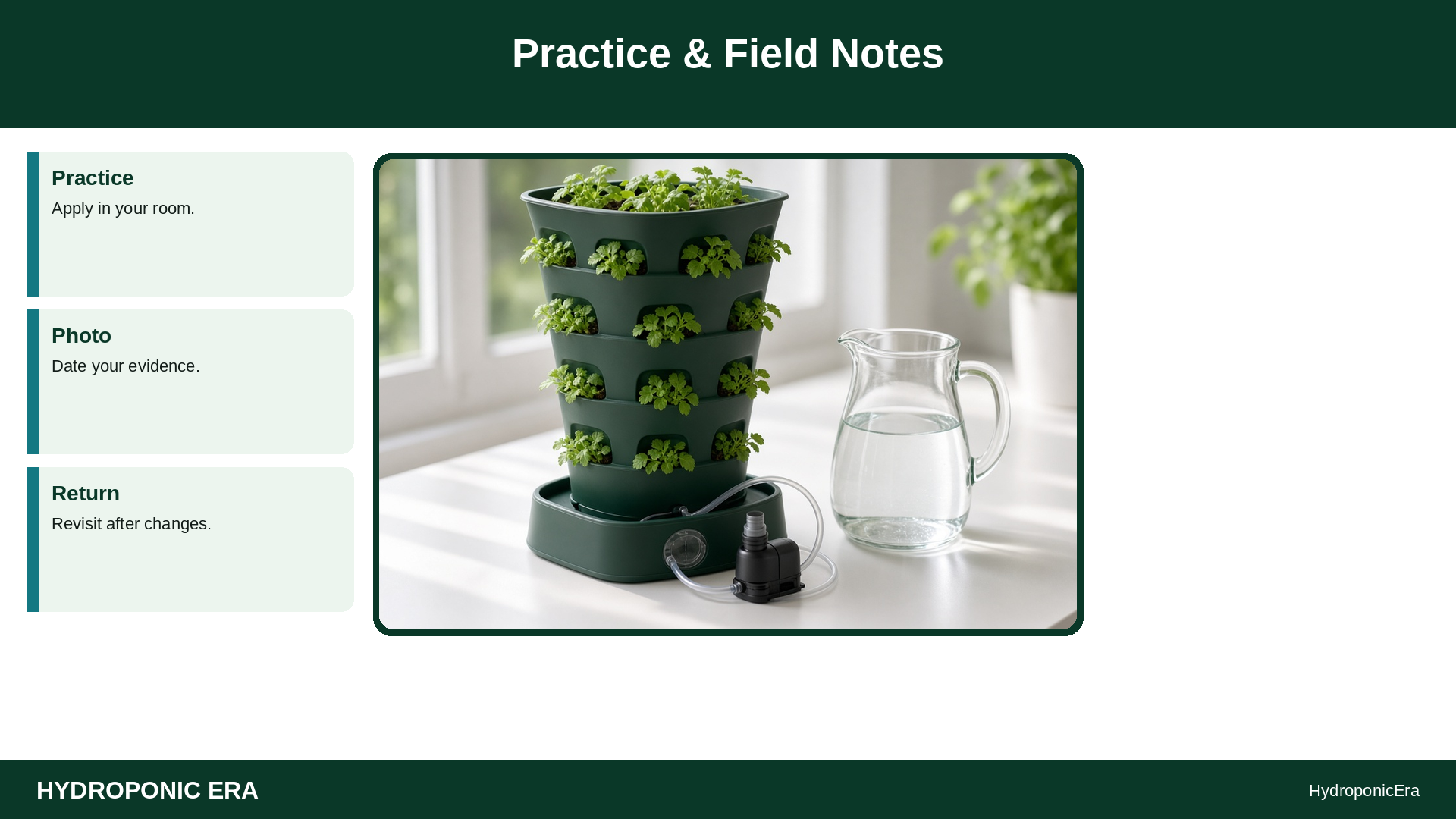
Try reflective bubble wrap or radiant barrier on the exterior first—cheap learning. If nights still crash on a cold floor, add foam board underneath and around, leaving plumbing access. Tote-in-tote air gaps help apartments that cannot run noisy chillers 24/7.
Re-log temperatures for three days after each change. If spikes remain brutal, insulation alone will not cancel a sealed hot tent—reduce radiant load or add active cooling. Keep heaters GFCI-protected and rated for the job.
Combine with reservoir temperature targets and DO awareness: hot roots lose oxygen headroom even when leaves look dramatic under LEDs.
Scenario Walkthrough
Solution runs hot by mid-lights in a small tent. Reflective exterior wrap plus moving the tote farther from the driver drops the peak. Still high—so you add a small chiller with shorter duty cycles than before. Insulation earned reduced runtime, not magic without active gear.
Winter opposite: nights crash on a slab. Foam under the tote plus a controlled heater stabilizes without cooking daytime peaks. Always re-log. Keep algae out with lid proofing while you wrap.
Key Limits & Honest Scope
Insulation reduces swings and duty cycles; it does not repeal thermodynamics in a sealed hot tent. Measure before and after. Prefer exterior materials to keep foam out of food-crop solution. Electrical safety around heaters remains mandatory.
Light-proofing while insulating prevents trading a temperature win for an algae loss. Active chillers/heaters still belong when loads demand them—see chillers and heaters.
Service access beats perfect R-value vanity. If you cannot reach a bulkhead, you built a trap.
Review Cadence
Revisit this guide after any major equipment or climate change. Log what you measured, what you changed, and what new growth did within a week. Share the checklist with anyone who helps water the system so diagnosis stays consistent. Internal links in the Related section keep you inside the HydroponicEra cluster instead of random search loops. Prefer extension sources in the Sources list when advice conflicts with forum lore.
If symptoms span multiple articles, solve hydraulics and climate before micronutrient folklore. Steady meters, clean probes, and dated notes are the authority tools available to home growers without a lab.
FAQs about reservoir insulation methods
Will insulation stop all need for chillers?
Not in high heat loads—it reduces duty cycle and spikes.
Interior foam OK?
Prefer exterior to avoid crumbs and cleaning nightmares.
Double tote worth it?
Yes for apartments needing quiet passive help.
Heater + insulation?
Yes—prevents short cycling; use safe rated gear.
Clear lids?
Light-proof them; clear + warm = algae.
Safety?
Keep GFCI habits; see electrical-around-water guidance.
Extended Home-Grower Walkthrough
Use this extended walkthrough as a second pass after the Quick Answer. Walk the system with a notebook: write the date, crop, EC, pH, reservoir temperature, and one observation about roots or leaves. Change only one control at a time when a problem appears. If last week’s fix did not show in new growth, revert and try the next smallest lever. Keep university and extension principles in mind—oxygen, sanitation, and measured nutrition beat product stacking.
Photograph the canopy and the reservoir surface weekly. Dated photos settle arguments about algae, tip burn, or stretch faster than memory. When a helper waters for you, leave a one-page card with do-not-touch items and the exact top-off rule. Store calibration sachets next to the meters so “I will calibrate later” stops being the default. Review timers after any power event. Confirm air stones still roar. Confirm drains still drain.
At the end of the week, score the cycle 1–5 for ease and plant quality. Low scores should trigger a sanitation or climate review before you buy new hardware. Link neighboring HydroponicEra guides when the symptom matches a cluster page. Prefer labeled procedures over improvisation under stress. Healthy boring routines are the real upgrade path for home hydroponics.
Keep reservoir insulation methods on your ops card so helpers follow one standard.
Keep reservoir insulation methods on your ops card so helpers follow one standard.
Keep reservoir insulation methods on your ops card so helpers follow one standard.
Keep reservoir insulation methods on your ops card so helpers follow one standard.
Keep reservoir insulation methods on your ops card so helpers follow one standard.
Keep reservoir insulation methods on your ops card so helpers follow one standard.
Keep reservoir insulation methods on your ops card so helpers follow one standard.
Keep reservoir insulation methods on your ops card so helpers follow one standard.
Keep reservoir insulation methods on your ops card so helpers follow one standard.
Keep reservoir insulation methods on your ops card so helpers follow one standard.
Keep reservoir insulation methods on your ops card so helpers follow one standard.
Keep reservoir insulation methods on your ops card so helpers follow one standard.
Keep reservoir insulation methods on your ops card so helpers follow one standard.
Keep reservoir insulation methods on your ops card so helpers follow one standard.
Sources
- Oklahoma State University Extension — Hydroponics
- Michigan State University Extension — Hydroponics as an agricultural production system
- Penn State Extension — Hydroponics Systems and Principles of Plant Nutrition
- University of Florida IFAS — AE069 publication (greenhouse/env control context)
- University of Kentucky — Managing Greenhouse & High Tunnel Environmental Conditions to Reduce Plant Diseases (PPFS-GH-01)
- Ohio State University Extension — AEX-790.20 Electrical safety around water