
Can tomato bacterial canker infect hydroponic tomatoes? Yes. Tomato bacterial canker is caused by the bacterium Clavibacter michiganensis, which arrives on seed or transplants and spreads through pruning, clipping and handling. UMN Extension notes some growers move to hydroponic production when the pathogen builds up in soil, but hydroponics does not stop spread on hands, tools and reused stakes.
Key takeaway: Tomato bacterial canker causes one-sided wilting, scorched leaf edges, brown streaks inside stems and small bird’s-eye spots on fruit. There are no resistant tomato varieties, according to UMN Extension, so clean seed, clean transplants, disinfected pruning tools and fast removal of sick plants are the main defenses indoors.
| Factor | What sources report | Source |
|---|---|---|
| Cause | Clavibacter michiganensis (bacterium) | NC State; UW–Madison |
| Favored conditions | Warm, 75–90°F (24–32°C), high humidity | UMN Extension |
| Main entry | Infected seed and transplants | UMN; UC IPM |
| Main spread | Pruning, staking, hands, tools | NC State; UW–Madison |
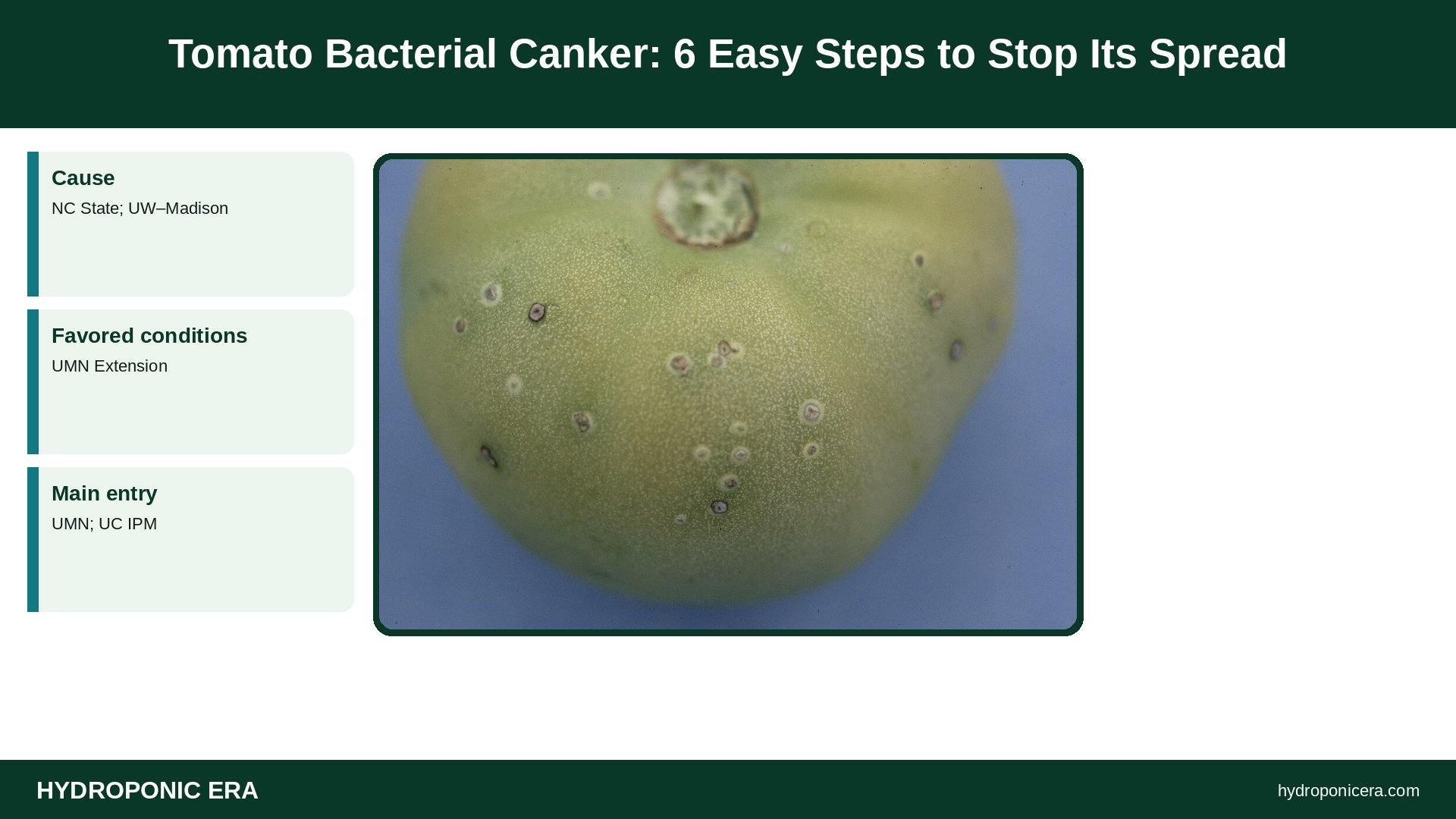
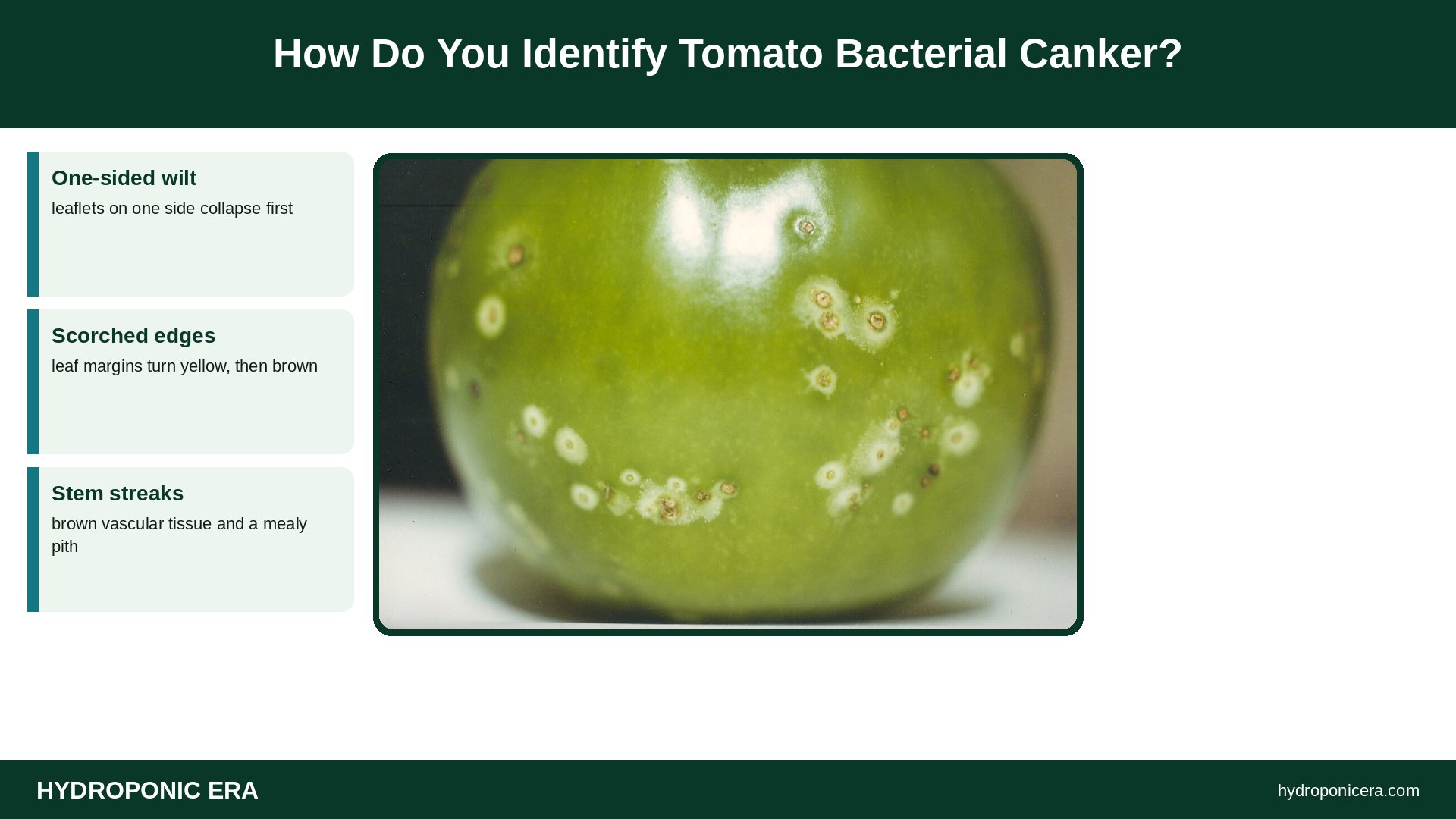
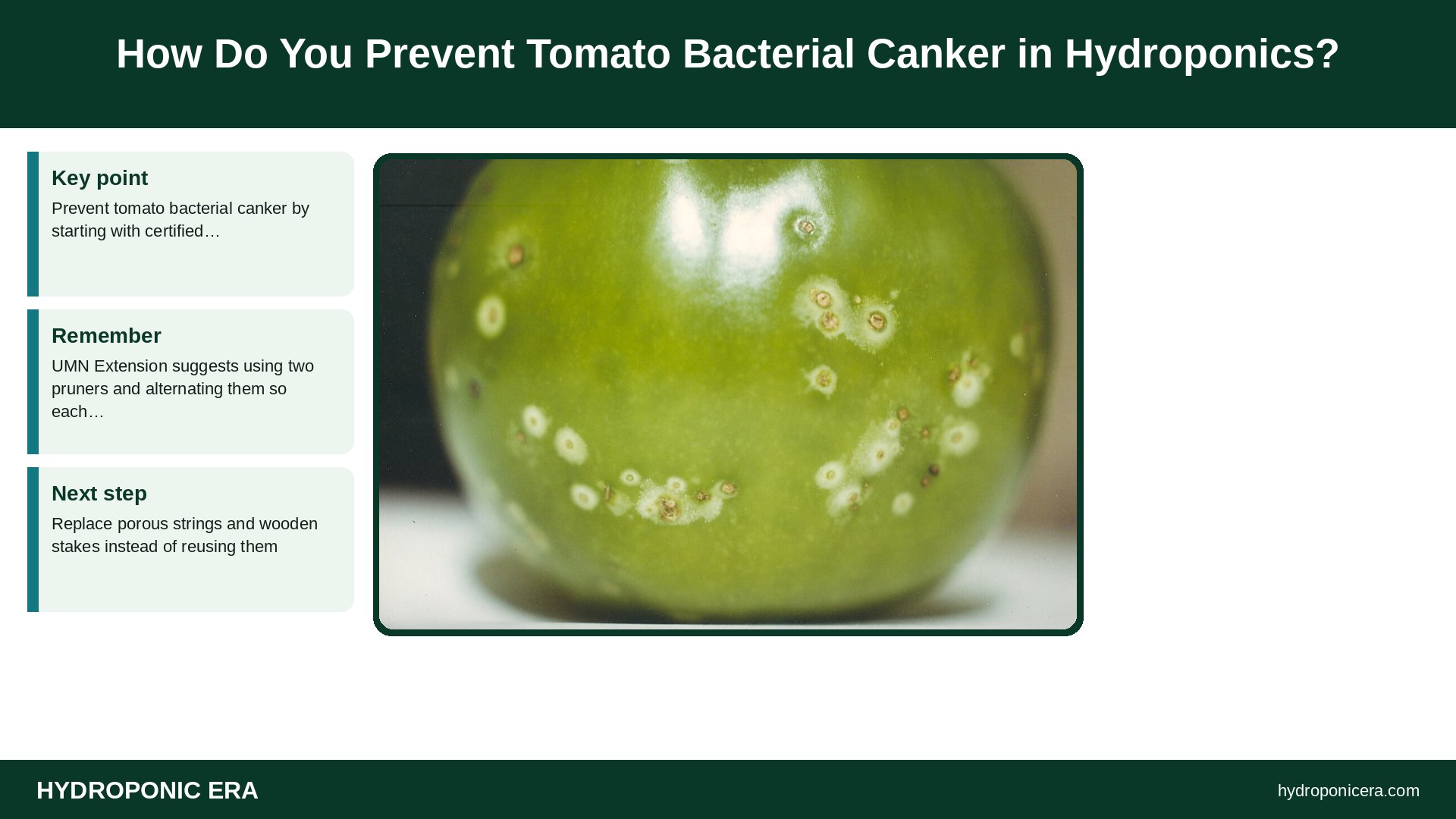
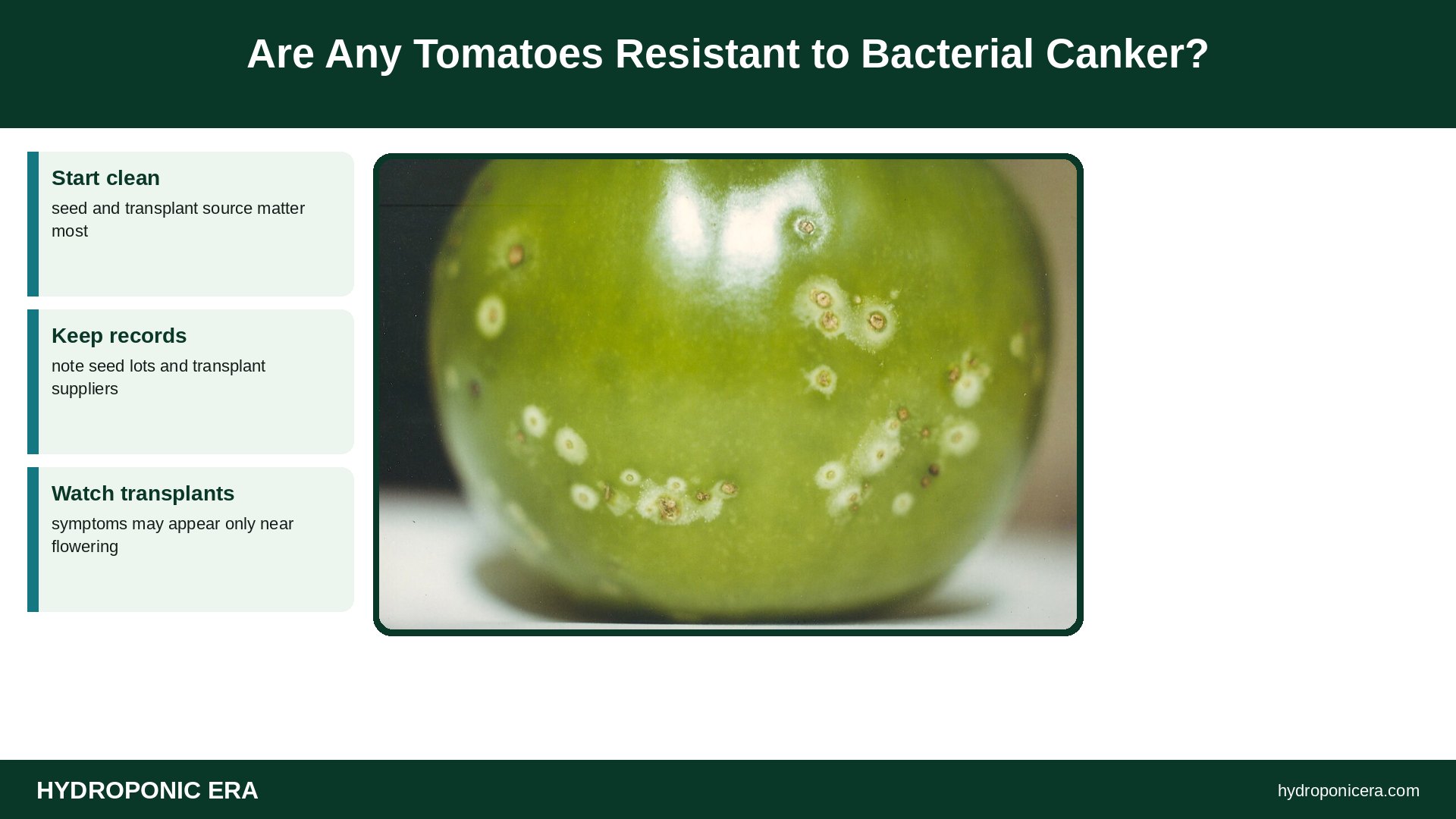
| Fruit sign | Bird’s-eye spots about 1/8 inch (3 mm) | UC IPM |
| Survival | Months on stakes and equipment | UMN Extension |
What Is Tomato Bacterial Canker?
Tomato bacterial canker is a bacterial disease caused by Clavibacter michiganensis. NC State Extension calls it one of the most important diseases to manage in the greenhouse tomato industry, because an epidemic can begin with a single infected seed. Tomato is the primary host, though pepper, eggplant and other nightshade-family plants may also be hosts.
The bacterium can become systemic, moving through the water-conducting tissue of the plant. That is why symptoms often show as wilting rather than just spots. UW–Madison also warns that infected transplants can carry the bacterium without showing obvious symptoms at first.
How Do You Identify Tomato Bacterial Canker?
Identify tomato bacterial canker by wilting on one side of a leaf or plant, yellow then brown leaf edges that look scorched, and brown streaks inside the stem when cut. UMN Extension says fruit may show small raised white spots with tan centers called bird’s-eye spots. Lab confirmation is recommended.
- One-sided wilt: leaflets on one side collapse first.
- Scorched edges: leaf margins turn yellow, then brown.
- Stem streaks: brown vascular tissue and a mealy pith.
- Bird’s-eye spots: raised fruit spots with a white halo.
UW–Madison stresses that several other diseases and disorders look similar, so send a sample to a plant disease clinic before pulling a whole crop. Nutrient problems can also yellow leaf edges, so check your solution strength before assuming disease.
How Does Tomato Bacterial Canker Spread in Hydroponics?
It spreads on contaminated seed, symptomless transplants, and anything that moves plant sap between plants. UW–Madison lists pruning, clipping, tying, staking, grafting and harvesting as key routes, with knives, gloves and reused clips carrying bacteria. Splashing water can add local spread, and UMN says the bacterium survives months on stakes and equipment.
Hydroponic tomato crops are pruned and trellised often, which creates many wounds. NC State notes the disease spreads quickly through pruning when shears are not disinfected. In a greenhouse, UMN Extension says spread between transplants and older plants can cause severe symptoms and yield loss.
How Do You Prevent Tomato Bacterial Canker in Hydroponics?
Prevent tomato bacterial canker by starting with certified pathogen-free seed, buying clean transplants that have not been pruned, disinfecting pruning tools between plants and keeping leaves dry. UMN Extension suggests using two pruners and alternating them so each soaks in sanitizer. Replace porous strings and wooden stakes instead of reusing them.
- Buy certified seed from a reputable supplier.
- Quarantine and inspect new transplants.
- Sanitize pruners between plants with a labeled greenhouse sanitizer.
- Avoid working plants when foliage is wet.
- Replace strings and wooden stakes after each crop.
- Clean trays, clips and channels before replanting.
See our guides to quarantining new plants and clones and hydroponic tomato pruning for workflow ideas.
What Should You Do If Tomato Bacterial Canker Appears?
Bag and remove infected plants, including roots, as soon as the disease is suspected, and remove the neighboring plants too, even if they look healthy. UMN Extension gives this advice for greenhouse and high tunnel production. There are very few chemical options, and sprays during transplant production work better than sprays after symptoms appear.
| Action | Purpose | Source |
|---|---|---|
| Confirm with a lab | Rule out look-alikes | UW–Madison; UMN |
| Remove sick and adjacent plants | Stop spread | UMN Extension |
| Disinfect tools and surfaces | Remove bacteria | UMN; NC State |
| Trace seed and transplant source | Prevent recurrence | UW–Madison |
After the crop, strip the system and follow our guide to cleaning and sterilizing a hydroponic system. UMN notes the pathogen survives up to three years in undecomposed tomato debris.
Are Any Tomatoes Resistant to Bacterial Canker?
No. UMN Extension states there are currently no tomato varieties with resistance to bacterial canker. Variety choice still matters for yield and vigor indoors, but it will not protect against this disease. Prevention depends on clean starting material, hygiene and fast removal of infected plants.
- Start clean: seed and transplant source matter most.
- Keep records: note seed lots and transplant suppliers.
- Watch transplants: symptoms may appear only near flowering.
For variety ideas, see best tomato varieties for hydroponics.
Can Seed Treatment Stop Tomato Bacterial Canker?
Seed treatment lowers risk but does not guarantee clean seed. UMN Extension describes a hot water soak at 122°F (50°C) for 25 minutes, or a short dilute bleach soak, and says neither method eliminates the pathogen completely. UC IPM adds that a few contaminated seeds can cause serious greenhouse problems, so monitor seedlings closely.
Most home and small hydroponic growers are better off buying seed from suppliers that test for this pathogen than treating seed themselves. If you save seed, never save it from plants that showed wilting or fruit spots.
Does Tomato Bacterial Canker Affect Other Crops?
Tomato is the main host. NC State says pepper, eggplant, potato and tobacco may also be hosts, and UC IPM notes several nightshades are naturally infected. Leafy greens and herbs in the same room are not hosts, but shared tools can still move bacteria to other tomato and pepper plants.
FAQ About Tomato Bacterial Canker
Can you sell tomatoes with bacterial canker spots?
Spotted fruit loses market quality; sources focus on removing infected plants to protect the crop.
Does tomato bacterial canker spread through nutrient solution?
Main spread is on seed, transplants, tools and hands; splashing water adds local spread.
How long does tomato bacterial canker survive?
UMN says up to three years in undecomposed tomato debris and months on stakes.
Do seedlings show tomato bacterial canker symptoms?
Often not. UC IPM says seedlings usually show no symptoms and signs may wait until flowering.
Can I reuse grow channels after tomato bacterial canker?
Yes, after thorough cleaning and disinfection; replace porous strings and wooden stakes.
Sources
- UMN Extension — Bacterial canker of tomato
- NC State Extension — Bacterial canker of tomato
- UC IPM — Bacterial canker of tomato
- UW–Madison Vegetable Pathology — Tomato bacterial canker
- Photo credits (Wikimedia Commons, edited with titles): Clavibacter michiganensis symptoms on tomato by Mary Ann Hansen, Virginia Polytechnic Institute and State University, Bugwood.or (CC BY 3.0 us); Bacterial canker of tomato caused by Corynebacterium michiganense pv. michiganense (9777392932) by Scot Nelson (CC0)