
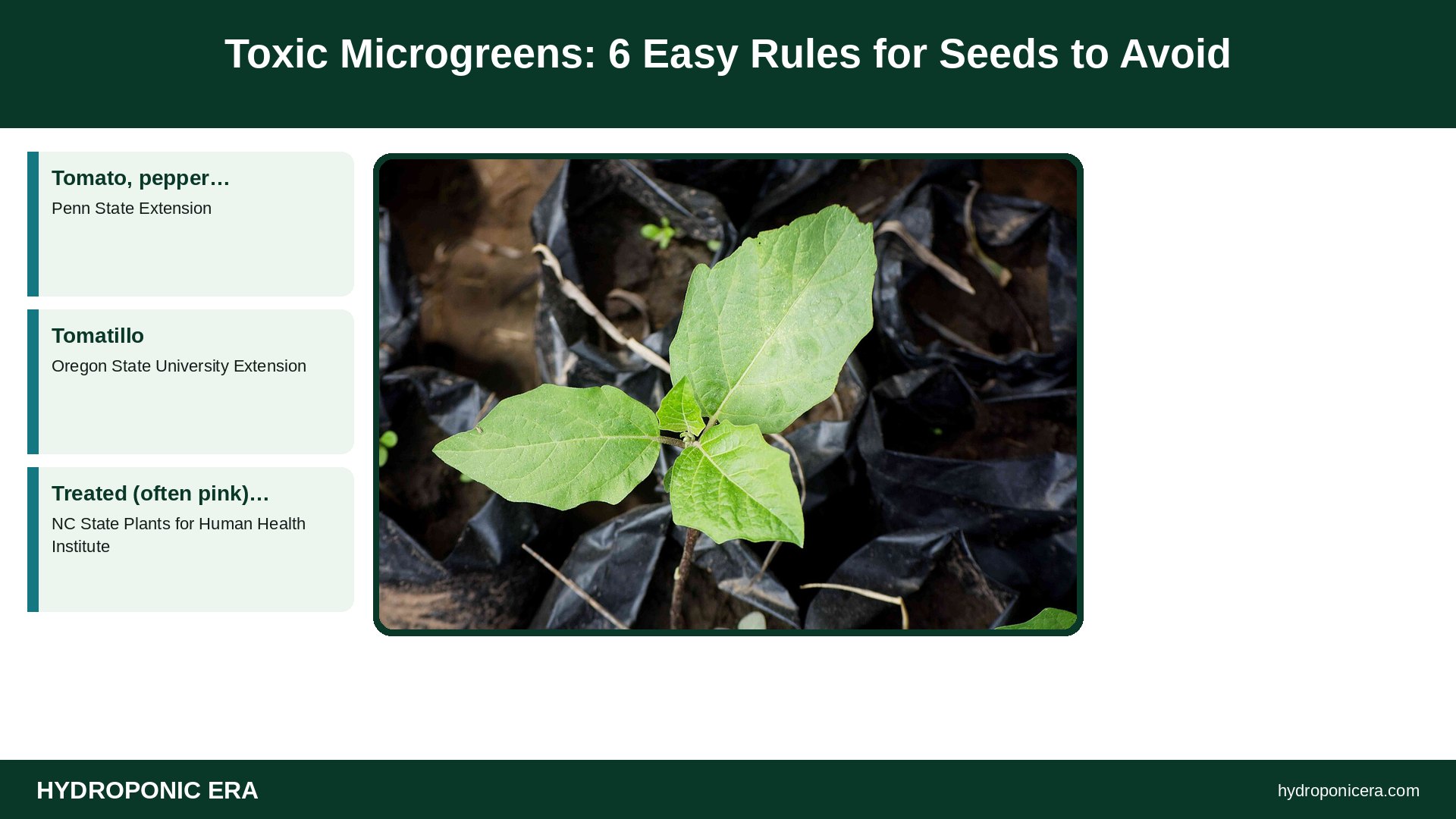
Which microgreens are toxic? The main toxic microgreens are nightshade family seedlings: tomato, pepper, eggplant, potato and tomatillo. Extension specialists say their young stems and leaves contain alkaloids that can be toxic to people, even though the ripe fruit is safe. Also avoid seed treated with fungicide, which is often coated pink, wild plants you cannot identify, and any species you are allergic to.
Key takeaway: Penn State Extension says tomato, pepper, eggplant and potato are not edible at the seedling stage and are not suitable for microgreens because they contain alkaloids that are toxic to humans at high levels. University of Illinois Extension and Oregon State University Extension give the same warning, so toxic microgreens are easy to avoid once you know the plant families.
| Avoid | Why | Source |
|---|---|---|
| Tomato, pepper, eggplant, potato | Alkaloids toxic at high levels | Penn State Extension |
| Tomatillo | Nightshade; on avoid list | Oregon State University Extension |
| Treated (often pink) seed | Fungicide coating | NC State Plants for Human Health Institute |
| Unknown wild species | Many contain toxic compounds | Penn State Extension |
| Allergenic species | Personal allergy risk | Penn State Extension |
What Makes Some Microgreens Toxic?
Natural plant chemicals. Penn State Extension explains that tomato, pepper, eggplant and potato seedlings contain alkaloids, which at high levels are toxic for humans. University of Illinois Extension says plants in the nightshade (Solanaceous) family should not be grown as microgreens due to toxins in the stems and foliage. Microgreens are eaten as stems and leaves, so those tissues matter.
The ripe fruits of tomatoes and peppers are safe, but a fruit being edible does not make the seedling edible. Microgreens are harvested at the cotyledon or first true leaf stage, which Penn State describes as cutting seedlings right above the growing medium.
Which Toxic Microgreens Should You Never Grow?
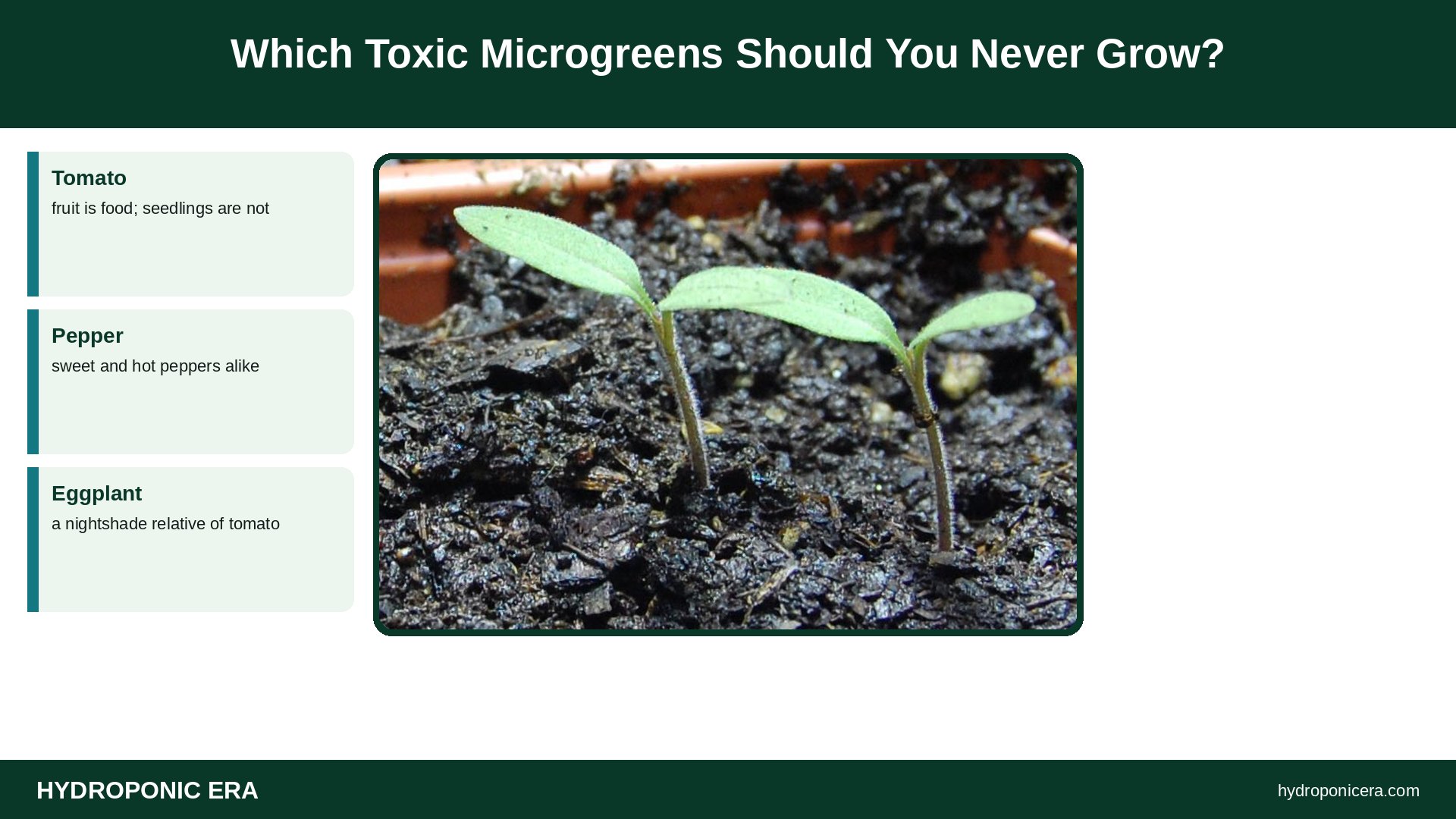
Skip every nightshade seed. Oregon State University Extension lists eggplants, peppers, tomatoes and tomatillos as seed types to avoid for microgreens. Penn State adds potato. NC State’s Plants for Human Health Institute says not to eat shoots from tomato, eggplant, pepper or potato, because these come from the nightshade family, which can be toxic.
- Tomato: fruit is food; seedlings are not.
- Pepper: sweet and hot peppers alike.
- Eggplant: a nightshade relative of tomato.
- Potato: never grow as microgreens.
- Tomatillo: on Oregon State’s avoid list.
Are Treated Seeds Toxic Microgreens Too?
They are a risk you can avoid. NC State’s Plants for Human Health Institute says not to use seed treated with a fungicide, noting it often has a pink coating. Penn State Extension recommends seed that has not been treated with chemicals or coated in any way, and that is sold specifically for sprouts and microgreens, produced to high food safety standards.
- Buy seed labeled for sprouting or microgreens.
- Check the packet for “treated” or a colored coating.
- Do not use leftover garden seed of unknown treatment.
- Store seed dry and cool.
See our list of the best microgreens to grow for safe seeds.
Can Wild Plants Be Toxic Microgreens?
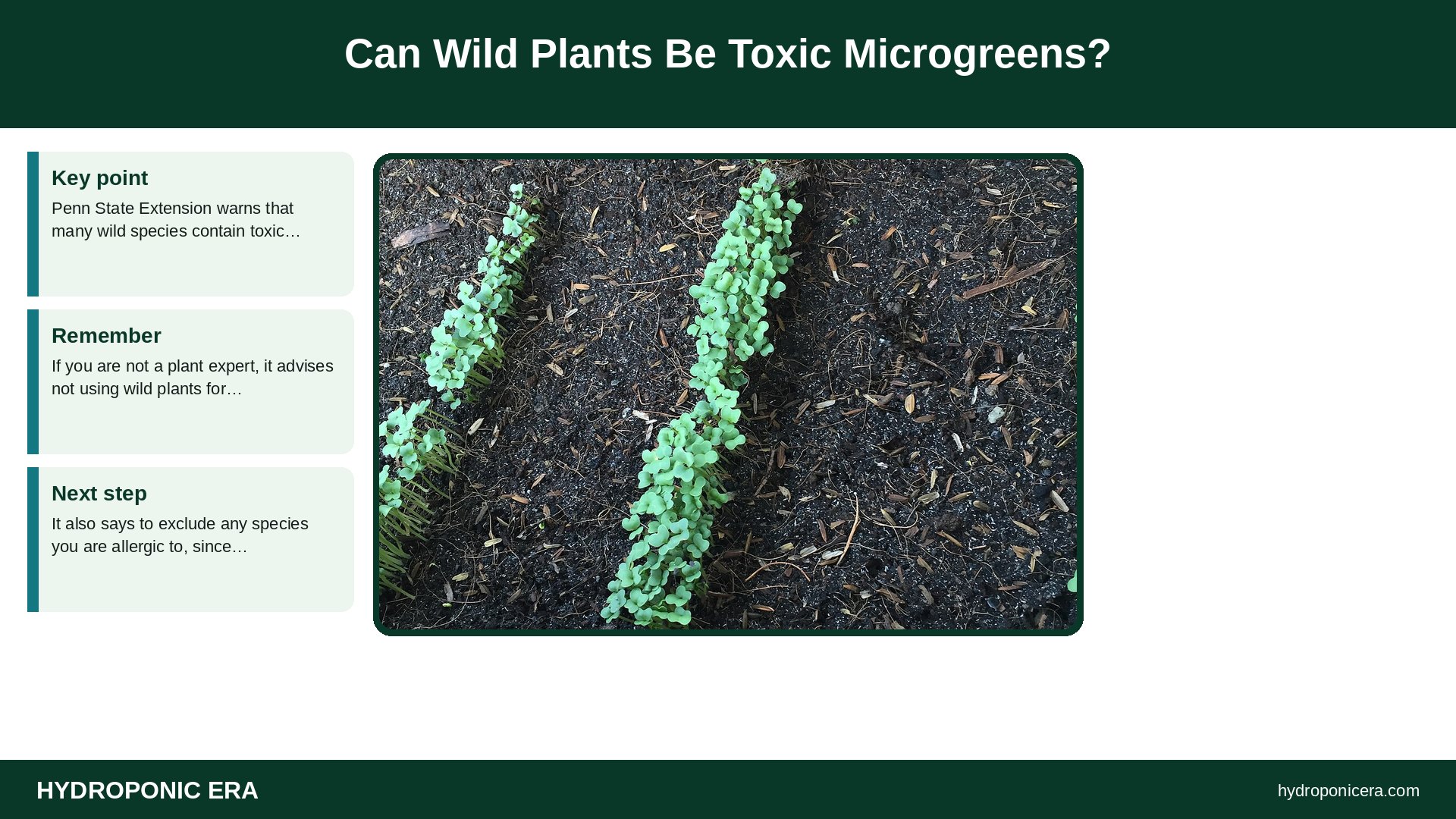
Yes. Penn State Extension warns that many wild species contain toxic compounds while looking like edible plants. If you are not a plant expert, it advises not using wild plants for microgreens at all. It also says to exclude any species you are allergic to, since microgreens are eaten raw and in large handfuls.
Which Microgreens Are Safe Instead of Toxic Microgreens?
Most common leafy crops and herbs. University of Illinois Extension lists mustard, kale, endive, arugula, beets, radish, watercress, peas, cabbage, basil and most lettuce. Penn State adds cereals such as barley, oat and wheat, legumes such as pea and lentil, and herbs such as basil, cilantro, dill and chives. Oregon State suggests broccoli, cabbage, chard, kale, peas, sunflower, arugula, mustard and radish.
- Mild: broccoli, cabbage, kale, pea, sunflower.
- Spicy: arugula, mustard, radish.
- Herbs: basil, cilantro, dill.
Popular picks include broccoli microgreens and radish microgreens.
How Do You Keep Microgreens Safe Once You Avoid Toxic Microgreens?
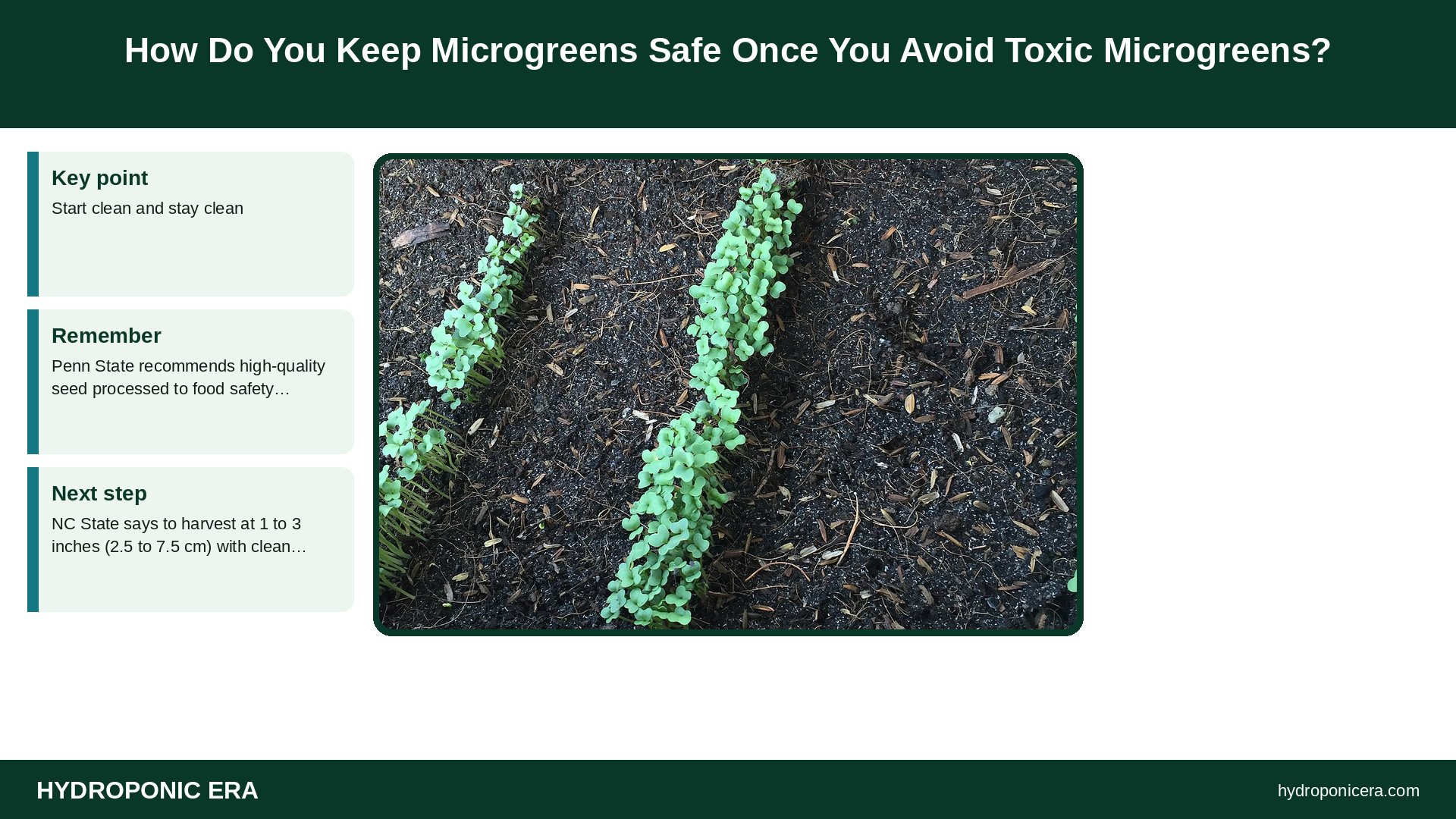
Start clean and stay clean. Penn State recommends high-quality seed processed to food safety standards to avoid microbial contamination. NC State says to harvest at 1 to 3 inches (2.5 to 7.5 cm) with clean scissors, cutting just above the soil, and to use them right away or refrigerate for 2 to 5 days. Oregon State notes that seedlings can rot or mold if the medium is too wet and cold.
Are Sprouts Different From Toxic Microgreens?
Yes, in how they are grown and eaten. Penn State Extension says sprouts are germinated seeds, often soaked in the dark, eaten whole with the root and seed, while microgreens are cut above the medium 7 to 21 days after germination. NC State notes that sprouts lack true leaves. The avoid list for toxic microgreens still applies: never sprout nightshade seed for eating either.
How Do You Avoid Mixing Up Toxic Microgreens?
Keep garden seed and microgreen seed apart. Tomato and pepper packets for the garden look much like any other small seed, and mix-ups happen at sowing time. Label every tray with the crop and date, buy single-species packets marked for microgreens, and store nightshade seed in a separate box. If a tray looks unfamiliar at harvest, compost it.
- Label: crop name and sowing date on each tray.
- Store: nightshade seed in its own container.
- Doubt: do not eat it; compost the tray.
What Should You Do if You Ate Toxic Microgreens?
If someone eats nightshade seedlings and feels unwell, contact the Poison Help line in the US at 1-800-222-1222, run by America’s Poison Centers, or your local emergency number. Have the seed packet ready so you can say exactly what was eaten. Then remove the remaining tray and label seed storage clearly so mix-ups do not happen again.
FAQ About Toxic Microgreens
Are tomato microgreens toxic?
Yes; extension sources say tomato seedlings should not be eaten.
Are pepper microgreens safe?
No; peppers are nightshades and are on every avoid list.
Is potato a toxic microgreen?
Yes; Penn State lists potato as not edible at the seedling stage.
Why are some seeds pink?
Often a fungicide coating; NC State says not to use them.
Are wild plant microgreens safe?
Only for experts; Penn State advises avoiding them.
Which microgreens are safest for beginners?
Radish, broccoli, cabbage, mustard and cilantro, per Cornell.
Sources
- Penn State Extension — The ABCs of Microgreens
- University of Illinois Extension — Small, but Mighty Microgreens Are Easy to Grow Indoors
- Oregon State University Extension — Microgreens
- NC State Plants for Human Health Institute — Microgreens
- Cornell Cooperative Extension — Microgreens!
- America’s Poison Centers — Poison Help Line 1-800-222-1222
- Photo credits (Wikimedia Commons, edited with titles): Young eggplant (Solanum melongena) seedling by KwakyeEsther (CC BY-SA 4.0); Germinating tomatoes by Dennis Brown (CC BY-SA 3.0); Microgreen rows growing by Zenyrgarden (CC BY-SA 4.0)