
What are the best plants for a shrimp tank? The best plants for shrimp tank setups are mosses such as Java moss, Christmas moss and subwassertang top the list, followed by floaters and soft stems like guppy grass. They give shrimp surfaces to graze and places to hide. Tropica advises buying lab-grown or nursery-potted plants that are free of pesticides, because shrimp are very sensitive.
Key takeaway: The best plants for shrimp tank setups are fine-leaved mosses, floating plants and soft stems that shrimp can graze and hide in. Tropica says shrimp love moss, and that its lab-grown 1-2-Grow plants are free of snails, algae and pesticides, which matters because shrimp are delicate. Most good choices also grow without CO2.
| Plant | Why shrimp keepers use it | Source |
|---|---|---|
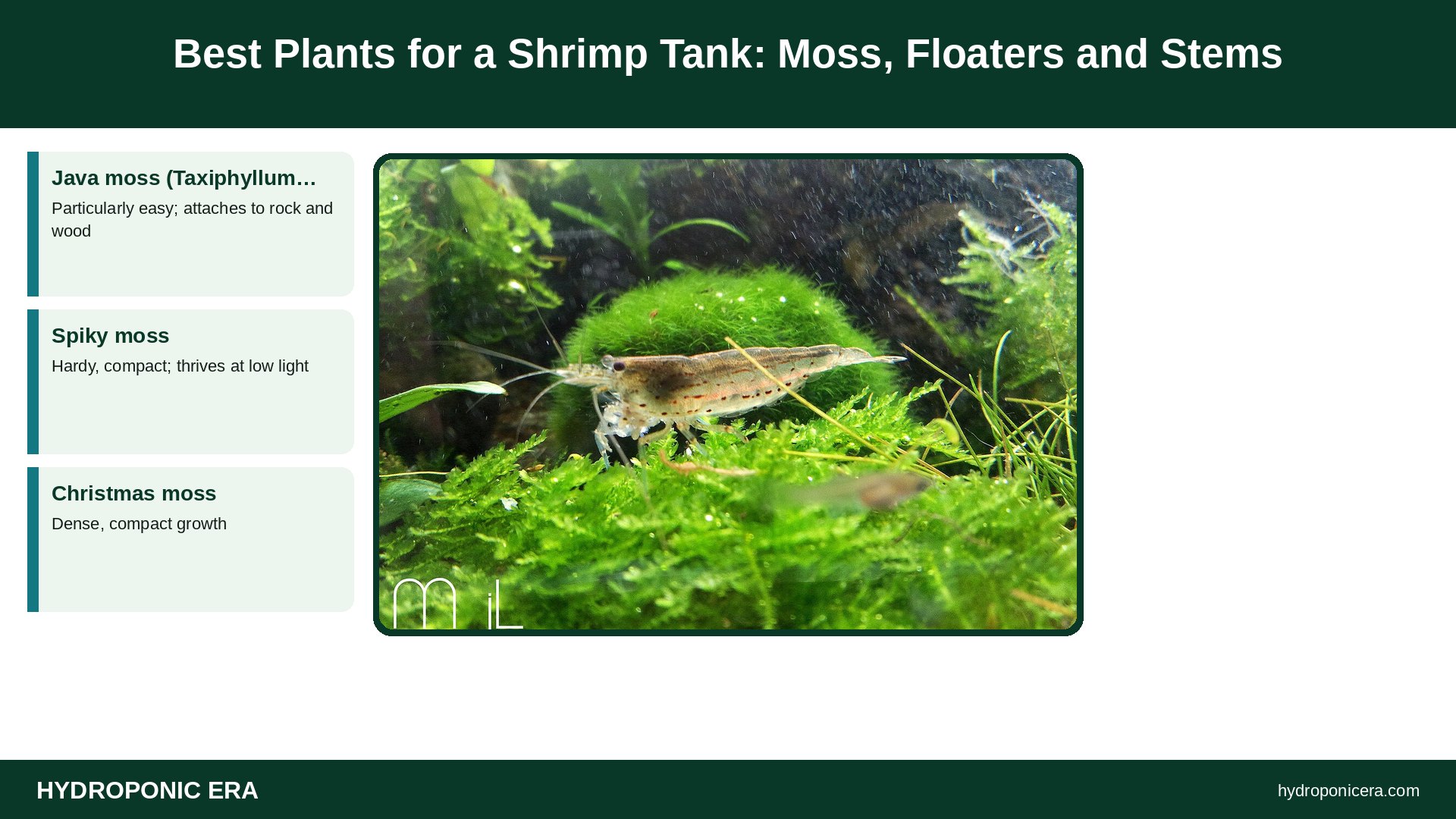
| Java moss (Taxiphyllum barbieri) | Particularly easy; attaches to rock and wood | Tropica |
| Spiky moss | Hardy, compact; thrives at low light | Tropica |
| Christmas moss | Dense, compact growth | Tropica |
| Subwassertang | Slow, nano-friendly pads | Dennerle |
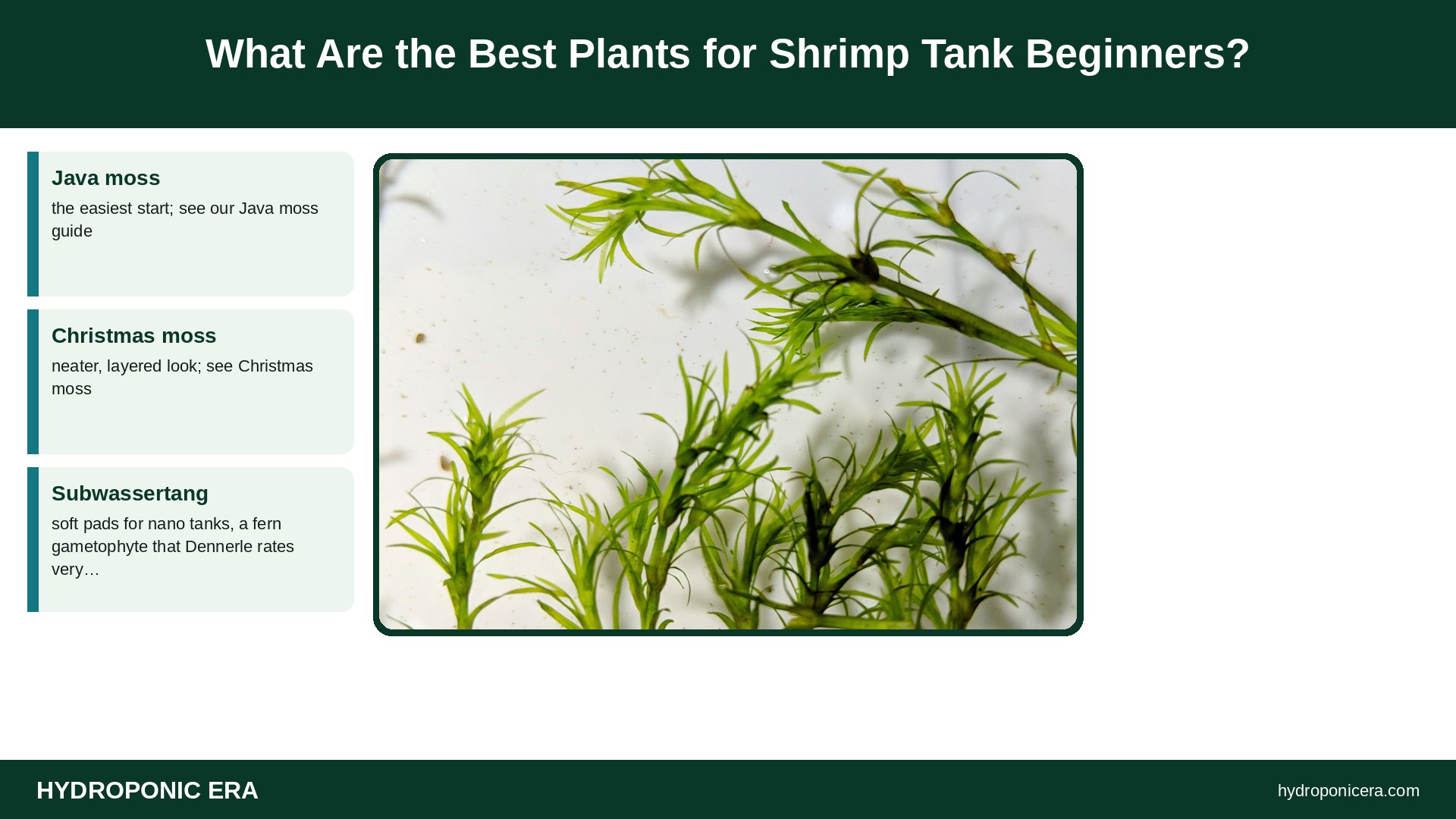
| Guppy grass (Najas) | Easy, fast; dense shelter for fry and shrimp | Tropica |
| Riccia fluitans | Floating liverwort; can be tied to decor | Tropica |
| Bundled plants | Not guaranteed pesticide-free; avoid in shrimp tanks | Tropica |
What Are the Best Plants for Shrimp Tank Beginners?
Among the best plants for shrimp tank use, mosses come first. Tropica states that “shrimps in particular love moss,” and fine moss traps the biofilm and tiny food particles shrimp graze all day. Tropica lists Java moss (Bogor moss) as particularly easy and Spiky moss as hardy and able to thrive at low light. Pair moss with a floater and one soft stem plant, and you cover food, cover and water quality.
- Java moss: the easiest start; see our Java moss guide.
- Christmas moss: neater, layered look; see Christmas moss.
- Subwassertang: soft pads for nano tanks, a fern gametophyte that Dennerle rates very slow.
- Riccia: bright green cushions; see Riccia fluitans.
- Guppy grass: fast, dense cover; see guppy grass.
Why Do Shrimp Need Live Plants?
The best plants for shrimp tank life give shrimp food surfaces, hiding places and cleaner water. Dense growth shelters molting shrimp and baby shrimp from fish. Tropica describes guppy grass as dense growth that gives perfect shelter for fish fry and shrimp. Fast growers also take up nutrients that would otherwise feed algae, which helps keep water stable for sensitive species.
- Grazing: biofilm grows on fine leaves and moss.
- Shelter: molting and baby shrimp hide in dense growth.
- Water quality: fast plants absorb excess nutrients.
Do Shrimp Eat Live Plants?
Even with the best plants for shrimp tank setups, dwarf shrimp mostly graze algae and biofilm rather than healthy leaves. Tropica notes that shrimp are very good at keeping delicate-leaved plants such as Hemianthus, Marsilea and Glossostigma free from algae. They will pick at dying or melting leaves, so a sudden plant loss usually points to a plant problem, not hungry shrimp. Fish such as goldfish are the real plant-eaters.
- Healthy leaves: usually left alone.
- Melting leaves: eaten as they break down.
- Plant-eating tankmates: goldfish and some cichlids eat moss, per Tropica.
Which Plants Are Safe Without CO2?
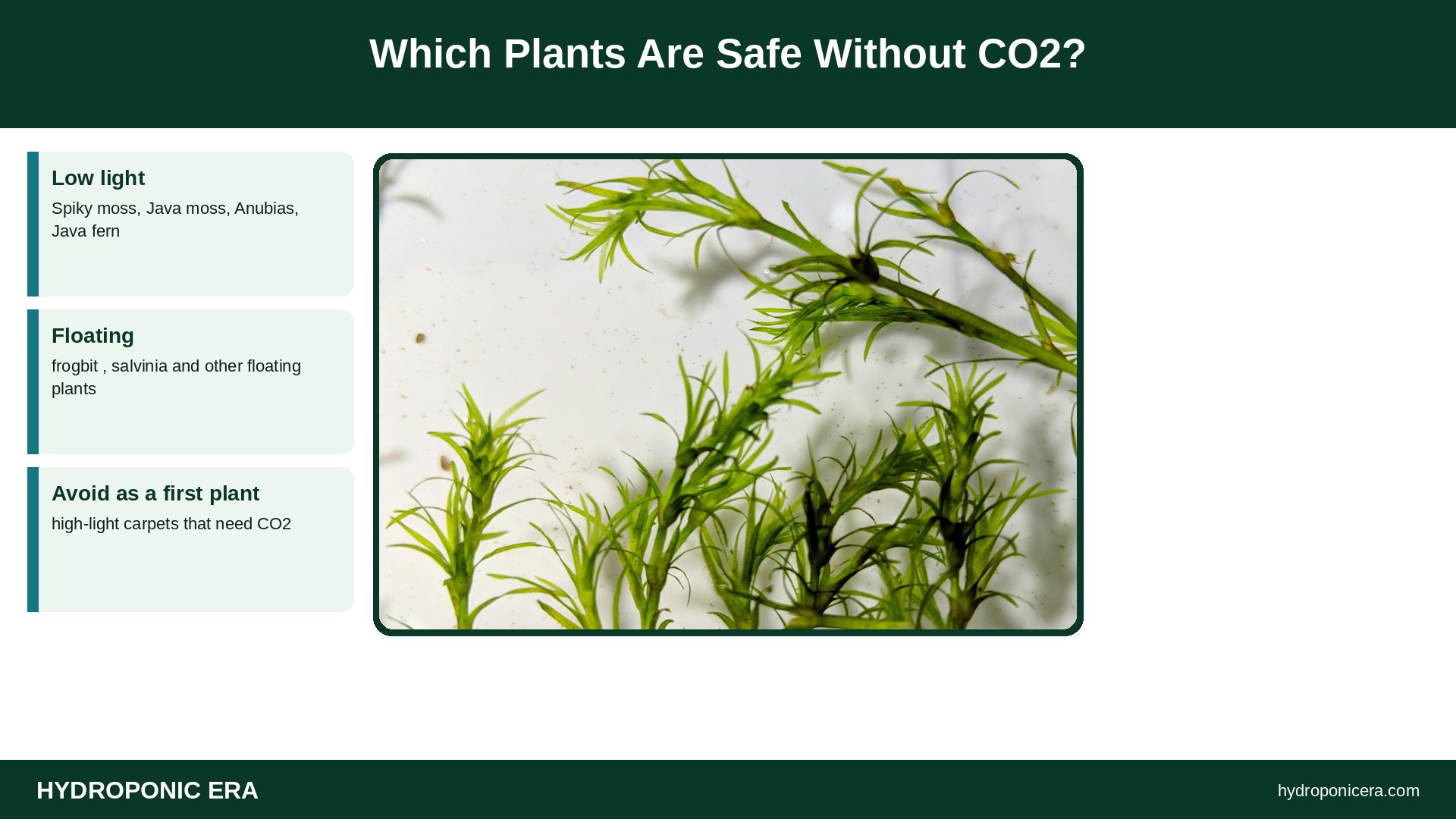
Most of the best plants for shrimp tank use grow fine without injected CO2. Java moss, Spiky moss, Christmas moss, subwassertang, Riccia, guppy grass and floating plants all handle low-tech tanks. Epiphytes such as Anubias, Java fern and Bucephalandra also do well with modest light.
- Low light: Spiky moss, Java moss, Anubias, Java fern.
- Floating: frogbit, salvinia and other floating plants.
- Avoid as a first plant: high-light carpets that need CO2.
How Do You Keep New Plants Safe for Shrimp?
Even the best plants for shrimp tank use can carry chemicals, so buy clean plants and quarantine anything else. Tropica says its 1-2-Grow tissue-culture plants are free from snails, algae and pesticides and harmless for sensitive shrimp. It also warns that bundled stem plants are not grown in its own nursery and could carry pesticides, so it advises not to place them directly in shrimp tanks. Rinse and hold doubtful plants in a separate container first.
- Choose tissue-culture (in-vitro) cups when possible.
- Rinse potted plants and remove the rock wool.
- Hold uncertain plants in a bucket for a few weeks with water changes.
- Add plants before shrimp in a new tank.
- Dose fertilizer lightly; copper-based products are a risk for shrimp.
How Many Plants Does a Shrimp Tank Need?
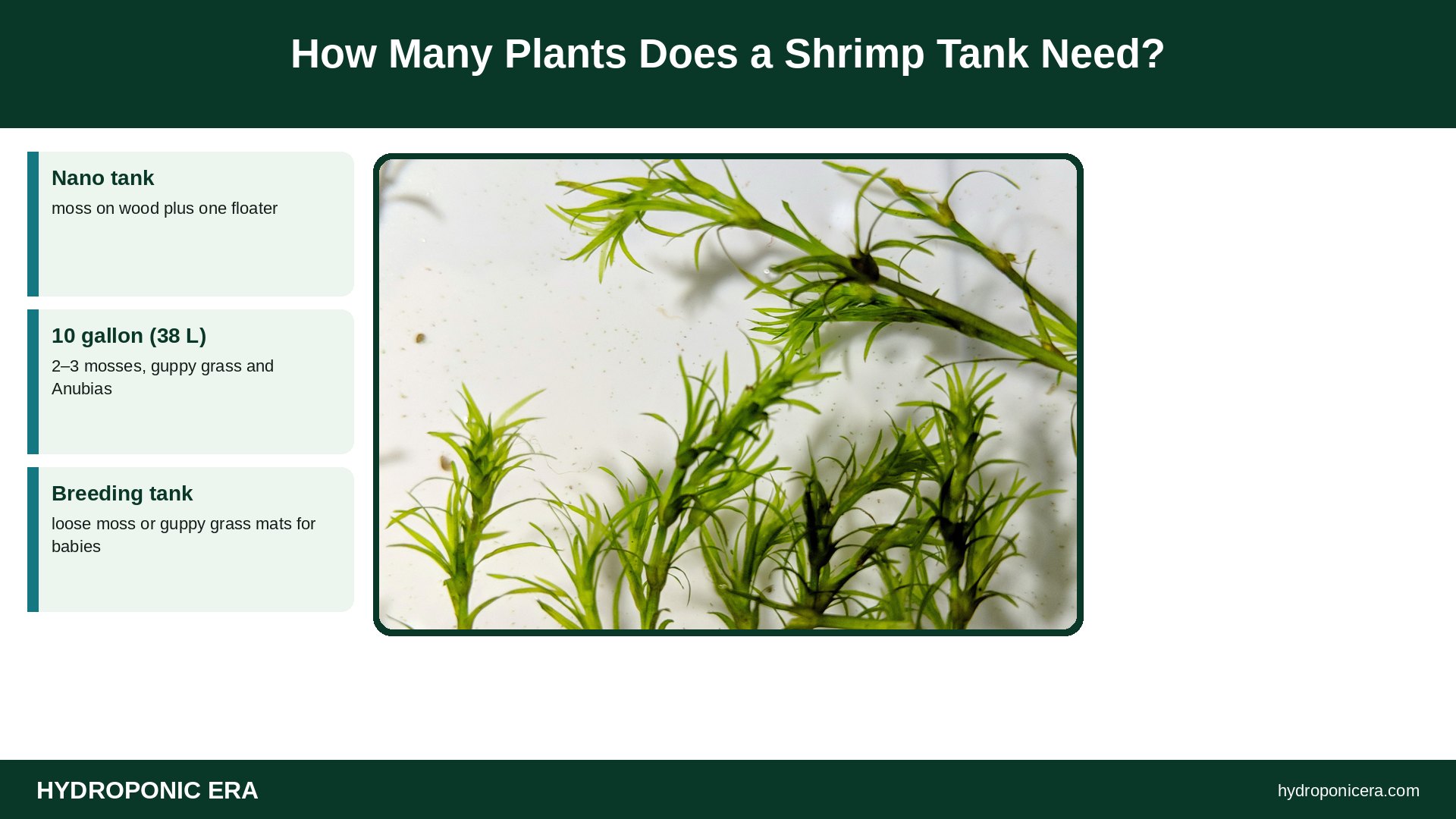
With the best plants for shrimp tank setups, more is better. A shrimp tank looks and works best when much of the hardscape is covered in moss and a floater shades part of the surface. Start with 2 to 3 portions of moss and one stem or floater for a 5 to 10 gallon (19 to 38 L) tank, then let them grow in before adding many shrimp.
- Nano tank: moss on wood plus one floater.
- 10 gallon (38 L): 2–3 mosses, guppy grass and Anubias.
- Breeding tank: loose moss or guppy grass mats for babies.
FAQ About the Best Plants for Shrimp Tank Setups
What is the easiest plant for shrimp?
Java moss; Tropica calls it particularly easy.
Do shrimp need CO2 for plants?
No; most shrimp-tank plants grow without it.
Do shrimp eat healthy plants?
Rarely; they mostly graze algae and biofilm.
Are store plants safe for shrimp?
Tissue-culture plants are safest; bundled plants may carry pesticides.
Is guppy grass good for shrimp?
Yes; Tropica says it gives dense shelter for fry and shrimp.
Which moss grows in low light?
Spiky moss and Java moss.
Sources
- Tropica Aquarium Plants — 1-2-Grow! plants
- Tropica Aquarium Plants — Tropica products: pots, bundles, 1-2-Grow!
- Tropica Aquarium Plants — Make your aquarium a success
- Dennerle Plants — Lomariopsis lineata plant profile/27959)
- Photo credits (Wikimedia Commons, edited with titles): Neocaridina heteropoda auf Javamoos by VivienneHarper (CC BY-SA 3.0); Najas guadalupensis – Timothy McNitt by Timothy McNitt https://www.inaturalist.org/people/frondsinhighplaces (CC BY 4.0)