
Quick Answer
Biofilm Slimy Reservoir Hydroponics (biofilm slimy reservoir hydroponics) is the practical focus of this guide for home growers.
Biofilm and slimy reservoir walls are microbial films that coat tanks, tubing, and fittings in recirculating hydroponics. Some slime is cosmetic; some pairs with root pathogens, algae, and clogged emitters. Triage biofilm vs root slime vs algae, then fix light leaks, cleaning cadence, and oxygen—not random oxidizer dumping alone.
Related: algae, cleaning, Pythium, reservoir setup.
Key Takeaways
- UK Extension root disease management materials stress hygiene and environment for hydroponic root health.
- Opaque reservoirs and blocked light leaks reduce algae that feed messy ecosystems.
- Slimy roots with browning differ from clear-tank wall film—inspect plants, not only plastic.
- Scheduled cleanouts beat heroic peroxide habits without aeration.
- Filters/strainers catch debris that becomes biofilm food.
- Warm reservoirs accelerate microbial growth—watch temperature.
- ATO and long tubing runs need periodic mechanical cleaning.
- Sterility is not permanent in home systems—aim for manageable sanitation.
Related HydroponicEra guides
- Algae in reservoirs
- Cleaning/sterilizing
- Pythium root rot
- Reservoir setup
- Dissolved oxygen
- Air pumps
- Pump sizing
Biofilm Slimy Reservoir Hydroponics: Biofilm vs Root Slime vs Algae
Tank-wall biofilm feels slippery on plastic. Algae is usually green and needs light (algae guide). Pathogenic root slime often comes with brown, soft roots and wilting—see Pythium. UK E706 root disease management in hydroponics underscores sanitation and root-zone environment rather than wishful thinking.
Biofilm Slimy Reservoir Hydroponics: Why Recirculating Systems Sliming Up

| Cause | Effect | Counter |
|---|---|---|
| Light leaks | Algae + organic load | Opaque lids/tape |
| Warm water | Faster microbes | Cool reservoir |
| Debris | Food for films | Strainers; dead-leaf discipline |
| Long dirty lines | Hidden film | Flush/replace tubing |
| Low oxygen | Root stress | Air stones; see DO |
Biofilm Slimy Reservoir Hydroponics: Step-by-Step Cleaning Cadence
- Inspect roots and walls separately
- Block light leaks first
- Mechanically scrub reservoir between crops
- Flush tubing and drip lines
- Replace spongy filters that never come clean
- Reset with clean water + fresh nutrients
- Verify air stones and pump flow
- Schedule mid-cycle wipedowns on lids/rims
- Log water temp and any root browning
- Escalate to full sanitize protocol when disease appears
Biofilm Slimy Reservoir Hydroponics: Common Mistakes

- Pouring oxidizers weekly while ignoring light leaks
- Never cleaning lines—only the visible tank
- Confusing white healthy roots with brown slime
- Running 90°F reservoirs “because the room is fine”
- Skipping strainers until emitters clog
Biofilm Slimy Reservoir Hydroponics: Troubleshooting Table
| Finding | Likely | Next |
|---|---|---|
| Green slime + light leak | Algae-driven mess | Lightproof + clean |
| Brown soft roots | Root disease risk | Pythium guide |
| Clogged drippers | Film + debris | Line flush; filters |
| Smell + heat | Stale warm tank | Cool + oxygen + clean |
Prevention Framework

Prevention: opaque reservoirs → oxygen → temperature → mechanical cleaning cadence → line hygiene. Pair with cleaning and reservoir setup. Honest ROI: gadgets help less than a scrub brush and a lid.
What to Check Before You Escalate
- Roots inspected?
- Light leaks blocked?
- Tubing cleaned?
- Reservoir temp?
- Air stones working?
- Last full clean date?
Cleaning Calendar and Line Hygiene for Recirculating Tanks
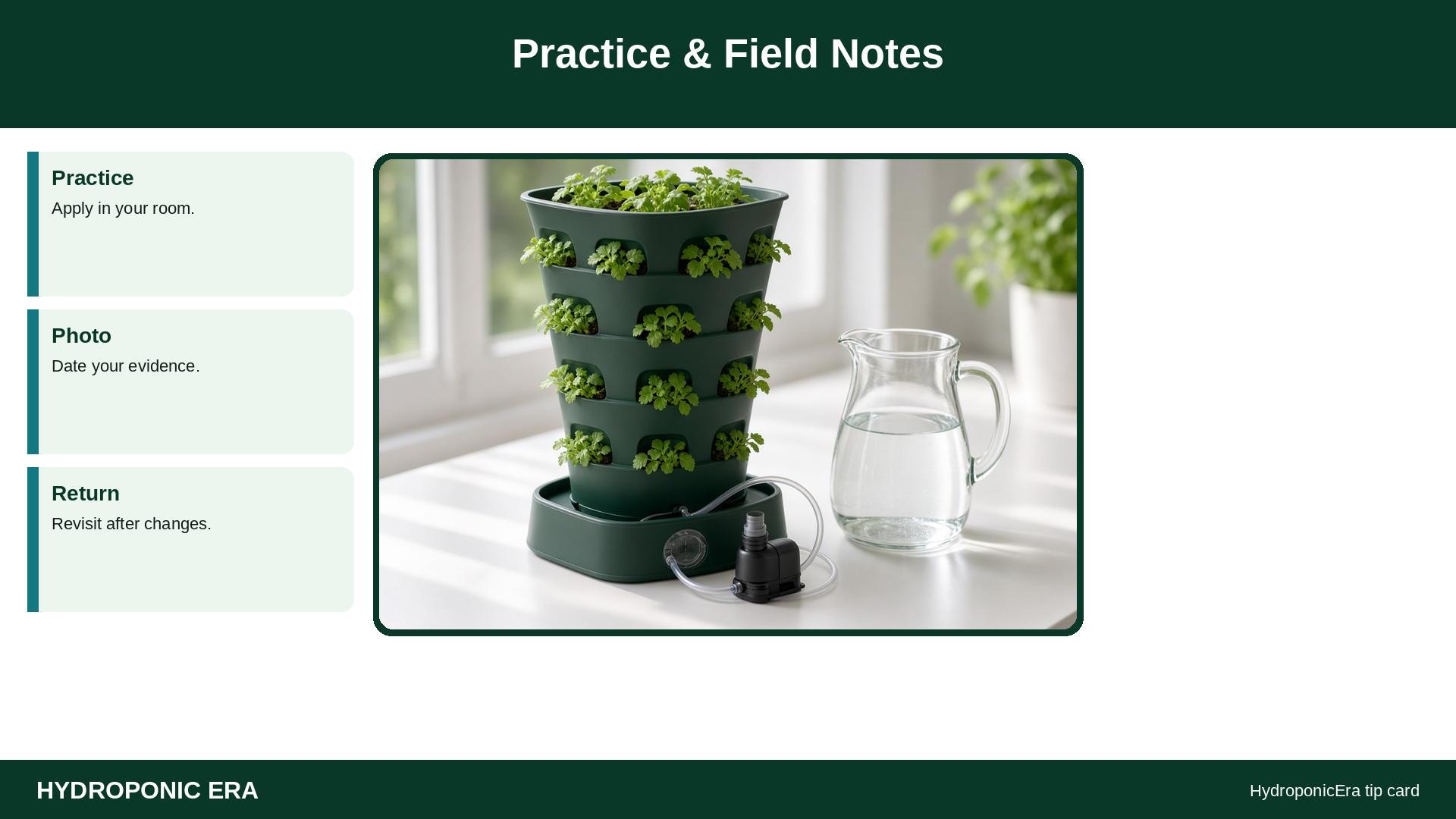
Put cleaning on a calendar, not a mood. Minimum: full mechanical clean between crops; mid-cycle wipe of lids/rims; tubing flush when flow drops. UK hydroponic root disease management materials and general extension sanitation logic beat oxidizer folklore. If roots are brown and soft, escalate via Pythium—do not only scrub the pretty tank wall.
Original slime score (0–3): wall slip | line odor | filter gunk | root color. Score weekly. Rising scores trigger cleaning before emitters fail. Pair with temperature notes—warm water accelerates mess (reservoir temperature).
Lightproofing is free prevention. Tape pinholes, prefer opaque reservoirs, and block LED spill into the tank (algae, reservoir setup). Algae is not identical to every biofilm, but it feeds messy ecosystems.
ATO users: float valves and day tanks grow film too—clean sensors/seats so automation stays truthful. Long drip manifolds need intentional flushes (pumps).
Oxygen and debris discipline: running air stones helps roots; strainers catch leaf bits that become microbial food (DO, air pumps).
Practice closer: keep a dedicated scrub brush that never leaves the grow area. Photograph the tank interior after each deep clean as your baseline. Continue with cleaning/sterilizing for stepwise sanitize options.
Field Notes: What Slimy Walls Are Trying to Tell You
Slippery walls after two quiet weeks usually mean light, warmth, debris, or all three. Fix light leaks before shopping UV. Scrub, rinse, and restart on a schedule you can keep (cleaning, algae).
Root checks beat wall checks for plant risk. White firm roots can coexist with cosmetic wall film; brown soft roots demand disease protocol (Pythium). Log both.
Tubing is where people cheat. If you never flush lines, emitters fail mid-fruiting (pumps). Label a “line flush day” on the calendar beside reservoir changes (water changes).
Original spare-parts bin: spare air stone, spare filter sock, scrub brush, opaque tape. That bin prevents “I’ll clean next month” spirals. Tie to reservoir setup and dissolved oxygen.
FAQs
Is all biofilm deadly?
No—manage load; prioritize root health symptoms.
Does H2O2 replace scrubbing?
No—mechanical cleaning still matters.
UV alone enough?
UV can help water-side microbes but won’t scrub wall film—see UV article in this batch.
Clear tanks OK?
They invite algae—prefer opaque.
How often to clean?
Between crops at minimum; sooner if disease or heavy film.
Sources?
UK E706, OSU hydro, UF water quality, cleaning cluster practices.
Are enzyme products required?
Optional for some growers; they do not replace scrubbing, lightproofing, and oxygen.
Clear vinyl tubing forever?
Clear lines encourage algae—prefer opaque where practical and clean often.
Measurement and Logging Habits That Keep Advice Honest
Every troubleshooting or equipment claim on HydroponicEra should collapse to something you can measure or photograph. Write the date, the meter reading, and one photo when you change a variable. That habit prevents stacking five fixes overnight and then inventing a success story. Use calibrated pH/EC meters where nutrients are involved, and canopy-level climate sensors where humidity and heat are involved (humidity/VPD).
When you link outward to university extension pages in the Sources section, treat them as anchors—not as promises that your exact tent will match a greenhouse trial. Translate ranges into your room with logs. If a fix works, keep it; if not, revert one step and retest. That methodology is the expertise signal search and AI systems can trust without fabricated statistics.
Internal next reads stay in-cluster: problems pages cross-link to cleaning, airflow, and crop guides like tomatoes or lettuce when symptoms live on those plants. Equipment pages cross-link to reservoir setup, pumps, and grow tents so purchases match the system you already run.
If slime returns within days of a scrub, assume a hidden line or light leak remains—open fittings and re-tape pinholes before blaming the nutrient brand.
Biofilm Slimy Reservoir Hydroponics: Practical Checklist
Biofilm Slimy Reservoir Hydroponics matters every week in a home system. Recheck biofilm slimy reservoir hydroponics after transplants, heat spikes, and canopy fill-in. Strong biofilm slimy reservoir hydroponics habits beat one-time guesses. When biofilm slimy reservoir hydroponics drifts, leaves crowd, roots stress, or harvest quality drops. Write biofilm slimy reservoir hydroponics targets into your log so you do not rely on memory. Teach helpers your biofilm slimy reservoir hydroponics checklist before you leave town. Improve biofilm slimy reservoir hydroponics in small steps—measure, adjust, then wait a day.
Sources
- University of Kentucky Greenhouse Horticulture — Root disease management in hydroponic systems (PDF)
- Oklahoma State University Extension — Hydroponics
- University of Florida IFAS — AE094: Water Quality for Crop Production Systems
- Penn State Extension — A Water Quality Toolkit for Greenhouse and Nursery Production
- Michigan State University Extension — Water quality considerations for greenhouse and nursery crops
- Michigan State University Extension — Hydroponics as an agricultural production system
3 thoughts on “Biofilm and Slimy Reservoir Walls: Prevention Guide”